
News
Catch up on what’s happening in the world of global citizenship education.
1,668 results found
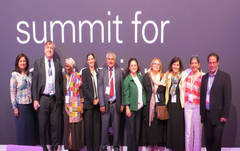 Charting together for Education to #SaveOurFuture 2020-07-15 Avoiding a COVID-19 lost generation will require radical transformation in education, shored up financing and innovation across the board, asserted leaders at a dedicated side-event of the UN High Level Political Forum, “Education Post-COVID 19,” on 9 July 2020. The event was organized by UNESCO and the SDG-Education 2030 Steering Committee, with support from the Group of Friends for Education and Lifelong Learning. “Our first estimates find that 20 million students are at risk of not returning to school. Without the right policy choices backed up by resources, the learning crisis will deepen with cascading repercussions across all the development goals,” said Stefania Giannini, UNESCO’s Assistant Director-General for Education. “No society can afford this. This is a time to recommit to education, better and differently, reaching beyond our circles”. Ringing the alarm on the largest shock to education in history, World Bank’s Global Director for Education Jaime Saavedra announced “the joint multi-partner global #SaveOurFuture campaign which aims to reimagine education in the post COVID world and engage people in a dialogue around education to build back better for the world’s children and youth.” “We have to campaign because we cannot afford for education to be the loser,” said Gordon Brown, United Nations Special Envoy for Global Education, referring to reduced tax revenue, falling aid and pressures to spend on health and social safety nets. “We need a build back better agenda for safe schools, connected schools and high technology schools and community support. Education is a component of social inclusion with teachers at its heart “Real changes often happen in deep crisis – we cannot return to the status quo. The future of education is the future of our societies,” said Andreas Schleicher, Director for Education, OECD, and moderator of the event. “We have a once in a generation opportunity to reopen schools better and differently,” echoed Robert Jenkins, UNICEF’s Global Chief of Education. “Teachers must be at the heart of this transformation and there have been amazing examples of resilience and creativity throughout the pandemic,” he said. Regretting that many countries have failed to sufficiently involve teachers in the response to the pandemic, Haldis Holst, Education International’s Deputy General Secretary, called on governments to “trust the professionalism of teachers and prioritize social dialogue with teachers and unions. Equity needs to be a priority.” This dimension was stressed by Maria Victoria Angulo Gonzalez, Minister of National Education of Colombia and her country’s representative on the SDG-Education 2030 Steering Committee. She explained her government’s efforts to promote inclusion at all levels, including through nutrition programmes, strengthened socio-emotional support for students and teachers and financial aid for higher education students. Priorities are to reduce dropout rates, understand gaps in the learning process, and accelerate the digital transformation as part of the new reality of education. The Profoturo Foundation, a member of UNESCO’s Global Education Coalition, is dedicated to narrowing the digital divide in education. Its Chief Executive Officer, Magdalena Brier, touched upon a range of programmes to build the capacities of governments, train teachers and reach vulnerable populations, affirming that the crisis has “taught us to reinvent ourselves and think in innovative ways”’. Providing a youth perspective, Anna Prokopenya, 2015 WorldSkills Champion, concentrated on how education should strengthen students’ agency. She put three questions to the education leaders: “Firstly, how can we make sure that practical learning is included in the new process? Secondly, how can the system become more flexible to consider and cultivate each student’s personality? Thirdly, in a reality with endless amount of information, how can education lead and show the way for self-motivated learning?” Rasheda K. Choudhury, Executive Director of CAMPE and Representative for the Collective Consultation of NGOs to the SDG-Education 2030 Steering Committee advocating for civil society, teachers, students, and parents said, “We must continue to work for those farthest behind and continue to strive for ensuring the right to education for all. SDG 4 is the door to achieving other SDGs and inclusion is the key to that door.” A recessionary outlook Expressing concern that the financial crisis could reverse two decades of gains in education, especially for girls, the Group of Friends for Lifelong Learning represented by Ambassador Mona Juul, President of ECOSOC and Norway’s Permanent Representative to the UN, called for engaged leadership and coordination action. “We have to seize the momentum to safeguard international and domestic investment in education as a prerequisite for the achievement of the 2030 Agenda and to foster the will to place education at the heart of recovery plans,” she said. Manos Antoninis, Director of UNESCO’s Global Education Monitoring Report, warned that COVID-19 ‘adds another layer of complexity to an already challenging situation” in terms of funding. He said that the SDG 4 financing gap could increase by one-third but investments in education now could save up to two-thirds of these costs by 2030. Special Envoy Gordon Brown evoked funding solutions such as conditional cash transfers, debt relief, creation of new resources by the International Monetary Fund and increased lending by the World Bank. Special focus was placed on Africa by Kenya’s Ambassador to the UN, Lazarus Ombai Amayo, co-chair of the Group of Friends. Noting that the continent accounts for 35% of the global student population, he stressed the need for all children to get back to school and called for increased regional cooperation. “The most vulnerable struggling to adapt. It should be the reverse - our education systems should adapt to needs of the most marginalized,” he said. “SDG 4 is being tested like never before,” said Alice Albright, CEO of the Global Partnership for Education, calling for debt restructuring, stepped up donor support, more efficiency in spending and national investment in education as the best way to face an uncertain future. “There’s a clear desire to transform how education systems deliver. We need to figure out where the gaps are and invest in the resilience of education systems.” Concluding the event, Stefania Giannini asserted that “the last couple of months have seen us unite and cooperate in new ways, innovative ways. Only through working together and partnerships will we be able to build back better, and every partner has a role to play.” Leading education 2030 SDG-Education 2030 Steering Committee URL:https://en.unesco.org/news/charting-together-education-saveourfuture
  Pandemic focuses attention on investing in youth initiatives to prevent violent extremism 2020-07-15 Listening to young people and investing in grassroots youth initiatives is an important step in any practical move to prevent violent extremism, a high-level UN virtual event heard. Virtual Counter Terrorism Week organized by the United Nations Office of Counter-Terrorism, explored practical and strategic challenges to prevent violent extremism and counter terrorism in a pandemic environment through a series of ten webinars and interactive discussions which took place from July 6 to 10 2020. UNESCO’s response to the pandemic has focused on supporting education from disruption to recovery and by harnessing partnerships through its Global Education Coalition. Representing UNESCO Ms Vibeke Jensen, Director of the Division for Peace and Sustainable Development, took part in a session on ‘Prevention of Violent Extremism and Strengthening Social Cohesion: Investing in Youth-led and Youth-driven Initiatives to build Resilient Societies’. During the session, moderated by Ms Jayathma Wickramanayake, United Nations Secretary-General’s Envoy on Youth, Ms Jensen responded to a statement by Ms Wevyn Muganda, Kenyan human rights activist and founder of the Beyond the Lines blog and Mutual Aid Kenya. Ms Muganda highlighted the real impact of the pandemic on the ground in Kenya. ‘During these difficult times, for many of the communities I work with, staying home is not possible when you live in a tiny and crowded house. E-learning is inaccessible and where available is expensive or unsafe for use. Unemployment and loss of income has left many starving and struggling to make rent. Should you go out, you risk infection, should you stay in, you risk starvation. It may be difficult to comprehend but this is the reality for many young people,' she said. Ms Jensen spoke of the importance of UNESCO’s work in promoting education in Preventing Violent Extremism and the consequential challenges for youth. ‘Young people soon came to the fore in providing voluntary and vital support; and the international community was also quick to come together to share experiences and provide open access to their knowledge, to find innovative and effective solutions to the biggest human crisis of our time,’ she said. ‘At the same time, however, we have witnessed a rise in intolerance, discrimination, racism, xenophobia, homophobia, antisemitism, anti-Muslim hatred, conspiracy theories, and hate speech, both off-line and online. Young people at home with more time to spend online have become exposed to another pandemic of disinformation, violent extremist and hateful messages which may either exclude or act as recruitment.’ Ms Muganda, through her Mutual Aid Kenya initiative, has built a network of national volunteers to distribute education materials for children who could not access distance learning, food and sanitation supplies in their communities. 'We need to appreciate how interconnected we are. We need to do more than just make promises to support young people and put our money where our mouth is, and that means investing heavily in the capacity of young people to be key players in building peace and more resilient communities,' she said. At the closing session Mr Vladimir Voronkov, Under-Secretary-General of the United Nations Office of Counter-Terrorism (UNOCT), emphasized that: 'We need a massive investment in young people and gender-sensitive and youth-driven initiatives if we want to build healthy and inclusive societies. 'COVID-19 has highlighted, and it could also exacerbate, old and new challenges and fault-lines that terrorists are keen to exploit. We need to strengthen multilateralism and international cooperation at all levels.” The week gathered Member States, United Nations entities, thought leaders, youth civil society representatives, tech companies and other key stakeholders together and explored themes including how to protect and promote human rights to build resilience to terrorism, harness a ‘whole society’ approach to respond to the pandemic, the impact of COVID-19 on international efforts to prevent and counter violent extremism; and proposed innovative strategies and opportunities for a way forward. Preventing Violent Extremism URL:https://en.unesco.org/news/pandemic-focuses-attention-investing-youth-initiatives-prevent-violent-extremism
 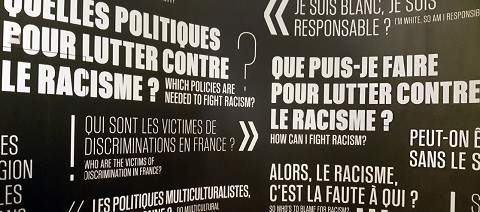 New resources – “Us and Them - From Prejudice to Racism”: Podcasts and musical voyages 2020-07-15 Now more than ever, understanding racism and discrimination in all its forms is crucial in order to foster inclusive societies. How are prejudices constructed? What is the reality of “race” from a genetic point of view? What are the arguments against the supporters of a division of humanity into “races”? Why have States come to institutionalize racism against specific categories of individuals? These are all questions that are addressed in the traveling exhibition “Us and Them – From Prejudice to Racism”, launched in March 2017 which was produced and conceived by the French Natural Museum of Natural History-Musée de l’Homme, with the collaboration of UNESCO. The exhibition continues to travel in various cities, including those from UNESCO’s International Coalition of Inclusive and Sustainable Cities – ICCAR, and made its way to the United Nations Headquarters in New York in March 2020. From the very beginning of the COVID-19 pandemic, the international community has witnessed the stigmatization and discrimination of populations of Asian origin and/or appearance. #IAmNotAVirus movement has risen up to combat such hate speech, but the xenophobic rhetoric used by leaders and populist groups has sparked a new wave of extreme right-wing movements that have galvanized racist messages advocating violence. Today, the global outrage that has heard the voices of citizens marching #BlackLivesMatter in different cities around the world, while appealing for racial justice for people of African descent, has substantiated that the legacy of slavery is still haunting us. The racial wounds that persist are once again uncovering the centuries-old legacies of bias and prejudice and has taken a toll in the construction of the moral fibre of our societies. In light of the current events, Musée de l'Homme has published several resources including a podcast series, reading materials, a MOOC, and videos revolving around the topic of racism. Under the name of “Us and Them”, the podcast series focuses on the scientific lies in which discrimination and racism were built on. RESOURCES Podcast series: « Nous et les autres : des préjugés au racisme » (in French) Using testimonies to dissect racism, this series of podcasts deconstructs the scientific lie on which this discrimination was built. Video: « La génétique permet-elle de classer les humains ? » (in French) Classifying humans according to morphological, geographical or cultural criteria does not work to describe their genetic diversity. Their variation is the result of movements, encounters and migrations, which retrace the complex and extremely rich history of our species. Reading materials: « Discriminations, préjugé, racisme, des définitions pour mieux comprendre ces phénomènes… » (in French) MOOC : « Les origines de l’Homme » (in French) Discover the history of our species, its origins and evolution with online courses. “15 stories: 15 musical voyages” From the stories of Nina Simone to that of Gaël Faye, discover 15 stories, 15 musical trajectories echoing the past exhibition "Nous et les autres, des préjugés au racisme", in partnership with the Médiathèque musicale de Paris. Other links Us and Them – From Prejudice to Racism Exhibition "Us and Them – From Prejudice to Racism" | UNESCO International Coalition of Inclusive and Sustainable Cities – ICCAR United Nations hosts “Us and Them – From Prejudice to Racism” exhibition Master Class Series against Racism and Discriminations URL:https://en.unesco.org/news/new-resources-us-and-them-prejudice-racism-podcasts-and-musical-voyages
  SDG Report Reveals Setbacks on Poverty, Healthcare, Education 2020-07-10 Story Highlights The report uses data as of June 2020 for selected indicators in the global indicator framework for the SDGs. It indicates that growing food insecurity, deterioration of the natural environment, and persistent inequalities have been exacerbated by the pandemic. The Sustainable Development Goals Report 2020 finds that, prior to the COVID-19 pandemic, the world had been making progress in several areas, including maternal and child health and access to electricity. Nonetheless, growing food insecurity, deterioration of the natural environment, and persistent inequalities remain and have been exacerbated by the pandemic. On the issues of poverty, healthcare, and education, the 2020 edition of this annual report documents: the first rise in global poverty since 1998, with an estimated 71 million people expected to be pushed back into extreme poverty in 2020; the disruptions to health and vaccination services and limited access to diet and nutrition services could cause hundreds of thousands of additional under-5 deaths and tens of thousands of additional maternal deaths in 2020; and school closures have kept 90% of students worldwide out of school. This report was launched at the opening of the 2020 session of the High-level Political Forum on Sustainable Development (HLPF 2020), on 7 July. The report uses data as of June 2020 for selected indicators in the global indicator framework for the SDGs, as developed by the Inter-Agency and Expert Group on SDG Indicators (IAEG-SDGs) and adopted by the UN General Assembly on 6 July 2017. The Sustainable Development Goals Report 2020 is the third of three global assessments on SDG progress that are released in preparation for the annual HLPF session. The yearly report of the UN Secretary-General on progress towards the 17 SDGs (SDG Progress Report) is released several months before the HLPF. The 2020 edition reported that progress was stalled or reversed on the number of people suffering from hunger, the rate of climate change, and increasing inequalities. The Sustainable Development Solutions Network (SDSN) annually releases a Sustainable Development Goals Report along with indexes that list countries by SDG achievement. Their 2020 edition focuses on ‘The Sustainable Development Goals and Covid-19.’ The report indicates that all regions have made progress in the SDG index since 2015, with East and South Asia having progressed the most. related events: Launch of the SDGs Report 2020 High-level Political Forum on Sustainable Development (HLPF) 2020 URL:http://sdg.iisd.org/news/sdg-report-reveals-setbacks-on-poverty-healthcare-education/
 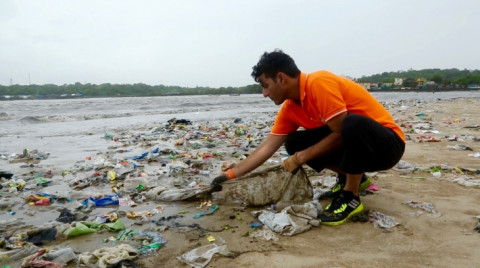 India’s youth take on plastic pollution 2020-07-10 On the 30th June 2020, 1,900 young people joined together at the Virtual Youth Summit in India to celebrate their completion of the Tide Turners Plastic Challenge in India. The challenge is a global initiative to educate young people about plastic pollution. It is developed by the United Nations Environment Programme’s (UNEP) Clean Seas Campaign, supported by the UK Government’s Department of Environment, Food and Agriculture. Addressing the virtual crowd of young change-makers from India, 86-year-old primatologist Jane Goodall recalled that from a very young age she was fascinated by nature. She shared that she once took worms to bed, wondering how they moved around without legs. Since then, her curiosity has earnt her global renown for her work on the study of chimpanzees. Curiosity is what has motivated the young people to take part in the Tide Turners Plastic Challenge. They share Jane Goodall’s enthusiasm for learning about nature and how they can make the world a better place. Tide Turners educates young people about single-use plastics, encouraging them to alter their attitude towards plastic consumption and spark behavioral change in their communities. Participants undertake three levels of the challenge from knowledge and self-reflection, to initiating dialogues with authorities at schools and businesses to encourage them to reduce their consumption of single-use plastic products from the grassroots level. Due to Covid-19, the fieldwork could not be carried out as planned. Still, the young tide turners found ways to complete their challenge virtually. The Youth Summit was marked by the presence of special guests - from celebrity changemakers, to badge-holders from Kenya, Uganda, and Ghana – who shared their passion for the environment. Actress and model Dia Mirza spoke about using her platforms to share messages about the environment with different audiences. Grammy Award winner Ricky Kej raises awareness about issues such as Land Degradation and Nitrogen pollution through music. Cartoonist Rohan Chakravarty uses his artistic talents to create artwork about marine litter and other environmental problems. UNEP’s Chief of Youth and Advocacy, Sam Barratt said, “The summit was a reminder that it doesn’t matter how old you are, where you’re from, or what your occupation is, we all have a critical role to play in shaping the world. This generation of Indian Tide Turners have taken their first steps into environmental leadership. Already they have had huge impact in changing the plastic habits of their community and calling on companies and their schools to act on pollution.” In India, Tide Turners is led by UNEP, with support from implementing partners: World Wide Fund for Nature India (WWF India), Centre for Environment Education (CEE), and the Million Sparks Foundation. According to India’s Central Pollution Control Board (CPCB), around 26,000 tonnes of plastic is generated per day in India, 10,000 of which is uncollected. But for the thousands of young people who have completed the challenge, there is hope for a better future. Shri Kartikeya V Sarabhai, Director of the Centre of Environment Education India said, “Youth have the power to bring about positive change. The Tide Turner Challenge was designed as an online platform for youth to participate, learn and act on plastic pollution. It was wonderful to see how over a 120,000 youth in India joined those in other countries to get involved and contribute to the solution” Since June 2019, 170,000 young people have participated in the Tide Turners challenge, earning badges made entirely from recycled plastic. The initiative operates in twenty-three countries in Africa and Asia. There are plans to expand to another ten countries in Africa, Asia, Pacific and the Caribbean, transforming the next phase of “Tide Turners” into “Wave Makers”. From awareness to advocacy, UNEP will roll out further training options for those that have completed Level 3, the “Champion” level of the badge. Find out more here. To see more details on the Youth Summit in India, click here. URL:https://www.unenvironment.org/news-and-stories/story/indias-youth-take-plastic-pollution
 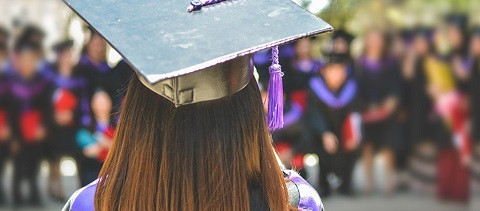 Education in times of crisis: Inspiring a new generation of gender equality advocates 2020-07-10 This new pandemic has impacted the lives of over 60% of the world’s student population. With the temporarily lockdown of schools and universities as an attempt to contain the spread of the COVID-19, classes at all educational levels have transitioned to online learning. This critical but necessary measure to ensure learning throughout the crisis makes it easier for students to participate in online events featuring the participation of global leaders. That is the case of the University San Francisco of Quito, which has been organizing classes to students from different fields, such as law, social sciences and architecture, to raise awareness on important challenges of society, such as poverty, education, health, human rights and gender equality. In this spirit, on 2 July, Professor Mateo Sáenz Hinojosa invited Ms Saniye Gülser Corat, UNESCO’s Director for Gender Equality, to speak to 60 students about UNESCO’s actions to foster gender equality and women’s empowerment, particularly through education, political participation and leadership. Brief History and Definition Gender equality has been a global priority for UNESCO since January 2008, but the work on this area has started much before, and it broke new ground when it started to also analyse the role of men in Gender Equality through the 1997 Expert Group Meeting on "Male Roles and Masculinities in the Perspective of a Culture of Peace" in Oslo, Norway, which led to the publication in 2000 of the book entitled Male roles, masculinities and violence: a culture of peace perspective. Since then, UNESCO has made an original and holistic contribution to the creation of an enabling environment for gender equality through coordinated actions in all its major programmes. Following the dual approach of gender mainstreaming and gender-specific programming, as outlined in its Priority Gender Equality Action Plan (2014-2021), UNESCO promotes gender equality and women’s empowerment from different and complementary angles, such as education, culture, information, and the sciences. Gender is not synonymous to women, it is not about the biological differences between people, but rather the socially-constructed roles and responsibilities of women and men, it includes expectations about characteristics, aptitudes and expected behaviors of both women and men. At UNESCO, we believe that gender equality means equal rights and opportunities, but also and very importantly, equal valuing of all genders.-- Saniye Gülser Corat Education & Gender Equality With a vision firmly rooted in inclusion, quality and learning throughout life, UNESCO is the UN’s specialized agency on Education and has a recognized leadership in the area of Education and Gender Equality. Although the common belief is that promoting gender equality means focusing on women and girls only, in some countries in particular in Latin America and the Caribbean, boys and young men can be at particular risk of early drop-out from school, for reasons ranging from a perception that young men should be earning money to support themselves and their families, to participation in gangs. However, it is important to remember that gender gaps in education, despite progress in recent years, are most often at the expense of girls. Around 132 million girls – about 1 in 5 across the world – are out of school today, and 16 million girls will never set foot in a classroom. At the current pace of change, it will take over a century to close the gap. Another alarming figure is that, among the 750 million illiterate adults in the world, two-thirds are women – a proportion that has not changed in the last two decades. 132 milliongirls are out of school today 16 milliongirls will never set foot in a classroom 500+ millionadult women without basic literacy skills Girls’ and women’s unequal access to, and performance in, education is both a cause and a result of multiple factors, including chronic and systemic gender-based discrimination reproduced in the education system. Therefore, UNESCO works to improve the quality of learning processes and environment for girls and boys by addressing gender disparities and promoting equality throughout the education system. UNESCO also plays a key role in overcoming gender disparities in access to, influence over, and use of science, technology, engineering and mathematics (STEM). Today women account for only 30% of the world’s researchers, and even lower percentages at higher decision-making levels. In 2019, the report entitled I’d Blush if I Could, which looked at the lack of women in frontier technologies such as artificial intelligence, shared strategies on how gender-responsive education can help resetting gendered views of technology and ensuring equality for women and girls. At a moment when every sector is becoming a technology sector, narrowing digital gaps is becoming an absolute priority for policy-makers, educators and everyday citizens. According to Ms Corat, “Gender equality in the education sector is more than just about parity in access; it is necessary to ensure that learners are acquiring the attitudes and competencies necessary for promoting gender equality in their everyday lives”. Equipping girls and boys, women and men with the knowledge, values, attitudes and skills to tackle gender disparities is a precondition to building a sustainable future for all. Politics & Leadership With 51% of women at Director and above levels in December 2019,UNESCO is among the highest-ranking UN agencies in terms of gender balance. Gender inequality persists in leadership positions. According to the Women’s Power Index, 19 out of 193 countries have a woman head of state or government, and 4 out of 193 countries have at least 50% women in the national legislature. However, women are not only globally underrepresented in politics in local governments, they have also been traditionally underrepresented at senior levels within the international organizations, including the United Nations. In 2016, António Guterres, UN Secretary-General, pledged to reach gender parity in senior positions at the United Nations stressing that by the end of his mandate, “we should reach full gender parity at the Under-Secretary-General and Assistant Secretary-General levels, including special representatives and special envoys”. UNESCO has been showing great results in this regard. In 2009, UNESCO had already achieved overall parity in the professional category. The number of women at Director and above positions rise from 23% in 2009 to 51% in December 2019. Positioning UNESCO among the highest-ranking agencies in this respect, as the average representation of women in the Professional category and above in the United Nations system is 45% (source: CEB/2019/HLCM/HR/17). For Ms Corat, “women in leadership positions bring diversity of opinions, ambitions and thinking. if we don’t have representation of half of humanity, it is impossible to ensure gender equality” In addition, women in leadership positions tend to favour the equitable redistribution of resources, and legislatures with a higher share of women on average tend to support health, education and social welfare spending at the expense of defence spending. Preliminary evidence also suggests that women leaders have been dealing with the COVID-19 pandemic much more efficiently. This is why UNESCO works to promote an enabling environment for women to become political leaders, in particular through gender transformative policies, and to call upon women leaders to be role models for future generations. To know more about UNESCO’s work on Gender Equality, please click here. URL:https://en.unesco.org/news/education-times-crisis-inspiring-new-generation-gender-equality-advocates
 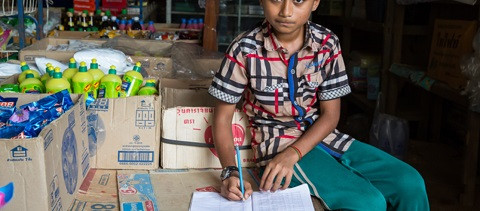 COVID-19: What you need to know about refugees’ education 2020-07-10 Despite a relative easing of COVID-19 school closures and an increasing trend towards reopening, over one billion learners globally remain affected by school closures. Disruption to education on this scale is unprecedented. COVID-19 leaves few lives and places untouched, however its impact, including in education, is harshest for groups that are already in vulnerable situations such as refugees. How are COVID -19 school closures affecting refugees’ education? Even before COVID-19 refugee children were twice as likely to be out of school than other children and despite improvements in refugee enrolment rates, only 63% of refugees are in enrolled in primary school and 24% in secondary education. The pandemic risks creating a backslide in the small gains made and creating a disaster for groups such as adolescent girls. In recent years significant efforts have been made on the inclusion of refugee learners in national education systems, however barriers to education persist and could potentially worsen due to the pandemic. There is also the worrying possibility that discrimination and xenophobia directed at refugee populations increases, negatively affecting school enrolment and retention. What can we do a ensure quality education for refugee learners? The first step is upholding and guaranteeing the right to education for refugees through ensuring all are able to learn at home and safely return to school. There are some promising signs that governments are fast-tracking the inclusion of refugees in their COVID-19 responses, demonstrating an opportunity to work on the delivery of commitments contained in the Global Compact on Refugees. As the focus shifts from distance learning and school closure to reopening and returning to school, close attention must be paid to existing and exacerbated inequities facing refugees, especially secondary school age refugee girls who were already only half as likely to enroll as their male peers. These conditions are anticipated to worsen. UNHCR estimates that 20% of the refugee girls who are in secondary school are at significant risk of never returning to school following the COVID-19 school closures. We must act now to address the inequality and dire situation facing refugee learners. Why is this so urgent and what is at stake? There is a lot at stake during and after COVID-19 for refugee learners. It is anticipated that there will be major increases in drop out, which means losing this generation if they are left out of education. In many countries the education status of refugees was already fragile prior to the pandemic, with many having missed years of schooling and having to work hard to catch up. They must now cope with further disruptions to their learning. Those who were already not enrolled in education programmes are at even greater risk of never returning to learning. Lack of access to infrastructure, hardware and connectivity, living conditions and the remoteness of many refugee-hosting areas means that refugee children are also at risk of not being able to access national distance learning programmes put in place by governments as part of the COVID-19 response. What is UNESCO doing to advance the right to education for refugees? Through the Global Education Coalition, UNESCO is facilitating partnerships between multiple stakeholders to provide learning opportunities for children youth and adults, including refugees, who have been impacted by the disruption of education due to the pandemic. UNESCO has pledged and is working to strengthen national education systems by providing Member States with expertise and technical guidance for policy design, implementation and planning support for the inclusion of refugees into all levels of national education systems. UNESCO’s qualifications passport for refugees and vulnerable migrants launched in 2019 aims to facilitate learners’ integration in the education system and labour market through assessment procedures. The process helps recognize key elements such as the highest achieved qualifications, skills, relevant job experiences and language proficiency. On 13 July from 4pm to 5:30pm CET, a high-level virtual roundtable led by UNHCR and UNESCO will bring together voices of refugees to hear about the needs and responses on the ground. The event is convened and chaired by Special Envoy Angelina Jolie and co-hosted by Canada and the United Kingdom. Watch it live here Photo: Refugee learner doing his homework, Thailand, 2015. What UNESCO does in education in emergencies UNESCO’s education response to COVID-19 The Global Education Coalition UNESCO qualifications passport for refugees and vulnerable migrants UNESCO’s Pledge to the Global Refugee Forum URL:https://en.unesco.org/news/covid-19-what-you-need-know-about-refugees-education
 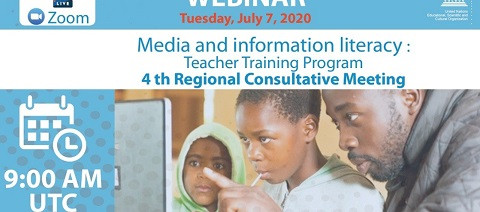 Media and Information Literacy: Teacher training program: Fourth regional consultative meeting, July 7th, 2020 2020-07-10 Dakar, July 2nd 2020 - The Communication & Information, and Education sectors of UNESCO’s Multisectoral Regional Office for West Africa-Sahel jointly are organizing the Fourth Regional Consultative Meeting on “Media and Information Literacy (MIL): Teacher Training Program”, and on the ‘Draft Global Standards for MIL Guidelines’. In 2011, UNESCO spearheaded a process that led to the development of a Model for a teacher training Program on Media and Information Literacy; it included content related to information, media and technology skills. The model has since been used to support training of trainers programs and the integration of its content into teacher training curricula in several African countries including South Africa, Nigeria, Gabon, etc. MIL provides communities with key skills for lifelong learning and in all aspects of life. It is therefore essential that people know how, by improving their knowledge of the media, information and technologies, and their skills, they can more significantly engage in sustainable development, dialogue, human rights, peace and improved governance. Much progress has been made in this direction. However, in view of new developments in the digital sector, in particular for artificial intelligence, the emergence of new concepts such as global citizenship and education for digital citizenship, and the exponential increase in disinformation, a second cycle of international dialogues around this crucial resource has proven to be necessary. It is indeed becoming urgent to foster the critical thinking and the digital well-being of people through MIL. As a reminder, the first international consultative meeting on the MIL program for teachers took place in September 2019, in Belgrade, Serbia. The results of this first meeting are available in the Belgrade Recommendations on the ‘Draft Global Standard for MIL Guidelines’. It is therefore with the aim of pursuing this prospective with stakeholders in Africa that UNESCO is organizing a consultation in French-speaking Africa, which will build on the results of previous consultations. The fourth regional consultative meeting is scheduled for July 07th, 2020 and will have as main objectives: Collecting contributions to update the Media and Information Literacy Program for teachers and to improve the ‘Draft Global Standards for MIL Guidelines’; Making recommendations for the promotion of MIL in Africa. The participants will mainly come from the academic world, teacher training institutions, youth organizations and the media sector from the following countries: Benin, Burkina Faso, Cameroon, Congo, Ivory Coast, Gabon, Guinea, Mali, Niger, DRC, Senegal, Chad and Togo. Contacts: Michel Kenmoe (me.kenmoe@unesco.org(link sends e-mail)) – Head of the Communication and Information Section, UNESCO’s Multisectoral Regional Office for West Africa (Sahel), Dakar, Senegal Yoshie Kaga (y.kaga@unesco.org(link sends e-mail)) – Program Specialist, UNESCO’s Multisectoral Regional Office for West Africa(Sahel), Dakar, Senegal Najib Mokni (n.mokni@unesco.org(link sends e-mail)) - Head of the Communication and Information Section, UNESCO’s Multisectoral Regional Office for Central Africa, Yaoundé, Cameroun Théodore Somda (tz.somda@unesco.org(link sends e-mail)) – Communications Officer, UNESCO’s Multisectoral Regional Office for West Africa (Sahel), Dakar, Sénégal URL:https://en.unesco.org/news/media-and-information-literacy-teacher-training-program-fourth-regional-consultative-meeting
 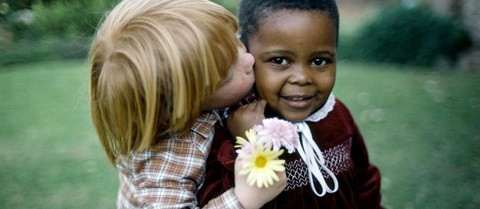 Experts from South Africa and Brazil speak: media and information literacy against racial discrimination 2020-07-10 Following UNESCO’s launch of the interview series, Media and Information Literacy (MIL) Experts Speak, two other MIL experts from South Africa and Brazil share their personal narratives about how, by becoming media and information literate, people can resist all forms of stereotypes that lead to discrimination and hate. The UNESCO’s work in Communication and Information promotes a diversity of voices in all types of information, whether in books, digital platforms, or in the media. One way through which we do this is to promote MIL as an integrated set of information, digital, and media critical thinking competences. The UNESCO Media and Information Literacy for Teachers provides modules that can help people to understand the power of media representation and how to analyse messages in online or offline spaces. How we are seen determines in part how we are treated: how we treat others is based on how we see them; such seeing comes from representation.-- Richard Dyer, "The Matter of Images" Journey with us into the minds of the two MIL experts/practitioners below. If you are inspired, then share your experiences and positive insights for human solidarity and peace in your preferred space online. As you share your insights about change through unity and mutual respect, put a note referencing this MIL Experts Speak series. Interview 1: Rachel Fischer, Information Ethicist, Co-Chair of the International Centre for Information Ethics UNESCO: Ms Fischer, you are a MIL expert/practitioner. How do you think MIL is relevant to tackle racial discrimination? Rachel Fischer: I view my experience co-rooted in philosophy, MIL and Information Ethics. If we consider ethics, they seek to guide our decision-making towards doing good. Much of our actions and decisions depend on being well-informed: if we have manipulated, inaccurate or insufficient information, this will impact our understanding and by extension our behaviour. Towards your question, MIL is one of the central elements in tackling racial discrimination. It equips one with the skills to seek, evaluate and impart accurate information. One is less likely to be discriminatory if she/he is completely informed about the equality of all human beings and our responsibility to treat people with fairness. UNESCO: Have you had a personal experience of racial discrimination? Rachel Fischer: Being a South African means your psyche is steeped in racial awareness. Whether you deem yourself racist or not, you cannot avoid racial awareness. I firmly believe we as a nation are extremely sensitive towards racial discrimination, and yes, I have unfortunately seen and experienced racial discrimination in many communities. UNESCO: How did you respond to the experience? Rachel Fischer: There are several ways in which this, and all other forms of discrimination manifests: you see it in comments on Facebook posts, during insensitive conversations, in job selection policies as well as in public discourse, such as what is portrayed in media. What this shows is that there tends to be a mix of experiences of which some are anonymous, some private or some supported by official policy. It is a subversive type of discrimination which is not particularly easy to pinpoint, but instead systematically erodes the social fabric and human dignity. When able, I voice my disagreement and remove myself from such conversations. The worst one can do is to stand by and do/say nothing. It is our moral imperative to act against racial discrimination. UNESCO: How would you characterize incidents of racial discrimination? Rachel Fischer: In many South African communities, racial awareness is etched in peoples' identity. Political, economic and social discourses are frequently influenced by racial awareness: whether to be more inclusive or used as a tool for dissent. The jobs people have (or don’t have when reflecting on our high unemployment figures), the suburbs they live in, the schools they go to, the food they eat and the places they shop, are all influenced by race historically and presently. Racial discrimination is considered by many a constant, either in the way it was practiced or reacted to, due to our history. UNESCO: Do you know about how MIL is being applied in your country to address these challenges? Rachel Fischer: There are many initiatives that seek to promote media, digital and information literacies. Poverty and unemployment are two of our biggest challenges in South Africa. When our citizens become better equipped with MIL skills they are better positioned to learn, work and contribute to society in an informed manner. Education and ICT skills are central considerations for these challenges to be addressed. Service providers, government departments and civil society organisations should be better equipped to deliver sustainable and high impact interventions over the longer term. Interview 2: Felipe Chibás Ortiz, Associate Professor and Researcher, School of Communications and Arts, University of São Paulo UNESCO: Mr Ortiz, you are a MIL expert/practitioner. How do you think MIL is relevant to tackle racial discrimination? Felipe Chibás Ortiz: The MIL approach teaches how to develop critical thinking fundamentally in young people and adults. MIL methodology teaches them to carefully analyze messages and reality in a more objective way, without prejudices or cultural barriers such as those related to ethnicity, race, religion, different cultural identities, gender, and migration. MIL framework also helps, through education, to recognize and unmask fake news, deep fakes and post-truths that can be conveyed in face-to-face communication, in traditional media or on the Internet, about black and indigenous people, women and other less favored groups. UNESCO: Have you had a personal experience of racial discrimination? Felipe Chibás Ortiz: Yes, I have had many. Racism is institutional and not something that involves only the person who practices it. Sometimes it is subtle and sometimes it is open. Because of my work as a university professor, I don't deal directly with racist policemen. However, even in the academic and business world, I deal with bullying and racism. Black people know that we have to work double to be minimally recognized. Awards, recognition and positions that I deserved for my work were denied or passed over in some of the institutions I worked for. UNESCO: How did you respond to the experience? Felipe Chibás Ortiz: I often repulse bullying on the spot. I also teach the subject to my students and write texts, short stories and poems that I have already published in books or posted on the Internet, to educate those who do not know about the phenomenon or to advocate against racial discrimination. Here is a poem I wrote: Cities without Lungs(from Racism to Love) The light of doubtlight a boiling soup of words.We are lost on a clown night.A Mandela poemwritten in blood for 28 yearscan answer you point blankin hands without nailsthat hold the minutes, hours, years or decades parallelof the body that imprisons the black cougar.We are trying to breathein a city without lungs.They imploded crystalsin a neighborhood of never.A scream can inspire a filmand a video change the story.My favorite religion is your song,but that mirage was bornwhen you said "I have a dream"Is it still an impossible dream?We are trying to breathein a city without lungs.The mirror of that pandemic is terrible.But change can come,In and through us all,With love!Let’s LOVE! UNESCO: How would you characterize incidents of racial discrimination? Felipe Chibás Ortiz: Unfortunately, it is something daily because it is very ingrained in my society. Thus, black people suffer from more police violence, lower wages, worse jobs, greater difficulties to be accepted into a job and to be promoted or recognized, less access to education and the internet, bullying and disrespect in the streets, etc., and are the largest imprisoned population. Life expectancy is up to eight years less in the poorest neighborhoods, where a large part of the black population lives. UNESCO: Do you know about how MIL is being applied in your country to address these challenges? Felipe Chibás Ortiz: In Brazil we have courses offered by NGOs that teach about this. At the University of São Paulo, for example, there is the Black Consciousness nucleus. In my study group, Toth-CRIARCOM, we approach the topic with the MIL framework emphasizing the focus of the 20 Cultural Barriers to Communication and teach professors, students, the corporate world and startups to build more inclusive ecosystems. --------------------------1. This was recently declared by Mr Bruno Covas, on 3 June this year, in a press conference offered because of COVID-19 and is quoted on the website R7. DisclaimerThe ideas and opinions expressed in these interviews are those of the interviewee and do not necessarily reflect the views of UNESCO. The designations used in this publication and the presentation of the data contained therein do not imply the expression of any opinion on the part of UNESCO concerning the legal status of countries, territories, cities or areas or their authorities, or concerning the layout of their borders or boundaries. The interviews were conducted by Alton Grizzle, UNESCO Programme Specialist in Media and Information Literacy. URL:https://en.unesco.org/news/experts-south-africa-and-brazil-speak-media-and-information-literacy-against-racial
  Universities as sisters of the search for truth: A media and information literacy, cultural dialogue and diversity response to COVID-19 2020-07-10 Is Media and Information Literacy the tool for information verification, dialogue, and diversity around tackling the COVID-19 pandemic and beyond? So do the United Nations Educational, Scientific and Cultural Organization (UNESCO), the United Nations Alliance of Civilizations, and partner universities around the world think. Universities as sisters of thinking and dialogue Universities have historically been spaces of diverse knowledge creation. They stimulate freedom to think, to reason, to generate, to discuss, share and test new ideas and hypotheses. They are to be the bedrock of social development driven by research and evidence. Sadly, the present ‘disinfodemic’ connected to the coronavirus crisis threatens to erode the trust in established institutions such as universities and the related tried and proven facts that they generate through empirical research. The next generation of global thinkers and shapers of the development agenda will emanate from universities and other entrepreneurial enterprises as well as innovative learning spaces. Developmental actions should not only seek to empower people to protect their minds but to help the general public to understand the importance of research and evidence that support facts. Effects of the COVID-19 pandemic The COVID-19 pandemic has interrupted normal social interaction because of the necessity for social distancing. If left unchecked, it will also compromise global dialogue and cultural diversity. UNESCO and its partners are implementing measures to promote human solidarity, cultural diversity, and constructive dialogue. These are rooted in critical information verification, critical social discourses in the media and online environments, and purposeful engagement with technology. A key strategy is the promotion of media and information literacy in universities and other learning spaces. This is the "raison d’être" of the UNESCO-UNAOC UNITWIN Cooperation Programme on Media and Information Literacy and Intercultural Dialogue (MILID University Network). As a response to the coronavirus crisis, the UNESCO-UNAOC MILID University Network will share its experience in research, dialogue, and diversity to unite people under the cause of discerning factual information from destructive discourses to promote human solidarity, and the fight against racial and other forms of discrimination through media and information literacy. Key actions and ways to engage in the MILD COVID—19 Response Click on this link to: Access and share MIL, dialogue and cultural diversity related tools and material on the Resource Portal Participate in the Series of webinars on MIL, dialogue, cultural diversity, and global citizenship Participant in the Online Summer School Global Network Contribute TED Talks style videos on the topic to let your voice be heard Contribute to the crowdsourcing and dissemination of videos Share and pursue various Massively Open Online Courses on the topics For more information about how to partner with UNESCO on media and information literacy please contact, Alton Grizzle, a.grizzle@unesco.org(link sends e-mail). To contact and explore cooperation with member universities of the UNESCO-UNAOC MILID University Network please see link here. The UNESCO-UNAOC MILID University Network was launched in 2011. It is part of the UNESCO UNITWIN programme which stimulate international cooperation and networking among universities for collaborative, intercultural, and diverse knowledge development and sharing around various development topics and issues. URL:https://en.unesco.org/news/universities-sisters-search-truth-media-and-information-literacy-cultural-dialogue-and