
News
Catch up on what’s happening in the world of global citizenship education.
1,668 results found
 [APCEIU Insights] Political Economy of COVID-19 and Global Cooperation 2020-07-28 KIM Chang-yupProfessor, Graduate School of Public Health, Seoul National University &Director, People's Health Institute Infectious diseases such as COVID-19 are biological, health, and medical incidents, and at the same time, they are social, political, and economic phenomena. Science for prevention and treatment is closely related to who should be prioritised in the distribution of health resources, e.g., ventilators and vaccines. A country's decision to ban the entry of foreigners is bound to consider the international political economy and quarantine effects. Even individual responses of fear and anxiety are not irrelevant to the socioeconomic system or ideologies such as racism, colonialism, and neo-liberalism at the national and global levels. Such non-pharmaceutical measures as “social distancing” are formulated in social, political, economic, and cultural contexts. An infectious disease’s political economy implicates more than just a political or economic factor that affects or is affected by the disease. For instance, inequality in health and access to health and medical care services is only one aspect of its political economy. From the outbreak of an infectious disease to the epidemic, spread, responses, consequences, and impacts, the various phenomena and incidents surrounding infectious diseases we encounter are the overall outcomes emerged from the deep structures involving pathogens, humans, non-humans, and society. The political economy can be an ontological and epistemological pursuit to develop a comprehensive explanation of the emergence process. Frequent Outbreaks of Emerging Infectious Diseases and Zoonoses COVID-19 is an emerging infectious disease and zoonosis. Here, the word “emerging” means that a pathogen, which used to be of little harm to humans, has caused a new infectious disease and attention should be paid to the reasons for its “emergence” rather than “newness.” It is because something has changed, and new factors are in play, for what was previously harmless to humans has become a new cause of disease. A new infectious disease would break out due to the changes in the conditions surrounding the infection sources (viruses or bacteria), human susceptibility, or the relations between the infection sources and humans. Going through the Severe Acute Respiratory Syndrome (SARS), the Middle East Respiratory Syndrome (MERS), and COVID-19, we have become familiar with the term zoonosis. It refers to an infectious disease whose pathogen is transmitted from its natural host of animals to humans which then causes infection. In addition, a zoonosis is not necessarily an emerging disease. For a long time, many human infectious diseases have been of this category, and such diseases as smallpox and tuberculosis, which we all know well, are zoonoses by nature. Although they have received renewed attention recently due to the outbreaks of SARS, MERS, and avian flu, zoonoses are frequent in incidence, taking over 60 percent of human infections. Why have zoonoses - which have coexisted with humanity for so long - increased, especially in the form of emerging diseases? We cannot explain it with one or two reasons, but the most convincing one, “upstream” cause particularly, seems to be the surge of contact between humans and animals. For example, indiscriminate deforestation and arable land development boost close contact between animals and humans, something that has not existed before. Consequently, pathogens in animals are transmitted to humans with new risks. The Ebola virus, which used to live in wild animals that inhabit dense forests, gets nearer to humans as forests disappear and mutates itself in a new environment before encountering humans. A study of 27 regions in West Africa where Ebola broke out shows a higher probability of epidemics in the recently deforested areas, supporting the political economy of outbreaks of emerging infectious diseases. The Nipah virus epidemic in Malaysia in 1998-1999, which cost more than 100 human lives, resulted directly from the destruction of forests and the expansion of pig farms. Eliminating forests, expanding farmlands, and building livestock factories in forests cannot be explained solely by individual economic actors' market behaviours. A global politico-economic structure exists in the deep of those reality changes. Whether the target or domain concerns farming, forestry, raising livestock, or whatever, it is essentially a direct consequence of the unequal international division of production and labour established on a global scale. Robert G. Wallace and Rodrick Wallace, who studied the “systemic” nature of Ebola, even call this emerging infectious disease regime as “neoliberal Ebola.” Epidemic and Spread of Infectious Diseases The current capitalist socioeconomic system provides optimal conditions for a small-scale endemic to spread and transform into a global pandemic. Mobility and connectedness, two factors that encompass the entire planet, are particularly notable. While the Influenza A (H1N1) pandemic in 2009 took only nine days to spread across the Pacific, it was several months faster than expected, no matter how it was calculated at the time. The same goes for intra-country movements. When the COVID-19 outbreak began in China, domestic air travel spiked up more than ten times, compared to the SARS outbreak. Now that no country can surpass these conditions, once incorporated into the globalized economic system, such preventive measures as entry bans and lockdowns are impossible and of no use. This “impossibility” is also the case with the issue of prohibiting the entry into South Korea of those traveling via China, which caused controversy in Korea. If the research results are correct, that there were already COVID-19 cases in several European countries before China reported the outbreak of the disease to the World Health Organization (WHO), blocking cross-border movements would hardly mean more than just lessening the quarantine burden. Furthermore, implementing the policy is next to impossible. Inbound Koreans coming from China hovered at 13,000 per day before the epidemic and close to 3,000 in early February 2020, even after the spread. Most of them are economic actors who have to travel between the two countries for essential business reasons. Is it possible to ban traveling or to enforce voluntary or involuntary separation of so many individuals once admitted to traveling? It is not the science of quarantine, but more of politics, mainly domestic politics, to demonstrate wills and capacity of the nation-states to prevent the spread of infectious diseases. Urbanization is another critical factor in promoting the diffusion and epidemic of infectious diseases. An exemplary case is the city of Wuhan, China, where COVID-19 emerged for the first time and subsequently spread to other places. The urbanized Wuhan does not merely mean the planar urban feature of a dense concentration of people. It is an industrial production base and regional transportation and educational centre, with various characteristics that makeup a globalized city. It was not a coincidence that over five million Wuhan dwellers left for other areas before its blockade in time for the Chinese New Year holidays, which was a critical contributor to the spread and epidemic of the disease. Numerous migrant workers have scattered to other regions and countries, becoming the sources of infection everywhere. Fully integrated into China's socioeconomic system and further, the global capitalist system, the megacity, has the optimal conditions for the spread of infection worldwide. The political economy of the epidemic and the spread of infectious diseases is integrated into quarantine means and technologies. To take an example, the so-called “social distancing” is one of the powerful ways to contain cluster infections in local communities, but its applicability and extent vary depending on the society's socioeconomic circumstances. In a typical capitalist market economy, it is relatively easy to adopt social distancing measures for schools, religious organizations, and leisure activities. However, production activities and workers engaged in them would find it quite challenging to practice social distancing at the individual level. It is because the issue of “power” intervenes in terms of who is to bear the cost of halting labour, in addition to the sustainability of economic activities. A large number of workers in the United States cannot afford to take time off from work, because they are hired part-time or have no paid leave; therefore, social distancing, that is, staying away from work, can hardly be a viable quarantine measure for them. System Crisis and Transformation Possibility From the outbreak to the epidemic and spread; responses; consequences; and long- and short-term impacts; the COVID-19 pandemic has revealed our socioeconomic system as its condition and basis. The manifestation will continue to unravel in the coming months and years. Border closure, shortage of hospital beds and equipment, racial inequality, and the impossibility of practicing social distancing are only a few facets of the related phenomena. Most countries have responded to the pandemic mainly as nation-states, while shutting down borders and prohibiting transborder movements. It is fully reflective of the vulnerability of global health governance. Most countries, including South Korea, have attempted predictions on what a “post-pandemic” era will be like and speculated on the “new normal.” It illustrates that they are well aware of the “systemic impossibility,” i.e., that the current system is too inadequate to respond effectively to the outbreaks of infectious diseases. For instance, the quarantine authorities' “recommendation” for workers to take sick leave when they are ill is a roundabout technical statement on the need for a new labour system. In a similar context, countries that have refrained from spending on health and medical care under a fiscal austerity policy vow belatedly to strengthen or restore the “publicness” of healthcare services. From the perspective of power dynamics, the necessity for systemic transformation does not automatically turn around as a possibility. It is questionable whether we could consider the current situation with the system becoming unstable due to the impact of an external factor (a pandemic) as a “crisis.” But we should not forget that the possibility of sustaining or transforming the existing system is almost entirely the outcome of power relations. If the current arrangement could be regarded as a “morbid state” of crisis in Antonio Gramsci’s notion, existing power groups will continuously struggle to go back to the “old normal.” Unless alternative powers manage to formulate a new equilibrium, “resilience” would probably end up only meaning regression to the old normal. The same is true for the microsystem. Claiming that “K-quarantine” has already made a success, the Korean government (state power) defines biotechnologies, ICT, and public-private partnerships as primary success factors. It perfectly matches the politico-economic interests of the new growth engine policy that has been put forth in full swing since the 2000s and corresponds to the capital accumulation model pursued by Korean capitalism. In comparison, the power to promote an alternative system, including strengthened public healthcare, seems unsure in its magnitude and foundation. Although forecasts say that vaccines and treatments will be the key to fundamentally resolving the COVID-19 crisis, without changing the old system, the solution is very likely to benefit only a limited number of groups. The political and economic interests concerning the development of vaccines and treatments are already well-known, thus do not need a long and detailed explanation. Like other vaccines and the treatments for neglected diseases, vaccines and treatments for emerging infectious diseases such as COVID-19 often have a small market and low profitability. As the pandemic subsides and enters a stable phase, the momentum for their development will weaken inevitably. Even if vaccines are developed soon as everyone hopes, the situation is unlikely to get much better. The firm structure and mechanisms of the between- and within-country inequalities will continue to play on in the distribution of such limited resources as vaccines. Nation-state-centered responses to the pandemic are highly likely to reveal their contradictions and implausibility more apparently. Not only can the strictest travel ban stop the spread of infection, but even if it is possible, a country’s social and economic isolation can hardly last beyond a specified period. Moreover, it should not be overlooked that the epidemic of an infectious disease in a particular country affects others indirectly in the current global economic system with production and consumption connected with all countries in the world. The coronavirus pandemic, literally, will not end until it finally ends in every country. That is why global and regional cooperation and solidarity are acutely called for even now. The question is, though, how to construct a new collaboration system now that the existing global governance has revealed its total incompetence and weaknesses. It seems somewhat too early to predict, but at least one thing is clear, the principles of a new global system must be based on the lessons we have learned from the COVID-19 pandemic and our responses. Perhaps the new relation system should go beyond the international relations composed of nation-states and be anchored as a new global governance based mainly on civic solidarity and cooperation of greater breadth, depth, and strength. In my view, the core principle should be democratic publicness that all global citizens should put into action. URL:(No.5) Political Economy of COVID-19 and Global Cooperation > EIU in the World - APCEIU (unescoapceiu.org)
 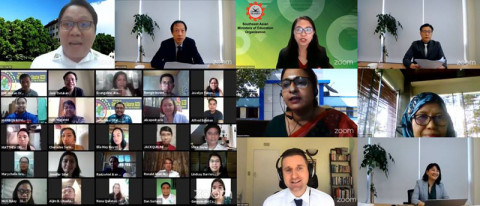 PNU/APCEIU Webinar Held amid Huge Attention: With More than 5,000 Participants around the Globe 2020-07-28 On 17 July 2020, the Webinar entitled “Reflecting on Global Citizenship Education in the time of the pandemic” was co-organized by the Philippine Normal University(PNU) and APCEIU along with the Southeast Asian Ministers of Education Organization(SEAMEO) Secretariat, and the Philippine National Commission for UNESCO. This webinar provided an opportunity to rethink the roles and challenges of GCED under the turbulent conditions of the COVID-19 crisis and delve into its increasing demand from the world. Further discussions went on to transform these challenges into opportunities for reconstructing a more effective up-to-date education system while highlighting the contextualization of GCED. Commenced by the welcome remarks from the co-organizers, the webinar invited Prof. Soon-Yong Pak from Yonsei University as the keynote speaker. In the plenary session, four GCED experts from India, Malaysia, the Philippines, and the United States gave presentations on how to integrate GCED in the curriculum and school practices in the post-COVID-19 scenario. The open forum session followed, inviting the online audience to participate through the Q&As via Zoom and Facebook live streaming page. The whole event made a significant appeal to the global audience by reaching more than five thousand participants with the total views of 22,000 on the airing day of the webinar. This event unraveled the continuing importance and the increasing demand for GCED as one of the key education initiatives to tackle the issues around various conflicts emerging in the pandemic era. URL:PNU/APCEIU Webinar Held amid Huge Attention: With More than 5,000 Participants around the Globe > APCEIU News - APCEIU (unescoapceiu.org)
  Six Ways COVID-19 Will Shape the Future of Education 2020-07-27 Most of us have been living with closed schools and some version of lockdown for four months now. For all the reimagining of education in the 21st century, nobody predicted that the greatest disruption of all would come from a virus. As education policymakers all over the world grapple with distance learning provision and safe school reopening, they will no doubt also be thinking about what the pandemic means for education in the longer term. We examine six ways COVID-19 is likely to shape the future of education. 1. There’s going to be a lot less money David Evans, Justin Sandefur, Liesbet Steer, and I (Susannah) discussed the impact on education budgets in a previous blog post. In April, the International Monetary Fund updated its global growth projections from 3.3 percent to -3.0 percent (negative). Slower or negative growth means that education budgets will not rise in absolute terms at the rate the Education Commission says is needed to reach the Sustainable Development Goal for education. And, in the wake of a health crisis, education budgets as a share of national spending are also likely to be squeezed. To see what the impact of past economic shocks has been on education budgets, we analysed education spending after the global financial crisis. In lower-middle income countries (LMICs) we observe a large dip in education spending in the immediate aftermath of the crisis that did not recover for several years (figure 1). Global aid to education is unlikely to fill the gap. It has remained at roughly the same level since 2009, while dropping as a share of total aid. As high-income countries fall into recession, aid is likely to be cut and education is unlikely to be prioritised. Trade-offs are not easy but seem inevitable, both between sectors and within the education sector. Governments may have to choose between some of their most ambitious education initiatives—from offering free universal secondary education to expanding preschool services—and they should start considering what compromises they might need to make, now. The global education aid architecture can help by making sure that education stays at the center of policy discussions so that essential investments and recent gains in education don’t fall by the wayside. 2. Millions of children will not return to school Despite huge gains in enrolment during the last two decades, 268 million children were already out of school when the pandemic struck. When schools reopen, millions more may not make it back. Children whose households have suffered economic shocks and adolescent girls who are at increased risk of pregnancy or early marriage are particularly vulnerable. A report by Save the Children released earlier this month analysed current out-of-school rates, broken down by income group, and learning outcomes. Their analysis suggests that over 9 million children are at risk of dropping out of school, with Niger, Mali, and Chad topping the list of countries where children are most vulnerable. The World Bank examined current out-of-school rates by economic quintile alongside macro projections of economic contraction in 2020 and predicted that more than seven million children may not return to school. Estimates suggest that more than half of all refugee girls will not return when schools open. We plotted the percentage of children currently out of school against GDP per capita estimates for 2020 (figure 2) to achieve our own crude estimate of which countries might be most affected. Like Save the Children, we find that children in Niger, Mali and Chad are at high risk, as are children in Nigeria and Pakistan where many millions were out of school before the pandemic struck. Figure 2. Countries with a high share of out-of-school children pre-COVID-19 and whose economic growth will be most negatively affected are likely to see increased numbers of children out of school Source: UIS data, IMF forecasts, WIDE database & UNICEF country reports Governments need to be planning now to implement measures to reach the children most at risk of dropping out. We produced an evidence kit for policymakers that summarizes the available rigorous evidence related to reducing dropout after a crisis, with two sets of recommendations: 1) combine community participation and large-scale direct communication campaigns to parents, and consider increasing attendance options to accommodate all children, including those with highest risk of dropping out; and 2) provide financial or in-kind support, such as school feeding, to help families overcome the costs of attending school. 3. Learning loss will exacerbate inequality In some countries, for example Liberia and Sierra Leone, government-led distance learning programmes were launched within a few days of schools closing. Other countries took much longer—Ghana did not announce its programme until June 15 (figures 3a and 3b). Substantial progress has been made and some countries have expanded their standard programming to include multiple languages or accessibility features for students with disabilities. This expansion provides a new baseline for countries to build on their distance learning offerings to supplement regular instruction, engage difficult-to-reach children and families, and to be better prepared for future crises and school closures. Figure 3a. Government-led distance learning offerings (May 2020) “Online + other” indicates that distance learning has been made available online and through at least one additional modality including radio, television, or other home-based learning materials. Figure 3b. Government-led distance learning offerings (July 2020) However, children in many countries had no access to any kind of education for months. Prior to the pandemic, we were already experiencing a learning crisis that is likely to be made more severe by prolonged school closures. Learning loss, however, will not impact all students in the same way. A meta-analysis of learning decay during summer breaks shows a substantial divergence by socioeconomic status. A recent study in the US finds a socioeconomic gap in Google searches for home-based learning resources following COVID-related school closures indicating that wealthier households are seeking distance learning opportunities at higher rates than poorer households and suggests that learning loss during school closures is likely to be even more severe and unequal than previously observed summer learning losses. Many surveys across different contexts, including a CGD survey in Senegal, have found socioeconomic gaps in access to distance learning, parental support for learning at home, and time spent studying while schools are closed. Figure 3c. Learning loss by socioeconomic status Source: Busso and Munoz, IADB Addressing learning loss and implementing large-scale catch-up programs should be a top priority for governments. Identifying which children are vulnerable to disproportionate learning loss is the first step and can take place even while schools are closed through phone-based assessments. Without targeted, evidenced interventions, the gap between rich and poor children—which will have widened considerably during the months of school closure—will continue to grow. In our evidence kit for policymakers, we summarise the evidence related to recovering learning loss and recommend three actions: 1) engage students in accelerated learning interventions to reverse crisis-related learning loss and strengthen future learning trends; 2) engage teachers in training and coaching so they can help students catch up, and ensure that school environments are safe and protected; and 3) engage parents by capitalizing on their current involvement in remote learning to improve future outcomes. 4. Edtech is not going to be the great equalizer Despite high hopes that edtech would be the answer to learning continuity during the crisis, there is not yet any evidence that tech can replace teachers or reduce inequality. Tech companies and ministries of education across the globe quickly launched new apps and free trials to keep kids learning. Yet as short-term closures have stretched across multiple months, edtech has not emerged as a substitute—or in some cases even as a viable temporary stand in—for teachers and schools. Despite rapid expansion during the crisis, edtech firms still have very low usage. Our colleague Lee Crawfurd finds that usage of edtech in Africa expanded by nearly 100 percent in the months following initial school closures—with most watching educational television programs—but overall only about 1 million out of the 500 million children on the continent are using edtech. This isn’t surprising. Edtech relies on technologies that many families around the world do not have access to. In low- and lower-middle income countries, only 1 in 5 households have access to the internet and 1 in 2 have access to radio or television. Even in the US, stark digital divides along lines of income, race, and geography characterized distance learning experiences, particularly for low-income and rural families. Figure 4. Household access to internet, radio, TV, and mobile phone Source: Data for internet access from globaldatalab.org, for radio, TV, and mobile, from statcompiler.com Access to these technologies will grow, but slowly. In the short-term, edtech is not able to replace traditional modes of learning. Even if coverage increases, there is a limited body of evidence on the effectiveness of edtech (something colleagues at the EdTech Hub are working to address). We’re also playing our part, through a randomised evaluation of the national distance learning program in Sierra Leone, supplemented by phone tutorials from teachers. In the meantime, donors should be cautious. Investments in edtech products are likely to increase learning inequalities and further disadvantage the poorest children. 5. High-stakes exams are unfair this year and every year One of the trickiest questions for policymakers during COVID-19 is what to do about exams. While some countries have cancelled or postponed them, others are pressing on regardless. At least 20 countries, including Sierra Leone, South Africa, and Senegal have prioritised the return of their exam classes, in some cases giving children just a few weeks of schooling before they are required to sit a high stakes exam that—in many ways—determines their futures. The COVID-19 shutdown is drawing attention to the role of high-stakes exams and triggering discussion about whether exams are a fair way of filtering children with very different early-life experiences into the next phase of education. Where there is a deficit of secondary school places, end-of-primary exams act as a filter into secondary school. While this is often perceived as a meritocratic way to allocate limited resources, it does not consider the advantages that rich children have enjoyed: better primary schools, private tuition, more educated parents, and better nutrition. Policymakers, including the Ministry of Education in Kenya, are right to conclude that going ahead with exams this year is unfair. But, while these school closures are exceptional, wealth-based inequality disadvantages poor children every year. Our colleague’s analysis of PISA 2012 data (figure 5) shows the correlation between parent wealth and test scores in richer countries, (though the strength of the relationship between wealth and scores varies a lot across countries). High stakes exams reinforce wealth inequalities and are one of the factors preventing education being the societal equaliser it should be. Governments should consider alternative and fairer policies to manage transitions from one phase of education to the next. Watch out for much more from our colleague Jack Rossiter on this topic. 6. Education markets will be disrupted, putting strain on the public sector Proprietors of private schools have had a tough time during the closure period. Most will have generated no or vastly reduced fee revenue. Many will have fired teachers and relinquished their rented premises. On the demand side, their enrolment may suffer once they do reopen, since millions of families have suffered economic shocks and will not be able to pay fees. In normal times, the education market exists in some sort of equilibrium, where pupils are allocated to a diverse range of public and private schools and parents’ choices describe, among other things, the level of inequality within and between schools driven by sorting of richer and poorer households. In areas where the share of private schools is high, the COVID-19 pandemic is likely to rip through this existing education market equilibrium. Mass shifts to public schools will strain the government system, particularly in urban areas where investment in new public schools has not kept up with population growth. Transport and cost barriers will mean some children cannot attend school at all. While parental demand for education is unlikely to change, and so in the long-run the sector may return to its previous market share, the short- and medium-term impacts could be catastrophic for children and for the millions of female teachers who are employed in the low-cost private school sector. In Pakistan, where more than 30 percent of children are enrolled in private primary schools, the All Pakistan Private Schools Association is demanding a rescue package to support 207,000 schools, 1.5 million teachers, and 25 million children. Private schools in other countries will probably follow suit. Governments should rapidly gather data on the possible impacts of private school closures on the education sector and consider what policy response would be most suitable for their context. Thanks to CGD education program colleagues who are working on these topics and contributed in many ways to this blog post. Author: Shelby Carvalho and Susannah Hares URL:https://www.cgdev.org/blog/six-ways-covid-19-will-shape-future-education
 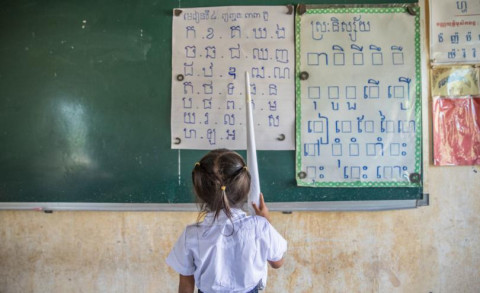 Girls in Asia-Pacific face increasing risk of violence, abuse and exploitation following COVID-19 lockdown measures 2020-07-26 New report from Save the Children and Plan International Violence against children threatens to escalate dramatically because of the COVID-19 pandemic, with girls disproportionately affected. For many girls, this and the additional risks of child or forced marriage could become more of a threat than the virus itself. Nearly 10 million children – mostly girls – may never return to school following COVID-19 lockdowns. According to the UN, an extra an extra 15 million gender-based violence cases are expected for every three months the lockdown continues globally. The UN also estimates that COVID-19 could result in an additional 13 million child marriages worldwide over the next ten years. In a joint report by Save the Children and Plan International released today, ‘Because We Matter: Addressing COVID-19 And Violence Against Girls in Asia-Pacific,’ the two leading children’s aid agencies lay out the alarming extent of the problem in the region, and what must be done to address it. Bhagyashri Dengle, Asia-Pacific Regional Director, Plan International, said: “While children in Asia have been spared the worst direct health effects of COVID-19, it has exposed millions of girls to the risk of violence, abuse and exploitation during lockdowns and periods of movement restrictions. Girls already living in violent family situations are particularly vulnerable as they may be confined at home with their abuser. At the same time, access to health and protection services have been disrupted. There is also evidence that sexual abuse of girls has increased, both offline and online, during the pandemic.” Hassan Noor, Asia Regional Director, Save the Children International, said: “Worldwide school closures have affected more than 1.5 billion students – more than half of whom are in Asia-Pacific. Such closures, combined with financial insecurities means girls are more likely to either be without a caregiver, or living in homes that have come under sudden and intense stress, exposing them to increased risk of violence or abuse. Many may never return to school once they re-open. This pandemic could undo much of the progress made in reducing levels of child marriage across Asia-Pacific in recent decades.”“Regional governments must do everything they can to protect the rights of girls during this crisis, including by supporting vital social services, and helping the most marginalised families with financial aid so they can get through the hardship caused by the pandemic.” Huu is an 18-year-old girl from Vietnam. She told us: “I know two girls who have just gotten married during this pandemic. I truly think that education offers us a chance to a brighter future. However, due to the current pandemic, many girls are giving up their learning opportunities for marriage to alleviate the new economic hardship.” Phulan is an 18-year-old girl from Nepal. She told us: “When I learned that my parents wanted to marry me off, I knew I couldn’t let it happen. If I did, what kind of message would I be sending to other girls? With community support, I told my parents I’d go to the police if they didn’t give up. I am now continuing my studies.”Read the full reportRead the full report (GCED Clearinghouse) To support Save the Children’s global COVID-19 emergency appeal, click here. Media contactsWe have spokespeople available in New Delhi, Dhaka, Bangkok and Singapore. You can reach out to: Save the Children Bhanu.Bhatnagar@savethechildren.org (London)Olof.Blomqvist@savethechildren.org (Bangkok) Plan InternationalNattasuda.Anusonadisai@plan-international.org (Bangkok)Krista.Zimmerman@plan-international.org (Bangkok) URL:https://www.savethechildren.net/news/girls-asia-pacific-face-increasing-risk-violence-abuse-and-exploitation-following-covid-19
  Design Thinking and Global Citizenship Education 2020-07-26 IDEA, our Bridge 47 project partner in Ireland, has run two train-the-trainer courses on Design Thinking for GCE practitioners. Here is a blog written by a participant who attended both trainings, sharing how design thinking has helped her GCE work. Train the Trainer Course on Design Thinking for Solving Global Challenges, June 2019 June 12th 2019, a day like any other. Sitting at my desk in the head office preparing for the teacher training event we have coming up. Another email hits my inbox, ‘Two creative training events’ reads the subject. Oh no, I really can’t get any more creative, I’m too busy! But there it is, a train the trainer two-day workshop on ‘Design Thinking for Solving Global Challenges’ for GCE practitioners in bright orange, my favourite colour! It looks interesting… Design Thinking - I was pushed out of my comfort zone to say the least. What grabbed me most about this approach is that we investigated problems in a way I’ve never done before. I’m a solution kind of person. Give me a problem and within two minutes I’ll tell you what to do to solve it, I’m the person who can fix everything… or so I thought. Well, how wrong was I! With Design Thinking you start by thoroughly investigating what the problem is. On day one we were told to diverge…what does that mean? Turns out it means finding out what people think of what you perceive as a problem. Is it a problem? We had to explore what people were saying about the subject of plastic waste and if they even perceived is as problematic – to get as much information as possible in a short space of time. So, we were given half an hour to go out onto the street and approach random people. We had to really dive in, speak to as many people as possible, put our ‘problem’ to them and listen! This part of the process requires active listening and empathy with what people feel, think, and say to ‘Fall in love with the problem, not the solution’ After our interview sessions we shared what we had learnt and decided on the problem, we converged! We then had to build a persona and find ways to help this person reduce their plastic consumption. As the process is so high-paced, you hardly get a minute to think. It means that people throw out all sorts of ideas, even if they sound a little bit ‘out there’. It means that you have no choice but to be alright with failure. One of the high-paced activities is writing down an A-Z of solutions with your team as quickly as possible. Of course, not all the ideas will make sense, and some will even cause a few giggles, but that is exactly what it’s all about, having fun during the process. If you’re happy and excited your mind opens and innovation just comes naturally. It was such a fun, high-paced way of working and the solutions that came about on the second day of the process were so innovative that both myself and my colleague Joanne felt that we were going to have to pass on what we had learnt. We began by training our own staff in the process and since then we have all been using some or all the techniques we learnt in our student workshops. During one of our secondary school workshops we had one team of students, who had only met that day, pitch an idea about tackling environmental challenge of disposable feminine hygiene products by replacing them with reusable ones. This idea ended up becoming a reality in one of the schools that attended on the day. We firmly believe it was the Design Thinking facilitation techniques we learnt during the Bridge 47 training that helped these students to be so innovative. ‘Global Goals Jam’ Train the Trainer Online Course on Design Thinking, June 2020 Again, this year I attended Bridge 47’s ‘Global Goals Jam’ training designed for GCE facilitators as a follow up to last year’s Design Thinking training. This time the training was delivered online as four sessions throughout the month of June. Surprisingly, the online format didn’t stop me from enjoying learning about the Design Thinking approaches and process, and working on developing an idea and designing a Global Goals-related local project. (Image credit: Amsterdam University of Applied Sciences Digital Society School) One of the methods I enjoyed a lot was to go out on a ‘photo walk’. Simply looking at and paying attention to my surroundings opened my mind and helped me come up with creative ideas translating big global goals into smaller local design steps. We used this method in our Green-Schools online teacher training where we asked teachers, working in groups, to develop a local project to raise awareness about the importance of Goal 4 on Quality Education. While enjoying the new brainstorming technique, teachers came up with simple but powerful project ideas which varied from learning to grow food to become self-sufficient, to addressing global waste problems by educating local communities on how to correctly reduce, reuse and recycle materials. I think that Design Thinking can and will be a very large part of how we tackle global environmental challenges. Determining the problem is such a big part of the process, and the fun that is involved in this high-paced approach gives space to all the, so called, crazy ideas to come out. As a result, this way of working enables us to actually hear our young people and listen to their inventive ways of looking at things. As I once told a first class boy - who was laughed at by everyone else in the class when he said: “we should create a robot squirrel who would chase off the invasive grey squirrel allowing the red squirrel to make a comeback” - that is exactly the kind of innovative thinking we need! Well done you! About the Author:Birgit O'Driscoll is a Global Citizenship Officer of Green-Schools, based in Ireland. URL:https://www.bridge47.org/blog/07/2020/design-thinking-and-global-citizenship-education
 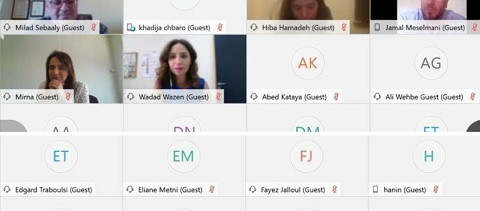 UNESCO explores “Online Teaching and Learning” during the Lebanese Internet Governance Forum 2020-07-24 On 23 July 2020, Joseph (USJ), Notre Dame University (NDU), and UK Leb TechHub the Lebanese Multi-Stakeholder Advisory Group organized the Lebanese Internet Governance Forum under the theme “Rethinking Internet Governance in times of crisis”. In this context, UNESCO Beirut hosted a panel on “Online Teaching and Learning”, in partnership with the American University of Beirut (AUB), the University of Saint. The COVID-19 outbreak in Lebanon has translated into a major education crisis due to schools and universities closure. As part of its response to the crisis, Lebanon’s Ministry of Education and Higher Education has developed three tracks to ensure the continuity of learning: learning through the TV, online learning, and traditional learning. Online teaching and learning met several challenges, mainly internet access and internet infrastructure in the country, the availability of online/digital teaching material, and teachers’ preparedness to switch to this kind of teaching. Against this backdrop, the session on “Online Teaching and Learning” aimed at exploring the impact of COVID-19 on the education sector in Lebanon, and discussing the challenges associated with remote/online learning and how to move forward towards adopting a new way of teaching and learning post-COVID 19. In his welcome speech, UNESCO Beirut’s Programme Specialist for Communication and Information, Mr George Awad, said that: “The Covid-19 pandemic reminded the world of the importance of the Internet as a means to access information and education. Yet the digital divide between those who are “connected” and those who are not may become the new face of inequality. Lack of internet access in some regions in the country has deprived students from the opportunity to benefit from remote/online learning”. Awad added: “This situation adds to the relevance of the universal right to access the internet, which was unanimously recognized by the 195 Member States of UNESCO in 2015. UNESCO’s framework for universalizing Internet access has endorsed four principles (ROAM principles): that the Internet be based on human rights, openness, accessibility to all, and be managed through the participation of multiple stakeholders”. Awad added: “The Covid-19 crisis is an opportunity to rethink education, educational philosophy and means of delivering education to learners. We must think about what remote education is and find solutions to the challenges that stand in the way of everyone's access to inclusive and quality education before and after the COVID-19 crisis”. High-level speakers participated in the session: Member of Parliament Mr Edgar Traboulsi; Educational Technology Expert at the Center of Educational Research and Development (CERD), Mr Milad Sibaaly; the Head of New Educational Technologies section at USJ, Mrs Wadad Wazen; School Academic Director, Mrs Hiba Hamadeh; co-founder of TABSHOURA and Lebanese Alternative Learning, Mrs Nayla Fahed. The highly-interactive session allowed participants to reflect on the challenges of online teaching and learning in Lebanon and means to improve infrastructure to provide quality teaching. URL:https://en.unesco.org/news/unesco-explores-online-teaching-and-learning-during-lebanese-internet-governance-forum
 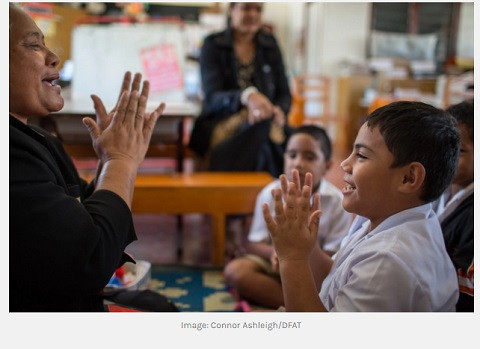 Creating inclusive learning environments for students with learning differences from marginalized communities 2020-07-24 By Rachel Brody, Global Director, Programmatic Partnerships and Inclusive Education, Teach For All Inclusive education is at the core of our collective vision at Teach For All—a world where educators, policymakers, parents, and students are working together to ensure that all of their communities’ children have the foundation they need to shape a better future for themselves and all of us. The 2020 GEM Report on Inclusion and Education is rooted in the premise that “education systems are only as inclusive as their creators make them”. Across our global network of organizations in 53 countries, we have seen the enormous amount of effort required in reimagining education and un-learning systems of oppression, listening to communities, and evolving mindsets, skills, and knowledge to be able to create inclusive settings that truly open up opportunities for us to learn with and from every student. Over the past several years, one of the key focus areas for our collective learning has been on the topic of education that is inclusive of all learners. In partnership with the Oak Foundation Learning Differences Programme, we launched a Fellowship to bring teachers and teacher coaches together to explore how to create more inclusive learning environments. After several iterations of this Fellowship, in 2019 we conducted a global scan—a survey and individual interviews—in which we engaged with teacher trainers and developers, teachers, and students from across our global network in order to learn more about the progress they are making towards creating inclusive learning environments for students from marginalized communities who also have intellectual and/or physical disabilities. Similar to the GEM Report, we learned that while there are many barriers and obstacles to be addressed, we are also seeing the implementation of innovations and practices that are supportive of inclusion. Two components that we found to be strong contributors to our network partners’ inclusive education agendas are deep partnerships with ministries of education and programmes like the Erasmus+ of the European Union that are placing inclusive education at the centre of their own priorities. In Estonia, for example, Teach For All network partner Noored Kooli hosted a national conference on Universal Design for Learning in partnership with a local university, the Estonian Ministry of Education, and UDL-IRN. This led to a country-wide focus on re-imagining how education is structured so that students are able to engage, reflect, and develop understanding in ways that are more supportive of how they learn and give them more autonomy and choice in their learning. From Inclusive Education to Real Scale Transfer (FIERST)—an Erasmus+ co-funded project—is working with organizations, including Teach For All partners in Bulgaria, Estonia, and Romania, to be leaders in the discussions of inclusive education in their countries, and their work and learning has been shared across Europe. In Romania, the project is supporting the creation of communities of practice in local schools that bring together teachers, community members, and school leaders to not only learn about, but actually experience, pedagogical approaches—such as culturally sustaining pedagogy and metacognitive practices—that can support them to build more inclusive environments. One of the practices that our network is finding critically important for inclusive education is the pursuit of a broader set of student outcomes, including proficiency, agency, dispositions, and awareness. We are continuing to learn that a deep focus on awareness—understanding the social, political, and cultural context in which students learn and grow, including cultural identities and systemic injustices—and agency—taking responsibility for one’s learning and believing in one’s ability to determine a life path and impact others—are critical and in supporting the whole learner. These two areas of focus are important in inclusive education as they are centred in who the learners are and how they learn. A few specific methods that network educators are using to support students’ awareness and agency and create learning environments where we can learn with and from every learners are Universal Design for Learning, Culturally Sustaining Pedagogy, and Metacognitive Practices. In order to deepen our understanding of these three methods and their impact on teachers and students, Teach For All has developed our Fellowship to focus deeply on these three methods, specifically when supporting students with disabilities and learning differences from marginalized communities. The Fellowship supports teachers and teacher coaches to first engage in an interactive online course to explore each of these methods. Then, each Fellow uses an action research framework to create a project (like this one) with their local school or community to implement inclusive practices in their context and then share their learning locally and globally via the Fellowship cohort and broader Teach For All network. Given the pandemic, our upcoming Fellowship will be fully virtual and is open to educators within and beyond the Teach For All network. The Fellowship launches in August, and we invite any teachers and teacher coaches to join, so more practitioners can learn together about how to ensure a truly inclusive education for all learners. If you’re interested in joining, please email rachel.brody@teachforall.org URL:https://gemreportunesco.wordpress.com/2020/07/21/creating-inclusive-learning-environments-for-students-with-learning-differences-from-marginalized-communities/
 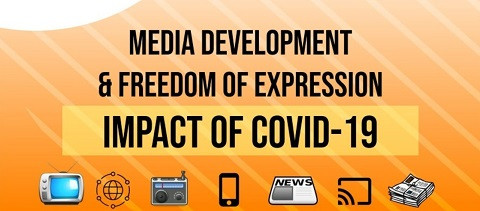 Media Development and Freedom of expression: the impact of the COVID-19 pandemic in West and Central Africa [Online Regional Consultation] July 29th & 30th, 2020 2020-07-24 Dakar, July 20th - Within the realm of its "COVID-19 Labs" initiative, a space for reflection and analysis on the present and future implications of the COVID-19 pandemic on UNESCO's fields of competence in Africa, the UNESCO Multisectoral Regional Office for West Africa-Sahel is organizing, jointly with the UNESCO Regional Offices in Abuja and Yaoundé, an online Regional Consultation entitled : "Media Development and Freedom of Expression: Impact of the COVID-19 pandemic in West and Central Africa". Since the emergence of the coronavirus pandemic in Africa, the media has continuously mad essential contributions when it comes to, among other things, informing citizens about the development of the disease, raising awareness about protective measures, uncovering misinformation, countering rumors and promoting the sharing of good practices. However, this necessary contribution has been made and is still being made in a context where the media is facing many technical, economic, social and even political difficulties due to the effects of the measures taken to contain the pandemic. These difficulties are all the more important in West and Central Africa, where the economic model of the media is particularly fragile. Indeed, there is virtually no dimension of public, private and/or community media (online and offline) that is not impacted. The effects are likely to shape the media landscape of countries in a sustainable way. It is for this reason that a background analysis should be carried out to draw the consequences and propose options to ensure media development in an environment that is conducive to economic viability, freedom of expression and safety of journalists. It is In this perspective that UNESCO - as the lead agency for the promotion of freedom of expression, media development and the security of journalists, organizes an online regional consultation where experts, decision-makers, politicians, civil society actors, media organizations and professionals will debate the future of the media in West and Central Africa. The main objectives of this online regional consultation, scheduled for July 29th and 30th, 2020 will be as follows: Identifying and promoting the contribution of the media in the fight against the COVID-19 pandemic, and in particular the fight against disinformation; Understanding the impact and the implications of the COVID-19 pandemic on freedom of expression, safety of journalists, respect for human rights, gender equality in the media, etc.; Identifying courses of action to support the development of the media and strengthen its resilience to the effects of large-scale crises such as the COVID-19 pandemic; Promoting good practices in the media's contribution to fighting against pandemics. To participate in the online Consultation, which will be held in English and French, please log on to the following link: http://bit.do/ConfirmParticipation Contacts: Michel Kenmoe (me.kenmoe@unesco.org(link sends e-mail)) – Advisor for Communication and Information, UNESCO's Multisectoral Regional Office for West Africa (Sahel), Dakar, Senegal Théodore Somda (tz.somda@unesco.org(link sends e-mail)) – Communications Officer, UNESCO's Multisectoral Regional Office for West Africa (Sahel), Dakar, Senegal URL:https://en.unesco.org/news/media-development-and-freedom-expression-impact-covid-19-pandemic-west-and-central-africa
  Poetry takes on center stage to dispel mis- and dis-information on COVID-19 2020-07-23 “Misinformation is a dangerous weapon;for it takes one man to hit the trigger but a lot more are sure to hear the sound of the gun,whether as pictures, as voice notes or in writing. Excitement or fear refusing us to let rationality’s light in, we share.Believing we are doing the right thing. Forgetting…a half truth is worse than a lie.” 26 year old, John Chiamama’s voice carries through with rhythm and rhyme. He is a poet, a writer, a DJ and a future producer, and he has a social mission to inspire the youth of Nigeria and combat social ills. John, popularly known by his stage name, Mindsmith, is also a practicing psychologist. In May 2020, he collaborated with media creator and video editor Godswill Ezeonyeka, to participate in a UNESCO Abuja-led Call for Jingles competition aimed to empower young women and men in Nigeria to control the flow of COVID-19 related mis- and dis-information. In the wake of the COVID-19 outbreak, UNESCO Abuja conducted a survey to examine the social pulse and evaluate the impact of infodemic on communities across Nigeria. Over 65% of the respondents encountered mis- and dis-information spread through social media. Many expressed confusion on information sourcing, fact checking as well as the understanding of their role in the efforts to stop the spread of misinformation about COVID-19. Fusing poetry with inspiring imagery and healing music in what Mindsmith calls “TheraPoetry” or therapy through poetry, the two artists crafted a jingle full of empowering messages countering misinformation, all against a backdrop of fleeting images of popular social media platforms. Mindsmith’s deep vocals weaves it all together to inspire young people to take charge. "I have seen that some elders in my family tend to accept and share whatever they received from social media platforms without any judgment. Because we keep abreast on new technologies. We, young people, compared with the older generations, should take more responsibility in guiding the media landscape and discourse into literacy...I used to get hundreds of shared (unverified) information about COVID-19 from my WhatsApp groups. The minute I urged my friends to stop and check before they share, I stopped getting any messages. That’s how bad it was." - Godswill Ezeonyeka After spending time with young groups in their communities, looking for tools and creative messages to empower young people to take charge, the duo built their concept on the pillars of empowerment and shared responsibility. Their jingle, which came in the top three during the competition, picks on the thread that starts with an individual action, which spreads to the family and ripples out to create positive change in the whole community. “Don’t share it, just because you hear it. Don’t share it, just because you fear it. Don't share it, if you can’t swear it.” UNESCO launched the campaign as part of the Media and Information Literacy Programme as a prerequisite for citizens to recognize their rights to freedom of information and expression for informed decisions. Through the programme, UNESCO supports a deeper understanding of the functions of media, and helps empower citizens to critically evaluate media content and to make informed decisions, whether as consumers of information, or as creators and producers of media content. The Call for Jingles Campaign winners were announced during a webinar held on Tuesday, 30 June 2020, under the theme, “Youth Power in Combatting Mis- and Dis-Information on COVID-19 and beyond”. Over 350 participants were in attendance, with Honorable Ministers of Youth in Nigeria and Sierra Leone as special guests at the event. "The Competition and the webinar that followed, both were a wake-up call to how capable the voices of youth are. It doesn’t take much to speak against mis-information, and to be the solution to dis-information. But it does save a whole lot when we chose to. I’m grateful to be part of the growing majority of African media professionals willing to change the narrative." - Godswill And the tip of his guitar was peeking tall behind him, a promise of more creative initiatives to come. URL:https://en.unesco.org/news/poetry-takes-center-stage-dispel-mis-and-dis-information-covid-19
 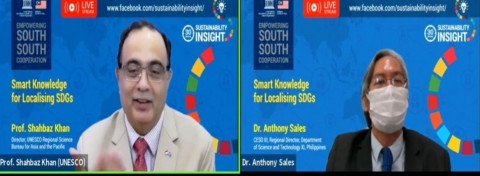 Sustainability Insight in 30 Minutes: Smart Knowledge for Localising SDGs 2020-07-23 The sixth interview session of the “Sustainability Insight in 30 minutes” on 20 July 2020 from 14:00 to 14:30 (GMT+7) featured Dr. Anthony Sales, CESO III, Regional Director of the Department of Science and Technology (DOST) XI, from the Philippines. Moderated by Prof. Shahbaz Khan, Director of UNESCO Office in Jakarta and Regional Science Bureau for Asia and the Pacific, the discussion revolved on using a culturally sensitive and specifically customized approaches and solutions to overcome local challenges, which Dr. Anthony defined as the smart approach. Dr. Anthony also stressed on the strong support of the local government in utilizing the product and outcome developed from research. Part of the MUCP outcome, the SETI for SDGs Scorecard, he further clarified, has been used intensively by the local government to do assessment for any projects. He further emphasized the significance of engaging youths and integrating sciences in education, as well as importance of engaging all relevant stakeholders via the Penta-Helix Modality. In his ending remarks, he emphasized how MUCP can be utilized to be a platform to both promote and link any tools and outcome developed with all relevant parties, whether from the authorities and industrial players. Relevant Materials: SETI for SDGs Scorecard Seti for SDGs Scorecard app URL:https://en.unesco.org/news/sustainability-insight-30-minutes-smart-knowledge-localising-sdgs