
News
Catch up on what’s happening in the world of global citizenship education.
1,668 results found
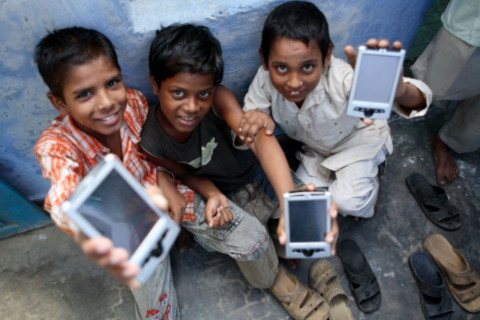 Preparing youth for the new normal 2020-08-04 By Eric Falt To read the published version in The Citizen, please click here. On 15 July, the world marked “World Youth Skills Day 2020”, a celebration aimed at recognizing the strategic importance of equipping young people with skills for employment, decent work and entrepreneurship, and to highlight the crucial role of a skilled youth in addressing the current and future global challenges. The theme this year, ‘Skills for a Resilient Youth’, reflects the unprecedented and challenging context of COVID-19 pandemic. As revealed in reports of the International Labour Organization (ILO), the pandemic has affected young people more than any other group, with nearly one in six young people out of work. We are also observing an increase in unemployment being more pronounced among young women as compared to young men. Those that have managed to retain their jobs have seen their working hours cut by nearly 25 per cent. With 16% of the world’s population belonging to youth (aged between 15-24) which in turn constitutes nearly 25% of the total working age population, enhancing the skills of the youth is an imperative that we cannot ignore if we are to successfully address the devastating socio-economic effects of the pandemic on the youth. India is amongst the youngest countries in the world, and is therefore well poised to take advantage of its high demographic dividend. On World Youth Skills Day, Prime Minister Modi addressed the Digital Skills Conclave expressing the need for skilling, reskilling and upskilling the youth. The Prime Minister further highlighted that skills play a key role in making a person self-reliant and enhances one’s self-employment potential. Likewise, the United Nations encourages all stakeholders to promote skilling programmes for the youth. This further has a domino-effect which help in making significant strides in the realization of the Sustainable Development Goals. For example, not only does it contribute in attaining SDG 8 (decent work and economic growth) by providing more opportunities to work, it also helps in achieving SDG 1 (no poverty), SDG 2 (zero hunger), SDG 3 (good health and well-being), SDG 4 (quality education), and SDG 16 (partnership for the goals). However, in current times, we have witnessed that economies around the world have been affected, subsequently hampering the possibility of improving the skills of the youth. The global pandemic has impacted not only employment opportunities but has also disrupted the delivery of education, training and skills development programs, and has also made labour market entry and transition between jobs quite challenging. While this a difficult period that the world is going through, we cannot afford to miss any opportunity of empowering the youth. It is understood that the process of skilling has been hindered due to COVID19 but there is a need to adapt to the present situation and ensure that easily accessible skilling programmes are shared with the younger generation. Perhaps there is an emergent need to skill the youth as they can be the driving force in helping economies recover post COVID19 times. To ensure that the skilling of youth never stops, especially during times of crises or pandemic, UNESCO launched the Global Skills Academy on 15th July 2020, aiming to equip one million young persons with employability and resilience skills worldwide. In India, realising the importance of training the youth with 21st century skills, UNESCO New Delhi has strategically enhanced its relevance and has engaged more deeply with countries in the sub-region that have expressed a need for Technical and Vocational Education and Training (TVET) programs. For instance, amongst other projects, UNESCO New Delhi is currently supporting a training course offered by Generation India Foundation, designed to upskill nurses and healthcare professionals in India engaged with treating Covid-19 patients. Over 30,000 nurses have already benefitted by enrolling in the course since its launch in June. The World Youth Skills Day serves as a reminder to nurture the youth with the 21st century skills which further helps to boost the economy and supports the youth to continue their personal development and contribute to address our common societal challenges, in our ever so growing competitive world. As the generations of tomorrow, young women and men need to be equipped to walk our common path towards a new normal built for peace and sustainability. Eric Falt is the Director, UNESCO New Delhi and UNESCO Representative to Bhutan, India, Maldives and Sri Lanka URL:https://en.unesco.org/news/preparing-youth-new-normal
 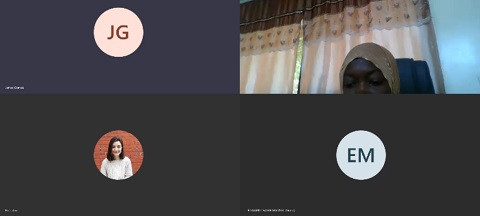 ‘Youth Empowerment through Technical and Vocational Education and Training (TVET) in The Gambia’: The TVET Policy Development Process and Methodology was successfully Launched 2020-07-31 Photo: stakeholders participating in the TVET Development Launch online. The long awaited TVET Policy and Strategy development process and methodology was successfully launched in The Gambia on 23 July 2020, using an online platform. The event was attended by 28 TVET stakeholders from the public and private sectors, constituting the National Technical Team responsible for the TVET Policy and Strategy Development, and the Technical and Steering Committees of the project. Within the framework of the Youth Empowerment through TVET project being implemented in The Gambia, UNESCO’s TVET expert, Dr. Ayele M. Adubra, who will ensure leadership and capacity building for the development of a TVET Policy and Strategy, presented the steps tha will compose this activity: i) documentary review; ii) diagnosis/review of the TVET system and labor market needs in The Gambia; iii) development of the new TVET Policy and Strategy; and d) finalization and validation of the TVET Policy and Strategy. This national exercise will ensure a sovereign, participatory and inclusive process through which key stakeholders will collaboratively identify and define the country’s priorities in the various TVET dimensions. The National Technical Team will implement this activity with the guidance and support of Dr. M. Adubra. The event was graced by the Deputy Permanent Secretary Technical of MoHERST, Mr. Yusupha Touray, who in deputizing for the Permanent Secretary of the Ministry of Higher Education, Research, Science and Technology stressed the Ministries’ desire to have a TVET policy that is aligned to the greater tertiary and higher education and sector education policies, The Gambia’s labor market needs as well as the regional and international protocols on TVET to ensure decent work for the youth and women. The Activity Deputy Focal Person and Manager of Corporate Services at the Gambia Chamber of Commerce and Industry (GCCI), Therese S. Diarra, in her turn reassured the forum of the teams’ commitment to the course of this activity, which has potential to ensure skills and employability opportunities for youth and women in The Gambia. She underlined the importance of information sharing and transparency in ensuring the full participation of all stakeholders, including the private sector. The development of a TVET Policy and Strategy is expected to be completed in December 2020. It is one of the eight activities that compose the Youth Empowerment through TVET in The Gambia project, which strives to create an enabling environment for the youth, and especially girls, to find decent employment by providing them with lifelong learning opportunities as recommended by SDGs 4 and 8. URL:https://en.unesco.org/news/youth-empowerment-through-technical-and-vocational-education-and-training-tvet-gambia-tvet
 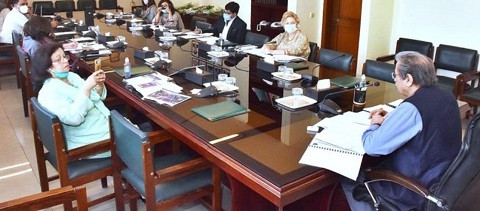 Pakistan is Using Innovative Approaches for Inclusive Education: GEM Report 2020 2020-07-31 The 2020 Global Education Monitoring (GEM) Report on Inclusion and Education "All means ALL" was Launched in Pakistan at the Ministry of Federal Education and Professional Training on Tuesday, July 28, 2020. Idara-e-Taleem-o-Aagahi (ITA) organized and co-hosted the national virtual launch of the UNESCO’s 2020 GEM Report, calling all stakeholders to concentrate on those being left behind and move towards inclusion in education, particularly after COVID-19. GEM Report Senior Analyst Anna Cristina D'Addio gave a presentation on the 2020 GEM Report and shared the key findings from the report. Federal Minister for Federal Education and Professional Training Shafqat Mahmood was the chief guest on the occasion. Launching the report, he said: "The online event featured an interactive high-level panel that discussed the key messages and recommendations in the report. “The GEM Report reminds us of the continued disparities in education, particularly in ensuring access of quality education to all, which is the foundation of inclusion,” UNESCO Pakistan Country Representative Patricia McPhillips said: “The GEM Report emphasizes the global need for better data collection and subsequent use,” she said, adding that it is encouraging to note that Pakistan’s inclusion-oriented data collection initiative is highlighted in the report as a best practice. Recognizing the Transgender Persons (Protection of Rights) Act 2018 and introduction of admission quotas to Disability Act 2014, she said that these are important milestones for ensuring inclusive education. Speaking at the event, Department for International Development (DFID) Pakistan Country Director Annabel Gerry said, “This report comes at a critical moment, where the coronavirus pandemic has added to the hidden emergency of exclusion from education. Since 2011, over 10 million children in primary school have benefited from UK support to Government of Pakistan’s education reforms, of which 4.7 million are girls. But significant inequalities remain by region, socio-economic status, disability, religion and gender. I hope this report will catalyze the will and resources to realize inclusive and equitable quality education in Pakistan. No country can ever reach its full potential unless every one of its citizens can reach their full potential. This is why we put inclusion at the heart of everything we do,” she said. Other panelists included Planning Commission of Pakistan’s Member Social Sector Dr. Shabnum Sarfraz, Institute of Development and Economic Alternatives (IDEAS) Director and LUMS School of Education Interim Dean Dr. Faisal Bari and Special Talent Exchange Program (STEP) Executive Director Muhammad Atif Sheikh. ITA CEO Baela Raza Jamil said, "There is much to do to set the actions right for Inclusive Education in Pakistan." The report provides an in-depth analysis of key factors for the exclusion of learners in education systems worldwide including background, identity and ability and urges the countries to focus on those left behind as schools reopen so as to foster more resilient and equal societies." Persistence of exclusion: The 2020 GEM Report notes that 258 million children and youth were entirely excluded from education, with poverty as the main obstacle to access. In Pakistan, hardly any poor rural women in Pakistan complete secondary school despite a target for universal secondary completion by 2030. Moreover, the gap in the probability of boys receiving more household resources for education was 13 percentage points for 5-9-year-olds and 24 points for 10-14-year-olds. Parents can thus help or hinder inclusion. Inequitable foundations: The Profiles Enhancing Education Reviews (PEER) introduced by GEM Report show that many countries still practice education segregation, which reinforces stereotyping, discrimination and alienation. Education Acts for all four provinces in Pakistan mention children with disabilities/special needs and lay down mechanism for educating CWDs in separate schooling system based on the National Policy for Persons with Disabilities 2002. But education policies vary in emphasis on inclusion. In Punjab, under the 2012 inclusive education policy framework, students with mild and moderate disabilities are admitted to mainstream primary and lower secondary schools whose teachers are trained by master trainers of the Department of Special Education. Blatant exclusion: The report states that fewer than 10% of countries have laws that help ensure full inclusion in education while exclusion can be very blatant in some laws. Although Article 16 of the Convention on the Elimination of All Forms of Discrimination Against Women prohibits forced and child marriage but girls can get married at age 16 in most provinces in Pakistan. Alienating learners: The report further states that reflecting learners’ diverse needs require textbooks and curricula to be inclusive, yet many still alienate by omission or false representation – Girls and women only made up 24% of references in secondary school English-language textbooks in Punjab while women were represented in less prestigious occupations and as introverted and passive. Chronic lack of quality data on those left behind: Pakistan is among the countries that do not collect data on disabilities in their Education Management Information System (EMIS). Household surveys are, however, the key to breaking education data down by individual characteristics. The Annual Status of Education Report (ASER) Pakistan survey, led by ITA, has included Washington Group’s Child Functioning Module to estimate the disability prevalence and educational status of children with disabilities in some regions of the country. Signs of progress towards inclusion: The 2020 GEM Report notes that Pakistan is using positive, innovative approaches to transition to inclusion. The country is testing a ‘third gender’ option in data collection tools while Pakistan’s Transgender Persons (Protection of Rights) Act 2018 prohibits discrimination in education and establishes their right to education and a 3% quota for transgender children in mainstream public and private education institutions. Moreover, in 2019, Pakistan’s Government Rules and Disability Act 2014 introduced admission quotas for students with disabilities at all education levels. Tertiary education institutions were asked to exempt candidates with disabilities from admission tests, relax age limits, provide fee concessions, and offer appropriate examination modalities. Media Coverage:English Coverage:https://www.dawn.com/news/1571663/conscious-effort-being-made-to-promote-inclusive-education-using-technology-ministerhttps://tribune.com.pk/epaper/news/Islamabad/2020-07-29/NmJjYmI4MjI5YWM3NWU0NzNiYmRmMzQ3OTkyMWJmYjQuanBlZw%3D%3Dhttps://www.brecorder.com/news/40008334 Photo Release:https://www.app.com.pk/photos-section/photos-section/islamabad-july-28-%C2%96-federal-minister-for-education-and-professional-training-shafqat-mahmood-addressing-during-the-virtual-launch-of-global-education-monitoring-report-2020-by-idara-e-taleem-o/ Urdu Coverage:https://www.express.pk/story/2063319/1/https://twnews.co.uk/pk-news/nzm-t-lym-myn-ttykhnlwjy-khy-st-ml-khw-frwg-dy-rhy-hyn-wfqy-wzyr-t-lym URL:https://en.unesco.org/news/pakistan-using-innovative-approaches-inclusive-education-gem-report-2020
 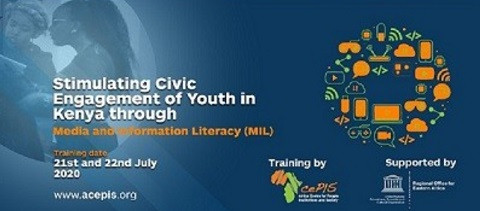 UNESCO trains Kenyan Youth Leaders in Media and Information Literacy 2020-07-30 Seventy (70) young people, drawn from 36 youth organizations across 16 counties in Kenya, have been trained on how to utilize and integrate Media and Information Literacy (MIL) competencies in their engagement and participation in civic activities in Kenya. The online training, which was held on 21 and 22 July 2020, was conducted by the Africa Center for People, Institutions and Society and supported by UNESCO. It equipped the participating youth leaders with requisite knowledge and skills on Media and Information Literacy to enable them to mainstream the gained competencies within their organizations. Media and Information Literacy (MIL) provides a basis for enhancing access to information and freedom of expression and critical thinking. It focuses on different and intersecting competencies to transform people’s interaction with information and learning environments online and offline. During the two-day workshop, participants were taken through sessions introducing them to MIL, its benefits to development, how it can contribute towards civic engagement for youth organizations, how to integrate it in their activities and opportunities and challenges of new and traditional media. It was very interesting for us, engaging so many enthusiastic and capable youth from across the country on how to utilize MIL, particularly in civic engagement. We found UNESCO’s MIL curriculum quite useful in designing and delivering the training. We appreciate the crucial support from UNESCO in rolling out this training.- Mr. Kenneth Okwaroh, Executive Director, Africa Center for People, Institutions and Society He further stated that his organization shall continue to partner with youth leaders in utilizing Media and Information Literacy to support their organizations’ work. Stating that they hope that this can contribute to the broader objective of empowering young people to be more engaged in civic affairs of their country. The training was super informative and an eye-opener. I learnt a lot in these two days. We intend to use the online and offline following that we have to impact change, other than just entertaining. I am also using the information I learnt to enlighten my colleagues at The Youthing Magazine and our fans.- Mr. Ian Ogonji, the founder and CEO of The Youthing Magazine, a youth-focused e-magazine It is imperative that young people set the stage through critical thinking, it makes our voices more critical and needed in discourses. As young people, engagements with policy making processes impact our lives directly.- Ms. Winnie Wadera from Reducing HIV in Adolescents and Youth (RHAY) Participants were drawn from organizations working in diverse areas, such as girl-child education, youth empowerment and development, mental health rights, sexual and reproductive health rights, community-based radio stations, governance and human rights, content creators, youth-focused magazines, advocates for peace and anti-radicalization of youth, and climate change activists among others. Enhancing media and information literacy (MIL) competencies among youth organizations, teachers and other stakeholders is a key action of UNESCO’s strategy to promote knowledge societies and foster the development of free, independent and pluralistic media and universal access to information and knowledge for good governance. This activity was implemented within UNESCO’s thematic action of ensuring that pluralistic media institutions are facilitated, while citizens, and particularly youth, are empowered through enhanced media and information literacy (MIL) competencies for civic participation and engagement in Kenya. URL:https://en.unesco.org/news/unesco-trains-kenyan-youth-leaders-media-and-information-literacy
 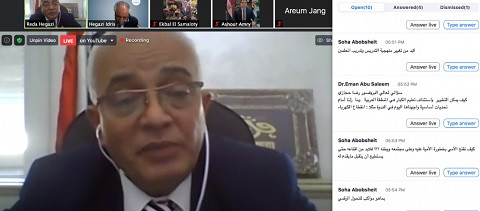 UNESCO hosts a webinar: ‘Towards a strategic framework on reopening adult learning and education programmes for the Arab States’ 2020-07-30 Beirut, 29 July 2020- Given the constant changes on the political, social and economic levels, in the Arab States, adult learning and education programme (ALE) has become a driving force for Sustainable Development Goals implementation. There is evidence that adult education can lead to positive change in social, economic, and political spheres, as well as in the health sphere, which in turn leads to building more sustainable societies. In this regard, over the past 5 decades, the Arab region has made significant progress in the field of literacy owing to the salient increase in school enrolment rates, political commitment and financial support to promote access to education. Despite the progress achieved, an estimated number of 50 million adults are still illiterate in the region and the ALE programme was not exempted from the massive education disruption caused by current COVID-19 pandemic since this March. When it comes to emergencies, UNESCO Institute for Lifelong learning (UIL) highlighted in their recent international review of education – Journal of Lifelong Learning that ALE can play a pivotal role as the promotion of health literacy is one of its part and the importance of populations having at least a basic level of literacy and numeracy will enable them to receive and act on vital information during crisis. Against this backdrop, UNESCO Regional Bureau for Education in the Arab States - Beirut in cooperation with the Regional Centre for Adult Education (ASFEC), organized a webinar titled “Towards a strategic framework on reopening adult learning and education programmes for the Arab States “ which aimed to identify the ALE status in the region and facilitate the development of strategic framework on reopening ALE programme by assessing multi-dimensional needs from diverse stakeholders. Government officials, educators and professionals in field of ALE and lifelong learning took part in the webinar, in addition to high-level personalities including Deputy Minister of Education and Technical and Vocational Training in Egypt Dr Reda Hegazi. The webinar was attended by ALE education officials and managers, ALE programme teachers at local communities, and academia in lifelong learning and ALE. In this opening of the webinar, UNESCO Beirut’s Programme Specialist for Basic Education Dr Hegazi Idris spoke of the importance of ALE for sustainable development. He pointed out to the dimensions that must be taken into consideration when developing ALE, the most prominent of which are: promoting social dialogue and communication between teachers and learners, guaranteeing the health and safety of students and teachers in the places where ALE programmes are offered, ensuring welfare and providing psychological, social and emotional support to learners, professional training for teachers and facilitators, securing funding for ALE programmes through partnerships between the private and public sectors and civil society. Then, Deputy Minister of Education and Technical and Vocational Training in Egypt Dr Reda Hegazi made a speech in which he said: “Education is no longer based on “feeding” information, because knowledge has become available for everyone. Education today means the organization of study. The teacher is not a “feeder” but an organizer of studies". He added: "As for curricula, they are a social construct and must therefore evolve in line with the evolutions of the national contexts and the needs of learners". Hegazi highlighted that: "The problem of illiteracy in our region derives from three problems which are reluctance to pursue education, reversion to illiteracy, and dropout from education. Hence, we must find solutions to these problems to ensure adult education and literacy." He concluded by saying that ensuring the quality of adult education passes through building partnerships with civil society: “Government agencies must organize adult education services, not provide these services because civil society has successful experiences and good practices that enable it to provide educational programs for adults with a high level of quality and innovation". This was followed by a speech by the Director of the General Authority for Adult Education in Egypt D Raafat Radwan who stated that "the world post-COVID19 will be different from the world before COVID19" noting that the post-COVID19 world will be characterized by “stability and continuity - because the complete disruption of service provision is no longer an option -, by the highest levels of human innovation and creativity to develop solutions to emergency situations, and by strong reliance on technology". Radwan pointed out the most pressing challenges facing adult education and literacy in the Arab region, especially in the COVID-19 context. He said that the most important challenge is the lack of access to technology and to the Internet, especially in rural areas, which makes it necessary to develop "technologies for the poor", i.e. radio and television. He asked: "How can the interaction between the teacher and the learner be guaranteed during remote learning through the radio and television? How can the curriculum be adapted to remote learning?" Then the Director of the Regional Center for Adult Education (Egypt) Dr Ashraf Muharram spoke of the importance of building partnerships between civil society and ALE programmes stakeholders, and of the sharing good practices to ensure the quality of ALE programmes and their adaptation to the needs of the learners. The Director of the General Authority for Adult Education in Egypt Ashour Amry talked about the Authority's response to the COVID-19 crisis, noting that the authority has established a unit for technological development whose mission is to develop online platforms for ALE and convert curricula from paper to digital resources. Lastly, Secretary General of the Arab Network for Literacy and Adult Education Dr Iqbal El Samaloty made a presentation in which she stressed the link between literacy and social development, and highlighted the need for developing ALE programmes based on unconventional and out-of-the-box methods that attract learners and respond to their needs. She added: "Civil society organization offer pioneering experiences and inspiring models in the field of adult education and literacy, which they developed in partnership with academics and relevant authorities and stakeholders. Therefore, civil society organizations should be involved in the adult education process to ensure its success". El Samaloty mentioned that ALE programmes have been a victim of the COVID-19 crisis in the absence of policies and mechanisms to deliver adult education remotely. “Remote teaching and learning has deepened discrimination against the illiterate people, which means the poor, and raised the issue of economic empowerment in our Arab societies,” she said. The webinar offered a platform to enhance the participants’ understanding of strategies and key elements necessary to resume ALE programmes, and to raise awareness on the importance of ALE relevant to health literacy for national emergency strategies and preparedness to future possible crisis. Resources Global Report on Adult Learning and Education (GRALE)(EN) The status of adult learning and education in the Arab States (EN) Arab Adult Education Is Not Accessible for Many (EN,AR) Adult education and learning (EN) Recommendation on Adult Learning and Education (EN) ‘Impact of Distance Education on Adult Learning’ project (IDEAL) (EN) URL:https://en.unesco.org/news/unesco-hosts-webinar-towards-strategic-framework-reopening-adult-learning-and-education
 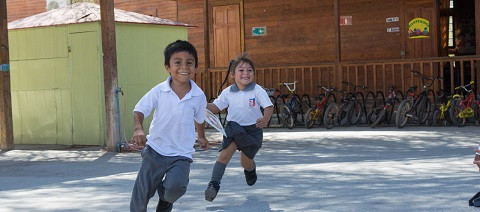 UNESCO warns of the need for greater presence of concepts such as knowledge of the world, climate change and gender equality in the Latin America and the Caribbean’s curricula 2020-07-29 A study by UNESCO's Latin American Laboratory for Assessment of the Quality of Education (LLECE) analyzed the curricula of 19 Latin American countries. The report provides information on what countries expect their students to learn in the areas of Language, Mathematics and Natural Sciences in third and sixth grades. Through this research, UNESCO explores for the first time the presence of central concepts for 2030 Education Agenda, such as global citizenship education and education for sustainable development in Latin American curricula. Santiago, July 28, 2020 - The report “¿Qué se espera que aprendan los estudiantes de América Latina y el Caribe? Análisis curricular del Estudio Regional Comparativo y Explicativo (ERCE 2019)", (What are students in Latin America and the Caribbean expected to learn? Curriculum Analysis of the Regional Comparative and Explanatory Study, ERCE 2019), was released by the Regional Bureau for Education in Latin America and the Caribbean (OREALC/UNESCO Santiago), through its Latin American Laboratory for Assessment of the Quality of Education (LLECE). This curriculum analysis is part of the ERCE 2019 study, a large-scale research study assessing the learning achievements of students in Latin America and the Caribbean, the results of which will be available in mid 2021. UNESCO's research, which was supported by UNICEF and with the technical participation of Universidad de Chile’s Center for Advanced Research in Education (CIAE), focused on the analysis of the curriculum content of 3rd and 6th grades of primary school in 19 countries: Argentina, Bolivia, Brazil, Chile, Colombia, Costa Rica, Cuba, Dominican Republic, Ecuador, El Salvador, Guatemala, Honduras, Mexico, Nicaragua, Panama, Paraguay, Peru, Uruguay, and Venezuela. The Director of the Regional Bureau for Education in Latin America and the Caribbean (OREALC/UNESCO Santiago), Claudia Uribe, explained that this study was carried out to learn about the contents and competencies prioritized by the different countries of the region and to highlight the visions and curricular trends at the time prior to the Covid-19 pandemic. "These are inputs that UNESCO makes available so that each country may review its national curriculum from a comparative perspective and assess how it responds to what students need to learn in order to develop academically and socio-emotionally as citizens of the 21st century, in an increasingly diverse society, as proposed by the 2030 Education Agenda". Among the findings, the report highlights in the area of Reading the relevance of working with a diversity of texts and the emphasis on literal and inferential reading comprehension, as well as reading strategies for comprehension, such as monitoring or re-reading. The report also points out a lesser presence of concepts linked to the areas of Decoding and Reflection and Evaluation on texts, which is especially relevant in these times due to the consumption of different quality contents by children on the Internet. Another novelty contained in this report is the regional analysis of the presence of content on global citizenship education and education for sustainable development, which inclusion in curricula is central to progress towards the fulfillment of the 2030 Education Agenda, in particular its target 4.7. "With the findings of this study, the countries will be able to review their actions to support teachers in implementing the curriculum with a view to student learning, even more in complex contexts such as the current one, where prioritizing content is essential", said Carlos Henríquez, General Coordinator of the Latin American Laboratory for Assessment of the Quality of Education (LLECE). Main results in the disciplinary areas In its disciplinary aspect, the analysis involved the revision and systematization of official curriculum documents in force until 2017 for the areas of Language, Mathematics and Natural Sciences. This information was provided by the countries participating in this stage of the ERCE 2019 study. In the area of Language, one of the most outstanding aspects in the region is the predominance of a communicative approach, focused on the use of language in different contexts. In Reading, there is a strong emphasis on Textual Diversity, which implies the reading of diverse types of texts and genres with which students relate in their daily lives. Likewise, the work on Literal and Inferential Comprehension and Reading Strategies is highlighted, for being very relevant for classroom work, since this is a learning problem affecting a significant proportion of children in the region. However, the presence of Reflection and Assessment on texts is less present, an indispensable skill in these times for the development of critical thinking and citizenship. This skill is a priority because people are increasingly exposed to texts of varying quality or to content with inaccurate or biased information, especially on the Internet. Reflecting on texts is indispensable for being well informed and participating in the 21st century societies. In the case of Writing, the presence of Knowledge about the Code and Processes Involved in Writing stands out. Knowing the written code implies understanding the alphabetic system, as well as the orthographic system and some relationships of meaning between words, all of them basic knowledge for the written production. Similarly, the presence of the Processes Involved in Writing (such as planning, writing, reviewing and rewriting) underline the importance of paying attention to the process and not only to the written product. This curricular emphasis is supported by evidence showing that teaching writing as a process contributes to the learning and improvement of this skill at school level. In Mathematics, the central finding is that most curricula adhere to the Problem Solving approach as a fundamental element in teaching and learning Mathematics to cope with the unforeseen circumstances and challenges of everyday life. According to the country, this approach is presented either as content or as a transversal skill expressed in different domains or topics present in the curricula analyzed, such as Numbers and Operations, Geometry, Magnitudes and Measurements, Statistics and Probability, and Patterns and Algebra. In Science, there is an emphasis on the Scientific Literacy approach in a significant number of the curricula analyzed. This implies going beyond the transmission of scientific knowledge, since it seeks to enable people to explain and predict the phenomena of nature. Its purpose is the development of abilities for citizen participation in decision-making that involves the interrelationship between science, technology, and society.The following curricular subjects were found in most countries: Human Body and Health, the Earth and the Universe, Science, Technology and Society, Living Beings, Ecology and Environment, Matter and Energy, this reflecting a relationship of science with real and unavoidable problems, such as sustainable development or the balance between technology and the well-being of people. Other novel findings for global challenges As an innovation, this report analyzed the presence of concepts related to global citizenship education and education for sustainable development in the region's curriculum documents. Both educational components are central to developing in students the skills, attitudes, and behaviors that will train them to respond to the changing and urgent global challenges demanded by all countries today. The study reviewed the presence of concepts in national education curricula and sought to distinguish whether these concepts appear in a declarative manner, as guiding principles, or whether they are integrated in a programmatic manner into those sections of the curriculum that are most frequently consulted by teachers when preparing their classes and, therefore, are more clearly integrated into teaching. In the areas of global citizenship education and education for sustainable development, the report found a greater presence of concepts in the declarative sections of the curriculum documents. Noteworthy, mentions of these concepts appear to a lesser extent in the programmatic documents of the curriculum, that is, in the material that guides and supports the implementation of these topics in the classroom. In the case of global citizenship education, it was observed that the notions of Citizenship, Identity, Respect, and Diversity are found in all of the countries studied. This is interesting because they belong to different dimensions of learning relevant to the exercise of citizenship, which are addressed in a broad way. However, the report points out that the concepts that are present in less than half of the countries in the region are Brotherhood, Happiness, Knowledge of the World and Empathy. These are very relevant notions that are absent in several countries, being a concern since they help to address one of the main challenges of globalization, heightened by the pandemic: how to live together. "It is important to join forces in order to strengthen comprehensive education in the region, and these concepts are a fundamental part of its consolidation. Schools are one of the main agents of socialization, and for this reason opportunities must be guaranteed in the curriculum to develop integrating behaviors, such as recognizing diversity, acquiring values such as empathy and brotherhood, and learning about global problems", said Carlos Henríquez, General Coordinator of the Latin American Laboratory for Assessment of the Quality of Education (LLECE) at OREALC/UNESCO Santiago. Other key concepts such as Gender Equality and Freedom appear in only half of the countries. UNESCO considers it relevant that education systems in Latin America and the Caribbean continue to make efforts towards greater integration of these subjects into national curricula and that they consider them in their processes of reflection, redesign, and implementation of curricula and education policies.Moreover, in countries where Gender Equality appears, it is generally addressed in the guiding sections of curricula, and not as a programmatic content. Progress in this area is crucial in order for societies to develop in an inclusive and sustainable manner. With respect to education for sustainable development, the concepts of Environment and Sustainability are present in the curriculum documents of all countries. However, concepts such as Recycle, reduce, reuse; Imagining future hypotheses; Understanding complex systems; Natural environment; Economy; Sustainable (green) processes and Carbon appear in less than half of the curricula analyzed. Mentions of Climate Change and Critical Thinking tend to appear only at a declarative level, without being intentionally integrated into classroom action. UNESCO and its Latin American Laboratory for Assessment of the Quality of Education (LLECE) have opened the disaggregated information of “¿Qué se espera que aprendan los estudiantes de América Latina y el Caribe? Análisis curricular del Estudio Regional Comparativo y Explicativo (ERCE 2019)" on its new web data platform, where this information is available to experts, public policy makers, teachers and all audiences interested in these findings. Further information Download: ¿Qué se espera que aprendan los estudiantes de América Latina y el Caribe? Análisis curricular del Estudio Regional Comparativo y Explicativo (ERCE 2019), (What are students in Latin America and the Caribbean expected to learn? Curriculum Analysis of the Regional Comparative and Explanatory Study, ERCE 2019) All the information available on this launch is available on this page URL:https://en.unesco.org/news/estudio-regional-analisis-curricular-resultados
 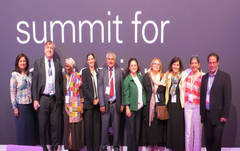 Sustainability Insight #8: Post-COVID Pathways for Real Gender Empowerment 2020-07-28 The 8th session of the Sustainability Insight Series in 30 minutes was organized on the 27th of August 2020, with issues revolving on gender empowerment and gender equality. Featuring Dr. Farida Faisal, Associate Professor University Institute of Management Sciences PMAS - Arid Agriculture University Rawalpindi, the discussion critically revolved around the various issues on all genders, which goes beyond the domain of social sciences and into crosscuttings disciplines. Moderated by Prof. Shahbaz Khan, Director of UNESCO Office in Jakarta and Regional Bureau for Science, in this session, Dr. Farida highlighted the various challenges in achieving gender equality as well as recommendations to the way forward. She highlighted the cooperation made between PMAS-Arid Agriculture University Rawalpindi, Pakistan, the Malaysia Funds-in-Trust and the Japanese Funds-in-Trust and UNESO Jakarta, in which the Asia Pacific Policy Dialogue on Water, Energy and Food Security for Poverty Alleviation in Dryland Regions was organized in November 2016, helps broaden the scope of South-South Cooperation to be inclusive of genders, as well as taking into account the scientific innovation and research to poverty alleviation. Dr. Farida continued by stressing the significance on inclusiveness to approach these issues, incorporating the aspects of social, economic, and environmental concerns. The session also discussed on the significance of gender disaggregated data, as well developing an inclusive, multidisciplinary and transformational policy that caters to all genders. The recorded video is available at our Facebook page. URL:https://en.unesco.org/news/sustainability-insight-8-post-covid-pathways-real-gender-empowerment
  UNESCO agrees with Ministries of Education of Albania and Sarajevo to pilot MIL in primary and secondary schools 2020-07-28 UNESCO agrees with Ministries of Education of Albania and Sarajevo to pilot MIL in primary and secondary schools Within the framework of the EU-funded project Building Trust in Media in South East Europe and Turkey – Phase 2, UNESCO and its lead local project partners, the Albanian Media Institute (AMI) and the Faculty of Political Sciences University of Sarajevo have taken first steps to pilot Media and Information Literacy (MIL) in formal education in both countries. The project aims to enhance youth MIL skills through introduction of MIL in formal educational system in the region. "The Covid-19 pandemic crisis has highlighted that there is an urgent need to reinforce the critical thinking of citizens in the region to address the rapid spread of related misinformation and disinformation in relation to the virus. The inclusion of MIL in school curricula of primary and secondary schools of the region is an efficient way to address that challenge” said Siniša Šešum, Head of the Sarajevo Project Office of the UNESCO Regional Bureau for Science and Culture in Europe. Media and Information Literacy is one of the key competences in this century- Emir Vajzović, Project Leader, Faculty of Political Sciences, University of Sarajevo "In order to map and engage with all relevant MIL stakeholders and key actors involved in Albania in the field of education, we have started updating the national MIL Strategy and the Position Paper of the country, which was outdated. In this process, we reach out to the Ministry of Education, Sports and Youth, the Agency for Quality Assurance in Pre-University Education, the Parliamentary Commission on Education and Media, the Audiovisual Media Authority, as well as main media organizations", said Remzi Lani, Head of the Albanian Media Institute. During the first consultation held in June 2020 with the Ministry of Education, Sports and Youth and the Agency for Quality Assurance in Pre-University Education (ASCAP), a joint work calendar for the piloting of MIL in schools has been drafted while the procedures for selecting the schools, where the curricula will be piloted were discussed. In Bosnia and Herzegovina, consultations took place on 6 July 2020 with the Minister of Education, Science and Youth of Sarajevo Canton, Anis Krivić, and his team. Continuous cooperation and preparation of the integration of MIL in the educational system in the Sarajevo Canton has been agreed. “We have an agreement with the Minister of Education in Sarajevo that MIL needs to be integrated in formal education, not just as an extra-curricular topic, but rather as a core subject in primary and secondary schools in BiH – because MIL is one of the key competencies in this century,” said Emir Vajzović, Project Leader from the Faculty of Political Sciences University of Sarajevo. In parallel, the drafting of the pilot MIL curricula for primary and secondary schools in Albania is well under way. In Bosnia and Herzegovina, an expert and stakeholder workshop on MIL integration in educational systems is foreseen in September 2020 and will involve Ministers of education, representatives of pedagogical and educational institutes, directors, teachers, librarians from primary and secondary schools and representatives of teachers' training colleges. UNESCO and the European Union, DG Near, launched the second phase of the project Building Trust in Media in South East Europe and Turkey in November 2019. In consideration of the clear decline in the civil society’s trust in media in the region and the recommendations from the European Union in combating disinformation online, the three years project aims to, among others, enhance MIL skills among youth by introducing MIL components in formal and non-formal education systems, training education staff, building MIL capacities of youth organisations. URL:https://en.unesco.org/news/unesco-agrees-ministries-education-albania-and-sarajevo-pilot-mil-primary-and-secondary-schools
  Innovation Stories: TAKE 1 Programme from Ireland 2020-07-28 "Key to the success of the TAKE 1 Programme is making the data about the 17 [Sustainable Development] goals available and understandable." The TAKE 1 Programme was developed from a desire to support senior leaders, teachers, and students in Education and Training Board (ETB) schools, to embed all the Sustainable Development Goals in teaching and learning. With a long-held interested in global citizenship, both from my time spent as a teacher and working in the development education sector, I was keen to continue to support and promote the sustainable agenda in my current role in educational policy and development. My intention was to formalise the support of learning about the Sustainable Development Goals in our post-primary schools and showcase the work happening in our classrooms. I was keen to promote the importance and interconnectedness of all the global goals and the importance of learning about all 17. Initial conversations with teachers and educators and subsequent research led me to discover that while there was a level of understanding about the Global Goals amongst students and teachers, the breath of knowledge across the entire sector, was more limited than anticipated. The information available and expressed by some was excellent, specifically in relation to climate change and climate justice, but when expanded to encompass comprehension of all the Goals, the understanding and application were more limited. The ‘five Ps’ identified in the preamble to the SDGs — People, Planet, Prosperity, Peace, and Partnership — reflect the overall themes of the sustainable agenda and also align with the core values of ETB schools (Excellence in Education, Respect, Care, Equality and Community). This natural alignment allows this sector to voice support for the Global Goals, make decisions that advance them, and to take actions to help with their implementation. My aim was to ensure that all of our learners, in all of our classrooms, had an opportunity to engage with sustainability education and on a practical level reflect the philosophy of the UN Goals and leave no student behind. Key to the success of the TAKE 1 Programme is making the data about the 17 goals available and understandable. Resources for the Programme demonstrate the potential for all Junior Cycle subjects to engage with the Goals in a formal setting and subsequently translate that engagement into action. Analysis of the subject specifications in the new Junior Cycle curriculum demonstrated that not only were there opportunities in each of the subject specifications, but often the learning related to sustainability had been highlighted quite specifically. Designing and producing the resource was supported by funding from Bridge 47, and it provides background information on the SDGs, policy alignment with the core values of the ETB sector and detailed mapping of the SDGs onto the learning outcomes of each Junior Cycle subject. The mapping exercise demonstrates that the potential to embed the global goals in teaching and learning already exists and that the Take 1 Programme is a vehicle of learning rather than an additional piece of content. In February, the resource was provided to participating teachers following a training event, which was also attended by a Principal or Deputy Principal from each school. Senior management attendance at these events has proved useful in ensuring the application and growth of the programme at the local level. The training introduced the available materials and an opportunity to share classroom practice and plan for future embedding and action. Additional promotional materials including posters, social media images and UN logos, were also provided which support each school in showcasing their teaching and learning activities. All materials were provided in both English and Irish. Take 1 Week was planned for March 23rd and asked teachers to showcase their learning, in individual classrooms, across subject areas and even throughout the school environment. The initial action of teaching 1 Lesson, about 1 SDG, to one class over the course of 1 Week, encourages teachers to participate in a seamless way, continuing to cover subject content while also raising awareness about the embedded nature of the SDGs. Activities are promoted on social media using the hashtag ETB_SDGS with a brief description and accompanying images and photographs. While Covid-19 impacted on the classroom activities to be undertaken, teachers continued to participate online. Despite much on-screen immersion, a select group of ETB teachers volunteered to engage as a pilot group to continue to develop the Take 1 Programme from its initial stages. This group met online in May and commenced planning for the development of template documents to grow the embedding process across more than one lesson and to expand the learning across subject areas and the school curriculum. To date, 125 participants have engaged with the programme initiative, across fifteen different subject areas. It is intended to expand the Programme into the senior cycle curriculum, mapping the learning outcomes in senior subjects to the SDGs. This new information will supplement the existing resource and further training models are planned for the next academic year. While it might be difficult to comprehend that not all students are experiencing learning about the sustainable development goals, practical evidence suggests that busy school environments and a full curriculum are impacting on the potential to explore global citizenship issues on a deeper level. The Take 1 Programme offers schools, their teachers, and students an opportunity to embed the SDGs in teaching and learning, through, as opposed to in addition to, their junior cycle subjects. About the Author:Valerie Lewis is an Educational Policy and Development Officer at Education and Training Boards Ireland.Marek Kakaščík assists Bridge 47 with the national work in Slovakia and with communications of our sug-granting mechanism. (marek.kakascik@bridge47.org) URL:https://www.bridge47.org/index.php/blog/07/2020/innovation-stories-take-1-programme-ireland
 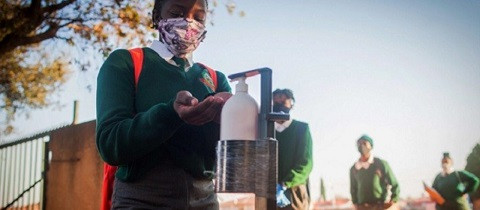 UNESCO and key education partners support the Ministry of Education on school reopening in Palestine 2020-07-28 As COVID-19 affected the globe, it forced many students to rely on distance learning as schools closed. With no end to the pandemic in sight, governments and organizations need to adapt to the new realities of this pandemic. The Palestinian Ministry of Education (MoE), recognizing the changes unfolding, plans to reopen schools early August, 2020. In this context, on 11 June, the Palestinian MoE and UNESCO organized a meeting with key education partners (including Ireland, Finland, UNRWA, Save the Children, and UNICEF) to discuss the school re-opening plan in Palestine in hopes of finding solutions and raising awareness on different issues to be faced. The meeting focused on policy formulation regarding appropriate restructuring of learning for the school reopening. The Minister of Education, Dr. Marwan Awartani, attended the meeting and expressed his appreciation to all education partners supporting the Ministry to have a safe return to school. Besides the urgency of finalizing the plan for reopening schools, he notably emphasized the need for greater coordination among ministries and other key actors with a view to ensuring that measures such as social distancing among students are effectively implemented. He also confirmed that an assessment of distance learning, which is important for remote areas with limited access to technical resources, was necessary. In order to guide the back to school planning process in Palestine, UNESCO Ramallah, presented the global framework, developed by UNESCO, UNICEF, WFP and the World Bank designed to guide different countries around the world in this critical intervention. The importance to consider safe operations, well-being, blended learning and the most vulnerable of students in responses and interventions was also underlined, as well as the necessity of ownership by the national stakeholders. During the discussions, it became clear that several ideas and draft plans (e.g. from UNRWA) already existed on which it was suggested to build upon in order to optimize the use of the funds available and avoid duplication of efforts. UNRWA presented their draft plan, which the Ministry was interested to consider. The meeting ended with several positive notes. While the rapid spread of the COVID-19 in Palestine is unfortunate, it also presents an opportunity to try new desired methods for teaching and learning. While the current landscape is unpredictable, it is important to agree upon specific principles in order to begin the implementation of the back to school plan. Any reopening should take into account a possible resurgence of a second wave of the pandemic. Thus, parents should be heavily involved to prepare and guide their children in education. At the same time, parents must not be seen as substitute teachers, as this would not provide the required equity of education to all students. While the meeting was attended by the Ministry of Education, UNESCO and other international agencies involved in education, more partners such as private schools and the civil society, should be involved in future discussions. As a concrete way forward, the formation of a specialized Task Team (TT) on School Reopening was suggested. Smaller teams would meet to discuss key issues in areas of the school reopening framework, presented by UNESCO, which should inform the work of the TT. The Ministry of Education was also advised to present its emergency plans and the initial plan for school reopening in the upcoming Education Sector Working Group meeting. The Ministry of Education suggested that UNRWA, UNESCO and other key agencies meet as soon as possible to develop a concrete plan, based on the discussions brought up in this meeting. A follow-up meeting took place on 30 June to discuss the progress on the school re-opening plan. The MoE, UNESCO, UNRWA, UNICEF and Save the Children attended the meeting. Dr. Basri Saleh, Deputy Minister opened the meeting, confirming that ensuring the readiness of schools, students, teachers, content and tools are very important pillars in the school re-opening plan. He further emphasized that education partners should continue the discussion with different departments at the Ministry for the preparation of the plan. Interventions, including related to hygiene, safety, teacher training, and distance learning, will be integral elements in the development of the plan, which will also include the financial needs for all activities. He also commended the work done by the education partners on all fronts as the only way to have a safe return to school. UNRWA mentioned its financial gap for the implementation of its plan for school re-opening, mentioning some 5 million US$ to cover the expenses of additional teachers and counselors. UNRWA’s plan is to open from Saturday to Thursday for half of the students, every day, depending on the spread of the virus using a blended approach. For more information on UNESCO’s activities in Palestine, please visit www.unesco.org/ramallah and visit us on : Unesco Ramallah Office For more information on this event, please contact Ms. Sonia Ezam, Senior Programme Officer at the Education Unit of UNESCO National Office for Palestine, at s.ezam@unesco.or(link sends e-mail)(link sends e-mail) URL:https://en.unesco.org/news/unesco-and-key-education-partners-support-ministry-education-school-reopening-palestine