
News
Catch up on what’s happening in the world of global citizenship education.
1,668 results found
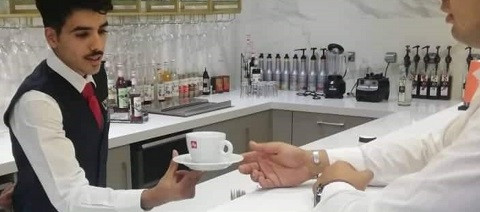 Syrian student overcomes challenges through learning and training opportunities 2020-08-15 Ahmad Al-Turk, 19, has a lot to teach us about persistence. Ahmad and his family left Syria in 2012, arriving in Jordan with little more than the clothes on their backs. They moved in with family in the northern city of Mafraq and prepared to start fresh. Wanting to help his family to make ends meet, an 11-year-old Ahmad got a job at a clothing store, folding clothes and cleaning. For two years, he worked full time, trying to help his family get back on their feet. Finally, Ahmad’s father got a job as a building manager in Amman and secured an apartment for his family. Ahmad’s parents enrolled him in school again but since Ahmad had missed two years, he had to begin in 5th grade rather than 7th. For a few years, Ahmad played catch up, leaving school to return to the world of work after finishing the 8th grade. First, he rented a cart from a vendor and sold steamed corn and then found a job distributing water door-to-door. I bounced from one job to another for a while. My family and people from my community kept reminding me that I hadn’t completed my education and I felt really badly about this but didn’t feel like I had a choice as I needed to earn money and help out--Ahmad Al-Turk Then one day, the mother of one of Ahmad’s friends told him about scholarship opportunities she had seen advertised. “The Technical and Vocational Education and Training (TVET) scholarships were appealing to me as they didn’t require applicants to have succeeded at Tawjihi. I had nothing to lose, so I applied for the Hospitality programme”. The scholarships are offered as part of the UNESCO “Provision of TVET for vulnerable Jordanian and Syrian Refugee Youth” project, implemented with generous funding and strong partnership from the Government of the Republic of Korea, in cooperation with Luminus Technical University College (formerly Al Quds College). Through the project, UNESCO supports youth to receive quality training programmes as a way of finding employment. The project is aligned with the 2030 Agenda for Sustainable Development and in particular, the Sustainable Development Goal 4, which focuses on ensuring inclusive and quality education for all and promoting lifelong learning. “When I learned that I had been accepted into the programme, I was overcome with happiness. It was that moment that I realized that I had a chance to prove myself to all those who had criticized me for leaving school. I knew things were going to change for me”, shared Ahmad. A week later, Ahmad began his studies. I gained so much knowledge, skills and confidence during the programme. Going in, I felt I was completely out of my league but the programme was so packed with value. For me, one challenge was learning English, but I improved upon my skills as time went on. In the hospitality field, you need to deal with tourists from all around the world so its important to have a second language. I really enjoyed the HACCP certification course and learning about safe food handling.-- Ahmad Al-Turk HACCP is an international standard defining the requirements for effective control of food safety and handling processes. Luminus instructors are licensed to issue the certificates to students who receive a satisfactory grade on the HACCP exam. His Excellency Lee Jae-wan, Ambassador of the Republic of Korea to Jordan, is pleased by the powerful impact of this TVET project. Korea believes that young people like Ahmad serve as a strong example to others, and demonstrate the power of perseverance. Youth have an opportunity to thrive and develop new skills through TVET training. We are delighted to be continuing to provide this valuable support through this UNESCO project.-- His Excellency Lee Jae-wan, Ambassador of the Republic of Korea to Jordan In early 2019, Ahmad finished the on-the-job training portion of his programme and began knocking on the doors of businesses looking for work in his new field. After three days, he found a job as a waiter in a restaurant in Amman, where he has worked for the past year. Reflecting on what it means to start over many times, Ahmad has a message for those searching for direction: “If you have lost hope in life, you must find it again. This programme brought hope back into my life and gave me an objective. Now my family is proud of me. When I think of the future, I feel that everything is going to be ok”. To learn more about this project, click here. URL:https://en.unesco.org/news/syrian-student-overcomes-challenges-through-learning-and-training-opportunities
  New resources to counter COVID-19 conspiracy theories through critical thinking and empathy 2020-08-15 UNESCO, in cooperation with the European Commission, Twitter, and the World Jewish Congress, is launching a series of easily accessible and comprehensive visual learning resources to raise awareness of the existence and consequences of conspiracy theories linked to the COVID-19 crisis. The resources also address how to recognize conspiracy theories, understand what drives them, refute them with facts and respond effectively to those who are spreading them. The COVID-19 pandemic has unleashed a parallel pandemic of dangerous misinformation and rumours in the form of conspiracy theories, including far-fetched explanations of the origins of the virus, how it can be cured and who is to blame for its spread. Conspiracy theories undermine science, facts and trust in institutions, and pose an immediate threat to individuals and communities. There have always been conspiracy theories, but the pandemic underway has proved to be a particularly fertile ground for their spread. They are part of a wider trend of increasing hate speech, and increased racist, xenophobic, and anti-Semitic attacks, which also target LGBTQ communities. UNESCO Director-General Audrey Azoulay underlined the dangers of misinformation and rumours in relation to the pandemic and other issues. “Conspiracy theories cause real harm to people, to their health, and also to their physical safety. They amplify and legitimize misconceptions about the pandemic, and reinforce stereotypes which can fuel violence and violent extremist ideologies,” she said. The infographics, available in Arabic, Chinese, English, French, Russian and Spanish, will be widely disseminated on social media via the hashtag #ThinkBeforeSharing, UNESCO MIL CLICKS social media pages, and through the European Commission’s website on fighting disinformation. Věra Jourová, Vice President of the European Commission for Values and Transparency, said: “Disinformation and conspiracy theories harm the health of our democracies – this has been made very clear in the context of a global pandemic. Citizens must be equipped with useful tools to recognise and debunk them. To support citizens, public institutions need to work together and with digital platforms, media professionals, fact checkers and researchers, as the European Commission and UNESCO are doing.” The visual learning resources complement UNESCO's work on Media and Information Literacy (MIL) and related educational graphics produced as part of the Organization’s COVID-19 response. They draw on the expert advice of Professor Michael Butter, author of the Guide to Conspiracy Theories, as well as Stephan Lewandowsky and John Cook, authors of the Conspiracy Theory Handbook. As part of the launch of the resources, Prof. Butter stressed the important role of education: “There is by now a lot of evidence that shows that people who have been taught what conspiracy theories are and how they work are much less receptive to them. It's easy: education is key.” Mr Lewandowsky affirmed the fact that conspiracy theories may be viewed as light-hearted, but can be dangerous, saying that “conspiracy theories have adverse consequences on society. This is especially true during a pandemic, when belief in conspiracies can harm or even kill people. It is therefore essential for the public to be informed about how to spot conspiracy theories so that they can be ignored.” The campaign is undertaken as part of UNESCO’s work in Media and Information Literacy and to counter hate speech, and supports its programmes on Preventing violent extremism through education and Global Citizenship Education. URL:https://en.unesco.org/news/new-resources-counter-covid-19-conspiracy-theories-through-critical-thinking-and-empathy
 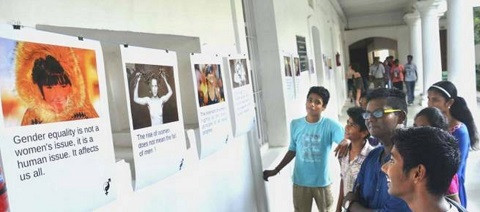 From locker rooms to classrooms 2020-08-13 by Eric FaltTo read the published version in The Hindi, click hereRecent cases such as the ‘Bois Locker Room’ and other examples of non-consensual sharing of images online to threaten and shame girls and women, have given a disturbing glimpse into the minds of some of our youth and the challenges we still face in these COVID times. These instances have raised serious questions about the mindsets of not only boys but of all youngsters, and their use of social media. Public opinion has pointed the finger at the growing and sometimes nefarious influence of technology. A quick fix of deactivating social media handles or deleting so called ‘provocative pictures’ is often the most common response to such situations. However, this merely skirts around the contours of the issue without addressing the real problem. COVID-19 has exacerbated the challenges that women continue to face and this has shown us that the glass ceiling remains far from being shattered. While women are holding up more than their half of the sky during the pandemic, the National Commission for Women has reported a surge in domestic violence and cybercrimes, which has made girls and women more vulnerable as they struggle to fight another pandemic of violence and abuse inside their homes and online. Against this background, UNESCO, UNICEF, UN Women, UNFPA and the South Asia Foundation joined hands recently to support Nandita Das in the production and launch of the short film “Listen to Her”. We hope this will contribute to breaking the stigma around the issue and encourage women to speak up and seek help.Young minds are malleable and therefore a concerted effort must be made to shape positive mindsets at this very critical age. As the boundary between the real and the virtual world becomes increasingly blurred, the perceived risks increase. For those looking to prevent and counter cyberbullying, UNESCO’s information booklet on Safe Online Learning in Times of COVID-19 can also be a useful reference. The booklet, developed in partnership with NCERT, supports the creation of safe digital spaces and addresses nuances of privacy, especially in the current context.We also need to engage with school communities, civil society organizations and governments to define alternatives for pre-existing norms of masculinities. One such initiative, the “Action for Equality” programme driven by our partner the Equal Community Foundation, has already trained over 130 educators across India on how to engage boys to achieve gender equality through educational interventions. At the core of this initiative is a community based behavioural change program designed to provide young boys with the skills and knowledge they need to challenge existing gender norms and take action to end violence and discrimination against women and girls. Many more schools should adopt School-Related Gender-based Violence (SRGBV) programmes and curriculums, so that conversations can move out of the locker-room and emerge as healthy discussions in the classroom. The new and ground-breaking National Education Policy (NEP) 2020, provides historic opportunities to shape the educational response to these challenges for decades to come.Ultimately, societies across the world must sensitize children and young women and men towards understanding the repercussion of their choices and guide them to a more sound actualization of their own individualities. From Riot Grrrl to MeToo and other actions, it is fairly evident that the global movements towards gender equality and the eradication of violence against women are here to stay and hopefully to grow. One of the most important lessons to be drawn from these movements is that change can be affected through peaceful means when people, often from different walks of life, come together in unison to confront the dominant social norms. Just as the challenges posed by the COVID-19 crisis demand interconnectedness, the challenge of gender inequality too is a battle that cannot be fought in silos. The pandemic is hopefully a gateway between the current world and the next and in our quest to get back to normal, let us reconsider which parts of normal are worth rushing back to. It would be a wasted opportunity if we campaign in poetry but conduct ourselves in prose in Year 1 AC: After Coronavirus. Eric Falt is the Director and UNESCO Representative to Bhutan, India, the Maldives and Sri Lanka. URL:https://en.unesco.org/news/locker-rooms-classrooms
  Regional Commemoration of Global MIL Week 2020: Call for Comic Cartoon/Animation 2020-08-13 This Call for Comic Cartoon/Animation on Media and Information Literacy is one of the series of activities under the regional commemoration of the Global Media and Information Week 2020 in the non-Sahel region of West Africa, organized by UNESCO Abuja Regional Office. Background UNESCO Abuja Regional Office is organizing a series of activities for the regional commemoration of the Global Media and Information (MIL) Week 2020 with the theme of "Creating a Peaceful Society: Media and Information Literacy, A Way out". This theme highlights how to address disinformation and divides by recognizing and enhancing people’s competences in MIL to improve today’s communication landscape, and thereby building a peaceful society. In this regards, a call for comic cartoon/animation on MIL themed on "We Are Superheroes Combating Disinformation/Fake News/Hate Speech" is initiated to promote MIL into a broader population through youth's creativity and innovation. Objectives The main objectives of this call include: to call upon youth to take advantage of their innovation and creativity for concrete actions against disinformation, thus improving the media and information landscape in the region; to empower a broader population with the knowledge, skills, values, and practices as critical-thinking citizens in societies, for better involvement in media development, access to information and knowledge for all, and freedom of expression which are necessary competence required to participate in policy making process that contributes to sustainable development; and to diversify the interventions of promoting MIL, especially those youth-lead, creative and professional ones. Activity Schedule This call for comic cartoon/animation on MIL consists of three phases:Phase 1: The call will be launched through official communication channels of UNESCO Abuja Regional Office (websites and social media handles) and with support of partners in further dissemination. All the qualified entries will be reviewed and rated by selected professional jury composed of communication and information experts.Phase 2: The top ten (10) winners will be announced during the webinar commemorating the Global MIL Week, which will provisionally take place at the last week of October.Phase 3: With needful professional improvements, the top 10 comic cartoons/animations, plus some other outstanding ones determined by the jury, will be compiled for publication and widely disseminated in the region and beyond for a bigger impact. Schedule S/N Items Date (Year 2020) 1 Launch of the Call August 15 2 Submission of Entries August 15 – Sept. 7 3 Closure of the Call Sept. 7 4 Evaluation of Qualified Entries Sept. 9 – Sept. 16 5 Pre-Announcement of Winners Sept. 21 – Sept. 25 6 Needful Improvements on Winning Entries Sept. 28 – Oct. 9 7 Formal Announcement and Presentation of Winning Entries The Last Week of October 8 Wide Dissemination of Winning Entries Nov. 2 – Nov. 20 9 Award-Giving to Winners Nov. 2 – Nov. 27 How to Participate? – Guideline and Rules This call is open to all the residents aged 35 and below in the non-Sahel region of West Africa (namely Benin Republic, Côte d'Ivoire, Ghana, Guinea, Liberia, Nigeria, Sierra Leone, and Togo) between August 15 and September 7, 2020. Women, girls and people living with disabilities are strongly encouraged to participate. The theme is “We Are Superheroes Combating Disinformation/Fake News/Hate Speech”. The comic cartoon/animation should educate the public (or a target group) on MIL, which tells a real-life or adapted story, or other mechanisms making the best use of your innovation and creativity. Steps for ParticipationStep 1: Carefully read the entry guideline and rules and smartly utilize various resources to have a foundational understanding of the media and information landscape in the regionStep 2: Create a narration of comic cartoon/animation, not more than three (3) pages in the A4 paper size, on the topic of “We Are Superhero in Combatting Disinformation/Fake News/Hate Speech”Step 3: Submit both the Comic Cartoon/Animation in PDF version through https://forms.gle/2g8QnEyooNnJaCdm6 Submission Deadline: 5 p.m., 7 September 2020, Monday (Abuja Time/GMT+1) Important Basic Rules Entries can be English, French and Pidgin English; Entries from both individuals and collective groups are acceptable, but a collaborative group will be considered as one participant while reviewing and prizing; Entries within the framework of this call certifies and warrants that his/her/their works do not violate the rights of a third party and/or any copyright. By submitting of their works, the participant authorize UNESCO to use their works for purpose of public information, including but not limited to publish the results of the call in the spoken, written, and/or electronic media – with the name of the creator(s) – and to exhibit or publish any of the submitted works anywhere in the world. Evaluation Criteria (100 points in total): Compliance with guideline and rules of the call (10%); Relevance with the theme and demonstrated knowledge of Media and Information Literacy (30%); Appropriate response to the current media and information landscape in the region (30%); Being readable and appealing (10%); Innovation and creativity (20%). PrizesTop 1: CameraTop 2: Mobile PhoneTop 3-10: T-shirts and MIL publicationsNB: All the participants, no matter winning or not, will receive a participating certificate awarded by UNESCO Abuja Regional Office. Sample of Comic Cartoon/Animation The following sample (Access to Information @ Chedly Belkhamsa) is captured from another call with a different theme (not very aligned with the guideline and rules of this call), and is only for participants’ kind reference. ArbitrationBy summiting of their works, the participants agree that the intellectual property of works is jointly owned by creators and UNESCO. UNESCO reserves the right in their absolute discretion to disqualify any entry or participant, or to waive any rules in the event of circumstance arising outside its control which in their opinion, make it desirable to cancel the call at any stage. On all matters, UNESCO’s decision shall be final. Contacts Macaulay Olushola: o.macaulay@unesco.org(link sends e-mail) Yachat Nuhu: ys.nuhu@unesco.org(link sends e-mail) Bin Chen: b.chen@unesco.org URL:https://en.unesco.org/news/regional-commemoration-global-mil-week-2020-call-comic-cartoonanimation
 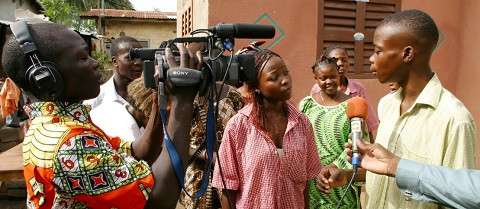 Les jeunes doivent être les leaders pour l'accès universel à l'éducation aux médias et à l'information 2020-08-11 Youth and Digital Transformation Youth are at the forefront of the digital transformation. A look into the minds of youth today can give us a glimpse into our world 20 years from now. UNESCO is fully aware of this reality and the often-understated opportunity to empower youth for change. According to ITU, the proportion of young people aged 15-24 using the Internet is significantly higher than that of the total population. High access to information provides a host of opportunities for youth engagement, leadership for change, and entrepreneurship. This is assuming that they have adequate media and information literacy (MIL) competencies. On the other hand, youth are also exposed to disinformation, online hate speech and violent extremism more frequently than other age groups. As a vulnerable and active group, it is imperative that youth acquire the knowledge and skills to effectively and wisely engage with information, media and technology in the ultra-mediated world where we live. Acquisition of MIL competencies can sharpen youth’s critical thinking, facilitate the expression of their voices, and enhance their engagement in democratic discourses. When youth are media and information literate, they can better capitalize on the benefits offered by the digital age. They also become more resilient to the negative effects. Youth are Co-leaders and Co-creators of MIL for All Peer education is instrumental in empowering youth with MIL. This is the rationale behind the Youth Committee of the UNESCO-led Global Alliance for Partnership on Media and Information Literacy (The MIL Alliance). Started in 2016, and led by a group of young professionals and activists from different countries working in fields related to MIL, the actions of the MIL Alliance Youth Committee have been supported by the Multi-Donor Programme on Freedom of Expression and Safety of Journalists. Youth organizations are at the core of the endeavour. UNESCO has enhanced the capacity of over 140 youth organizations, more than half of which are from Africa, to integrate MIL into their institutional policies and operation. Through the MIL Alliance Youth Committee, youth organizations and networks around the world build synergies at regional, national and local levels. Collectively, they are contributing to the MIL development agenda, by replicating good practices in different regions and forging multi-stakeholder partnerships. Through the annual Global MIL Week Youth Agenda Forum, youth leaders dialogue with policymakers and MIL stakeholders, and showcase their ideas and achievements. The annual Youth Agenda Forum is co-led by UNESCO and the MIL Alliance Youth Committee. During the 2019 edition in Gothenburg, Sweden, youth organizers and participants drafted and adopted a Youth Open Letter to Heads of International Development Organizations and States, urging decision makers to put MIL on their development agenda. The 2020 edition will again involve youth as co-leaders in the planning process. Global MIL Week 2020 will respond to the present COVID-19 Pandemic. It will focus on peer education to expand MIL access to all including youth, under the theme Resisting Disinfodemic: Media and Information Literacy for Everyone and by Everyone. Youth Responses to the COVID-19 PandemicThe COVID-19 pandemic entailed an unprecedented “disinfodemic” blending disinformation, misinformation, conspiracy theories, and information overload. The urgency for MIL for everyone and by everyone echoes across the world. Youth leaders shouldered the responsibility for MIL peer education alongside their senior counterparts. “No time than now has MIL been more relevant for the world and young people. The MIL Alliance Youth Committee responded to the call to combat a pandemic and an infodemic; we seized every possibility to do it even in the face of limited resources”, said Daniel Nwaeze, the global coordinator of the MIL Alliance Youth Committee. Witnessing the widespread repercussions of the “disinfodemic”, the MIL Alliance Youth Ambassadors took prompt measures to ensure their peers are appropriately equipped to tackle the challenges. These include: promoting and hosting a series of webinars on various MIL-related topics within the framework of the UNESCO MIL Alliance response to COVID-19; engaging volunteers from around the globe in the development, translation, and dissemination of a COVID-19 verified information guide; developing a database of reliable information sources on COVID-19 in over 70 languages. UNESCO joins WHO to bolster youth actions combatting COVID-19 The MIL Alliance Youth Ambassadors are also involved in the joint WHO and UNESCO international webinar and other related actions to celebrate International Youth Day. The webinar under the theme “Youth Engagement for Global Action” will take place on 12 August, from 12:30 to 14:00 (CET). Register for the webinar here. For more information about the webinar, please visit: https://on.unesco.org/3a3EBzC. In the pursuit of a media and information literate citizenry and society, youth participation in MIL actions is growing across platforms, institutions, and frontiers. Nonetheless, more young people need to be part of this effort, to facilitate and accelerate this long but important process. For more information on how to get involved or to explore partnerships, contact Alton Grizzle, a.grizzle@unesco.org(link sends e-mail) and Xu Jing, ji.xu@unesco.org(link sends e-mail). URL:https://en.unesco.org/news/youth-needed-leaders-universal-access-media-and-information-literacy
 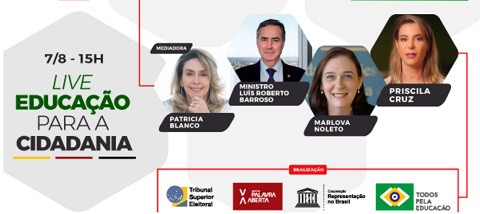 UNESCO in Brazil, Palavra Aberta and TSE discuss education and citizenship in a webinar 2020-08-11 In a virtual meeting opened for the public, the three organizations discussed the production of harmful content and freedom of expression UNESCO in Brazil, Instituto Palavra Aberta EducaMídia, and the Superior Electoral Court (TSE) of Brazil held, on Friday afternoon (7), the webinar “Education for Citizenship”. The objective was to address issues such as media education, democracy, and disinformation in the school environment. The meeting was mediated by Patrícia Blanco, president of Palavra Aberta, and was attended by the Director and Representative of UNESCO in Brazil, Marlova Jovchelovitch Noleto; the president of the TSE and minister of the Supreme Federal Court (STF), Luís Roberto Barroso; and the president of Todos Pela Educação, Priscila Cruz. At the opening, Patrícia pointed out that with the advancement of technology and the offer of new communication tools, today we are all producers and consumers of content and that the excess of information that travels on the Internet is a challenge to the critical sense. According to her, “it is necessary to know how to interpret intention, authorship, and context, in addition to mastering the tools and languages that allow us to exercise our freedom of expression in a conscious, ethical and responsible manner”. Minister Barroso recalled that education is a fundamental prerequisite for the exercise of conscious citizenship. “It is the raw material for citizenship. The lack of basic education, in addition to disturbing the citizen, also disturbs the country, especially now that we are on the verge of a great technological revolution ”. Regarding the current scenario of education in the country and in the world, Marlova Noleto mentioned a recent speech by the UN Secretary-General, António Guterres, for whom “education is the foundation for fairer societies and one of the engines to drive sustainable development ”. According to her, there are 1.6 billion students affected by the new coronavirus pandemic on all continents and the longer they stay out of school, the greater the risk that they will not return, thus increasing school dropout. “We are concerned that the pandemic has exacerbated all educational disparities. Because of it, all the progress made in the last decades can be canceled, ” he said. Priscila Cruz addressed the importance of education being uniform across the country: “Education is important for each of the children and young people in Brazil. We all have the right to education, even in the most remote places. What bothers me most is that we have 55% of children illiterate. We need to provide even more quality education to the poorest ”. In addition to the theme of education and citizenship, the webinar had two other blocks, with the themes "hate speech / harmful content" and "democracy and freedom of expression", followed by questions from the public. The virtual meeting can be fully accessed at the Justiça Eleitoral channel on YouTube (access here - only in Portuguese). Related contentSolidary Education – Citizenship for Education Fund URL:https://en.unesco.org/news/unesco-brazil-palavra-aberta-and-tse-discuss-education-and-citizenship-webinar
 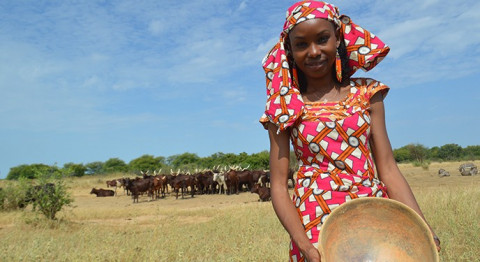 疫情威胁活态遗产,乍得湖区妇女做出回应 2020-08-11 Hindou Oumarou Ibrahim is an indigenous woman from the Mbororo pastoralist community in Chad. As nomadic cattle herders residing in the far west of the country near Lake Chad, her community have developed an array of traditional practices and weather forecasting knowledge, based on their interactions, over generations, with their living environment. During periods of drought or unexpected weather events, the Mbororo turn to such knowledge of changing seasonal patterns to adapt, often travelling vast distances over the semi-arid Sahel in search of water and pastures. Today, Ibrahim works to empower indigenous peoples’ voices and ensure their inclusion on international platforms. She is President of the Association for Indigenous Women and Peoples of Chad (AFPAT) and is currently serving as a Member of the UN Permanent Forum for Indigenous Issues and UN Sustainable Development Goals Advocate. She collaborated with UNESCO to conduct a 3D participatory mapping of Chad’s Sahel desert region, where some 250,000 Mbororos make their living from herding and subsistence farming. She is also a member of the technical and scientific committee of the BIOPALT-UNESCO project. She recently spoke with the Living Heritage Team in UNESCO’s Culture Sector about how her community is coping with the COVID-19 pandemic and its impact on their way of life, as well as their knowledge and cultural practices related to the natural environment and climate change. © ami_vita How is the coronavirus pandemic affecting your community and its living heritage? I am very scared for my community because we’re mainly pastoralists and we depend on the seasons. When it is the dry season, we migrate to other regions and sometimes to other countries – actually most of the time – then we come back to our region or to our country. So, with the lockdown of frontiers and regions, a lot of cattle will be stuck and not able to cross the border. While the ecosystem of the Sahel is very fragile, you can’t manage it, it will be very bad... all the cattle will die, communities will fight among themselves to access the resources, there will not be enough water to drink. These are really the big consequences that I am scared of. We can’t control the season, just as we can’t control the coronavirus. We can’t just say that now we will stop the rainy season until this pandemic is finished so we can produce the pasture or produce the water. Another consequence is that people do not have access to clean water to drink so they can’t access clean water to wash their hands. You can’t ask them to use soap every four hours, it’s completely impossible. And while they do not have access to the market to exchange their products, food security is a big concern; it is a big consequence and it will damage the very fragile people who are there. There is also a lack of information on the pandemic for the community. All the information given in town, is given through social media, TV, radio and in the major languages: Arabic and French. But people do not always speak Arabic or French, so they can’t get access to this information. They do not know what to do, they do not know what is happening, so they can’t avoid the sickness. How can culture and heritage be a source of resilience during such a crisis? People are turning to their traditions and traditional medicine. We always use our traditional medicine to heal ourselves. For us in the community, if you have a fever, or if you have a headache there are some plants that you can use. We can’t maybe heal COVID-19, but people turn a lot to traditional medicine to heal the symptoms that they have in their daily lives. While they can’t go to the hospital because everything is in lockdown, they protect and turn to the traditional knowledge that they do have. I found it very interesting because even the modern medicine is based on plants in the Earth and this can maybe also help people to protect the environment they are living in. They are doing this a lot in the community and hopefully those people that have that knowledge can share it with others and it can be one of the solutions. Another example, when I was talking to one community chief, is about supporting each other when old people need more support. So, when people have food, they need to take it to the more vulnerable. That’s the wonderful culture of the community: you can’t eat alone, if you have food and someone does not, you have to decide to prioritise the kids first, then the old people. This culture of sharing is so useful, even before COVID-19, and now people are coming back to this kind of culture. Can you see parallels between the current pandemic and other contemporary crises we now face, such as climate change? Climate change and COVID-19 have something in common: women leadership is key. Because women fight a lot: in my community they fight climate change and they’re innovators. They know how to share all the resources, what to protect, how to do it. Now, during the COVID-19 pandemic, even in developed countries, when you go to the hospital, the nurses, most of them are women. The women are the ones who work to care for others, as cooks, teachers. They are innovators in developed countries and in communities, and that’s a positive thing. If we can turn our leadership to women, then I think we can save the world. When you turn to the communities and to the general people, women are living in harmony with nature. They are not only protecting our environment but protecting our health. The health crisis has also made us realize how much our health depends on the environment. The food we eat around the world – in developed or developing countries – relies on sharing natural resources. For example, the borders were closed, but food shipping was still allowed as we found that we are not so self-sufficient, but that we depend on each other’s environment. So, environmental protection is becoming more evident for everybody. There are a lot of lessons learnt that we could take from the COVID-19 pandemic. Hope and solidarity, human values can help us to transform our world in a positive way -- and women leaders of course! Do you have a message for other living heritage stakeholders and communities about the future after the pandemic? Looking forward, I think the crisis has made us value our humanity and give us hope. We understand the need to live all together and the fact that we rely on each other. Living in solidarity, harmony, sharing within families and across communities. This protects our health and also the environment. If the world is smart, we can learn from the COVID-19 pandemic. Governments were able to mobilize billions and billions in a month around the world. So, if they inject that money in the right economy, using for example the SDGs, that can help to recover the climate. If we compare the COVID-19 pandemic and the climate, we will see that they both increase food insecurity, vulnerabilities, lack of adaptation, and neither of them recognize frontiers. We can build a big leadership and say hey guys if we managed to respond to COVID-19, we can also respond to climate change and if we want to improve our health, we must protect the environment. Conversation has been edited for length and clarity. To learn more about: The UNESCO 2003 Convention for the Safeguarding of the Intangible Cultural Heritage The UNESCO survey results on how the COVID-19 pandemic is impacting living heritage The resilience of living heritage in emergencies click here Indigenous Peoples UNESCO Indigenous Peoples Bulletin Issue 1: Indigenous Peoples and the COVID-19 pandemic (August 2020) URL:https://en.unesco.org/news/covid-19-threatens-living-heritage-around-lake-chad-women-respond
  Innovation Special: Adapting to Circumstances 2020-08-10 In the third instalment of the Innovation Special, we look at two innovative projects from Latvia and Cyprus, and their adaptation to changing circumstances of the pandemic. Through the looking glass In October 2019, Kurzeme NGO center organized and facilitated 9 discussions about building a cohesive society. People were asked about social cohesion, trust, national identity, culture, etc. One thing that stood out in the discussions, was that for the locals it is hard to accept newcomers, foreigners who have planned to stay in Latvia for a longer time than just a couple of months. And as the main reason for this, was mentioned that they don’t know them and their culture. After the discussions, we also had a chance to talk with some foreigners living in Latvia (they are here as volunteers - some are going home after the program, but some are planning to stay ). We asked them about their challenges while living here – people’s attitudes towards them and others, everyday challenges. A lot of answers were negative -they said that often people don’t answer them, are evasive, don’t know how to communicate with them, etc. The problem of how to make financial concepts such as sovereign debt and tax accessible and engaging to people is at the core of our work. We need people to understand how these processes work, how they are connected to justice and equality, and to feel motivated to take action. With our Bridge 47 project, we are trialling a new and innovative approach: creating a short online game, the Tax Detective, that helps people understand tax dodging. We are experienced in delivering interactive and critical education in formal and informal spaces, but developing an online game from scratch was a departure from our previous work. We specifically targeted members of trade unions in our design and consulted with a number of people involved in the education and justice work of Irish trade unions to understand how to make the game usable in their educational work, and engaging for trade union members. The goal of this project is to change the attitude towards newcomers and migration itself. Nowadays, when a lot of people are going abroad for job opportunities, they often form relationships and build families there. Then there comes a moment when they decide to visit their family here, or they decide to move back home with their family. Also, volunteer and student exchange programs are becoming more and more popular, So it is inevitable that there will be even more people of other nationalities living here among us, therefore it is important to eliminate negativity toward these processes, to reduce inequality among us. Our experience has shown that the most effective way how people learn is by doing and in order to change their minds about some processes the best way is by taking part in those processes. It is also important to develop a culture of conversation necessary for democratic processes. Taking this into consideration it was planned that the project activities would be based on the eye to eye meetings and conversations in small groups. When the pandemic started, we had to make a lot of changes to our project. Since all the activities were based on the eye to eye meetings, we had to adapt. We changed from the eye to eye meetings to filming the persons and their stories, we had planned to invite as host speakers. In Latvia, the emergency situation was until June 9th, but still, there are some restrictions that we still need to follow. And since a week ago, the number of cases increased rapidly, every day we are following news updates so we don’t break any rules. Since now bigger gatherings are allowed we will be holding meetings and the participants will be working with the filmed material. For now, we are filming foreigners who are living in Latvia (some living here for a long time and building their life here, some are here for a while). They are telling their stories about their challenges here, about communication with people around them, about how they feel here in general. These videos will be posted on our Facebook page and organization website so that the local residents can also get to know them better. Meeting participants will be working with these videos to get to know the challenges they are facing and also looking for a solution to those challenges. One of the meetings will include discussion where participants will look at themselves from 3 different aspects – past, present, and future. Discussion “My roots” – each member tries to look into his family tree, in his past. Tries to remember as much as he can about he’s/her family. The present, “My beliefs now”, is a mutual discussion of their beliefs and attitudes about what is happening around us. How do I treat the arrivals and the differences around us? Do I try to find a solution for communication when there is a language barrier? Am I trying to help? What do I think of living in a foreigner here in Latvia? Would I be able to accept someone else in my work/school environment? The future “What if …?” “Participant discussion “What if…?”, in which each participant imagines himself in a relationship with a representative of another nationality, or such a representative enters your family!” “You moved abroad?” What kind of attitude would you like from people around you? What are your challenges? Would you be prepared to move to somewhere else for the sake of your other side? Would it be better for the other party to move to live here? Don't you be intimidated by the attitudes and condemnation of those around you? As a final event, we had planned a big ending event, which was supposed to be planned by the meeting participants. In this event, they were supposed to introduce local society with the work that all of us had done and with the results. And the event was supposed to be in any form that they want. But since the restrictions are still our everyday life and we don’t know what the future holds, we changed the ending event to an exhibition, for which we will have a local opening event, and after that, it will be available for everyone who wants. Some of our work you can watch here: https://www.youtube.com/watch?v=phvRD5tlhuE&t https://www.youtube.com/watch?v=4BTyup8KXAc&t We're hoping for the best and wishing everyone good health. Kurzeme NGO Center is a non-profit organization that mostly works in territory that covers 1/4 of Latvia, called Kurzeme. We are the only organization in Kurzeme, which implements civic society activation and supports activities in all of the Kurzeme region, and has a wider knowledge of active NGOs in Kurzeme and their work, including youth organizations. Local to Global “It is our duty to help young people in informing them and enabling them to become the change they want to see in this world” According to statistics concerning the fulfilment of the 17 SDG’s Cyprus has an overall performance of 70 %, (2019 Global Index) while at a local level, Nicosia scored 53.7 % (SDG Index for EU cities). Internationally, no country is on track to fulfil all of its targets by the 2030 deadline. Moreover, the Spillover Index revealed that Cyprus has the 6th worse performance. Moreover, due to our previous work at a local level, we have learned that emphasis needs to be placed upon increasing awareness and knowledge regarding the SGD’s and their long-term societal benefits, especially, since according to the 2019 Global Index, Cyprus has scored an overall performance of 70% regarding the implementation of SGD’s. On top of that, the younger generations have either not been properly engaged or informed which in turn led to a collective lack of interest. Taking into account the above, the project Local to Global came to address these issues by touching upon several Sustainable Development Goals (G4, G8, G10, G11, G17) through a series of workshops to inform young people and enable them to be the change they want to see in this world. The innovative part of our project was the structure of the type of a workshop which would be easily adaptable and implemented through an island-wide network. YEU Cyprus in collaboration with five different NGO’s implemented seven online workshops about what Global Citizenship Education is and the SDG’s based on non-formal education. In order to ensure a long-term impact of the project, at the end of the workshops, a questionnaire was shared amongst the participants. In this way, participants had the chance to reflect upon their learning, how and if their general global outlook has changed, and through which means we can ensure the perpetuity of learning. Through the evaluation of the results of the survey, and based on those results and the needs of young people we will be able to bridge the gap of a needs-based and youth-targeted approach in initiatives related to SDG’s, through a follow-up project. Last but not least, a manual was created which entailed the methodology and structure of the workshops to promote the implementation also in other countries. This means that other NGO’s in Cyprus or globally could draw from our experience in order to promote change and awareness, and in return enable the continuity of the learning agenda. The manual was also translated in Greek, for greater dissemination and use on a national level. “Local to Global” aimed at enhancing collective knowledge regarding SDG’s, their importance, and long-term implementation of actions by current and future generations in Cyprus. The objectives of the project were: to create networks and coalitions among youth organizations and young people, for further synergies to take place; To foster and develop the sense of initiative for young people, by supporting them in creating grassroots initiatives and youth-led projects; To empower marginalized youth and underrepresented youth and improve their capacities to become informed decision-makers and change-makers in their communities; To provide young people with the knowledge and information to understand the challenges of reaching a sustainable Cyprus and Europe; To increase better understanding of topics on societal issues through NFE methods and techniques; To increase the digital competences of our participants by incorporating a variety of digital tools through the online workshop; To increase the capacities of local and European organizations through the creation of the manual. Since our project was directly affected by the COVID-19 pandemic we had to adapt some parts of our project. Initially, we intended to implement seven workshops, three of them in Nicosia, due to the high concentration of young groups and for us to include a workshop including Turkish Cypriots, and the rest as following: one in Larnaca, one in Limassol, one in Paphos, and one in the Famagusta districts. Due to the lock-down which was issued because of COVID-19, the implementation of the workshops changed. An online version was created and organizations throughout Cyprus were approached for us to implement the series of workshops in collaboration with them. Hence, in the manual where the methodology and structure of the workshops are explained, we have added the unforeseen result of the online versions of the workshops adding upon the initially expected outcome. The organizations which we resulted in collaborating with for the online series of workshops were: the Youth Council of Odou (a rural village in the Larnaca district), Famagusta Avenue Garage organization (bi-communal organization in the Famagusta District), Cyprus Scouts (mainly Nicosia, but had participants from across the island), Soma Akriton (active across the island), GIGEM (Kyrenia district, but had participants from across the North of Cyprus) and two workshops one in English and one in Greek open to the public. Stay tuned for 2021 when we will hopefully be implementing the follow-up project to Local to Global. YEU Cyprus stands for Youth for Exchange and Understanding Cyprus and it is a non-political, non-governmental organization (NGO) based in Cyprus. It was established in 1995 with the aim to foster closer co-operation and better understanding among the young people of the world through the exchange of information, experiences and ideas. About the Author: Marek KakaščíkInnovation and Communications Trainee (marek.kakascik@bridge47.org) URL:https://www.bridge47.org/index.php/blog/08/2020/innovation-special-adapting-circumstances
 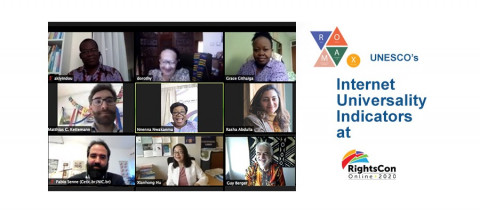 UNESCO advocates Internet Universality Indicators for advancing human rights at Rightscon 2020 2020-08-09 On 31 July 2020, UNESCO convened an online session during RightsCon 2020 to present the national assessment results and impacts of the Internet Universality Indicators for advancing human rights. “It’s important to highlight the human rights dimension of the Internet in the assessment grounded on a package of ROAM principles encompassing human Rights, Openness, Accessibility, and Multi-stakeholder participation,” said Guy Berger, UNESCO Director for Strategies and Policies in the Field of Communication and Information. Mr Berger explained that a national assessment of Internet Universality Indicators upholds an international standard that aims to improve human rights around the world in order to inform local recommendations for a better Internet in the country concerned. “The national assessments progressing in above 20 countries illustrate well how the ROAM principles and indicators could contribute to safeguarding online human rights and advancing Internet development in a holistic approach,” noted Xianhong Hu, the UNESCO focal point of the Internet Universality project. She moderated the session by dialoguing with five experts who are leading the assessments in Ghana, Germany, Benin, Kenya and Brazil. Ms Hu stated: “The Covid-19 pandemic has reminded the world of the importance of the Internet, and UNESCO has also re-affirmed more than ever the relevance of the UNESCO’s Internet Universality Principles.” Representing the two newly launched assessments in Ghana and Germany, Dorothy Gordon, UNESCO’s Chair of IFAP (Information for All Programme), and Dr Matthias Kettemann, Leibniz Institute for Media Research/Hans Bredow Institute confirmed that an inclusive and gender balanced Multi-stakeholder Advisory Board (MAB) has been established to guide the national assessments in both countries. Ms Gordon stated: “Topics such as data sovereignty, digital imperialism and privacy, are in the forefront of our thinking to cope with the pandemic. The whole process linked with the Internet Universality indicators assessment allows us to bring more people in the conversation to tackle Internet governance related issues. The Covid-19 pandemic highlighted the fact that too many policies are tech-oriented, but the UNESCO’s Internet Universality ROAM principles and indicators broaden that discussion.” In his remarks, Dr Ketteman said: “Even for a developed country such as Germany, issues related to accessibility and human rights of Internet such as privacy are still relevant and prevent people from taking part in full-fledged knowledge societies”. Regarding the challenges Germany is facing in the completion of their national assessment, he explained that “the data gathering process can be difficult: we have to look at all the indicators and treat them fairly but we cannot go into details with each one of them due to the different specifics of German federal states”. On the assessment in Kenya, Grace Githaiga representing KICTANET said: “The most striking finding of the ROAM-X assessment in Kenya was the lack of data from institutions and governmental bodies”. She explained that researchers were unable to track marginalized groups and thus formulate appropriate policy recommendations including in some of areas of online freedom of expression, privacy and content regulation. “In Benin, the striking impact of the Internet Universality indicators assessment was the government has quickly followed and implemented the policy recommendations by creating a platform to counter the lack of data and to give researchers access to relevant data,” said Dr. Alain Kiyindou, Professor and Researcher, Université Bordeaux Montaigne. "A framework on the ethics and human-rights in Artificial Intelligence (AI)to foster national AI strategy is also underway” he added. Fabio Senne, representing the Regional Center for Studies on the Development of the Information Society (Cetic.br), highlighted that Brazil was a unique case because it participated in the consultation phase and testing of the UNESCO indicators at the very beginning of the development process. The assessment was well supported by the Multi-stakeholder Advisory Board represented by Brazilian Internet Steering Committee (CGI.br), he stated. In his perspective, the main strength of the Internet Universality framework was its holistic approach and identification of the institutional changes needed for Brazil to fully implement policy recommendations and reforms tackling emerging challenges of privacy protection and countering disinformation. All the experts agreed that the multi-stakeholder approach and its diversity was necessary to successfully conduct a national assessment and that a monitoring mechanism needs to be put in place to support the implementations of the policy recommendations after the completion of the assessments. Mr Berger closed the session by informing that UNESCO is launching a Dynamic Coalition of Internet Universality at the Internet Governance Forum in 2020. There are also plans to develop an online platform with Indicators generated by UNESCO to allow for worldwide sharing of data and knowledge of the indicators assessments. The national assessment reports of Benin, Senegal and Kenya have been finalized and will be published by UNESCO as the new editions of Series of Internet Universality National Assessments in the coming months. In November 2015, UNESCO’s 38th General Conference endorsed the concept of Internet Universality, embracing four ROAM principles: an acronym for Rights, Openness, Accessibility to all, and Multistakeholder participation. UNESCO recognizes these four “pillars” underpin the growth and evolution of the Internet, fundamental to the development of the Internet, in ways that are conducive to achieving the Sustainable Development Goals. The Internet Universality ROAM-X Indicators framework is a set of 303 indicators that aim to assess how well national stakeholders, including governments, companies, and civil society perform in adhering to the ROAM principles of Rights, Openness, Accessibility, and Multi-stakeholder participation. The framework also includes 79 cross-cutting Indicators (category X) concerning gender and the needs of children and young people, sustainable development, trust and security, and legal and ethical aspects of the Internet. Developed over a three-year process of global and inclusive consultations with stakeholders, the indicators were endorsed for voluntary implementation in November 2018 by the 31st Council of the International Programme for the Development of Communication (IPDC). Since then, UNESCO has been working with stakeholders and encouraging more countries to implement national assessments of Internet development using the Indicators. More information on the Internet Universality Indicators project, along with the full version of Internet Universality indicators in English, French and Spanish, is available at: https://en.unesco.org/internetuniversality. URL:https://en.unesco.org/news/unesco-advocates-internet-universality-indicators-advancing-human-rights-rightscon-2020
 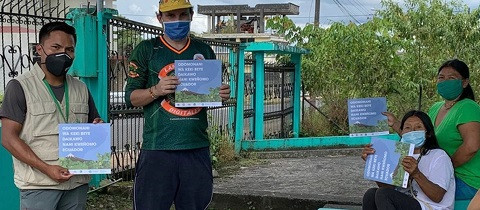 Media and Communications with indigenous peoples in the pandemic 2020-08-08 Denis Yety, Waorani technician and Andrés Tapia, CONFENIAE communication manager, deliver copies of the booklet "Indications to prevent Coronavirus in indigenous communities of Ecuador", to women in the Waorani community, within the framework of the UNESCO project on Interculturality, indigenous languages and COVID-19. @ CONFENAIE The pandemic highlighted the importance of swift, good communication, carrying accurate information in a format and language that would be meaningful for its users. For indigenous peoples, the major challenge was to be in a reliable information stream, avoid disinformation and have the informational tools to prepare and respond to the health crisis. UNESCO offices responded to improve communications and fight the infodemic. Now, more than ever, Governments worldwide should support indigenous peoples to implement their own plans to protect their communities and participate in the elaboration of nationwide initiatives to ensure these do not discriminate against them. States must ensure that indigenous peoples have access to information about COVID-19 in their languages and urgent special measures need to be taken to ensure availability and access to culturally appropriate medical services. It is a major challenge that public health facilities are often scarce in indigenous communities. - Geneva, 18 May 2020-- The UN Special Rapporteur on the rights of indigenous peoples, José Francisco Cali Tzay In the feedback which UNESCO received from indigenous peoples’ organizations and partners through the IYIL2019 information channels, the strong message was that for people to respond appropriately to the pandemic they required accurate, clear and reliable information. Some indigenous peoples live in locations without any internet connection, limited cellphone reception and sometimes limited or no electricity. The challenge of communicating about the pandemic, with appropriate social, legal, educational and cultural responses, all hinge on the choice of the medium of communication, its relevance, the language of the message and its credibility and cultural appropriateness for the communities receiving the messages. The right of indigenous people to express themselves is equally important to their right to access information. As demonstrated in previous humanitarian crises such as Ebola and Zika virus outbreaks, when information is provided in languages that people can understand, many lives can be saved. Languages are important during the COVID-19 pandemic because they are an integral part of the communication strategy and uphold the human rights and fundamental freedoms of their users. UNESCO for example, UNESCO mobilized its partners’ radio network all across the Latin American and Caribbean region. Informative and preventive radio spots against the spread of the virus were produced, distributed and discussed in local languages in collaboration with the International Federation of Red Cross and Red Crescent Societies (IFRC) and the World Health Organization (WHO). These types of multi-stakeholder cooperation are replicated to ensure greater impact of the response to the COVID-19 pandemic. The confusing infodemic about COVID-19 pandemic is made life-threatening due to the ‘dis-infodemic’ dimensions that combinedeliberate disinformationand inadvertent falsehoods. . Given that COVID-19 is spreading to countries where levels of poverty and malnutrition are high and other disadvantages affect indigenous peoples, it is essential to join efforts to expose and debunk incorrect and misleading content, and to ensure information sharing and provide access to reliable and accurate health information in lesser-used, minority and indigenous languages. Appropriate communication channels, means and formats should be used. Furthermore, it is an imperative that specific initiatives are developed and strengthened to empower indigenous peoples with media and information literacy competencies (information, media, and digital skills) needed to detect disinformation and to resist the disinfodemic beyond the COVID-19 pandemic. For indigenous peoples, there are challenges that need to be addressed related to the provision of access to life-saving information for these communities, who are often based in rural areas with absent or limited broadband connectivity or access to other media (radio systems, satellite phones, etc.). Sharing understandable messages with the traditional and youth leaders represents an effective strategy for reaching out to other community members. Targeted Actions/Initiatives UNESCO has developed a tailored approach to communication on COVID-19 to engage Ecuador’s indigenous peoples in advancing prevention actions to protect this highly vulnerable segment of the population. Working hand in hand with indigenous associations and leadership, the Ecuadorian government, the Pan American Health Organization (PAHO), and Community Radios Network (CORAPE), UNESCO has developed specific intercultural activities and communication products in community territories to limit contagion. It has been a collaborative and consensual process sustained through technical and social dialogue. All agreements have been taken in the framework of the “Plan for health promotion and risk communication to respond to COVID-19 pandemic for peoples and nationalities of Ecuador". Intercultural mediation is focused on the cultural, social and environmental needs of indigenous peoples. It is not an adaptation process but a critical analysis that considers the context and resources available for communities to follow prevention measures. The success of prevention communication largely depends on the consultation process with indigenous communities. These consultations and consensus-based actions allow the appropriation of the contents through self-identification, social empowerment and community involvement in decision-making. In this regard, the indigenous grassroots organizations themselves make the decisions on communication products, messages, interpreted indigenous languages and means for transmission. Given the limited access of indigenous communities to the internet, radio is the most influential media. In the case of indigenous territories, it is essential to take advantage of the available networks. Community networks, whether radio or social organizations, have a reach and presence in connection with the communication practices of the communities. The Coordinator of the Community Radios Network (CORAPE), which brings together the indigenous community radio stations of the territory, is a central partner for the purposes of the project. The project is in line with an inclusive human-rights approach, including indigenous peoples, Afro-descendants and Montubio (mestizo coastal) communities have been included as target populations. The community radio project includes the following communication products: a) 20 radio spots in indigenous languages and cultural codes of Afro-descendant and Montubio people to be transmitted through the network of indigenous community radio stations; b) Production, printing and distribution in indigenous languages and cultural codes of Afro-descendant and Montubio (mixed descent) people of a booklet on preventive measures to manage COVID-19 in territories and community settings. This booklet was formulated collaboratively within the framework of the aforementioned Plan and validated by the World Health Organization - WHO / Pan American Health Organization – PAHO. UNESCO has taken part in inter-agency initiatives coordinated by the Office of the Resident Coordinator, notably in Costa Rica, to provide culturally appropriate health assistance to indigenous peoples in the context of the crisis through the development of messages in indigenous languages but also through the identification of mediators and the recruitment of interpreters to provide transparent and contextualized information on the health assistance provided. Targeted Actions/Initiatives The Secretariat of the 2019 International Year of Indigenous Languages (IYIL2019) has created the dedicated web page “COVID-19 Pandemic: Language Matters”. It includes a collection of resources in and about indigenous languages related to COVID-19 prevention (public health messages and recommendations), as well as statements and policy-guidelines issued by other UN agencies and other organizations, and information about relevant initiatives that aim to tackle the negative impact of the pandemic on indigenous communities worldwide. These resources, links and other material is shared daily on the related IYIL2019 social media (Facebook, Twitter and Instagram), followed by thousands of indigenous language users from all over the world, who often repost the information in their relevant local networks, either on social media or different communications tools, such as radio, television, and other. Active indigenous media and youth organizations also reach out to the Secretariat to share relevant resources, regularly updated on the dedicated page. UNESCO dedicated one of its Social and Human Sciences webinar series “Inclusion in the time of COVID-19” to indigenous peoples (on 5 June 2020). Through testimonies from different actors, including the new UN Special Rapporteur on the rights of Indigenous Peoples, José Francisco Cali Tzay, the webinar brought forth diverse perspectives on the ways the pandemic has adversely affected the enjoyment of basic rights by indigenous peoples. The webinar highlighted issues of access to information, on consultations between government and traditional authorities, on economic and health vulnerabilities, on indigenous values of solidarity and intergenerational care, and on issues of cross-border movement for herders. The series highlighted the role of the International Coalition of Inclusive Sustainable Cities. The webinar promoted international dialogue and the promotion of good practices of successful interventions that could be replicated or serve as source of inspiration. In connection with the UNESCO Media and Information Literacy (MIL) Alliance COVID-19 Response, one webinar focused on MIL for Indigenous Peoples. The webinar gathered indigenous actors from Australia, Brazil, and Costa Rica and highlighted the challenges faced by indigenous communities and case studies of initiatives that seek to ensure the accessibility of credible information and knowledge in local languages and enhancing their media and information literacy capacities to combat misinformation and disinformation and to tackle racism and discrimination by mobilizing more inclusive online and offline indigenous communities. Through partnerships with the UNESCO-led MIL Alliance (GAPMIL) Youth Committee, the MIL Alliance Youth Ambassadors developed the Health Information Literacy Alliance. Verified COVID-19 and MIL related was translated and distributed in 70 languages including indigenous dialects from Brazil India and the Arabe Region. To counter the spread of disinformation connected to the new coronavirus, UNESCO produced a series of audio and video messages as well as MIL learning resources. These resources were translated and adapted in 45 languages, including indigenous languages from Africa and Asia. In Myanmar, for instance, to reach the maximum audiences, the UNESCO resources were translated and adapted in 19 local languages. The same was done in Africa. UNESCO, with its partners (Radio France International and France Media Monde), made available the resources in Fulfulde, Mandingue, Swahili, and Wolof. UNESCO is committed to further support the Member States with new audio, video, and MIL graphics resources for indigenous communities. Within the framework of the project « Youth as Researchers », in partnership with UNESCO Chairs (NUI Galway ; Penn State University), knowledge and data are being collected on, with and by young women and men from different regions, including indigenous youth, around a set of important questions emerging from the pandemic crisis, such as the use of Artificial Intelligence (AI), rising inequalities, mental health, intergenerational relationships, the impact of school closures and as well as their consequences (positive or negative) on the resilience capacity. URL:https://en.unesco.org/news/media-and-communications-indigenous-peoples-pandemic