
News
Catch up on what’s happening in the world of global citizenship education.
1,668 results found
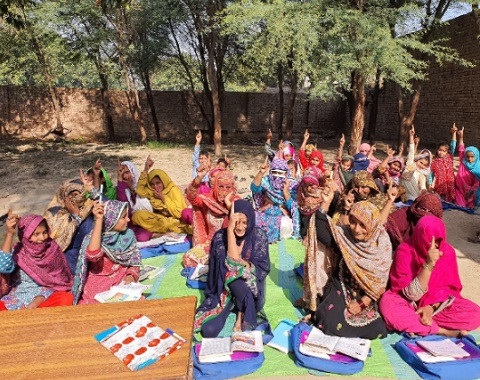 Preparing for the new normal in Pakistan amid COVID 19 – A case for accelerated learning 2020-08-25 By Hamza Sarfraz, Policy Researcher and Zain ul Abidin, Programme Specialist at Idara-e-Taleem-o-Aagahi Several months after it first hit globally, governments and experts across the world have now finally begun to register the long-term consequences of the COVID-19 crisis. Education for children has emerged as a major casualty, particularly in the Global South where many countries were already struggling with learning crises. The school closures, limited access to online learning, and already constrained education systems have coalesced together to bring about an adverse situation. The potential learning losses suffered by children, both temporally and economically, are significant. The search is on to find an immediate solution for such an unprecedented crisis. Considering the time and resource constraints, a good solution has to fulfill a certain set of criteria. Essentially, it has to be 1) low-cost, 2) scalable, 3) easily available, 4) targeted specifically at the issue of learning losses, and 5) workable. In this regard, accelerated learning has been identified as potentially effective solution to learning losses. Pakistan has a large-scale workable model of accelerated learning underway that covers all bases already, which this blog describes. As context, Pakistan had already been experiencing a deeply-entrenched learning crisis before the onset of COVID-19. Data from 2019 shows that 75% of children in Pakistan cannot read and understand a simple text by age 10. Twenty-four million children are out-of-school, equivalent to nearly 47% of those aged 5-16 years, among these 24 million children, 5.6 million had dropped out from school. This is particularly pertinent as the same solutions offered to bring these children back up-to-speed with their age-appropriate learning levels when re-enrolling them in school can be studied and modified for those now forced out of schools during the COVID-19 crisis. The Advancing Action for Adolescent Girls project (A3G) this blog describes addresses precisely this issue by providing accelerated learning to over 20,000 girls in Pakistan who have either dropped-out or, in some cases, not attended school before. The A3G project supports flexible schooling options for second chance education for vulnerable and disadvantaged adolescent girls (aged 9-19) in rural areas in the marginalized Southern region of the province of Punjab, Pakistan. The girls identified have either never enrolled in school or have dropped out in the past 24 months. For girls never enrolled in schools, the project offers a 90-day course called “Chalo Parho Barho”, roughly translated to “Let us read and grow”, which supplies bursts of remedial learning in literacy and numeracy domains. For girls who dropped out of school in the past two years or less, the program provides opportunities for finishing primary and middle grades. There is also a pilot underway with a small group for students who are finishing their secondary school. Learning in the program is not envisioned as in a formal setting. Instead, it is tailored according to the learning level of each individual child, as recommended in the 2020 GEM Report as the correct approach for inclusion. Once a child comes to the learning center, a one-on-one, facilitated diagnostic assessment is undertaken with the student which determines her learning level. This entire process is based on a ‘teaching at the right level’ (TaRL) approach. Once the learning level of the student is determined, the child is assigned a particular strand to continue his/her learning. The expected student learning outcomes (SLOs) are selected from Pakistan’s National Curriculum for each of the strands. These SLOs are then aligned with the textbooks and selected topics are taught to the students. One diagnostic assessment is taken in the 1st week of enrollment, and one summative assessment is taken at the end of each strand. All students appear in the provincial PEC Examination too. Formative assessments are a component of day-to-day teaching. This specifically designed curriculum covers an extensive syllabus in a short-period of time and thus prepares children to appear in mainstream education assessments. Not only is this effective, it is also scalable thanks to being low-cost, much less than the average amount spent per child in a government school over the same time period. The program works with capable teachers from within the communities, trains them, provides them with resources, and then encourages them to teach these designed accelerated learning programs. So far, the project has been a success in mainstreaming more than 8000 girls, with a next cohort already preparing for their exams. These girls appeared in the official board examinations for primary and middle grades (administered by the government) and as many as 92% of them cleared the exams. This highlights its efficacy in helping children catch up on learning losses. Furthermore, the accelerated learning program is already in the process of adapting to distance-learning approaches. Right after COVID-19 pandemic was recognized in Pakistan and a lockdown policy announced, key content from the syllabus was digitized and steps are now being taken to explore low-tech solutions such as radio/tv. Furthermore, the program ensures that young girls do not face additional inequity and suffer further stress and anxiety during the pandemic. Girls are taught core life-skills through short animated films and mobile cinema, which can create a positive change in their attitudes and mental resilience. This teaches strong values of leadership, communication, health & hygiene and critical thinking ability. In a post-pandemic world, a lot of children are at risk of being left behind their global peers due to time away from school. The challenge is to provide these children learning solutions that can quickly make-up for the gaps that may emerge, and to do it within the limited resources available. Given the large-scale and successful implementation over a wide region and with a large number of children, A3G provides governments in the Global South with a potential blue-print on how they can meet their needs. URL:https://gemreportunesco.wordpress.com/2020/08/21/preparing-for-the-new-normal-in-pakistan-amid-covid-19-a-case-for-accelerated-learning/
 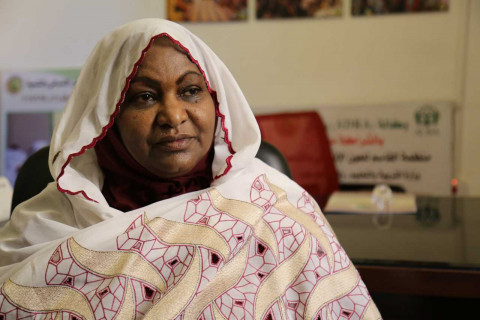 ‘Women’s empowerment starts at the grass-roots level’: An NGO in Sudan supports thousands of vulnerable people a month 2020-08-21 Ahead of World Humanitarian Day on 19 August, OCHA is celebrating humanitarians who are playing an important role in saving and protecting people’s lives despite conflict, insecurity, lack of access and the added challenges of COVID-19. By Nahla Zarroug, Communications Officer, and Saviano Abreu, Head of Communications, in Khartoum, Sudan When we met Khadiga Al Gassim at the office she works in with her colleagues in Khartoum, Sudan, we realized that the humanitarian world is not something new to her. With a calm and warm voice, she explained how she left – almost 10 years ago – her long career and senior positions with national and international organizations to create the volunteer-based non-governmental organization (NGO) Al Gassim for Humanitarian Aid and Development (AGHAD). Khadiga felt it was a good moment to leave the structures behind the development of polices to alleviate poverty to be one of the front-line responders. And until now this strong woman, already in her sixties, wakes up early every day and works hard to mobilize help and provide food to the most vulnerable people, support orphans in the poor neighbourhoods of Karthoum, help people displaced by floods across the country, and empower women to protect them against gender-based violence. Khadiga explained how AGHAD manages to provide daily meals to more than 18,000 people living on the outskirts of Khartoum, with the funding the organization collects only from its own volunteers and supporters. But Khadiga believes that more has to be done. “Since COVID-19, prices are increasing, people have lost their jobs, and more and more people need help,” she explained. Hunger has indeed increased in Sudan. The ongoing economic crisis, high inflation rates, and necessary measures to contain the COVID-19 pandemic have pushed up food prices in the country. Now, more than 9.6 million people in Sudan are going hungry every day, 65 per cent more compared with the same period in 2019. A clear example of this is the increasing demand for the school-feeding programme that Khadiga and her team support in River Nile State. “We directly pay the school meal for 150 students whose families cannot afford it. Many other schools approached us for the same support, but unfortunately AGHAD does not have enough funding,” she said. Khadiga is most proud of the work her organization is doing to help vulnerable women. Women’s empowerment is a cause dear to her heart, and seeing women rise from extreme poverty or situations of violence, to be able to stand on their own, inspires Khadiga to continue her work. “Since the start of the programme, over 3,000 women have become literate and acquired income-generating skills. Now they can support their children and families,” she said. Women from Karrary Locality, in Khartoum State, Sudan, receive their certificates after completing their studies in the literacy programme organized by AGHAD, with the support of ADRA. Credit: AGHAD Despite the challenges and all this work, Khadiga does not seem tired. “When you work with vulnerable people who are in dire need of assistance, no matter how much you do, you still feel it is not enough and you need to do more,” she said. Khadiga has a dream: to mobilize more support, assist more people and, in particular, empower more women. “The journey is long. Working in the voluntary field requires participation, partnership and support at the national, regional and international levels to achieve our goals. Women’s empowerment starts at the grass-roots level and, from here, we can help not only women in Sudan but women all over the world,” she said. URL:https://www.unocha.org/story/%E2%80%98women%E2%80%99s-empowerment-starts-grass-roots-level%E2%80%99-ngo-sudan-supports-thousands-vulnerable-people
 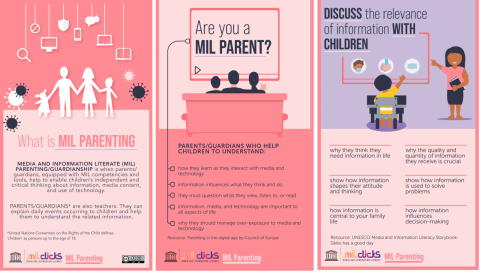 МИГ воспитание детей: 10 полезных карточек, которые помогут вашим детям в критическом осмыслении информации 2020-08-19 UNESCO produced a series of graphic messages on Media and Information Literate (MIL) Parenting. Parents/Guardians are also teachers. This reality has intensified consequent to the COVID-19 pandemic. Parents/Guardians can explain daily events occurring to children and help them to understand the related information. MIL Parenting is when parents/guardians equipped with MIL competencies and tools, help to enable children’s independent and critical thinking about information, media content, and use of technology. The UNESCO Tashkent Office prepared translations of the graphic cards into Russian and Uzbek. Download all the graphic cards (ZIP File): in Russian - Uzbek.Download and share them widely! Recall that, at the outbreak of the COVID-19 pandemic, UNESCO produced visuals, graphics and social media messages to counter disinformation, fight discrimination, and promote best practices. More visual resources are available here URL:https://en.unesco.org/news/mil-parenting-10-useful-cards-help-your-children-critical-thinking-about-information
  Eutopía Magazine No. 18 Call: Rethinking Territorial Development in Times of Crisis in Latin America 2020-08-19 The Eutopía Magazine of FLACSO Ecuador opens a call for articles for its next edition. For this edition, the Journal seeks to answer, among other questions: What is the current state of the critical approach to Territorial Development in Latin America? What experiences in terms of impacts exist in relation to territorial development policies in the continent? Has centralism been overcome in planning and development processes? What experiences exist in the implementation of territorial governance systems? What has been the territorial response to the current pandemic situation (Covid-19) in Latin America? The call is open until August 30, 2020. URL:https://www.flacso.org/secretaria-general/convocatoria-revista-eutop-no-18-repensando-desarrollo-territorial-pocas-crisis
  Respect for human rights must become an everyday reality, UNESCO’s Director-General said in her welcome address at the Samarkand Human Rights Web Forum 2020-08-19 On 12-13 August 2020, the Samarkand Human Rights Web Forum was held in Samarkand in the format of a videoconference on different issues of rights of youth. It was a part of the UN75 initiative proclaimed by the United Nations during the year of its 75th anniversary and served as a follow-up to the Asian Human Rights Forum held in Samarkand on 22-23 November 2018. It was aimed to discussing improvements in existing international and regional instruments and mechanisms for the protection and promotion of rights of youth. The Forum was organized by the Government of the Republic of Uzbekistan, the National Centre for Human Rights, the Ministry of Foreign Affairs of the Republic of Uzbekistan in partnership with the Office of the United Nations High Commissioner for Human Rights (OHCHR), the United Nations Country Team in Uzbekistan, the OSCE Project Coordinator in Uzbekistan and the Friedrich Ebert Foundation. During the two-day discussion, the participants discussed the role of young people in the implementation of sustainable development goals, identified key problems in the implementation of their rights, raised issues of human rights education for youth, as well as considered the role of the young generation in ensuring a safer future towards 2030. The Forum was attended by representatives of UN specialized agencies, including the International Labour Organization, the International Organization for Migration, the United Nations High Commissioner for Human Rights, the United Nations Development Programme, the United Nations Educational, Scientific and Cultural Organization, the United Nations Population Fund, the United Nations Children's Fund as well as representatives of the African Union, the Asian Parliamentary Assembly, the Commonwealth of Independent States, the Council of Europe, the Inter-Parliamentary Union, the Organization of Islamic Cooperation, the Organization for Security and Co-operation in Europe, the Shanghai Cooperation Organization. More than 30 youth organizations from all the regions of Uzbekistan participated in the Forum, including the Youth Union of Uzbekistan, the Youth Parliament under the Legislative Chamber of the Oliy Majlis, the National Movement "Yuxalish" and others. The Director-General of UNESCO, Ms Audrey Azoulay, gave a welcome address at the opening of the Forum participants. In her video message, she stressed the importance of calling for universal peace, and noted that human rights must become an everyday reality. "The universal message of peace has been vital for the past 75 years. It will be even more important in the future, because we need to come to making human rights an everyday reality, we still have a very long way to go especially for young people. Making these rights a reality, creating a new opportunity for youth – this is what UNESCO’s commitment to the future generation is all about. It means allowing them to reach the full potential through education and UNESCO is, as you know, strongly committed to this right especially for vulnerable youth, for girls, for women, for refugees. Secondly, this means giving young people the right tools to navigate tomorrow’s world, a world, where digital issues and an environmental protection will be more essential than ever. UNESCO works to provide youth with the skills they need in these fields. Lastly, it means supporting young people’s involvement in these policies so they can be active participants, not just observers". Full video message (24:48). Mr Alexander Schischlik, Chief of Youth and Sport Section of the Social and Human Sciences Sector of UNESCO Headquarters gave a presentation at Session 3 of the Forum. He spoke about how to strengthen human rights education (HRE) for youth and gave examples of different UNESCO initiatives:"Strengthening human rights education for youth means greater efforts to ensure that HRE is holistic, inclusive and equitable – that it is available for all youth groups in society, through formal, non-formal and informal spaces. It must also be value-based, promoting universally shared values such as non-discrimination, equality, respect and dialogue. All this, of course, requires also capacity and investment for adaptability and contextualization – from content and curricula to teachers, from learning methods to learning spaces, from families to community services". Mr Schischlik stressed that the promotion of civic engagement of youth contributes to enhancing human rights education:"It is a means for them (youth – ed.) to contribute to driving change and to improve the societies they live in. This provides a sense of purpose, meaning and belonging that connects youth to their societies and which is absolutely fundamental in preventing risk behaviours, violence or marginalization". The Forum resulted in the adoption of the Samarkand Resolution "Youth 2020: Global Solidarity, Sustainable Development and Human Rights", which calls upon States to undertake a number of initiatives. The Resolution also called on the UN General Assembly to take note of Uzbekistan's initiative to adopt a new International Convention on the Rights of Youth. At the 72nd UN General Assembly, the President of the Republic of Uzbekistan H.E Mr Shavkat Mirziyoyev proposed the development of this Convention. URL:https://en.unesco.org/news/respect-human-rights-must-become-everyday-reality-unescos-director-general-said-her-welcome
  Emanuela Di Gropello: “Education in Latin America faces a silent crisis that will become very loud. But we can build on it.” 2020-08-18 The coronavirus (COVID-19) is having a deeply worrisome impact on education in Latin America and the Caribbean, according to Emanuela Di Gropello, the World Bank’s regional practice manager for education. It’s also a “silent crisis,” she says. How could the pandemic not have a profound impact on education? Schools are closed across the region. Over 170 million kids are out of school – many of them poor or from disadvantaged areas – and grappling with mostly improvised remote education during a crisis that affects their families in so many ways. Learning losses are likely to be steep, as will learning inequities and dropouts. Emanuela discovered early in her career that education is at the core of the problems pulling back Latin America, and 20 years after joining the World Bank this perception hasn’t changed much. But there is, she believes, a possible counter story to the challenge we now face in the region. -How bleak is this scenario, and how would you describe the crisis we face? First, we must clearly recognize that the situation is very serious for the education sector, and I believe people will increasingly realize that. It’s a bit of a silent crisis; it’s not what we immediately see. The health crisis is obvious, and the economic and social crisis too. But the education crisis is very much in the making and will be more visible moving forward. It relates to the very likely learning losses and increased learning inequities that we are going to notice in the region. The silent crisis will become less and less silent and will eventually become very loud. Schools are closed in nearly all the countries in the region. This basically means that students must continue studying and learning at home. This is a challenge for all: for households with good connectivity, because remote learning is not easy, and more so for households that do not have good connectivity, live in more remote or disadvantaged areas, or come from more disadvantaged backgrounds. They may not have access to any remote learning or be able to implement it effectively. If we think that 25% of learning is usually lost during the summer (in normal times), we can appreciate the possible implications of school closures. And even when schools have reopened, the recession sparked by pandemic control measures will further exacerbate the damage on education outcomes. "There are two factors that make it very problematic in our region. Latin America was already facing a learning crisis, with very high levels of learning poverty and stark inequities, and, secondly, the level of connectivity, while higher than in some regions, was still below expectations. " -How is this different in Latin America from other regions? The likely learning losses are everywhere in the world; that’s why some countries are starting to reopen schools, often starting with the more disadvantaged students. But there are two factors that make it very problematic in our region. Latin America was already facing a learning crisis, with very high levels of learning poverty and stark inequities, and, secondly, the level of connectivity, while higher than in some regions, was still below expectations. What this means is that about 50% of students are not able to read properly by the age of 10. And, in a context where, on average, less than 60% of individuals use the internet, even in the most advantaged backgrounds, the risks to learning are particularly high—and all the more so for the most disadvantaged. -Will dropouts also be a problem? Yes, we will see a lot more youth dropping out. And for three main reasons: first, because during schools closures the relationship between educators and students becomes looser. This makes it easier to lose kids: not all are logging in as they should, assuming they have access to remote learning; and many of them do not even have this opportunity. A second issue is that if there are significant learning losses, there is a fair risk that people will drop out soon after schools reopen. And the third issue is that this risk will be further exacerbated by the economic crisis, which may drive many households to pull children out of school. All these situations are particularly serious in Latin America because of the preexisting issues and the expected severity of the economic crisis. -How is the World Bank helping mitigate this impact? Our response—and the governments’ response—is focused on three main phases. Currently we are coping with the crisis, which is the first phase. That is, helping governments set up effective remote distance learning systems. This is where most of our energy has been put so far, and countries are stepping up to the challenge and being quite proactive and innovative, and very open to sharing and exchanging good practices among themselves. Countries have also turned to education programs with lower-technology options, like television and radio, to increase access to remote learning for households with no connectivity. A second phase will happen when schools reopen. We can call this phase recovery/managing learning continuity, and the challenges will be many. Designing and implementing protocols to reopen schools safely, as well as mitigating the learning losses with remedial education programs and other academic and pedagogical measures, will be very important. We need to be able to train and redeploy teachers and make sure they can assist the most vulnerable and those who have suffered the most. And we need to have early warning systems, to monitor those who are at most risk of dropping out and target them, so that we don’t lose them. Support to this second phase, through technical assistance and operational support, is already well underway, as countries need to be ready to act swiftly to mitigate the costs on education outcomes. -You mentioned three phases. What would be the last one, moving ahead? The third phase will be the improvement of education and what we could call the silver lining of this crisis. We have been framing a response along these three phases, which overlap. The third phase is where we have the potential to build better than before. One major priority will be to sustain and improve some of the innovations developed during the first two phases. This may entail, for instance, expanding education to areas which were underserved in the past through remote learning and scale-up of computer-assisted learning to teach at the right level. Also, and as we fear that in the medium-to-long term the economic crisis will be pervasive, with a lot of public funding possibly redirected to urgent economic and social matters, we will need to build better in terms of structural reforms. This translates into simplifying curriculums and managing and deploying teachers more effectively, for example. These reforms have been delayed and we can now implement them. Furthermore, we have discovered during this crisis how difficult it is to be a teacher and that parents have a critical role in supporting their children’s education. This must be appreciated and rewarded. And finally, there is now a nice dynamic among Latin American countries in sharing their experiences in the education sector. I hope this collaboration continues going forward so that we can do things better in the future. Latin American countries should seize these opportunities, which complement each other, to build education systems better than before. URL:https://www.worldbank.org/en/news/feature/2020/06/01/covid19-coronavirus-educacion-america-latina
 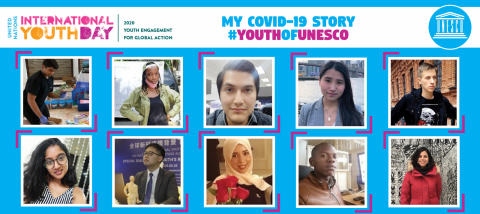 COVID-19 Pandemic: Youth Engaged in the #NextNormal 2020-08-18 Today, we celebrate International Youth Day, and this year’s theme – youth engagement for global action – is reflected in the hundreds of positive stories of youth engagement and resilience that we received during UNESCO’s “My COVID19 Story” campaign. The storytelling campaign was launched in April of 2020 to serve as a platform for youth around the world to share their voices and highlight their different lived experiences during the pandemic, including their feelings, perceptions, and innovative initiatives to find solutions to the crisis. In total, the written and video testimonials that UNESCO received represent all regions of the world, proving once again that they are key actors when it comes to developing innovative solutions to the global challenges that the world faces. Perceptions, Lived Experiences, and Youth Action During the Pandemic Throughout this pandemic, youth have sometimes been accused of spreading the virus and lacking respect for quarantine and sanitation procedures. However, this initiative has shined a light on the fact that youth are among the ones who are most active in responding to the pandemic and helping their communities remain safe and develop coping strategies. Young people, such as Maria from the Philippines, Farkhad from Kyrgyzstan, Olga from Belarus, Akwasi from Nigeria and Manuel from Argentina, demonstrated the power of youth engagement in unprecedented times of crisis through the development of major initiatives. Social bonds The testimonials represented youth perceptions of their experience during the virus, particularly in relation to lockdown measures. Although many expressed their enjoyment of increased family time, Crystal (11) from Hong Kong does not experience that privilege; she has been separated from her father for over 5 months due to him being in Taiwan, where he must stay and work. Overall, the lack of in-person contact (not being able to see friends and family members) was a common difficult experience for youth to navigate. Culture Another noted difficulty by youth was finding ways to celebrate traditional events that are deeply important to many cultures, such as weddings, funerals, musical/theatrical performances, or the celebration of Ramadan. Many of these have been shifted online; Siwon (24) from South Korea explains that performing arts centers, such as The National Gugak Center and the Seoul Donhwamun Traditional Theater have shifted to livestream performances. Mental health Many respondents also reported on how they have found ways to ensure that their own mental health does not suffer. Some mentioned that they discovered new hobbies and engaged in activities such as martial arts, meditation, and yoga. Pearl (13) from China, even started her own cooking channel, and Palomi (19) from India has spread awareness about mental health through her Instagram: instagram.com/thepsychehealer, where she posts about different quotes and tips related to mental health or how to change certain mindsets. This resilience speaks to the power of community, rather than society, during this time. As Moises (25) from Mexico explains “My community has learned that as humans we are so fragile alone, but together we can make a huge change.” This power of collective action is reflected in the testimonials, as youth have come together to tackle the challenges of the crisis. The following challenges were most commonly noted, irrespective of country or region: food insecurity, loss of employment, difficulty to provide universal access to education, discrimination and racism, increased cases of domestic violence and harassment, a lack of belief in the existence of the pandemic, increased difficulties in marginalized and vulnerable communities, weaknesses in healthcare systems and governments, stigma around the virus, and stress and depression. Community and vulnerable people Among the video submissions we received from different communities around the world, we have several which showcase the most the importance of young people’s engagement in initiatives aimed at helping vulnerable people. For example, various video testimonials from Eshana (a member of CCV Global from Sri Lanka who delivers COVID-related supplies to individuals), Tammy (a member of the Mask Volunteers from the USA who makes face masks for community members), and Sanjana (a woman from the UK who created posters and baked cupcakes for healthcare workers), all of whom were involved in distribution of items for their communities. Dhruv (16) from the USA created the initiative “Teens Helping Seniors” to deliver groceries to elderly individuals and working with “Arts-n-Stem4Hearts” to distribute personal protective equipment (PPE) to health care workers. Access to education Other initiatives focused more on the theme of education. As Justin (25) from Zimbabwe explains, “Educational disruption has affected learners. This is why I teach students on WhatsApp through voice recordings and sharing notes as text messages. This makes it cheaper to access information as [access to strong internet speed] is expensive.” Ifunanya (23) from Nigeria similarly provides free lessons to primary and secondary students in her driveway. Misinformation Another way to educate is through fighting misinformation. Tiancheng (27) from China disseminated medical knowledge to eliminate prejudice and misunderstanding around the virus and the victims of the virus. Shivang (23) from India created posters to support COVID-19 survivors and to raise awareness about proper sanitation measures. Aida (19) from Kazakhstan and Nhial (21) from Kenya have worked on informative campaigns for UNICEF Kazakhstan and Kakuma Refugee Camp & Kalobeyei Integrated Settlement in Kenya, respectively. Online hate speech and discrimination Zhong (17), from China, explains that “Misleading, biased information and conspiracy theories have resulted in hatred in racism.” Aline (32) from Brazil noted she is concerned about “The increase in prejudice and racism, especially because [she is] an immigrant.” Wuhan, where the initial outbreak occurred, has faced many challenges with discrimination, and Belinda (14) and Sally (14), both from China, have made posters to support Wuhan and end such discrimination. Overall, these actions show that youth are engaging in peacebuilding activities and showing resilience during the COVID-19 crisis. Eyes on the Future These testimonials speak to the fact that youth are at the focal points of resilience-building and will shape the #NextNormal. Numerous responses, including expansive remarks by Jennalynn (18) of the USA, and Fatma (28) of Oman, demonstrate how youth are observing the positive impact of this crisis on the planet and on climate change. Fatma describes how it has served as a type of “rebalancing of the earth after years of high levels of pollution, where the environment suffered from human selfishness and its struggle to drain the wealth of this land.” Still, despite this resilience, it is important to note that youth worry about the future, especially with the general difficulty with adapting “to a changing reality,” as Dmitri (19) from Russia explains succinctly. This is particularly hard for vulnerable and marginalized groups, as explained by many youth who noted the lack of infrastructure and government involvement in helping these groups. Gol (32) from Iran was particularly concerned about this, as it is leading to increased risk of infection with the virus, but also poorer mental health in vulnerable populations. Overall, the insightful knowledge about how COVID-19 affects different people differently shows that youth are thinking beyond the direct impacts of COVID-19. Throughout the “My COVID-19 Story” Campaign, which we bring to a close today, the deepened solidarity and empathy expressed throughout these responses speaks to the influence that young people – the world’s future leaders – will have in the #NextNormal. *** During the “My COVID-19 Story” campaign, young people have been sharing with us their creativity, knowledge,humour, innovative ideas and messages of hope:Explore their creative touch here *** Learn more about the My COVID-19 Story campaign here! Share with us your inspirational story by creating your own video! How? Sign up and do it here UNESCO Youth Programme URL:https://en.unesco.org/news/covid-19-pandemic-youth-engaged-nextnormal
 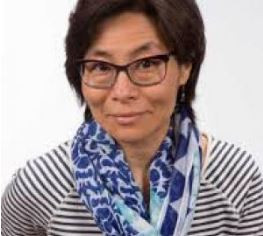 Lifting the Floor: An interview with Dr. Su-Ming Khoo 2020-08-18 On June 17, Dr. Su-Ming Khoo presented the role of critical global citizenship education in reducing and understanding global inequality through solidarity at the Bridge 47 Knowledge Exchange Partnership event. "Inequalities and Solidarity: The role of Critical Global Citizenship Education in responding glocally to marginalisation in the Global North" was held over three days with more than 20 participants. Contributors included leading Researchers and Academics from across Europe. We were fortunate enough to be able to have an interview with Dr. Khoo regarding her presentation on the day. The presentation itself began by noting how solidarity is a complex topic to fully understand and even more complex in the multidimensional sphere of GCE. The concept of “bioethical solidarity” was proposed as an approach to help critical GCE find itself when dealing with challenges such as inequalities within democracy or health injustice. A visual metaphor of a rope was used to elucidate the multi-stranded nature of solidarity and the historical direction in which each of the different strands have been woven. Just as ropes can be made right or left-handed, approaches to global challenges can be left-wing or right-wing. To understand this fully it was suggested that solidarity should replace the word fraternity from the French revolution motto "Liberty, Equality, Fraternity” with the principles of bioethics namely “Justice, Equality, Solidarity”. The word fraternity symbolises the exclusion of many and critical GCE rejects this in favour of a more democratic and inclusive approach. Dr. Khoo noted how contemporary concepts of global citizenship have been shaped by neo-liberal attempts to transform the modern welfare state. It was pointed out how the New Deal or Keynesian Welfare states came into being alongside imperialist and socially conservative social contracts. But critical GCE rejects market freedom in favour of social justice and solidarity. This begins with a grassroots approach centred on bottom-up struggles. The 20th century social contract was renegotiated by groups like Trade Unions but was weakened after 1918 as demands for solidarity remained in a right-handed or neo-liberal fashion. The historical background of global co-operation has many failures around issues like global justice, health and the control of multinationals and the protection of corporate rights over knowledge with little regard for the poor and vulnerable. However Bioethical commitments require everyone to have basic ethical standards and minimum core rights. Dr. Khoo also stressed the importance of critical GCE in assisting those whose citizenship has become eroded or those who have become “stateless”. It is clear bioethical solidarity offers GCE practitioners a critical lens to explore the plight of the most vulnerable. Recent events such as the death of George Floyd in the United States and the ongoing Refugee crisis in the Mediterranean should remind us of the importance of global solidarity. Here is our interview with Dr.Khoo, we hope you enjoy it! Interview by Christian Bardales Could you tell me a little bit about yourself? My name is Su-Ming Khoo and I'm a lecturer in the School of Political Science and Sociology at the National University of Ireland in Galway, which is in Connemara in the west of Ireland. It's one component of the federal National University structure, which has several campuses across the country. I would describe it as a medium sized public university with around 19,000 students and around 2000 staff. It's a comprehensive public university with all the different disciplines and specializations that you would expect in a public university. Originally, I was born in Malaysia of a Chinese ethnic heritage. I lived in England for 12 years where I did my upper secondary schooling and bachelors. I did my PhD in Northern Ireland on democracy and development in Malaysia on a Northern Ireland Department of Education scholarship. I was lucky enough to get my first temporary position at University College Cork nearly 25 years ago before I received a tenure position at Galway. I've been working for about a quarter century now on the basic connections between development and democracy.Because of my Southeast Asian roots, I have an interest in the Southeast Asian region, diaspora, and migration, but broadly I've been working on this connection or lack thereof between human rights and development. I'm also involved in lots of different collaborative networks and projects that overlap with Bridge 47 including one currently funded by the Irish Research Council on redefining quality with equity in mind for higher education. It's broadly on the theme of critical higher education studies. I’m always researching and writing about the connections between development and human rights. I'm particularly interested in the ‘Third World’ approach to human rights, or Right to Development approach. I'm very broadly interested in the political economy of neo-colonialism and development including questions around capitalism's historical connections with racism, patriarchy, and economic exploitation. I'm involved in quite a number of different overlapping research networks which work on decolonial ethics and human development. In your presentation, you spoke of bioethical global citizens citizenship education. How will you define that? The ethical part of critical global citizenship education basically relates to each of these words, critical, global, citizenship, and education. We could look at how bioethics relates to each of these, but that would take too long. So, a shortcut might be to think about what it is that citizens of the world need to think about and critically look at both from within our presumed ethical containers like our nation or state regulatory framework because of course, no nation lives alone. We are living in the world which is also a planet, in a solar system, in a universe, in a cosmos. I think the ethical aspect of critical global citizenship education is thinking about these locations and the relationships they imply. Bioethics is about life, health, and how we think about them morally as the basis for relating to others and the world. What do bioethics principles say about justice or equality and what does solidarity require? Solidarity being what those who have owe to those who have not. It's not just an abstract ethical principle. It's a practical ethical principle. Solidarity is about the practical ethical principle of what we owe to others, how we situate ourselves in relation to others, which in today's world, is about sustainable development. Sustainable development which is becoming much more to the fore of our consciousness again. It's about the obligations and duties to younger people and people of generations yet to come, as well as thinking about the burdens that are imposed by the deaths, suffering and other shortfalls of justice and equality. Getting bioethical concerns inside critical global citizenship education is about thinking about the ‘floor’ and the ‘ceiling’ for citizenship and education. The ‘floor’ concerns those who are experiencing the shortfalls, falling below what we might consider to be necessary to be human and to be a citizen in the world. This is especially concerning today because we have more refugees and more people who are losing their citizenship rights than ever before. At the same time, we're thinking about all the people in the world and the ‘ceiling’ of planetary boundaries. How much can our planet bear in terms of generating those resources that are needed for people to live with dignity is a complicated question to answer. I think the ‘floor’ is the foundation of global citizenship and the ceiling for global citizenship is thinking about just distributions of resources within planetary limits - justice not just in principle, but as a practical ethical horizon. How would bioethics reframe how we view human rights as a whole? I think bioethics reframes how we view citizenship or human rights. Human rights determine the ‘floor’ of global citizenship because human rights, first and foremost starts, with the right to have rights. So human rights are the rights attached to a person in the world when talking about global citizenship. Bioethics reframe how we view human rights by both recentering and by decentering the human subject at the same time. Human rights, since its origins in the mid-20th century, has been very much a legalistic concept. It has to somehow escape from this legalism and become a more truly human concept. It can only do this by decentering the human subject because bioethics is about the fact that we as human beings are not islands of splendid isolation or atoms, that we all live in relation. We need other people and other beings intensely through relations, so by recentering and decentering the human, human rights become not just about laws, but about human beings and what’s required to vindicate their humanity. Decentering that humanity and saying, humanity isn't about being individuals, the individual lumps of people to which all rights stick to, but that those rights are constructed as a dialogue between ourselves, other people, and each other in the world in order for them to become substantive and real. So, I think bioethics gives us the key that unlocks the substantive dimension of human rights. Would bioethics not be compatible with the constructivist understanding of human rights and society’s legalist interpretation or is it leaning more towards an enlightenment principle of natural rights? I think natural rights are really problematic because of their historical construction, but I wouldn't frame it in that way. I think that bioethics gives us keys to rethink human rights in ways that bring creativity and relationality into thinking about rights and thinking about humanity and justice. So, I'm not really that bothered about the restrictions of particular frameworks, as I think that's not what bioethics is. I don’t think that you can easily substitute bioethics for some other foundational framework, which simply continues to be there. There's something different about bioethics and I think that it’s substantive around life. It’s concerned with living beings and their life, liveliness, their being alive. Being alive is about needing other types of life. That's how I think it's different from the legalistic interpretation, which is an abstraction, some kind of medical abstraction or something.But really, that's not what it's about to me. I suppose I have a strongly feminist reading of bioethics which puts me in a particular position from which I think about the substance of human rights. What attracts people to human rights is this lively aspect of them, that sort of mojo that human rights has that somehow gives you a key to unlock justice. It gives you a key to thinking about humanity as if the humanity of human beings really matters and that can't be just about the sovereignty of the legal personality. That cuts through what we basically think legal interpretation is and I think that we need to give ourselves permission to think more broadly. What were the historical trends of human solidarity? I think we can think of trends as maybe just going in two directions. First, we need to start by acknowledging that what any of us knows about history is vanishingly small. That even someone like me of Chinese heritage or Asian heritage knows about Asian traditions of history or solidarity is probably vanishingly non-existent. With that caveat in mind, you know what we know about history is based on what we may have been forced to read about in earlier times. This limitation comes with the fact that the historical trends could go in two directions, they could go in conservative directions, or in transformative and egalitarian directions. Conservative directions have always been about maintaining disparity, about the fact that history is the property of the winners, the masters of the universe, in terms of who defines what the universe is and what counts or doesn't count in that universe. It has always been based on appropriating rights, so in that discourse, creates rights for those who have it and disenfranchises and dispossesses others.Whereas I think our radical or transformative understanding of historical trends looks for redistributive and egalitarian moments in history. In western history or in 20th century history, there are certain moments, but they’re different moments in different countries. I think that it's really about thinking about directions or horizons rather than me definitively saying that was this in 1789 and that in 1834 because there will always be other facts that come to light. Depending on what tradition you're drawing on like Sanskritic teaching, Buddhist thinking, Daoist or Confucian teachings, Islamic thought, or Western European history, or indigenous thought, I think different stories or narratives of what counts have always constructed solidarity in terms of what does it include, what are we trying to keep the same, and what are we trying to change. I know that may not be as definitive as some might like, but I think we should think about what we're looking for when we make the story and when we look for the story. Every history has stories of those in power, either trying to keep it or get it back. And those who don't have power, finding the voice to demand what they think is rightfully theirs. Has Rousseauean concept of the social contract failed certain groups? Well, there were so many failures in a very limited contract. You have to remember who Rousseau was and that he had some pretty weird ideas. First of all, if you're an elite male person in Geneva at the time of Rousseau and he reckons that Geneva has cracked it but only for people like him. He had very exclusivist concepts of the social contract and it's all very well to say that we all decide to be free and we freely decide to force each other to be free if needed. That's a social contract if we're all free, white propertied men and eminent citizens of Geneva. He had extremely sexist views and his ideas about ‘Nobel Savagery’ were terribly misused by racist theory. The western enlightenment failed to question how men in places like Geneva could become so rich and free in the first place, how the elites could have the educational, financial, and material circumstances. These were the fortunate circumstances that Rousseau found himself in. That social contract usually fails through what are called contracts of domination, and contracts of domination are unconsented contracts.The story of slavery and oppression of women was really about social contracts that encapsulated sub-political subjects into being subjects of lesser standing in contracts of domination. In terms of Rousseau’s time, where women and slaves were concerned, these would have been unconsented contracts of domination for large numbers of persons, to be held as property by other people. So, it’s highly problematic because you have some citizens who agree on egalitarian social contracts based on enslaving large numbers of others and entire categories of others by designating that they’re slightly lesser types of people than us “real” people. The concept of the contract of domination, a concept developed by the feminist theorist Carole Pateman and further developed by the race theorist Charles Mills in their two critiques of the liberal social contract, the sexual contract and the racial contract. I think they are really key to understanding why Rousseau's view of the social contract is deeply problematic. It's not that we can't take anything from it, but you have to qualify it. Do you think that this unqualified view of the social contract has created the problems that we have in society today, as shown by what's happening in America, the UK, and across the globe? Yes, but also, it's worse because we have this history that is much more than slavery. Even after abolition, structural racism persisted in Jim Crow, voter oppression, and massive inequalities that have undermined the potential for great numbers of people to even stand on the ‘floor’ with some expectations of equality. If you're talking about social contracts and contravening contracts politically, that creates political equality, which is what the social contract is. The Rousseau contract is a contract that creates the conditions of social and political equality, but if you have this massive heritage of this increasingly massive pile of inequality that just keeps mounting up, you see the trouble we have today. The trouble we have today with discourses of inequality is that there's so much inequality everywhere and I agree that the contracts of domination underlie many of the troubles that we have in terms of the actually existing unfinished business of persisting structures of injustice. How could critical GC be used to reinterpret these contracts? Well, cosmopolitanism gets a bad rap, but I think it’s about how critical global citizenship education could think about the dominating contract, whilst being critical about its own liberal basis. We talk about the Rousseau contract in the language of equality and freedom. It is problematized that it has to confront its own silences and structural ignorances because either it's egalitarian or it's not. It shouldn't pretend to favour egalitarianism while pushing some, possibly many people below the ‘floor’. By pretending that equality exists is very difficult because the ‘floor’ is where the border is. It is where we decide who belongs to ‘us’ and who doesn't. This goes back to the theme of solidarity and who owes something to somebody else, whose humanity is going to be denied at the border. This applies to the literal borders where humanity suffers, whether the Mediterranean shore, US-Mexico border, or the Burma-Bangladesh border. So, I think critical global citizenship education has to think about the ‘floor’ and borderization to become aware of how this ‘floor’ thinking becomes salient.It's very troublesome and difficult because we'd like to stay in the center, far away from any border situations, because it's terribly inconvenient. I think we need to go to those inconvenient places, if you really are committed to a critical global solution. Then we can think about the ceiling, which is the other threshold. How much space do we have together to live in the world and how much we then have to think about historically about the people who were pushed below the floor. What the present owes to the past. I mean, it's not really the past, because the ‘past’ is the people in the present who are still burdened with the baggage and the difficulties of the past. This requires some reparation and redistributive justice and is what Bell Hooks, the feminist writer, calls going from the center to the margin. Those of us who are in the center have to go to the margin. We can't expect the margin to come to us. In doing that, we can think about and explore what we mean by having freedom as citizens and the rights of citizens’ and their ability to live together. At that point, we can explore what kinds of affordances are there for human freedom, creativity, wellbeing, and flourishing within that common ceiling. What has been the greatest benefit of your participation with the Bridge 47 project? I think it's reconnecting with a kind of family of people who I've been working alongside and together, but in different ways. Some of these people are people I have known for quite a few years working on different aspects of internationalization on critical global citizenship education and development education. The possibility to reconnect with people is really precious and helpful for me. Those reconnections seen in a different light, bring the sustainability agenda more to the fore. So, in the last meeting, agreeing on the thematic focus, I think has been really useful to focus our ongoing collaborations. Just being able to continue these ongoing collaboration conversations, which are forms of critical friendship, accompaniment, and walking together is almost like a new direction for sustainable development and critical global citizenship education. We've all been walking in this general direction for quite a few years, but exploring that more and the tension between what is it that we're sustaining in the sustainable development, the ecology, and the environment questions that tends to get sidelined. Besides establishing a connection or reconnecting a community, has it changed the way you thought about GCE? It's made me slightly more hopeful that it actually wants to face the difficult questions that GCE didn't seem to want to face before. I think it's gone a little bit more towards the harder to resolve questions about incommensurability, taking different paths, and where do we go with the decolonial critiques, which has always been very much in the background of our conversations. I think we've all been involved in some aspect of critiquing decolonialism, eurocentrism, or of the northern focused ways of thinking for a long time. They're not like absolutely new things, but it's just the sense that people are traveling in a direction of wanting to work more on these things, deal with them, and not run away. Introduction by Wayne Tobin About the author:Dr. Su-Ming Khoo is a Lecturer in Political Science and Sociology, and Cluster Leader of the Whitaker Institute: Environment, Development and Sustainability and Ryan Institute: Socio-Economic Impact Research Clusters at NUI Galway. URL:https://www.bridge47.org/blog/08/2020/lifting-floor-interview-dr-su-ming-khoo
  Los jóvenes están impulsando la acción mundial sobre el clima 2020-08-18 12 August marks International Youth Day, a day to celebrate the voices, actions and contributions of young people in building a better world. This year’s theme is “Youth Engagement for Global Action” – an opportunity to highlight the engagement of young people in climate action at the local, national and global levels as well as in the UN Climate Change process. According to UN estimates, there are 1.21 billion young people between the ages of 15 and 24 in the world today, accounting for 15.5 per cent of the global population. The need to include youth voices has become more pressing than ever as young people, whose futures are threatened by accelerating global heating, are increasingly demanding action towards a more just, equitable, and climate-resilient society. The voices and contributions of the youth are notably essential for the effective implementation of the Sustainable Development Goals and of the Paris Agreement, as recognized in the preamble of the Paris Agreement which reaffirms intergenerational equity as a guiding principle shaping climate action. “Most of the global challenges we face today, especially climate change, require a concerted and inclusive global effort where everyone can meaningfully contribute. Youth can be an important positive force for change and climate action when engaged and empowered effectively. So, on this youth day let us recognize and celebrate the key role of youth in our societies and welcome their ideas and participation,” said Adriana Valenzuela, UN Climate Change Education and Youth focal point. YOUNGO Officially Represents Youth in the UNFCCC Context YOUNGO is the official Youth Constituency of the UNFCCC and is invited to represent youth at negotiations and other UN events related to climate change. YOUNGO organizes the annual Conference of Youth which brings together young people from around the world to exchange ideas, good practices and experiences to strengthen climate action. Since 2012, two YOUNGO focal points are nominated each year – one from the Global North and one from the Global South to ensure fair youth representation at the intergovernmental processes. These focal points work closely with the Action for Climate Empowerment Agenda to design and implement activities and regularly provide input to shape global climate policies. Marie-Claire Graf, YOUNGO Focal Point for Global North, said: "Youth must sit at the table when decisions are taken and be included in climate-related policy formulation as well as its implementation." And Heeta Lakhani, YOUNGO Focal Point for Global South added: Youth have the solutions to ensure that the inheritance we leave for our future generations is one of justice, equality and a healthy planet. We need everyone to work together in order to achieve this.” The Action for Climate Empowerment Agenda The UN Framework Convention on Climate Change (UNFCCC) actively acknowledges the role of youth as essential partners in the fight against climate change and facilitates youth engagement under its Action for Climate Empowerment (ACE) agenda. And the Katowice package recognizes the key role of youth in the implementation of ACE. The ACE program under the Doha Work Programme (2012-2020) works to educate, empower and engage youth in climate action and encourages their participation in developing and implementing climate policies. It does so by undertaking various activities such as organizing the annual Global Youth Video Competition and hosting the Young and Future Generations Day which features the intergenerational inquiry on climate change event and includes high-level youth briefings and a UN Youth Booth at the annual Conferences of Parties (COPs). Engagement of youth in the intergovernmental and formal policy-making processes enables better, more inclusive and sustainable policies. The ACE Dialogues provide such a platform to youth to present their ideas to governments. Youth can also currently engage in the global consultation process to design stronger national action plans through the NDC partnership and UNDP’s NDC Support Programme to develop and review their country’s nationally determined contribution (NDC). In addition, Italy, in partnership with the UK, is organizing youth dialogues and events in the lead up to COP26. The Italian Ministry of Environment, in collaboration with Connect4Climate - World Bank Group and the Office of Secretary-General's Envoy on Youth, has recently launched a series of virtual, interactive sessions for youth entitled "Youth4Climate Live Series: Driving Momentum Towards Pre-COP26" where the youth can join the conversation on climate action. And finally, youth and children can participate in ongoing competitions such as Youth Policy Case Competition and the Children’s Visual Art Competition organized by The Adaptation Exchange. About Action for Climate Empowerment Action for Climate Empowerment (ACE) is a term adopted by the United Nations Framework Convention on Climate Change to denote work under Article 6 of the Convention (1992) and Article 12 of the Paris Agreement. The over-arching goal of ACE is to empower all members of society to engage in climate action, through education, training, public awareness, public participation, public access to information, and international cooperation on these issues. URL:https://unfccc.int/news/young-people-are-boosting-global-climate-action
 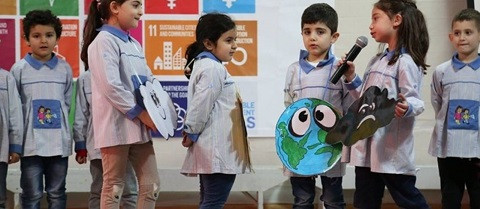 Education for Sustainable Development: UNESCO Associated Schools National Coordinators share experiences 2020-08-15 UNESCO’s Associated Schools Network are successfully integrating sustainable development into government policy, and scaling up programmes to reach more schools, according to new results mapping from 37 countries. Education for Sustainable Development is at the heart of UNESCO’s Associated Schools Network’s (ASPnet) work, and National Coordinatiors are sharing experiences on how their programmes have been upscaled and worked into policy. “These inspiring examples will be instrumental as we move forward with the design of implementation strategies for ESD for 2030.” said Alexander Leicht, Chief of the Section of Education for Sustainable Development. In a success story shared by Argentinian coordinators, schools within the Network collaborated on projects with local Biosphere Reserves, including the creation of a greenhouses and preservation of natural plants. These activities were upscaled, and will be replicated in other schools close to Biosphere Reserves with the support of the National Commission for UNESCO and the Ministry of Environment and Sustainable Development. In Germany, several ASPnet schools and Teacher Education Institutions have been part of activities and model projects to strengthen ESD and the Whole Institution Approach on the level of their region or municipality. Some of these projects have been funded by the German Federal Ministry for Economic Cooperation and Development or the ministries of the federal states. Ministry officials from the Republic of Zimbabwe gathered at Sihlengeni Primary School, who won the 2017 ESD Prize in Permaculture and encouraged other schools to implement similar projects. In Japan, the Ministry of Education, Culture, Sports, Science and Technology (MEXT) and the National Commission for UNESCO are widely disseminating good practice in ESD implemented by ASPnet through guidelines which target any teachers or education stakeholders who are concerned with ESD implementation. ESD has been incorporated into Course of study for kindergartens and National Curriculum Standards for elementary and middle schools and high schools, and teachers need to get inspired. In Bahrain, public and private partners are supporting a number of projects implemented by the ASPnet schools. A pedagogical kit was developed and presented to the Curriculum Department of the Ministry of Education in the Kingdom of Bahrain for wider dissemination among schools. “It is interesting to see that many countries influenced policy through compiling good practices and sharing them with the Ministry of Education, Local or Municipalities government,” said Julie Saito, Chief of UNESCO’s Associated Schools Network. Other examples reported were organizing school visits by government officials and presenting activities through social and traditional media or at national and international events. Many schools scaled up programmes by collaborating within UNESCO and other networks, and sharing good practices with non-ASPnet schools. Some of the challenges recognized by ASPnet members included the need for more funding and resources for programmes, high turnover of school staff and keeping schools motivated. Managing the growth of the network and ensuring high quality standards at the same time was also cited as a challenge. An opportunity identified was more connection and exchange within the network, for example, to share successes. Greater capacity building, training of trainers and knowledge sharing were also identified as potentially effective levers to fully mobilize ASPnet as advocator of ESD. UNESCO calls on more ASPnet National Coordinators from around the world to share their experiences with ESD. These contributions will be essential to upscaling ESD in the next decade, allowing more learners to acquire the knowledge, skills, values and attitudes that lead to more sustainable societies. Education for Sustainable Development (ESD) empowers learners to change the way they think and to act for a sustainable future. It has gained recognition as an integral element of quality education by schools around the world. In November 2019, UNESCO’s commitment to ESD was reinforced by the 40th session of UNESCO General Conference, which adopted a new global framework on ESD called ‘Education for Sustainable Development: Towards achieving the SDGs’ or ‘ESD for 2030’. UNESCO’s Associated Schools Network (ASPnet) is considered a key platform for further implementing ESD. ESD is identified as a priority in the ASPnet Strategy for 2014-2021. Through its Associated Schools Network (ASPnet), UNESCO supported schools to adopt a “Whole-Institution Approach to Climate Action”. In a pilot project from 2016 to 2018, 258 schools in 25 countries integrated sustainability in every dimension of their school in a combination of learning and actions, involving 230 980 students and 13 853 teachers as well as their communities. In 2020, ASPnet will invite all of its member institutions – 11 500 schools in 180 countries – to adopt the whole-institution approach and develop and implement school action plans to counter climate change at the local level, with the objective to initiate lasting positive transformations in students’ attitudes, behaviours and actions. URL:https://en.unesco.org/news/education-sustainable-development-unesco-associated-schools-national-coordinators-share