
News
Catch up on what’s happening in the world of global citizenship education.
229 results found
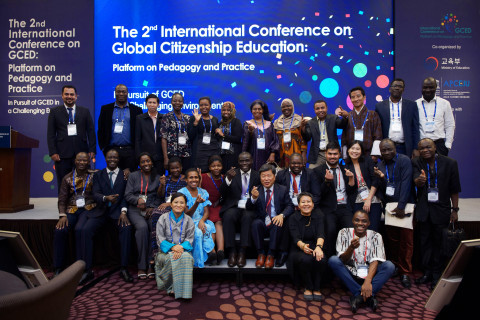 The 2nd International Conference on GCED: In Search of Solutions to Tackle Global Challenges 2018-12-26 With the rise of radicalism and nationalism, we have faced the increasing number of hate crimes against specific race, ethnicity, gender or cultural group and, consequently, an antagonistic atmosphere has been prevalent across the globe. Under these circumstances, there has been an ongoing demand for rethinking the role of Global Citizenship Education(GCED). In response, APCEIU held the 2nd International Conference on GCED from 13 to 14 September 2017 in Seoul to gather GCED practitioners and experts all over the world. Under the overarching theme of ‘in pursuit of GCED in a challenging environment’, this Conference was co-organized by the Ministry of Education of the Republic of Korea in partnership with UNESCO HQ. This Conference successfully provided a platform where participants discussed the challenges we have face globally, nationally and locally when it comes to implementing GCED and reflected upon the direction of GCED. During the two-day conference, more than 400 educators, policy makers, scholars and youth representatives from 60 different countries had attended. Kim Sang-kon (Deputy Prime Minister and Minister of Education of the Republic of Korea), Norbu Wangchuk (Minister of Education of the Kingdom of Bhutan) took part in the Conference. This Conference attempted to provide interactive sessions which encourage participants to actively participate in, consisting of various plenary sessions and concurrent sessions. The plenary sessions intended to give an integrated overview on the theme of the Conference, while the concurrent sessions consisted of diverse programmes as panel discussions, case presentations, participatory workshops, theater and debate chamber. Beyond its emphasis on the importance of global citizenship, this Conference enabled discussions on how to make the world more peaceful, inclusive and sustainable and how GCED can address current imperatives. The first day of the Conference was initiated by a panel discussion which brought together a panel of experts and practitioners from respective fields of GCED. Entitled ‘how can we pursue GCED in a challenging environment’, the panel discussion touched upon the challenges that they have faced and the achievements made by tackling these challenges in each field, region and practice. The plenary session 2 took the format of a town hall meeting in which every participant exchanged their perspectives and actively debated with each other. More than 400 participants shared their views and ideas through Mentimeter, the real-time online voting tool. In the concurrent session 1 titled ‘exploring practices of GCED and their impact,’ participants discovered how GCED has been practiced and what kind of difficulties it has been facing specifically throughout primary and secondary education, higher education and civil society organizations. This session encompassed practices on GCED in all types of education-formal, informal and non-formal.The second day kicked off with the plenary session 3, which was led by a brief performance that embodied an ethos of global citizenship. The topic was ‘GCED in Action’ and the performance was given by the Philippine Educational Theater Association (PETA). The session was designed to provide hands-on experience wherein the audience can feel the importance and message of GCED through the medium of theater. Furthermore, as GCED is considered to be delivered through diverse mediums such as participatory activities, the concurrent session 2 attempted to focus on democratic dialogism, transformative pedagogy and how to teach controversial issues. In addition, comprised of distinctive three sessions, each session in the concurrent session 3 addressed supportive conditions to scale up GCED. Each session covered education policies, curricula and teacher education respectively, shedding light on the challenges that we have faced in implementing GCED and sharing the recommendations suggested by experts in their fields. The youth debate chamber, a special session, was organized during the concurrent session 3. Under the motion of ‘Can global identity and national identity coexist? ,’ the four debaters were divided into two groups which held different views-pros and cons. The audiences were required to cast their votes in favor of the side they support two times-in advance of the debate as well as after the debate, and the side that obtained the biggest number of votes in the end won the debate. Interestingly, the result of the initial vote was reversed at the moment of the final vote. Subsequently, Cho Heeyeon, the Superintendent of Seoul Metropolitan Office of Education gave a special lecture on ‘Global Citizenship Education for Empathy & Coexistence’, which introduced the process and accomplishments of GCED in the context of education in Seoul. The 2nd International Conference on GCED provided opportunities to exchange and deduce various ideas to effectively resolve issues by which GCED is currently confronted. The Conference (except concurrent sessions) was live-streamed online for those who were interested in GCED. URL:The 2nd International Conference on GCED: In Search of Solutions to Tackle Global Challenges > APCEIU News - APCEIU (unescoapceiu.org)
 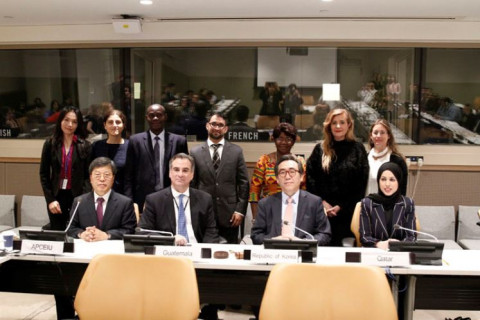 2018 UN Global Citizenship Education Forum 2018-11-26 On 13 November 2018, APCEIU, together with the Permanent Mission of the Republic of Korea to the United Nations co-organized the 2018 United Nations Global Citizenship Education Forum at the United Nations Headquarters. The Forum was co-sponsored by the Permanent Mission of the State of Qatar to the United Nations, Permanent Mission of the Principality of Andorra to the United Nations, Permanent Mission of Guatemala to the United Nations, and UNESCO New York Liaison Office. Approximately 70 participants, including Ambassadors to the United Nations, high-level officials of the United Nations, academia, and international organizations, attended the Forum. Under the overarching theme "GCED as a key enabler of Sustainable Development Goals (SDGs), the Forum shared best practices of GCED and sought for collective efforts to promote GCED across the globe. In the opening remarks, Ambassador Cho Tae-yul of the Republic of Korea to the United Nations mentioned that the new role of education in addressing global issues such as violent extremism and climate change has been emphasized as the countries are getting much more closely interconnected than ever before. With an emphasis on the transformative education to build a more inclusive and peaceful society, he underlined the joint endeavour for the designation of the International Day of Global Citizenship Education. The first session was kicked off by Chung Utak, Director of APCEIU who moderated the session. During the session, best practices of GCED in Colombia, Ghana, Mexico and Oman were shared with the audience. Ana Maria Velasquez, Associate Professor of the Universidad de los Andes, introduced the Colombian context originated by peace agreement which took place at the end of a prolonged conflict, and emphasized the demand for GCED to achieve a sustained peace. Joyce Afutu, Director of Communications and Corporate Affairs, National Commission for Civic Education claimed that Ghana has been leading the way in implementing GCED by sharing various practices taken in Ghana such as teachers’ capacity-building workshops, UNESCO ASPnet Schools, and community-based group activities. Adding to that, Cyomara Inurrigarro who is a teacher at Normal Miguel F. Martinez School in Mexico introduced her story of promoting GCED in UNESCO ASPnet Schools in Nuevo Leon region through the pre-service teacher training programme on GCED. Lastly, Khalaf Marhoun Al'Abri, Assistant Professor of Education Policy, Sultan Qaboos University presented about the Omani efforts in applying GCED to pre-schools, public schools and higher education systems. The following session mainly addressed methods of promoting GCED and designation of the International Day of GCED. See the panellists as follows: Moderator: H.E. Elisenda Vives Balmana, Permanent Representative of the Principality of Andorra Panellists H.E. Bakhtiyor Ibragimov, Permanent Representative of the Republic of Uzbekistan Patrice Ssembirige, Curriculum Specialist, National Curriculum Development Centre of Uganda Lily Gray, Liaison Officer, UNESCO New York Liaison Office Eunhee Jung, Founder and President of IVECA(International Virtual Schooling) and Co-chair of IDEGC Steering Committee While sharing a variety of researches and practices on GCED at national level, the panellists reaffirmed GCED is the key enabler of SDG 4.7. It was actively debated that a global citizen is a person who holds universal values such as justice, equity, respect, dignity and understands global issues, and embraces their own heritage (identity) but transcends cultural differences. Furthermore, it was also mentioned that “GCED for all” can be achieved when it comes to consolidated partnership between multiple stakeholders. Also, it was suggested that since GCED for quality education and SDGs are closely interconnected, collective action and international cooperation are necessary in designation of the International Day of GCED. Finally, the importance of designation of International Day of GCED was emphasized because when the International Day of GCED is designated, voice about GCED will be louder through the UN, a powerful platform. Closing the Forum, Ambassador Chull-Joo Park, Deputy Permanent Representative of the Republic of Korea, emphasised the continued implementation of GCED at regional, national levels by quoting the passage “act locally, think globally”. For webcast, visit the following website:http://webtv.un.org/meetings-events/other-meetingsevents/watch/2018-united-nations-global-citizenship-education-forum-global-citizenship-education-as-a-key-enabler-of-sdgs/5966500284001 URL:2018 UN Global Citizenship Education Forum > APCEIU News - APCEIU (unescoapceiu.org)
 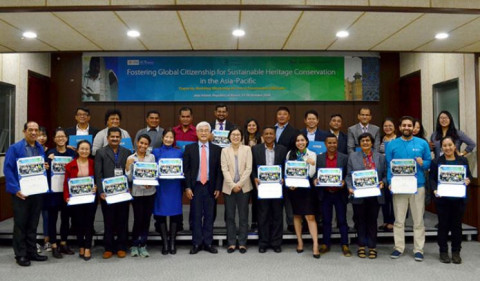 Fostering Global Citizenship for Sustainable Heritage Conservation among Local Government Officials 2018-11-01 A joint workshop with UNITAR CIFAL Jeju was held during 17-20 Oct 2018 Heritage sites have been damaged or destroyed as a result of direct hits, or as collateral damage related to armed conflicts, terrorism, and climate change. These challenges call for global citizens who recognize the value of heritage and put concerted efforts to protect the non-renewable resource beyond national boundaries. Against this background, APCEIU and UNITAR CIFAL Jeju International Training Center co-organized a Workshop on Fostering Global Citizenship for Sustainable Heritage Conservation for four days between 17 and 20 of October 2018 in Jeju Island, Republic of Korea. This workshop was designed for local government officials from the Asia-Pacific region to equip them with knowledge and skills on global citizenship and sustainable heritage conservation. The participants have analyzed the current status of their local heritage conservation to identify issues and challenges faced by communities, and discussed on the critical role of citizens and communities along with policies to ensure the sustainable conservation of heritage. A total of 23 participants from 15 countries consisting of officials from national and local government as well as local organizations related to heritage policy and management attended the workshop. This workshop aimed to enhance participants’ understanding of global citizenship and leadership capacity to implement innovative practices of heritage conservation for sustainable development. At the opening of the workshop, mentioning numerous global challenges that threaten the sustainable life and development, Director Utak Chung stressed the importance of local government officials’ roles by reminding them of their assumed role and responsibility to bring changes to their own society. The workshop was facilitated in the participatory format through presentations, dialogue, group works and activities to help participants deepening their understanding on sustainable heritage conservation and fostering global citizenship. During the four days of the workshop, participants presented their case studies, exchanged knowledge as well as opinions and at the end, established action plans to be implemented in their respective local settings. This workshop was a platform for local government officials to build capacities and build up network in the Asia-Pacific region. URL:Fostering Global Citizenship for Sustainable Heritage Conservation among Local Government Officials > APCEIU News - APCEIU (unescoapceiu.org)
 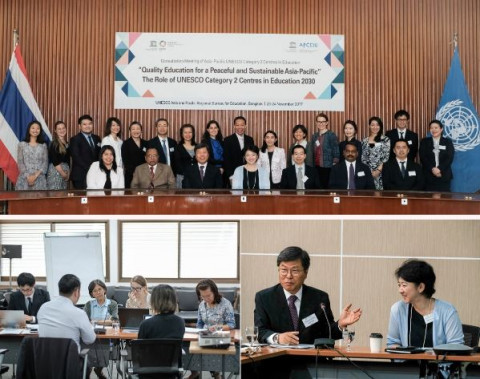 Regional Collaboration for SDG 4.7 explored at the Consultation Meeting of the Asia-Pacific UNESCO Category 2 Centres in Education 2018-10-30 The Consultation Meeting of the UNESCO Category 2 Centres in Education, entitled “Quality Education for a Peaceful and Sustainable Asia-Pacific: The Role of UNESCO Category 2 Centres in Education 2030” was held from 23 to 24 November 2017 in Bangkok, Thailand. Co-organized by the UNESCO Asia and Pacific Regional Bureau for Education (UNESCO Bangkok) and APCEIU, the meeting aimed to share the achievements and challenges of the participating organizations in the implementation of SDG 4 and to identify ways within their work plans on how to promote SDG Target 4.7 as a cross-cutting theme. This meeting is a first of its kind, which serves as an important opportunity to reflect on the year that was and open the discussion on how to promote synergies and increase the impact of planned activities together. The meeting gathered 25 participants from UNESCO Category 2 Centres in the Asia-Pacific, as well as Category 1 Institutes, relevant UNESCO field offices and UNESCO regional bureaus. The participating UNESCO Category 2 Centres include existing centres (APCEIU, INRULED, SACTD, SEA CLLSD), and the newly established centres (ICHEI, IMLI), making up to a total of six centres in education located in the region. The said centres are as follows: Asia-Pacific Centre of Education for International Understanding (APCEIU), Seoul, Republic of Korea International Research and Training Centre for Rural Education (INRULED), Beijing, People’s Republic of China South Asian Centre for Teacher Development (SACTD), Meepe, Sri Lanka South East Asia Centre of Lifelong Learning for Sustainable Development (SEA CLLSD), Manila, Philippines International Centre for Higher Education Innovation (ICHEI), Shenzhen, China International Mother Language Institute (IMLI), Dhaka, Bangladesh In her welcoming remarks, Ms Maki Hayashikawa, Director ai of UNESCO Bangkok extended her gratitude to APCEIU for contributing to the organization of the meeting. She also stated that “The meeting is timely as we have just finished with the General Conference, and UNESCO is in the process of finalizing its work plans for 2018-2021”. Reflecting the message from UNESCO Bangkok, Mr Utak Chung, Director of APCEIU, has mentioned that within the challenging environment that UNESCO is facing, cooperation among UNESCO entities, including regional bureaus, field offices, Category 1 Institutes and Category 2 Centres, is crucial in realizing the goal of the Organization, including SDG 4. The Meeting explored and identified the role of UNESCO Category 2 Centres in Education 2030 by reinforcing cooperation and community-building and sharing achievements and strategies for realization of SDG 4 in the Asia-Pacific. It also explored possible areas of cooperation between UNESCO Category 2 Centres, Category 1 Institutes and Field Offices, with particular focus on SDG Target 4.7. The sessions on the first day included presentations from participating institutions on implementation and actions of SDG 4, with a special focus on SDG 4.7. Followed by the presentations, a mapping activity was held to identify SDG 4.7 activities and actions of each participating organization to explore the status of the SDG 4.7 implementation in the region. It was identified that many of the participating organizations have activities that focus on capacity-building of educators and research and development. Following this mapping activity, group discussions focusing on collaboration, particularly on mainstreaming SDG 4.7 in SDG 4 implementation activities of the organizations took place. The meeting ended with a presentation of UNESCO Bangkok on its plans for the new UNESCO biennium (2018-2019), sharing the status of the region on SDG 4, and areas of possible collaboration. A communications strategy between UNESCO bureaus, field offices, Category 1 Institutes and Category 2 Centres was proposed to sustainably promote cooperation. Joint programming, including the co-organization of activities that tackle the diverse topics of SDG 4.7 and the topics that different UNESCO Category 2 Centres are covering, has been proposed for further discussion in 2018. URL:Regional Collaboration for SDG 4.7 explored at the Consultation Meeting of the Asia-Pacific UNESCO Category 2 Centres in Education > APCEIU News - APCEIU (unescoapceiu.org)
 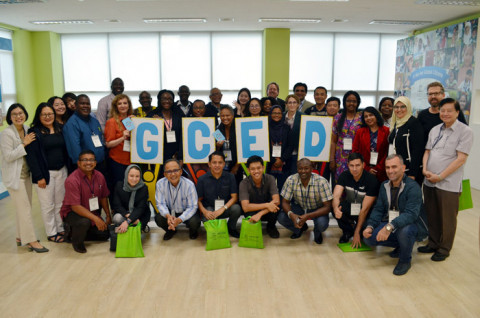 Follow-up Activity of the 3rd Global Capacity-Building Workshop on GCED: Capacity-Building Workshop on GCED for Educators in Ghana 2018-10-12 APCEIU organized the 3rd Global Capacity-Building Workshop on GCED from 29 August to 11 September, 2018. This workshop covered diverse thematic areas including peace, human rights, sustainable development, cultural diversity and prevention of violent extremism and this year, participants had an opportunity to participate in the 3rd International Conference on GCED from 5 to 6 September as session moderators or presenters, and expand their networks on GCED. The participants were composed of 29 professionals in the field of teacher education, teacher training, curriculum development and education policy of 27 UNESCO member states from the Asia-Pacific, Africa, Arab States, Latin America and Europe for this workshop and they participated in the lectures, hands-on activities, field and school visits and action plan development on GCED. As a follow-up activity of this workshop continued for 3 years, APCEIU co-organized a Capacity-Building Workshop on GCED for Educators in Ghana with the Ghana National Commission for UNESCO and National Commission for Civic Education (NCCE) from 17 to 19 September 2018 in Cape Coast, Ghana. This three-day workshop was especially for the civic educators from NCCE, UNESCO Associated Schools Project Network (ASPnet) school teachers and educators from the University of Cape Coast’s Education School to raise their understanding of GCED reflecting national education system. Aimed to ensure that civic educators in Ghana are provided with the knowledge, attitudes and skills to promote global citizenship, this workshop also introduced GCED from Ghanaian perspective by the 1st Global Capacity-Building Workshop on GCED participant Mrs. Joyce Afutu, who is a Communication & Cooperation Affairs Director at NCCE and provided thematic lectures including human rights, sustainable development, and prevention of violent extremism by local experts. This workshop was facilitated in the participatory format through presentations, group works and activities to help participants deepening their understanding on GCED as well as internalize its concepts to develop action plans respective to their own educational contexts. As parts of the workshop, Mrs. Ama Serwah, Secretary-General of Ghana National Commission for UNESCO introduced Ghanaian education policies and promised to support programmes on GCED, and Mrs. Josephine Nkrumah, Director of NCCE, emphasized on GCED practices in local context. During the workshop, participants worked in groups to share their best practices and at the end, established detailed action plans to be implemented in their educational settings. URL:Follow-up Activity of the 3rd Global Capacity-Building Workshop on GCED: Capacity-Building Workshop on GCED for Educators in Ghana > APCEIU News - APCEIU (unescoapceiu.org)
 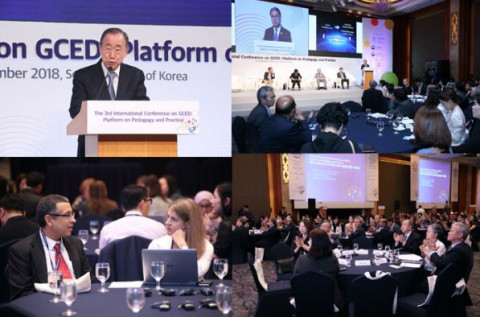 The 3rd International Conference on GCED: Sustainable and robust platform for GCED 2018-10-11 Since Global Citizenship Education (GCED) has been inscribed in Target 4.7 of the Sustainable Development Goals, it gained international attention as an imperative education agenda. In response to the ongoing demand for exchanging international, intensive, professional and practical information regarding GCED, APCEIU has been organizing the International Conference on GCED annually since 2016, in order to gather a wide variety of stakeholders of GCED from all over the world. Co-organized by APCEIU, the Ministry of Education and the Ministry of Foreign Affairs of the Republic of Korea, in partnership with UNESCO, the 3rd International Conference on GCED: Platform on Pedagogy and Practice was held on 5-6 September 2018 in Seoul, Republic of Korea. Under the overarching theme of ‘GCED in Every Corner of the World: Local-Contextualization of GCED’, the Conference intends to touch upon how GCED has been and or can be perceived differently based on the local, national and regional contexts. The Conference explored and shared regional, national and traditional concepts which address same or similar values to those that are at the core of GCED. During the two-day Conference, more than 600 educators, policy makers, scholars and youth representatives from 63 different countries had attended. Park Chun-ran (Vice Minister of Education of the Republic of Korea), Cho Hyun (2nd Vice Minister of Foreign Affairs of the Republic of Korea), Ban Ki-moon (the 8th Secretary-General of the United Nations), Leonor Briones (Secretary of Department of Education of the Philippines) took part in the Conference. This Conference attempted to provide interactive sessions which encourage participants to actively participate in, consisting of various plenary sessions and concurrent sessions. The plenary sessions intended to give an integrated overview on the theme of the Conference, while the concurrent sessions were comprised of diverse programmes such as panel discussions, case presentations, participatory workshops, theatre and TEDtalk-style speeches. The first day of the Conference was initiated by a keynote speech by Moon Chung-in, Special Advisor to the President for National Security and Foreign Affairs, under the theme ‘Localizing Global Citizenship Education: Challenges and Tasks’. The importance of GCED and its localization through networking and solidarity were discussed through the example of GCED textbooks developed by Gyeonggido Office of Education. The plenary session 1 was a panel discussion which brought together a panel of experts and from respective fields. Entitled ‘GCED in the context of the Korean peninsulaㅡits contribution to peacebuilding and reconciliation efforts’, the panel discussion explored the relevance of the notion of GCED in advancing the principle of “learning-to-leave-together” in the Korean context. The panellists discussed the importance of unification education, the understanding of clear division of the two Koreas in the way of perceiving the concept of peace, and the successful example of German-French, German-Polish joint compilation of history textbook. The plenary session 2 took the format of a town hall meeting in which all the participants exchanged their perspectives with the GCED experts from Senegal, Colombia and Philippines. The participants shared their views and ideas through question-and-answer session which aimed to raise awareness among participants about the diverse forms and expressions of GCED that exist around the world and how its core values are reflected in education systems. In the concurrent session 1 titled ‘Do classrooms respond to the local realities?’, the participants discovered how GCED has been practiced in teacher-training programmes. Also, this session touched upon the comparative studies on GCED in the system of formal education in Korea, Japan and China and GCED integrated curricula responding to local contexts based on the cases from Cambodia, Mongolia, Uganda and Colombia. The plenary 3 was led by a brief performance that embodied an ethos of global citizenship. The performance entitled ‘GCED Play ㅡ Here, hear’ was given by the Philippine Educational Theater Association (PETA). The session was designed to provide hands-on experience wherein the audience can feel the importance and message of GCED through the medium of theatre by creating different sounds. The second day kicked off with the plenary session 4 called ‘GCED Talks’. The speakers shared their genuine stories about the power of GCED transforming lives by introducing the cases of ‘Chocotogo’ cooperative promoting community-centric efforts, and advocacy activities of ‘Global Citizen’ using online platform and social media to mobilize the youth around the world. The concurrent session 2 was composed of three sessions under the theme of ‘It takes a village to raise a child as a global citizen’. One of the sessions took the format of policy talk based on the APCEIU’s publication, 『GCED: A Guide for Policymakers』. Also, in a different room, the participants were able to learn about the transformative power of GCED by introducing women/youth-led and community-based practices in India, Philippines and Costa Rica. In another session, a participatory workshop facilitated by the Suseong-gu Office invited participants to engage in an exercise based on a scenario of a polar bear cub and his attempt to find his lost mother using different props, followed by a video of destruction of the earth by humans. The key message of these activities was that even small things can have an impact to change the world. Lastly, comprised of distinctive three sessions, each session in the concurrent session 3 addressed ‘today and tomorrow of GCED’. One of the sessions delivered the added-values of ICT in GCED as ICT can facilitate the GCED pillars of cognition, socio-emotional connection and behaviour. Participatory workshops of drawing comics and playing theatre for transformative pedagogy were conducted in parallel. The 3rd International Conference on GCED provided a global platform for exchange, interaction and dialogue on GCED, acting as a bridge between the countries across the globe in implementing GCED. You can find more detailed information on the Conference at:http://gced.unescoapceiu.org/conference URL:The 3rd International Conference on GCED: Sustainable and robust platform for GCED > APCEIU News - APCEIU (unescoapceiu.org)
  French Version of SangSaeng No. 49 Published 2018-10-10 The French version of the 49th issue of SangSaeng (Winter 2017), "Sauvegarder le patrimoine pour consolider la paix", has been published. The French version was translated and produced by the UNESCO Office in Dakar - Multi sectoral Regional Office for West Africa (Sahel) with the support of APCEIU.This edition of SangSaeng aims to examine heritage in its different contexts and to help identify our responsibilities as a global community to understand and tolerate other people’s heritages. Download link for PDF file:[English version] [French version]
 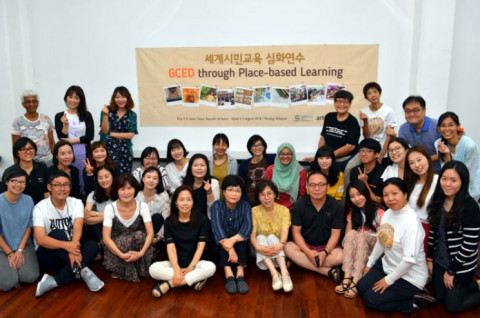 한국 교사들을 위한 세계시민교육 심화연수 페낭에서 개최 2018-08-20 장소기반학습법(Place-Based Learning)을 통한 세계시민교육 실천 전략 모색 유네스코 아태교육원은 8월 1일부터 5일까지 말레이시아 페낭에서 한국 교사들을 위한 세계시민교육 심화연수를 개최했다. 국내 초·중등 교사 20명이 참가한 가운데 ‘장소기반학습법(PBL)을 통한 세계시민교육’을 주제로 열린 이번 5일간의 연수에서 참가자들은 세계시민교육의 방법론으로서 장소기반학습법의 가능성을 탐색해보았다. 말레이시아의 교육 NGO인 아츠이디(Arts-ED)와 공동주관한 이번 워크숍은 한국 교사들의 세계시민교육 교수법 개발 및 실행 역량을 향상시킬 기회를 제공하기 위해 말레이시아 현지에서 진행되었다. 본 연수는 강연, 장소기반학습 사례연구, 장소기반학습 현장경험, 지역학교 방문, 액션플랜 설계 및 발표 등 체험적 프로그램들로 구성되었다. 참가자들은 장소기반학습법의 핵심적인 이론뿐 아니라 페낭의 학교 및 지역사회에서의 사례들을 접할 수 있었다. 이들은 또한 ‘조지타운의 초기정착지’ ‘벽화 속 이야기’를 주제로 한 장소기반학습 현장경험에도 참가했는데, 여기에는 장소기반학습의 현장을 직접 방문하여 현지인들과 대화하는 것을 비롯하여 스토리텔링, 그림그리기, 연극으로 각색하기 등 다양한 장소기반학습의 도구들을 사용해보는 것이 포함되었다. 이번 연수를 통해 참가자들은 학습자 중심의 변혁적 교수법의 하나인 장소기반학습법에 대한 이해와 실천 방법에 관해 현장에서의 경험을 통해 성찰하고 배우는 시간을 가졌으며, 소속 지역 및 공동체의 이슈들을 활용해 장소기반학습법을 실천하고 있는 말레이시아 교사들과 구체적인 실천 전략에 관해 의견을 나누는 시간을 가지기도 하였다. 본 연수는 참가자들이 각자 소속 지역에서의 장소기반학습 방법론을 적용한 세계시민교육 실행 계획을 수립하는 것으로 마무리되었다. 아태교육원은 향후 참가자들의 실행 결과들을 수합 및 발굴하여 좋은 사례들을 국내외에 소개함으로 장소기반학습법을 세계시민교육의 실천 방법으로 더욱 공고화하고자 한다. URL:한국 교사들을 위한 세계시민교육 심화연수 페낭에서 개최 > 교육원 소식 - APCEIU (unescoapceiu.org)
 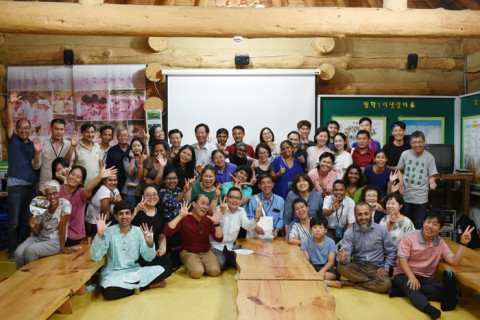 18th Asia-Pacific Training Workshop on EIU 2018-08-08 From July 20th to 28th, 31 professionals in the field of teacher education from 21 UNESCO member states gathered to attend APCEIU’s 18th Asia Pacific Training Workshop on Education for International Understanding (APTW), held in Seoul and Inje, Republic of Korea. As the world grows more interconnected and interdependent, so does the importance of instilling the concept of global citizenship education (GCED) into the world’s populace. Thus, capacity-building programmes like APTW foster and encourage the participants’ commitment to spreading GCED values throughout the global sphere. Though the workshop’s overarching goal was to strengthen understanding of the concrete concepts and issues of EIU and GCED, its purpose was to also enhance the participants’ training expertise and in turn the impact of their training on their respective regions. The nine-day programme consisted of lectures, in-depth discussions and seminars, field visits, and action plan development. Participants were given the opportunity to design localized GCED training programmes to implement in their regions with the help and guidance of a faculty of international GCED experts. Thorough discussion on the significance of global interconnectedness and a Culture of Peace helped participants instill those values both in themselves and in their action planning-relevant constituents for cultivating our global society’s future. A significant portion of the workshop was devoted to a visit to the DMZ Peace-Life Valley to further explore issues of peace and sustainability. With visits to Naetgang Village and the Fourth Tunnel, participants were able to witness firsthand how citizens and activists are working to correct deep historical divisions and lead sustainable livelihoods. In understanding the linkage between the national and international, participants could better understand and augment their skills in designing and implementing GCED-related programmes and development. Critically reflecting on and analyzing current educational issues provided participants the opportunity to renew their commitment and confidence in addressing such issues. As the workshop intended, it aimed to both enable and empower participants to propagate pedagogical themes and concepts under GCED. On the final day of the DMZ visit, attendees interweaved and placed their letters into a blanket of hope and aspirations for future generations into a time capsule, alluding to the continuing and future linkages between what they gained from the workshop and what will take place back home. URL:18th Asia-Pacific Training Workshop on EIU > APCEIU News - APCEIU (unescoapceiu.org)
 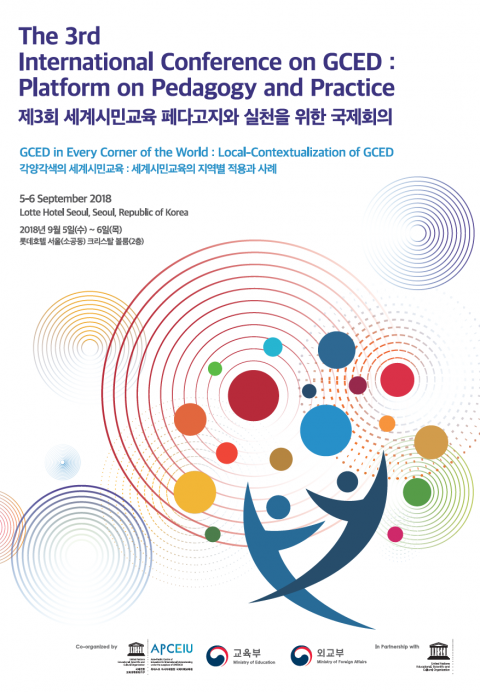 The 3rd International Conference on GCED: Platform on Pedagogy and Practice 2018-08-08 Co-organized by APCEIU, the Ministry of Education, and the Ministry of Foreign Affairs of the Republic of Korea, and in partnership with UNESCO HQ, the 3rd International Conference on GCED: Platform on Pedagogy and Practice will take place on 5-6 September 2018 at Lotte Hotel Seoul in Seoul, Republic of Korea. Global Citizenship Education (GCED) aims to foster global citizens to understand, appreciate, and act in terms of universal values such as peace, human rights, culture diversity, and sustainable development. GCED has emerged as one of the global goals in recognition of the prominent role of education while addressing interconnected global challenges. APCEIU organizes this Conference to be a prime platform to boost networking on GCED, proposed as an education goal of UN and UNESCO. The Conference, initiated in 2016, ranged over GCED’s role and direction under the United Nations Sustainable Development Goals (SDGs). Last year, the Conference touched upon the challenges GCED faces, while presenting pedagogical approaches and supportive conditions to put GCED in action. This year, the Conference plans to explore how to approach and apply concepts similar to GCED under the overarching theme ‘GCED in Every Corner of the World: Local-Contextualization of GCED’. Approximately 500 people consisted of policy makers, teachers, and experts from academia, international organizations, and NGOs are expected to participate. The Conference will share different characteristics when applying GCED based on culture and region. APCEIU hopes that this Conference can act as a platform to effectively spread and implement GCED while reflecting the local context fully. The 3rd International Conference on GCED welcomes everyone interested in GCED. Registration is available online until August 20 at http://gced.unescoapceiu.org/conference. URL:The 3rd International Conference on GCED: Platform on Pedagogy and Practice > APCEIU News - APCEIU (unescoapceiu.org)