
News
Catch up on what’s happening in the world of global citizenship education.
225 results found
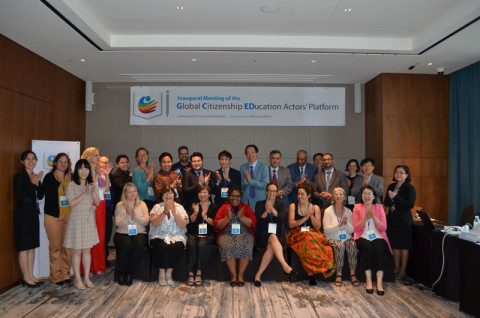 Weaving the Strength of Collaboration: GCED Global and Regional Networks 2020-07-21 Despite the presence of efforts around the world to promote Global Citizenship Education (GCED) in line with the Sustainable Development Goals (SDGs), there has been limited initiative in developing a systematic approach to connect relevant stakeholders in order to strengthen implementation in the field. As a leading agency in this area, APCEIU has launched GCED networks at the global and regional levels, supported by UNESCO Headquarters and Field Offices. The initiative gave way to consensus building among participating institutions on what constitutes as the main priorities for GCED implementation at the global and regional levels, and a mechanism for partnership which will serve as the working tool for the realization of the GCED Network. In 2016, the first global meeting convened GCED key partners around the world in 2016 in Seoul, Republic of Korea, to embark on the formation of GCED Network. The 2016 meeting was a stepping stone of the initiatives by setting its main principles, the ABCs of the GCED Network, particularly: to Accelerate GCED implementation by obtaining innovative ideas and lessons from other regions, Bridge partners, and build Communities. Addressing the call to support actions on the ground as was identified by partners in 2016, the Regional GCED Networks were launched in 2017 and 2018. Launched in five geographic regions - Asia-Pacific, Arab States, Europe and North America, Latin America and the Caribbean and Sub-Saharan Africa, the Regional GCED Networks aim to address identified priority areas and operate planned coordination mechanisms towards sustaining local action for GCED. In order to increase the relevance of GCED at the local levels, respective networks have their core groups of dedicated individuals and partners, convened by the Regional Coordinator and in close communication with key partner organizations. Since 2019, APCEIU co-organizes activities with the Regional GCED Networks. These have motivated individual partners to develop their own autonomous activities, aligned with regional priorities. In 2020, the activities supported by APCEIU are as follows: Asia-Pacific Regional GCED Network: 2020 Asia-Pacific Regional GCED Network Meeting, Development of “How to GCED” Mini Guide Series Arab States Regional GCED Network: Strengthening GCED in Arab Higher Education Institutions Europe and North America Regional GCED Network: Research Study on “Understanding and Building Europe and North America as a Regional Network Promoting GCED” Latin America and the Caribbean Regional GCED Network: Development and Dissemination of a GCED Youth Massive Open Online Course for Latin America and the Caribbean Sub-Saharan Africa Regional GCED Network: Strengthening GCED in Curricula in Southern Africa As an effort to envision a strategic framework through a retrospective look of regional activities and experiences, APCEIU organized Technical Consultation Meeting on the GCED Network in 2018 in Seoul, Republic of Korea. While wide-range of insights of facilitating GCED were presented, the participants including key stakeholders and partners from the five Regional Networks have reached consensus on fostering closer GCED collaboration and stronger solidarity inter-regionally and globally. Thus, in 2019, co-hosted by UNESCO Headquarters and APCEIU, the “GCED Actors’ Platform” was inaugurated. With the presence of 17 key GCED-implementing organizations across the globe, the Inaugural Meeting of the GCED Actors’ Platform worked towards establishing a global platform, in which different actors and stakeholders could share, review and update their achievements and progress of implementing GCED. In the light of the theme of 2019, “GCED Capacity Building of Teachers”, the key players of GCED have imparted currently on-going initiatives and challenges that they have encountered along with further discussions on the plans of GCED partnership strategies. Apart from Regional Coordinators and representatives from partner organizations, youth have also contributed to the dialogue through the GCED Youth Network, an international group of young GCED advocates. Kicking off with the topic of GCED educators capacity-building in 2019, the GCED Actors Platform will cover different themes every year. For 2020, the platform focuses on GCED research and policy development. In light of strengthening global and regional action for GCED through the GCED Network initiative, APCEIU calls on partners to focus on the following priority lines of action: 1) exchange of information on GCED, 2) peer learning, monitoring and evaluation, 3) mutual invitations to GCED meetings and events, 3) co-organization of GCED meetings, conference and seminars, 5) co-organization of GCED capacity-building workshops, and 6) co-publication of GCED resources and materials. In the next ten years before the target date of 2030 for the SDGs, APCEIU is committed to support the efforts to work together for GCED, weaving synergies towards more peaceful, sustainable and tolerant societies through education. Inquiries or suggestions on the GCED Network initiative may be shared to gced-net@unescoapceiu.org. Related Materials: Final Reports of the Regional GCED Network Meetings (2017-2018) Inaugural Meeting of the GCED Actors’ Platform Final Report GCED Network Initiative: Introductory Brochure URL:Weaving the Strength of Collaboration: GCED Global and Regional Networks > APCEIU News - APCEIU (unescoapceiu.org)
 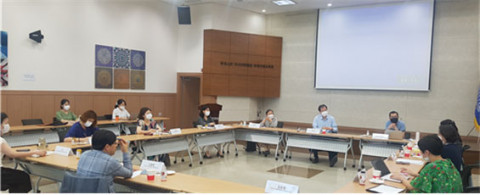 동북아 평화에 기여하는 2020년도「유네스코 평화교육 연구」 3차 전문가 자문회의/2차 포커스그룹면담 실시 2020-07-15 유네스코 아태교육원은 동북아시아 평화에 기여하는 세계시민교육 정책 연구라는 목표 하에 2020년도「유네스코 평화교육 연구」를 추진하고 있다. 유네스코는 창설 이후 지속적으로 평화의 문화를 구축하기 위한 의제를 설정하고 평화교육의 원칙과 내용에 대한 지침을 제시해왔다. 아태교육원은 이에 발맞추어 장기적이고 포괄적인 안목으로 평화의 문화와 평화교육의 중요성을 강조하고 새로운 실천의 전기를 마련할 필요가 있겠다는 판단 하에 본 연구를 기획하였다. 그간 유네스코가 세계적으로 추진해온 평화교육의 흐름을 검토하고 오늘날 한국의 평화교육은 이러한 흐름과 얼마나 부합하는지 분석하여, 한반도 및 동북아 평화의 문화 구축을 위해 평화교육이 나아가야 할 방향을 모색하고자 한다. 본 연구의 수행을 위해 아태교육원과 연구진은 국내 평화교육 담당 각 시도교육청 관계자, 평화교육 실천 교사 및 시민사회단체 관계자, 평화교육 연구자들을 대상으로 심층 면담을 여러 차례 실시할 예정이다. 그 일환으로 아태교육원은 7월 3일 아태교육원에서 평화교육을 담당하고 있는 4개 시도교육청(서울, 인천, 경기, 강원) 관계자를 초청하여 2차 포커스그룹면담에 해당하는 3차 전문가 자문회의를 실시하였다. 본 회의에서는 4개 시도교육청의 2019-2020년 평화교육 계획 및 현황을 공유하고, 국내 평화교육 활성화 방안에 대해 논의했다. 참가자들은 보편적으로 적용될 수 있는 평화교육의 프레임 구축이 필요함에 공감하며, 지속가능한 평화교육 정책을 연구하고 개발해 나갈 필요가 있다는 점에 인식을 같이하였다. URL:동북아 평화에 기여하는 2020년도「유네스코 평화교육 연구」 3차 전문가 자문회의/2차 포커스그룹면담 실시 > 교육원 소식 - APCEIU (unescoapceiu.org)
 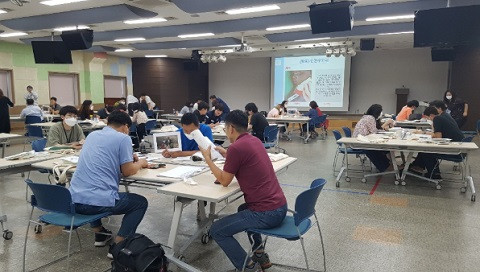 코이카, 청소년 세계시민교육 확산 위해 KYWA와 MOU 체결 2020-07-07 코이카, 청소년 세계시민교육 확산 위해 KYWA와 MOU 체결 - 양 기관 협력으로 청소년·강사 대상 세계시민교육 실시 및 전국 3개 국립청소년수련원 내 세계시민교육 전시관 설치 대한민국 개발협력 대표기관 코이카(KOICA‧한국국제협력단, 이사장 이미경)는 한국청소년활동진흥원(KYWA, 이사장 이광호)과 국내 청소년 대상 세계시민교육* 사업 협력을 위한 업무협조약정(MOU)을 체결했다고 23일 밝혔다. * 세계시민교육: 인종, 문화, 종교를 넘어 다양한 지구촌 문제에 관심을 갖고 그 문제의 해결을 위해 적극적으로 행동하는 사람을 양성하기 위한 교육 이번 약정에 따라 코이카는 5P(사람, 평화, 번영, 환경, 파트너십)를 주제로 한 다양한 체험형 활동으로 구성된 초·중·고 대상 20개 교육과정을 제공하고, 3개 국립청소년수련원(고흥, 천안, 평창) 내 세계시민교육 전시관 설치를 지원할 계획이다. 코이카는 KYWA 내부직원 및 청소년 지도자를 대상으로 온·오프라인 세계시민교육 강사양성과정 및 다양한 세계시민교육 교재도 제공한다. KYWA는 코이카의 지원으로 육성된 강사들과 청소년을 대상으로 세계시민교육을 실시할 계획이다. 전국 5개 국립청소년수련원(고흥, 김제, 영덕, 천안, 평창)을 포함한 다양한 산하 청소년 수련시설을 통해 교육 프로그램을 확산해갈 예정이다. 코이카와 KYWA는 선제적으로 지난 10일부터 12일, 17일부터 19일 간 천안 및 평창 국립청소년수련원에서 전국 5개 국립청소년수련원 직원을 포함한 KYWA 내부직원 80여명에 대한 세계시민교육을 실시하였으며, 7~8월 중에는 전국 청소년 지도자 60여명에 대한 세계시민교육 강사 교육을 실시할 계획이다. 3개 국립청소년수련원(고흥, 천안, 평창) 내 세계시민교육전시관 설치는 11월 경 추진될 예정이다. 코이카는 우리 국민들을 대상으로 국제개발협력 이해증진 교육을 실시해 왔으며, 특히 청소년에 대해서는 한국 및 국제사회의 국제개발협력 이해증진과 세계시민의식 제고를 위한 교육을 실시해 왔다. 청소년 교육에 있어 전문성과 넓은 네트워크 및 인프라를 가지고 있는 KYWA와의 협력을 통해 더 많은 청소년들에게 효과적으로 세계시민교육을 확산할 수 있을 것으로 기대된다. 이미경 코이카 이사장은 “코로나19 사태로 세계적인 연대와 협력의 정신을 함양하는 세계시민교육의 중요성이 더 강조되고 있다”며 “이번 MOU를 계기로 코이카가 세계시민교육 분야에서, KYWA가 청소년 교육 분야에서 쌓아온 전문성이 만나 시너지를 창출하고, 우리 청소년들이 책임 있는 지구촌 공동체 일원으로 성장할 수 있도록 기여하길 바란다”고 말했다. ※ 코이카 (KOICA·한국국제협력단·Korea International Cooperation Agency)코이카는 개발도상국의 경제사회발전 지원을 위하여 1991년에 설립되었으며, 국별 프로그램(프로젝트/개발컨설팅), 글로벌 프로그램(해외봉사단 및 개발협력인재양성사업, 글로벌연수, 국제기구협력, 민관협력사업, 혁신적 개발협력 프로그램), 인도적 지원(재난복구지원, 긴급구호 등), 국제질병퇴치기금사업 등을 수행하는 대한민국 개발협력 대표기관이다. ※ 한국청소년활동진흥원 (KYWA)여성가족부 산하 준정부기관으로 1998년에 설립된 한국청소년수련원과 2005년에 설립된 한국청소년진흥센터를 통합하여 2010년에 설립됐다. 청소년의 균형있는 성장에 필요한 활동을 종합적으로 지원함으로써 청소년의 삶의 질 향상에 기여함을 목적으로 다양한 청소년 지원 사업을 추진하고 있다. URL:http://www.koica.go.kr/koica_kr/990/subview.do enc=Zm5jdDF8QEB8JTJGYmJzJTJGa29pY2Ffa3IlMkYxNTElMkYzNTk0NDglMkZhcnRjbFZpZXcuZG8lM0ZwYWdlJTNEMSUyNnNyY2hDb2x1bW4lM0RzaiUyNnNyY2hXcmQlM0QlRUMlODQlQjglRUElQjMlODQlRUMlOEIlOUMlRUIlQUYlQkMlMjZiYnNDbFNlcSUzRCUyNmJic09wZW5XcmRTZXElM0QlMjZyZ3NCZ25kZVN0ciUzRCUyNnJnc0VuZGRlU3RyJTNEJTI2aXNWaWV3TWluZSUzRGZhbHNlJTI2cGFzc3dvcmQlM0QlMjY%3D
 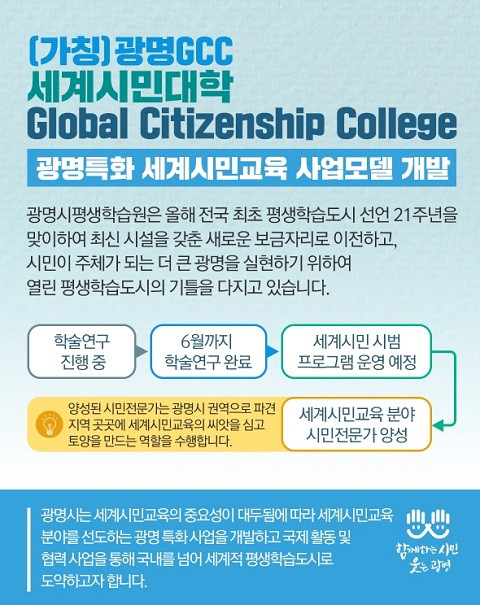 광명특화 세계시민교육 사업모델 개발 2020-07-07 광명시평생학습원은 올해 전국 최초 평생학습도시 선언 21주년을 맞이하여 최신 시설을 갖춘 새로운 보금자리로 이전하고, 시민이 주체가 되는 더 큰 광명을 실현하기 위하여 열린 평생학습도시의 기틀을 다지고 있습니다.시는 세계시민교육의 중요성이 대두됨에 따라 세계시민교육 분야를 선도하는 광명 특화 사업을 개발하고 국제 활동 및 협력 사업을 통해 국내를 넘어 세계적 평생학습도시로 도약하고자 합니다.현재 광명시는 사업 모델의 타당성과 발전 방향을 구체적으로 정립하기 위한 학술연구를 진행 중이며, 오는 6월까지 학술연구를 완료하고 지역 여건과 상황을 반영한 세계시민 시범 프로그램을 운영할 예정으로세계시민교육 분야의 시민전문가도 양성할 계획입니다. 양성된 시민전문가는 광명시 권역으로 파견되어 지역 곳곳에 세계시민교육의 씨앗을 심고 토양을 만드는 활동을 하게 됩니다.광명시는 ‘(가칭)광명GCC’를 통해 포스트 코로나 시대에 세계시민으로서 지녀야 할 올바른 태도와 역량을 갖춘 광명시민을 양성할 것이며 코로나19 팬데믹 상황에서 세계 글로벌 평생학습도시는 다양한 방식의 학습 시스템을 구축하여 전 시민이 함께, 전 세계인이 함께 이 상황을 이겨낼 수 있도록 공동 전략을 세워나가겠습니다.문의 : 광명시 평생학습원 학습기획팀 02-2680-6741 URL:http://news.gm.go.kr/news/articleView.html?idxno=14127
  [APCEIU Insights] Reflecting on Global Citizenship Education in the Era of the Pandemic 2020-06-21 PAK Soon-Yong (Professor, Department of Education, Yonsei University) With the World Health Organization's official declaration of COVID-19 as a pandemic on March 12, 2020, the scope and speed of the formidable virus have brought about a halt in the daily life of the global village amidst lingering fear in an unprecedented scale.Compared to the recent past experiences of the Zika (2014) and Ebola (2014-2016) viruses, which were also very infectious but regional as they affected mostly Latin America and West Africa and thus did not call for the declaration of a pandemic, the far-reaching case of COVID-19 has brought about an entirely different situation characteristic of a true pandemic.We are indeed witnessing a real and ongoing global crisis as of May 2020. Moreover, a true cause for concern is at hand if we are to take heed of the warnings from the medical community that COVID-19 may be but one of a series of outbreaks of highly infectious collective contamination cases reaching a pandemic scale to follow in the near future. Because the impact of the pandemic is not confined to health issues but causes ramifications in all spheres - including economy, society, politics, and culture - the global community is at a critical juncture where accelerated changes in social and organizational paradigms are called for in the coming months and years. Relevance of GCEDWith regard to Global Citizenship Education (GCED), the timeliness of the pandemic has made it all the more relevant despite the closing down of borders and a shift toward parochial tendencies. Upon first glance, GCED may sound ironic given the present situation where schools delay the start of a new semester and rely on untact online classes even when they are open.However, if we recall that GCED has emerged in recent years amid the growing need for a conceptual framework for educational practices that address the global concerns on the future of humanity, the discussion on how to converge educational values with global circumstances has become necessary more than ever before. This may actually be an opportune time to reflect on the meaning implicated in the term "global citizenship" and ponder the possibilities of GCED, which aims to nurture global citizenship based on school education.As is widely known, GCED began to draw the attention of the international community as the main discourse in education following United Nations Secretary-General Ban Ki Moon's Global Education First Initiative (GEFI) proclaimed in September 2012, which set forth "fostering global citizenship" as one of its three main priorities. Furthermore, international cooperation and commitment to action for realizing the initiative have been widely diffused with the inclusion of GCED as a key target of the Sustainable Development Goals (SDGs) proclaimed at the UN Summit on Sustainable Development in September 2015 and subsequently in the UNESCO Education 2030 Agenda adopted at the UNESCO General Conference in November of the same year. GCED VisionUltimately, UNESCO aims to create a universal, global educational paradigm that is suitable for the "age of the global village" by helping countries integrate GCED into their educational policies and embrace it as an educational mandate of the global community. Core values that run through the definition and role of GCED can be found in "Learning to Live Together" and "Teaching Respect for All," which are emphasized by UNESCO.According to UNESCO, GCED is "a framing paradigm that encapsulates how education can develop the knowledge, skills, values, and attitudes learners need for securing a world which is more just, peaceful, tolerant, inclusive, secure and sustainable. It also acknowledges the role of education in moving beyond the development of knowledge and cognitive skills to build values, soft skills, and attitudes among learners that can facilitate international cooperation and promote social transformation."Nevertheless, GCED is not an entirely new creation that came into being all of a sudden under the above-mentioned international initiatives.In the Republic of Korea, the term "global citizenship" began to appear in the 7th National Curriculum adopted in 1997 to nurture the desirable orientation of the educated person. In addition, a large share of major topics and contents of the learning objectives of GCED had already been covered in depth in the form of peace education, multicultural education, environmental education, and human rights education for quite a long time in Korea. Such learning contents and activities could be found not only within the schools but also in lifelong education institutions, NGOs, and civil society organizations.In this respect, GCED should be regarded less as a means to deliver packaged information, but rather be taken as a series of processes that bring together dispersed efforts by multiple parties in different regions and at different levels so as to address concerns on the future of the earth and humanity. Such an approach may allow more effective and coordinated responses to various forms of global crises. In short, the ultimate vision for GCED is to converge parochial efforts to this end so that the global community can search for a common path that will allow educational solutions to emerge.To this day, there have been ongoing debates among various actors in academia and civil society concerning the plausibility of the "global citizen" concept. It is commonly understood that the concept of global citizenship was conceived from an imaginary sense of solidarity, which transcends spacial, racial, ideological, and linguistic boundaries across regions and states. However, contradictions harboured in the concept of the "global citizen" have been pointed out more often than not. Reconciling the ConflictedThe concept of the "global citizen" presupposes "globalization," a term which manifests both universality and fragmentalization. Such an inherent contradiction within the concept is therefore an unavoidable feature as it encompasses both widespread expansion of, and resistance toward, globalization across far-reaching regions. Furthermore, the most frequently raised issue about the conceptualization of global citizenship is whether the identity of the "global citizen" among individuals could be possible in the absence of a globally governing political structure in the form of a substantive entity. This is also directly related to the problem of how to compromise the cultivation of national citizenship - which is considered as a primary goal in state-led school education - with global citizenship in a post-state, trans-boundary context.It should be pointed out, however, that oversimplifying the usage of the term "global" forces us to think in a manner based on the binary opposition of "nation" vs. "world," which may only incite further misunderstanding of the concept. Conversely, the term calls for our attention to a need to establish a coherent concept by reconciling the seemingly conflicting combination of the "global," a trans-boundary concept, and "citizenship," which is based on a bounded exclusive collective identity.To this end, we need to treat the concept "citizenship" not at the dimension of national identity anchored on an exclusive membership, but with a focus on the sense of responsibility and duty that lead to proper action. In other words, if people conceive the meaning of citizenship around the notion of civic duty instead of civic identity, the term "global citizen" will not appear as disjointed.Civic duty, which is usually mentioned at the national level, means that individuals extend voluntary commitments and perform duties for the greater cause of the collective they belong to. In this regard, it represents the code of action that puts the community first before individuals, and others before one's own self.To apply civic duty to the wider concept of global citizen, we can posit individuals who empathize with global challenges and fulfil duties for the greater cause of humanity as members of the global community. Therefore, global citizenship signifies the ethos embraced by individuals who do not cling to the exclusive collective identity and are willing to extend their boundary of relevance in order to respond to the conditions facing the global village. Global Paradigm ShiftEntering the 21st century, globalization has led to deepening regional interdependence and interconnectedness; an example is the operating principle of a Global Value Chain (GVC). It refers to the mode of global-level cooperation involved in the whole process of value chains from a product's design to production to promotion for sales. But, if a pandemic such as the COVID-19 crisis or a return to nationalism causes border closures, the connecting chains can crumble instantly, putting the whole sequence in a precarious condition. While GVC represents a material link among global actors, global citizenship represents a mental connection. In this context, global citizenship can be regarded as a product of globalization and, simultaneously, a mental mechanism in response to it.The post-COVID-19 world will be a new challenge, as we may witness a new global paradigm to emerge in terms of how we connect with one another. In this respect, GCED, as a conscious effort to exercise the duties of education in helping people attain multifaceted understandings and critical reflections on the conditions confronting humanity in the 21st century, has become all the more relevant. GCED can present significant educational implications for what should have priority, when we are pressed to select a path to secure human sustainability in times of urgent need for international cooperation, such as a pandemic. That is because GCED is oriented to respond to the contemporary era's call to fulfil the duties as members of the global village, and as global citizens, moving beyond immediate national and regional interests.Ultimately, GCED, as an umbrella concept, can shine by integrating diverse educational efforts to achieve a proper understanding of the conditions of humanity and to reflect on the limitations of the current educational terrain that is dominated by statism or nationalism. If it falls short in addressing these issues, it can quickly become relegated to superficial education propaganda, which produces an illusion of pursuing global common good, while still dwelling on the statist paradigm of thinking.In the end, meaningful practice of GCED lies in mapping out a blueprint in the field of education that allows us to advance the awareness of the global community for collaborative responses to global challenges facing the world today and to realize common prosperity based on sustainability and righteousness. GCED forces us to rethink our priorities as it promotes educational values leading to conscious choices that forsake narrow-minded thinking and parochial selfishness centred on one's own culture.Finally, if GCED is to fulfil its manifested role to the fullest extent, it needs to expose the global community to the realities facing our times rather than resorting to simple idealism or imagined solidarity. The value of an abstract concept such as "global citizenship" can only become meaningful when it is followed by practices that GCED undergird. Only then will humanity have a fighting chance against global crises that threaten our very survival for decades to come. Professor PAK Soon-Yong teaches anthropology and education at Yonsei University. He also serves as the President of the Korean Society of Education for International Understanding (KOSEIU), the Editor-in-Chief of the International Journal of Multicultural Education, and a member of the Governing Board of UNESCO-APCEIU. URL:(No.2) Reflecting on Global Citizenship Education in the Era of the Pandemic > EIU in the World - APCEIU (unescoapceiu.org)
 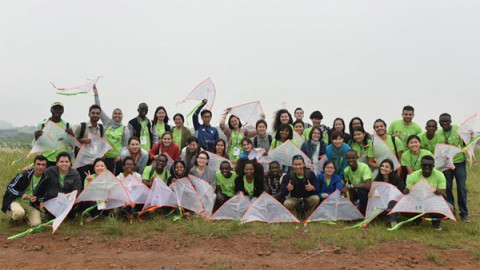 [APCEIU Insights] Youth Voices on the COVID-19 Pandemic and a New World 2020-06-20 The COVID-19 pandemic is challenging the social, political and economic dynamics of the world. This global pandemic is forcing us to ponder our actions while changing the life of many people and raising a lot of questions for the future, especially for young people across the world. Through these short stories, we aim to take you on a journey around the world through the eyes of young people facing the COVID-19 pandemic. From Bhutan to Zambia, youth are suffering the effects of the pandemic, but they are also working to tackle them by helping their communities. When facing the current crisis, young people are reminding everyone the importance of realizing that we all live in one same global village in which we are responsible for one another. While the novel coronavirus has disrupted entire countries, it has also brought people closer despite national, political or social boundaries. This global crisis has also shined the spotlight back to the people and their most fundamental needs and rights. We are therefore facing an opportunity that we can all take advantage of in order to foster global citizenship at all levels with the hope of building a more sustainable and prosperous world. If Not Now, When? The isolated Kingdom of Bhutan was watching the world from afar when the effects of the pandemic ravaged through the economies and the social lives of people around the globe. Within days, it hit Bhutan as well. Bhutan was not prepared or equipped to deal with the pandemic when a 76-year old American tourist became the first to test positive for COVID-19. However, he was treated with the utmost care, and sincere prayers and messages flooded social media for his quick recovery. This incident showed how important it is to consider one nation’s problem as another’s concern. The American tourist, despite having underlying medical conditions, fully recovered and now expresses his gratitude to Bhutan. This depicts the ideals of global citizenship and the importance of support and solidarity that extends beyond one’s border in times of need. On the other hand, it caused a lot of panic among the country’s citizens with a heated blame game of neglect and irresponsibility. Gradually, people came together as a community to fight the virus. Young people in Bhutan have played a significant role in these difficult times. Youths across the country are rendering their services as volunteers. The essence of global citizenship is realised locally as Bhutanese youth have united and are determined under a common cause. They have scattered around the country as volunteers with some raising awareness in rural Bhutan, patrolling the borders, and offering to work in the food sector and in every other area where help and service is needed. All the positive cases in Bhutan are associated with the youth who returned to the country from abroad. They have been doing their part firstly by coming out on social media sharing their experiences and raising awareness. The Bhutanese, in general, have started stigmatising people who have tested positive for COVID-19 and foreigners in Bhutan with racism. Youths who have tested positive as well as youths who are volunteering have been advocating and addressing society -especially those in rural Bhutan - on the stigma and racism associated with COVID-19. Sonam Zam is a 26 year-old high school teacher in rural Bhutan who has been volunteering to patrol the India-Bhutan border. She has been managing her time between online lessons and her service as a volunteer. Likewise, Kesang, a 26 year-old dentist is volunteering as a frontline worker. Meanwhile, another Sonam (26) is volunteering to serve the other volunteers with food and drinks. There is also Ninjay (21), who has been staying home, keeping himself updated with the latest news while educating and informing his family about COVID-19. When asked what motivates them to unite in these difficult times, a common response echoed, “If not now, then when?” Their services have helped their communities remain calm and provide the country with hope and strength. The youth of the country make up the largest section of this landlocked country and the King of Bhutan, who is highly revered by its people, has always said “the future of Bhutan will depend upon the youths of today.” Waving Flags Away The COVID-19 pandemic has strongly affected Latin America and the Caribbean. Guatemala, the most populous country in Central America, is struggling to deal with the effects of what started as a sanitary challenge and evolved into a multi-source crisis. With over 60 per cent of the national population below the age of 35, the country’s youth are both at the frontline of the efforts to tackle this crisis and also are some of the most affected. In addition to young people, people living in the rural areas, women and indigenous people are among the most affected by the pandemic in the country. The Guatemalan government has failed to contain the spread of the virus and does not seem to have a clear strategy on how to deal with the negative economic and social effects brought on by the pandemic. As of early June 2020, the number of new cases has not ceased and the very weakened public health system is on the verge of collapse As a result of the lockdown and curfew policies enforced in the country since late March, thousands of people have lost their source of income as they rely on informal economic activities that cannot be practiced in the current context; therefore the levels of poverty and extreme poverty are rising. One of the most visible effects of the COVID-19 crisis is the widespread hunger that numerous families are facing. All across the country, entire families take to the streets to waive white flags at cars and pedestrians in a desperate call for help as they are hungry and do not have any more resources to feed themselves. Due to the needs of the many facing hunger and the lack of effective actions from the local authorities, a group of young citizens created an initiative called “La Olla Comunitaria (The Community Pot);” an initiative that focuses on feeding all of those in need. This movement started in Guatemala City and was quickly replicated in six other cities across the nation and later in El Salvador as well. For over two months, each Community Pot fed over a 1,000 people and provided supplies to many more every day. They use their own resources as well as donations given by many fellow citizens. Despite the high risk environment, groups of young friends would cook and serve meals and deliver supplies across the country. Unfortunately, due to their popularity, some Community Pots have been forced to close to avoid becoming clusters of infection. However, people are still hungry and many are now left alone on the streets to fend for themselves. The Community Pots are a very clear example of global solidarity being raised by young people across Central America and beyond. The COVID-19 crisis has allowed people across the world to better understand the desperate need to foster global citizenship due to disruption of people’s everyday lives. This experience has made it very clear that we are all vulnerable and are not that different from one another when facing adversities. Therefore, the best and only way to ensure a sustainable future for all is to come together as a global community, leaving all pre-existing tags and flags behind. This pandemic is a call for more caring and empathetic communities. It is a call for tolerance and solidarity. It is a call for critical thinking citizens and, above all, a call for individual actions to have a global impact. “Let’s take advantage of this crisis to transform ourselves and realize that it’s possible to have another type of humanity,” said Byron Vasquez, founder of La Olla Comunitaria. A Place to Call Home The pandemic that the world is facing today has brought back many nationalist ideas that challenge the way people and countries interact with one another in today's globalized and connected world. Shortly after China first announced an outbreak of COVID-19 in the city of Wuhan, many Chinese and Asians around the world became the target of prejudice and different forms of violence. Citizens of different countries started blaming China for the spread of the virus believing that all Chinese people were virus carriers. Later on, as the virus spread around the world, each country started applying containment policies. Regions with high levels of cooperation and exchange such as Southeast Asia, Europe and South America have gone back to more traditional nationalistic approaches to preserve the wellbeing of their own. Therefore, the institution of the traditional nation state has regained importance as today’s citizens rely on their governments to assist them in weathering this crisis. However, many people around the world cannot count on any government since they do not have the legal requirements to be considered as a citizen of the territory in which they reside. This is the case of thousands of refugees and displaced people around the world, particularly coming from conflict areas and currently seeking to locate themselves elsewhere due to violence, war, natural disasters, etc. Although we do not hear from them during this global crisis, they are also suffering from the effects of the pandemic in ways that few people can imagine. This is the current situation affecting many Syrian refugees. To be a refugee means to be away from home, away from families and friends. It also means that they struggle to adapt in a new country with new cultural values and norms. To have to go through this while quarantined can be a very challenging task that can have a strong impact on their lives. In light of this, a group of young Syrian refugees in Turkey have created an innovative platform for Syrian refugees around the world to connect and accompany each other during these difficult times. This initiative is called “My Home is Your Home” and it is based on the principle of solidarity. This initiative consists of an online volunteer-based platform that facilitates open spaces for dialogue and exchange between Syrian refugees. Through this platform, people can access sessions facilitated by experts in fields such as civil participation, psychology and other areas of expertise that are relevant to overcome the effects of isolation brought on by the confinement and lockdown policies in many countries. In Syria, the COVID-19 situation is very complex and diverse between regions. There is an overall lack of resources to deal with the pandemic as the health system has been decimated as a result of almost a decade of civil war. In late April, the United Nations called for a nationwide ceasefire in Syria in order to focus on the pandemic. However, the war is still ongoing. As of 10 June, the government controlled areas reported around over 150 cases of COVID-19. However, young people in Syria believe that the authorities refuse to admit the gravity of the situation and are not doing enough to support the population. This initiative showcases the potential that individual experiences can have when transformed on a collective community action, therefore highlighting the importance of all forms of diversity in our societies and the importance of cooperation. At the same time, it is a clear example of how today’s young people around the world remain connected regardless of the physical distances that separate one another. Even when being away from the place that was once called home, a sense of community and belonging will remain strong when supporting one another regardless of where they come from and where they may end up in the future. Together, Apart Zambian youths are piercing into their power like never before and demanding a space to make their voices heard. They are the front runners of their generation and are working towards a more successful and compassionate world. As a young person involved in making a meaningful impact through driving social inclusion movements for underrepresented communities, I (Zanji Sinkala) believe this should be an opportune time to reach populations that the market and governments are unable to account for. To my dismay, certain factors such as lockdowns, have hindered and restricted my efforts inevitably. As a solution to this, I write journalistic articles about the diverse ways youths have been responding to COVID-19 to highlight their voices and foster solution-based action plans. It is to not only render help where it is needed, but to ensure that young people’s voices are raised alongside other communities’ voices in the roll-out of health and non-health interventions in response to this pandemic, because our reactions and responses have been often overlooked. Typing furiously on her laptop keyboard, Kasuba Kaisa creates a petition for her college institution to introduce online graduation amidst the pandemic so that she and her peers can graduate. Without her degree, she can't get a stable job anywhere. "I don't know how long this will go on for or how long I will be jobless," laments Kasuba, "Even if they sent my degree via email, I wouldn't mind. I just desperately need it." Kasuba hopes that this petition can speak for the potential graduates countrywide who feel like their lives and dreams have been put on hold abruptly and indefinitely. Mulenga Chileshe, a young professional Zambian tennis player and coach, stands on an empty court in Roma Park in Lusaka. In his 12 years in the game, he has never experienced a significant plummet in business like this. "I went from having 13 consistent clients a week paying me per one-hour session, to three vacillating clients I wouldn't even be certain would attend," he said. Aside from his tennis job, Mulenga helps run his family's restaurant in downtown Lusaka. However, the crisis has pulverized his business, leaving his five workers unpaid and uneasy. "It hurts me that there's nothing I can do to help them right now," he noted. "I am equally struggling." To combat the economic effects of the unprecedented retrenchments countrywide, Victoria Hospital, a private medical institution, with the help of youth volunteers, recently donated bags of corn flour ? Zambia’s staple food mostly known as Mealie Meal ? to individuals who lost their jobs due to the COVID-19 crisis and could not secure a single meal. Speaking of meals, a youth initiative called “The Lab Lunch,” created by Orange Tree Public House, pulls their weight by providing free lunches for the scientists and healthcare workers treating the numerous people infected with the coronavirus. In the midst of the devastation and distress, a sliver of hope manifests through the selfless acts of young people in Zambia who have chosen to rise to the plate and cushion the tangible impact of the virus on their fellow citizens. Lusaka Helps is an initiative run by youths in Lusaka, which supports the efforts of young people making a difference in their communities during the COVID-19 crisis. This includes highlighting even the simplest of gestures made by young people, such as letters of encouragement written to healthcare workers or phone calls made to people suffering emotional breakdowns. As the country learns to live in this “new normal,” it continues to work ‘together, apart’ proving fierce solidarity and a strong sense of togetherness in the face of uncertainty. - Diego Manrique from Guatemala is a Core Team member of the GCED Youth Network. He studied political science and currently works as an international development consultant.- Tshering Zangmo from Bhutan is also a member of the Network’s Core Team. She is a former TV producer in Bhutan and currently a master’s student in communication.- Zanji Sinkala from Zambia, a member of the Network, is an investigative journalist currently working with Reuters to report the COVID-19 crisis in sub-Saharan Africa. She is also a human rights activist.- Hadi Althib from Syria, a former member of the Network’s Core Team, works as a program manager of #MeWeIntl based in Turkey. He helped Diego with the article by providing information on the COVID-19 situation in Syria. For Previous Articles:(APCEIU Insights 1)- “What Changes Do We Want in the Post-Coronavirus World?” by Dr. LIM Hyun Mook- https://gcedclearinghouse.org/news/apceiu-insights-what-changes-do-we-want-post-coronavirus-world (APCEIU Insights 2)- “Reflecting on Global Citizenship Education in the Era of the Pandemic” by Prof. PAK Soon-Yong- https://gcedclearinghouse.org/news/apceiu-insights-reflecting-global-citizenship-education-era-pandemic URL:(No.3) Youth Voices on the COVID-19 Pandemic and a New World > EIU in the World - APCEIU (unescoapceiu.org)
 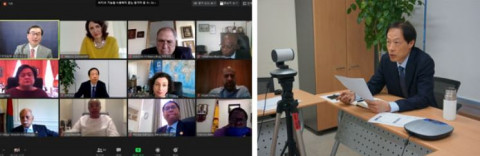 Launch of the UNESCO GCED Group of Friends to combat hatred and discrimination exacerbated by COVID-19 Pandemic 2020-06-12 On 26 May 2020, the Group of Friends for Solidarity and Inclusion with Global Citizenship Education (GCED) was launched and held its first meeting virtually with the participation of about 110 representatives of UNESCO Member States and relevant organizations. The group was launched in line with the global community’s effort to find collective solutions to fight against hatred, discrimination, and stigmatization exacerbated by COVID-19 Pandemic, and to enhance global cooperation through GCED. Led by the Republic of Korea as the chair of the group, the meeting was participated by 11 UNESCO Member States including Armenia, Austria, Bangladesh, Colombia, Italy, Jordan, Kenya, Philippines, Serbia, and Senegal. Celebrating the launch of the Group of Friends, Director-General of UNESCO Mme Audrey Azoulay highlighted the importance of GCED, which promotes critical thinking, understanding each other, and empathy - the essential competencies to combat the messages of hate that divides our society. In the congratulatory message, Foreign Minister of the Republic of Korea Ms Kang Kyung-wha said how GCED plays a significant role as a psychological vaccine to defend ourselves from hatred and prejudice. Furthermore, she appreciated the contribution of APCEIU in disseminating and promoting GCED regionally and internationally. Mr Kim Dong Gi, Ambassador and the Permanent Delegate of the Republic of Korea to UNESCO, chaired the meeting and underlined that the Group of Friends upholds UNESCO’s ideas and values against misunderstanding and prejudice. GCED was presented as a useful tool to materialize the aim of the Group of Friends. He also pledged to cooperate with UNESCO and other educational institutions as an action-oriented group. In the light of UNESCO’s leading role of supporting SDG 4.7, Assistant Director-General for Education of UNESCO Ms Stefania Giannini highlighted the importance of APCEIU’s culture of disseminating GCED. Moreover, she reiterated that GCED is one of the ways for us to foster empathy and responsibility to face the newly emerging challenges. As part of the expert presentation session, Mr Lim Hyun Mook, Director of APCEIU, shared these thoughts with the topic of ‘COVID-19 Pandemic and GCED’. He underlined important lessons from COVID-19 for GCED and suggested future plans on how the Group of Friends could promote GCED. He stressed the urgent call to Member States for action and the willingness of APCEIU to support the process. Ms Vibeke Jensen, Director of the Division for Peace and Sustainable Development at UNESCO Headquarters, shared that while it is a reality that the immediate educational needs of countries and their urgent response are essential, GCED plays a vital role in long-term recovery. Mr Rilli Lappalainen, Founder and Chair of the Bridge 47 Network that focuses on working for GCED, emphasized the importance of investing to support global citizenship that will bring forth social transformation. While all the Member States mentioned the core value of GCED in the line of enhancing global solidarity, Ambassador of Serbia has mentioned how the APCEIU’s Capacity-Building initiatives supported its effort to educate Serbian education officials on GCED, which is now a necessity amidst the global pandemic. In a joint statement, the GCED Group of Friends has pledged to work as an open platform to combat hatred and discrimination through strengthening international cooperation with GCED. The outcomes of the launch meeting were decided to be shared during the next Executive Board Meetings of UNESCO to gather further support among Member States and to implement relevant action at different levels. (Photo Credit: ROK MOFA, APCEIU) URL:Launch of the UNESCO GCED Group of Friends to combat hatred and discrimination exacerbated by COVID-19 Pandemic > APCEIU News - APCEIU (unescoapceiu.org)
  [APCEIU Insights] What Changes Do We Want in the Post-Coronavirus World? 2020-05-27 What Changes Do We Want in the Post-Coronavirus World? LIM Hyun Mook (Director, APCEIU) Something beyond our imagination is occurring. The novel coronavirus is forcing humanity into the greatest crisis since World War II. Even the United States and European countries, regarded as advanced nations, are being hit hardest due to the ongoing pandemic. However, crises sometimes bring about positive changes. The 1918-19 influenza triggered the introduction of national health services in European countries. What changes do we want once the coronavirus crisis has passed? While overcoming the immediate crisis is an absolute priority, we need to look beyond that. Globalization in Retreat? Some predict that globalization will recede, and the role of the state will be strengthened again. Actually, almost all countries have closed their borders and blocked the entry of foreigners. Exports of medical supplies have been banned, and global supply chains of manufacturing components have been disrupted. Some countries have halted food exports. Along with these actions, the authority and responsibility of states are expanding unprecedentedly. From forceful lockdown measures to the allocation of workers and resources, countries are behaving much like during the times of war. Some critics fear health fascism. The state is also mobilizing large amounts of public money to provide disaster aid to the people and nationalize companies on the brink of bankruptcy. Accelerated globalization over the past several decades has connected the lives of humanity more closely than ever, which means that no single country can be safe alone. COVID-19 has evidenced the stark risk of such globalization. Will market globalism retreat after the coronavirus crisis and will state sovereignty, resource nationalism, and protectionism resurge? Is this change positive? If not, should we go back to pre-coronavirus globalization? In history, crises did not necessarily lead to positive changes. The opposite was often the case. Economic inequality in South Korea widened after the 1997 financial crisis, and polarization has deepened in many countries since the 2008 global financial crisis. Strengthening Democracy and the Public Sector As we go through this crisis, we feel the desperate need to strengthen the public sector above all. We realize that, at the cost of enormous sacrifices, citizens’ health and safety cannot be protected by privatization but by social solidarity and public systems. We must not forget that countries that have cut the number of public health workers and budgets and put public health in the hands of the market are suffering the most in this crisis. Each country's response strategies and policies inevitably vary depending on its infection control, the medical system, and the political regime. There can be no one-size-fits-all strategy. However, it is essential to learn from the experiences of other countries. While most countries have declared an emergency and are struggling to slow the spread of the virus, South Korea has succeeded in flattening the infection curve due to its citizens’ participation and cooperation without employing coercive measures. The utilization of technologies such as the tracking of movements of those that tested positive also played a significant role in South Korea, but more importantly, the citizens' willingness to cooperate for the safety of the community was paramount to its success. When disasters and crises strike, people naturally feel fear first, which is followed by unusual behaviors such as panic-buying. The most effective antidote to combat this fear is democratic leadership. Democratic leadership instills trust in its citizens and promotes civic cooperation. This is because it prioritizes the health and safety of citizens and responds quickly to the needs of civil society in times of crisis. In some countries, the government's coercive responses are temporarily supported by its citizens. However, coercive measures suppress the voluntary cooperation and creative response of a country’s citizens and eventually diminish the community's capacity for responding to crises. In addition, accurate and sufficient information is important. This is also the foundation of democracy. Media reports that blame others and fake news can hinder citizens' responsible actions and undermine the morale of those striving to overcome the crisis. The news media that responsibly deal with an infectious disease crisis are another critical factor that strengthens the public sphere. Viruses are said to be equal to everyone, but in reality, they sacrifice vulnerable people more. It is the politicians, assisted by scientists, who take special steps to protect them and make decisions to allocate insufficient medical resources for them. This brings to mind the importance of democracy. Likewise, it is international politics that coordinates internationally assistance for low-income countries with weak medical systems. International Solidarity and Cooperation COVID-19 has revealed the vulnerable reality of high-income countries so much so that it is frightening just to imagine how badly low-income countries will be damaged if such explosive outbreaks happen. International support and cooperation for them are desperately needed. However, global governance aimed at tackling the pandemic crisis is not functioning well. Even the strongest nation in the world, the United States, is focusing on its domestic countermeasures. Moreover, European Union countries have failed to show strong joint action. International solidarity and cooperation could be less robust than before if globalization retreats after the coronavirus pandemic and state sovereignty continue to rise. This is not good for world peace and safety. What we need is not higher walls, but more cooperation. Sustainable Civilization Ironically, the COVID-19 crisis has made the skies clean. As lockdowns in many countries have dampened industrial activities, there is a significant drop in fossil fuel consumption. Fine dust has also decreased. We are in a paradoxical situation where the pandemic crisis helps to fight the climate crisis. The cause of the continued emergence of mutated viruses such as SARS, MERS, and COVID-19 may be attributed to modern industrial civilization. As animal and plant habitats are destroyed, and the ecosystem is disrupted by climate change, there are more chances for virus strains to spread to humans. In addition, urbanization has concentrated the population, and globalization has led to frequent international movements, both factors that generate a favorable environment for the virus to spread worldwide. Epidemics are likely to outbreak again in the future. In view of this, while we need to fully reinforce the quarantine and medical system, more fundamentally, we need to reflect on whether our lives are sustainable. The coronavirus may be a “canary in a coal mine” that warns of the dangers of modern industrial civilization, captivated by the tenet of economic growth based on fossil fuel. The Role of Education What role should education play for positive changes to be pursued in the post-coronavirus world? What lessons will we as responsible citizens learn and pass on to the next generation in this pandemic crisis, the biggest one since World War II? Above all, the first lesson should be that fighting hate and discrimination, and practicing the spirit of solidarity and cooperation, is absolutely important in overcoming a crisis. Under the current crisis, some people equated certain groups with the virus; they stigmatized, hated, and wielded violence against them. On the other side, there have been many cases of people showing solidarity and cooperation in order to narrow the psychological distance while avoiding physical contact. Regardless of racial, national, and ethnic distinctions, citizens of the world showed empathy with the suffering of victims, appreciated the strenuous effort of medical workers and quarantine authorities, and did whatever small things they could do to contribute to overcoming the crisis. This has moved and encouraged us all. Understanding the value of democracy and the public good, empathizing with the suffering and hardship of those affected by the disease, and practicing solidarity and support, particularly for the vulnerable and underprivileged people and low-income countries with weak medical systems should also be an important lesson. In addition, it will be essential to develop literacy that enables a critical understanding of the information disseminated from social media channels and the press. Reflections on the sustainability of modern society are also a critical lesson that has emerged from this crisis. The questions the coronavirus is asking us, such as the climate crisis caused by the use of fossil fuels, lives of humanity closely interconnected under globalization and the resulting greater risks and vulnerabilities, and the harmony between the protection of personal information and community safety, are all important and urgent. Sharing these lessons and finding their meaning together is perhaps the most important educational task of the time. Global citizens who have developed their capabilities through such education will become agents for driving positive post-crisis changes. UNESCO should further strengthen its efforts to promote Global Citizenship Education in this regard. APCEIU will also continue to contribute to this effort. I extend my respect and gratitude to medical workers and quarantine authorities around the world who are struggling to fight the crisis even at this moment. I also appreciate the solidarity and cooperation displayed by global citizens sharing common humanity beyond all distinctions and differences. URL:(No.1) What Changes Do We Want in the Post-Coronavirus World? > EIU in the World - APCEIU (unescoapceiu.org)
 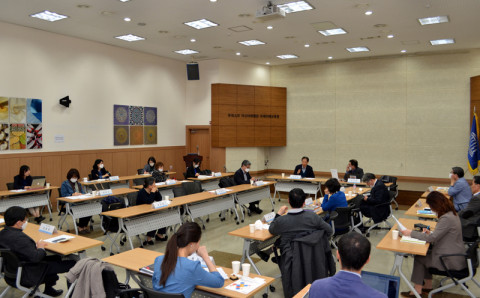 Global Citizenship Education and COVID-19 Pandemic held 2020-04-30 On 17 April 2020, APCEIU held a consultation meeting with the theme “Global Citizenship Education and COVID-19 Pandemic” within its premises. Representatives of relevant organizations, academia and civil society participated in this consultation meeting who shared their activities and plans to strengthen the promotion of GCED in the Republic of Korea and beyond, in response to the challenges in education imposed by the current pandemic. The participants discussed the importance of and challenges in promoting GCED in face of this unprecedented global crisis, the need for further investigation and discussion, and the need to have a sustainable platform to strategize and share information to develop on future direction. All participants agreed on the urgency of spreading GCED to prevent conflicts that may occur due to the crisis, as well as the need to explore synergies to maximize the impact of future actions to be taken. URL:Global Citizenship Education and COVID-19 Pandemic held > APCEIU News - APCEIU (unescoapceiu.org)
 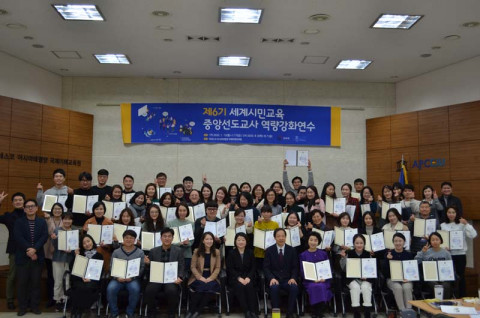 1st Capacity-Building Training Workshop for the 6th Batch of the National GCED Lead Teachers 2020-04-02 Co-organized by Ministry of Education of Republic of Korea and APCEIU, ‘1st Capacity-Building Workshop for the 6th Batch of the National GCED Lead Teachers’ was held during 13-17th of January, 2020, awarding a letter of appointment to 64 teachers who successfully completed the workshop. Those are representative teachers appointed by 17 MPOEs (Metropolitan and Provincial Offices of Education) to play pivotal roles in disseminating and implementing global citizenship education (GCED) in Korea. During five days intensive capacity-building workshop, the GCED lead teachers were engaged with various programmes and activities to learn concepts and themes of GCED in depth and GCED best practice cases at the school level while developing action plans and exploring implementation strategies that reflect the context of their respective regions for further dissemination of GCED. Launched in the year 2015, Korean GCED Lead Teachers Programme has annually produced 700 national and provincial GCED Lead teachers and over 3,000 teachers across the country are currently carrying out diverse GCED activities in cooperation with their schools and communities and 17 MPOEs. URL:1st Capacity-Building Training Workshop for the 6th Batch of the National GCED Lead Teachers > APCEIU News - APCEIU (unescoapceiu.org)