
News
Catch up on what’s happening in the world of global citizenship education.
225 results found
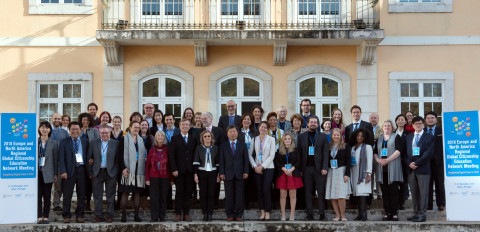 Strengthening Regional Action for GCED: Europe and North America Regional GCED Network Meeting 2018-12-28 Asia-Pacific Centre of Education for International Understanding (APCEIU) under the auspices of UNESCO, UNESCO Venice Office and the Global Education Network Europe (GENE) co-organized the 2018 Europe and North America Regional GCED Network Meeting in cooperation with UNESCO Headquarters on 21-22 November in Lisbon, Portugal. The meeting brought together about 50 participants from GCED-implementation institutions from the government, academia, civil society and international organizations in the region. In their welcoming remarks, the co-organizers, including Director of APCEIU Mr Utak Chung, identified the aim of the conference in deepening the understanding of GCED in the region and providing a platform to discuss avenues of future collaboration and effective ways of strengthening networking for GCED within and beyond the region, recognizing that the meeting is the first of its level on GCED to bring together representatives of different sectors in the region. The first session touched upon the overview of GCED in both the global and regional contexts. Ms Lydia Ruprecht, Team Leader of Section on Education for Global Citizenship, UNESCO Headquarters, took the lead to present on the significance of GCED in the global education agenda and UNESCO’s efforts to realize GCED and SDG 4.7. Mr Utak Chung then took the stage to explain GCED in the global agenda and the global activities of APCEIU. After which, representatives of UNESCO field offices and APCEIU briefed the participants on respective regional GCED networks of Asia and the Pacific, Latin America and the Caribbean, Africa and Arab States, where speakers touched upon challenges, on-going actions to future actions. Then, representatives of the networks and institutions related to GCED in Europe and North America shared their activities and experiences. The next session was dedicated to review of the current status of GCED implementation in Europe and North America, serving as an opportunity to know who is doing what in the region, sharing their activities on GCED and recommendations for a possible regional GCED network in Europe and North America. The session also showcased a wide variety of initiatives being implemented in the region for GCED by different actors. Following the session, participants were divided in several groups by sector and had group discussions on the challenges and remaining gaps in GCED implementation in the region. Through the discussions, participants identified the need to develop new pathways for partnership within and beyond the region. On the second day, participants discussed the ways of strengthening GCED implementation both globally and regionally through the Europe and North America Regional GCED Network, sharing the needs and possible contributions to the network. The two day meeting was concluded with the establishment of a network steering committee with participation from 15 organizations to bring the recommendations of the meeting to action. On 23 November 2018, Mr Utak Chung presented on the network meeting outcomes as well as APCEIU initiatives on GCED at the 2018 GENE International Conference. URL:Strengthening Regional Action for GCED: Europe and North America Regional GCED Network Meeting > APCEIU News - APCEIU (unescoapceiu.org)
 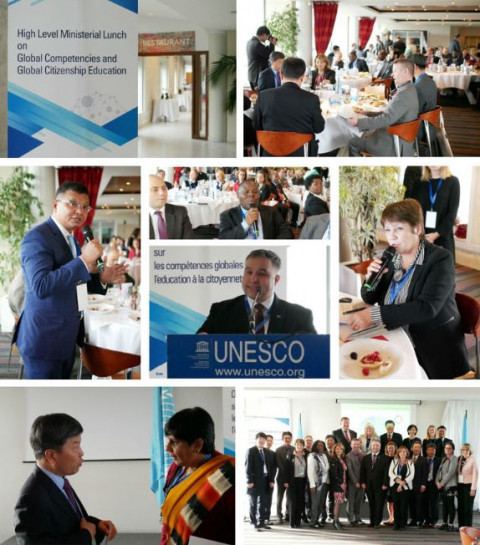 Leadership on GCED shown at High-Level Side Event during the 39th Session of the UNESCO General Conference 2018-12-28 On the occasion of the 39th Session of the UNESCO General Conference, a High-Level Ministerial Side Event took place with the title of ‘Dialogue on Global Competencies and Global Citizenship Education’ on 2 November at the UNESCO Headquarters. This side event was hosted by the Ministry of Education of the Republic of Korea and the Council of Ministers of Education of Canada, with the partenership of APCEIU and Global Affairs Canada. The dialogue attracted about 110 high-level participants, including 36 education ministers of Member States, as well as ambassadors from permanent delegations and senior officials from around the world. They gathered to discuss transformative and innovative education strategies to promote global competencies and global citizenship education. Ambassador Elaine Ayotte, Permanent Delegate of Canada to UNESCO welcomed the ministers and high-level officials to the dialogue by emphasizing the commitment of Canada and Korea to education and the realization of Education 2030 by saying “Canada and Korea, although different, have many common positions in the field of education. I believe that the reason why our two countries are here today is because Education 2030 agenda is a cornerstone for both our countries, which reaffirms the importance of providing opportunities to achieve education for the better.” Also, Ambassador Lee Byeong Hyun, Permanent Delegate of the Republic of Korea to UNESCO highlighted the role and need of GCED in a rapidly changing world and urged the efforts of stakeholders by saying “We need to mobilize resources and make the best use of those resources to transform learning environments. This requires collective endeavors of all stakeholders involved in the process, including teachers, communities and policy makers to promote global citizenship education beyond classrooms.” Followed by opening remarks, Mr Qian Tang, Assistant Director-General for Education of UNESCO highlighted the important role of the Republic of Korea and Canada in promoting GCED and contributing to the realization of SDG 4.7. As well, he thanked APCEIU for its invaluable contribution to GCED. Showcasing the two countries’ work on global competencies and global citizenship education, education ministers from Canada opened the floor to share best practices. Honorable Dale Kirby, Minister of Education and Early Childhood Development of Newfoundland and Labrador, and the Honorable Sebastien Proulx, Minister of Education, Recreation, and Sports of Quebec introduced 6 components of Canada’s Global Competencies (►Critical thinking and problem solving, ►Innovation, creativity and entrepreneurship ►Learning to learn/self-awareness and self-direction ►Collaboration ►Communication ►Global citizenship and sustainability) and shared education reforms in Canada that aim to put global competencies and foster global citizenship at the forefront of education. On behalf of the Honorable Deputy Prime Minister and Minister of Education of the Republic of Korea, Kim Sang-Kon, Mr Yeonghan Choi, Director General of International Cooperation Bureau of the Ministry of Education of the Republic of Korea, talked about lessons learned and challenges in implementing Sustainable Development Goal 4 and Global Citizenship Education. He shared that despite rapid economic development of the country, there are still limitations in the implementation of GCED in the Republic of Korea, but strongly pointed out that this is the future of education for the country. “At this point where the country has flourished, the only way towards further development is to enhance the capacities of the future generations to be sensitive with global challenges and to creatively find solutions.”, mentioned Mr Choi. He also shared the partnership effort with APCEIU in promoting GCED in transforming education in the Republic of Korea towards fostering global citizenship. He introduced initiatives such as the GCED Lead Teachers and International Teacher Exchange Programme, and other programmes that promote international cooperation for education in the Asia-Pacific and beyond. After the presentations from Canada and Korea, the participants were invited to a dialogue moderated by John McLaughlin, Deputy Minister, Department of Education and Early Childhood Development of New Brunswick. The discussion questions focused on challenges and successful initiatives or strategies in developing GCED in schools. Honorable Joof Batlara, Minister of Higher Education of Gambia asserted the political and religious challenges Gambia faces should be tackled with education, especially through GCED to sustain peace. Honorable Benghabrit Remaoun Nouria, Minister of National Education of Algeria shared the serious social issues in Algeria such as social and political turmoil and extreme violence, and highlighted that GCED represents the need to transform education in Algeria. Also, she applauded the work of UNESCO to provide tools and materials on GCED, such as the 『GCED Topics and Learning Objectives』, supported by APCEIU in 2014. The high-level participants had an opportunity to share their experiences and expertise on policy frameworks and implementation of GCED through this dialogue. Honorable Mr Hang Chuon Naron, Minister of Education, Youth and Sport of Cambodia shared a current initiative in Cambodia, called “New Generation Schools” which provided resources, equipped teachers and updated methodology that allow students to work in a team and promote collaborative learning. He further mentioned that Cambodia is cooperating with APCEIU to integrate GCED in their national curriculum, which will help students to face and tackle global challenges. Also, Honorable Mr John Chrysestom Muyingo, Minister of State for Higher Education of Uganda mentioned Uganda took the initiative of integrating GCED in the national curriculum in Uganda, a collaborative initiative with APCEIU. Even though the curriculum was not yet wholly changed, it gave an opportunity for schools to complement with new materials for learners and teachers, and to educate trainers. The High-Level Ministerial Side Event contributed to the continued discussion on global competencies and global citizenship education, an integral part of the discussions and debate during the 39th Session of the UNESCO General Conference. Being part of the strategic objectives of UNESCO in the next biennium (2018-2019), the high-level side event was an important opportunity to enhance partnership amongst different stakeholders, particularly with ministries of education, towards realizing SDG 4.7. URL:Leadership on GCED shown at High-Level Side Event during the 39th Session of the UNESCO General Conference > APCEIU News - APCEIU (unescoapceiu.org)
 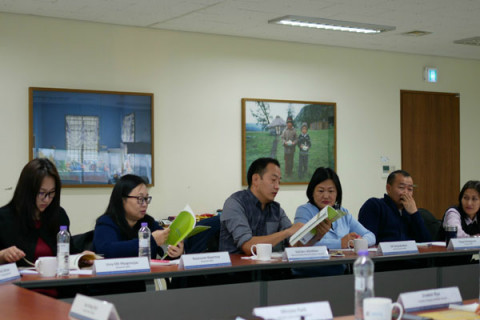 Enhancement Workshop on GCED Curriculum Development and Integration for Mongolian Project Coordinators: A Synergy between Mongolia’s Passion and Korea’s Expertise 2018-12-28 An enhancement workshop for the Mongolian GCED curriculum developers was held by APCEIU on 15 to 18 November. Seven participants, including researchers at the Mongolian Institute for Educational Research (MIER), a professor at the Mongolian National University of Education, and a teacher at a GCED model school, attended the workshop as representatives of the GCED curriculum development project team in Mongolia. For the workshop, Seoul Ancheon Elementary School and the Korea Institute for Curriculum and Evaluation (KICE) provided special cooperation. Mongolia has been developing and disseminating GCED curriculum in collaboration with APCEIU since last year, and its major outcome, a teacher’s guide on GCED will be published next year. In support of the project, the purpose of the workshop was to provide an opportunity for the Mongolian project team to collect resources and feedback from GCED experts and schools in Korea for the development of the Mongolian teacher’s guide on GCED. In his welcoming remarks, Utak Chung, Director of APCEIU, expressed thanks to the Mongolian government’s wholehearted support and the project team’s devotion in the GCED curriculum development. He wished for the workshop to provide upmost valuable supplementation to the development of the Mongolian teacher’s guide on GCED, and to serve as an opportunity to deepen the solidarity between the two countries under GCED. Throughout the 4-day workshop, the participants deepened their understanding on GCED through hearing the experience on the development of the GCED curriculum guide in Korea, receiving lectures on transformative pedagogies for GCED, visiting a GCED research school, and engaging in consultation with Korean GCED Lead teachers and curriculum developers from KICE. With the invitation by the Seoul Ancheon Elementary School to the report meeting on the GCED research school activities, workshop participants gained on-site experience by closely observing GCED classes in play and exchanging dialogue with teachers and students at the school. Sid Sanjaabadam, Research Director of MIER, proclaimed as the spokesperson to use the acquired experiences and resources to enhance the Mongolian teacher’s guide on GCED. Also, she hoped for the outcomes of the Mongolian team’s endeavor to reciprocate as valuable resources to Korea, creating a cycle of mutual support and cooperation between the two countries. URL:Enhancement Workshop on GCED Curriculum Development and Integration for Mongolian Project Coordinators: A Synergy between Mongolia’s Passion and Korea’s Expertise > APCEIU News - APCEIU (unescoapceiu.org)
 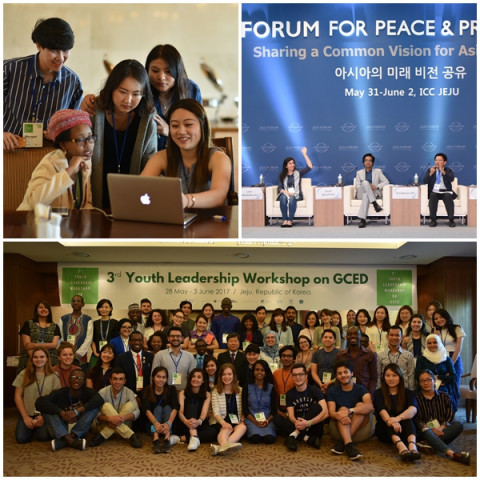 A Global Forum for Youth Leaders to Share Initiatives on GCED 2018-12-26 The 3rd Youth Leadership Workshop on GCED was held from 28 May to 3 June 2017 in Jeju, Republic of Korea. During this workshop, 50 youth leaders/activists from 42 countries participated in various forms of programmes, including plenary sessions on GCED, workshops for Youth Advocacy and study visits to understand GCED local initiative. Facilitated by APCEIU and core members of GCED Youth Network, this workshop was a forum for participants to actively share and engage with each other based on their local youth activities. Starting with the sessions on ‘Introduction of GCED’ by Director CHUNG Utak and Office of Education and Training, various workshops under the main theme of “Deepening the Understanding of GCED Advocacy” were held. For the session of “Youth Inspirational Speakers on GCED” by GCED Youth Network, youth leaders took part in various interactive exercises to understand GCED through sharing their own GCED activities and ultimately respect the difference of each other through GCED. Following this, participants had a session to ponder over the advocacy in GCED and its implementation strategies during the group activities. As a part of the session, “GCED Advocacy”, which was led by the GCED Youth Network introduced Youth Advocacy Toolkit and internalised advocacy strategies to efficiently implement GCED as a youth leader. In order to explore the local initiatives and develop a strategic planning for GCED, the youth activists participated in study visits to two different places in Jeju. Participants chose one of the options to experience and deepen their understandings of local initiatives on GCED based on the following themes: 1) “Understanding GCED Local Initiatives” - Global Inner Peace, A Civil Society Organization on Global Issues; 2) “Creative Ways for the Sustainable Future” - Jaejudo Joa, A Cultural Group for Sustainable Marine Ecosystem through Beachcombing. By exploring GCED in local settings, the youth leaders had a priceless opportunity to relate their own experience with the different areas of Jeju to find methods to implement GCED in their home countries and share their activities on social media. After the study visit, participants gathered at Ttarabi Oreum and participated in the Peace Campaign by writing peace messages and flying kites. On June 1, the participants in six groups presented their outcomes to promote GCED by different thematic issues followed by action plans on specific topics: 1) Human Rights - Sexual Human Trafficking, 2) Leadership Development - Social Entrepreneurship, 3) Peace & Conflict - Act for Tolerance, 4) Cross-Cultural Understanding - Dialogue for Peace 5) Environmental Sustainability - Design a Sustainable Future with Comunidade da Mare 6) Gender Equality - Sanitary Pad, Right for Every Girl. Each group gave a speech on the above topics, composed of the background, target group, plans/timeline, method, evaluation/monitoring and organisational approach. To find the solutions to each issue, youth leaders had discussions to share their ideas and come up with group outcomes which are to be implemented and reproduced after the workshop as follow-up activities. On the last day, the youth activists participated in a session on “The Role of Youth and Culture in Shaping a Peaceful and Sustainable Future” in Jeju Forum for Peace and Prosperity. In this session organised by APCEIU and Jeju Special Self-Governing Province, two of the Workshop participants shared their youth and culture activities representing youth leaders across the globe as panelists. Her Excellency Puan Maharani, Coordinating Minister for Human Development and Culture of Indonesia, His Excellency Hamat Bah, Minister for Tourism and Culture of The Gambia, Mr. Eduardo Mendez, Executive Director of Simon Bolivar Music Foundation in Venezuela and Mr. Daniel Lindemann, TV personality in Korea from Germany Culture also joined the session as panelists. At the closing ceremony, Director Gwangjo KIM from UNESCO Bangkok commented that “It is important to take actions as global leaders and bring the issues forward to implement GCED in your own community.” Director CHUNG concluded this workshop by saying that “It is surely expected that the outcome of workshop will be implemented in your programmes of diverse regions and APCEIU will continuously support youth activities through GCED Youth Network.” URL:A Global Forum for Youth Leaders to Share Initiatives on GCED > APCEIU News - APCEIU (unescoapceiu.org)
 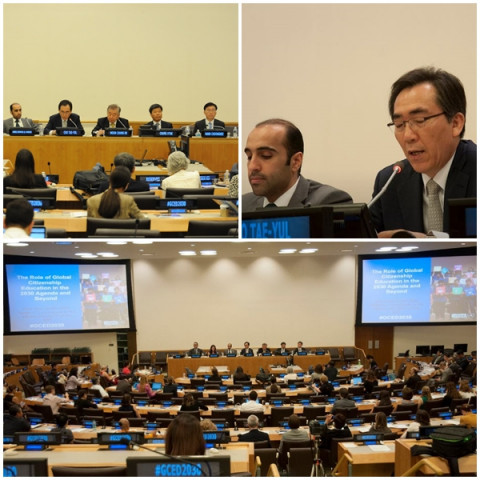 Value of GCED for the United Nations highlighted in 2017 UN GCED Seminar 2018-12-26 On 19 June 2017, APCEIU, together with the Permanent Missions to the United Nations of the Republic of Korea and Qatar, as well as the World Federation of United Nations Association (WFUNA) co-organized the 2017 UN Global Citizenship Education (GCED) Seminar at the United Nations (UN) Headquarters in New York. With the title “The Role of Global Citizenship Education in the 2030 Agenda and Beyond” the seminar focused on answering the question of how does Global Citizenship Education (SDG Target 4.7) contribute to the values and visions of the United Nations. An annual event since 2015, the discussions in the 2017 also touched on best practices that contribute to the realization of SDG Target 4.7, the Sustainable Development Goal for GCED. Ambassador Cho Tae-yul, Permanent Representative of the Republic of Korea to the United Nations, emphasized on the significance of GCED with the current global challenges faced mutually by humanity, and its role in realizing the mission of the United Nations. “GCED educates people to become active and responsible global citizens…towards sharing and realizing the universal values and visions which the United Nations upholds.” Ambassador Cho further mentioned that GCED contributes to the UN beyond its inclusion in the SDGs as it serves as, “…an important element of the UN’s holistic approach, strengthening the nexus among peace and security, development and human rights.” He further addressed that in line with the mainstreaming action needed at the United Nations, the “Group of Friends on Global Citizenship Education” was established, co-chaired by the Republic of Korea and the State of Qatar. The inaugural meeting of the group was held last 1 June where 60 representatives from 35 UN Member States as well as UN Department of Public Information, UNESCO and UN Alliance of Civilizations participated. As a reply, Ambassador Abdulrahman Yaaqob Y. A. Al-Hamadi, Deputy Permanent Representative of the State of Qatar to the United Nations, expressed their pride in co-chairing the group, a common platform for member states and key stakeholders to discuss challenges and opportunities to promote GCED. Ambassador Al-Hamadi also stressed the various efforts of Qatar to promote GCED, including through its support of intercultural dialogue, and the organization of the 2017 World Education Summit for Education (WISE) with the theme “Co-exist, Co-create, Learning to Live and Work Together”. The WISE will be held in Doha from 14 to 16 November 2017. In the opening remarks, Utak Chung, Director of APCEIU, explained that in light of the effort to prevent violent extremism, the implementation of GCED is crucial. He mentioned the full commitment of APCEIU in implementing GCED, shown in its various efforts such as the annual UN GCED Seminar, building capacities of teachers, development of curricula and policy guidance on GCED, and opening of platforms such as the International Conference on GCED and the GCED Global Network to exchange ideas and develop strategies for GCED. On a similar note, Bonian Golmohammadi, Secretary-General of WFUNA, highlighted their work on GCED, towards the goal of empowering young people to become global citizens that contribute and engage with the work of the UN and the realization of the SDGs. On a special video message, Madame Irina Bokova, Director-General of UNESCO, expounded that the inclusion of GCED in the SDGs is recognition of its role to support an education that meets the needs and challenges of the 21st century, “…convinced that (GCED) is essential to empower learners with skills and values they need to be positive change actors.” Furthermore, she recognized the leadership role of APCEIU in the promotion of GCED, working closely together within UNESCO towards stronger and more efficient programming. For the keynote speech, Moon Chung-In, Special Advisor to the President of the Republic of Korea for Unification and National Security Affairs and Distinguished Professor of Yonsei, drew the backdrop of the Korean case of GCED, a retrospection of how GCED came into being in the Korean context despite many challenges. Historical memory of poverty and rapid development has caused the Korean society to develop a certain culture that includes attitudes such as low empathy and high nationalism, a major barrier to GCED. As such, he put emphasis on the importance of taking history and culture into account, as is underlined in the GCED textbook developed through a consortium between various provincial offices of education in the Republic of Korea. The panel discussion included presentations from practitioners of GCED including Karen Bryner, Director of Educate-A-Child Technical Department, Education Above All; Lily Gray, Liaison Officer, UNESCO Office in New York; Han Kyung-Koo, Professor, Seoul National University; Mareike Hachemer, Teacher and Member of the Global Goals Educator Task Force; and Theresa Ridings, Student Cohort, Lehigh University’s Global Citizenship Programme. Panelists discussed about their activities on GCED, and perspectives that they apply in doing so. The role of teachers has been stressed, in that they need to become global citizens first and to be provided with resources and capacities developed. Students beyond the formal education sector needs to be offered with opportunities on GCED, lest the cycle of marginalization will continue. As well, the message of the complementarity between national citizenship and global citizenship was an important topic in the discussion. In the words of Han Kyung-Koo, “I believe that a good patriot can be, and should be, a really good global citizen. National citizenship is not an event, it is a process, and so is global citizenship.” At his closing remarks, Ambassador Hahn Choonghee, Deputy Permanent Representative of the Republic of Korea to the United Nations, put stress on the value of GCED beyond Target 4.7, as it achieves the ultimate goal of building peace through the United Nations. “I do not think that GCED is just a sub-target…rather it is our over-arching and ultimate goal for all SDGs, even the whole process of the United Nations. This is a common undertaking and it will be this solemn responsibility of our generation for our next generation’s children.” Related Link:http://webtv.un.org/search/the-role-of-global-citizenship-education-in-the-2030-agenda-and-beyond/5477618357001?term=Global%20Citizenship URL:Value of GCED for the United Nations highlighted in 2017 UN GCED Seminar > APCEIU News - APCEIU (unescoapceiu.org)
 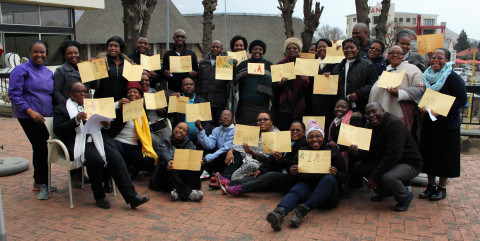 평화의 문화를 위한 세계시민교육 교사워크숍, 아프리카 레소토에서 개최 2018-12-26 Co-organized by Asia-Pacific Centre of Education for International Understanding (APCEIU) and Lesotho Distance Teaching Centre (LDTC), Workshop in Lesotho on GCED took place between 12 and 14 of July 2017 at Maseru, the capital city of Lesotho.As a post-Fellowship Programme, Fellowship Good Practices & On-site Training (Fellows in Action 2017) was launched this year to identify exemplary initiatives led by alumni of the UNESCO/KOICA Joint Fellowship Programme. The Programme is designed to provide support to the alumni of the Fellowship Programmes to share their good educational practices in local contexts, applying the knowledge and skills gained from APCEIU’s two-month training in Korea. The case of Ms. Nomsa Mpalami (2015 Fellowship Participant from Lesotho), ‘teacher training on peace education for non-formal educators in Lesotho’, has been selected as one of the three good practices, and the Workshop was implemented to further encourage her efforts to enhance the capacity of teachers in non-formal sector on GCED (Global Citizenship Education) and peace education. The Workshop invited 30 non-formal educators from different regions of Lesotho to learn about GCED with a focus of peace education and PVE (Preventing Violent Extremism) with sessions and lectures on conceptual framework of peace education led by Dr. Yonas Adeto (Institute of Peace and Security Studies, Addis Ababa University), discussion and dialogue on ways of dealing with conflicts and methods of conflict transformation in their own contexts facilitated by Ms. M. Mohasi (Transformation Resource Centre, Lesotho), and workshops on creating learning materials on peace and conflict transformation reflecting the lessons learned, which will be used as teaching and learning resources for their learners. The learning materials created by the participants will further be polished and edited to be published as booklets on peace education by the publication department of LDTC, which will be disseminated throughout the country, including schools, community centers, libraries and other institutions where teachers can utilize them as teaching and learning materials.
 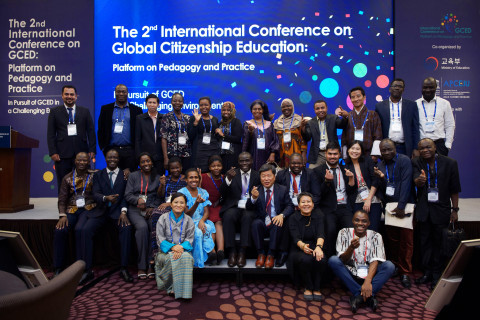 The 2nd International Conference on GCED: In Search of Solutions to Tackle Global Challenges 2018-12-26 With the rise of radicalism and nationalism, we have faced the increasing number of hate crimes against specific race, ethnicity, gender or cultural group and, consequently, an antagonistic atmosphere has been prevalent across the globe. Under these circumstances, there has been an ongoing demand for rethinking the role of Global Citizenship Education(GCED). In response, APCEIU held the 2nd International Conference on GCED from 13 to 14 September 2017 in Seoul to gather GCED practitioners and experts all over the world. Under the overarching theme of ‘in pursuit of GCED in a challenging environment’, this Conference was co-organized by the Ministry of Education of the Republic of Korea in partnership with UNESCO HQ. This Conference successfully provided a platform where participants discussed the challenges we have face globally, nationally and locally when it comes to implementing GCED and reflected upon the direction of GCED. During the two-day conference, more than 400 educators, policy makers, scholars and youth representatives from 60 different countries had attended. Kim Sang-kon (Deputy Prime Minister and Minister of Education of the Republic of Korea), Norbu Wangchuk (Minister of Education of the Kingdom of Bhutan) took part in the Conference. This Conference attempted to provide interactive sessions which encourage participants to actively participate in, consisting of various plenary sessions and concurrent sessions. The plenary sessions intended to give an integrated overview on the theme of the Conference, while the concurrent sessions consisted of diverse programmes as panel discussions, case presentations, participatory workshops, theater and debate chamber. Beyond its emphasis on the importance of global citizenship, this Conference enabled discussions on how to make the world more peaceful, inclusive and sustainable and how GCED can address current imperatives. The first day of the Conference was initiated by a panel discussion which brought together a panel of experts and practitioners from respective fields of GCED. Entitled ‘how can we pursue GCED in a challenging environment’, the panel discussion touched upon the challenges that they have faced and the achievements made by tackling these challenges in each field, region and practice. The plenary session 2 took the format of a town hall meeting in which every participant exchanged their perspectives and actively debated with each other. More than 400 participants shared their views and ideas through Mentimeter, the real-time online voting tool. In the concurrent session 1 titled ‘exploring practices of GCED and their impact,’ participants discovered how GCED has been practiced and what kind of difficulties it has been facing specifically throughout primary and secondary education, higher education and civil society organizations. This session encompassed practices on GCED in all types of education-formal, informal and non-formal.The second day kicked off with the plenary session 3, which was led by a brief performance that embodied an ethos of global citizenship. The topic was ‘GCED in Action’ and the performance was given by the Philippine Educational Theater Association (PETA). The session was designed to provide hands-on experience wherein the audience can feel the importance and message of GCED through the medium of theater. Furthermore, as GCED is considered to be delivered through diverse mediums such as participatory activities, the concurrent session 2 attempted to focus on democratic dialogism, transformative pedagogy and how to teach controversial issues. In addition, comprised of distinctive three sessions, each session in the concurrent session 3 addressed supportive conditions to scale up GCED. Each session covered education policies, curricula and teacher education respectively, shedding light on the challenges that we have faced in implementing GCED and sharing the recommendations suggested by experts in their fields. The youth debate chamber, a special session, was organized during the concurrent session 3. Under the motion of ‘Can global identity and national identity coexist? ,’ the four debaters were divided into two groups which held different views-pros and cons. The audiences were required to cast their votes in favor of the side they support two times-in advance of the debate as well as after the debate, and the side that obtained the biggest number of votes in the end won the debate. Interestingly, the result of the initial vote was reversed at the moment of the final vote. Subsequently, Cho Heeyeon, the Superintendent of Seoul Metropolitan Office of Education gave a special lecture on ‘Global Citizenship Education for Empathy & Coexistence’, which introduced the process and accomplishments of GCED in the context of education in Seoul. The 2nd International Conference on GCED provided opportunities to exchange and deduce various ideas to effectively resolve issues by which GCED is currently confronted. The Conference (except concurrent sessions) was live-streamed online for those who were interested in GCED. URL:The 2nd International Conference on GCED: In Search of Solutions to Tackle Global Challenges > APCEIU News - APCEIU (unescoapceiu.org)
 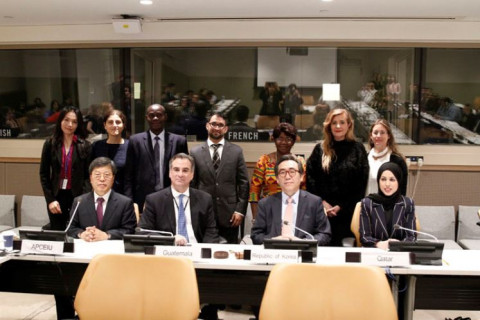 2018 UN Global Citizenship Education Forum 2018-11-26 On 13 November 2018, APCEIU, together with the Permanent Mission of the Republic of Korea to the United Nations co-organized the 2018 United Nations Global Citizenship Education Forum at the United Nations Headquarters. The Forum was co-sponsored by the Permanent Mission of the State of Qatar to the United Nations, Permanent Mission of the Principality of Andorra to the United Nations, Permanent Mission of Guatemala to the United Nations, and UNESCO New York Liaison Office. Approximately 70 participants, including Ambassadors to the United Nations, high-level officials of the United Nations, academia, and international organizations, attended the Forum. Under the overarching theme "GCED as a key enabler of Sustainable Development Goals (SDGs), the Forum shared best practices of GCED and sought for collective efforts to promote GCED across the globe. In the opening remarks, Ambassador Cho Tae-yul of the Republic of Korea to the United Nations mentioned that the new role of education in addressing global issues such as violent extremism and climate change has been emphasized as the countries are getting much more closely interconnected than ever before. With an emphasis on the transformative education to build a more inclusive and peaceful society, he underlined the joint endeavour for the designation of the International Day of Global Citizenship Education. The first session was kicked off by Chung Utak, Director of APCEIU who moderated the session. During the session, best practices of GCED in Colombia, Ghana, Mexico and Oman were shared with the audience. Ana Maria Velasquez, Associate Professor of the Universidad de los Andes, introduced the Colombian context originated by peace agreement which took place at the end of a prolonged conflict, and emphasized the demand for GCED to achieve a sustained peace. Joyce Afutu, Director of Communications and Corporate Affairs, National Commission for Civic Education claimed that Ghana has been leading the way in implementing GCED by sharing various practices taken in Ghana such as teachers’ capacity-building workshops, UNESCO ASPnet Schools, and community-based group activities. Adding to that, Cyomara Inurrigarro who is a teacher at Normal Miguel F. Martinez School in Mexico introduced her story of promoting GCED in UNESCO ASPnet Schools in Nuevo Leon region through the pre-service teacher training programme on GCED. Lastly, Khalaf Marhoun Al'Abri, Assistant Professor of Education Policy, Sultan Qaboos University presented about the Omani efforts in applying GCED to pre-schools, public schools and higher education systems. The following session mainly addressed methods of promoting GCED and designation of the International Day of GCED. See the panellists as follows: Moderator: H.E. Elisenda Vives Balmana, Permanent Representative of the Principality of Andorra Panellists H.E. Bakhtiyor Ibragimov, Permanent Representative of the Republic of Uzbekistan Patrice Ssembirige, Curriculum Specialist, National Curriculum Development Centre of Uganda Lily Gray, Liaison Officer, UNESCO New York Liaison Office Eunhee Jung, Founder and President of IVECA(International Virtual Schooling) and Co-chair of IDEGC Steering Committee While sharing a variety of researches and practices on GCED at national level, the panellists reaffirmed GCED is the key enabler of SDG 4.7. It was actively debated that a global citizen is a person who holds universal values such as justice, equity, respect, dignity and understands global issues, and embraces their own heritage (identity) but transcends cultural differences. Furthermore, it was also mentioned that “GCED for all” can be achieved when it comes to consolidated partnership between multiple stakeholders. Also, it was suggested that since GCED for quality education and SDGs are closely interconnected, collective action and international cooperation are necessary in designation of the International Day of GCED. Finally, the importance of designation of International Day of GCED was emphasized because when the International Day of GCED is designated, voice about GCED will be louder through the UN, a powerful platform. Closing the Forum, Ambassador Chull-Joo Park, Deputy Permanent Representative of the Republic of Korea, emphasised the continued implementation of GCED at regional, national levels by quoting the passage “act locally, think globally”. For webcast, visit the following website:http://webtv.un.org/meetings-events/other-meetingsevents/watch/2018-united-nations-global-citizenship-education-forum-global-citizenship-education-as-a-key-enabler-of-sdgs/5966500284001 URL:2018 UN Global Citizenship Education Forum > APCEIU News - APCEIU (unescoapceiu.org)
 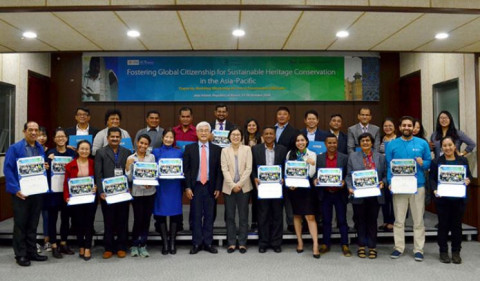 Fostering Global Citizenship for Sustainable Heritage Conservation among Local Government Officials 2018-11-01 A joint workshop with UNITAR CIFAL Jeju was held during 17-20 Oct 2018 Heritage sites have been damaged or destroyed as a result of direct hits, or as collateral damage related to armed conflicts, terrorism, and climate change. These challenges call for global citizens who recognize the value of heritage and put concerted efforts to protect the non-renewable resource beyond national boundaries. Against this background, APCEIU and UNITAR CIFAL Jeju International Training Center co-organized a Workshop on Fostering Global Citizenship for Sustainable Heritage Conservation for four days between 17 and 20 of October 2018 in Jeju Island, Republic of Korea. This workshop was designed for local government officials from the Asia-Pacific region to equip them with knowledge and skills on global citizenship and sustainable heritage conservation. The participants have analyzed the current status of their local heritage conservation to identify issues and challenges faced by communities, and discussed on the critical role of citizens and communities along with policies to ensure the sustainable conservation of heritage. A total of 23 participants from 15 countries consisting of officials from national and local government as well as local organizations related to heritage policy and management attended the workshop. This workshop aimed to enhance participants’ understanding of global citizenship and leadership capacity to implement innovative practices of heritage conservation for sustainable development. At the opening of the workshop, mentioning numerous global challenges that threaten the sustainable life and development, Director Utak Chung stressed the importance of local government officials’ roles by reminding them of their assumed role and responsibility to bring changes to their own society. The workshop was facilitated in the participatory format through presentations, dialogue, group works and activities to help participants deepening their understanding on sustainable heritage conservation and fostering global citizenship. During the four days of the workshop, participants presented their case studies, exchanged knowledge as well as opinions and at the end, established action plans to be implemented in their respective local settings. This workshop was a platform for local government officials to build capacities and build up network in the Asia-Pacific region. URL:Fostering Global Citizenship for Sustainable Heritage Conservation among Local Government Officials > APCEIU News - APCEIU (unescoapceiu.org)
 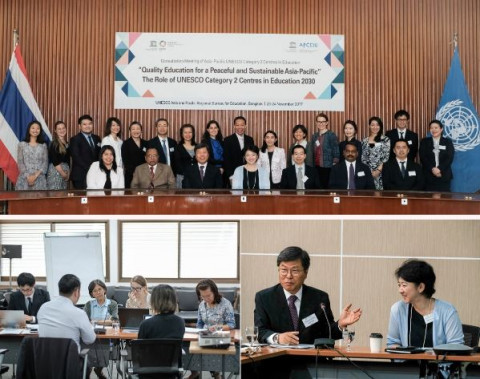 Regional Collaboration for SDG 4.7 explored at the Consultation Meeting of the Asia-Pacific UNESCO Category 2 Centres in Education 2018-10-30 The Consultation Meeting of the UNESCO Category 2 Centres in Education, entitled “Quality Education for a Peaceful and Sustainable Asia-Pacific: The Role of UNESCO Category 2 Centres in Education 2030” was held from 23 to 24 November 2017 in Bangkok, Thailand. Co-organized by the UNESCO Asia and Pacific Regional Bureau for Education (UNESCO Bangkok) and APCEIU, the meeting aimed to share the achievements and challenges of the participating organizations in the implementation of SDG 4 and to identify ways within their work plans on how to promote SDG Target 4.7 as a cross-cutting theme. This meeting is a first of its kind, which serves as an important opportunity to reflect on the year that was and open the discussion on how to promote synergies and increase the impact of planned activities together. The meeting gathered 25 participants from UNESCO Category 2 Centres in the Asia-Pacific, as well as Category 1 Institutes, relevant UNESCO field offices and UNESCO regional bureaus. The participating UNESCO Category 2 Centres include existing centres (APCEIU, INRULED, SACTD, SEA CLLSD), and the newly established centres (ICHEI, IMLI), making up to a total of six centres in education located in the region. The said centres are as follows: Asia-Pacific Centre of Education for International Understanding (APCEIU), Seoul, Republic of Korea International Research and Training Centre for Rural Education (INRULED), Beijing, People’s Republic of China South Asian Centre for Teacher Development (SACTD), Meepe, Sri Lanka South East Asia Centre of Lifelong Learning for Sustainable Development (SEA CLLSD), Manila, Philippines International Centre for Higher Education Innovation (ICHEI), Shenzhen, China International Mother Language Institute (IMLI), Dhaka, Bangladesh In her welcoming remarks, Ms Maki Hayashikawa, Director ai of UNESCO Bangkok extended her gratitude to APCEIU for contributing to the organization of the meeting. She also stated that “The meeting is timely as we have just finished with the General Conference, and UNESCO is in the process of finalizing its work plans for 2018-2021”. Reflecting the message from UNESCO Bangkok, Mr Utak Chung, Director of APCEIU, has mentioned that within the challenging environment that UNESCO is facing, cooperation among UNESCO entities, including regional bureaus, field offices, Category 1 Institutes and Category 2 Centres, is crucial in realizing the goal of the Organization, including SDG 4. The Meeting explored and identified the role of UNESCO Category 2 Centres in Education 2030 by reinforcing cooperation and community-building and sharing achievements and strategies for realization of SDG 4 in the Asia-Pacific. It also explored possible areas of cooperation between UNESCO Category 2 Centres, Category 1 Institutes and Field Offices, with particular focus on SDG Target 4.7. The sessions on the first day included presentations from participating institutions on implementation and actions of SDG 4, with a special focus on SDG 4.7. Followed by the presentations, a mapping activity was held to identify SDG 4.7 activities and actions of each participating organization to explore the status of the SDG 4.7 implementation in the region. It was identified that many of the participating organizations have activities that focus on capacity-building of educators and research and development. Following this mapping activity, group discussions focusing on collaboration, particularly on mainstreaming SDG 4.7 in SDG 4 implementation activities of the organizations took place. The meeting ended with a presentation of UNESCO Bangkok on its plans for the new UNESCO biennium (2018-2019), sharing the status of the region on SDG 4, and areas of possible collaboration. A communications strategy between UNESCO bureaus, field offices, Category 1 Institutes and Category 2 Centres was proposed to sustainably promote cooperation. Joint programming, including the co-organization of activities that tackle the diverse topics of SDG 4.7 and the topics that different UNESCO Category 2 Centres are covering, has been proposed for further discussion in 2018. URL:Regional Collaboration for SDG 4.7 explored at the Consultation Meeting of the Asia-Pacific UNESCO Category 2 Centres in Education > APCEIU News - APCEIU (unescoapceiu.org)