
News
Catch up on what’s happening in the world of global citizenship education.
225 results found
 [APCEIU Insights] Media and Information Literacy Matters in Preparing for Post-Pandemic World 2020-10-13 Divina Frau-Meigs(Professor, Sorbonne Nouvelle University & UNESCO Chair “Savoir Devenir in digital development: mastering information cultures”) COVID-19: Disinfodemic Insights The COVID-19 crisis has not only been a health pandemic, it has also been a disinfodemic, with many “fake news” that show how information can be weaponized by all sorts of third parties and rogue actors that work to undermine the trust in scientific knowledge and professional journalism. The disinfodemic can be analysed as an unprecedented life-size experiment of our strengths and weaknesses in the face of information in the digital era. It has tested our tolerance to what is bearable and tolerable in terms of manipulation of fears and emotion in democratic societies. The post COVID-19 situation makes us stand at a crossroads: either move towards a digital future of surveillance, traceability and monetisation of our actions or move towards a future of resilience, openness and digital citizenship with online freedoms. The COVID-19 crisis has precipitated the double process that construes information as the fuel of the digital revolution. During the e-confinement, our lives have moved online and on screens: all our social functions (work, school, leisure, etc.) have been connected to networks and screens have mediated them with videoconferences, e-learning platforms, virtual globe-trotting and virtual visits to museums, concerts and so forth. The attendant risks have invited cyber-harassment, data theft, hate speech and disinformation. The disinfodemic has made us conscious that reliable information is, literally, a matter of life or death. Eating garlic, drinking disinfectant or destroying 5G antennas to stave off the virus are detrimental fakes. Not adopting protective gestures as supported by some world leaders is lethal to the entire under-protected populations. Taking advantage of the situation in order to deal with cyberattacks on data, or destabilize countries by finger-pointing at some minority groups is also fraught with danger. Relevance of Media and Information Literacy Building resilience, openness and digital citizenship is part of what Media and Information Literacy (MIL) is about and the disinfodemic has precipitated the need for MIL solutions. In this context of digital use and misuse of information, MIL can help facilitate the digital transition as democratic societies undergo the dual pressures of ubiquitous media and big data. Minimally, it can help expose the factors that lead to the creation and dissemination of such toxic material such as “fake news.” More ambitiously, it can unveil the patterns that drive individuals and communities to consume and disseminate fraudulent and falsified information. MIL induces us to revisit our knowledge constructions and belief systems because it relies on critical thinking and focuses on how our minds work to construct, consume and contest media narratives online and offline. MIL research has benefited from the disinformation crisis that started in 2016 with such scandals as Cambridge Analytica, which revealed the capacity for the manipulation of people’s choices via micro-targeted AI-driven political advertising campaigns. Much like a disease can be used to understand the way a healthy body functions, the disinformation virus, by contaminating democratic institutions and individual choices, has revealed the information factory as it is driven by media and data in the digital era. Four new insights on how our mind functions have come to the fore: the role of emotions (not logic) in the thought processes leading to knowledge-construction and decision-making; the power of image-driven content (not text) on many types of screens, including those of immersive virtual reality; the influence of algorithms and artificial intelligence (not human) to predict our future decisions based on our past ones online; and the strength of interactions between individuals and communities to authenticate information based on group-belonging influence and values (not proof and science). These new insights shed a new light on the MIL competences required in a post-pandemic world to mitigate the negative impacts of such functions and harness their opportunities for positive change. To deal with emotions, we need to be aware of how affective elements cause us to lend cognitive authority to others, especially when fear and anger are used to blind people in their search and use of proper information. To deal with images, we have to go beyond pre-digital visual literacy (composition, contrast, camera angles, etc.) to assess the authenticity and trustworthiness of our sources as current ways of processing images (neuro-imaging, data visualization, deepfakes, etc.) can modify our perception of facts. To deal with algorithms and their automated decisions based more on our navigation history and the popularity of news than on the quality of news and the force for evidence, we need to know about audience measurement that consists awareness metrics (impressions, views, clicks) and engagement metrics (likes, shares, comments). To deal with interactions via ubiquitous social media platforms, we must see how they have a vested interest in producing fake news that generate traffic and profit and require transparency and accountability, if not downright dismantling of their de-facto monopoly on our data and media. Paradigm Shift: MIL as 1st Curriculum Online wellbeing thus depends on the way we balance our control over data analytics (trends, patterns, profiles, etc.) and our knowledge of the values, emotions and ideologies that construct and bias them, as it is essential to our connectedness and the way we engage with others. For instance, knowing the patterns of the COVID-19 spread via big data is an opportunity as long as the data collection is transparent and accountable, and not used for further purposes as exemplified by the controversies doubting the uses of the COVID-apps beyond the pandemic. As notions of credibility, authenticity, authority, accountability and transparency take centre stage in the way we construct information and disinformation, the very notion of basic literacy is displaced. The 1st curriculum of schools that focused mostly on text, logic and source verification, is fast becoming obsolete in the face of the emergency at hand. It needs to be completed or augmented with MIL; something that has been considered as a 2nd curriculum and an adjustment variable that could be called upon in times of crisis and dismissed after. MIL needs to be the 1st curriculum by default, as a trans-literacy, with its specific mix of text, visual and algorithmic literacy, as images and data become crucial elements of information, beyond news and fake news. There is an urgent need for ready response to develop quick healthy reflexes or heuristics for young people and citizens at large as soon as doubts about the credibility of a piece of information appear. Heuristics is a critical thinking practice that involves using a tool to solve problems by “learning by doing” and trial-and-error methods. Combatting disinformation can be quite a messy problem-solving case that needs to become a common practice and not appear as a huge hurdle that seems beyond a solution. This is the point of departure of the action-research that UNESCO Chair Savoir Devenir is conducting (savoirdevenir.net). A case in point is the Youcheck! project, funded by the European Union programme “Media Education for All” (www.project-youcheck.com). This civil society initiative relies on a key asset, the InVID visual verification plugin, which works to foster critical thinking about pictures and videos shared on social networks and help debunk fakes as a rapid response. It develops a toolbox with pedagogical materials and gamification to serve the needs of media educators, students and citizens at large. It is also research-based, an element often missing in good practices focused on implementation, with scientific evaluations of the impact of the toolbox on teachers and students as well as on a random sample of the adult population whose feedback matters to the InVID developers. Fostering citizens’ agency with such smart tools as InVID and adopting a solution-oriented approach to debunk “fake news” appears as the most efficient way to change both people’s understanding of the disinfodemic phenomenon and their daily post-pandemic behaviour with regard to information. InVID is thus being repurposed, from an image and video checking technology reserved for professionals (used worldwide by many newsrooms, journalists and human rights workers) to a tool for nonexperts. Although, as most MIL practitioners, we do not support tool-based only educational approaches, we strongly believe that in our AI-driven digital world, being empowered by high-level smart tools is a necessity, if and only if technical skills are a support for MIL competences and human right values. To ensure that such smart tools are embedded within the MIL competence framework, we have ensured that InVID functionalities are associated with visual and data literacy resources and training. InVID make it possible (1) to retrieve metadata about videos and images; (2) to fragment videos into key-frames to allow image-similarity search in other contexts; (3) to perform advanced search queries on Twitter, Facebook and YouTube; (4) to compare the efficiency of search engines (Google, Yandex, Baidu, etc.); (5) to look inside images through a magnifying lens; and (6) to analyse an image with forensic filters (to detect alterations within its structure such as quantization, frequencies, colours and pixel coherence). All these itemized functionalities are matched to cognitive processes (retrieve, fragment, search laterally, compare across data sets, apply filters, etc.) and examined with many examples to ensure understanding and mastery. A serious game, Youcheck Detectives, has been developed to encourage learning by doing and by playing (http://project-youcheck.com/game-english), with workshops for teachers and trainers. Several Massive Open Online Courses (MOOCs) on Information and Disinformation have been created to ensure that teachers, educators, librarians, journalists and others feel comfortable in these news competences. Optimizing the plug-in thanks to testing results and enriching it with pedagogical scenarios and self-paced tutorials, quizzes and games also makes it an available teaching gateway to MIL. This is how we can concretely move between theory and practice, and ensure that research fosters reaction and, ultimately, refutation the test that MIL has empowered citizens to respond and to provide a counternarrative to disinformation. Such digital critical thinking strategies should be part of the MIL curriculum for digital citizenship. This curriculum is crucial in the classroom but can also be shared in discussions with parents, politicians, human rights workers, etc. These functionalities lend themselves to many activities that can be developed by civil society associations ? such as hackathons, urban games, and fake news challenges. Country Readiness: Preparing for Healthy Post-pandemic Media Ecosystem As with any new literacy, the training of trainers is key for scaling up. Such experiments can be helpful for the design of materials for curriculum and for policymaking. The disinfodemic can show positive outcomes as the e-confinement has sensitized everybody both to the market-minded responsiveness of the e-learning and social media platforms and to the lack of preparedness of school systems at the local and national levels. The main points of vigilance around MIL deal with the lack of quality control regarding commercially-provided tools and contents and the lack of safety control regarding the use of data and the protection of privacy of minors. The disinfodemic can be an opportunity for schools and institutions of education and culture to closely evaluate the adaptations necessary to ensure that MIL helps them develop strategies for the future, compliant with a certain number of international instruments with the best interests of young people and citizens in mind, such as the various declarations on data protection such as The Council of Europe Data Protection Convention 108 and Recommendation CM/Rec(2019)10 on developing and promoting digital citizenship education (2019). Solid cooperation across actors is also called for, as MIL programmes often require the media industry sector to contribute their expertise and partnerships. Getting countries ready with a set of diagnosis tools and implementation strategies is at the heart of the Council of Europe Digital Citizenship Education Project (https://www.coe.int/en/web/digital-citizenship-education-project). Its main messages deal with the new insights opened up by disinformation, in relation to emotions, image-driven content and predictive algorithms. Rights and responsibilities are set as part of online wellbeing for all to ensure sustainable learning outcomes. Embedding MIL in the early design of services and contents becomes key to democratic societies as it fosters trust and solidarity. As the consequences of the disinfodemic on democratic societies are still being determined, MIL appears as a beacon of hope that casts light in the outer reaches of our minds as they interact with media and data. Effective MIL activities and policies can have beneficial impacts at political and societal levels. Providing citizens with an understanding of algorithms, brain processes, data patterns and social networks can build information resilience on a large scale. Producing robust counter-discourses to climate change coverage, gender injustice, migrant crisis representations or virus pandemics prepares them for any emerging information disorders that may emerge in the future. URL:(No.9) Media and Information Literacy Matters in Preparing for Post-Pandemic World > EIU in the World - APCEIU (unescoapceiu.org)
  [APCEIU Insights] Plague, Prejudice and Protest: Role of Education in Pandemic World 2020-09-29 Lynn Davies(Emeritus Professor of International Education, University of Birmingham, and Co-Director, ConnectFutures) Writing in September 2020, one’s gaze both backwards and forwards is unprecedented. Because of COVID-19, the past few months have seen an almost unique upheaval globally; the future is unknown but likely to be equally unmatched. Across the world, schools have been closed, people have lost jobs and livelihoods, and the harsh economic and social impact is yet to be evaluated. ”Recovery” and “normality” are only visions. So how can one even begin to make prescriptions about the role of education - nationally let alone globally? This article offers three imperatives relating to inequality, racism and social action - based mostly on not making things any worse, while possibly sharpening up educational responses to turmoil. Inequality: Poverty, Displacement, Gender The first most obvious task centres around inequality. While schools across the world have been trying to maintain some educational contact through online teaching, it is feared that children already disadvantaged will become more so. This includes those who do not have access to the internet, or where a family of eight shares access to the sole mobile phone, or, as always, where there are no books in the home. Libraries are shut. While innovative work is being done through television and radio, this requires electricity. But a UNICEF report says that poverty also seriously affects access to electricity. In seven least developed countries, less than 10 per cent of the poorest households have electricity. Nonetheless, we can draw inspiration from efforts by organisations such as Africa Educational Trust (AET), who work in the poorest regions of Africa. Where there is connectivity, they have been able to deliver training to head teachers, community education councils and project officers through Zoom, with the training that includes child-centered pedagogy, disaster planning and resilience - including safe back to school measures post-COVID-19 and the protection of vulnerable children and adults. When there is little connectivity, outreach workers and local networks come into play. In Kenya, parents of school children can visit those outreach organisations by making appointments, using social distancing and hygiene practices, to pick up home learning packs and nutritionally enhanced porridge powder to help them survive. We have to remember that COVID-19 is not the only disaster in Africa. In Kenya, they have suffered from the worst locust swarm in living memory, devouring all crops; in Somalia, floods displaced over 250,000 people in March and a rise in fighting between armed groups in South Sudan resulted in over 250 deaths in one week in early June. Whilst facing all these challenges, people that AET talk to on the ground still maintain that education is the only way that they see themselves getting out of poverty. With the economic impact of COVID-19, we will see increased migrations and refugees. Children who are displaced across or within borders already are more likely to have their education disrupted. Refugees can be stigmatised. Girls in conflict-affected settings are even more adversely affected. Organisations such as UNICEF and Mercy Corps have been ‘reimagining’ education and devising a whole array of platforms to deliver lessons and find inclusive learning apps. But disadvantaged girls are at the most risk. Without the protective school environment, COVID-19 menaces the education, health and wellbeing of girls. With increased poverty among families and limited social protection, parents are increasingly likely to marry their daughters at a younger age as a negative coping strategy. This increases the risk of female genital mutilation (FGM), child marriages and subsequent permanent dropouts from schools. Families in Somalia are taking advantage of school closures to carry out FGM so that girls have time to recover from the ritual, which can take weeks. FGM of course takes place in many other countries, including wealthy ones. The protective role of schools is at a premium. Vigilance is so much more than just stressing handwashing and social distancing. Nationalism, Racism, Extremism: Spread of Infodemic Any emergency generates fear, threat and a culture of blame. Conspiracy theories abound regarding who, what and which country is responsible. So educational efforts on media literacy and fake news have a key importance now. Habits of questioning what is read and seeking for evidence become vital. The great problem in these COVID-19 times is that the evidence seems to change, whether face coverings protect people, what exact social distance is necessary and whether a vaccine is possible. There is likely to be the growth of an anti-vaccination movement, as we saw with the measles and, in some countries, polio. Hence, the role of education is to dissuade against kneejerk reactions based on fear and to encourage the scrutiny of available science. Frighteningly, we are seeing greater explicit racism and prejudice. When the Chinese are blamed for example, there can be attacks on anyone who is or looks Chinese. In the United States, many individuals, particularly those from East Asian backgrounds, are reporting more experiences of racism and xenophobia. A Canadian survey conducted by Angus Reid in June revealed that almost one-third of Chinese Canadians reported being physically attacked due to the COVID-19 pandemic. In parts of Europe, the racism against Roma communities has increased with accusations of the community spreading disease. This is the collective danger -a license to unleash racism against stigmatized groups. What is happening is that extremist groups are using the opportunity to spread their hatred. This is part of what the World Health Organisation calls an “infodemic” - the massive spread of misinformation and cybercrime relating to COVID-19. The Commission for Counter Extremism in the United Kingdom published a report on July 9 revealing how hateful extremists of all spectrums, including neo-Nazis and the far right, have been exploiting the pandemic to launch broad misinformation campaigns that aim to sow social discord. They have promoted racist and xenophobic narratives on social media platforms that aim to incite violence against minority groups, such as urging their supporters to intentionally infect Jewish and Muslim populations with the coronavirus. Other groupings have also been fingered by neo-Nazi groups as a danger; whether refugees, LGTB individuals or elites. Fringe extremist and fringe health groups are mingling dangerously in this infodemic. Conversely, from Islamist groups, the apportioning of blame is varied. The “crusaders” in the United States are held responsible for a wave or atheism and immorality that has allegedly provoked punishment by God in the form of the pandemic. The Islamic State (ISIS) is telling terrorists to steer clear of coronavirus-stricken Europe. Those who believe they might have contracted the coronavirus are told to stay away from areas under ISIS control in order to preserve the health of others and fulfil the “holy obligation of taking up the causes of protection from illnesses and avoiding them.” Elsewhere, it was reported in The Conversation (a network of not-for-profit media outlets) that an Islamic State group online publication in India has called for its supporters to spread the coronavirus, saying “every brother and sister, even children, can contribute to Allah’s cause by becoming the carriers of this disease and striking the colonies of the disbelievers.” In Nigeria, according to the British daily newspaper The Guardian, the leader of the Boko Haram breakaway faction of extremists has released an audio clip claiming that his brutal version of Islam was an “anti-virus” while portraying the social distancing measures that have closed mosques an assault on the faith. Hence, media literacy has an intensified role of enabling young people to work their way through the large number of conflicting messages and politicised strategies on a pandemic. Teachers need support in their role of recognising hate speech and how to report it, whether online or offline. Students also need support in recognising misinformation, open or hidden xenophobia and the tactics of extremists. Social Unrest and Protest Finally, we are seeing a confluence of the impact of both COVID-19 and protest movements. The Black Lives Matter movement has swept across many countries, with different facets - from statues of slave traders being toppled, to the exposure of how BAME (black and ethnic minority) people are more likely to be affected by COVID-19 because of historic racism and deprivation, differential access to health care and differential representation as frontline workers in hospitals and care homes. Foreign Policy magazine, a U.S. news publication, reported that in parts of Latin America, COVID-19 initially dampened down protest movements - for social media cannot replace social mobilisation - but they are likely to re-emerge with increasingly vulnerable and disaffected populations. A recent analysis by Verisk Maplecroft, a global strategic consulting firm, predicts that protests are likely to surge globally. The economic shock of the pandemic coupled with existing grievances makes widespread public uprisings “inevitable.” Thirty-seven countries, mainly in Africa and Latin America, could face protests for up to three years. But the risk of unrest in other countries including India, Brazil, Russia, South Africa, Indonesia and Turkey are only slightly less acute and still constitute a threat to stability. In 2019, Verisk Maplecroft recorded 47 countries with a significant uptick in protests, including Hong Kong, Chile, Nigeria, Sudan and Haiti. As reported in The Guardian, more turmoil is predicted in 2021. When schools fully reopen (if they do), this may lead to a new world of unrest. Teachers need to be aware of how protests are triggered, and how to discuss with students both the causes and effects of these protests. Civil disobedience takes different forms and is responded to in different ways and in different countries; the responsibility of teachers is to try to keep students safe, yet at the same time, not avoid discussions that examine the root of conflicts or grievances and what protests do or do not achieve. This includes warnings about how protest movements get hijacked by extremists: for example, far-right white supremacists have seized the opportunity to mount counter protests about White Lives Matter, with inevitable outbreaks of violence across groups and with the police, according to the Southern Poverty Law Center, a nonprofit legal advocacy organization in the United States. Vigilance and Action The intersections between inequality, racism and violent protests have been amplified by COVID-19. The role of schools has become equally intensified. On the one hand, they have an opportunity and responsibility to build on any benign aspect - that many communities have actually demonstrated greater coherence, providing food and supporting each other across ethnic, social class and age lines. Schools and agencies across the globe have had to develop innovative ways of accessing the hardest to reach. Yet major challenges remain and will get worse. It is vital that schools continue to fight hate speech and propaganda, enable young people to extend skills and vigilance in what they read online, and not thinkingly or unthinkingly contribute to racism, antisemitism and Islamophobia through what they themselves post, what they share or “like.” Yet the task is more than media literacy. The slogan of the Holocaust Memorial Museum is highly relevant here: “What you do matters; what you fail to do is critical.” In times of social unrest, informed political and citizenship education becomes central: for example, how to protect the self and others, how to protest against injustice or corruption, and how to create social change without violence. URL:(No.8) Plague, Prejudice and Protest > EIU in the World - APCEIU (unescoapceiu.org)
  The Opening of the Pre-Conference Webinar for the 5th International Conference on GCED 2020-09-16 Asia-Pacific Centre of Education for International Understanding (APCEIU) will hold a Pre-Conference Webinar for the 5th International Conference on Global Citizenship Education(IConGCED) for starting from 7pm (Seoul, GMT+9) on Wednesday, 23 September 2020. Since 2016, APCEIU has held an IConGCED every year, and last year, more than 600 participants from 65 countries around the world attended. This is the 5th year of hosting the IConGCED and the event will be held using an online platform in response to the current COVID-19 pandemic. Prior to the main event scheduled to be held on 3 ? 5 November, a Pre-Conference Webinar will take place on 23 September to lay the groundwork for key agendas that will be discussed at the main virtual conference. The theme of the Pre-conference Webinar is ‘Challenges and Roles of GCED in Times of Pandemic’. The main goal is to examine the role of GCED in the pandemic era and reactivate global solidarity. Moreover, the latest knowledge, experience, and information to tackle the current pandemic crisis, such as transformative learning methods, will be shared during the webinar. This webinar, which will begin with a keynote presentation by Ilan Kelman, Professor of Disaster and Health at the University of London, consists of a panel discussion on the experiences and visions of the educators, professors, youth, and civil society practitioners who are leading GCED. Pre-Conference Webinar (Wednesday, 23 September 2020) Challenges and Roles of GCED in Times of Pandemic Time Programme Details 19:00-19:10 (10 mins) (Seoul, GMT+9) [Opening] LIM Hyun Mook (Director of Asia-Pacific Centre of Education for International Understanding (APCEIU)) 19:10-19:25 (15 mins) [Keynote] Ilan KELMAN (Professor of Disasters and Health, University College London) 19:25-20:55 (90 mins) [Panel Discussion] What are key issues and problems currently facing the global community in this pandemic crisis, which can be seen as “multiple pandemics”? What are those particular issues and problems that GCED has to address and act upon? What roles GCED should play in overcoming such problems, and how can GCED deliver them effectively? Bert TUGA (President, Philippine Normal University) Dylan WRAY (Executive Director, Shikaya, Republic of South Africa) Rilli LAPPALAINEN (Chair of Steering Group, Bridge 47) Lester RUIZ (Director of Accreditation and Global Engagement, ATS, USA) Akpezi OGBUIGWE (Founder, Anpez Center for Environment and Development, Nigeria) Lorena GAMARRA (Academic Consultant, Universidad Peruana de Ciencias Aplicadas, Peru) Moderator: EOM Jeongmin (Head, Office of Research & Development, APCEIU) 20:55-21:00 (5 mins) [Closing] APCEIU The Pre-Conference Webinar will be held on Zoom webinar platform and requires pre-registration. The pre-registration will be operated on first-come, first-served basis. Also the webinar will be also livestreamed on the YouTube channel of APCEIU (www.youtube.com/apceiu). Link for pre-registration: https://zoom.us/webinar/register/WN_Jn2MfBObQKSA4l-Itk5PDQ URL:Pre-Conference Webinar for the 5th International Conference on GCED > APCEIU News - APCEIU (unescoapceiu.org)
  [APCEIU Insights] The Pandemic Stall of 2020 2020-09-15 Virginia A. Miralao(Former Secretary-General, UNESCO National Commission of the Philippines) Years and years from now when COVID-19 would be but a blip in the history of human experience, surviving accounts of the period may yet show that COVID-19 pandemic of 2020 stalled the trajectories of world developments and instilled the seeds of long-term social change and transformation. Within a month after the declaration of COVID-19 as a pandemic, border closures and lockdown measured unrolled country after country until the world came close to a standstill. The developing catastrophe caused the stoppage not only of travel and movement, but of almost all economic activity and forced the closure of schools, offices, churches and public places. Unprepared as the world was for the pandemic, COVID-19 overwhelmed even the most modern health care systems of the developed world, prompting governments to declare states-of-emergencies and mobilize all resources to battle the pandemic. But just weeks following the lockdowns and amidst the fear and uncertainty wrought by COVID-19, there were some unexpected but heartening developments welcomed by citizens and communities. Among the immediate of these was the improvement of air quality worldwide. By spreading quickly, stopping air, sea and land travel, and curtailing manufacturing and industry, COVID-19 cleared the air and advanced an environmental goal that has eluded the global community. Also, the pandemic began to engender changes in lifestyles as the prolonged “stay safe - stay home” orders stalled people’s “busyness,” causing them to pause and rethink what to do with their time and how to rearrange their lives. Uniting to Fight the Pandemic Expectedly, governments took the lead in responding to COVID-19’s outbreak, quickly expanding health care facilities and providing direct financial aid to the populace. Governments also forged partnerships and cooperation with private sector and civic entities to produce and deliver necessary supplies and services, even as other groups and individuals independently embarked on their own assistance initiatives. Uncharacteristically setting profits aside, big corporations and individual billionaires and celebrities donated huge sums of money to provide food and necessities to the public; build structures to expand hospital and treatment centre capacities; fund research and development projects to speed up the search for a cure and vaccine for COVID-19; and even went as far as repurposing their manufacturing plants to produce sorely needed supplies and equipment, i.e., face masks, protective shields and the like. Similar assistance has come from local groups, churches and traditional charities, civic associations and non-profits that organized food aid and assistance programs. Unable to reach their usual markets, farmers offered their produce free or at token prices to the public. Thousands volunteered to prepare, pack and deliver food bags and essential supplies to households and street dwellers alike. Artists and those with talents and expertise created online programs to entertain people stuck at home, or provide online counselling to those increasingly disturbed and frustrated by the prolonged lockdowns. Churches likewise went online, live streaming services to their congregations. Expressing heartfelt gratitude to those health, security and public order personnel for their services and dedication to care for those infected with COVID-19 risking their own lives, citizens the world over organized moving events on their streets and on social media to thank and honour these frontline workers of the pandemic. It was as if the pandemic touched people to the core and evoked in them feelings of compassion and belongingness to one and the same human race. Damage Done by COVID-19 The foregoing demonstration of caring and cooperation among different actors notwithstanding, it must be told that COVID-19 hit society and economies very hard, causing incalculable suffering as the numbers of COVID-19 infections and deaths continued to rise. The pandemic too, caused widespread joblessness: unemployment numbers rising in almost all economic sectors. Many of these sectors were growing robustly just before the pandemic, fuelled earlier by the globalization of the economy via bilateral and multilateral agreements that reduced barriers to free trade and other exchanges between and among countries. But crippling the economy, COVID-19 has left countries around the world in severe economic slumps or with barely growing economies. One might say that the pandemic exposed the strengths and weaknesses of globalization as countries saw the vulnerabilities of their economies to international crises and calamities. Agricultural enterprises that were heavily dependent on migrant and foreign labour for example, could no longer easily and effectively harvest and process their produce. Manufacturing and industrial plants, many of which are located in the developing world ceased or reduced production as the demand and markets for their products dropped in the developed world. Several other businesses closed down in view of their dependence on component parts or operations produced or undertaken in other parts of the world. Meanwhile, countries whose economies were buoyed up by migrant labour remittances (like the Philippines), suffered significant drops in income and bore the costs of repatriating their nationals rendered jobless in other lands. The massive loss of jobs and livelihoods from the pandemic have swelled the numbers of the poor, likely creating a new underclass even from among the mainstream and middle class who have lost their businesses and jobs. In turn, the realization that national economies are heavily interlinked and that no one country is ever self-sufficient appears to have furthered nationalist and totalitarian tendencies, already evident in a number of governments before the pandemic. At national levels, ideas of rebuilding the economy have turned towards lessening the dependence on external labour, products and markets and increasing self-sufficiency, particularly in the area of food production and the provision of essential services. It may not be surprising then that governments could increasingly turn protectionist and pursue nationalist economic policies to shield their countries from global economic turmoil. Additionally, one notes that the declaration of states of emergency to battle COVID-19 has justified the stronger powers and roles given to the police and the military to enforce mandated restrictions, curfews and lockdowns, maintain peace and order, and provide necessary logistics for the care and treatment of COVID-19 patients. Inadvertently, this has reinforced the resurgence of “strong leaders/strong states,” also evident in not a few countries before the pandemic. The revival of nationalist and authoritarian tendencies represents a push-back (or a stall) against earlier globalizing trends that promoted mobility and freedom of movement and cross-country and cultural exchanges. Increasing Social Tensions, Conflicts Although the pandemic brought governments and other social actors to partner with one another and cooperate to fight COVID-19, this has not sufficiently suppressed ongoing geopolitical tensions and social conflicts around the world. Historical border disputes between and among countries for instance, and issues of territoriality and sovereignty remain sensitive issues that threaten world peace. Equally concerning are the ideological and economic tensions among the world’s superpowers as they compete for global technological, economic and political dominance. These tensions have not eased and may have been exacerbated by current trends towards nationalism and authoritarianism, and the politization of the origins and spread of COVID-19 and its handling by governments and international bodies. Neither has COVID-19 diminished occasions for conflicts arising from longstanding class differences and the increased differentiation and diversity of societies that came with modernization and globalization. Some of these differences have evolved into today’s ideological and “culture wars,” and are evident in the debates over such issues as ethnic, racial, gender and religious diversities and rights. The non-resolution of these conflicts have erupted into street rallies and protest actions around the world, despite the COVID-19 lockdowns and prohibitions against mass gatherings. These protest actions (organized in defence of freedoms, democracy, human and sovereign rights, and other related causes) have at times turned unruly and violent, surfacing deep-seated differences that fuel extremism, partisanship and the polarization of the body politic. These also highlight the difficulties in arriving at a common understanding on global issues among people of varying cultural backgrounds and countries of widely differing viewpoints and perspectives. The continuation of these conflicts not only feeds geopolitical tensions but also distracts governments’ attention from the complex problems unleashed by the pandemic. Challenges of Rebuilding, Recovery Extensive as the damage of COVID-19 has been, it also had some beneficial consequences such as the improvement of the atmosphere and environment. The pandemic also brought into focus opposing social tendencies towards cooperation and unity on the one hand, and towards discord and division on the other. The success of countries and the world community in ending the pandemic, reviving economies and restoring regularity to social life, depends in no small measure on their ability to manage tensions and conflicts and rally public support and unity to move their countries forward. There is no telling how the recoveries of societies and economies will go, but it is generally accepted that there will be no return to “business as usual,” signifying the evolution of new norms and practices in a post-COVID-19 world. It is also acknowledged that the rebuilding of societies towards a “new normal” is fraught with huge challenges that can exhaust available resources and exacerbate existing fissures and divisions within and across countries. The biggest challenge is on the economic front as governments deal with massive unemployment and worsening destitution, poverty and inequality. On the health front, and despite expected scientific and medical breakthroughs in dealing with COVID-19, a huge challenge lies with the rise of pandemic-related hunger and diseases expected to increasingly follow in the disease’s aftermath. Health needs can easily outstrip public health provisions and strain the delivery of humanitarian aid to already poor, conflict-ridden and pandemic-stricken places and regions across the globe. On the education front, educational institutions must find ways to minimize the disruption of schooling following the school closures during the lockdowns. Although much progress has been made possible by digital technologies in distance education and in the conduct of educational programs online, the education sector faces difficult challenges in adjusting school calendars and curricula to changed schooling systems and settings, while also taking into account the differential access of localities to the internet and online learning. Finally, today’s highly differentiated and socially, linguistically and demographically diverse societies have left the world with fewer commonalities and guiding norms and values to govern individual behaviour and social life. Differences in viewpoints among groups of varying social classes, ages, genders, ethnicities, races and religions are fodder for conflicts and social unrest. As politicians, activists and interest groups get naturally drawn into these conflicts, these soon become polarizing and politicized. COVID-19 may have exacerbated these disruptive and divisive processes within and across countries, leaving governments hard-pressed to maintain social order and unify the citizenry behind the pursuit of urgent socioeconomic measures and reforms. But, on the positive side, COVID-19 brought people together to share and commiserate with one another at a time of common suffering - preventing societies from falling apart or into varying states of anomie and dysfunction. Since conflict and contestation are in the nature of politics, governments are not well-positioned to unify and effectively govern in crisis situations. And here, the COVID-19 experience points to the role of other social institutions, family, education and religious institutions outside of politics and government, working to keep societies intact and assisting people through difficult and trying times. One notes that it is more in the nature of families, schools and faith congregations to build communities, prepare children for adulthood, and impart values of caring for and respecting “the other,” and living harmoniously together. Schools for instance, play important roles in promoting civicmindedness and ideas of the common good. Drawing lessons from COVID-19, schools can enrich educational content to further awareness of today’s contending global issues. Lessons in civics, history, social studies and other subjects can delve into the historical and cultural contexts surrounding the emergence and development of these issues, and their interpretations by various publics. A more informed understanding of these can prevent knee-jerk reactions to conflicts and foster appreciation of difference and dialogue. Families provided the first line of support - material, emotional and psychosocial - to household members during the lockdowns. It is within families that members are rooted (versus simply being networked) in primary ties and relationships that sustain individuals and communities at large. Churches and faith-based organizations on the other hand, have long engaged in charities and the provision of a range of social services particularly to the needy and disadvantaged. During emergencies like the COVID-19 lockdowns, they are known to mobilize quickly and bring assistance to large numbers of the public. This is on top of their primary mission of growing the faith of their members and attending to their spiritual needs. Like families, churches and faith groups provide comfort and psychosocial support to individuals and build a sense of community amidst turmoil and difficulties. But considered as constituting private and individual concerns, discussions on the value of families and religious faith in sustaining the social fabric have been pushed out of the public square. In the run-up to rebuilding a post COVID-19 world however, it may be time to revisit the contributions of families, schools and faith congregations to social stability, harmony and peace. Dr. Virginia Miralao is a sociologist. While serving as Secretary-General of the UNESCO National Commission of the Philippines, she was also a Governing Board member of three UNESCO centres, including APCEIU. Previously, she served as Executive Director of the Philippine Social Science Council, among other positions. URL:(No.7) The Pandemic Stall of 2020 > EIU in the World - APCEIU (unescoapceiu.org)
 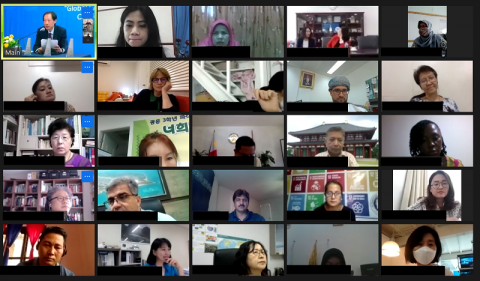 Virtual Ceremony Commemorating APCEIU’s 20th Anniversary 2020-09-06 On Tuesday, 25 August 2020, APCEIU held a virtual ceremony under the theme of “Global Citizens’ Call for Solidarity and Cooperation in the Pandemic” in commemoration of its 20th anniversary. This virtual ceremony was organized in an effort to benefit a wider audience around the world, reminding them of the importance of Global Citizenship Education (hereinafter GCED), which fosters the value of solidarity and cooperation, especially in times of global crisis. Educators, researchers, civil society practitioners, and youth from all over the world participated in this ceremony, which was held through APCEIU’s YouTube channel. About 500 online participants participated in this event and the total number of YouTube views reached almost 2,000. The 20th anniversary ceremony consisted of a variety of programmes including ‘Song for Global Citizens' written by the youth from around the world, welcoming remarks by Director Lim, congratulatory remarks and messages from key personnels from both domestic and international level, presentation of plaques of appreciation on the ocassion of the 20th anniversary, and watching stories of global citizens' action for solidarity and cooperation and video of the 20th anniversary of APCEIU. Song for Global CitizensThe ceremony started with a “Song for Global Citizens” written and sung by youth who participated in GCED Youth Leadership Workshop hosted by APCEIU every year. The alumni of Youth Leadership Workshop congratulated the 20th anniversary of APCEIU by writing lyrics on the theme of GCED in the song “Somebody to Lean On,” delivering the message that everyone can overcome the crisis through cooperation even under difficult situations like today. Remarks from key personnels from domestic and international levelNext, after Director Lim of APCEIU began by welcoming remarks, Mr. Ban Ki-moon, 8th Secretary-General, of the United Nations delivered a commemorative address, Ms. Yoo Eun-Hae, Deputy Prime Minister and Minister of Education, Republic of Korea, Ms. Stefania Giannini, Assistant Director-General for Education at UNESCO and Ms. Seo Eun-ji, Director-General for Public Diplomacy and Cultural Affairs, Ministry of Foreign Affairs, Republic of Korea, delivered congratularatory remarks. Director Lim in his welcoming remarks mentioned that, “In the future, the second and third Centres on GCED will be established in other countries going beyond Korea,” and explained the future plan of APCEIU likewise. In the commemorative address, Mr. Ban Ki-moon said, "I hope that Korea and APCEIU will cooperate to take the lead in spreading GCED." Ms. Yoo Eun-Hae said, “As the world is struggling with covid-19, the importance of global citizenship to protect the values of solidarity and inclusion, and to respond to prejudice and discrimination is increasing.” Ms. Stefania Giannini said "Amid the unprecedented crisis of covid-19, various programmes of APCEIU can provide an important reference point for education to the international community." Ms. Seo Eun-ji said, “When it comes to examining the global progress of GCED and Education for Sustainable Development (ESD) at the GCED and ESD Forum jointly held by UNESCO and Korea in 2021, it is expected that APCEIU will play an important role.” Subsequently, Mr. Jai Bir Rai, Minister of Education of the Kingdom of Bhutan, Dr. Hang Chuon Naron, Minister of Education, Youth and Sport of the Kingdom Cambodia, Dr. Leonor Briones, Secretary of Education of the Republic of the Philippines delivered congratulatory messages. They expressed the importance of APCEIU, which is recognized internationally as a leading institution, and stressed their will to actively cooperate with APCEIU in the future. Presenting Plaques of AppreciationNext, plaques of appreciation were presented to Professor Toh Swee-Hin, Professor Emeritus, University of Alberta, Canada, Dr. Bae Kidong, Director General, National Museum of Korea and Ms. Choi Soo-Hyang, Director of UNESCO-UNEVOC. Since the establishment of APCEIU, they have not only conducted lectures and workshops related to GCED for many years, but have been working as members of the Governing Board of APCEIU to put their efforts in the development of APCEIU. Stories of Global Citizens' Action for Solidarity and CooperationNext, the stories of 6 past participants of APCEIU’s programmes called the “Stories of Global Citizens' Action for Solidarity and Cooperation,” were presented. It began by Dr. Bert Tuga, President, Philippine Normal University of Philippines, followed by Dr. Khalaf Marhoun Al'Abri, Assistant Professor, Sultan Qaboos University of Oman, Ms. Nomsa Mpalami, Editor, Lesotho Distance Teaching Centre of Lesotho, Mr. Horin Kim, Teacher, Gonggeun Elementary School of the Republic of Korea, Dr. Marco D. Meduranda, Education Programme Supervisor, Department of Education, Division of Navotas City of Philippines and, Mr. Jinnarat Manojai, Student, Assumption University of Thailand, where they showed how their experience with APCEIU had impacted their lives and how they are practicing GCED in their local educational grounds. They all expressed their appreciation to APCEIU for providing the opportunity to participate in various activities related to GCED and for the support in carrying out projects to spread GCED in their own countries. Through the video message, online participants were able to closely observe how GCED has changed people’s lives and what kind of activities they are practicing to spread GCED. Lee Chul-soo, “You and I, ‘We’ Share the Same Sky”, Special Artwork Commemorating 20th Anniversary & Production of APCEIU’s 20th Anniversary Video To celebrate the 20th anniversary of APCEIU, Mr. Lee Chul-soo, a leading Korean woodblock artist, produced a special artwork entitled “You and I, and ‘We’ share the Same Sky” and sent it to APCEIU. This work, which expresses the connected global village with the connected constellation and an expanding earthenware, conveys the message that all life in the universe is connected as one, well showing the spirit of APCEIU pursuing solidarity and cooperation. This work was decided to be permanently displayed at APCEIU. Through the presentation of the 20th Anniversary video, APCEIU was able to further promote the past activities and the future vision of APCEIU, all of which have been paving the path to a culture of peace. Significance of the virtual ceremony of the 20th anniversary of APCEIUParticipants who showed unity in a single virtual space regardless of the distance and covid-19 crisis hinted at the hopeful future of the global village amidst rising hatred, stigmatization and discrimination, and infused hopes and wishes to all Global Citizens around the world. APCEIU 20th Anniversary Virtual Ceremony YouTube Link:https://www.youtube.com/watch?v=HUD5kx45nVA&t=4194s APCEIU 20th Anniversary Video Link:https://www.youtube.com/watch?v=UKlvEn9M7N0 URL:Virtual Ceremony Commemorating APCEIU’s 20th Anniversary > APCEIU News - APCEIU (unescoapceiu.org)
  [APCEIU Insights] Peace in the Time of Global Pandemic: What Implications for the Global Citizenship Education? 2020-09-05 By Yonas Adaye Adeto(Director, Institute for Peace and Security Studies, Addis Ababa University) Peace is a positive relation within and between parties. It is a form of love, which is the union of body, mind and spirit; in a more general sense, love is the union of those unions, according to Professor Johan Galtung. Love is the miracle of sex and physical tenderness; the miracle of two minds sharing joy and suffering, resonating in harmony; the miracle of two persons having a joint project beyond themselves including constructive reflection on the union of body, mind, and spirit. Extending this metaphor of love for peace to a community or country, we find that, as Galtung said, “the body is the economy, the mind is the polity, and the spirit is the culture, particularly the deep, collectively shared, subconscious culture,” which is the basis of inner peace. It is this interconnectedness and complexity that constitutes peace. Peace can also be viewed as an intrapersonal (within oneself) as well as interpersonal (between persons) positive relation. In either case, the condition for peace is altruism, compassion, dignity, equality, equity, love, reciprocity, respect, etc… not necessarily in this order, though. A structure without all or some of these elements is not giving to others what they deserve and demand for themselves making the realisation of peace difficult. Once these qualities are developed within an individual, they then are able to create an atmosphere of peace and harmony. As Dalai Lama said, this atmosphere can be expanded and extended from the individual to their family, from the family to the community and eventually to the global world. How can we internally transform ourselves as individuals and nurture inner peace in order to feel at peace with ourselves during the global pandemic? I propose the 5P’s for internal transformation of individuals to acquire inner peace, which need to be diffused and permeated to the family, community, the country and to the global level during the pandemic turbulence: These are purpose - the rationale behind or justification for us to seek peace; passion - our commitment, compassion or dedication to peace; prayer - peace transcends the material world, it has a spiritual dimension, it goes beyond the here and now physical world; partnership - peace is relational, like love, peace is expressed in interaction; and finally, practice - peace is never passive, like love, it should be expressed in action, it must be seen, admired, celebrated, gently touched, hugged, embraced, caressed, felt, respected, smelt, shared, cared for, lived with, and so forth. Purpose: Why Peace? There is an inner hunger and yearning for peace of mind particularly during the global pandemic of the coronavirus. What we currently view through the window of our televisions almost all the times is the death, despise and destruction caused by COVID-19. Before our very eyes on the TV screen, thousands and tens of thousands are buried at times in an undignified manner, reminding us how fragile and frail we are! Deep down we feel completely empty, helpless, and depressed. Hardly anywhere in the world could we turn to for any news of hope, news of comfort, news of positive information, news of peace. We feel completely drained and in need of filling the yawning gap with inner peace. No food or drink can satisfy that hunger. The evening or morning news are filled with the images of mass graves in this or that part of our world. We look at our children, the children of our neighbours, and mull over their hopes, and ask ourselves: “Do they have any future?” “Can they ever have peace?” They are all locked down, no more schools, no more plays, all locked in some bitter lessons from the most advanced countries (which could not prove their economic tag of being advanced) in their efforts to stop the spread of COVID-19. Only inner peace and peace of mind do we cry and yearn for now. We know only too well, both theoretically and practically, that it is impossible to imagine any meaningful life without inner peace. Essential for inner peace, in my opinion, is to maintain positive attitudes towards and relations with the self, others, nature, and one’s own conscience or a Creator. Our quest for inner peace is not only for self-preservation and our loved ones, but also for saving our planet from anthropogenic destruction by ego-centric individuals. The importance of peace in general and inner peace in particular remains evident for its effect on human life and human development. It is this reality, which should be tapped to transformative pedagogy and peace education in Global Citizenship Education. It ought to prepare the young generation to develop their own strategy to nurture inner peace in a time of unexpected crisis and, through time, transform those adversities into opportunity by using skills, passion and capacities from the transformative pedagogy in the Global Citizenship Education classes. Passion for Peace Passion for peace is an individual’s psychological resilience, strength and a collective action for peace. Passion is a commitment, which is an engine to gather momentum for inner peace. It can be realised through creative and innovative approaches to peacebuilding through peace education. To me, passion implies dedication to make what appears to be the impossible possible through creative engagement in community peacebuilding activities; it means to dare to walk on fire thinking that tomorrow is a better and brighter day, even though today is clouded with the coronavirus pandemic. This way it is possible to imagine peace amid crisis and visible war against an invisible enemy. This is the missing link in most peace studies classes, which I recommend for Global Citizenship Education, so that it prepares the young generation for the uncharted future, the unexpected and emerging global human insecurities brought on by pandemics such as COVID-19, and for future unknown pandemics, by going beyond the here and now and stretching as well as igniting their imaginations. Prayer: Crucial for Inner Peace The most effective strategy to build a better life with inner peace, in my view, is to know one’s limitations, acknowledging it, and working to fill that gap. The most remarkable lesson COVID-19 must have taught humanity is or should be that human capacity is limited. Science is limited. Civilisation is limited. Human beings are frail, fragile and vulnerable. Humanity has not yet controlled its fate. Developed as well as developing countries are almost equal before COVID-19. In my personal experience, prayer is crucial for inner peace since it is communion and conversation with the Creator, irrespective of the different names we attach. It is directly related to spirituality, which is the deep awareness of something beyond the sum of individuals and it is the foundation for attaining inner peace. In the words of Galtung, “There is something beyond us.” It is by transcending the here and now, it is by transcending the physical and material world, and it is by going beyond our body and reaching out to our mind and spirit that we can have inner peace during the turbulent times of the global pandemic. This is yet another area almost neglected by our education systems and I, therefore, strongly recommend it for Global Citizenship Education classes because it creates a whole-rounded personality by creating peace within oneself and with others. Partnership, the Most Essential Antidote for Hopelessness of Daily Life Peace is relational. We are not just a sum total of isolated individuals. We live because of the inspiration we get from those who went before us and those who are next to us. We are in the network called relations and our task in life is to inspire others. Simply put, we have cascades of inspiration. We are interconnected to each other as the African philosophy, Ubuntu, teaches us. In the words of Archbishop Desmond Tutu, “A person is a person through other persons.” In the turbulent times of COVID-19, partnership, irrespective of social distancing rules, is the most essential antidote for hopelessness, loneliness, and the dreariness of daily life. In the partnership, we discuss and dislodge some of our heavy feelings accumulated over the day, chocked with coronavirus updates of how many people were tested positive, how many survived, and how many died. Inner peace and comfort come when we are in a partnership. Peacebuilding and relationship building entail partnership. Peace by its very nature is relational and isolated individualism is not natural to inner and perpetual peace. This is the very fundamental point for Global Citizenship Education; it is the source of inspiration for learning and living a healthy life as learning itself is life when learners are holistically engaged and when the learning makes meaning for the learners before they practise what they have learnt. Practice: Peace Is an Active, Dynamic Force In its meaning and purpose, peace is neither a state of perpetuation nor the status quo. It has nothing to do with inactiveness. Peace is an active, dynamic force. Committing to it as a goal offers an individual or a group the strength to respond to any and all types of violent conflict. Moreover, ideas of peace generate enthusiasm and illuminate the path for humanity’s progress. Being the basic source and centre of peace, communicating peaceful ideas among partners or networks brings a human being out of the domain of individualism and inspires action for the welfare of others, as Albert Einstein and Galtung argue. Through learned practices and new activities, people move forward on the pathway to peace. Like love, without action, interaction and pro-action, peace does not have life. It requires a new reality from old relations. In love affairs, as a couple metamorphose from isolated and boring singularity to a singularity of the heavenly paradise of a collective and complete life and a new relationship, so does peace metamorphose from turmoil to tranquillity, from insipidity to inspiration, and from darkness to light when it is practised. This aspect of peace phenomenon needs to be included in and reflected on Global Citizenship Education if we mean to achieve world peace that works at individual as well as community and global levels. Final Thoughts We need essentially new ways of thinking of peace and adapting it if we are to survive as a human species during the global coronavirus pandemic, as well as after it as a human community on planet Earth. To this end, we must internally transform ourselves by entrenching purpose, passion and prayer as well as a partnership for peace, and by practising peace. We have to learn to celebrate not only the peace elements in our own cultures but also those in others, by celebrating each person’s gift to humanity during the global crisis and beyond. In the words of Einstein, we must radically change our attitudes towards each other and our views of the future. It is up to our generation to succeed in thinking differently in order to achieve inner peace through internal transformation at the individual level, which is the foundation for peace at the family, community and global levels amid this present or future pandemic turbulences. URL:(No.6) Peace in the Time of Global Pandemic > EIU in the World - APCEIU (unescoapceiu.org)
  [APCEIU Insights] Political Economy of COVID-19 and Global Cooperation 2020-07-28 KIM Chang-yupProfessor, Graduate School of Public Health, Seoul National University &Director, People's Health Institute Infectious diseases such as COVID-19 are biological, health, and medical incidents, and at the same time, they are social, political, and economic phenomena. Science for prevention and treatment is closely related to who should be prioritised in the distribution of health resources, e.g., ventilators and vaccines. A country's decision to ban the entry of foreigners is bound to consider the international political economy and quarantine effects. Even individual responses of fear and anxiety are not irrelevant to the socioeconomic system or ideologies such as racism, colonialism, and neo-liberalism at the national and global levels. Such non-pharmaceutical measures as “social distancing” are formulated in social, political, economic, and cultural contexts. An infectious disease’s political economy implicates more than just a political or economic factor that affects or is affected by the disease. For instance, inequality in health and access to health and medical care services is only one aspect of its political economy. From the outbreak of an infectious disease to the epidemic, spread, responses, consequences, and impacts, the various phenomena and incidents surrounding infectious diseases we encounter are the overall outcomes emerged from the deep structures involving pathogens, humans, non-humans, and society. The political economy can be an ontological and epistemological pursuit to develop a comprehensive explanation of the emergence process. Frequent Outbreaks of Emerging Infectious Diseases and Zoonoses COVID-19 is an emerging infectious disease and zoonosis. Here, the word “emerging” means that a pathogen, which used to be of little harm to humans, has caused a new infectious disease and attention should be paid to the reasons for its “emergence” rather than “newness.” It is because something has changed, and new factors are in play, for what was previously harmless to humans has become a new cause of disease. A new infectious disease would break out due to the changes in the conditions surrounding the infection sources (viruses or bacteria), human susceptibility, or the relations between the infection sources and humans. Going through the Severe Acute Respiratory Syndrome (SARS), the Middle East Respiratory Syndrome (MERS), and COVID-19, we have become familiar with the term zoonosis. It refers to an infectious disease whose pathogen is transmitted from its natural host of animals to humans which then causes infection. In addition, a zoonosis is not necessarily an emerging disease. For a long time, many human infectious diseases have been of this category, and such diseases as smallpox and tuberculosis, which we all know well, are zoonoses by nature. Although they have received renewed attention recently due to the outbreaks of SARS, MERS, and avian flu, zoonoses are frequent in incidence, taking over 60 percent of human infections. Why have zoonoses - which have coexisted with humanity for so long - increased, especially in the form of emerging diseases? We cannot explain it with one or two reasons, but the most convincing one, “upstream” cause particularly, seems to be the surge of contact between humans and animals. For example, indiscriminate deforestation and arable land development boost close contact between animals and humans, something that has not existed before. Consequently, pathogens in animals are transmitted to humans with new risks. The Ebola virus, which used to live in wild animals that inhabit dense forests, gets nearer to humans as forests disappear and mutates itself in a new environment before encountering humans. A study of 27 regions in West Africa where Ebola broke out shows a higher probability of epidemics in the recently deforested areas, supporting the political economy of outbreaks of emerging infectious diseases. The Nipah virus epidemic in Malaysia in 1998-1999, which cost more than 100 human lives, resulted directly from the destruction of forests and the expansion of pig farms. Eliminating forests, expanding farmlands, and building livestock factories in forests cannot be explained solely by individual economic actors' market behaviours. A global politico-economic structure exists in the deep of those reality changes. Whether the target or domain concerns farming, forestry, raising livestock, or whatever, it is essentially a direct consequence of the unequal international division of production and labour established on a global scale. Robert G. Wallace and Rodrick Wallace, who studied the “systemic” nature of Ebola, even call this emerging infectious disease regime as “neoliberal Ebola.” Epidemic and Spread of Infectious Diseases The current capitalist socioeconomic system provides optimal conditions for a small-scale endemic to spread and transform into a global pandemic. Mobility and connectedness, two factors that encompass the entire planet, are particularly notable. While the Influenza A (H1N1) pandemic in 2009 took only nine days to spread across the Pacific, it was several months faster than expected, no matter how it was calculated at the time. The same goes for intra-country movements. When the COVID-19 outbreak began in China, domestic air travel spiked up more than ten times, compared to the SARS outbreak. Now that no country can surpass these conditions, once incorporated into the globalized economic system, such preventive measures as entry bans and lockdowns are impossible and of no use. This “impossibility” is also the case with the issue of prohibiting the entry into South Korea of those traveling via China, which caused controversy in Korea. If the research results are correct, that there were already COVID-19 cases in several European countries before China reported the outbreak of the disease to the World Health Organization (WHO), blocking cross-border movements would hardly mean more than just lessening the quarantine burden. Furthermore, implementing the policy is next to impossible. Inbound Koreans coming from China hovered at 13,000 per day before the epidemic and close to 3,000 in early February 2020, even after the spread. Most of them are economic actors who have to travel between the two countries for essential business reasons. Is it possible to ban traveling or to enforce voluntary or involuntary separation of so many individuals once admitted to traveling? It is not the science of quarantine, but more of politics, mainly domestic politics, to demonstrate wills and capacity of the nation-states to prevent the spread of infectious diseases. Urbanization is another critical factor in promoting the diffusion and epidemic of infectious diseases. An exemplary case is the city of Wuhan, China, where COVID-19 emerged for the first time and subsequently spread to other places. The urbanized Wuhan does not merely mean the planar urban feature of a dense concentration of people. It is an industrial production base and regional transportation and educational centre, with various characteristics that makeup a globalized city. It was not a coincidence that over five million Wuhan dwellers left for other areas before its blockade in time for the Chinese New Year holidays, which was a critical contributor to the spread and epidemic of the disease. Numerous migrant workers have scattered to other regions and countries, becoming the sources of infection everywhere. Fully integrated into China's socioeconomic system and further, the global capitalist system, the megacity, has the optimal conditions for the spread of infection worldwide. The political economy of the epidemic and the spread of infectious diseases is integrated into quarantine means and technologies. To take an example, the so-called “social distancing” is one of the powerful ways to contain cluster infections in local communities, but its applicability and extent vary depending on the society's socioeconomic circumstances. In a typical capitalist market economy, it is relatively easy to adopt social distancing measures for schools, religious organizations, and leisure activities. However, production activities and workers engaged in them would find it quite challenging to practice social distancing at the individual level. It is because the issue of “power” intervenes in terms of who is to bear the cost of halting labour, in addition to the sustainability of economic activities. A large number of workers in the United States cannot afford to take time off from work, because they are hired part-time or have no paid leave; therefore, social distancing, that is, staying away from work, can hardly be a viable quarantine measure for them. System Crisis and Transformation Possibility From the outbreak to the epidemic and spread; responses; consequences; and long- and short-term impacts; the COVID-19 pandemic has revealed our socioeconomic system as its condition and basis. The manifestation will continue to unravel in the coming months and years. Border closure, shortage of hospital beds and equipment, racial inequality, and the impossibility of practicing social distancing are only a few facets of the related phenomena. Most countries have responded to the pandemic mainly as nation-states, while shutting down borders and prohibiting transborder movements. It is fully reflective of the vulnerability of global health governance. Most countries, including South Korea, have attempted predictions on what a “post-pandemic” era will be like and speculated on the “new normal.” It illustrates that they are well aware of the “systemic impossibility,” i.e., that the current system is too inadequate to respond effectively to the outbreaks of infectious diseases. For instance, the quarantine authorities' “recommendation” for workers to take sick leave when they are ill is a roundabout technical statement on the need for a new labour system. In a similar context, countries that have refrained from spending on health and medical care under a fiscal austerity policy vow belatedly to strengthen or restore the “publicness” of healthcare services. From the perspective of power dynamics, the necessity for systemic transformation does not automatically turn around as a possibility. It is questionable whether we could consider the current situation with the system becoming unstable due to the impact of an external factor (a pandemic) as a “crisis.” But we should not forget that the possibility of sustaining or transforming the existing system is almost entirely the outcome of power relations. If the current arrangement could be regarded as a “morbid state” of crisis in Antonio Gramsci’s notion, existing power groups will continuously struggle to go back to the “old normal.” Unless alternative powers manage to formulate a new equilibrium, “resilience” would probably end up only meaning regression to the old normal. The same is true for the microsystem. Claiming that “K-quarantine” has already made a success, the Korean government (state power) defines biotechnologies, ICT, and public-private partnerships as primary success factors. It perfectly matches the politico-economic interests of the new growth engine policy that has been put forth in full swing since the 2000s and corresponds to the capital accumulation model pursued by Korean capitalism. In comparison, the power to promote an alternative system, including strengthened public healthcare, seems unsure in its magnitude and foundation. Although forecasts say that vaccines and treatments will be the key to fundamentally resolving the COVID-19 crisis, without changing the old system, the solution is very likely to benefit only a limited number of groups. The political and economic interests concerning the development of vaccines and treatments are already well-known, thus do not need a long and detailed explanation. Like other vaccines and the treatments for neglected diseases, vaccines and treatments for emerging infectious diseases such as COVID-19 often have a small market and low profitability. As the pandemic subsides and enters a stable phase, the momentum for their development will weaken inevitably. Even if vaccines are developed soon as everyone hopes, the situation is unlikely to get much better. The firm structure and mechanisms of the between- and within-country inequalities will continue to play on in the distribution of such limited resources as vaccines. Nation-state-centered responses to the pandemic are highly likely to reveal their contradictions and implausibility more apparently. Not only can the strictest travel ban stop the spread of infection, but even if it is possible, a country’s social and economic isolation can hardly last beyond a specified period. Moreover, it should not be overlooked that the epidemic of an infectious disease in a particular country affects others indirectly in the current global economic system with production and consumption connected with all countries in the world. The coronavirus pandemic, literally, will not end until it finally ends in every country. That is why global and regional cooperation and solidarity are acutely called for even now. The question is, though, how to construct a new collaboration system now that the existing global governance has revealed its total incompetence and weaknesses. It seems somewhat too early to predict, but at least one thing is clear, the principles of a new global system must be based on the lessons we have learned from the COVID-19 pandemic and our responses. Perhaps the new relation system should go beyond the international relations composed of nation-states and be anchored as a new global governance based mainly on civic solidarity and cooperation of greater breadth, depth, and strength. In my view, the core principle should be democratic publicness that all global citizens should put into action. URL:(No.5) Political Economy of COVID-19 and Global Cooperation > EIU in the World - APCEIU (unescoapceiu.org)
 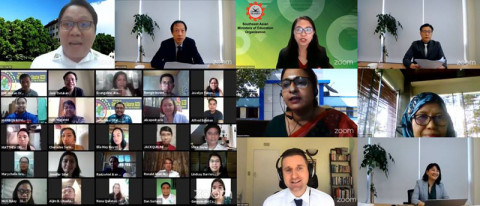 PNU/APCEIU Webinar Held amid Huge Attention: With More than 5,000 Participants around the Globe 2020-07-28 On 17 July 2020, the Webinar entitled “Reflecting on Global Citizenship Education in the time of the pandemic” was co-organized by the Philippine Normal University(PNU) and APCEIU along with the Southeast Asian Ministers of Education Organization(SEAMEO) Secretariat, and the Philippine National Commission for UNESCO. This webinar provided an opportunity to rethink the roles and challenges of GCED under the turbulent conditions of the COVID-19 crisis and delve into its increasing demand from the world. Further discussions went on to transform these challenges into opportunities for reconstructing a more effective up-to-date education system while highlighting the contextualization of GCED. Commenced by the welcome remarks from the co-organizers, the webinar invited Prof. Soon-Yong Pak from Yonsei University as the keynote speaker. In the plenary session, four GCED experts from India, Malaysia, the Philippines, and the United States gave presentations on how to integrate GCED in the curriculum and school practices in the post-COVID-19 scenario. The open forum session followed, inviting the online audience to participate through the Q&As via Zoom and Facebook live streaming page. The whole event made a significant appeal to the global audience by reaching more than five thousand participants with the total views of 22,000 on the airing day of the webinar. This event unraveled the continuing importance and the increasing demand for GCED as one of the key education initiatives to tackle the issues around various conflicts emerging in the pandemic era. URL:PNU/APCEIU Webinar Held amid Huge Attention: With More than 5,000 Participants around the Globe > APCEIU News - APCEIU (unescoapceiu.org)
 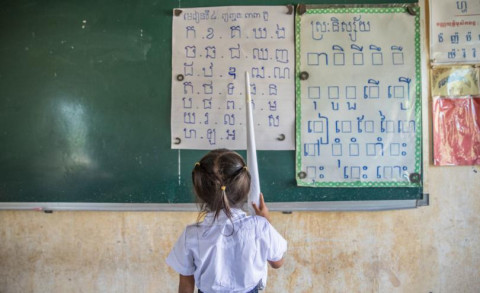 Girls in Asia-Pacific face increasing risk of violence, abuse and exploitation following COVID-19 lockdown measures 2020-07-26 New report from Save the Children and Plan International Violence against children threatens to escalate dramatically because of the COVID-19 pandemic, with girls disproportionately affected. For many girls, this and the additional risks of child or forced marriage could become more of a threat than the virus itself. Nearly 10 million children – mostly girls – may never return to school following COVID-19 lockdowns. According to the UN, an extra an extra 15 million gender-based violence cases are expected for every three months the lockdown continues globally. The UN also estimates that COVID-19 could result in an additional 13 million child marriages worldwide over the next ten years. In a joint report by Save the Children and Plan International released today, ‘Because We Matter: Addressing COVID-19 And Violence Against Girls in Asia-Pacific,’ the two leading children’s aid agencies lay out the alarming extent of the problem in the region, and what must be done to address it. Bhagyashri Dengle, Asia-Pacific Regional Director, Plan International, said: “While children in Asia have been spared the worst direct health effects of COVID-19, it has exposed millions of girls to the risk of violence, abuse and exploitation during lockdowns and periods of movement restrictions. Girls already living in violent family situations are particularly vulnerable as they may be confined at home with their abuser. At the same time, access to health and protection services have been disrupted. There is also evidence that sexual abuse of girls has increased, both offline and online, during the pandemic.” Hassan Noor, Asia Regional Director, Save the Children International, said: “Worldwide school closures have affected more than 1.5 billion students – more than half of whom are in Asia-Pacific. Such closures, combined with financial insecurities means girls are more likely to either be without a caregiver, or living in homes that have come under sudden and intense stress, exposing them to increased risk of violence or abuse. Many may never return to school once they re-open. This pandemic could undo much of the progress made in reducing levels of child marriage across Asia-Pacific in recent decades.”“Regional governments must do everything they can to protect the rights of girls during this crisis, including by supporting vital social services, and helping the most marginalised families with financial aid so they can get through the hardship caused by the pandemic.” Huu is an 18-year-old girl from Vietnam. She told us: “I know two girls who have just gotten married during this pandemic. I truly think that education offers us a chance to a brighter future. However, due to the current pandemic, many girls are giving up their learning opportunities for marriage to alleviate the new economic hardship.” Phulan is an 18-year-old girl from Nepal. She told us: “When I learned that my parents wanted to marry me off, I knew I couldn’t let it happen. If I did, what kind of message would I be sending to other girls? With community support, I told my parents I’d go to the police if they didn’t give up. I am now continuing my studies.”Read the full reportRead the full report (GCED Clearinghouse) To support Save the Children’s global COVID-19 emergency appeal, click here. Media contactsWe have spokespeople available in New Delhi, Dhaka, Bangkok and Singapore. You can reach out to: Save the Children Bhanu.Bhatnagar@savethechildren.org (London)Olof.Blomqvist@savethechildren.org (Bangkok) Plan InternationalNattasuda.Anusonadisai@plan-international.org (Bangkok)Krista.Zimmerman@plan-international.org (Bangkok) URL:https://www.savethechildren.net/news/girls-asia-pacific-face-increasing-risk-violence-abuse-and-exploitation-following-covid-19
  [APCEIU Insights] Choosing Our Post-Pandemic World 2020-07-21 Ilan Kelman (Professor of Disasters and Health, University College London) The 2020 COVID-19 pandemic has uprooted our lives and livelihoods. Most readers here have engaged in extensive international travel, now curtailed for an extended period. Most of us expect to be able to buy what we need when we want, often being able to afford our choices without too much trouble. We expect to be able to use our income which is certainly hard-earned and deserved to go out for good food with good friends at will, an experience that is now inhibited. All these are far from the reality of life experienced by most people. Even being healthy and energetic with full stomachs and plenty of drinking and washing water each day is not the typical experience of most people around the world, particularly those who will never have the opportunity to read this article. And when we do not feel so healthy, despite the difficulties with many healthcare systems, we typically have options for seeing professionals to hope for sound advice and a cure. As we consider our post-pandemic world, seeking opportunities to build up and push forward global citizenship and solidarity, what does it really mean for those who do have few options to lead the efforts? For most of them, the pandemic has meant mainly fewer opportunities for livelihoods and more opportunities to die of illness. A Fundamental Question For me, choosing our post-pandemic world involving everyone together is fundamentally asking “What does it mean to be human?” What have we done to our society to reach this situation of calamity? What will we do better? And how do we move forward with the choices we select? Too often, we end up taking comfort in buzzwords, such as “transformation” and “resilience,” which can mean whatever we wish them to mean. Regarding transformation, we have now seen it. Lockdown, travel bans, and new modes of interacting with people represent social transformation. It happened exceptionally quickly, from the end of January 2020 when parts of China started lockdown to the end of March when much of the world had adopted some level of measures. We have achieved transformation and it is not pretty. For resilience, the standard assumption from ecology which has infiltrated many climate change discussions is about bouncing back, or returning, to normal. Do we really know what “normal” means? Is “normal” with or without intercontinental travel at will, with or without social media and unbroken internet connectivity, and with or without the vast amounts of food discarded by supermarkets and restaurants while people go hungry along the same street? These have been the normal in recent times, but are from the normal throughout human history. I hope that we would not really want to restore normalcy after the pandemic by perpetuating the massive inequities across society fuelled by gross resource overconsumption through the exploitation of people and the environment. Why should we bounce back to the normal in which a tiny minority of people with resources and power, and without much real accountability, make decisions about the lives of everyone else? Surely we should prefer a resilience which is, in effect, the opposite of returning to the pre-pandemic “normal.” Pandemic by Choice Much of the pre-pandemic normality created the conditions for a pandemic in the first place and retains prospects for many more pandemics. Examples of our “normal” behaviour are the high speed and vast extent of long-distance travel, the harmful ways in which we treat ecosystems and animals thereby supporting conditions for microbes to jump species, and the gross inequities which force many to live in crowded, unhygienic conditions. That is, pandemics are more about long-term societal conditions and everyday behaviour than about a specific microbe’s traits. Most fundamental is the state of and access to our health systems. Many countries do not have enough professionals, facilities, or equipment to deal with day-to-day health, never mind during a time of crisis. Some countries do not provide fully accessible healthcare to all their citizens, so people must pay for diagnosis and treatment. This chronic crisis of inadequate healthcare for everyone inevitably invites acute crises such as outbreaks. Why return to this pre-pandemic state which set up this pandemic disaster and its consequences? Even the more affluent countries ended up with a dire choice. One choice, taken by many jurisdictions, was to implement lockdown. Society’s functions were overturned in such a way that those most vulnerable and marginalised, and who had the fewest options to improve their situation, ended up even more vulnerable and even more marginalised. The alternative was to permit the virus to spread with a horrendous death rate and again tending to hit worst those who are most vulnerable and marginalised, with the fewest options to improve their situation. With choices limited to complete lockdown, mass death, or somewhere in between these two extremes, we have lost already, because nowhere on this axis supports being human. This is not a state we should recover to, when pandemic prevention is possible instead. Consider, too, what happened in those places which chose an extensive lockdown. Without disputing the thousands of lives (or more) which a lockdown saved, we must be aware of the mental health consequences, such as increased stress, self-harm including suicide attempts, domestic violence, and substance use. All these are poorly treated epidemics within society anyway, depicting yet another normal to which we should never return. Being human means wanting to solve them; it does not mean stigmatising mental health conditions, brushing over or excusing everyday violence, and creating livelihoods and compensation which are about squeezing the humanity out from the worker ants so that those who do not need it, accumulate even more wealth. We have constructed systems in which, each year, the world spends more than ten times on defence budgets (basically, weapons for intimidating, harming, and killing) than we spend on official international aid. Notwithstanding all the problems with the international aid system, at least it tries to help people. Meanwhile, governments use our tax money to subsidise the fossil fuel industry at perhaps two orders of magnitude more than governments invest in all forms of disaster prevention, including for pandemics. Citizenship and Solidarity So, what does it mean to be human? Here is where the importance of citizenship and solidarity shines. Citizenship does not refer to having the passport of a country. It embraces the individual, accepting their rights and duties as a constructively contributing member of society to the best of their ability. Ask for help when needed and help others when possible. Enjoy the privileges of living oneself while fulfilling obligations to others. Retain opportunities to have fun without neglecting the hard, dedicated work required to keep society functioning. Solidarity is not about a specific ideology or opposing one. It is about one catchphrase of the pandemic that “We are all in this together.” We are all human beings together, aiming to stop others from suffering. Responsibilities and freedoms coincide, aiming for the same availability for everyone. As humans, we need to join forces to work with and for each other, against the ravages of lethal viruses and inequities. Not all of us have the options to consider citizenship and solidarity, indicating the need for those who can to generate the opportunities for others. Are disasters such as pandemics one such impetus? Are we rallying around the concept of being human of being human collectively? Sadly, not always, as seen through examining pandemic diplomacy as one element of the wider concept of disaster diplomacy. Disaster diplomacy analyses how and why disasters might create new peace and cooperation initiatives. In general, unfortunately, they do not, with the same conclusion reached for disease diplomacy. From a top-down perspective, during the COVID-19 pandemic, too many countries and governments used the virus and the lockdown to either pursue cooperation, something they wanted anyway, or to gain advantage over rivals and to ferment conflict which is useful for them. It is a sad conclusion that disaster diplomacy simply does not succeed in the long-term. Instead, the interests of those with power have too often been about themselves without fully considering the negative impacts on others. Even the typical vocabulary of the pandemic shows our baseline. The phrase “social distancing” has stuck, rather than using the more accurate “physical distancing” which communicates the important premise that we must remain as social as possible without physical proximity. We heard plenty of talk about the “exit strategy” from lockdown rather than an “entrance strategy” to a better civilization and a better humanity as the choice for our post-pandemic world. More optimistically, from a bottom-up perspective, so many people ignored the petty politics driven by self-interest. They reached out to their fellow humans to build a better world. Throughout it all, health professionals, utility workers, transportation staff, cleaners, trash collectors, those in the food industry, and so many others continued going to work on-site to keep systems up and running for us. Far too many of them died from COVID-19 because lack of preparedness put them at risk, followed by inadequate responses to protect them until it was too late. This awful way in which essential workers have been treated by the governments they serve mirrors the awful way in which many within the most marginalised populations have been systematically denied basic healthcare and measures to keep themselves safe, during and irrespective of the pandemic. Such mistreatment, though, can happen only in places where these services actually exist. Too many people still suffer the pandemic of lacking basic needs such as clean water, sanitation, hygiene, shelter, community, healthcare, food, education, and many others. We do not wish to re-create this condition of perpetual illness. Cure All Pandemics This rampant disease of inequity and inadequate access to basic services can be cured through applying global citizenship and solidarity. For citizenship, if we are not helping ourselves and each other, while being helped by others, then we will simply continue with all the problems identified so clearly. As for solidarity, we are all in this together since injustice to one person or group harms us all. This double-edged cure will contribute to preventing microbe-based pandemics and to resolving the societal problems which created the 2020 pandemic. To answer the question “What does it mean to be human?” we must choose this post-pandemic world, which favours prevention over cure in ethos and in action. Then, through citizenship and solidarity, we will be tackling the long-term, chronic ills that plague us. From functioning and accessible health systems to mutually beneficial interactions with ecosystems and species, we can do much better than the long-term, baseline conditions which created the 2020 pandemic. We know that new infectious agents with the potential to kill us are inevitable, but that pandemic disasters are not. It is up to us to create this post-pandemic world by being human. (Twitter/Instagram @ILANKELMAN) URL:(No.4) Choosing Our Post-Pandemic World > EIU in the World - APCEIU (unescoapceiu.org)