
News
Catch up on what’s happening in the world of global citizenship education.
225 results found
 유네스코와 대한민국, 인종주의와 차별 반대 국제포럼 공동개최 2021-03-27 “코로나 상황 속에서 인종, 성별 등에 따른 차별과 불평등 심화… 지금은 함께 행동해야할 때” - 코로나가 물리적 바이러스라면, 인종주의와 차별은 심리적 바이러스- 모든 형태의 차별 철폐를 위한 국제사회의 연대와 행동 필요 유네스코와 대한민국 정부는 3월 22일(월), 국제 인종차별 철폐의 날(3.21)을 맞아 “인종주의와 차별 반대 포럼(Global Forum against Racism and Discrimination)”을 공동으로 개최(대면과 비대면 혼합 방식)했다. 이번 포럼은 최근 미국 애틀랜타에서 발생한 아시아계 증오 범죄로 추정되는 총격 피살 사건으로 인해 더욱 큰 관심을 모았다. 지난 수십 년 간 진행된 세계화의 흐름 속에서 다양성에 대한 존중과 관용의 수준은 높아지는 듯 했다. 그러나 주류 사회 구성원들은 경제위기나 기후위기 등이 발생할 때면 자신의 일자리가 뺏기고 생존의 위협을 받을 수 있다는 두려움과 공포에 쌓여 이주민과 장애인, 여성 등 사회적 소수자들에 대한 차별를 더욱 강화하는 패턴을 보여왔다. 특히, 코로나 팬데믹 속에서 확산된 가짜뉴스와 증오발언(Hate Speech) 등은 코로나19라는 물리적 바이러스의 극복을 더욱 어렵게 만드는 심리적 바이러스로 작용하고 있다. © 오드리 아줄레(Audrey Azoulay) 유네스코 사무총장이 개회사를 하고 있다. UNESCO, 2021, Global Forum against Racism and Discrimination 이번 포럼에 참석한 오드리 아줄레(Audrey Azoulay) 유네스코 사무총장은 막연한 공포와 두려움은 가짜뉴스와 같은 해악에 의해 확산되는 것이며, 이러한 해악을 없애기 위해서는 인류 공동의 노력이 필요하다는 점을 강조했다. 또한, 미디어 리터러시를 통해 수많은 매체를 통해 쏟아지는 각종 정보를 비판적으로 수용할 수 있는 역량을 함양하는 것이 문제해결의 열쇠라는 점을 설명했다. 한편, 최종문 외교부 제2차관은 개회사에서 “혐오발언, 차별, 폭력 등의 행위는 반인권적일 뿐만 아니라 코로나19 위기 극복에 필요한 국제협력을 저해한다”라며, 이 문제를 해결하기 위한 방법으로 인류애, 관용, 다양성 존중 등과 같은 보편적 가치를 배우고 실천하는 세계시민교육의 중요성을 강조했다. 인종주의와 차별 철폐를 위한 방안을 모색하기 위한 토론에 참석한 영국 브리스톨 대학교의 타릭 모두(Tariq Modood) 교수는 “우리 사회 안에 인종주의가 존재하고 있다는 점을 인정하는 것이 문제해결의 첫 걸음”이라고 강조하며, 최근 벌어지고 있는 인종주의의 형태는 단순히 피부색만에 의한 것이 아니라 자신과 다른 문화, 종교적 정체성 등으로 인해 파생되는 복잡한 성격을 띠고 있다고 설명했다. 이러한 문제를 해결하기 위한 방안으로 임현묵 유네스코 아시아태평양 국제이해교육원 원장은 교육의 역할을 강조했다. 그러나 현재 교육은 각국 정부에 의해 국가주의가 확대, 강화되는 방향으로 진행되고 있어, 세계시민의식이 교육과정에 반영될 수 있도록 유네스코가 가이드라인을 제시하는 등 적극적인 역할을 담당해야 한다고 주장했다. © 영국 브리스톨 대학교의 타릭 모두 교수(가운데)와 임현묵 유네스코 아시아태평양 국제이해교육원 원장(왼쪽에서 두번째) 등이 패널토론에 참여하고 있다. UNESCO, 2021, Global Forum against Racism and Discrimination 이번 포럼은 총 4개의 패널토론에 정부(중앙/지방), 국제기구, 정계 및 학계, 시민사회 활동가 등 21명이 참석하여 ▲인종차별 반대 정책 수립 및 문화 조성 방안, ▲편견과 차별 철폐를 위한 양성평등 증진 방안, ▲인종차별 반대 국제 파트너십 형성 방안 등을 논의했다. 포럼의 참석자들은 모든 형태의 차별과 불평등을 철폐하기 위해서는 유네스코와 같은 다자기구를 통한 국제협력과 연대가 중요하며, 국제사회 구성원 모두가 바로 “지금” 다함께 “행동”해야 한다는데 인식을 같이 했다. 이번 포럼에는 오드리 아졸레이 유네스코 사무총장과 안겔 구리야 경제협력개발기구(OECD) 사무총장 등이 참석했으며, 한국에서는 최종문 외교부 제2차관과 김동기 주유네스코대사, 최영애 국가인권위원장, 임현묵 아태국제이해교육원(APCEIU) 원장이 참석했다. “피부색이나 배경, 종교 등의 이유로 다른 사람을 증오하도록 태어난 사람은 아무도 없습니다. 사람은 증오를 배워야 합니다. 증오를 배울 수 있다면 사랑도 배울 수 있습니다. 왜냐하면 증오보다 사랑이 사람의 본성에 더 가깝기 때문입니다.(No one is born hating another person because of the color of his skin, or his background, or his religion," Mandela said. "People must learn to hate, and if they can learn to hate, they can be taught to love, for love comes more naturally to the human heart than its opposite.) -- 넬슨 만델라(1918-2013, 남아프리카공화국 前 대통령, 노벨평화상 수상자) <참고> 인종주의와 차별 반대 국제포럼 다시 보기https://youtu.be/96Q6rkeJmqQURL:https://www.unesco.or.kr/news/press/view/2385
 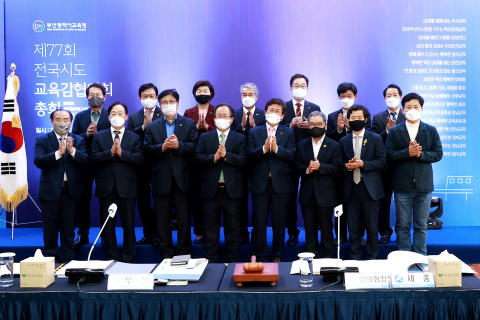 서울시교육청 평화, 세계시민성, 지속가능성, 노동인권 교육 국가교육과정 개정 제안 2021-03-23 ▢ 서울특별시교육청(교육감 조희연)은 2021년 3월 18일 개최한 전국시도교육감협의회 총회에서 「2022 국가교육과정 개정 시 평화, 세계시민성, 지속가능성 총론 반영」안건이 가결되어 대정부 건의하기로 하였다. ▢ 이번 안건은 ‘2022 개정 교육과정과 평화’ 주제로 진행한 5개 시도교육감 라운드테이블’(2021.1.7.)에서 최교진 전국시도교육감협의회 회장(세종특별자치시교육감), 도성훈 전국시도교육감협의회 부회장(인천광역시교육감), 이재정 경기도교육감, 이석문 제주특별자치도교육감과 함께 논의한 결과를 바탕으로 공동 제안된 것이다. ○ 한편 지난 1월 전국시도교육감협의회 총회(2021.1.14., 제76회 총회)에서는 서울시교육청이 제안하였던 「2022 국가교육과정 개정 시 노동교육 관련 요소를 균형이 있게 반영」안건이 가결되어 대정부 건의된 상태이다. ▢ 확대되는 교육 불평등과 사회경제적 불평등, 혐오와 차별, 생명 경시 등과 더불어 코로나19와 기후 위기로 드러난 지속가능하지 않은 삶의 방식과 사회시스템의 개혁 문제는 인류 공통의 과제이다. ○ 오늘날 한국과 세계가 직면한 불평등과 양극화, 차별과 혐오, 극심한 경쟁, 생명 경시, 개발지상주의, 기후변화와 생태계 파괴와 같은 세계사적 위기 상황에 주목할 때, ’평화, 세계시민성, 지속가능성‘의 가치를 강조할 필요가 있다. ○ 유엔은 인류 공동의 문제를 해결하는 방안으로서 지속가능발전목표(SDGs)이행을 제시하고 특히, 교육의 방향과 내용에서 평화, 세계시민성, 인권, 성평등, 문화 다양성, 지속가능성을 강조할 것을 촉구하고 있다. ▢ 이에 서울시교육청은 「2022년 국가교육과정 개정 시 평화, 세계시민성, 지속가능성 총론 반영」안건을 제안하고 대정부 건의를 하게 되었으며, 주요 내용은 다음과 같다. ○ 총론 ‘교육과정이 추구하는 인간상’ 마. ‘세계시민으로서 평화를 실천하고 생태친화적인 삶의 방식으로 전환함으로써 세계평화와 지속가능성에 이바지하는 사람’ 항목 추가 ○ 핵심역량에 ‘불확실한 세계 환경에서 지속가능한 미래를 준비할 수 있도록 세계시민성을 키우고 실천하는 평화역량과 지속가능성 역량’ 추가 ○ 범교과 학습 주제에서 ‘평화와 세계시민성, 지속가능성’을 강조 ○ 학교에서 평화, 세계시민성, 불평등, 차별과 혐오, 생태계 파괴와 같은 폭력에 맞서는 다양한 평화 개념에 대한 담론 논의 ▢ 조희연 서울시교육감은 "지난 1월 시도교육감협의회의 ‘노동교육 관련 요소의 균형 있는 반영’에 이어 이번 ‘평화, 세계시민성, 지속가능성의 국가교육과정 총론 포함’ 대정부 건의를 통하여 우리 학생들은 미래 역량이 강화된 민주시민으로서 성장할 수 있을 것이다" 라고 하였으며, "2022 국가교육과정에서는 ‘세계시민으로서 평화롭고 지속가능하고 생태 친화적 삶을 실천함으로써 세계평화와 지속가능성에 이바지하는 사람'을 기르는 방향이 반영되기를 소망한다" 라고 밝혔다. 사진: 전국시도교육감협의회[Copyrights ⓒ 서울교육소식 (enews.sen.go.kr) 배포시 저작자 반드시 표기] ※ 본 저작물은 서울특별시교육청에서 2021년 작성하여 공공누리 제 2유형으로 개방한 ‘평화, 세계시민성, 지속가능성, 노동인권 교육 국가교육과정 개정 제안 (조한주)’을 이용하였으며 해당 저작물은 서울특별시교육청 서울교육소식(enews.sen.go.kr)에서 열람하실 수 있습니다. URL:https://enews.sen.go.kr/news/view.do?bbsSn=170893&step1=3&step2=1
 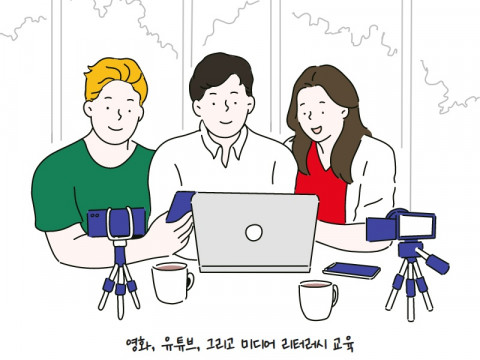 영화, 유튜브 그리고 미디어 리터러시 교육 2021-03-18 영화, 유튜브 그리고 미디어 리터러시 교육 김선아 (영상물등급위원회 연구조사센터 연구원) 90년대 후반에서 2000년대 초반 정도에 등장한 ‘디지털’이라는 용어는 그것이 한 때의 유행어가 될지 아니면 이후에 대세를 이룰 보통명사가 될지 명확하지 않았다. 당시만 해도 영화는 필름과 디지털이 혼합된 채 함께 사용되던 시절이었고, 영화계는 디지털이라는 새로운 영화 제작 방식 및 형식에 대한 거부감 또한 드러내던 시기였다. <기생충>으로 세계적으로 알려진 봉준호 감독 또한 당시만 해도 필름에 대한 여전한 사랑을 피력했었고, 영화광들은 디지털이 마치 영화에 대한 자신들의 사랑을 빼앗아 갈까봐 방어적인 태도를 보이곤 했었다. 하루 중 90~120분을 낯선 이들과 한 공간에 모여 커다란 스크린이라는 한 곳을 바라보는 극장의 경험은 필름의 경험이지 디지털적인 경험은 아니라고 생각했었다. 달리 보면 필름을 기반으로 한 영화보다는 비디오를 기반으로 한 경량의 카메라가 발전하면서 이를 재생하는 방식으로 디지털이 채택되었고 이러한 소량화·경량화가 필름 영화에도 영향을 미쳤다는 것이 맞을지도 모른다. 파일로 영화가 전송되고 영화 현장에서 데이터 매니저라는 새로운 직종이 생긴 지금 필름 제작 방식은 사라져서 아카이브에 보관되어 있는 시대가 되었다. 그러면서 ‘디지털 시네마’라는 용어가 법적·제도적 용어로 등장, 본격적으로 통용되기 시작했다. 영화 교육 혹은 영화 리터러시 교육은 이러한 필름과 디지털의 융합기 혹은 전환기에 시작되었다. 2000년대 초반 연극영화학과 학생들의 교직 이수 과목으로 영화교육이 채택되었고, 2003년에는 고등학교 선택 과목으로 영화가 채택되었다. 경량의 비디오카메라 덕분인지 몰라도 청소년 영화 교육 대부분은 영화 제작에 치우쳐 있었고 지금도 그건 여전하다. 교과수업만이 아니라 공공기관 등에서 행해지는 영화교육 또한 학생들이 주어진 시간에 한 편의 영화를 만들어 내는 실기 중심으로 이루어져 있다. 영화를 감상하고 영화에 대해 토론하는 ‘비판적 이해’ 수업은 독립적인 영화 교육이 아니라 제작을 하기 위한 배경 지식 정도에 그친 게 사실이다. 배경으로서의 비판적 이해와 ‘표현력’의 주된 배양으로 이루어진 수업 과정은 지금도 여전한 수업 내용일 것이다. 그러다가 2010년대 전후로 ‘리터러시 교육’이라는 용어가 등장한다. 리터러시란 용어는 유엔에서 빈곤국가 아동의 교육에 대해 논하면서 본격적으로 공론의 장에서 사용되기 시작한 단어이다. 빈곤국가의 높은 아동 문맹률을 지적하고 이를 타파해야 한다는 유엔 보고서에서 리터러시 교육은 말 그대로 문맹 해소 교육을 말했다. 그 후 ‘리터러시 교육’이란 용어는 문학에서 영화까지 매체 전반의 소통과 경험을 연결하는 문자와 (움직이는) 이미지를 이해하는 능력을 가리키는 용어로 확장해서 사용되었다. 현재 문학에서 영화까지의 미디어 문화 전반을 접할 수 있는 각종 디바이스를 이용한 교육은 모두 리터러시 교육이라는 이름으로 시행되고 있다. 미국의 미디어교육전국연합회에서 정의한 미디어 리터러시란 ‘모든 종류의 의사소통 수단을 기반으로 접근, 분석, 평가, 창조, 그리고 행동하는 능력’1)을 말하는 것에서 알 수 있듯이 정의 자체가 의사소통 기술과 같이 상당히 포괄적이라는 것을 알 수 있다. 그러나 문맹율 타파라는 ‘리터러시 교육’ 의 원론적인 목표는 리터러시 교육을 제한시키고, 그것의 포괄적 정의로 나아가는 데에 장애가 되고 있다. 왜냐하면 ‘리터러시 교육’을 대부분 초·중·고등학생 대상으로 컴퓨터 사용 능력을 교육하는 것으로 한정해서 사용하고 있기 때문이다. 이럴 경우 미디어 리터러시 교육은 문해력 교육, 나아가 소통 기술의 습득으로 거듭나지 못한 채 컴퓨터 기술 교육으로만 그칠 수 있다. 보다 구체적으로 영화라는 미디어로 좁혀 이를 생각해 보자. 영화는 포괄적 리터러시 교육의 관점에서 보면 피교육자들이 영화를 더욱 잘 분석, 평가, 창조하도록 하는 기술을 가르쳐야 한다. 한 마디로 이론, 비평, 제작 혹은 보다 보편적으로 언어와 이미지 교육을 함께 해야 한다. 그러나 교육 현실은 그리 녹록치 않은 듯하다. 영화진흥위원회에서 발간된 한 보고서에는 현 영화 리터러시 교육에서의 문제점이 나와 있다.2) 이 보고서에 따르면 현재 행해지고 있는 영화 리터러시 교육은 몇 가지 개선점을 갖고 있는데 그것은 1) 불안정한 행정체제 2) 교재 및 보조교재 연구 개발 미미 및 교육 프로그램의 단발성 3) 제작교육 위주, 연령별 무차별화, 단발성 체험위주 교육 4) 교강사 인프라 구축 실패 등이 현 단계 영화 리터러시 교육 현장에서 드러나는 문제점이라 할 수 있다. 문제점들은 서로 맞물려 있기 마련이다. 전문화된 행정 인력이 부재하고 민관 협동 영화교육 기관이 없다는 건 교육을 뒷받침해줄 수 있는 인적·물적 인프라에 대한 투자가 없어서다. 이는 영화 산업의 진흥과 발전을 중심으로 구성된 다양한 국가 및 민간 기관이 뉴 미디어나 각종 기술 중심의 현장 영화 교육만이 아니라 미래의 현장 예비 인력, 더 나아가 시민 미디어 교육에 가치를 두고 있는가의 문제이다. 더 구체적으로 살펴보면 '2) 교재 및 보조교재 연구 개발 미미 및 교육 프로그램의 단발성 3) 제작교육 위주, 연령별 무차별화, 단발성 체험위주 교육'은 교육의 내용으로서 그나마 현재에 점진적 개선이 가능한 부분이라 할 수 있다. 공공기관에서의 영상교육의 예로는 영상물등급위원회의 등급분류교육을 들 수 있다. 영상물등급위원회는 영상물 등급분류 체험을 통해 청소년 영상교육을 시행하고 있다. 2010년대 중반부터 미디어 강사를 채용하여 전국의 초·중고등학교 방과 후 활동이나 체험 수업을 통해 등급분류교육을 시행해 왔다. 초기에는 영상물등급위원회를 홍보하거나 기관 안내 등의 교육이 주를 이루었다. 그러다가 학교측에서 등급분류교육을 영상물등급위원회에 신청하면 학생들이 영상물등급위원회를 직접 방문하여 위원회 내 소극장에서 함께 영화를 본 후 체험지 등을 통해 등급분류교육을 받는 체험 학습 등을 시행하고 있다. 등급분류교육은 물론 단발성 체험위주 교육이라는 점은 벗어날 수 없지만, 영화 리터러시교육에서의 문제점으로 앞에서 지적했던 '제작교육 위주나 연령별 무차별화 교육'이 아닌 교육이라 할 수 있다. 영상물등급위원회의 체험교육은 전체관람가, 12세이상관람가, 15세이상관람가, 청소년관람불가, 제한상영가 크게 다섯 가지 연령별 등급으로 구분되어 있는 현행 등급분류에 따라 청소년들에게 적정 영화를 구분하고 이해하는 눈을 길러주려는 목적을 갖고 있다.3) 한편 극장과 민간 영상단체가 협업하여 교육 프로그램을 진행한 예도 있다. 두근두근 영화학교는 'CGV와 영상미디어센터 미디액트가 2016년부터 중학교 자유학기제의 일환으로 극장에서 영화를 관람하고 30분 정도 간단한 강연을 함께 하는 프로그램’이다.(현재는 극장 뿐 아니라 온라인을 통해서도 교육 활동이 이루어지고 있다_편집자주)4) 이 프로그램을 통해 ‘영화로 배우는 직업과 사회’를 주제로 영화를 통한 진로탐색 등 다양한 시도를 한 바 있다. 그러나 이러한 다양한 영화 리터러시 교육이 교육 현장에 굳건히 자리매김 하거나 제 문제점을 개선하는 효과를 나타내기도 전에 유튜브가 주도하는 플랫폼 시대가 도래했다. 텔레비전 시청률과 극장 점유율을 제치고 OTT 서비스(Over the Top, Media Service, 인터넷을 통해 각종 동영상 미디어 콘텐츠를 제공하는 서비스)는 이제 지배적인 비즈니스 모델이 되었다. 영화는 이제 동영상 중 하나의 매체가 되었고, OTT 서비스 프로그램을 구성하는 많은 동영상 콘텐츠 중 이용자가 선택할 수 있는 하나의 매체가 되었다. 그렇다면 기존의 영화 리터러시 교육은 어떻게 또 한 번 시대에 맞는 변신을 해야 할까. 유튜브를 비롯해서 일반적으로 OTT 서비스 혹은 구독 비디오(SVoD, Subscription Video on Demand)는 인터넷이 텔레비전(스마트 TV)과 모바일 폰에 들어갈 수 있는 콘텐츠가 되면서 본격적으로 미디어 시장을 장악했다는 점에 주목해야 한다. 인터넷은 극장 스크린, 컴퓨터 윈도우, 텔레비전 화면, 모바일 화면 등 모든 시각 경제를 ‘N-스크린’으로 만들었다. 따라서 영화를 포함한 영상 리터러시 교육은 ‘N-스크린’ 시대에 맞는 교육이 요구된다고 할 수 있다. N-스크린 시대에 알맞은 영화 리터러시 교육은 앞에서 언급한 ‘언어와 이미지 교육’으로 제 목표를 보다 확고하게 잡을 필요가 있다. 디바이스와 스크린이 부지런히 분화되면서도 서로 넘나들면서 방송, 숏 폼 영상, 광고, 영화 등을 흡수하고 있는 지금 오히려 해당 콘텐츠를 도구로 언어와 이미지 교육을 동시에 병행해야 한다. 유튜브와 모바일 폰 스크린에 익숙한 학생들은 극장과 영화를 낯설어할 수 있다. ‘매체 융합 교육’은 N-스크린 시대에 새롭게 구상해볼만한 교육 비전이다. ‘매체 융합 교육’이 거창한 말 같지만 이는 디바이스와 스크린에 구애받지 않은 소통술이라 할 수 있다. 미디어에 대한 ‘비판적 이해’와 ‘표현력 향상’이라는 비평과 제작, 언어와 이미지의 소통술 또한 융합되어야 한다. 이 때 영화는 장편 소설 쓰기처럼 긴 호흡을 지닌 영상 소통술의 예가 된다. 학생들이 직접 영상을 제작하는 경우 현재의 사회적 이슈를 던져주고, 이를 함께 고민하고 현실에서 드러나는 경우를 분석적으로 접근하여 나름의 대안을 만드는 과정으로 제작 교육 내용을 구성하는 건 매우 중요하다. 학생들은 먼저 사회적 이슈에 관심을 갖게 되고, 그에 대한 접근을 위한 리서치 과정을 겪으면서 문제의식을 날카롭게 키울 수 있으며 이를 이미지와 말(예를 들어 누구를, 어떻게, 왜 인터뷰를 하는가)로 담는 방식을 배우고 이 전체 과정을 경험하면서 학생들은 자율적으로 문제를 도출해 내며 다른 학생들과 함께 하는 과정을 겪으면서 사회적 관계 맺기 기술도 향상시킬 수 있다. ‘유튜브 시대, 미디어 교육 어떻게 해야 하나’5)에서는 핀란드의 한 학교에서 행해지는 리터러시 교육의 예를 들고 있다. 이 학교는 언론 수업 때 “학교 이미지를 실추하는 콘텐츠 제작하기”를 과제로 준다. 학생들은 학교에 쓰레기를 합성하고, 저질스러운 음식을 학교 급식이라고 왜곡한다. 황당한 과제 같지만 속고 속이는 게 얼마나 쉬운지 직접 경험하게 하는 차원의 교육이다. 다큐멘터리 수업에서는 페이크 다큐멘터리를 틀어주고 학생들에게 해당 사안에 대해 토론하게 했다. 교사는 다큐멘터리에서 다루는 내용이 가짜임을 밝히며 “내가 교사라고 해서 신뢰하지 마라. 모든 정보가 사실을 어떻게 왜곡하는지 스스로 능력을 길러 구분해야 한다”라고 강조했다. 영상이 지닌 기만성에 대해 학생들이 스스로 느끼고 겪는 과정 자체가 리터러시 교육이 된다. 그러면서 비판적 이해와 표현력 향상이라는 미디어 리터러시 교육의 큰 학습 목표가 함께 융합된다. 이러한 융합 교육에서 가장 중요한 역할은 사회적 이슈를 선별하여 학생들에게 그에 맞는 가이드라인을 제공해 주는 교사의 역할이다. 교사들이 아이들의 입장에서 생각해봐야 하는 동시대의 중요하고도 첨예한 사회적 이슈를 포착해서, 이를 아이들의 눈높이에 맞게 던지고 아이들에게서 나올 수 있는 여러 예외적인 소통술에 유연성을 갖고 대처하는 어려운 과제를 기꺼이 수행할 때 영화를 비롯한 각종 영상 리터러시 교육이 제대로 시행되지 않을까. 교사와 학부모도 이 교육 대상에 예외일 수 없으며 어쩌면 아이들보다 더 먼저 이러한 리터러시 능력을 갖춰야 할 것이다. 1) 김아미, ‘그래서 미디어 리터러시 교육이 필요합니다’, 한겨레신문, 2018.09.10.2) 장다나(2017), 「청소년 영화 공교육 활성화를 위한 제의」, 영화진흥위원회. 3) 이에 관해서는 박유신 외 2명(2020), 「연령별 영상 교육 교구 개발 연구」 , 영상물등급위원회 참고. 4) 영상미디어센터 미디액트 펴냄, 「두근두근 영화학교 1, 2권」, 2018. (두근두근 영화학교 홈페이지)5) 금준경, ‘유튜브 시대, 미디어 교육 어떻게 해야 하나’, 이슈 인사이트 8호, 한국콘텐츠진흥원, 42~45쪽. 출처: [미디어센터 이슈_11] ① 영화, 유튜브 그리고 미디어 리터러시 교육 - 전국미디어센터협의회 (krmedia.org) URL:http://www.krmedia.org/pages/page_118.php?act_module=board_board_2&act_type=read&sn=10676&page=1
 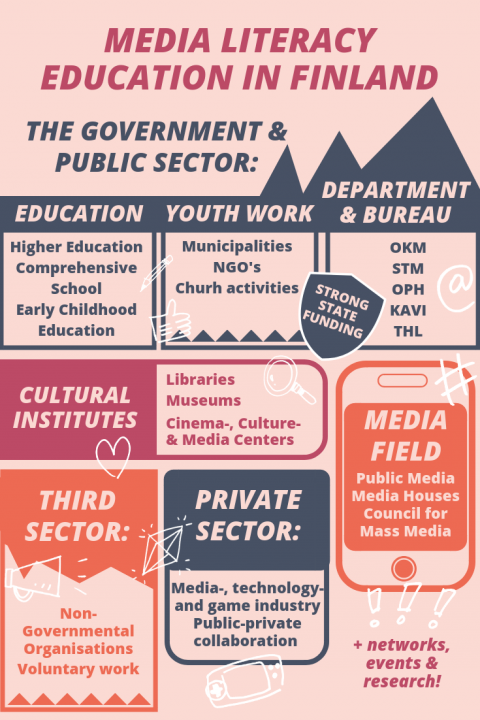 시민에게 가까워지려는 협력: 핀란드 미디어 교육 2021-03-17 시민에게 가까워지려는 협력: 핀란드 미디어 교육 최원석 (핀란드 라플란드대학 미디어교육 석사과정/ medialiteracynetwork@gmail.com) 뉴스레터 코너에 핀란드 미디어 교육을 소개해 달라는 전미협 연락을 받고 겁이 났다. 지난해 여름 같은 주제로 전미협 회원센터 스태프 앞에서 발표했던 기억 때문이다. 무슨 말을 했더라, 뭔가 약속한 건 없었나, 나는 모두들 열심히 지내셨을 지난 1년 동안 새롭게 뭔가를 쌓아뒀던가, 그리고 무엇보다 그 생각이나 이야기를 꺼낼 준비가 되었나. 작년 발표 후에 전미협 김수연 선생님께서 보내주신 청중 소감을 뒤늦게 찾아 읽었다. “더 세부적으로 구체적이었으면 좋겠다” “미디어교육 정책 관련해서도 듣고 싶다” “3박 4일 함께 숙식하며 심도있게 토론하고 방안을 모색하고 싶다”와 같은 이야기를 해주셨다. 정말 코로나19 이전에는 모이는 것도 대화하는 것도 편안했다. 그런 날이 다시 올까. 이런저런 생각을 거쳐, 핀란드 미디어교육 현황을 뉴스레터에 적는다. 핀란드 미디어교육의 지형과 주체 핀란드 미디어교육은 어떤 모습으로 이뤄지고 있을까? 교육 환경이 좋은 것으로 알려진 나라이긴 하지만, 실제 현장에서 이뤄지는 교육을 한눈에 그려내긴 어렵다. 무엇보다도 일부 단편적인 사례가 이곳 미디어교육을 대변하진 않는다는 것을 최근 들어 느낀다. 다만 몇 가지 사례를 통해서 큰 틀에서 학교와 사회 미디어 교육의 구조를 가늠해볼 수는 있을 듯하다. 편의상 미디어교육을 구분하는 방식을 참고하면, 핀란드에서도 크게 학교와 사회분야로 나눠 미디어교육이 이뤄진다. 다만 ‘학교 미디어교육’이나 ‘사회 미디어교육’ 이라는 말이 통용되진 않고, 두 영역 간의 경계도 희미하다. 경계가 희미하다고 쓰는 이유는 양쪽에 속한 기관과 단체가 굉장히 협력적으로 미디어교육을 시행하고 있기 때문이다. 예를 들어 핀란드 교육부에서 주도하는 프로젝트의 경우도, 예산은 부처에서 나오지만 교육 프로그램이나 자료 개발에는 교사와 연구자, 전문가가 함께 참여한다. 아예 예산지원 선정 단계에서 의무적으로 여러 분야 당사자로 운영진 혹은 연구진을 구성하도록 조건을 거는 경우도 있다. 2020년 현재 핀란드 미디어교육의 지향점은 ‘모두를 위한 미디어교육’(media education for all)이다. 민주주의 사회에서 시민 모두가 기본적인 미디어 리터러시 역량을 갖추는 일은 개인의 기본권, 인권, 삶의 질, 직업선택의 자유 등과 연결되어 있다고 본다. 이는 교육의 기본적인 방향과도 맞닿아 있어, 미디어교육의 대상 범위 또한 기존보다 위아래로 넓어졌다. 0세부터 6세 사이 영유아기, 그리고 60대 이상 노년층까지 모두 미디어교육의 대상으로 삼는다. 달리 표현하자면, 연령대에 맞춘 미디어교육 평생학습(life-long learning)을 목표로 삼고 있다. 물론 여전히 핵심적으로 강조하는 영역은 초중등 어린이 청소년을 대상으로 한 학교 안과 밖의 미디어교육이라는 점을 기억할 필요가 있다. 지향점은 평생교육이지만, 그 중심에는 기본교육 혹은 공교육을 둔다. 또한 정부가 중앙집권적인 기구로써 모든 것을 결정한 뒤 내려보내는 하향식 정책 문화 대신, 현장의 목소리를 파악해 국가 단위로 발전시키는 상향식 문화가 정책 결정 과정에 있다는 점도 주목할 만하다. 미디어교육 특성상 다양한 관계 기관과 시민의 협력이 필수적인데, 정부 기관 또한 그 협력에 기여하는 곳 중 하나로 위치를 둘 뿐 특정 이념, 교육 내용, 방식 등을 강요하거나 독점하지 않는다. 이런 미디어교육 지형에서 이뤄지고 있는 사례들 가운데 전미협에서 그간 해온 미디어교육과 접점을 찾을 수 있는 ‘학교 영화 주간’(Koulujen Elokuvaviikko) 프로그램과 청소년 활동가 대상 미디어교육 프로그램을 소개한다. 학교 영화 주간 (Koulujen Elokuvaviikko) ‘학교 영화 주간’은 핀란드 북부 중심도시 오울루(Oulu)시에 있는 문화센터 발베(Valve) 활동가들이 시작해 전국으로 퍼진 미디어 리터러시 교육 프로그램이다. 1987년 문화센터이자 청소년 센터로 운영을 시작한 발베는 2007년 재공사를 통해 소극장과 영화 상영관, 전시관 및 워크숍 공간을 갖춘 종합 문화센터가 되었다. 이곳에서는 발베 영화 학교(Valve Film School)를 운영하는 동시에 학교와 협력해 영화 주간 프로그램과 미디어 교육을 제공해왔다. 매해 9월이나 10월 전국 여러 학교가 이 프로그램에 참여하고 수업을 진행한 뒤, 결과물로 나온 학생 영상과 영화를 함께 관람한다. 올해는 코로나19 영향으로 온라인 영화상영을 진행했고, 전국에서 18만 명 가까운 아동과 청소년이 영상을 관람했다.[1] 오울루(Oulu)에 있는 문화센터 발베(Valve). 100년 된 건물을 재건축했다. 극장과 영화관, 전시관, 워크숍 공간 등이 있다.출처: 오울루시 관광청 Visit Oulu. https://visitoulu.fi/tuote/kulttuuritalo-valve-4/ ‘학교 영화 주간’은 발베(Valve)가 운영해온 각종 영화와 영상 제작 수업을 학교 수업과 연계해서 확대한 캠페인으로, (극장에서의) 영화 관람, 핀란드 고전 영상 활용 수업, 비디오카메라 워크숍 등으로 이뤄져있다. 코로나19로 영화 관람은 대부분 온라인 상영으로 대체되었지만, 영화 관람 프로그램은 학생들에게 종합적인 문화예술 활동으로서 영화관 방문과 영화 관람 기회를 제공했다는 평가를 받아왔다. 핀란드 고전 영상 활용 수업과 비디오카메라 워크숍은 초중등 교과목과 연계해 운영하는 미디어 교육이다. 탐색(이론), 체험(관람), 창작(제작) 등 세 단계로 수업을 구성하되, 초중등 교과목에서 활용할 수 있는 요소를 강조했다. 국가교육과정안에 포함된 핵심역량과 연계해, 교강사들이 참고할 수 있는 수업지도안을 예시로 제공한다. 예를 들어 과학 수업에서는 스마트폰이나 타블렛PC로 밖에 있는 식물이나 열매 사진을 영상으로 5초가량 아주 가까이 클로즈업 촬영하고, 다음 장면에서는 카메라를 피사체에서 서서히 뒤로 물러 떨어져 식물과 주변 환경이 모두 나오도록 풀샷(full shot)을 촬영한다. 모듬별로 서너 개 식물을 촬영해 모아오면 수업시간에 클로즈업을 보고 무슨 열매인지, 어떤 식생에 자라는지를 맞춰보는 퀴즈용 자료로 사용한다. 기본적인 촬영 기법은 ‘학교 영화 주간’에서 제공하는 영화 리터러시 교재나 자료를 참고해 익힐 수 있다. 학생들은 어떤 장면을 촬영하고 또 어떻게 편집하는지를 익히는 방식으로 영상 메시지의 효과와 전달력에 대해 배울 수 있다. 또한 스토리텔링, 소통과 배려, 미디어 재현, 제작 구조와 윤리 등 비판적 미디어 리터러시를 기를 수도 있다. 참고로 핀란드의 ‘학교 영화 주간’은 지난 2월 뉴스레터 <프랑스의 작은 영화관들>에서 전은정 선생이 소개한 ‘시네마테크 프랑세즈’가 중심에서 발전시킨 유럽 영화교육 프로젝트 씨네에드(CineEd)의 참여 프로그램이기도 하다.[2] 청소년에게 메지시를 잘 전달하려면?청소년 활동가 대상 미디어 교육으로 소개하는 사례는 헬싱키시를 중심으로 국가에서 제공하는 청소년 활동가 대상 디지털 미디어 교육 기관 베르케(Verke: https://www.verke.org)다. 베르케는 청소년센터(youth center)를 중심으로 활동하는 여러 활동가와 교육자를 위한 프로그램을 운영한다. 핀란드의 청소년센터는 학교 안과 밖의 청소년이 다양한 미디어를 경험할 수 있는 환경을 제공해왔다. 시내 중심가 접근성 좋은 곳에 자리잡은 공간에서 청소년들은 영화 관람이나 보드게임, 잡지, 소모임, 각종 참여 프로그램 등을 즐길 수 있었다. 핀란드에서는 이런 센터를 중심으로 이뤄지는 ‘청소년 지도’ 혹은 ‘청소년 사업’을 청소년 활동(youth work)이라는 표현으로 정의한다. 핀란드의 여러 기관과 지자체가 청소년 활동가 미디어교육에 주목한 이유는 청소년의 미디어 이용 행태에 따라 또래 문화와 의사소통 방식이 급변하고, 이에 따라 청소년 활동가(혹은 지도사)들이 겪는 어려움이 나타났기 때문이다. 특히 학교 공교육이 잘 되어 있더라도, 핀란드에서도 학교 밖 청소년 문제와 방과후 청소년 여가 문화는 중요한 사회 현안이다. 최근에는 지자체 예산난으로 일부 소도시의 청소년센터가 문을 닫는 문제도 있었다. 코로나19도 큰 영향을 줬다. 이런 상황에 청소년 활동가들은 청소년들과 지속적으로 접촉할 수 있는 방법을 발굴한다. 온라인게임을 하는 청소년과는 트위치(Twitch)나 디스코드(Discord)로 소통하고, 인스타그램(Instagram)과 틱톡(Tiktok)으로 효과적인 청소년 대상 캠페인 방법도 모색한다.[3] 모바일 영상과 각종 짤(meme) 활용은 필수적인 기술이 되었고, 이런 방법으로 인터넷에서 청소년들과 대화하는 방식이 청소년과 활동가 모두에게 필요하게 되었다. 메신저인 텔레그램(Telegram)이나 왓츠앱(WhatsApp)을 통해 비밀리에 이뤄지는 불법적인 행위가 청소년들의 현실적인 안전에도 위협을 줄 수 있는 점도 중요한 고려 사항이다. 특히 최근 국내에서도 문제가 된 성착취비밀대화방과 같은 사건을 방지하는 차원에서 활동가들은 경찰을 포함한 수사기관과도 직접 연락하면서 활동한다. 베르케에서 제작한 틱톡 활용법 영상 / 출처: 베르케 유튜브 채널.https://www.youtube.com/watch?v=WHmdTZbp-ro 베르케는 매년 여름 청소년 활동가 및 교육자, 전문가, 연구자가 모이는 소셜미디어 캠프 (SOME CAMP)를 주최해왔다. 전면 온라인으로 진행되는 올해 교육에서는 공영방송 윌레(Yle)의 1030세대 대상 채널 YleX 음악 매니저 겸 DJ 로 활동 중인 타피오 하카넨(Tapio Hakanen)이 어떻게 기획해야 청소년과 효과적으로 소통할 수 있는지를 주제로 강연한다.[4] 2019-2020년 핀란드 미디어교육에서 일어나는 논의지난 2019년과 2020년 핀란드 정부는 미디어 교육을 정책적으로 체계화 하는 작업을 이어가고 있다. 지난해 12월에는 핀란드 교육문화부가 <핀란드의 미디어 리터러시: 국가 미디어교육 정책>이란 제목의 정책안을 출간했다. 이 정책안은 앞서 2013년에 나온 정책 가이드라인 <좋은 미디어 리터러시 2013-2016>에 이어 6년만에 나온 것으로, 기존과 달리 각계 전문가와 전국 순회 워크숍을 바탕으로 완성했다는 특징이 있다. 정책안은 1년 가까운 현장 조사와 의견 수렴을 거쳐 핀란드 미디어교육의 특징과 지향점, 또 목표와 과제를 정리했다. 이와 함께 교육과 문화뿐만 아니라 전 정부부처 및 사회 각계에서 누가 어떤 미디어교육을 실천하는지를 함께 담았다. 핀란드 교육문화부는 2020년부터 2023년까지는 이 정책들을 구체적으로 실천하고 또 평가해 개선할 계획을 세웠다. 앞서 소개한 사례는 정책이라기보다는 개별 기관 단위의 활동으로, 이런 활동이 어떤 구조에서 이뤄지는지를 조금이나마 살펴볼 수 있는 자료다.[5] 핀란드 미디어교육 정책안 핀란드의 미디어교육 정책에서 주목할 만한 내용을 고르자면, 협업을 바탕으로한 정부부처-민간영역 간의 공동 활동이 많다는 점, 그리고 공교육 기관을 중심으로 여러 분야에서 미디어 교육 활동을 한다는 점이다. 예를 들면 정책 현황 조사에 서로 다른 부문의 41개 기관 전문가가 참여했고, 민간 자격으로도 58명이 설문조사에 응답했다. 정책안 초안이 나왔을 때 71개 기관이 의견을 등록했다. 교육기관뿐만 아니라 문화, 영상, 청소년센터, 아동권리 보호기관, 저작권 협회, 종교단체, 작가협회, 출판인협회, 언론사 협력체 등이 참여했다. 핀란드의 적은 인구와 도시 규모 등을 감안하면 기관과 단체 수십 곳이 논의와 실천에 적극 참여하는 점, 그리고 여러 주체가 다양한 관점에서 의견을 보탤 수 있는 정책 개발 과정도 참고할 만한 특징이다. 최근 한국의 여러 정부 부처는 디지털 미디어 소통 강화 방안을 합동으로 발표했다. 다양한 중장기 계획이 많이 담겨 있지만, 이를 시행하기 위해서는 정부 차원뿐만 아니라 시민 사회 영역과의 협력이 무척 중요해 보인다. 어느 나라의 사례든지 그 일부 내용이 한국에도 적합한지를 판단하기는 어렵겠지만, 약간의 자극과 새로운 관점을 참고해볼 수는 있을 듯하다. 뉴스레터로 전하는 핀란드 미디어교육도 좋지만, 한국의 미디어교육 사례를 소개하는 일이 더 많아지기를 기대한다. [1] 학교 영화 주간 웹사이트 https://www.elokuvaviikko.fi/ajankohtaista/[2] 씨네에드 웹사이트 https://www.cined.eu/fi[3] 유튜브에서 생중계한 디스코드 활용 청소년 활동 방법 세미나를 참고해볼 수 있다. https://www.youtube.com/watch?v=mqBdYZpAcQw[4] 청소년 활동가 대상 미디어교육 캠프 SOMECAMP 2020 https://www.verke.org/somecamp/[5] <핀란드의 미디어 리터러시: 국가 미디어교육 정책>은 한국언론진흥재단에서 한국어로 번역했다. https://url.kr/uI74P1 출처: [해외사례 이모저모_09] 시민에게 가까워지려는 협력: 핀란드 미디어 교육 - 전국미디어센터협의회 (krmedia.org) (2020. 10. 27) URL:http://www.krmedia.org/pages/page_131.php?act_module=board_board_2&act_type=read&sn=10534&page=1
  Online Courses Developed for the APTE Participants 2021-03-04 APCEIU has developed Online courses available for the Asia-Pacific Teacher Exchange for Global Education(APTE) Programme participants . The APTE Programme, hosted by the Ministry of Education of the Republic of Korea and implemented by the APCEIU in collaboration with the Ministries of Education of the partner countries, is a bilateral teacher exchange programme with seven partner countries in the Asia-Pacific region – Cambodia, Indonesia, Laos, Malaysia, Mongolia, Philippines and Thailand. APCEIU's new e-learning courses aim to improve participants’ understanding of the Programme, increase accessibility to lectures and promote the efficiency of programme operations by minimizing offline training through online lessons essential for the preparation of educational activities. The courses covering 12 subjects (41 units) were developed with the cooperation of outstanding experts from each field for the APTE participants. These courses consist of 2 subjects for all participants and 10 subjects for Korean participants: ▲ Global citizenship education and teachers as global citizens (Professor. JHO Daehoon) ▲ Education System and Policy in Korea (Professor. KIM Ee-gyeong ▲ Cambodian History, Society, and Culture (Researcher. BOO Kyunghwan) ▲ Indonesian History, Society, and Culture (Dr. LEE Jihyouk) ▲ Laotian History, Society, and Culture (Professor. LEE Yohan) ▲ Malaysian History, Society, and Culture (Professor. HONG Seok-Joon) ▲ Mongolian History, Society, and Culture (Dr. Kim Janggoo) ▲ Philippine History, Society, and Culture (Professor. PARK Aileen) ▲ Thai History, Society, and Culture (Professor. SHIN Keun-hye) ▲ Role and competence of teacher in multicultural society (Professor. KIM Da Won) ▲ Korean language education as a foreign language (Professor. KIM Young Rang) ▲ Understanding the learning environment and classroom management in partner countries (Professor. HONG Youngki) These online courses will be offered mainly to Korean teachers, and APCEIU will develop additional courses in English and other languages for teachers from partner countries in the second half of this year. URL:http://www.unescoapceiu.org/post/4132
 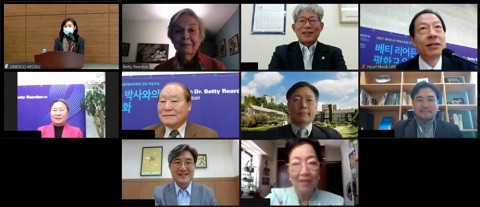 평화교육 분야의 세계적 석학, 베티 리어든(Betty Reardon) 박사와의 평화교육 학술포럼 개최 2021-03-04 유네스코 아태교육원은 한국국제이해교육학회와 공동으로 2021년 2월 26일 금요일 오전 10시부터 75분 동안 평화교육 분야의 세계적 석학, 베티 리어든(Betty Readrdon) 박사와의 평화교육 학술포럼을 온라인으로 개최하였다. 글로벌 팬데믹 이후 심화된 차별과 혐오, 증오, 극단주의로 인해 평화교육에 대한 요구는 날로 증가하고 있으나, 평화가 지닌 복합적이고 다층적인 특성으로 인해 교육현장에서 평화교육을 실현하는 데는 현실적 어려움이 따르는 상황이다. 동 포럼은 이러한 문제의식을 바탕으로 올해 2월 베티 리어든 박사의 저서『Comprehensive Peace Education(포괄적 평화교육)』의 한국어판(역자 : 강순원 유네스코 아태교육원 이사회 의장/한신대학교 교수) 출간을 계기로 개최되었다. 베티 리어든 박사와 교류해온 평화교육자들과의 대담 및 청중과의 대화로 구성된 포럼에는 국내외 평화교육자 및 교사, 연구자, 학생 등 약 100 명이 참석하였다. 박순용 한국국제이해교육학회장(연세대학교 교수)은 개회사를 통해“평화는 개념적 이해가 상이하여 학술적으로 다루기 어려운 주제로 평화의 소중한 가치를 일깨워주는 교육의 형식과 내용에 막막함을 느낄 수가 있다”고 평가하며 “리어든 박사님의 통찰을 통해 평화에 대한 궁금증들을 해소해나가길 희망한다”고 전했다. 임현묵 유네스코 아태교육원장은 환영사에서“평화교육의 이론적 발전과 실천에 남다른 기여를 해 오신 베티 리어든 박사님과의 대화를 통해 포스트 코로나 이후 한국의 평화교육, 나아가 아태지역의 평화교육이 추구할 방향을 모색하는 데 중요한 해답을 얻길 희망한다”고 전하며 특히“리어든 박사님이 강조하신 포괄적 평화교육의 실천을 위해 차기 한국의 교육과정 내 평화와 세계시민성이 강조되어 평화교육과 세계시민교육이 학교현장에서 제대로 실천되어야 할 것”이라고 강조하였다. 동 포럼에 지정패널로 참석한 이삼열 유네스코 아태교육원 초대 원장(대화문화아카데미 이사장)은 코로나19 팬데믹과 기후변화가 평화교육에 미치는 영향에 대한 리어든 박사의 의견을 물었고, 리어든 박사는“코로나로 인해 평화교육의 범위가 인간과 인간 간의 평화 뿐 아니라 인간과 지구와의 평화로 넓혀져야 함을 재확인하였다”고 답했다. 리어든 박사는“코로나 뿐 아니라 기후변화, 인종차별, 난민문제 등 글로벌 위기를 해소하기 위해서는 각자가 느끼는 두려움과 공포가 어떻게 형성, 확산되는지를 이해해야 한다”는 점을 강조하며“특히 최근의 미중 갈등에서도 엿볼 수 있듯이 시민들이 느끼는 공포가 정치적 이해와 미디어에 의해 확대되고 있어 향후 세계시민교육의 강화를 위해서는 비판적 미디어 교육이 병행되어야 한다”고 주장하였다. 이어서 또 다른 지정패널인 강순원 교수는『포괄적 평화교육』의 한국어판 부제인‘평화교육은 세계시민교육이다’에 대한 리어든 박사의 의견을 물었다. 이에 리어든 박사는“세계시민교육은 국경의 틀을 넘어 상호 연계성을 이해하고 글로벌 책임을 실현할 동기를 얻는 계기를 제공하기 때문에, 1988년 출간 당시 붙여진 부제‘글로벌 책임교육’보다 더 적절하다”고 평가하고 한국어판의 출간을 축하하였다. 청중과의 대화 시간에서 김성근 충청북도교육청 부교육감은 학령별 발달단계에 따른 평화교육의 실현방안에 대해 질문하였으며, 리어든 박사는“학령기가 어린 학생일수록 타인을 존중하는 것을 우선적으로 학습해야 한다”며,“평화교육을 통해 전 학령기에 걸쳐 더 나은 사회를 만들기 위한 행동이 가능하다는 점을 학생들에게 일깨워야 한다”고 역설하였다. 이재영 한국평화교육훈련원장은 포스트 코로나 시대 새로운 평화교육을 위한 준비 방안에 대해 질문하였으며, 리어든 박사는“코로나로 인해 우리 사회에 존재하는 불평등의 현실이 적나라하게 드러났다”며“앞으로 평화교육자들은 우리 사회의 구조적 부정의(structural injustice)가 인류의 발전을 막고 있다는 점에 주목하고, 평화를 실현하기 위해 이러한 비인간적(inhumane) 사회구조의 개선을 위해서도 함께 행동해 나가야 한다”고 역설하였다. 유네스코 아태교육원은 금번 포럼이 국내 포괄적 평화교육에 대한 논의의 장을 활성화하는 데 기여할 것을 기대하며, 행사 영상은 아태교육원 유튜브 채널 (www.youtube.com/apceiu)을 통해 제공할 예정이다. URL:http://www.unescoapceiu.org/post/4135
  제4회 한국팩트체크대상 공고 2021-02-24 한국언론학회와 서울대학교 언론정보연구소 산하 SNU팩트체크센터에서는 ‘팩트체크’ 보도를 게재한 언론사와 그 구성원을 대상으로 제4회 '한국팩체크대상'을 수여할 예정입니다. 아래의 링크를 통해 응모가능합니다. □ 시상 취지허위정보의 범람이 민주주의를 위협하는 요소로 대두되고 있는 것은 전 세계적인 현상입니다. 시민들이 허위정보, 그릇된 정보에 대한 판단력을 길러 주요 공적 사안에 대해 올바른 이해를 갖기 위해서는 사실검증이 제대로 된 뉴스를 꾸준히 접하는 것이 대안으로 제시되고 있습니다. 한국언론학회와 서울대학교 언론정보연구소 산하 SNU팩트체크센터는 시민들의 삶에 영향을 주는 공적 사안들에 대해, 사실의 오류를 바로 잡고 맥락을 심층적으로 밝히는 검증을 함으로써 시민들에게 정확하고 진실된 정보를 전하는데 기여한 언론인과 언론사를 격려하고자 2018년부터 본 상을 수여하고 있습니다. □ 사업 내용중요하고 시의성 있는 공적 사안을 정밀하고 객관적인 방법을 동원해 철저히 검증함으로써 한국 사회에 의미 있는 변화를 가져온 팩트체크 보도에 상을 수여합니다. 이상이 정하는 팩트체크 보도란 정치, 경제, 과학, 문화, IT 등 제반 분야에서 정확한 사실검증이 필요하다고 보이는 공적 사안을, 팩트체크임을 명시한 별도의 보도를 통해 시민들에게 제공한 유형의 기사를 말합니다. 심사는 한국언론학회가 독립적으로 구성한 「한국팩트체크대상 심사위원회」가 맡습니다. □ 시상 내역수상작으로 대상과 우수상을 선정해 부상으로 상금을 수여합니다. ○ 대상 1 건 : 1000만원, 우수상 : 각 500만원 ※ 시상내역은 심사과정에서 조정될 수 있습니다. □ 응모 자격 제4회 「한국팩트체크대상」의 응모 자격은 다음과 같습니다. ○ 언론중재법 제2조1항의 '언론'에 해당하는 방송, 신문, 잡지 등 정기 간행물, 뉴스통신 및 인터넷 신문에 2020년 1월 1일 ~ 2020년 12월 31일 기간 동안 「한국팩트체크대상」의 규정에 따른 ‘팩트체크’ 보도를 게재한 언론사와 그 구성원 (참고자료 첨부 한국팩트체크대상_규정.hwp) ○ 응모작의 수는 각 사 별로 최대 3개까지 가능합니다. 단, 관련 서류(신청서, 요약서, 추천서)는 개별 응모작 단위로 제출해야 합니다. □ 응모 기간 ○ 2021년 2월 4일(목) ~2월 28일(일) (18:00까지) □ 제출 서류 및 접수 방법 ○ 제출서류 - 신청서, 팩트체크 보도 요약서*, 추천서** (제4회 한국팩트체크대상_공고문.hwp내 [붙임], [별첨]양식) * 분량은 총 5매를 넘지 않도록 작성 ** 추천서는 대표이사 또는 사내 보도담당 책임자 (예: 편집국장, 보도본부장) 명의 ○ 접수 방법 - 이메일 접수(snufactcheck@snu.ac.kr) - 메일 제목 및 첨부파일 제목은 ‘한국팩트체크대상 응모_언론사명’ □ 수상작 발표 및 시상식 ○ 수상작 발표 : 2021년 3월 중순 (예정) ○ 시상식 : 2021년 3월 30일(화) (예정) □ 문의 사항 (연락처) ○ E-mail : snufactcheck@snu.ac.kr (권장) ○ 담당: 서한나 연구원 (010-9951-9045) □ 기타 사항 ○「한국팩트체크대상」에 응모하는 언론사 및 그 구성원은 한국언론학회와 SNU팩트체크센터가 공익을 위한 목적 또는 본 상에 대한 홍보 목적으로 심사대상 기사 등을 무상으로 사용하는 것에 동의해야 합니다. □ 첨부 파일 (1) 제출 서류: 제4회 한국팩트체크대상_공고문.hwp (2) 참고 사항: 한국팩트체크대상_규정.hwp URL:https://factcheck.snu.ac.kr/documents/230
 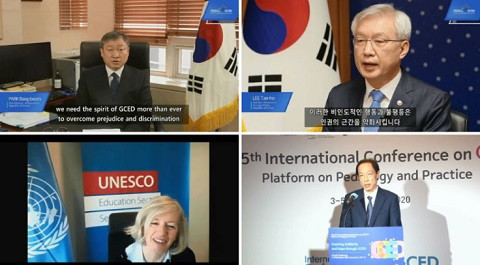 The 5th IConGCED Opened Dialogues to Revive Global Solidarity in Times of Pandemic 2020-11-19 The 5th International Conference on GCED (IConGCED) was held online from 3 to 5 November 2020. This Conference was co-organized by the Asia-Pacific Centre of Education for International Understanding (APCEIU), the Ministry of Education, and the Ministry of Foreign Affairs of the Republic of Korea, and in partnership with UNESCO, Under the overarching theme of “Fostering Solidarity and Hope through GCED,” the Conference provided a venue for dialogues to examine the role of GCED in response to the pandemic and revitalise global solidarity. Over 1,300 education policy makers, educators, stakeholders from academia, international organisation and civil society organisation, and youth members from 111 countries attended the conference virtually. Distinguished guests among the participants includes the Vice Minister of Education of the Republic of Korea, PARK Baeg-beom, the 2nd Vice Minister of the Foreign Affairs of the Republic of Korea, LEE Tae-ho, and the Assistant Director-General for Education of UNESCO, Stefania GIANNINI. Professor Lynn DAVIES from the University of Birmingham stressed that “we must understand the process of how injustices occur and consider strategies to prevent the repetition of injustices” in her keynote speech on global solidarity against all forms of systematic discrimination, exclusion and phobia. Professor CHOE Jae from Ewha Womans University addressed the lessons we should learn from the pandemic and endeavours to create a better future in his keynote speech. He asserted that “while the pandemic may not destroy our human race, climate change can do,” as he emphasized the urgency of “ecological turn,” cognitive shift towards ecological thinking. During the first panel discussion, a wide range of experts from the fields of peace and conflict resolution, media & information literacy (MIL), teacher association, and environment explored the primary issues raised by the recent pandemic from the GCED perspective. The panelists addressed several problems resulting from the inaccessibility of education, one of many unforeseen side effects of the pandemic. Consequently distance learning is in demand, but teachers are also facing limitation in their delivery of pedagogies and developing educational contents beyond the basic introductory level course. As such, while the online platform has opened a new window of opportunities for learning, the experts anticipated that we must also prepare ourselves for the dangers posed by unchecked digital space. On the following day, educators from South Korea and South Africa were invited to share their local practices of facilitating education for anti-discrimination and social justice. In the first special talk titled “Transforming a crisis into an educational opportunity: Critical reflection on discrimination and inequality in our own society,” the Korean educators discussed how they fostered a learning environment where students may inquire and discuss social injustice and inequality issues by observing the impact of the pandemic in their daily lives. Meanwhile, in another special talk titled “No story left behind - Storytelling and social justice,” South African educators shared a compelling case of imbuing a message of social transformation to the younger generation and contextualizing seemingly abstract notions of social justice based on individual stories of racism and social inequality. In Session 3 titled “Transformative Engagement and Education for Sustainable Development,” panelists discussed a diverse range of educational practices in Central America, Africa, and the Middle East. While emphasizing that local effort for sustainable development can stir a global momentum for change, the experts shared their transformative experiences of implementing school rules for living together with students to apply their commitment to action. In one instance, an educator from UNESCO ASPnet in Lebanon shared his experience of motivating students to add environmentally conscious features to the building (e.g. roof to collect rainwater) to foster the physical transformation of school space towards sustainability. He stressed that it is important to inspire students to take interest in sustainable development by changing their school environment. Meanwhile, the experts also examined key emerging concepts of digital citizenship and its relevance to GCED. During the session, a mini workshop was also facilitated for the participants to get a first-hand experience of critical media & information literacy amidst the overwhelming tide of fake news. The last day of the Conference comprised of a variety of activities through a virtual expo session where various GCED related studies, publications, projects were introduced. This special session included promotional video clips to introduce “Emerging Issues in Times of the Multiple Pandemics: The Korean Experience” published by APCEIU, “NISSEM Global Briefs 2020,” and so on. In the closing session, under the title of “Next Normal” we make”, representatives from UNESCO HQ, UNESCO Group of Friends for Solidarity and Inclusion with GCED, Kenya Ministry of Education, Department of Education and Training of Victoria State in Australia, academia, and youth were invited as panelists to discuss the vision of GCED for this pandemic era and beyond. In particular, Ambassador H.E. Tamara SIAMASHVILI of Permanent Delegation of the Republic of Serbia to UNESCO noted that “experts and practitioners should raise public awareness of GCED and strengthen advocacy through collaboration.” The moderator, Director LIM Hyun Mook from APCEIU, concurred that the role of GCED in times of pandemic is critical more than ever and concluded on a positive note that “there is still a lot we can do to actualize the full potential of GCED into reality.” Despite the limitations posed by the pandemic, the Conference was able to draw a great degree of attention from the participants around the world. By hosting a virtual conference, the 5th IConGCED contributed to creating a new platform to revisit the role of GCED and revive global solidarity in this pandemic era. URL:The 5th IConGCED Opened Dialogues to Revive Global Solidarity in Times of Pandemic > APCEIU News - APCEIU (unescoapceiu.org)
 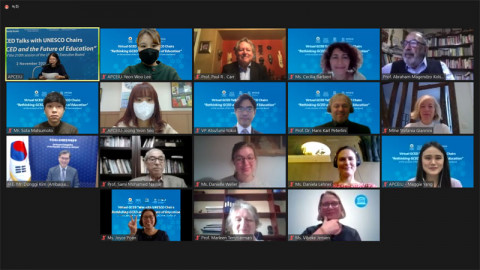 Virtual GCED Talks with UNESCO Chairs: ‘Rethinking GCED and the Future of Education’ 2020-11-16 On the occasion of the 210th Session of UNESCO Executive Board Meeting, the Virtual GCED Talks with UNESCO Chairs was held under the theme ‘Rethinking GCED and the Future of Education’ on Monday, 2 November 2020. The event was organized by the Permanent Delegation of the Republic of Korea to UNESCO, in collaboration with the Group of Friends for Solidarity and Inclusion with Global Citizenship Education (Afghanistan, Armenia, Austria, Bangladesh, Colombia, Italy, Jordan, Kenya, Kuwait, Philippines, Republic of Korea, Senegal, and Serbia), UNESCO and APCEIU. The Talks successfully facilitated a wide-ranging dialogue among the distinguished panelists consisted of six UNESCO Chairs and professors in GCED-related areas, such as human rights, peace, sustainable development, gender equality, and cultural diversity. The panelists also represented six different regions across the globe: Africa, Arab-States, Asia, Europe, Latin America, and North America. The event served as a momentum to address the current situation and challenges faced by different regions around the world amid the pandemic and to explore untapped resources and ideas for collective and transformative actions to tackle those challenges. The Talks was opened by the Ambassador and the Permanent Delegate of the Republic of Korea to UNESCO and Chair of the Group of Friends for Solidarity and Inclusion with Global Citizenship Education, H.E. Mr Kim Dong Gi. Ambassador Kim Dong Gi stated that GCED is the most effective way to build defenses of peace in the minds of men and women, especially during this time of pandemic when racism and discrimination are aggravated. The Ambassador also briefly introduced the Group of Friends for Solidarity and Inclusion with GCED in which APCEIU contributed to its launch in May 2020. The speech was then followed by the opening remarks of Madame Stefania Giannini, Assistant Director-General for Education of UNESCO. While reaffirming the significance of GCED, Madame Stefania Giannini reminded the participants of UNESCO's efforts to enhance ‘Education for All’ and highlighted the role of young people in making changes in society as they are the future leaders of this planet. Following the inspirational opening remarks, the panel discussion was initiated by the moderator, Ms Cecilia Barbieri, Chief of the Section of Global Citizenship and Peace Education, Division for Peace and Sustainable Development of UNESCO. The list of the distinguished panelists of the discussion is as follows: Prof. Marleen Temmerman (Aga Khan University, Kenya) - UNESCO Chair on Youth Leadership in Science, Health, Gender and Education Prof. Sami Mohamed Nassar (Cairo University, Egypt) - Professor of Education, Graduate School of Education, Cairo University Prof Atsufumi Yokoi (Okayama University, Japan) - UNESCO Chair in Research and Education for Sustainable Development, Vice President for Global Engagement Strategy of Okayama University Prof. Dr. Hans Karl Peterlini (Alpen-Adria-Universitat Klagenfurt, Austria) - Professor of Intercultural Education and Head of the Austrian Course in Global Citizenship Education Prof. Abraham Magendzo Kolstrein (Universidad Academia de Humanismo Cristiano, Chile) - UNESCO Chair in Human Rights Education Prof. Paul R . Carr (Universite du Quebec en Outaouais, Canada) - UNESCO Chair in Democracy, Global Citizenship and Transformative Education Three key guiding questions were presented to engage the panelists on the discussion around the idea of envisioning the future of GCED. The questions that were posed during the panel discussion encompassed a broad range of ideas from the current situation in the context of the COVID-19 pandemic to strategic directions of UNESCO in the upcoming future. Based on the questions above, the panelists exchanged their thoughts on various topics including but not limited to rights to education, social injustice, widened social gap, equal access to the public health system for girls, digital divide, and planetary ethics. During the panel discussion, participating students from the UNESCO Chair-hosting universities also had the opportunity to raise their questions regarding the pertinent issues within the unprecedented crisis such as the new learning environment of universities, the role of education as a tool to navigate the societal panic, and teachers’ impartiality under the huge influence of social media and mass information. The youth’s engaging questions and the panelists’ insightful responses based on their interdisciplinary knowledge and experiences have further enriched the quality of the discussion and provided fresh points of view that can be reflected by the participants throughout and beyond the Talks. The Talks was wrapped up with a closing remarks by Mr Lim Hyun Mook, Director of APCEIU. Expressing his sincere gratitude towards all the distinguished speakers and panelists, he reiterated the role of GCED in tackling problems such as hate, discrimination and extreme violence that are exacerbated amidst the COVID-19 pandemic. He further pledged APCEIU’s unwavering support for the realization of GCED in the region and beyond. URL:Virtual GCED Talks with UNESCO Chairs: ‘Rethinking GCED and the Future of Education’ > APCEIU News - APCEIU (unescoapceiu.org)
  [APCEIU Insights] Marine Conservation Efforts in Uncertain Times: Challenges, Lessons on Resilience 2020-10-16 Kerstin Forsberg (Director, Planeta Oceano) Early this year, while I was attending the World Economic Forum Annual Meeting in Davos, Switzerland, I heard about a newly discovered virus that could rapidly spread into a devastating pandemic. A friend told me about the outbreak; I had no clue how my life was about to change. For more than a decade, I have been working to scale-up the efforts of Planeta Oceano (www.facebook.com/planetaoceano) that engages coastal communities in marine conservation through research, education and sustainable development initiatives. To achieve this, my specific work these recent years has been to balance my activities on the field with a schedule packed with international meetings. Although I had always strongly questioned my travel footprint, these opportunities had certainly strengthened our conservation impact. After the meeting in Davos, I returned home to Lima, Peru, and started planning for my next conferences while envisioning my work for the year ahead. Yet, abruptly, all my events were cancelled; my daughter’s first-grade classes changed to home-schooling and I found myself under a strict lockdown without the possibility of leaving home, which has so far lasted for over seven months. Our flagship Manta Ray Project encompasses fieldwork and data collection and is greatly supported by Earthwatch expeditions and international volunteers. But, the project was put on hold due to travel and tourism restrictions. Suddenly, as the leader of a small non-profit, I began my continuous challenge of balancing home-schooling with fundraising, team management at a distance, and continuing to implement impactful initiatives without being able to go out into the field. Despite budget constraints, I fought to keep supporting our core staff, hoping that these challenges would make us stronger. While we are fortunate that our team and families are healthy and safe, with an already fragile medical system, Peru has become one of the most heavily affected countries by COVID-19. The economic impact of this crisis has been devastating for almost everyone, perhaps even more so for small non-profits across the globe. Although the lockdowns were sometimes initially referred to as a measure to support the recovery of nature by decreasing habitat perturbations and emissions, the truth is that the pandemic has only underlined the environmental challenges we are all facing at several levels. In terms of waste and pollution, the increase in protective gears and masks has led to an increase in unmanaged waste disposal flooding our streets, rivers and our oceans. According to the BBC, elastic straps from face masks have been found entangled with fauna, and campaigns calling for the responsible disposal of face masks highlight the need to cut these straps to prevent wildlife entanglement as well as utilize reusable and washable masks whenever possible. Single-use plastics were already a huge concern even before the pandemic, with plastic pollution causing severe challenges to our ecosystems’ health. In many cases, the pandemic has further incentivized the use of more plastic packages, as people opt for more take-out and delivery services and avoid goods bulk bins, amongst others. For example, the initial strict lockdown in Peru had paused the county’s recycling systems, creating a challenge for adequate waste management and local recyclers. But, even beyond these easy-to-see environmental impacts brought on by consumer behaviours, the environmental agenda has been severely challenged this year. Challenged Oceans Previously, everyone thought that 2020 would be a “super-year” for the world’s oceans with many critical events planned, such as the 2020 United Nations Ocean Conference. Yet understandably, lockdowns postponed events, international negotiations, and decision-making. Environmental organizations worldwide have been confronted with challenges in attaining their goals, with reduced incomes, the reduction of personnel, and project delays. Furthermore, reduced enforcement has opened the door to illegal practices such as illegal fishing or hunting. Soon after I started my quarantine, I received calls from fishermen in northern Peru reporting on the illegal harvest of giant manta rays, a species we had worked hard to get legally protected. Mantas were now being exposed to furtive capture due to limited government enforcement caused by the country-wide lockdown. In short, a combination of all challenges we have faced during the pandemic has decreased our global capacity to “conserve and sustainably use the oceans, seas and marine resources,” as stated in the UN’s Sustainable Development Goal 14 or SDG 14; as well as our capacity to support all other Sustainable Development Goals (SDGs) through a healthy ocean (an approach referred to as SDG 14+). With this, I would like to highlight the importance the oceans have on every person living on this planet. The oceans are our planet’s main life support system; it regulates our climate, provides over half of the oxygen we breathe, sustains livelihoods and food security, and makes our planet habitable. We all depend on the oceans, even if we have never seen them. Thus, it is critical that we all understand our impact on the oceans and the oceans’ impact on us; in other words, that we all become what UNESCO calls “Ocean Literate” (oceanliteracy.unesco.org/ ). However, our oceans have been continuously exposed to threats such as over-exploitation, pollution, climate change, have notoriously been under-explored, and investments in ocean resilience are far from what one would expect for the planet’s main life-source. Affecting Humanity With marine environments and local livelihoods at greater risk due to challenges arising from the pandemic, it has also become clear that minorities, vulnerable and disadvantaged populations, such as small-scale fishers, women and youth, amongst many others, have been further exposed to the previously existing inequality gap. As we move forward, all of us must understand that a healthy ocean is critical to achieving the SDGs. Likewise, through a “blue” approach, all other SDGs can greatly contribute to our oceans. This includes, but is certainly not limited to, achieving climate action for the oceans (SDG 13), incorporating ocean literacy in quality education (SDG 4), and improving local sustainable fisheries for economic growth (SDG 8), among so many others. As we rebuild our nations from the pandemic, it is more important than ever to invest in a Blue Economy and recovery. If we fail to do so, it will increase environmental challenges and inequality. While under lockdown, I suddenly found myself witnessing how countries could potentially risk fragile environments as they struggle to rebuild their suppressed economies. I observed how an existing port near one of Peru’s most iconic Marine Protected Areas, the Paracas National Reserve, was intending to store and transport ore concentrate near and within the reserve, an operation that could potentially affect local ecosystems and livelihoods, as reported by Fortune magazine. In a coalition with others, I soon embarked on a new pursuit: trying to protect the Paracas, hoping to promote a sustainable blue-green recovery. Implementing conservation efforts in these uncertain times has certainly been challenging globally as well as at the individual and organizational levels. However, we need to strengthen our environmental efforts now more than ever. All of us should ensure sustainable consumption and lifestyle patterns and behaviours; funders invest in ocean resilience; decision-makers note the critical need of a sustainable blue recovery. It has become clear that the loss of nature can contribute to the proliferation of pandemics. The current global crisis is a reminder of our society’s dysfunctional relationship with nature. Despite difficulties, this year has hopefully opened our eyes to things we need to learn and improve, while showcasing things we used to take for granted. My own lockdown experience has allowed me to reframe the way I think, question, and act. It has taught me lessons on resilience, both at the personal and organizational levels, as I work forward for sustainability. Creativity is Key For over half a decade, my team and I have been working to engage local fishermen in leading community-based giant manta ray ecotourism, thus helping to increase the value of this vulnerable species’ life rather than harvesting them. This majestic and harmless species, reaching up to 7 meters from wing tip to wing tip, is vulnerable to extinction globally. Although mantas were previously hunted in Peru, our collaboration with local communities, partners and government officials led to the legal protection for this species in Peru, an effort that supported the development of local ecotourism. Building upon our collaboration with the local fishing industry, fishermen would take tourists out to swim with giant manta rays. It has contributed to citizen science and the monitoring of this species in addition to supplying fishermen with an income and a livelihood. However, with tourism suddenly cancelled, our efforts and progress immediately collapsed. I could only feel the need to search for new alternatives for this program, perhaps even beyond what could be initially recognizable. Since then, we have been seeking to design an innovative online platform where anyone from around the world could potentially connect with those fishermen and learn about mantas, a service we hope to launch very soon. In this process, we have noted how this platform could be replicated to other areas and further help increase resilience and income of the low-income communities that depend on the ecotourism. Similarly, we soon started tapping into technology platforms we had not fully used before. During this lockdown, our in-person workshops turned into radio campaigns and our school activities into national and international webinars for all. Our fieldwork with fishermen was replaced by an online forum that expanded information exchanges with fishermen sharing their stories of sightings and releases of threatened species. These processes have shown me how challenges can open one’s mind to new possibilities and creations, and wider opportunities and engagements. In many cases, challenges can press creativity beyond boundaries, leading to even greater results. Leverage Power of Networks Although many global events were challenged or postponed, the global ocean community still proved to be strong and resilient, with many discussions now taking place online. During a webinar I attended during the lockdown, I learnt that what we really need to practice and refer to more is physical distancing rather than social distancing, as collaboration is even more important at the current stage we are living in. When I heard this, World Ocean Day (June 8) was two weeks away, and I found myself returning to a dream I had for some time: creating a video with young voices from across the world, showcasing the importance of the world’s oceans. Despite the short time frame, I reached out to international friends and partners, inviting them to join and collaborate on this video. In only two weeks, we united 102 children’s voices from 44 countries for our World Ocean Day Video that we posted on YouTube. The video features the children calling for a “new normal” for our planet and asking adults to build a world that respects nature. Children explained the importance of the oceans and nature for their health and life, and the actions that they expect to be carried out by adults as they rebuild society. Some of them mentioned: “this year has been difficult for us,” “we have been patient,” “we want to grow up in a planet that is different,” and “now you have a second chance, please don’t let it slip away.” This video represented a greatly needed message of hope from our children. They trust us to give them a renewed world and we cannot let them down. Furthermore, this effort also showed how we can always take a step further to fully leverage our networks. Convening so many voices in such a short time showed the power of what we can all do together. Look through Positive Lens Building upon Planeta Oceano’s ten years of work in marine education, in the past couple of years, we started framing our ‘Connecting Schools’ initiative, which aims to scale-up our educational efforts by bringing together youth from different countries and communities through online technology and community action. Our program is focused on guiding the youth through a series of modules in which they learn and research about coastal and marine environments and the local challenges faced by these environments. Participating youth are guided to design and implement a youth-led initiative that aims to contribute towards solutions while gaining experience in project development, enhancing critical thinking skills and environmental leadership. Throughout this process, the youth are paired with peers conducting the same program in another geographic locality. Peers learn from one another and develop fellowship, collaboration skills and global citizenship so critically needed for our shared oceans. With distance education suddenly being the new norm, establishing our Connecting Schools model became even more relevant and timely. Although technology gaps are still a pressing issue in many locations worldwide, given internet access at home, students can connect across borders, recognizing how we all share the same oceans. We are confident that this initiative can help contribute to ocean conservation, provide skills for youth professional development, and support peace education. As we now look forward to growing this new initiative, I notice how our current challenges can become opportunities. Although we can all fall, we have the strength to stand stronger. Celebrate the Simple Despite the current environmental challenges, I am optimistic that collaborations, innovations, and commitments throughout the world will move forward efforts for a more sustainable, resilient, and healthy oceans. I am excited, for example, for the upcoming UN Decade of Ocean Science for Sustainable Development ( www.oceandecade.org ), which will take place from 2021 to 2030. As a mother of a young girl, I look forward to the next decade of Ocean Action and what this will greatly mean to my daughter. One day during my lockdown, I was attending an online meeting for this UN Decade with my daughter home-schooling beside me. As this was happening, I realized that spending more time at home has allowed me to further value what is most important to me as a person, appreciate every single detail of the environment surrounding us and build this into my life and work; to focus on what I previously overlooked and allocate time to write, analyse and be strategic. It has also helped us value our efforts’ human component, as we engage with others who are also at home. All these personal connections and learning processes will certainly benefit our work in conservation. Likewise, our work in conservation will continue to enrich our own individual experiences. Ultimately, this lockdown has shown me how humanity took many things for granted before the pandemic: our resources, surroundings, and communities. At an incalculable global cost, what we have all gone through will hopefully shed light on things we now need to change. Although this year has been particularly challenging for conservation and the environment, I hope that coping with the challenge will only make our efforts stronger by helping us build resilience and gain perspective. URL:(No.10) Marine Conservation Efforts in Uncertain Times: Challenges, Lessons on Resilience > EIU in the World - APCEIU (unescoapceiu.org)