
News
Catch up on what’s happening in the world of global citizenship education.
1,668 results found
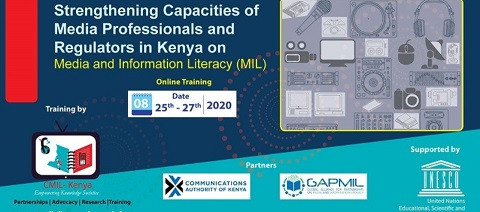 UNESCO Strengthens Capacities in Media and Information Literacy in Kenya 2020-09-10 UNESCO trained 60 media professionals, practitioners, and regulators on media and information literacy competencies in Kenya in an online workshop from 25 to 27 August 2020, which was facilitated by the Centre for Media and Information Literacy in Kenya (CMIL-Kenya) in partnership with Communications Authority of Kenya. The workshop aimed to empower participants with knowledge and competencies to create awareness on the need for development of national policies and strategies on media and information literacy relevant for the 21st century in Kenya. It also encouraged uptake of media and information literacy initiatives, actions, and policies within their organizations. In his keynote address during the virtual workshop, Mr. David Omwoyo, Chief Executive Officer of the Media Council of Kenya stated that media and information literacy (MIL) restores public interest back to the practice of journalism:“Media and Information Literacy enables the consumer to interrogate news and other information content. In a situation where there’s a free market of information, most of it sub-standard, MIL for journalists will help them set higher standards of the news they produce, thereby responding to public interest and ultimately restoring public trust in media.” Mr. Victor Bwire, Deputy CEO and Head of Strategy and Programmes at Media Council of Kenya noted that Media and Information Literacy (MIL) competences are an important skill set especially for practicing journalists in the wake of rampant misinformation and disinformation, adding that the Council is active in mainstreaming of MIL since 2013 through UNESCO support in the country: “Media regulations have changed over the years. In order not to stifle innovation opportunities brought about by technological advancement, regulation around the globe is shifting from legislation to self-regulation. Media and information literacy for journalists will go a long way towards the achievement of this regulation model.” Mr. Bwire further noted that Kenya is now embracing Media and Information Literacy initiatives, notably in media and education, and the development of a national MIL policy and strategy supported by UNESCO was at advanced stage. Mr. Peter Ikumilu, Director of Compliance at the Communications Authority of Kenya underscored the need for sustained stakeholder forums, capacity-building sessions, and collaborations to ingrain Media and Information Literacy in the Kenyan society. He noted that the Authority has rolled out a few Media and Information Literacy related initiatives with partners such as on child online safety and cyber-security:“The workshop was quite solid. The focus was on how MIL can make journalism more efficient and vice versa, and how media can empower and influence citizen journalism and help audiences move from passive media consumption to analysing, interrogating, and reflecting on content.” Ms Judie Kaberia a journalist and Chair of the Africa Check Foundation board in Kenya underscored the cardinal principles of journalism – verification, fact-checking and ownership of content – as relevant to the MIL training, which she said would help close the ranks between journalists and their audiences and help restore trust in legacy and new media. Mr. Anthony Mugo, Chairman of the Centre for Media and Information Literacy in Kenya emphasized that the workshop was relevant and beneficial in a situation where the Kenyan government is implementing a variety of cross-cutting initiatives that have a direct bearing to the lives of all citizens in the information age. He further indicated that the workshop has set state for formation of a Media and Information Literacy Consortium in Kenya to undertake further strategic engagements, awareness creation, and advocacy for mainstreaming of MIL in Kenya. Participants to the workshop were drawn from media organizations, communication and film regulatory bodies, government ministries, community media associations, universities, and the private sector working in media environment, among others. Enhancing Media and Information Literacy competencies among media professionals, practitioners, and regulators is a key action of UNESCO’s strategy to promote knowledge societies and foster the development of free, independent and pluralistic media and universal access to information and knowledge for good governance.-- Ms. Ann Therese Ndong-Jatta, Director of UNESCO Regional Office for Eastern Africa This activity was implemented within UNESCO’s thematic action of ensuring that pluralistic media institutions are facilitated, while citizens are empowered, through enhanced Media and Information Literacy (MIL) competencies for civic participation and engagement in Kenya. URL:https://en.unesco.org/news/unesco-strengthens-capacities-media-and-information-literacy-kenya
 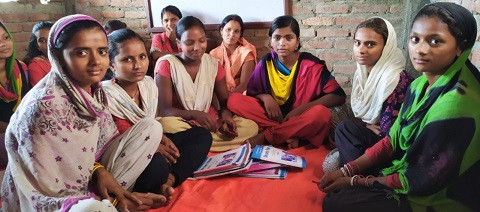 How UNESCO’s functional literacy class is empowering girls in Nepal 2020-09-10 I was so happy to be back in school. I want to continue studying up to bachelor’s level and become a nurse.-- Sushma Sushma still remembers the day she went back to school. The excitement she felt walking into a classroom and joining other girls to re-start her journey. Two years ago, Sushma had to drop out of school to handle the household chores when her mother fell ill. After attending the UNESCO-supported functional literacy class (FLC) she was able to join the Krishna Secondary School in Dewanganj Rural Municipality. The Joint Programme offered her a chance to catch up for the gap years but more importantly, it helped her realise the importance of education. ‘Earlier, after dropping out of school, I never thought of studying further,’ says Sushma. ‘But, the FLC made me realise the importance of education and I earned the courage to continue my studies.’ Sushma’s return to learning wasn’t so easy. Her family wanted her to get married instead of going to school. ‘I told my father, mother, elder brother, and uncle that I wasn’t old enough to get married,’ explains Sushma. ‘It wasn’t easy convincing them especially because we didn’t have the resources, but eventually they saw how determined I was.’ The facilitator of the Joint Programme’s FLC helped arrange her transition into the school. Sushma is among the 1,800 girls in Nepal who have participated in the Joint Programme’s functional literacy class organized by UNESCO. The programme works closely with local governments and community learning centers in five districts – Achham, Bajura, Rautahat, Sarlahi, and Sunsari – to provide literacy and numeracy education as well as life skills to adolescent girls and young women. The classes have helped change attitudes. Sushma says ‘I used to think that sons should be preferred to daughters, but now I have come to know that sons and daughters are equal. This helped me convince my parents to send me back to school.’ The Joint Programme has also integrated comprehensive sexuality education into these classes helping young girls to be aware of their sexual and reproductive health and rights and sensitizing them on harmful practices such as gender-based violence and child marriage. Not all girls in Nepal get this chance. While more than 95% of children in Nepal are in primary school many of them drop out with girls at higher risk than boys. Many factors lead to this. Poverty, accessibility to schools, gender norms, and child marriage are just a few on the list. As education is not seen as a priority for girls in many parts of the country they are most often asked to stay at home or taken out of school to support their families. Child marriage is still a common practice in both rural and urban areas. UNESCO, UNFPA and UN Women are working together through the Joint Programme for “Empowering Adolescent Girls and Young Women through the Provision of Comprehensive Sexuality Education and a Safe Learning Environment in Nepal” funded by KOICA to empower girls and young women through quality education. Most of the girls who participate in the literacy classes have never been to school or left school early with some from groups subject to caste-based discrimination further alienating them from any educational opportunity. Working closely with community learning centres and facilitators, to date, the Joint Programme has been able to reach about 1,800 adolescent girls and young women in 14 municipalities across 5 project districts. With the onset of the COVID-19 pandemic, many girls in rural Nepal have lost any opportunity to learn. Sushma is not an exception. She has also not been able to attend classes due to school closures. Distant learning options are farfetched choices in these areas where owning a mobile phone is a luxury. Sushma says her biggest fear is that she will never be able to return to school, an opportunity that was so hard to be come by in the first place. UNESCO is working closely with the government and the local community to ensure relevant support can be provided to those most in need. Together with the Ministry of Education, Science and Technology, and Nepal’s Association of Community Radio Broadcasters (ACORAB) it has led efforts to make radio lessons available across the country for secondary students. UNESCO is also planning to launch a community-radio-based campaign Keeping girls in the picture to ensure that #LearningNeverStops for every girl in Nepal. For more information: Empowering adolescent girls and young women through education UNESCO Gender Equality in Education *“Empowering Adolescent Girls and Young Women through the Provision of Comprehensive Sexuality Education and a Safe Learning Environment in Nepal” is a Joint Programme led together by UNESCO, UNFPA and UN Women with support from KOICA aiming to empower girls and young women through an integrated approach to education, health, and gender equality. URL:https://en.unesco.org/news/how-unescos-functional-literacy-class-empowering-girls-nepal
 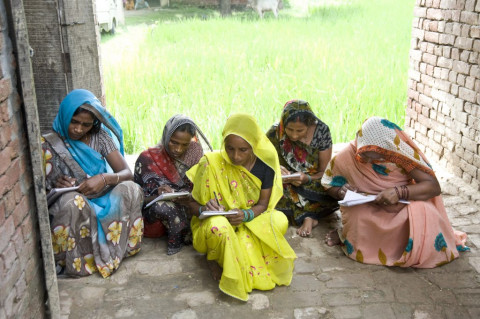 COVID-19: A perilous time for adult education 2020-09-09 As governments implement plans for post-pandemic recovery, the emphasis on getting children back to school risks further marginalizing adult learning and education. Now, more than ever, it is critical that we preserve a comprehensive understanding of the right to education, argues Daniel Baril. As we try, slowly and uncertainly, to emerge from the pandemic, governments are defining the framework for socio-economic recovery. The deconfinement of society, the reopening of businesses, jump-starting economic growth, mass-producing a vaccine and preparing for a possible second wave of infection are all priorities. Education is on the agenda too, as governments revise and resume school protocols. Restarting formal schooling for children and young people is, without any doubt, urgent. Last month, 275 former world leaders, economists and business leaders stressed the potentially catastrophic consequences of locking children and youth out of learning for any longer, particularly for the most vulnerable among them. Moreover, as economic recovery action plans are implemented, protecting and increasing funding for education will be fundamental in the months and years ahead. In this emerging post-pandemic political agenda, adult learning and education (ALE) is largely forgotten. In fact, it has been absent from policy since COVID-19 first hit our world. Yet, it is clear that adult education should be prioritized, notably because the development of adult capacities assumes major strategic importance in times of crisis. Early on in the pandemic, members of the global adult learning and education community expressed concerns over the future of ALE. The Asia South Pacific Association for Basic and Adult Education (ASPBAE) warned that adult education could bear the brunt of budget priorities favouring health financing and the cost of socio-economic recovery, while the European Association for the Education of Adults (EAEA) noted that the impact of this crisis could have dire consequences on the economic viability of several key ALE organizations. DVV International furthermore argued that ALE could face an existential crisis after the pandemic. The UNESCO Special Envoy on Literacy for Development, Princess Laurentien of the Netherlands, has also sounded the alarm about youth and adult illiteracy in the COVID-19 context. The post-pandemic ‘next normal’ could be a perilous time for ALE. As governments focus on health, economic issues and education for children and young people, adults’ learning needs could be left unanswered. Globally, the field could be weakened and further marginalized. The recent Global Report on Adult Learning and Education (GRALE 4) illustrated the vulnerabilities of ALE, as shown by insufficient progress in participation, inadequate funding, deep and persistent inequalities and the absence of policy action in the field of liberal, popular and community education, which should be so crucial in matters of health education. For decades, adult learning and education advocacy strongly supported the extension of the right to education to all adults. Every CONFINTEA’s declaration, from 1949 to 2009, as well as the Recommendation on Adult Learning and Education and Sustainable Development Goal 4, have strengthened the case for every adults’ right to education. UIL’s important contribution to UNESCO’s Futures of Education initiative, Embracing a culture of lifelong learning, published last week, has further underscored the need to recognize lifelong learning as a human right. In the post-pandemic world, commitment to the right to education for all, including adults, will be challenged. In that context, it is worth reminding ourselves that protecting, respecting and fulfilling the right to education are baseline obligations for states. Without a doubt, this transformative time of ours will have a lasting impact. The call to ‘build back better’ invites us not to miss the opportunities brought by the current crisis. A comprehensive understanding of the beneficiaries of the right to education could be at stake. Daniel Baril is Chair of the Governing Board of the UNESCO Institute for Lifelong Learning and Director General of the Canadian Institute for Cooperation in Adult Education. URL:https://thelifelonglearningblog.uil.unesco.org/2020/09/07/covid-19-a-perilous-time-for-adult-education/
 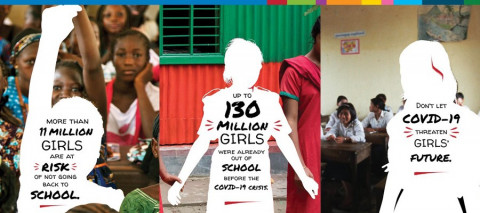 COVID-19: UNESCO and partners in education launch global campaign to keep girls in the picture 2020-09-09 The COVID-19 pandemic has caused the largest school closures and education disruption in history, with more than 1.5 billion students affected at the height of the crisis. Over 767 million of these students were girls. Now, another major challenge is looming. Over 11 million girls – from pre-primary to tertiary education - may not return to school in 2020. This alarming number not only threatens decades of progress made towards gender equality, but also puts girls around the world at risk of adolescent pregnancy, early and forced marriage, and violence. For many girls, school is more than just a key to a better future. It’s a lifeline. This is why UNESCO and members of the Global Education Coalition’s Gender Flagship are launching a new #LearningNeverStops campaign focusing on ‘keeping girls in the picture.’ The campaign calls for efforts to safeguard progress made on girls’ education, ensure girls’ learning continuity during school closures, and promote girls’ safe return to school once these reopen. It also sheds light on the 130 million girls who were already out of school before the pandemic, and calls on the international community to urgently work together to guarantee their right to education. It’s time to turn the crisis into an opportunity to build back equal. The new #LearningNeverStops multilingual campaign features a signature launch video, engaging social media assets, practical toolkits for radio and youth-led organizations as well as a Girls back to school guide for partners to engage audiences and stakeholders everywhere. Youth activists and community radios are being mobilized at the local level to access hard to reach communities to reach. Local and regional influencers, experts, education professionals and champions for girls’ and women’s rights have also committed to amplifying campaign messages and spread knowledge through their respective networks. Powerful human-interest stories from girls around the world will also be featured throughout this extended campaign. A wealth of knowledge and resources on girls’ and women’s education are also available on the campaign landing page. Join the campaign now and use your voice to ensure that #LearningNeverStops for girls everywhere. About UNESCO’s Global Education Coalition The Global Education Coalition was launched by UNESCO at the onset of the COVID-19 pandemic as a platform for collaboration and exchange to protect the right to education during this unprecedented disruption and beyond. It currently brings together more than 140 members from the UN family, civil society, academia and the private sector, among others. The Coalition has established three Flagships, including one on gender. The Gender Flagship is open to all organizations within the Global Education Coalition interested in gender equality in and through education. The Gender Flagship works to address the gender dimensions of COVID-19’s impact on education and safeguard progress made on gender equality in education in recent decades. Campaign landing page Social media pack Keeping girls in the picture: Youth advocacy toolkit Keeping girls in the picture: Community radio toolkit Building back equal: Girls back to school guide URL:https://en.unesco.org/news/covid-19-unesco-and-partners-education-launch-global-campaign-keep-girls-picture
 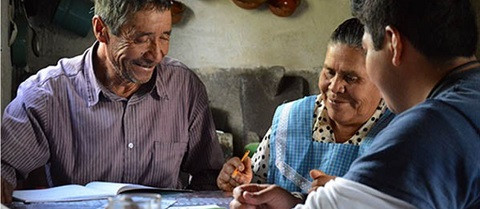 While the COVID crisis increases inequalities, UNESCO recalls that reading is the basis of development 2020-09-08 While 773 million adults and young people around the world still lack basic literacy skills, UNESCO will host an online International Conference on literacy teaching and learning in the COVID-19 crisis and beyond On International Literacy Day, 8 September. The conference will bring together experts and educators to reimagine literacy teaching and learning for youth and adults, in line with UNESCO’s Futures of Education initiative. UNESCO’s International Literacy Prizes 2020 will also award five outstanding literacy programmes from Ghana, Mexico, Nepal, United Kingdom and Yemen. The near-global lockdown caused by COVID-19 has disrupted education, affecting more than 91% of students and 99% of teachers. Reading is the key to development. Adult literacy programs should not be the adjustment variable of education.-- Audrey Azoulay, UNESCO Director-General This year’s UNESCO’s International Literacy Prizes recognizes excellence in literacy programmes in the spirit of the theme of the Organization’s Literacy Day celebration. The two UNESCO King Sejong Literacy Prize awards for mother-tongue literacy education and training, sponsored by the Government of the Republic of Korea, will be given to: Ageing Nepal for its national programme: ‘Basic Literacy Class for Older Persons,’ Nepal. The country’s first programme to target older people who have moved from rural settings to urban areas. It empowers the elderly by supporting their ability to live independently through intergenerational adult literacy education in the national language, Nepali. Ageing Nepal is a national leading non-government organization registered with the government of Nepal and affiliated to the Social Welfare Council. United World Schools for its programme ‘Providing Non-Burmese Speaking Out-of-School Children with Access to Education’, United Kingdom. The programme provides access to primary education for out-of-school children from linguistic minority communities in Myanmar’s Shan State. By employing and training community members as teachers, the programme allows children to study in their mother tongue, while bringing employment and capacity-building opportunities to teachers. United world schools (UWS) is an international charity based in the United Kingdom that focuses on sustainable quality education. The three awards of the UNESCO Confucius Prize for Literacy, supported by the Government of the People’s Republic of China, for work that benefits rural populations and out-of-school youth, particularly girls and women, will be given to: Centro Universitario de Participación Social of the Benmérita Universidad Autónoma de Puebla for its literacy programme: 'Learning by Teaching, Mexico'. Based on the creation of support networks, the programme supports the idea of global citizenship whereby volunteer college students, previously trained by mentors, live together in a rural community to teach young people and adults how to read and write, while also educationally supporting children. It is a unique model of participatory training and critical reflection on the different social problems in the context of life skills training. This approach aims to ensure sustainability and building relationships between different sectors of the society to create positive interdependency. The General literacy office in Sanaa, Yemen, for its programme ‘Educating and integrating refugees in literacy classes in Yemeni society,’. This exemplary local programme operating despite war and displacement, caters to illiterate refugees regardless of their nationality. It helps them acquire literacy skills so that they can benefit from a range of learning opportunities throughout life, including the acquisition of life skills needed to face the social and economic challenges. The programme employs flexible pedagogies adapted to different age groups and abilities to help them qualify for enrollment in formal education. The General Literacy Office in Sanaa is part of the Literacy and Adult Education Organization of the Yemeni ministry of Education, which operates in 21 provinces and supervises over 215 literacy centres in 11 districts in Yemen. Just Commit Foundation (JCF) for its programme ‘Inspirational Business Stories,’ Ghana. This programme has an innovative approach to literacy teaching and learning through business story books that inspire and guide children and youth to create sustainable businesses with limited resources. It promotes the use of waste such as paper, plastic, fabric and e-waste to create new, inexpensive and reusable products. The beneficiaries learn eco-entrepreneurship in both their local language and English, including how to develop business models, set up and run successful, sustainable and environmentally-friendly businesses. The programme also develops young peoples' personal skills such as confidence, team-work, leadership and problem-solving, and combines literacy and sustainability for the broader community. JCF was established in 2017 as a non-profit organization to leverage innovation at the service of youth and children. URL:https://en.unesco.org/news/while-covid-crisis-increases-inequalities-unesco-recalls-reading-basis-development
 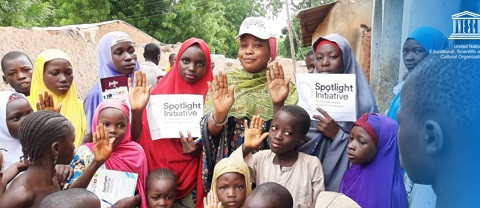 Lives Resumed by Education: The Second-Chance Education for Women and Girls in Nigeria 2020-09-07 Aqsa Dajani (alias for confidentiality) just finished listening to a radio session on literacy in her home compound at Yola South, Adamawa State of Nigeria; she is a beneficiary of the second-change education activity organized by the EU-UN Spotlight Initiative: Eliminating Violence against Women and Girls. The rape experience of her elder sister left a crushing influence on Aqsa, leaving her to believe that women neither have rights nor access to instruments to protect those rights. Sincerely, listening to this radio program plays a vital role especially to us – women and girls who stay at home idly. [Thanks to this programme,] I was able to read and write and also [sic] it educates me to know my rights as a woman which I did not know before.-- Aqsa Dajani This programme is developed under the Spotlight Initiative to provide accelerated second-chance education opportunities to out-of-school girls and young children facing intersectional marginalization. Many of those targeted for the programme are either ostracized or are on the margins of society because they are either living with HIV/AIDS, or are victims of early and unintended pregnancy, child marriage, gender-based violence or are classified as rural poor. This programme gives them an opportunity to be reintegrated into mainstream formal education. “Upholding the vision to empower vulnerable children, youth and women through education and capacity building, GESA is assigned by UNESCO to provide accelerated second-chance education for women and girls in the ‘5+1’ focus states (Adamawa, Cross River, Ebonyi, Lagos, Sokoto and Federal Capital Territory)”, explained by Cynthia Evans, the National Coordinator of GESA. According to UNESCO Institute for Statistics, in 2018 the literacy rate of females aged 15 and above in Nigeria was only 52.65%, which was about 18.6% below the literacy rate for male aged 15 and above. Even though primary education is officially free and compulsory, about 10.5 million of the country’s children aged 5-14 years are not in school, disproportionately affecting more girls than boys, (UNICEF, 2018). “This deprivation of education rights is severer among the women and girls who were married before their 18-year birthday. I was heartbroken and felt the necessity and urgency of GESA’s work while seeing the statistics reported by the National Demographic and Health Survey 2018 (82% of women and girls who were married before the age of 18 had no education). Thank God, the Spotlight Initiative came in timely.” Destiny can be changed through education, and I am the best example. My mother passed on when I was 16 years old, which hit me hard. As a girl in the family, education is always given a secondary priority. But I knew that only education could change the rest of my life. I persevered and finally made it. During my college years, I volunteered in the communities, and I noticed that there were many girls without access to education. This experience inspired me to establish a cause to empower a broad population of girls to get educated and thereby changing their life, as I did before.-- Cynthia Evans Cynthia is a persistent and strong advocate for the protection of women and girls’ education rights in her community. She works very hard to ensure that the idea of girls’ education takes hold and deepens in the communities she engages with, in spite of the challenges she encounters along the way. Due to the pervasive culture of gender inequality in the Northern part of Nigeria, it is difficult to persuade the families of women and girls to join the programme. Yet she continues to find ways to change long held perceptions that exclude women and girls from education “I have to appeal to them time after time (through various channels). Sometimes, it is necessary to convince the key stakeholders in the communities first.” “I have been deriving solutions to some of the critical challenges facing the young girls in society”, Cynthia explained her encounter with a 13 years old girl who was married out by her uncle to a man far older and the girl was abused. “I had a thoughtful conversation with the girl. It took courage for her to reveal stories to me, and (at that time) I could feel the rising determination within her to change her life. She joined our non-formal learning centre and regained confidence.” This pathway for women and girls’ empowerment through education is undoubtedly long and repetitive, “but I am grateful to see the beneficiary women change from the inside out.” In addition, the COVID-19 pandemic imposed a huge challenge on the continuity of women and girls’ education, as the second-chance education was delivered in a physical mode. However, a transition was initiated by Cynthia and her team: the Literacy by Radio Programme was developed and conducted. Witnessing a noticeable surge in cases of domestic and sexual abuse since the COVID-19 outbreak in Nigeria, the Programme also embeds relevant information on sexual and reproductive human rights. Providing women and girls basic literacy is a prerequisite for them either to enter the formal education system or to be enrolled in a vocational skills program. It is the original intent to develop the Second-Chance Education Program. -- Cynthia Evans There are countless heroes like Cynthia working on the frontier of women and girl empowerment, and because of them, progressive change taking place in the country. As the global leading agency for the Sustainable Development Goal 4: Education, UNESCO will continue to support these heroes to promote inclusive and equitable quality education with a special focus on gender equality. URL:https://en.unesco.org/news/lives-resumed-education-second-chance-education-women-and-girls-nigeria
 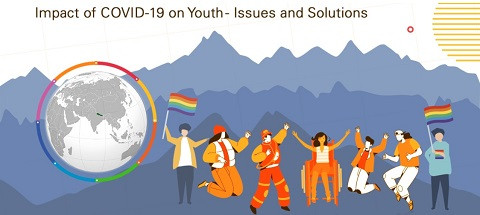 COVID-19 and youth: South Asian Youth Summit 2020 2020-09-07 The unprecedented global COVID-19 pandemic has impacted youth tremendously. They are amongst the most vulnerable to its effects, with many at risk of being left behind at this crucial stage of their life development. On 5 September, Youth Advocacy Nepal, in partnership with UNESCO, UNV, and ActionAid Nepal, organized a South Asian Youth Summit on the impact of COVID-19 on youth. Young speakers from seven South Asian countries - Afghanistan, Bangladesh, Bhutan, India, Nepal, Pakistan and Sri Lanka - shared about the impact this pandemic has had on youth, the issues they are facing, and their perspectives. About 200 young people from South Asian countries attended the summit. Shalina Miah, Regional Manager of Asia Pacific UNV, in her keynote speech, pointed out how the pandemic has undermined the progress in sustainable development goals. “In South Asia, all countries are affected by the pandemic, some more than the others. Youth are among the most severely affected by this crisis,” she said. She urged youth organizations and community groups along with the governments to play a crucial role to provide the required support. “Volunteering is critical to empower youth by creating opportunities,” she added. Youth are experiencing a lot of stress, not just because their education and careers are disrupted but also because there is a feeling of helplessness as they are not able to reach out as before. The young speakers shared how this pandemic has impacted youth in their respective countries, as well as positive stories of youth engagement and the ways they have addressed these issues. Young people have used this period to work on their creativity and skills, creating more opportunities for networking - particularly online, which has become a crucial platform for gaining emotional and mental support - as well as fundraising and charity. During the lockdown, gender-based violence and sexual abuse are also occurring, and those with disabilities and young queer people are prone to exploitation. In many countries, homosexuality is criminalized and most individuals belonging to the LGBTIQ community thus sense the loss of security and support. They are out of work, out of touch with their friends, and unable to access medication. The summit screened a motivational video of a visually impaired youth, Shristi K.C., founder of Blink Rocks. In the video, she shared her adventures, advocacy, and stigmas around disability and how challenges can be overcome. She emphasised the need for a new normal post-COVID, one that accepts differences and celebrates diversity. “Youth are at the end phase of their education and the starting phase of their careers, but for their smooth transition towards informed adulthood, they need to be skilled and capacitated,” said Balaram Timalsina, Chief of Education Unit in UNESCO Kathmandu Office and Special Guest of the event. He urged all to ensure youths’ participation in the overall sphere, saying that no country can be democratic without the involvement of its youth. “No one shall be left behind, we must reach out to the most marginalized, disabled, and those in geographically remote locations and be inclusive; UNESCO always supports youth.” Chief Guest Madhav Dhungel, Vice President of National Youth Council, Nepal, said that COVID-19 has added challenges in all spheres of life but this can still be seen as an opportunity. “In regards to the development of youth leadership, South Asian countries can learn from each other and refer to good practices,” he stressed. “The National Youth Council Nepal believes in a partnership culture and looks forward to networking and collective efforts to form inclusive governments that can empower youth. A global crisis requires global action,” he concluded. URL:https://en.unesco.org/news/covid-19-and-youth-south-asian-youth-summit-2020
 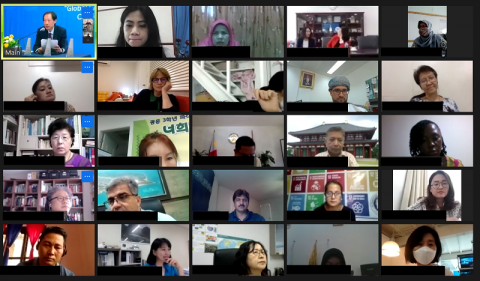 Virtual Ceremony Commemorating APCEIU’s 20th Anniversary 2020-09-06 On Tuesday, 25 August 2020, APCEIU held a virtual ceremony under the theme of “Global Citizens’ Call for Solidarity and Cooperation in the Pandemic” in commemoration of its 20th anniversary. This virtual ceremony was organized in an effort to benefit a wider audience around the world, reminding them of the importance of Global Citizenship Education (hereinafter GCED), which fosters the value of solidarity and cooperation, especially in times of global crisis. Educators, researchers, civil society practitioners, and youth from all over the world participated in this ceremony, which was held through APCEIU’s YouTube channel. About 500 online participants participated in this event and the total number of YouTube views reached almost 2,000. The 20th anniversary ceremony consisted of a variety of programmes including ‘Song for Global Citizens' written by the youth from around the world, welcoming remarks by Director Lim, congratulatory remarks and messages from key personnels from both domestic and international level, presentation of plaques of appreciation on the ocassion of the 20th anniversary, and watching stories of global citizens' action for solidarity and cooperation and video of the 20th anniversary of APCEIU. Song for Global CitizensThe ceremony started with a “Song for Global Citizens” written and sung by youth who participated in GCED Youth Leadership Workshop hosted by APCEIU every year. The alumni of Youth Leadership Workshop congratulated the 20th anniversary of APCEIU by writing lyrics on the theme of GCED in the song “Somebody to Lean On,” delivering the message that everyone can overcome the crisis through cooperation even under difficult situations like today. Remarks from key personnels from domestic and international levelNext, after Director Lim of APCEIU began by welcoming remarks, Mr. Ban Ki-moon, 8th Secretary-General, of the United Nations delivered a commemorative address, Ms. Yoo Eun-Hae, Deputy Prime Minister and Minister of Education, Republic of Korea, Ms. Stefania Giannini, Assistant Director-General for Education at UNESCO and Ms. Seo Eun-ji, Director-General for Public Diplomacy and Cultural Affairs, Ministry of Foreign Affairs, Republic of Korea, delivered congratularatory remarks. Director Lim in his welcoming remarks mentioned that, “In the future, the second and third Centres on GCED will be established in other countries going beyond Korea,” and explained the future plan of APCEIU likewise. In the commemorative address, Mr. Ban Ki-moon said, "I hope that Korea and APCEIU will cooperate to take the lead in spreading GCED." Ms. Yoo Eun-Hae said, “As the world is struggling with covid-19, the importance of global citizenship to protect the values of solidarity and inclusion, and to respond to prejudice and discrimination is increasing.” Ms. Stefania Giannini said "Amid the unprecedented crisis of covid-19, various programmes of APCEIU can provide an important reference point for education to the international community." Ms. Seo Eun-ji said, “When it comes to examining the global progress of GCED and Education for Sustainable Development (ESD) at the GCED and ESD Forum jointly held by UNESCO and Korea in 2021, it is expected that APCEIU will play an important role.” Subsequently, Mr. Jai Bir Rai, Minister of Education of the Kingdom of Bhutan, Dr. Hang Chuon Naron, Minister of Education, Youth and Sport of the Kingdom Cambodia, Dr. Leonor Briones, Secretary of Education of the Republic of the Philippines delivered congratulatory messages. They expressed the importance of APCEIU, which is recognized internationally as a leading institution, and stressed their will to actively cooperate with APCEIU in the future. Presenting Plaques of AppreciationNext, plaques of appreciation were presented to Professor Toh Swee-Hin, Professor Emeritus, University of Alberta, Canada, Dr. Bae Kidong, Director General, National Museum of Korea and Ms. Choi Soo-Hyang, Director of UNESCO-UNEVOC. Since the establishment of APCEIU, they have not only conducted lectures and workshops related to GCED for many years, but have been working as members of the Governing Board of APCEIU to put their efforts in the development of APCEIU. Stories of Global Citizens' Action for Solidarity and CooperationNext, the stories of 6 past participants of APCEIU’s programmes called the “Stories of Global Citizens' Action for Solidarity and Cooperation,” were presented. It began by Dr. Bert Tuga, President, Philippine Normal University of Philippines, followed by Dr. Khalaf Marhoun Al'Abri, Assistant Professor, Sultan Qaboos University of Oman, Ms. Nomsa Mpalami, Editor, Lesotho Distance Teaching Centre of Lesotho, Mr. Horin Kim, Teacher, Gonggeun Elementary School of the Republic of Korea, Dr. Marco D. Meduranda, Education Programme Supervisor, Department of Education, Division of Navotas City of Philippines and, Mr. Jinnarat Manojai, Student, Assumption University of Thailand, where they showed how their experience with APCEIU had impacted their lives and how they are practicing GCED in their local educational grounds. They all expressed their appreciation to APCEIU for providing the opportunity to participate in various activities related to GCED and for the support in carrying out projects to spread GCED in their own countries. Through the video message, online participants were able to closely observe how GCED has changed people’s lives and what kind of activities they are practicing to spread GCED. Lee Chul-soo, “You and I, ‘We’ Share the Same Sky”, Special Artwork Commemorating 20th Anniversary & Production of APCEIU’s 20th Anniversary Video To celebrate the 20th anniversary of APCEIU, Mr. Lee Chul-soo, a leading Korean woodblock artist, produced a special artwork entitled “You and I, and ‘We’ share the Same Sky” and sent it to APCEIU. This work, which expresses the connected global village with the connected constellation and an expanding earthenware, conveys the message that all life in the universe is connected as one, well showing the spirit of APCEIU pursuing solidarity and cooperation. This work was decided to be permanently displayed at APCEIU. Through the presentation of the 20th Anniversary video, APCEIU was able to further promote the past activities and the future vision of APCEIU, all of which have been paving the path to a culture of peace. Significance of the virtual ceremony of the 20th anniversary of APCEIUParticipants who showed unity in a single virtual space regardless of the distance and covid-19 crisis hinted at the hopeful future of the global village amidst rising hatred, stigmatization and discrimination, and infused hopes and wishes to all Global Citizens around the world. APCEIU 20th Anniversary Virtual Ceremony YouTube Link:https://www.youtube.com/watch?v=HUD5kx45nVA&t=4194s APCEIU 20th Anniversary Video Link:https://www.youtube.com/watch?v=UKlvEn9M7N0 URL:Virtual Ceremony Commemorating APCEIU’s 20th Anniversary > APCEIU News - APCEIU (unescoapceiu.org)
  [APCEIU Insights] Peace in the Time of Global Pandemic: What Implications for the Global Citizenship Education? 2020-09-05 By Yonas Adaye Adeto(Director, Institute for Peace and Security Studies, Addis Ababa University) Peace is a positive relation within and between parties. It is a form of love, which is the union of body, mind and spirit; in a more general sense, love is the union of those unions, according to Professor Johan Galtung. Love is the miracle of sex and physical tenderness; the miracle of two minds sharing joy and suffering, resonating in harmony; the miracle of two persons having a joint project beyond themselves including constructive reflection on the union of body, mind, and spirit. Extending this metaphor of love for peace to a community or country, we find that, as Galtung said, “the body is the economy, the mind is the polity, and the spirit is the culture, particularly the deep, collectively shared, subconscious culture,” which is the basis of inner peace. It is this interconnectedness and complexity that constitutes peace. Peace can also be viewed as an intrapersonal (within oneself) as well as interpersonal (between persons) positive relation. In either case, the condition for peace is altruism, compassion, dignity, equality, equity, love, reciprocity, respect, etc… not necessarily in this order, though. A structure without all or some of these elements is not giving to others what they deserve and demand for themselves making the realisation of peace difficult. Once these qualities are developed within an individual, they then are able to create an atmosphere of peace and harmony. As Dalai Lama said, this atmosphere can be expanded and extended from the individual to their family, from the family to the community and eventually to the global world. How can we internally transform ourselves as individuals and nurture inner peace in order to feel at peace with ourselves during the global pandemic? I propose the 5P’s for internal transformation of individuals to acquire inner peace, which need to be diffused and permeated to the family, community, the country and to the global level during the pandemic turbulence: These are purpose - the rationale behind or justification for us to seek peace; passion - our commitment, compassion or dedication to peace; prayer - peace transcends the material world, it has a spiritual dimension, it goes beyond the here and now physical world; partnership - peace is relational, like love, peace is expressed in interaction; and finally, practice - peace is never passive, like love, it should be expressed in action, it must be seen, admired, celebrated, gently touched, hugged, embraced, caressed, felt, respected, smelt, shared, cared for, lived with, and so forth. Purpose: Why Peace? There is an inner hunger and yearning for peace of mind particularly during the global pandemic of the coronavirus. What we currently view through the window of our televisions almost all the times is the death, despise and destruction caused by COVID-19. Before our very eyes on the TV screen, thousands and tens of thousands are buried at times in an undignified manner, reminding us how fragile and frail we are! Deep down we feel completely empty, helpless, and depressed. Hardly anywhere in the world could we turn to for any news of hope, news of comfort, news of positive information, news of peace. We feel completely drained and in need of filling the yawning gap with inner peace. No food or drink can satisfy that hunger. The evening or morning news are filled with the images of mass graves in this or that part of our world. We look at our children, the children of our neighbours, and mull over their hopes, and ask ourselves: “Do they have any future?” “Can they ever have peace?” They are all locked down, no more schools, no more plays, all locked in some bitter lessons from the most advanced countries (which could not prove their economic tag of being advanced) in their efforts to stop the spread of COVID-19. Only inner peace and peace of mind do we cry and yearn for now. We know only too well, both theoretically and practically, that it is impossible to imagine any meaningful life without inner peace. Essential for inner peace, in my opinion, is to maintain positive attitudes towards and relations with the self, others, nature, and one’s own conscience or a Creator. Our quest for inner peace is not only for self-preservation and our loved ones, but also for saving our planet from anthropogenic destruction by ego-centric individuals. The importance of peace in general and inner peace in particular remains evident for its effect on human life and human development. It is this reality, which should be tapped to transformative pedagogy and peace education in Global Citizenship Education. It ought to prepare the young generation to develop their own strategy to nurture inner peace in a time of unexpected crisis and, through time, transform those adversities into opportunity by using skills, passion and capacities from the transformative pedagogy in the Global Citizenship Education classes. Passion for Peace Passion for peace is an individual’s psychological resilience, strength and a collective action for peace. Passion is a commitment, which is an engine to gather momentum for inner peace. It can be realised through creative and innovative approaches to peacebuilding through peace education. To me, passion implies dedication to make what appears to be the impossible possible through creative engagement in community peacebuilding activities; it means to dare to walk on fire thinking that tomorrow is a better and brighter day, even though today is clouded with the coronavirus pandemic. This way it is possible to imagine peace amid crisis and visible war against an invisible enemy. This is the missing link in most peace studies classes, which I recommend for Global Citizenship Education, so that it prepares the young generation for the uncharted future, the unexpected and emerging global human insecurities brought on by pandemics such as COVID-19, and for future unknown pandemics, by going beyond the here and now and stretching as well as igniting their imaginations. Prayer: Crucial for Inner Peace The most effective strategy to build a better life with inner peace, in my view, is to know one’s limitations, acknowledging it, and working to fill that gap. The most remarkable lesson COVID-19 must have taught humanity is or should be that human capacity is limited. Science is limited. Civilisation is limited. Human beings are frail, fragile and vulnerable. Humanity has not yet controlled its fate. Developed as well as developing countries are almost equal before COVID-19. In my personal experience, prayer is crucial for inner peace since it is communion and conversation with the Creator, irrespective of the different names we attach. It is directly related to spirituality, which is the deep awareness of something beyond the sum of individuals and it is the foundation for attaining inner peace. In the words of Galtung, “There is something beyond us.” It is by transcending the here and now, it is by transcending the physical and material world, and it is by going beyond our body and reaching out to our mind and spirit that we can have inner peace during the turbulent times of the global pandemic. This is yet another area almost neglected by our education systems and I, therefore, strongly recommend it for Global Citizenship Education classes because it creates a whole-rounded personality by creating peace within oneself and with others. Partnership, the Most Essential Antidote for Hopelessness of Daily Life Peace is relational. We are not just a sum total of isolated individuals. We live because of the inspiration we get from those who went before us and those who are next to us. We are in the network called relations and our task in life is to inspire others. Simply put, we have cascades of inspiration. We are interconnected to each other as the African philosophy, Ubuntu, teaches us. In the words of Archbishop Desmond Tutu, “A person is a person through other persons.” In the turbulent times of COVID-19, partnership, irrespective of social distancing rules, is the most essential antidote for hopelessness, loneliness, and the dreariness of daily life. In the partnership, we discuss and dislodge some of our heavy feelings accumulated over the day, chocked with coronavirus updates of how many people were tested positive, how many survived, and how many died. Inner peace and comfort come when we are in a partnership. Peacebuilding and relationship building entail partnership. Peace by its very nature is relational and isolated individualism is not natural to inner and perpetual peace. This is the very fundamental point for Global Citizenship Education; it is the source of inspiration for learning and living a healthy life as learning itself is life when learners are holistically engaged and when the learning makes meaning for the learners before they practise what they have learnt. Practice: Peace Is an Active, Dynamic Force In its meaning and purpose, peace is neither a state of perpetuation nor the status quo. It has nothing to do with inactiveness. Peace is an active, dynamic force. Committing to it as a goal offers an individual or a group the strength to respond to any and all types of violent conflict. Moreover, ideas of peace generate enthusiasm and illuminate the path for humanity’s progress. Being the basic source and centre of peace, communicating peaceful ideas among partners or networks brings a human being out of the domain of individualism and inspires action for the welfare of others, as Albert Einstein and Galtung argue. Through learned practices and new activities, people move forward on the pathway to peace. Like love, without action, interaction and pro-action, peace does not have life. It requires a new reality from old relations. In love affairs, as a couple metamorphose from isolated and boring singularity to a singularity of the heavenly paradise of a collective and complete life and a new relationship, so does peace metamorphose from turmoil to tranquillity, from insipidity to inspiration, and from darkness to light when it is practised. This aspect of peace phenomenon needs to be included in and reflected on Global Citizenship Education if we mean to achieve world peace that works at individual as well as community and global levels. Final Thoughts We need essentially new ways of thinking of peace and adapting it if we are to survive as a human species during the global coronavirus pandemic, as well as after it as a human community on planet Earth. To this end, we must internally transform ourselves by entrenching purpose, passion and prayer as well as a partnership for peace, and by practising peace. We have to learn to celebrate not only the peace elements in our own cultures but also those in others, by celebrating each person’s gift to humanity during the global crisis and beyond. In the words of Einstein, we must radically change our attitudes towards each other and our views of the future. It is up to our generation to succeed in thinking differently in order to achieve inner peace through internal transformation at the individual level, which is the foundation for peace at the family, community and global levels amid this present or future pandemic turbulences. URL:(No.6) Peace in the Time of Global Pandemic > EIU in the World - APCEIU (unescoapceiu.org)
  School, health and nutrition: Why COVID-19 demands a rethink of education to address gender inequalities 2020-09-03 By Stefania Giannini, Assistant Director-General for Education at UNESCO and Carmen Burbano, Head of School Health and Nutrition, World Food Program. Last year, António Guterres, the Secretary-General of the United Nations warned that with 250 million school-age children out of school, the world was “facing a learning crisis”. One year on, with the coronavirus pandemic in full swing, he declared that we face a “generational catastrophe that could waste untold potential, undermine decades of progress and exacerbate entrenched inequalities”. Even before COVID-19, more girls than boys were out of school. While many girls will continue with their education once schools reopen, others may never return to school. UNESCO has estimated that globally, 23.8 million children, adolescents and youth from pre-primary to tertiary are at risk of not returning to school in 2020, including 11.2 million girls and young women. We could see the reversal of 20 years of gains made for girls’ education. To avert this threat, we need to reimagine how we deliver good quality and gender inclusive education. This starts with expanding the concept of ‘education’ itself to include the wellbeing of children, particularly girls, which in turn calls for urgent and substantial investments in school-based health and nutrition services. By mid-April, COVID-19 pandemic related lockdowns were keeping a staggering 94 percent of pupils worldwide out of school – half of them girls. These children were immediately deprived of their regular education, but not that alone. It is at school that children - especially the poorest - get vital nutrition and health support allowing them to learn. In the poorest communities, schools are among the most important structures of family cohesion and support. Schools are where poor families access support and incentives, both financial and non-financial, aimed at addressing structural inequalities. Without the school platform, and without the access to health and nutrition programmes, hunger, poverty and malnutrition are exacerbated for hundreds of millions of children and their families, affecting their chances of ever recovering from the COVID-19 induced crisis. Girls and adolescents systematically lack equal access to education and are at particular risk. From past pandemics we know that many girls won’t return to school when they re-open, as families consider the financial and opportunity costs of educating their daughters. School health and nutrition, including access to water and sanitation, sexual and reproductive healthcare and school meals, among others, provide an incentive for families to send girls back to school, help them stay in school, especially into adolescence, effectively preventing early marriage and delaying first pregnancy. Educating girls is one of the most effective strategies to combat child marriage, especially as they progress to secondary school. When a girl remains in secondary school, she is six times less likely to marry young – and to avoid being trapped into poverty, social exclusion, violence and chronic ill-health. Boys and girls who are healthy and nourished are less likely to miss out of school and learn better. When the health and nutrition of children are improved, the rest of their life will be transformed. More than 70 countries have adapted their programmes to continue supporting girls and boys during school closures through take-home rations, vouchers or cash transfers. WFP has reached 7 million children in 45 of the poorest countries. UNESCO’s Global Education Coalition has just launched a Girls Back to School Campaign to ensure girls’ continuity of learning and their safe return to school when schools reopen. As part of the campaign, UNESCO, together with UNGEI, UNICEF, Malala Fund and Plan International have produced the Building Back Equal: Girls Back to School Guide to help policymakers and practitioners address the gender dimensions of COVID-related school closures, with targeted recommendations. Only by investing in girls, and injecting resources in school and nutrition programmes will we be able to ensure that a whole generation of girls and adolescents are not left behind. School is a place where a community and a child’s broader needs are addressed – and we all need to keep that lesson in mind as we defend SDG 4 in this unprecedented crisis. Faced with the risk of losing millions of students in the classroom, global leaders are coming together in a campaign to #SaveOurFuture and demand that we shore up the necessary funding and policy changes to go beyond repairing the pre-pandemic status quo, and actually build back a better and inclusive education system. A World Bank report, launched in partnership with the Malala Fund, shows that if all girls completed secondary school, women and girls could add up to $30 trillion to the global economy. As we stare down the barrel of the steepest recession in modern history, let’s consider the trillions to be gained from this sort of investment in girls’ education. Redefining the meaning of ‘education’ to encompass the wellbeing of children could be game-changing. Failing to do so will indeed be catastrophic. Keeping girls in the picture: UNESCO Girls Back to School Campaign URL:https://en.unesco.org/news/school-health-and-nutrition-why-covid-19-demands-rethink-education-address-gender-inequalities