
News
Catch up on what’s happening in the world of global citizenship education.
1,668 results found
 [APCEIU Insights] Marine Conservation Efforts in Uncertain Times: Challenges, Lessons on Resilience 2020-10-16 Kerstin Forsberg (Director, Planeta Oceano) Early this year, while I was attending the World Economic Forum Annual Meeting in Davos, Switzerland, I heard about a newly discovered virus that could rapidly spread into a devastating pandemic. A friend told me about the outbreak; I had no clue how my life was about to change. For more than a decade, I have been working to scale-up the efforts of Planeta Oceano (www.facebook.com/planetaoceano) that engages coastal communities in marine conservation through research, education and sustainable development initiatives. To achieve this, my specific work these recent years has been to balance my activities on the field with a schedule packed with international meetings. Although I had always strongly questioned my travel footprint, these opportunities had certainly strengthened our conservation impact. After the meeting in Davos, I returned home to Lima, Peru, and started planning for my next conferences while envisioning my work for the year ahead. Yet, abruptly, all my events were cancelled; my daughter’s first-grade classes changed to home-schooling and I found myself under a strict lockdown without the possibility of leaving home, which has so far lasted for over seven months. Our flagship Manta Ray Project encompasses fieldwork and data collection and is greatly supported by Earthwatch expeditions and international volunteers. But, the project was put on hold due to travel and tourism restrictions. Suddenly, as the leader of a small non-profit, I began my continuous challenge of balancing home-schooling with fundraising, team management at a distance, and continuing to implement impactful initiatives without being able to go out into the field. Despite budget constraints, I fought to keep supporting our core staff, hoping that these challenges would make us stronger. While we are fortunate that our team and families are healthy and safe, with an already fragile medical system, Peru has become one of the most heavily affected countries by COVID-19. The economic impact of this crisis has been devastating for almost everyone, perhaps even more so for small non-profits across the globe. Although the lockdowns were sometimes initially referred to as a measure to support the recovery of nature by decreasing habitat perturbations and emissions, the truth is that the pandemic has only underlined the environmental challenges we are all facing at several levels. In terms of waste and pollution, the increase in protective gears and masks has led to an increase in unmanaged waste disposal flooding our streets, rivers and our oceans. According to the BBC, elastic straps from face masks have been found entangled with fauna, and campaigns calling for the responsible disposal of face masks highlight the need to cut these straps to prevent wildlife entanglement as well as utilize reusable and washable masks whenever possible. Single-use plastics were already a huge concern even before the pandemic, with plastic pollution causing severe challenges to our ecosystems’ health. In many cases, the pandemic has further incentivized the use of more plastic packages, as people opt for more take-out and delivery services and avoid goods bulk bins, amongst others. For example, the initial strict lockdown in Peru had paused the county’s recycling systems, creating a challenge for adequate waste management and local recyclers. But, even beyond these easy-to-see environmental impacts brought on by consumer behaviours, the environmental agenda has been severely challenged this year. Challenged Oceans Previously, everyone thought that 2020 would be a “super-year” for the world’s oceans with many critical events planned, such as the 2020 United Nations Ocean Conference. Yet understandably, lockdowns postponed events, international negotiations, and decision-making. Environmental organizations worldwide have been confronted with challenges in attaining their goals, with reduced incomes, the reduction of personnel, and project delays. Furthermore, reduced enforcement has opened the door to illegal practices such as illegal fishing or hunting. Soon after I started my quarantine, I received calls from fishermen in northern Peru reporting on the illegal harvest of giant manta rays, a species we had worked hard to get legally protected. Mantas were now being exposed to furtive capture due to limited government enforcement caused by the country-wide lockdown. In short, a combination of all challenges we have faced during the pandemic has decreased our global capacity to “conserve and sustainably use the oceans, seas and marine resources,” as stated in the UN’s Sustainable Development Goal 14 or SDG 14; as well as our capacity to support all other Sustainable Development Goals (SDGs) through a healthy ocean (an approach referred to as SDG 14+). With this, I would like to highlight the importance the oceans have on every person living on this planet. The oceans are our planet’s main life support system; it regulates our climate, provides over half of the oxygen we breathe, sustains livelihoods and food security, and makes our planet habitable. We all depend on the oceans, even if we have never seen them. Thus, it is critical that we all understand our impact on the oceans and the oceans’ impact on us; in other words, that we all become what UNESCO calls “Ocean Literate” (oceanliteracy.unesco.org/ ). However, our oceans have been continuously exposed to threats such as over-exploitation, pollution, climate change, have notoriously been under-explored, and investments in ocean resilience are far from what one would expect for the planet’s main life-source. Affecting Humanity With marine environments and local livelihoods at greater risk due to challenges arising from the pandemic, it has also become clear that minorities, vulnerable and disadvantaged populations, such as small-scale fishers, women and youth, amongst many others, have been further exposed to the previously existing inequality gap. As we move forward, all of us must understand that a healthy ocean is critical to achieving the SDGs. Likewise, through a “blue” approach, all other SDGs can greatly contribute to our oceans. This includes, but is certainly not limited to, achieving climate action for the oceans (SDG 13), incorporating ocean literacy in quality education (SDG 4), and improving local sustainable fisheries for economic growth (SDG 8), among so many others. As we rebuild our nations from the pandemic, it is more important than ever to invest in a Blue Economy and recovery. If we fail to do so, it will increase environmental challenges and inequality. While under lockdown, I suddenly found myself witnessing how countries could potentially risk fragile environments as they struggle to rebuild their suppressed economies. I observed how an existing port near one of Peru’s most iconic Marine Protected Areas, the Paracas National Reserve, was intending to store and transport ore concentrate near and within the reserve, an operation that could potentially affect local ecosystems and livelihoods, as reported by Fortune magazine. In a coalition with others, I soon embarked on a new pursuit: trying to protect the Paracas, hoping to promote a sustainable blue-green recovery. Implementing conservation efforts in these uncertain times has certainly been challenging globally as well as at the individual and organizational levels. However, we need to strengthen our environmental efforts now more than ever. All of us should ensure sustainable consumption and lifestyle patterns and behaviours; funders invest in ocean resilience; decision-makers note the critical need of a sustainable blue recovery. It has become clear that the loss of nature can contribute to the proliferation of pandemics. The current global crisis is a reminder of our society’s dysfunctional relationship with nature. Despite difficulties, this year has hopefully opened our eyes to things we need to learn and improve, while showcasing things we used to take for granted. My own lockdown experience has allowed me to reframe the way I think, question, and act. It has taught me lessons on resilience, both at the personal and organizational levels, as I work forward for sustainability. Creativity is Key For over half a decade, my team and I have been working to engage local fishermen in leading community-based giant manta ray ecotourism, thus helping to increase the value of this vulnerable species’ life rather than harvesting them. This majestic and harmless species, reaching up to 7 meters from wing tip to wing tip, is vulnerable to extinction globally. Although mantas were previously hunted in Peru, our collaboration with local communities, partners and government officials led to the legal protection for this species in Peru, an effort that supported the development of local ecotourism. Building upon our collaboration with the local fishing industry, fishermen would take tourists out to swim with giant manta rays. It has contributed to citizen science and the monitoring of this species in addition to supplying fishermen with an income and a livelihood. However, with tourism suddenly cancelled, our efforts and progress immediately collapsed. I could only feel the need to search for new alternatives for this program, perhaps even beyond what could be initially recognizable. Since then, we have been seeking to design an innovative online platform where anyone from around the world could potentially connect with those fishermen and learn about mantas, a service we hope to launch very soon. In this process, we have noted how this platform could be replicated to other areas and further help increase resilience and income of the low-income communities that depend on the ecotourism. Similarly, we soon started tapping into technology platforms we had not fully used before. During this lockdown, our in-person workshops turned into radio campaigns and our school activities into national and international webinars for all. Our fieldwork with fishermen was replaced by an online forum that expanded information exchanges with fishermen sharing their stories of sightings and releases of threatened species. These processes have shown me how challenges can open one’s mind to new possibilities and creations, and wider opportunities and engagements. In many cases, challenges can press creativity beyond boundaries, leading to even greater results. Leverage Power of Networks Although many global events were challenged or postponed, the global ocean community still proved to be strong and resilient, with many discussions now taking place online. During a webinar I attended during the lockdown, I learnt that what we really need to practice and refer to more is physical distancing rather than social distancing, as collaboration is even more important at the current stage we are living in. When I heard this, World Ocean Day (June 8) was two weeks away, and I found myself returning to a dream I had for some time: creating a video with young voices from across the world, showcasing the importance of the world’s oceans. Despite the short time frame, I reached out to international friends and partners, inviting them to join and collaborate on this video. In only two weeks, we united 102 children’s voices from 44 countries for our World Ocean Day Video that we posted on YouTube. The video features the children calling for a “new normal” for our planet and asking adults to build a world that respects nature. Children explained the importance of the oceans and nature for their health and life, and the actions that they expect to be carried out by adults as they rebuild society. Some of them mentioned: “this year has been difficult for us,” “we have been patient,” “we want to grow up in a planet that is different,” and “now you have a second chance, please don’t let it slip away.” This video represented a greatly needed message of hope from our children. They trust us to give them a renewed world and we cannot let them down. Furthermore, this effort also showed how we can always take a step further to fully leverage our networks. Convening so many voices in such a short time showed the power of what we can all do together. Look through Positive Lens Building upon Planeta Oceano’s ten years of work in marine education, in the past couple of years, we started framing our ‘Connecting Schools’ initiative, which aims to scale-up our educational efforts by bringing together youth from different countries and communities through online technology and community action. Our program is focused on guiding the youth through a series of modules in which they learn and research about coastal and marine environments and the local challenges faced by these environments. Participating youth are guided to design and implement a youth-led initiative that aims to contribute towards solutions while gaining experience in project development, enhancing critical thinking skills and environmental leadership. Throughout this process, the youth are paired with peers conducting the same program in another geographic locality. Peers learn from one another and develop fellowship, collaboration skills and global citizenship so critically needed for our shared oceans. With distance education suddenly being the new norm, establishing our Connecting Schools model became even more relevant and timely. Although technology gaps are still a pressing issue in many locations worldwide, given internet access at home, students can connect across borders, recognizing how we all share the same oceans. We are confident that this initiative can help contribute to ocean conservation, provide skills for youth professional development, and support peace education. As we now look forward to growing this new initiative, I notice how our current challenges can become opportunities. Although we can all fall, we have the strength to stand stronger. Celebrate the Simple Despite the current environmental challenges, I am optimistic that collaborations, innovations, and commitments throughout the world will move forward efforts for a more sustainable, resilient, and healthy oceans. I am excited, for example, for the upcoming UN Decade of Ocean Science for Sustainable Development ( www.oceandecade.org ), which will take place from 2021 to 2030. As a mother of a young girl, I look forward to the next decade of Ocean Action and what this will greatly mean to my daughter. One day during my lockdown, I was attending an online meeting for this UN Decade with my daughter home-schooling beside me. As this was happening, I realized that spending more time at home has allowed me to further value what is most important to me as a person, appreciate every single detail of the environment surrounding us and build this into my life and work; to focus on what I previously overlooked and allocate time to write, analyse and be strategic. It has also helped us value our efforts’ human component, as we engage with others who are also at home. All these personal connections and learning processes will certainly benefit our work in conservation. Likewise, our work in conservation will continue to enrich our own individual experiences. Ultimately, this lockdown has shown me how humanity took many things for granted before the pandemic: our resources, surroundings, and communities. At an incalculable global cost, what we have all gone through will hopefully shed light on things we now need to change. Although this year has been particularly challenging for conservation and the environment, I hope that coping with the challenge will only make our efforts stronger by helping us build resilience and gain perspective. URL:(No.10) Marine Conservation Efforts in Uncertain Times: Challenges, Lessons on Resilience > EIU in the World - APCEIU (unescoapceiu.org)
  Adolescent girls in schools inspired to use their voices towards a better and equal future 2020-10-14 Women leaders and academicians inspire adolescent girls in schools to strategically use their voices towards a better and equal future while celebrating the International Day of the Girl Child.Sengerema District, Mwanza Tanzania, 11th October 2020 UNESCO, through the established TUSEME (Let us Speak out) – Safe Space Youth Clubs and in close collaboration with the Secondary Education Department in Sengerema district, brought together key women leaders from various sectors within the district to commemorate the International Day of the Girl Child. During the commemoration, speakers jointly and strategically discussed this year’s theme, "My voice, our equal future", and drew conclusion on how girls must start giving out their voices towards equal future they aspire to. Hosted by TUSEME – Safe Space Youth Club in Kilabela Secondary School, the event was attended by a range of successful women leaders in various sectors who inspired young girls through their presentations on each of the three focus areas of this year’s celebration under theme "My voice, our equal future". Presenting on the sub topic “Live free from gender-based violence, harmful practices, and HIV and AIDS”, Dr. Brandina Kahuru from Project Health Centre in Sengerema urged adolescent girls to abstain from unsafe sexual practices and early marriages while calling on parents to provide equal education opportunity for both boys and girls. She pointed out that in most societies, girls are underprivileged when it comes to education and other social-economic opportunities. She, hence, urged the society to stop such social discriminations against a girl child to attain equal opportunity as boys. She went further by providing menstruation cycle education and urged schools to have supportive toilet infrastructures for these girls for them to comfortably attend all class hours and days as boys even when they are menstruating. As an adolescent girl, you are better placed when you are aware of your biological changes and have knowledge on sexuality, never allow your adolescence to ruin your future-- Dr. Brandina Kahuru, Project Health Centre, Sengerema Ms Anociatha Missiongo, a Human Resources Officer from Sengerema district, pointed out the need for adolescent girls to learn new skills that would enable them to grab the global opportunities as they prepare for the equal future. She insisted on diversifying education and economic opportunities rather than focusing on traditional formal education and employment. In addition, she insisted the club mentors to strengthen life skills and entrepreneurship education through various small projects so that the skills acquired in schools would enable these girls to strive outside the education system and get them some economic activities to earn them an income. Furthermore, police representatives from the gender desk office in Sengerema district Ms. Mponela Malongo and Alice Mawila, jointly urged young girls to openly speak out the challenges they face and actively express their desires to social changes while asserting their goals towards the equal future they aspire to. The presenters used this opportunity to educate girls on the importance of gender desk to a girl child and urged them to see the unit as a supporting hand for them to report out various gender-based violence, including cases of early marriages and sexual harassments as amplified these acts as one of the setbacks to girls education and equal future aspiration. Through the help of ICT, the girls were further joined by Mrs. Neema Kitundu, National Coordinator FAWE-Tanzania and Prof Fatihiya Massawe from Sokoine University of Agriculture who both sent their voice note. In addition Prof. Felister Mombo from Sokoine University gave a direct call to the students and other guests who were present. The female academicians and speakers emphasized the importance this day especially to a girl child and the need for girls to speak out for a better future. They further motivated young girls to be proactive and focus oriented in academic affairs to achieve their education goals and one day hold high level positions as they do. The presentations collectively inspired, empowered and motivated young girls in asserting their voices as a powerful tool and change-maker towards equal future Organised by Kilabela Secondary School through TUSEME - Safe Space Youth club members and mentors, the event was attended by District Secondary Education Officer Ms. Genoveva Chuchuba as the guest of honor who, among others, was joined by two education officers Ms. Ghati Matiko and Neema Ndekirwa, Statistics and Logistic Officer and Academic Officer respectively. Speaking to the girls, Ms. Chuchuba stressed the importance of education to a girl child and urged girls who are club members to lead by example in both academic and discipline matters for them to inspire other students to join the club. She also urged teachers to adopt the same modality to have their own forum to discuss various issues as teachers. Through the KOICA Funded UN joint Programme on “empowering Adolescent Girls and Young Women through Education in Tanzania”, UNESCO established the TUSEME Safe Space Youth Clubs in 60 Primary and Secondary schools in four beneficiary districts of Sengerema, Ngorongoro, Kasulu and Mkoani – Pemba. Among other functions, the club members provides peer sexuality education, guidance and counselling services, entrepreneurial education including junior farming, and sensitization on violence against children at schools. URL:https://en.unesco.org/news/adolescent-girls-schools-inspired-use-their-voices-towards-better-and-equal-future
  [APCEIU Insights] Media and Information Literacy Matters in Preparing for Post-Pandemic World 2020-10-13 Divina Frau-Meigs(Professor, Sorbonne Nouvelle University & UNESCO Chair “Savoir Devenir in digital development: mastering information cultures”) COVID-19: Disinfodemic Insights The COVID-19 crisis has not only been a health pandemic, it has also been a disinfodemic, with many “fake news” that show how information can be weaponized by all sorts of third parties and rogue actors that work to undermine the trust in scientific knowledge and professional journalism. The disinfodemic can be analysed as an unprecedented life-size experiment of our strengths and weaknesses in the face of information in the digital era. It has tested our tolerance to what is bearable and tolerable in terms of manipulation of fears and emotion in democratic societies. The post COVID-19 situation makes us stand at a crossroads: either move towards a digital future of surveillance, traceability and monetisation of our actions or move towards a future of resilience, openness and digital citizenship with online freedoms. The COVID-19 crisis has precipitated the double process that construes information as the fuel of the digital revolution. During the e-confinement, our lives have moved online and on screens: all our social functions (work, school, leisure, etc.) have been connected to networks and screens have mediated them with videoconferences, e-learning platforms, virtual globe-trotting and virtual visits to museums, concerts and so forth. The attendant risks have invited cyber-harassment, data theft, hate speech and disinformation. The disinfodemic has made us conscious that reliable information is, literally, a matter of life or death. Eating garlic, drinking disinfectant or destroying 5G antennas to stave off the virus are detrimental fakes. Not adopting protective gestures as supported by some world leaders is lethal to the entire under-protected populations. Taking advantage of the situation in order to deal with cyberattacks on data, or destabilize countries by finger-pointing at some minority groups is also fraught with danger. Relevance of Media and Information Literacy Building resilience, openness and digital citizenship is part of what Media and Information Literacy (MIL) is about and the disinfodemic has precipitated the need for MIL solutions. In this context of digital use and misuse of information, MIL can help facilitate the digital transition as democratic societies undergo the dual pressures of ubiquitous media and big data. Minimally, it can help expose the factors that lead to the creation and dissemination of such toxic material such as “fake news.” More ambitiously, it can unveil the patterns that drive individuals and communities to consume and disseminate fraudulent and falsified information. MIL induces us to revisit our knowledge constructions and belief systems because it relies on critical thinking and focuses on how our minds work to construct, consume and contest media narratives online and offline. MIL research has benefited from the disinformation crisis that started in 2016 with such scandals as Cambridge Analytica, which revealed the capacity for the manipulation of people’s choices via micro-targeted AI-driven political advertising campaigns. Much like a disease can be used to understand the way a healthy body functions, the disinformation virus, by contaminating democratic institutions and individual choices, has revealed the information factory as it is driven by media and data in the digital era. Four new insights on how our mind functions have come to the fore: the role of emotions (not logic) in the thought processes leading to knowledge-construction and decision-making; the power of image-driven content (not text) on many types of screens, including those of immersive virtual reality; the influence of algorithms and artificial intelligence (not human) to predict our future decisions based on our past ones online; and the strength of interactions between individuals and communities to authenticate information based on group-belonging influence and values (not proof and science). These new insights shed a new light on the MIL competences required in a post-pandemic world to mitigate the negative impacts of such functions and harness their opportunities for positive change. To deal with emotions, we need to be aware of how affective elements cause us to lend cognitive authority to others, especially when fear and anger are used to blind people in their search and use of proper information. To deal with images, we have to go beyond pre-digital visual literacy (composition, contrast, camera angles, etc.) to assess the authenticity and trustworthiness of our sources as current ways of processing images (neuro-imaging, data visualization, deepfakes, etc.) can modify our perception of facts. To deal with algorithms and their automated decisions based more on our navigation history and the popularity of news than on the quality of news and the force for evidence, we need to know about audience measurement that consists awareness metrics (impressions, views, clicks) and engagement metrics (likes, shares, comments). To deal with interactions via ubiquitous social media platforms, we must see how they have a vested interest in producing fake news that generate traffic and profit and require transparency and accountability, if not downright dismantling of their de-facto monopoly on our data and media. Paradigm Shift: MIL as 1st Curriculum Online wellbeing thus depends on the way we balance our control over data analytics (trends, patterns, profiles, etc.) and our knowledge of the values, emotions and ideologies that construct and bias them, as it is essential to our connectedness and the way we engage with others. For instance, knowing the patterns of the COVID-19 spread via big data is an opportunity as long as the data collection is transparent and accountable, and not used for further purposes as exemplified by the controversies doubting the uses of the COVID-apps beyond the pandemic. As notions of credibility, authenticity, authority, accountability and transparency take centre stage in the way we construct information and disinformation, the very notion of basic literacy is displaced. The 1st curriculum of schools that focused mostly on text, logic and source verification, is fast becoming obsolete in the face of the emergency at hand. It needs to be completed or augmented with MIL; something that has been considered as a 2nd curriculum and an adjustment variable that could be called upon in times of crisis and dismissed after. MIL needs to be the 1st curriculum by default, as a trans-literacy, with its specific mix of text, visual and algorithmic literacy, as images and data become crucial elements of information, beyond news and fake news. There is an urgent need for ready response to develop quick healthy reflexes or heuristics for young people and citizens at large as soon as doubts about the credibility of a piece of information appear. Heuristics is a critical thinking practice that involves using a tool to solve problems by “learning by doing” and trial-and-error methods. Combatting disinformation can be quite a messy problem-solving case that needs to become a common practice and not appear as a huge hurdle that seems beyond a solution. This is the point of departure of the action-research that UNESCO Chair Savoir Devenir is conducting (savoirdevenir.net). A case in point is the Youcheck! project, funded by the European Union programme “Media Education for All” (www.project-youcheck.com). This civil society initiative relies on a key asset, the InVID visual verification plugin, which works to foster critical thinking about pictures and videos shared on social networks and help debunk fakes as a rapid response. It develops a toolbox with pedagogical materials and gamification to serve the needs of media educators, students and citizens at large. It is also research-based, an element often missing in good practices focused on implementation, with scientific evaluations of the impact of the toolbox on teachers and students as well as on a random sample of the adult population whose feedback matters to the InVID developers. Fostering citizens’ agency with such smart tools as InVID and adopting a solution-oriented approach to debunk “fake news” appears as the most efficient way to change both people’s understanding of the disinfodemic phenomenon and their daily post-pandemic behaviour with regard to information. InVID is thus being repurposed, from an image and video checking technology reserved for professionals (used worldwide by many newsrooms, journalists and human rights workers) to a tool for nonexperts. Although, as most MIL practitioners, we do not support tool-based only educational approaches, we strongly believe that in our AI-driven digital world, being empowered by high-level smart tools is a necessity, if and only if technical skills are a support for MIL competences and human right values. To ensure that such smart tools are embedded within the MIL competence framework, we have ensured that InVID functionalities are associated with visual and data literacy resources and training. InVID make it possible (1) to retrieve metadata about videos and images; (2) to fragment videos into key-frames to allow image-similarity search in other contexts; (3) to perform advanced search queries on Twitter, Facebook and YouTube; (4) to compare the efficiency of search engines (Google, Yandex, Baidu, etc.); (5) to look inside images through a magnifying lens; and (6) to analyse an image with forensic filters (to detect alterations within its structure such as quantization, frequencies, colours and pixel coherence). All these itemized functionalities are matched to cognitive processes (retrieve, fragment, search laterally, compare across data sets, apply filters, etc.) and examined with many examples to ensure understanding and mastery. A serious game, Youcheck Detectives, has been developed to encourage learning by doing and by playing (http://project-youcheck.com/game-english), with workshops for teachers and trainers. Several Massive Open Online Courses (MOOCs) on Information and Disinformation have been created to ensure that teachers, educators, librarians, journalists and others feel comfortable in these news competences. Optimizing the plug-in thanks to testing results and enriching it with pedagogical scenarios and self-paced tutorials, quizzes and games also makes it an available teaching gateway to MIL. This is how we can concretely move between theory and practice, and ensure that research fosters reaction and, ultimately, refutation the test that MIL has empowered citizens to respond and to provide a counternarrative to disinformation. Such digital critical thinking strategies should be part of the MIL curriculum for digital citizenship. This curriculum is crucial in the classroom but can also be shared in discussions with parents, politicians, human rights workers, etc. These functionalities lend themselves to many activities that can be developed by civil society associations ? such as hackathons, urban games, and fake news challenges. Country Readiness: Preparing for Healthy Post-pandemic Media Ecosystem As with any new literacy, the training of trainers is key for scaling up. Such experiments can be helpful for the design of materials for curriculum and for policymaking. The disinfodemic can show positive outcomes as the e-confinement has sensitized everybody both to the market-minded responsiveness of the e-learning and social media platforms and to the lack of preparedness of school systems at the local and national levels. The main points of vigilance around MIL deal with the lack of quality control regarding commercially-provided tools and contents and the lack of safety control regarding the use of data and the protection of privacy of minors. The disinfodemic can be an opportunity for schools and institutions of education and culture to closely evaluate the adaptations necessary to ensure that MIL helps them develop strategies for the future, compliant with a certain number of international instruments with the best interests of young people and citizens in mind, such as the various declarations on data protection such as The Council of Europe Data Protection Convention 108 and Recommendation CM/Rec(2019)10 on developing and promoting digital citizenship education (2019). Solid cooperation across actors is also called for, as MIL programmes often require the media industry sector to contribute their expertise and partnerships. Getting countries ready with a set of diagnosis tools and implementation strategies is at the heart of the Council of Europe Digital Citizenship Education Project (https://www.coe.int/en/web/digital-citizenship-education-project). Its main messages deal with the new insights opened up by disinformation, in relation to emotions, image-driven content and predictive algorithms. Rights and responsibilities are set as part of online wellbeing for all to ensure sustainable learning outcomes. Embedding MIL in the early design of services and contents becomes key to democratic societies as it fosters trust and solidarity. As the consequences of the disinfodemic on democratic societies are still being determined, MIL appears as a beacon of hope that casts light in the outer reaches of our minds as they interact with media and data. Effective MIL activities and policies can have beneficial impacts at political and societal levels. Providing citizens with an understanding of algorithms, brain processes, data patterns and social networks can build information resilience on a large scale. Producing robust counter-discourses to climate change coverage, gender injustice, migrant crisis representations or virus pandemics prepares them for any emerging information disorders that may emerge in the future. URL:(No.9) Media and Information Literacy Matters in Preparing for Post-Pandemic World > EIU in the World - APCEIU (unescoapceiu.org)
 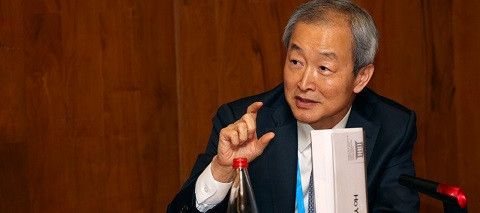 Our most pressing transnational challenges must be addressed together 2020-10-12 Photo: Ho-Young Ahn, academic and Korean diplomat. “What are the world’s most pressing challenges?” asks Ho-Young Ahn, academic and Korean diplomat. “For obvious reasons, the pandemic. Then, of course, climate change. Summers are getting hotter everywhere, and natural disasters more often and more serious. Climate change weighs very heavily on my mind. And the third is international security. The observations for this are becoming more and more worrisome.” These trends, he says, highlight more than ever the need for international cooperation. “Let us just think about the pandemic – this is a transnational challenge,” says Ho-Young. “We cannot respond to it alone. Well, of course, we can try, but if we work together, that will be far more efficient. The same thing must be said about climate change and our security challenges. We could be dealing with them at a national level, but we can do it far better if we do it together.” The transnational nature of these challenges is one of the reasons, according to Ho-Young Ahn, that multilateralism remains so relevant. As we celebrate the 75th Anniversary of the United Nations, he says we should take a moment to reflect on the role of multilateralism since the United Nations was established. “Let us think about the meaning of multilateralism after seventy-five years. Even before the war was over, world leaders had a vision of what international cooperation would look like afterward. And now, thinking about our transnational challenges, multilateralism is more important than ever. Overall, I am very thankful for how the United Nations has functioned over the past seventy-five years.” Results of the UNESCO’“World in 2030” survey indicate that while a strong majority of respondents believe that international cooperation is vital to address our global challenges, many also have low confidence in the world’s ability to respond. To this, Ho-Young Ahn offers some advice. Rather than saying we can’t do it – we must ask how we can do it. First, we have to think about all the United Nations has done since its inception. Think about where we started. Then we need to come up with concrete solutions to challenges and demonstrate them to global citizens.-- Ho-Young Ahn Besides its multilateral role, it is in such concrete solutions that UNESCO can provide tangible tools for peace building. To this end, UNESCO’s interdisciplinary mandate is a strong platform to start with. “From day one, building peace has been the most important issue for the United Nations. And for UNESCO, it is literally in the mandate, ‘building peace in the minds of men and women’. Thinking about UNESCO’s areas of work – education, science, culture – are they separate issues? I don’t think so. I think they are inseparable. UNESCO’s strength is that you combine them with peace as the goal.” Global citizenship education a vital tool for peaceful societies “Access to education, science and culture must be used for building peace, not sowing the seeds of hatred,” says Ho-Young Ahn. “For instance, following the Korean War, Korea was in great need. It put a big emphasis on education as a way of building back, but it did not have the resources to do so. UNESCO came in, and they gave us what we needed. All those textbooks – they were printed on printers provided by UNESCO.” UNESCO’s concrete actions serve a higher mandate of peace-building. In a global context of transnational challenges, UNESCO can tap into the spirit of multilateralism – global cooperation – to help deliver this. One key tool it has at its disposal is global citizenship education. “UNESCO has been promoting this idea of global citizenship education, and it is right to do so. But why is global citizenship education important? Take climate change. A typical discussion surrounding this challenge is that of ‘economy versus climate change action’. This dichotomy occupies the minds of many people – and yet it is not true! One way to communicate this is by strengthening global citizenship education, so that we can see ourselves as global citizens dealing with transnational problems.” One area UNESCO can work in, says Ho-Young Ahn, is advocating for global citizenship education to be incorporated in national curriculums. UNESCO is one of the most trusted voices on education, he says, and therefore has a duty to help children broaden their perspective and become global citizens. Children learn in their civics classes what it means to be a good citizen in their societies. This horizon must be extended so they can become transnational citizens – good citizens of the world.-- Ho-Young Ahn Being a global citizen means understanding the international nature of contemporary challenges, and helping contribute globally to more peaceful, tolerant, inclusive, secure and sustainable societies. This 75th Anniversary of the United Nations gives us an opportunity to reflect on this, and on how multilateralism and global citizenship can work together in the face of transnational challenges. “There is no shortage of transitional challenges. And we need a new perspective on them. Well – not a new perspective. We have known for seventy-five years that the challenges we face are global. We just need to be committed to addressing them together.” URL:https://en.unesco.org/news/our-most-pressing-transnational-challenges-must-be-addressed-together
 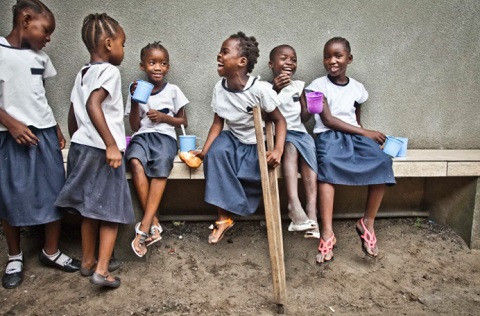 There has been a huge leap forward in girls’ education over the past 25 years 2020-10-12 Our 2020 Gender Report, released today, shows that 180 million more girls have enrolled in primary and secondary education since the Beijing Declaration and Platform for Action, a landmark commitment to advance the rights of girls and women made in 1995 by 189 countries. Released on the occasion of the International Day of the Girl Child, which is celebrated on October 11, it shows that, despite an increase across all levels of education, girls are still more likely to suffer exclusion than boys. It therefore remains vital for governments to tackle persisting discrimination to achieve equality for the next generation of girls. New analysis shows that the benefits of maternal education accumulate and can break the cycle of disadvantage between generations. Girls born in low-income countries in the 1980s acquired seven more months of education for every year of education their mothers received. Education is the springboard for achieving the six Action Coalitions at the Generation Equality Forum planned for 2021, where the next iteration of the Beijing Declaration will be produced. It makes the timing of this Report particularly critical. A high-level discussion co-hosted by the Government of France, Plan International and UNESCO is taking place this Monday 12 October, 15:00–16:30 CEST. Female leaders and young women whose lives have been transformed by gains in education made over the past 25 years will join ministers of education from Finland and Senegal and Audrey Azoulay,Director-General, UNESCO, to discuss what should be prioritised for the next generation of girls. Click here for more information and to register. Since 1995, the global enrolment rate for girls increased from 73% to 89%, with the biggest improvements seen in sub-Saharan Africa and Southern Asia, especially in India. Significant progress has been made in primary education enrolment in 23 countries including Bhutan, Djibouti and Nepal, where gender parity has been achieved compared to 1995 when fewer than 80 girls for every 100 boys attended school. Three times more women are also now enrolled in universities than two decades ago, with particular progress seen in Northern Africa and Western Asia. In Morocco, parity was achieved in 2018, compared to just 30 women enrolled for every 100 men in the early 1990s. Despite encouraging progress, gender still plays a significant role in enrolment in many countries. Three-quarters of all primary-age children who may never set foot in school are girls (9 million). In Chad, Guinea-Bissau and Yemen, fewer than 80 girls for every 100 boys completed primary school and boys are more than twice as likely to complete secondary school as girls. Large gender disparities persist particularly for disadvantaged learners. In at least 20 countries, mostly in sub-Saharan Africa but also in Belize, Haiti, Pakistan and Papua New Guinea, hardly any poor rural young women have completed upper secondary school. The heavy legacy of past discrimination and the slow speed with which recent advances trickle down to the entire population are such that women still account for almost two-thirds of illiterate adults, same as in 1995. Many also face additional barriers, such as poverty and disability. In 59 countries, women aged 15-49 from the poorest households are four times more likely to be unable to read and write than those from the richest households. The report, A New Generation: 25 Years of Efforts for Gender Equality in Education, calls for action in six areas tightly linked to the six Action Coalitions that will form the basis for the discussion at the Generation Equality Forum in 2021: violence, economic justice and rights, sexual and reproductive health and rights, climate justice, technology and innovation, and feminist movements and leadership. Ensure 12 years of safe and quality education for all girls. There are fewer than 9 females enrolled for every 10 males in 4% of countries in primary, 9% in lower secondary, 15% in upper secondary and 21% in tertiary education. Ensure balanced representation of girls and women in technology and engineering fields of study. The share of females in these fields of study in tertiary education is below 25% in over two-thirds of countries. Invest in training for teachers and counsellors to be gender responsive. Remove stereotypes and gender bias from pedagogy and learning materials. Examples of girls and women in English language textbooks make up to 44% in Malaysia and Indonesia, 37% in Bangladesh and 24% in Punjab province, Pakistan. Textbook revision processes need to be inclusive, ensuring that women participate equally and that their views are heard. Make schools safe spaces for all girls and boys, free from gender-based violence. Violence is an obstacle to the achievement of universal secondary education and perpetuates gender-unequal norms. Fighting it requires an inclusive school ethos, clear rules about what is acceptable, preparation of teachers and head teachers, and engagement with the community, not least to improve reporting. Commit to delivering comprehensive sexuality education at all education levels. In 2019, 14% of 20- to 24-year-old women globally had given birth before age 18 and 25% in sub-Saharan Africa. Education must be used to promotes sexual and reproductive health and rights but governments need to overcome two challenges: fight erroneous beliefs and improve management capacity. Ensure balanced representation of women in education management and leadership positions. In 48 middle- and high-income countries, there is a gender gap of 20 percentage points in the share of teachers and head teachers in lower secondary schools. The GEM Report has been running a campaign called #Iamthe1stGirl to find and share the inspiring stories of girls and women who were the first in their family to graduate. Keep watch as we post them on this blog in the coming days. URL:https://gemreportunesco.wordpress.com/2020/10/09/there-has-been-a-huge-leap-forward-in-girls-education-over-the-past-25-years/
 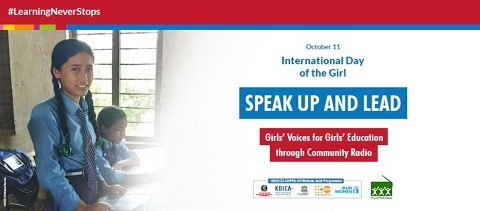 Speak Up and Lead: Girls’ voices for girls’ education through community radio 2020-10-12 School closures in Nepal are putting an estimated 4.46 million girls at risk of not completing their education, according to the UNESCO Institute of Statistics. This is in addition to those already out of school before the COVID-19 pandemic. Today, on the International Day of the Girl, UNESCO, together with the Association of Community Radio Broadcasters Nepal (ACORAB), is organising a radio show entitled “Speak Up and Lead: Girls’ voices for girls’ education through community radio” to advocate for safeguarding girls’ education, ensuring girls’ learning continuity during the pandemic, and promoting girls’ safe return to school once these reopen. Fifty-two adolescent girls and young women from five project districts of the Joint Programme (Achham, Bajura, Rauthat, Sarlahi and Sunsari) have interviewed local government officials including Deputy Mayors, Education Coordination Officers, and Women Development Officers. On the show, the girls shared their experiences and the challenges they faced during the COVID-19 pandemic, shedding light on the issues of child marriage, gender-based violence, gender discrimination, and the right to education. The discussions will be documented and submitted as a report to the respective local government bodies. Parbati, a participant of the Joint Programme’s Comprehensive Sexuality Education (CSE) training and later a female champion from Achham district, was one of the 52 girls who hosted the radio show for this event. It was an amazing experience to sit together with the Deputy Mayor and discuss how we can solve the issues girls are facing. I am glad that my voice was heard to ensure we create a better future for girls.-- Parbati Bista Parbati and the other hosts of the radio show are among the many girls who have participated in the UNESCO-UNFPA-UN Women Joint Programme on “Empowering Adolescent Girls and Young Women through the Provision of CSE and a Safe Learning Environment in Nepal,” engaging in CSE trainings, female championship programmes, functional literacy classes and skills development trainings. This event will mark the launch of a three-month community radio campaign by UNESCO and ACORAB entitled “Keeping girls in the picture”. Through radio dramas and interviews, the campaign aims to raise awareness on existing gender inequalities in education and the harmful practices that perpetuate gender discrimination. The weekly show will be broadcast across 26 community radio stations in all five project districts. This campaign is supported by Global Education Coalition’s Gender Flagship. About the UNESCO-UNFPA-UN Women Joint Programme “Empowering Adolescent Girls and Young Women through the Provision of Comprehensive Sexuality Education and a Safe Learning Environment in Nepal” is a Joint Programme led by UNESCO, UNFPA and UN Women with support from KOICA aiming to empower girls and young women through an integrated approach to education, health, and gender equality. For more inquiries, contact the UNESCO Office in Kathmandu at kathmandu@unesco.org URL:https://en.unesco.org/news/speak-and-lead-girls-voices-girls-education-through-community-radio
  NGO consultations in the lead up to the 2020 Global Education Meeting: Education for humanity’s sake 2020-10-12 UNESCO’s Collective Consultation of NGOs on Education 2030's (CCNGO-Education 2030) Coordination Group (CG) met on 17 September and 1 October in the lead up to the 2020 Global Education Meeting (2020 GEM). The coordination group, having collected the voice of their respective constituencies at national, regional and international level, met to provide a civil society lens to the draft 2020 GEM declaration. The Declaration, an agreement on global priority actions to be delivered in the next 12 months to ensure an adequate education response to COVID-19, will be endorsed on 22 October 2020 at the high-level segment of the 2020 GEM. At the meetings members expressed the necessity for free, quality education for pre-school, school, youth and adults learning in both formal and non-formal settings especially for the most marginalized throughout and beyond the crisis. Financing education Research by the Global Education Monitoring Report has shown that if the international community acts now and invests in remedial and re-enrolment programmes, this could reduce the additional cost of COVID-19 on SDG 4 by 75%. At the meeting members highlighted the need for education’s public expenditure share to be ensured, for national recovery stimulus packages to include allocations for remediation classes to recover all disadvantaged students’ learning loss and reenrollment campaigns for learners at risk of not returning to learning. President of the Global Campaign for Education (GCE), Refat Sabbah, called on domestic financing solutions and international financing of education to target countries most in need, “these countries should be supported through grants and debt cancellations,” he said. Internet connectivity and digital commons Through the work of the Global Education Coalition UNESCO has worked relentlessly on connectivity to internet for learning institutions and on building digital commons, with a view to enabling equitable and inclusive technology-based learning. The meeting explored the current connectivity gap and members expressed the need for free, equitable and inclusive technology-based learning resources. “Internet connectivity should be seen as a public good and a 21st century right,” said the CCNGO CG Latin America and Caribbean representative, the General Coordinator of the Campaña Latinoamericana por el Derecho a la Educación (CLADE), Nelsy Lizarazo. To this, the CCNGO CG Asia and Pacific representative, the Secretary General of the Asia South Pacific Association for Basic and Adult Education (ASPBAE), Maria Lourdes Almazan Khan added, “governments must ensure regulatory frameworks and guidelines for private providers of online education. At the same time, building the capacities of public/government schools to provide quality education through blended approaches - online and offline means.” Reopening learning institutions Reopening schools, learning institutions safely, and establishing closer collaboration between the education, health and social protection sectors with plans that are equity-focused, gender-responsive and inclusive and adequately funded is a major part of the COVID-19 Response toolkit currently being developed by UNESCO. This toolkit provides principles to guide governments and communities in taking decisions for learning during and post pandemic. “There is a need for Adult Learning and Education, ALE, that is not just work-related. Community-based education, inter-generational learning are critical in the response of communities in the pandemic. Support for these should be explicit in the coming period,” said Maria Khan of ASPBAE expressing the need for stronger support of “Community Learning Centres for information dissemination and awareness raising on how to prevent COVID-19 transmission as well as to support education programs such as learning opportunities, re-skilling to enable youth and adults to gain employment and income. Community Learning Centres can also support feeding for early childhood children as well as provide psycho-social support and capacity building for young people and adults.” World Organisation for Early Childhood Education and Care, Organisation Mondiale pour l’Education Préscolaire (OMEP) represented by its President Mercedes Mayol Lassalle warned, “the COVID-19 education response has not taken into consideration early years development, early years is not a time for distance learning,” to which the President of the UNESCO NGO liaison Committee, Marie-Claude Machon-Honoré added “for humanity’s sake, human contact is needed at all levels especially early childhood but not only, face to face learning where possible must be priotitized.” Investing in skills development for inclusive recovery, decent work and sustainable development through reskilling and upskilling opportunities for all youth and adults who lost or are at risk of losing their jobs was also focus of discussions, including digital literacy and literacy. The CCNGO CG European representative, Director of the European Association for the Education of Adults (DVV International), Christoph Jost said, “governments must provide non-formal learning opportunities for youth and adults to allow for more inclusive digital and media literacy and health-related education for learners at all ages.” Teachers Support all teachers as frontline workers, involving their representative in decision making and ensuring their personal and professional well-being and professional development needs, including digital and pedagogical skills for differentiated instruction, was also a focus of NGO discussions on 1 October. National NGO representative on the CCNGO CG, Executive Director of the Campaign for Popular Education (CAMPE), Rasheda K. Choudhury spoke out for teachers saying “Support the teachers as frontline actors promoting health and hygiene etiquettes inside education institution and in communities, and support their representatives so that they are included in national and local level planning and implementation of COVID responses and recovery plans.” “Teachers, parents, families, community and governments. This pandemic has shown us that it is together that we must work, build bridges between education, academia, research and health sectors. And that both teachers and parents must be supported to face the challenges of future pandemics and lockdowns closing down our learning institutions,” said Marie-Claude Machon-Honoré UNESCO NGO liaison Committee. Leading Education 2030 agenda In conclusion, members of the CG underscored the importance of the 2020 GEM strongly affirming the leadership role of UNESCO in coordinating the SDG4-Education 2030 agenda as codified in paragraph 92 of the Framework for Action; and that measures to enhance global coordination on education in this difficult period of the pandemic should be aligned with the agreed architecture on the SDG4 follow-up which ensures strong leadership of member states, broad multi-stakeholder representation and the institutionalized participation of civil society. The CCNGO-Education 2030 is UNESCO’s key mechanism for dialogue, reflection and partnership with NGOs working in the field of education, its Coordination Group is made up of 10 elected members, at international, regional and national NGO levels represent a 300 plus NGO network. Read the 2020 GEM concept note and agendaMore about 2020 GEM URL:https://en.unesco.org/news/ngo-consultations-lead-2020-global-education-meeting-education-humanitys-sake
  Empowering girls by amplifying their voices for better and equal future 2020-10-12 This year the International Day of the Girl Child advocates for amplifying the girls voices and how young girls can stand up for their rights. Under the theme, “My voice, our equal future”, the emphasis is on seizing the opportunity to reimagine a better world inspired by adolescent girls – energized and recognized, counted and invested in. UNESCO in partnership with UN Women and UNFPA is currently implementing a project on “Empowering Adolescent Girls and Young Women through Education in Tanzania”. The government of the Republic of South Korea through Korea International Cooperation Agency (KOICA) funds the project, which operates in the districts of Kasulu in Kigoma, Sengerema in Mwanza, Ngorongoro in Arusha and Mkoani Pemba in Zanzibar. This year the International Day of the Girl Child advocates for amplifying the girls voices and how young girls can stand up for their rights. Under the theme, “My voice, our equal future”, the emphasis is on seizing the opportunity to reimagine a better world inspired by adolescent girls – energized and recognized, counted and invested in. UNESCO in partnership with UN Women and UNFPA is currently implementing a project on “Empowering Adolescent Girls and Young Women through Education in Tanzania”. The government of the Republic of South Korea through Korea International Cooperation Agency (KOICA) funds the project, which operates in the districts of Kasulu in Kigoma, Sengerema in Mwanza, Ngorongoro in Arusha and Mkoani Pemba in Zanzibar. The project applies a multi-sectoral approach for an enhanced effort to ensure that girls and women attain their educational aspirations and become productive and fulfilled citizens at family, community and national levels. In so doing, there are a number of programmes for both in and out-of-school beneficiaries to ensure that girls have access to education and a better future. One of the key aspects for the in-school programme is the creation of the Safe Space – TUSEME youth clubs. Through the clubs in the project schools, girls are sensitised and informed on gender issues (gender relations, roles, equity and equality), guidance and counselling services, sexual reproductive health education, sanitation and menstrual hygiene and violence against children. This provides a safe platform for young girls to voice their concerns on the matters, address the challenges and find viable solutions to them. Since the inception of the TUSEME Clubs, reports in the target schools indicate a decrease in truancy, dropout and teenage pregnancy amongst female students. Some of the adopted practices in the school activities are such as teachers and students observing how human rights can be realized and practiced. In addition, applying gender-responsive pedagogy to science, technology, engineering, and mathematics (STEM) classes has resulted to an increase in the number of female students undertaking STEM subjects. Furthermore, for the out-of-school beneficiaries, the programme seeks to empower the girls and young women academically, financially and socially towards a better future. When I dropped out of school in my final year, my hope for education was lost until I joined the programme at Mkoani, Pemba and all my dreams were redeemed-- Fatma Khamis, an out-of-school project beneficiary from Mkoani Fatma Khamis, together with other out-of-school beneficiaries in Mkoani, received literacy, numeracy and entrepreneurship trainings that has enabled her to plan, budget and monitor her own small retail business. The ICT literacy and numeracy programme has enabled leaners to combine technology and hands on games to learn on how to read, write, count and perform minor calculations. Asimida Wednesday, a member of Tuinuane Youth Girls group and a beneficiary of the programme in Kasulu states that through the VICOBA, she took a loan of TZS 10,000 in February 2020. She used the loan to purchase two male rabbits and three female rabbits. The rabbits have since multiplied and grown to more than 20, which she sells each between TZS 5,000 to 8,000. Moreover, she also commenced gardening from the profit she made. Even if I don’t get to save all the profits I make from my rabbits project, being a single mother of three, my children no longer go hungry and I am able to supply all their basic needs-- Asimida Wednesday, an out-of-school project beneficiary from Kasulu Asimida Wednesday, an out-of-school project beneficiary from Kasulu Through the programme, I am able to provide for my family and soon, I will have a roof over my head as I have bought all required building materials. I only need funds to cover labour costs so that I can begin the construction-- Asimida Wednesday, an out-of-school project beneficiary from Kasulu The girls groups for the out of school programme have benefited from the support structure of community members and leaders in which they offer their mentorship support. Thus, in celebrating the day, UNESCO calls for the support of the local and international community to support girls’ access to quality education and a dignified life free from gender-based violence, harmful practices, and HIV/AIDS. URL:https://en.unesco.org/news/empowering-girls-amplifying-their-voices-better-and-equal-future
  West and Central Africa Regional Consultation on the 2020 Global Education Meeting 2020-10-09 West and Central Africa is facing an unparalleled disruption in education due to the COVID-19 pandemic which has affected learners, families, schools, teachers and communities, leaving no domains of education unscathed. As the pandemic is still far from coming to an end education is at an important juncture compelling all education communities to prevent this learning crisis from becoming a generational catastrophe. UNESCO Regional Offices of West and Central Africa (WCA) in cooperation with the Division for Education 2030 at UNESCO HQ, hosted an online regional consultation on 28 September 2020, to incorporate the member states, Civil Society Organisations (CSOs) including International Non-governmental Organisations' (INGOs) reflections and recommendations on the draft outcome document “2030 GEM Declaration” for the extraordinary session of the 2020 Global Education Meeting (2020 GEM) scheduled on 20 and 22 October. The regional consultation commenced with remarks by Mr. Salah Khaled, the Director of UNESCO Regional Office for Central Africa and a presentation by Ms. Giannini Stefania, UNESCO's Assistant Director General of Education, underscoring the importance of regional consultations worldwide whose outcomes will be incorporated in the final declaration document to be endorsed by member states at the high-level segment of the 2020 GEM on 22 October, spotlighting education at the centre of recovery. Member states’ representatives, development partners, CSOs including INGOs upheld and renewed their commitment to the full inclusion of marginalised children, youth, girls, dropouts and persons with disabilities, as well as the promotion of contextualized ICT and innovation for learning continuity, equitable processes for school reopenings, support for teachers, facilitators and school leadership in their capacity building for readiness, stabilization of finance, gender responsiveness and the importance of non-formal and informal education in responding to COVID-19 and beyond. The discussion further stressed on improving education data for evidence-based policy and planning, proactive actions against future pandemics, ensuring all girls are safely back to schools, and properly addressing the exacerbation of pre-existing gender disparities and humanitarian crisis during the pandemic which further deprives of the fundamental right to education. Following up on the fruitful discussion, UNESCO Regional Offices of WCA further incorporated members’ suggestions and comments to the draft outcome document, which will be integrated with other draft declaration documents being formulated by Regional Offices in Africa. The outcome document “2020 GEM Declaration” will be implemented by member states over the next 12 months and its progress will be reviewed at the ordinary session of the GEM in November 2021. Please refer to GEM Concept note and agendaMore about GEM 2020 URL:https://en.unesco.org/news/west-and-central-africa-regional-consultation-2020-global-education-meeting
  Literacy and education for democracy: essential milestones to advance the SDGs during and beyond COVID-19 2020-10-09 New York: On 8 October 2020, UNESCO presented the UN Secretary-General’s report on Literacy for life, work, lifelong learning and education for democracy at the Third Committee of the United Nations General Assembly. Addressing the Third Committee of the United Nations General Assembly during a virtual meeting, Ms Stefania Giannini UNESCO Assistant Director-General for Education, presented the UN Secretary-General’s report entitled Literacy for life, work, lifelong learning and education for democracy. The report identifies the progress made on literacy, with a particular focus on young people and adults. Set against the largest disruption of education, as described by the UN Secretary General in his policy brief, the report provides recommendations for the further promotion of literacy as part of the 2030 Agenda for Sustainable Development. Reviewing the global trends in the field of education for democracy as requested but the General Assembly resolution 73/134 the report also contains information on major efforts being made by Member States, the United Nations system and relevant stakeholders in addressing the subject and the intrinsic relationship of the subject to human rights and fundamental freedoms. Warning that ‘millions of children, youth and adults are missing out on literacy and education programmes, especially at the backdrop of the COVID-19 crisis, while it is putting their future at risk and threatening to erase decades of progress’, - the education chief alerted that ‘without accelerated action, less than 70 per cent of adults and slightly more than 80 per cent of youth in low-income countries are projected to be literate by 2030’. Presenting its findings, Ms. Giannini reiterated the importance of literacy as a matter of dignity and an integral part of the right to education. As highlighted in the report, ‘literacy empowers individuals and expands their capabilities for achieving greater freedoms and engaging more effectively in life, work and lifelong learning’ and it should be regarded as a learning continuum, inscribed in a wider set of competencies that are required to navigate in the era of digital technologies. Promising initiatives in this regard are undertaken under the UNESCO’s Strategy for Youth and Adult Literacy for 2020 to 2025 that aim to develop better national literacy policies and strategies, meet the learning needs of the most disadvantaged, harness digital technologies and monitor and assess diverse skills and programmes. During her presentation, UNESCO education chief called for increased funding as the ‘current funding gap stands of 10 billion dollars in the 20 countries with adult literacy rates below 50%‘ is expected to encounter further decline. Against this background, UNESCO is taking further the advocacy for better financing for literacy at the upcoming Global Education Meeting on 22 October. As COVID-19’s negative impact has caused further waves of xenophobia, racism, and other forms of intolerance and discrimination, education remains essential in preparing people to build more peaceful, tolerant resilient post-crisis societies. Amplifying the report’s recommendations, Ms. Giannini stated that quality education, and particularly target 4.7, is a key enabler to promote just and peaceful societies - Sustainable Development Goal 16. Stressing the report’s recommendation to “educate young people about their rights and empower them, in particular to shape, in the aftermath of COVID-19, societies that are anchored in respect for human rights and the rule of law”, Mrs Giannini highlighted the importance of developing “educational policies and initiatives that contribute to preventing disinformation and hate speech, in particular through media and information literacy”. UNESCO leads the coordination of the implementation of the Education 2030 Agenda through a coordinated and sustained collective support, advocacy and knowledge management on different platforms, including the SDG-Education 2030 coordination mechanisms, the Global Alliance for Literacy (GAL), the Global Network of Learning Cities and the Global Alliance to Monitor Learning. Following the presentation of the report, Member states engaged in a fruitful discussion with UNESCO representative. Some reiterated that literacy, as an integral part of the right to education, is essential for the enjoyment of other rights. Delegates also pointed out that education for democracy could be a tool to address hate speech. Furthermore, an emphasis was put on the protection of education during conflict when the safety of students and teachers in conflict-affected zones is a primary concern. During this session, the Third Committee, chaired by H. E. Ms Katalin Bogyay, Ambassador and Permanent Representative of Hungary to the United Nations, also heard presentations of the reports related to social development, including questions relating to the world social situation and to youth, ageing, persons with disabilities and the family. ***More information: UNESCO strategy for youth and adult literacy (2020-2025) UN Secretary-General’s Policy Brief: Education during COVID-19 and beyond Framework for reopening schools (UNESCO, UNICEF, the World Bank, the World Food Programme and UNHCR) Responding to COVID-19 and beyond (the Global Education Coalition in action) Global Citizenship Education for the rule of law: doing the right think (UNESCO, UNODC). URL:https://en.unesco.org/news/literacy-and-education-democracy-essential-milestones-advance-sdgs-during-and-beyond-covid-19