
News
Catch up on what’s happening in the world of global citizenship education.
1,668 results found
 Call for applications: HackingDisinfodemic 2020-10-08 Global Media and Information Literacy Youth Hackathon What can youth do to counter disinfodemic, using media and information literacy as a tool? HackingDisinfodemic – a Global Media and Information Literacy Youth Hackathon led by UNESCO and the Republic of Korea will seek to answer this question, in partnership with the World Health Organization, the United Nations Population Fund, the UNESCO Mahatma Gandhi Institute of Education for Peace and Sustainable Development (MGIEP), and IBM. The call for applications is now launched globally. Apply as an individual candidate or as a team: https://en.unesco.org/feedback/hackingdisinfodemic Deadline: 12 October 2020, at 00:00 Paris time About HackingDisinfodemic COVID-19 has confronted the world with a new wave of disinformation. Media and information literate youth have a pivotal role to play to resolve this challenge. HackingDisinfodemic is a global competition on MIL targeting youth, organized in the framework of Global MIL Week 2020, which will be commemorated from 24 to 31 October, under the theme of “Resisting Disinfodemic: Media and Information Literacy for Everyone and by Everyone”. UNESCO and partners are calling on youth worldwide to participate in this four-week virtual hackathon to design innovative solutions to disinfodemic and related online challenges. The COVID-19 pandemic is a stark reminder that access to reliable high-quality information is vital, and something that we need to defend today more than ever. This is what UNESCO does, especially through media and information literacy... Young people are essential to this process.-- Audrey Azoulay, UNESCO’s Director-General (on the occasion of the International Youth Day 2020) The Hackathon will follow the theme of MIL against disinfodemic. It complements the mainstreaming of young men and women in the Global MIL Week In-Focus Sessions by enabling more significant youth leadership. Youth from local schools, universities, youth centres and youth organizations, as well as youth leaders from around the globe, are invited to participate. The winning teams and the outcome of the Hackathon will be presented during a dedicated online Press Conference on 27 October 2020. This initiative builds on the first Global MIL Hackathon organized during Global MIL Week 2018, and the CodeTheCurve Hackathon organized by UNESCO earlier this year. Timeline 5-12 October 2020: Call for applications 13 October 2020: Announcement of shortlisted participants 14-15 October 2020: Two-day mentoring on MIL and the hackathon 16 and 19 October 2020: Two-day hacking 19 October 2020: Submission of pitches 20-23 October 2020: Judging process 23 October 2020: Announcement of winners 27 October 2020: Press Conference “Youth Tackling the Disinfodemic: Outcome of the Global MIL Youth Hackathon” Eligibility Any person or group of persons who are of ages between 18 and 35 years and adheres to the values of UNESCO*. No previous coding background is required. Experience and expertise in game, mobile application, website and radio development would be an asset. ----------------------------* Peace, respect for diversity, and freedom of expression etc. Task and challenges Design innovative and creative solutions to one of the three challenges below: Media and information literacy to counter the COVID-19 disinfodemic Media and information literacy to fight discrimination Media and information literacy to combat online privacy and data protection infringements Solution categories Game Application/Website Radio programme/Podcast Creative community-based intervention (non-technology focused) Submission format Prototype of the solution and a 3-minute video pitch (a creative format is strongly recommended), which must present: Problem statement, objectives and alignment with one of the three challenges Explanation of the prototype Feasibility Audience Deployment strategies Business model and evidence of market validation Sustainability Mentoring modules Media and information literacy Prototyping, pitching, and storytelling Game development App development Website development Radio programming Innovating with or without new technology Jury The jury members will include representatives from UNESCO, Republic of Korea, World Health Organization, United Nations Population Fund, the UNESCO Mahatma Gandhi Institute of Education for Peace and Sustainable Development (MGIEP), IBM, Twitter, the UNESCO MIL Alliance, and the UNESCO-UNAOC MIL and Intercultural Dialogue University Network. Evaluation criteria Consistency Excellence Feasibility and Sustainability Potential Impact Winning teams will gain Opportunity to pre-launch the projects globally during an online press conference Interviews with potential donors and partners Invitation to UNESCO’s Global MIL Week 2021 Feature Events Two-day mentoring offered by a team of world-class MIL and game experts A participation certificate from UNESCO and the Republic of Korea Recognition through a UNESCO press release and various channels About Global MIL Week 2020 Under the theme “Resisting Disinfodemic: Media and Information Literacy for Everyone and, by Everyone”, Global MIL Week 2020 will respond to the exponentially increasing demand for MIL worldwide. It highlights the necessity of recognizing our shared interest in improving everyone’s competencies to interact with media, technology, and information, in order that they can be engaged in societies as critical-thinking citizens. It also underlines the pivotal role of MIL in fostering quality journalism, creative and purposeful use of digital technologies, critical access to information and freedom of expression, which all have implications on how we can individually and collectively overcome disinformation and misinformation. URL:https://en.unesco.org/news/call-applications-hackingdisinfodemic
  UNESCO launches consultation to measure progress in Education for Sustainable Development and Global Citizenship Education 2020-10-08 46 years ago, UNESCO’s General Conference made a commitment to promote international education and world peace through the 1974 Recommendation concerning Education for International Understanding, Co-operation and Peace and Education relating to Human Rights and Fundamental Freedoms. But the goals of the 1974 Recommendation are as vital in 2020 – a year that has seen the tragic impact of the COVID-19 pandemic, as the world exits its hottest decade on record and sees a rise in nationalism and hate speech – as when it was first adopted. They align closely to Target 4.7 of the Sustainable Development Goal on education, which covers Education for Sustainable Development (ESD) and Global Citizenship Education (GCED), essential to the achievement of the 2030 Agenda for Sustainable Development. Every four years, as part of its standard-setting and monitoring role, UNESCO invites Member States to report on progress made in implementing the 1974 Recommendation. To find out more about past consultations consult: Progress on Education for Sustainable Development and Global Citizenship Education (findings of the 6th Consultation) and Historical efforts to implement the UNESCO 1974 recommendation. The Seventh Consultation will provide the data needed for global indicator 4.7.1 which monitors progress towards the achievement of SDG Target 4.7, the extent to which ESD and GCED are mainstreamed at all levels in national education policies, curricula, teacher education and student assessment. This will be the first time these data are collected. The questionnaire is sent to the Government department responsible for the 1974 Recommendation and Target 4.7, typically the Ministry of Education. However, to have a holistic understanding of the education sector in each country, collaboration with other education stakeholders is encouraged, including other Ministries, non-governmental organizations, human rights institutions. The consultation will finish at the end of December 2020, and a report on the results of the consultation will be presented to the 211th Session of the UNESCO Executive Board and the 41st Session of the UNESCO General Conference in 2021. The data will also be presented to the 2021 United Nations High Level Political Forum on the SDGs. URL:https://en.unesco.org/news/unesco-launches-consultation-measure-progress-education-sustainable-development-and-global
  UIL highlights the need for digital inclusion and global solidarity in Korea EdTech Forum 2020 2020-10-08 On 8 September 2020, the UNESCO Institute of Lifelong Learning (UIL), together with the UNESCO Asia and Pacific Regional Bureau for Education and the Korea Education and Research Information Service (KERIS), co-organized a virtual policy forum during the EdTech Korea Fair 2020. Hosted by the Republic of Korea’s Ministry of Education, the forum convened 28 high-level officials from education ministries in 22 countries. Under the overall theme ‘EdTtech, Education Digital Transformation’, the forum facilitated dialogue, the exchange of ideas, and promising practices on the future of innovative schooling, the instrumental role of information and communication technology (ICT) in education, and on promoting inclusive lifelong learning pathways. Referring to the COVID-19 education crisis, UIL Director David Atchoarena, in his welcoming remarks, urged educators to ‘seize this forced opportunity and turn this crisis into a deep transformation in education’. He set the premise of the forum by drawing attention to three factors which are key for educational transformation: digital accessibility for all, community and family support for lifelong learners, and strong global solidarity. During the following sessions, Mr Fengchun Miao, Head of the ICT in Education team at UNESCO introduced UNESCO’s guiding frameworks for effective distance learning and technology-enabled open school systems This was followed by a panel discussion on digital inclusion and equity to support marginalized learners, moderated by UIL’s Team Leader for Policy and Capacity Development, Ms Rakhat Zholdoshalieva. The session brought together diverse experiences from around the world, including an analysis of 30 case studies wherein ICT is used to support the learning of refugees, migrants and internally displaced persons (Ms Jonghwi Park, UIL); basic skills development for adults and challenges and measures taken during the COVID-19 pandemic at the German Adult Education Association (Ms Celia Sokolowsky, DVV); and local government efforts to ensure equal ICT access for marginalized students during pandemic-imposed homeschooling (Ms Un Jo Lee, Seoul Metropolitan Office of Education). The presentations successfully provided a venue to collectively deliberate on digital inclusion and share ideas and resources to support the most vulnerable populations. Throughout the four-day forum, more than 3,500 registered participants from across the globe attended the various sessions. More information on the agenda and the key speakers Recordings from the event URL:https://uil.unesco.org/literacy/mobile-technologies/uil-highlights-need-digital-inclusion-and-global-solidarity-korea
  UIL launches a global survey on the role of universities in promoting lifelong learning 2020-10-08 Universities constitute a major institution for knowledge production and innovation, as such they are critical to the promotion of lifelong learning (LLL) opportunities for all. Yet, the extent of universities’ and other higher education institutions’ (HEIs) involvement in lifelong learning remains poorly documented. To address this gap, the UNESCO Institute for Lifelong Learning (UIL) in collaboration with the Shanghai Open University (SOU), the International Association of Universities (IAU), the UNESCO International Institute for Educational Planning (UNESCO–IIEP), and the UNESCO International Institute for Higher Education in Latin America and the Caribbean (UNESCO–IESALC) will today launch a global survey on how and to what extent HEIs contribute to the implementation of LLL, promote the establishment of flexible learning pathways, engage with the community, and advance the development of LLL as a research field. The results of the survey will be published in a comprehensive research report, including an assessment of HEIs’ current levels of engagement in LLL, identification of the areas in which further interventions are needed, and recommendations for HEIs’ contribution to LLL. The results will also feed into the UNESCO World Conference on Higher Education in 2021, and will be widely disseminated to UNESCO Member States, in particular to ministries of education, and the university sector to inform policies and strategies for promoting HEIs’ engagement in LLL. The survey forms part of a broader and a comprehensive research project on the contribution of higher education institutions to lifelong learning, conducted by UIL and SOU from 2020–2021. The survey is open to universities and other HEIs around the world and will be open until 15 November 2020. The questionnaire is available in Arabic, Chinese, English, French and Spanish. URL:https://uil.unesco.org/lifelong-learning/uil-launches-global-survey-role-universities-promoting-lifelong-learning
 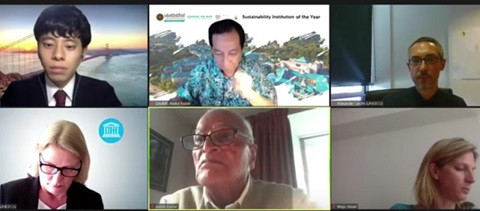 The power of education towards sustainable societies in the world post-COVID-19 2020-10-08 The COVID-19 pandemic has challenged our structures and has had a tragic impact all around the world. But this crisis is also an occasion to question our ways of living and to redesign our societies in a more sustainable way. What world do we want to live in? What is necessary to rebuild in a more sustainable and equitable way? How can education contribute to the transformation needed? These are some of the questions which framed the discussions of the first online workshop of the series “The transformative power of Education for Sustainable Development for the world beyond COVID-19”, which took place on 9 September 2020. The event gathered hundreds of participants from all over the world, who shared their visions and perspectives on what Education in the post-crisis should look like. The workshop was opened by Vibeke Jensen, the Director of the Division for Peace and Sustainable Development of UNESCO’s Education Sector, who spoke about the new global framework ‘ESD for 2030’, which seeks to further strengthen the contribution of Education for Sustainable Development to all 17 SDGs: “ESD for 2030 will place particular emphasis on the importance of individual and societal transformation for sustainability and the contribution of education to the survival and prosperity of humanity”. In her words of welcome, Maria Böhmer, the President of the German Commission for UNESCO, stated that the transformative power of Education for Sustainable Development ”lies in creating empathic learners with critical thinking skills” and emphasized that young people should be empowered to take action: “We need to give them the opportunity to actively contribute to rebuilding more resilient systems.” Satish Kumar, Editor Emeritus of the Resurgence & Ecologist magazine, highlighted the need for education to build a new worldview of the relationship between humans and nature. From his perspective, education systems should not teach about nature as a mere resource for the economy anymore, but as a “source of life itself”, with its own rights: “For me COVID-19 is a cry from the Earth. (…) The new post-COVID 19 worldview education system should be that human and nature are one. We are connected, we are interdependent. There is no separation, there is no disconnection”. Dzulkifli Abdul Razak, Rector of International Islamic University Malaysia, spoke about lifestyles and emphasized the need to integrate values into our education systems: “Let’s bring back the values. The values that we can live together with nature symbiotically, benefitting from one another.” Katsutoshi Hori, student and member of Climate Youth Japan, compared the COVID-19 crisis with the climate crisis, both caused by the excess of human activities. Katsutoshi Hori spoke of the need of ethics and responsibility for the future, while Maja Göpel, Secretary General, German Advisory Council on Global Change, recalled the importance of building resilience. The speakers concluded that the role of education in the post-crisis goes beyond the simple ‘provision of knowledge’. If we want our societies to change, education needs to go beyond the ‘brain’ to encompass the whole body. Learning should not only mean ‘learning to ‘know’ and ‘learning to do’, but also ‘learning to be’. As Satish Kumar says, education needs to teach “not only the heads, but also the hands and especially the hearts”. At the workshop, many key questions on the role of ESD have been collected from the audience across the world, which will feed into the following monthly online workshops on specific thematic areas. This online workshop is part of the online workshop series organized by UNESCO, in cooperation with the Federal Ministry of Education and Research of Germany and the German Commission for UNESCO in preparation of the UNESCO World Conference on ESD. More information on the series of workshops URL:https://en.unesco.org/news/power-education-towards-sustainable-societies-world-post-covid-19
 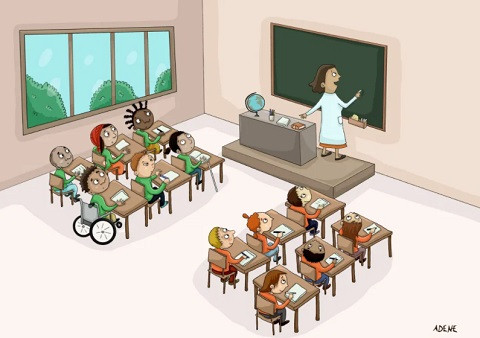 Teachers need training on inclusion 2020-10-07 By Anna Cristina D’Addio and Daniel April, GEM Report team Many factors go into the design of a truly inclusive education system. Some determine the way in which education systems are put in place, such as laws and policies, or governance and funding mechanisms. Others operate within the walls of the school. Teachers play a central role in welcoming and teaching all students, regardless of their background, ability and identity. They need specific skills to adapt teaching to learners’ diverse needs – a skill that is acutely needed during school shutdowns – but they need support and training to know how. This World Teachers’ Day, a new policy paper by the GEM Report and the International Task Force on Teachers for Education 2030 (TTF), “Inclusive teaching: Preparing all teachers to teach all students” looks at teacher training programmes, touching upon issues of planning, implementation, monitoring and evaluation, and the support mechanisms in place to help teachers foster inclusion. The examples are mainly extracted from the GEM Report’s new Profiles Enhancing Education Reviews (PEER) website, which contains comparable country profiles of laws and policies on key issues to facilitate peer dialogue within and between countries and regions. Only about 4 in 10 countries cover teacher training for inclusion in their laws and policies, with the highest coverage found in Latin America and the Caribbean. Analysis of PEER also shows that among the 10% of countries with general or inclusive education laws that define inclusion as a process that refers to all learners, just one-third mention teacher training, while none mentions its content. The analysis also shows that three-quarters of 134 education plans reviewed promote or envisage inclusion. Of these, about half explicitly indicate an aim to provide teacher training on inclusion, either general or targeted at a specific group. Still, whether in policies or plans, many intentions only materialize slowly. Teacher training for inclusion should not be a specialist subject The paper shows that the ideal of teacher training of inclusion is rarely realized. Teachers are often taught inclusion on the side, rather than as a central principle of all the training they receive. Many countries tend to focus on specific groups. For instance, a review of teacher education in Argentina, Ethiopia, Ghana, the Lao People’s Democratic Republic and Zanzibar (United Republic of Tanzania) found that training for inclusion was focused primarily on students with disabilities despite efforts underway to build inclusive school communities and cultures. Some countries cover certain groups in all training. Austria, Singapore, South Africa and the New Brunswick province in Canada, for instance, embed training on disability-inclusive education in a wider system of teacher education. The latter for example, which has pioneered the promotion of inclusive in education for more than three decades now, introduced training opportunities for teachers to support students with autism spectrum disorders in a comprehensive inclusive education policy. Other countries cover gender and gender identities in all teacher training. In Chile, the Ministry of Education has established training on gender, discrimination, inclusive schools, sexuality and sexual diversity in the classroom for teachers nationwide and has developed practical teacher guidance and training recommendations for inclusion of LGBTI communities. In Colombia, Mauritius, Nepal, and Uganda, gender perspective and gender identities is a cross cutting component in policy guidelines for teacher education. Language and multilingual education also factors into teacher training in several countries including in Botswana’s inclusive education policy and Peru’s National Bilingual Intercultural Education Plan. But it is extremely rare for countries to mainstream teacher training on inclusion and to cover all learners at risk of exclusion, not just one or other particular group. Doing so would mark a shift away from categorizations, which often result in stigma, marginalization, and exclusion. It is markedly lacking given the importance placed on leaving no one behind since 2015. Collaboration and professional peer exchanges between teachers foster inclusion There are multiple examples of countries that have seen the benefit in supporting different forms of teacher collaboration for inclusion. New Brunswick, Canada and Namibia promote learning communities, while team teaching is used in Ireland. Such approaches can help teachers perform better and manage change more effectively, a critical skill for today’s tempestuous times. They also enable the development of new leaders. Cooperation among teachers within schools and between schools is also important to support them in addressing the challenges of diversity. Many countries encourage cooperation between mainstream and special schools, which can help when transitioning from segregation to inclusion, as in Ethiopia, Kazakhstan, Kenya, and Viet Nam. Resource centres, which distribute centralised resources including specialised teachers to different schools are used in China, Maldives and Nigeria Teaching assistants, head teachers and district or thematic education coordinators play a crucial role supporting teachers and their professional development. For example, in Kiribati, thirteen education coordinators support teachers and head teachers, who have received advanced training on the principles of inclusive education. In Namibia, occupational therapists, speech and language therapists, social workers and audiologists are deployed to advise teachers in rural and remote schools. To ensure that inclusion is at the heart of teacher training: Education laws and policies need to communicate a clear vision of teacher training for inclusion. Pre-service and in-service training systems should be reviewed and revised to ensure inclusive education principles are fully mainstreamed. Inclusion for all should be a core element of general pre-service training imparting inclusive values and not an optional specialist course helping some teachers prepare to teach some target groups. Teacher training systems need to deliver a more effective balance of theory-based learning and hands-on practice. Peer training and professional exchanges, for instance through learning communities, resource centres, connections between mainstream and special school, mentoring and team teaching need to be prioritized. Teaching assistants, head teachers and district or thematic education coordinators need to be equally well prepared to help teachers fulfil their mission towards inclusive teaching. Governments need to engage teachers, parents and community organizations to improve teacher standards, competencies and education programmes. A culture of monitoring and evaluation needs to be embedded in teacher education programmes. URL:https://gemreportunesco.wordpress.com/2020/10/05/teachers-need-training-on-inclusion/
  What do families in the UK think about sexuality education? 2020-10-07 Young people and their parents told UNESCO what their experience of sexuality education was like as part of the Foundation of Life and Love campaign, which highlights intergenerational stories from families across the world to show why it is so important for young people to learn about health, relationships, gender, sex and sexuality. This comes as sex and relationships education becomes compulsory for all young people in England, reflecting the increasing acknowledgement by countries that young people need knowledge and skills to make responsible choices in their lives. Too many young people grow up hearing inaccurate, incomplete or judgement-laden information about sexuality. This can foster feelings of fear and insecurity among young people as they grow up, said UNESCO Senior Programme Specialist for Health and Education, Joanna Herat. “Comprehensive sexuality education, and support from trusted adults such as parents and teachers, is central in the preparation of young people for a safe, productive, healthy life, in a world where sexually transmitted infections, unintended pregnancies, gender-based violence and gender inequality still pose serious risks to their well-being,” Ms Herat said. The families from the UK interviewed for the Foundation of Life and Love campaign said it was critical that all young people received sexuality education, but also that it was comprehensive and tailored to their needs. “It needs to be inclusive, honest and fun,” said student Elise Collis, “because otherwise people are just going to be living in fear, and it’s not good to live in fear”. Hear what families from the UK have to say about sexuality education HERE (LINK) See more from families in Ghana, Thailand, and China. Join the conversation at #CSEandMe. URL:https://en.unesco.org/news/what-do-families-uk-think-about-sexuality-education
 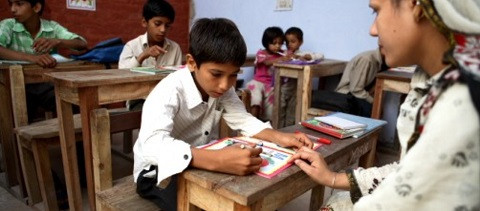 World Teachers Day: celebration of educators’ commitment and leadership 2020-10-07 UNESCO New Delhi and Education International are jointly celebrating World Teachers’ Day with a 24-hour long global broadcast today for the Asia Pacific Region. Celebrated globally every year on 5 October, World Teachers’ Day is celebrated by UNESCO, in partnership with UNICEF, the International Labour Organization and Education International, to bring attention to the importance of teachers at the global level. The regional celebration began with a virtual broadcast where Eric Falt, UNESCO New Delhi Director, delivered the opening remarks. Every year, the World Teachers’ Day serves as a reminder to pay tribute to all the teachers who have made valuable contributions in building generations of youth over the past decades. The World Teachers’ Day is an occasion to mark progress and reflect on ways to counter the existing challenges for the promotion of the teaching profession.-- Eric Falt, UNESCO New Delhi Director The opening remarks were followed by a panel discussion on Teaching through the Pandemic in South Asia keeping in line with the theme for this year, Teachers: Leading in crisis, reimagining the future. Target 4.c of the Sustainable Development Goal 4 highlights teachers as key to the achievement of the Education 2030 agenda and in our collective goal of providing equitable quality education for all. To join the global broadcast click here. Read more about the critical role of teachers shaping the future of education systems in a joint opinion education piece published in The Print by Eric Falt, Director, UNESCO New Delhi and Prof Hrushikesh Senapaty, Director of National Council of Educational Research and Training (NCERT), New Delhi. Related contentCovid shut schools, but teachers making sure learning is not stopped in India URL:https://en.unesco.org/news/world-teachers-day-celebration-educators-commitment-and-leadership
  لمديرة العامة لليونسكو تضم صوتها إلى قادة العالم في دعوتهم لتوطيد الالتزام السياسي لتحقيق المساواة بين الجنسين 2020-10-07 UNESCO Director-General Audrey Azoulay has cautioned that much remained to be done for gender equality as world leaders gathered at a High-Level Meeting during the UN General Assembly to mark the 25th anniversary of the visionary Beijing Declaration and Platform for Action (1995) that set a global agenda for the empowerment of women and girls and called for the recognition of women’s rights as human rights, "Much has been achieved since the 4th World Conference on Women took place in 1995, and yet the struggles to achieve full Gender Equality remain dire in all societies [...] I call upon women worldwide to be inspired by the extraordinary achievements of the Beijing Declaration and to take control and full leadership in every aspect of life and domain of society to build back a better future for all." --- UNESCO's Director-General, Audrey Azoulay Evidence suggests that women and girls are hit hardest by economic down-turns, violence, conflict and climate change, and the COVID-19 crisis has proved no different. The pandemic and its associated school closures and lockdowns have had a disproportionate impact on the life and wellbeing of millions of women, putting many of the Beijing Declaration’s objectives at risk. The exacerbated burden of unpaid care has further limited the time women and girls are able to dedicate to learning; more than 767 million girls were out of school due to the COVID-19 lockdowns, 11 million of whom are unlikely to return to school. According to UN-Women, the pandemic will push 47 million more women and girls below the poverty line. Gender-based violence increased dramatically during lock downs around the world. Women scientists, journalists, artists and creators found and continue to find themselves at increased risks of different forms of harassment, censorship and abuse, both online and offline. We also learned how wide the gender digital divide really was with only 54% of women connected to mobile internet. This limits the access of millions of women to information and to a diversity of information sources that is necessary to sift out disinformation. 767 million girls were out of school due to the COVID-19 lockdowns 11 million of these girls might never go back to school 47 million more women will be pushed below the poverty line Only 54% of women are connected to mobile internet Recognizing the vision of the women who made history in Beijing in 1995, UNESCO’s Director-General declared that “The Beijing Declaration and Platform for Action are the most powerful examples of how the global agenda can be written for women and by women. Twenty-five years after their launch we still owe a lot to those visionary women leaders, and we remain accountable to the new generations in ensuring that the multilateral system amplifies their voices and strives towards full equality in all societies.” With signs of an impending recession likely to have a devastating impact on the poorest and as social spending appears likely to shrink, decision makers worldwide have a collective responsibility to prioritize work on gender equality. Ambitious legislation, measures and policies to ensure gender equality are needed to avoid detrimental economic, social, cultural, political and environmental consequences that will jeopardize the achievement of the internationally agreed 2030 Agenda for Sustainable Development. UNESCO is determined to work with its partners to make gender equality, the empowerment of women and girls a central driving force in optimizing recovery from the socio-economic and cultural impact of COVID-19. Now is the time to defend and advance women and girl’s human rights. Now is the time for the Beijing Declaration and its legacy to be fully delivered. Now is the time to work toward a new Generation Equality. URL:https://en.unesco.org/news/unesco-director-general-joins-world-leaders-call-highest-political-commitment-achieve-gender
 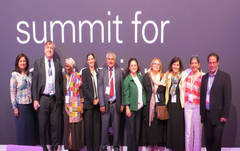 Martin Luther King III and experts call for action in the aftermath of #BlackLivesMatter 2020-10-03 Martin Luther King III, a global human rights activist, and a distinguished panel of experts gathered for the second edition of the UNESCO Regional Expert Consultation Series held on 29 September 2020, focusing on the North American region. Together, they deconstructed the impact of racism and discussed ways forward. In the context of the COVID-19 pandemic, the vulnerabilities of disadvantaged populations, including minority communities, have been further exacerbated. “The #BlackLivesMatter movement was the result of the systematic racism that permeates the US society. If the movement allowed people to talk about systemic racism against black communities, now it is important to move forward and develop a plan of action,” Mr King said. Professor Jane Landers, Member of the International Scientific Committee of UNESCO’s Slave Route Project, underlined the need to go beyond the ethnocentric narrative in education and teach history in a different way from what has been done so far. According to her, “UNESCO should work on the democratization of knowledge” through the development of innovative online resources using modern and more visual materials which would allow isolated and disadvantaged communities to access knowledge. Raising the importance of the intersectionality of discriminations, the Founder of the Black Canadian Studies Association, Professor Naa Afua Dadesen Cooper observed that “racism against black communities is still widespread in specific regions”, and as in the United States, black communities in Canada are most affected by the pandemic. This is due to the fact that Black Canadians, especially women, are employed in high-risk sectors such as healthcare, and have already increased rates of pre-existing illnesses. While urging societies to oppose racial capitalism, Professor Cooper stressed the importance of “reallocating resources for the development of black communities.” Alice Miquet, President of Montreal’s Youth City Council, shared the ways on how meaningful youth participation can be achieved in counteracting racism and discriminations. The Council recommended the following policy responses to the City of Montreal: take actions to increase the representation of racialized communities in decision-making positions, provide information on elections (both on how to vote and run for election) in all the languages spoken by at least 2% of the population, and devote a percentage of the city budget to organize cultural activities led by racialized communities. Webster, hip-hop artist and author of several books on slavery, who collaborates with UNESCO in the Master Class Series against Racism and Discriminations, urged to “change the pyramid” in accessing the different narratives of knowledge. He indicated that “One of the main problems of racism is that people do not listen enough to those who are victims of discriminations based on race and ethnicity. People need to listen more to racialized communities and to understand them.” As part of his recommendations to UNESCO, Mr King encouraged the development and implementation of diversity and sensitivity trainings targeting students, from primary to tertiary levels, which will “create a different world at the end of the day”. Organized by UNESCO, this Series aims to unpack the societal challenges of the COVID-19 pandemic related to racism and discriminations and seeks to facilitate the necessary deep reflection on what direction the international community should take amid a renewed emergence of racist agendas. This edition was moderated by George Papagiannis, Chief of Media Services at UNESCO. The first edition, focusing on the African region, was held on 18 September 2020. The next regional consultations are scheduled throughout the month of October. Watch the VOD of the webinar More information on UNESCO’s work on Fostering Rights, Inclusion and Non-Discrimination URL:https://en.unesco.org/news/martin-luther-king-iii-and-experts-call-action-aftermath-blacklivesmatter