
News
Catch up on what’s happening in the world of global citizenship education.
1,668 results found
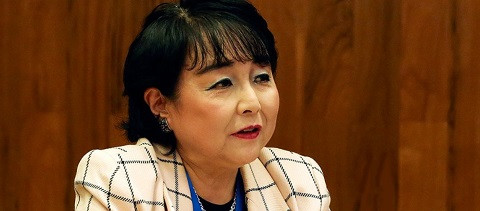 Education is the foundation of gender equality 2020-11-03 Photo: Kuniko Inoguchi, political scientist and former Japanese Minister for Gender Equality and Social Affairs, addressing the High Level Reflection Group meeting in Paris in November 2019. Women are in the periphery of most societies. And then if you have other problems – like if you are living with a disability, if you are disaster stricken, if you have bad access to education, for any number of reasons, then you are also in the periphery of your society. So, gender inequality is linked to many other problems, and half of the world’s population is doubly impacted-- Kuniko Inoguchi, political scientist and former Japanese Minister for Gender Equality and Social Aff The universal occurrence of these unequal, intersectional experiences reflects the pressing need to not only unburden our societies of damaging patriarchal and paternalistic traditions, but also intervene in a comprehensive way that, according to Kuniko Inoguchi, begins with education. Translating equal access to education into long-term equality of opportunity “Development without education is not sustainable. It must start early. It must be equally available to boys and girls. And there must be persistent opportunities available to all generations to access quality education, including for those who have fallen out of the education system.” This means investing in early childhood education, through primary and higher education to post-doctoral education. It means ensuring access, and encouraging, older people to return to, complete, or even start their education if they wish. It also means targeting vulnerable children and citizens who have fallen out of the education system, including those who have dropped out or been explicitly deprived, like child soldiers, children subject to child labour, refugees, and the more than 11 million girls who may not return to school after COVID-19. This also links to ensuring the safety of girls in school and the safety of children in general, says Kuniko Inoguchi. “To participate in education, children must be alive and well. Societies have a responsibility to ensure this, and to ensure that inequalities do not drive dangers experienced by children, whether that be traffic accidents or sexual harassment in school environments.” What we must also consider, says Kuniko Inoguchi, is that once we have safe and equal access to education, this does not automatically translate to equal access to the labour market. For many women, accessing education doesn’t inevitably lead to equal opportunities for employment. But you can’t give up your equal opportunities to education. The time will come when girls will have better opportunities in society. We see it in societies across the world. Doors will open for more participation in leadership and management. And education is the foundation. Keep on studying. The curtain will rise, quite soon.-- Kuniko Inoguchi In addition, says Kuniko Inoguchi, education must be pursued so that women can access leadership and decision-making roles – roles which can, in turn, help advance gender equality. She speaks about her own experience:“There is a direct link between girls’ education and them later taking up leadership positions. For instance, after getting my degree, nobody wanted to hire women in Japan. But Sophia University decided to hire me as the first female assistant professor in political science. I then became the first female professor of political science at that university, then the first female dean of international relations, before I took up my position as a parliamentarian. I decided to become a parliamentarian because I wanted to secure democracy on the ground, and make sure that girls and women would have opportunities for generations to come.” Pandemic has highlighted patterns of vulnerability These opportunities must be pursued and made available with specific inequalities – and vulnerabilities – kept in mind. In addition to school closures, the COVID-19 pandemic has exacerbated and exposed a number of other vulnerabilities experienced by women and children. These vulnerabilities are cross-border issues, says Kuniko Inoguchi, and one of the most prevalent and damaging we have seen is the experience of domestic violence. “Domestic violence can lead to lifelong trauma. During the pandemic, many people are trapped in their homes, under different stresses, and violence can ensue. Societies have a responsibility to prevent domestic violence, support victims, and ensure that children are never subjected to this. Leaders have a responsibility to speak out against it, especially in times of crisis.” According to Kuniko, investments must be made in community workers and employment protections, and support given to struggling parents. In addition, she says, UNESCO has a role here in speaking out against domestic violence. Prioritising education, social progress and gender equality for sustainable development COVID-19 has also highlighted female labour market precarity, as well as other concerning trends in discrimination and poverty. The pandemic, says Kuniko Inoguchi, cannot be allowed to kill the progress made in social development, gender equality and education. In times of crisis, we cannot let discriminations grow. Cultural diversity must be celebrated. Gender equality must be sought. Education must be 100% inclusive.-- Kuniko Inoguchi UNESCO’s work toward peace, based on an inclusive and transdisciplinary mandate, means it has an important role to play in this arena. “Only with global peace will we be able to effectively reallocate resources to sustainable development, education, inclusion, diversity, climate change, cultural heritage, welfare, health coverage – all those important social necessities that, like women, have often been kept at the periphery. After COVID-19, countries need to reprioritise. UNESCO can be a leader in showing that children, women and sustainable development should be at the centre of this shift.” UNESCO is a “brand for peace” that inspires empathy and positive impact Key strengths that UNESCO has to this end, says Kuniko Inoguchi, lie in its celebration of cultural diversity and its work on the science of climate change and oceans – having intercultural harmony and a stable planet are two vital requirements for peace, she says. Most importantly, these strengths lie in UNESCO’s ability to inspire empathy in people around the world, and to engage them in our collective challenges. “UNESCO is a brand for peace. It inspires understanding, better cognition, tolerance – it gives you the opportunity to imagine things you’ve never seen. It helps people understand what it is like to be, for example, a girl deprived of education. It taps into the treasure of the human mind, to help provide perspective and empathy. It helps us imagine the suffering of other people and motivates us to help and work with UNESCO for solutions.” Kuniko Inoguchi is a member of the Director General’s High Level Reflection Group, an initiative of UNESCO’s Strategic Transformation designed to anticipate and analyse global developments and contribute to the enrichment of UNESCO’s next Medium-Term Strategy. *The ideas and opinions expressed in this article are those of the author and do not necessarily reflect the views or official position of UNESCO. URL:https://en.unesco.org/news/education-foundation-gender-equality
 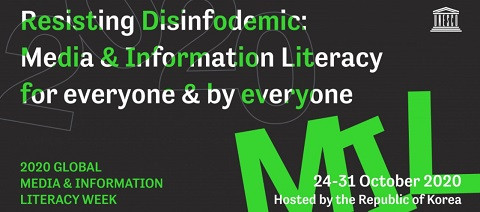 Resisting Disinfodemic through Media and Information Literacy 2020-11-03 The Global Media and Information Literacy (MIL) Week, commemorated annually by UNESCO worldwide, is a major occasion for stakeholders to review and celebrate the progress achieved towards “MIL for All”. This year, UNESCO Headquarters organized a morning-long special programme on 30 October, with the aim to forge strategic partnerships around MIL on 30 October. One of the sessions, moderated by Eric Falt, UNESCO New Delhi Director, and entitled “Networking, Synergies and Awareness Raising”, debated the nature of partner organizations’ engagement with UNESCO on MIL. The panelists included: Ms Martina Wagner, Senior Advisor, expert on MIL, Swedish Media Council; Mr Ronan Costello, Public Policy Manager, Twitter; Mr José Manuel Tornero, Professor, Autonomous University of Barcelona, UNESCO UNITWIN Cooperation Programme on MIL Intercultural Dialogue (MILID); and Ms Carolyn Wilson, Senior Lecturer, Western University, Canada. A recent evaluation of the media and information literacy programme at UNESCO established that countries worldwide recognize the importance of MIL and that they are demanding an increase in MIL-related interventions. The evaluation also confirmed that UNESCO has mobilized an engaged network of stakeholders working on MIL at the national and international levels.-- Eric Falt, UNESCO New Delhi Director underlined at the beginning of the session The hour-long panel discussion discussed the power of forming synergies between various stakeholders and their potential to become active creators of digital solutions to tackle misinformation and disinformation, which has become prevalent during the ongoing COVID-19 crisis. It is essential for the social media to step up its efforts towards media and information literacy, especially now as we consume content from a very wide range of sources. Our partnership with UNESCO is a step towards amplifying healthier messaging practices in online spaces.-- Ronan Costello, Public Policy Manager, Twitter. He also shared examples of recent policy reforms implemented by the social media to combat misinformation with the panel. Twitter, who has been an official partner of UNESCO in the field of MIL since 2018, and has developed the second edition of the “Teaching and Learning with Twitter” guide for educators with a focus on MIL.For her part, Carolyn Wilson called for international organizations to recognize MIL as one of the most important areas to invest, and urged to step up funding in related research areas. Ms Wilson is former Chair of the UNESCO MIL Alliance that aims to facilitate and promote international multi-stakeholder partnerships around MIL. URL:https://en.unesco.org/news/resisting-disinfodemic-through-media-and-information-literacy
 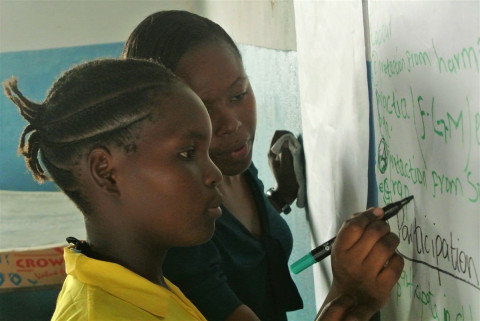 Access to Education, Reaching the Unreached 2020-11-03 Child centered learning of child rights and life skills © Girl Child Network Ms. Mercy Musomi, Executive Director of Girl Child Network (GCN) is on a mission to liberate and empower girls and women through education; building their skills and resilience for a better future. Having experienced the power of education herself, Ms. Musomi took the baton passed to her by her maternal grandmother who advocated and fought for the right to education of Kenyan children. "Before the design of the project, Our Right to Learn – Reaching the Unreached, we looked at the ministry of education’s statistical data booklet and noted that Kwale, Garissa, Kajiado, like other Arid and Semi-Arid (ASAL) areas in Kenya, have a lot of school age going children who were out of school. And we also have our benchmark, because in the project, we have three categories of out of School children: those who have never been enrolled in school, hose who have dropped out of school and those who have potential but at the breaking point" - Ms. Mercy Musomi, Executive Director of Girl Child Network (GCN) Girl Child Network of Kenya arethe 2020 winners of UNESCO Laureate Prize for Girls’ and Women Education for their project Our Right to Learn – Reaching the Unreached together with Shilpa Sayura Foundation of Sri Lanka. Girl Child Network was established in 1995 by 25 Kenyan Women Gender Advocates who attended the Beijing Fourth World Conference on Women. Since its establishment, GCN’s mission has been to protect and promote the rights of children, youth and women in Africa through advocacy, research, networking and enhancement of community participation. UNESCO recognized GCN for providing participation and access to quality primary education for vulnerable children, out of school children, including girls prevented from accessing or completing primary education by harmful cultural practices and poverty. Phase one of the project has reached 51,936 children in 240 primary schools, including 25,937 girls, through education programmes, gender and disability-friendly school facilities, and community-based social mobilization, transforming negative attitudes standing in the way of girls’ education. All Hands on Deck “When you want to go fast, go alone; when you want to go further, go with others”. To educate a child requires the whole community, and it is this strong network and collaborations established by GCN through constant negotiation that is the main contributing factor for the success of phase one of the project. The target for phase one was to reach 37,500 out of school children. However, with the assistance of key community gatekeepers, community facilitators, head teachers, village tracking committees, and Our Right to Learn clubs, the GCN have managed to reach more out of school children. “Every school has a community facilitator, and every sixth school joins a group where village tracking committee work with them and the Right of Child (ROC) club to identify out of school children and work with them to ensure return and retention of the children in school,” said Ms. Musomi "ROC club members have been sensitized on child rights, especially on the right to learn. This has enabled them to know as learners that it is their right to learn. With this conviction, they have been our mouthpiece in their communities as they report to the teachers about the learners who are at home and have reached the age of schooling" - Ms. Florence, patron teacher, ROC club, Matuga Primary Kwale Through constant sensitization and negotiation with the communities by convening community conversations and dialogues, children have been able to return to school. The project is empowering boys and girls with information on rights and life skills giving them confidence and aspiration to learn. Barriers associated with poverty, cultural practices such as female genital mutilation, child marriage, child labour, among others, have not been easy as most of the time when a child is taken back to school the parents tend to leave the responsibility of the learners and children to the community facilitators. This has been a constant challenge in learners’ retention in school experienced by community facilitators. Most schools supported by GCN through the project are in the hard to reach areas with poor infrastructure and inadequate WASH facilities. Therefore, to reach the unreached, the project aims at enhancing the capacity of duty bearers with a view of training them on their duties and responsibilities. The training enables them to meet their legal obligations of enforcing implementation and monitoring of laws and policies that support enrollment and retention of out of schoolchildren and the protection of child rights. In addition, the project aims at engendering friendliness of the school learning environment to make it friendlier and gender sensitive and attractive for girls and boys to enroll and participate in education. Through rehabilitation of WASH facilities, training of teachers on leaner centered methodologies/pedagogy, training of School Boards of Managements on gender responsive school development planning, reduced gender based violence and stereotypes, schools would become more safe, secure and child friendly "Our success is not only when many girls and boys from hard to reach areas go back to school. Our joy is having these children go to school, but also having their parents participate in their education process. The project provides a back to school kit for the girls and boys including solar lamps, making the learners and their parents/care givers be champions in reaching out to the other children who are out of school" - Ms. Mercy Musomi, Executive Director of Girl Child Network (GCN) UNESCO Prize for Girls’ and Women Education UNESCO established the Prize for Girls’ and Women Education in 2015 with the generous funding from the Government of the People’s Republic of China. The prize is annually granted to two laureates and consists of an award of $50,000 to each winner to help further their work in advancing girls’ and women’s education. The prize contributes directly to the achievement of the 2030 Sustainable Development Agenda (SDG), in particular, Goal 4 on education and Goal 5 on gender equality. GCN’s win is timely as they are rolling out phase two of the project targeting to reach 47,515 Out of School Children and celebrating their Silver Jubilee since the establishment of the Network. “The prize is for community facilitator empowerment,” said Ms. Musomi. Gender equality is a fundamental right. That is why UNESCO has made it its global priority URL:https://en.unesco.org/news/access-education-reaching-unreached
  Iraq’s environmental sustainability prioritized in new UNEP/UNDP agreement 2020-11-01 The UN Environment Programme Regional Office for West Asia and the UN Development Programme in Iraq join forces to accelerate Iraq’s implementation of the 2030 Sustainable Development Agenda. UNEP and UNDP will work on environmental policy, biodiversity and ecosystems, pollution, and climate change for the advancement of environmental sustainability in Iraq Manama, Baghdad, 22 October 2020 – The UN Environment Programme’s (UNEP) Regional Office for West Asia based in Manama, Bahrain, and the UN Development Programme (UNDP) in Iraq have joined forces today, signing a four-year Memorandum of Understanding (MOU) that aims to accelerate the implementation of the 2030 Sustainable Development Agenda, particularly the environmental Sustainable Development Goals (SDGs). The MOU identifies several priority areas that UNEP and UNDP will jointly address including; environmental policy, biodiversity and ecosystems, pollution and waste management, climate change, and supporting the Government of Iraq in its post–COVID-19 response on areas related to environmental sustainability. UNEP and UNDP share a successful history of collaboration on projects and initiatives at the global, regional and country levels. In late 2019, the two organizations signed a global strategic partnership which strengthens engagement and collaboration at the institutional level. UNEP and UNDP share unique and complementary attributes. While UNDP has a strong country presence and access to a wide range of stakeholders and sectoral policy, UNEP is the leading global environmental authority that sets the global environmental agenda, it has a deep-rooted science foundation, and a strong normative mandate that promotes the coherent implementation of the environmental dimension of sustainable development. Since 2009 UNEP in West Asia and UNDP in Iraq have worked on a large portfolio of projects, including supporting Iraq with its reporting obligations under the United Nations Framework Convention on Climate Change (UNFCCC) and the Kyoto Protocol, and developing a National Environment Strategy and Action Plan that outlined the scale of environmental degradation in Iraq, its root causes and impacts, and necessary next steps. As one of the signatories to the Paris Agreement in 2016, Iraq continues to priorities climate change adaptation and mitigation measures in its environmental planning and is committed to adopting a green vision and implementing green programmes. Today’s agreement puts UNEP and UNDP firmly on a path to supporting Iraq’s progress towards achieving the 2030 Sustainable Development Agenda. From his side, the Regional Director and Representative of UNEP in West Asia, Mr. Sami Dimassi, highlighted that “UNEP is committed to forging a strong collaboration with UNDP in Iraq to support the country in addressing environmental challenges while supporting the Government and the people of Iraq to build back better after the COVID-19 pandemic. UNDP has a successful track record in Iraq, and today, I am pleased that we have joined forces towards achieving a sustainable environment for all”. “Iraq faces a number of environmental challenges – from water scarcity, to rising temperatures, to pollution, to environmental degradation due to years of conflict and neglect. Tackling these challenges in a complex setting like Iraq cannot be done alone, so we are proud to join UNEP and support the Government of Iraq in securing a healthy, sustainable environment, now and for future generations,” says Resident Representative of UNDP Iraq, Ms. Zena Ali Ahmad. “Without increasing efforts to decelerate the climate crisis, the Iraqi population will not be able to live prosperously in the future. The goal of the SDGs of leaving no one behind, especially SDG 6 on Clean Water and Sanitation, SDG 7 Affordable and Clean Energy, and SDG 13 Climate Action are of particular importance for Iraq. I am pleased to see that UNEP and UNDP are increasing their activities in order to help Iraq and its population” says Resident Coordinator for Iraq, Ms. Irena Vojackova-Sollorano. NOTES TO EDITORS About the UN Environment Programme (UNEP):The UN Environment Programme is the leading global voice on the environment. It provides leadership and encourages partnership in caring for the environment by inspiring, informing and enabling nations and peoples to improve their quality of life without compromising that of future generations. About the UN Development Programme (UNDP):UNDP is the leading United Nations organization fighting to end the injustice of poverty, inequality, and climate change. Working with our broad network of experts and partners in 170 countries, we help nations to build integrated, lasting solutions for people and planet. For more information and to arrange interviews, please contact: Noora Albinkhalil, Information Officer, Programme Management Assistant – UNEP Regional Office for West Asia, Tel: +973 17 812 765 or +973 66 33 33 73Fay Daoud, Communications Specialist, UNDP Iraq, Tel: +964 780 1976 460 URL:https://www.unep.org/news-and-stories/press-release/iraqs-environmental-sustainability-prioritized-new-unepundp
 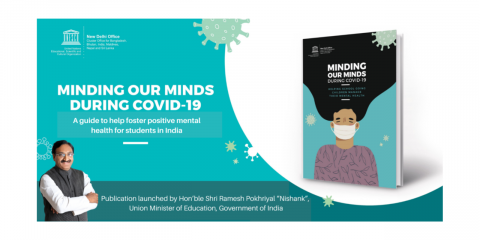 Union Minister of Education launches UNESCO’s mental health guide for students 2020-10-31 30 October 2020, New Delhi: UNESCO New Delhi launched today its publication, Minding our Minds during COVID-19: a guide to help foster positive mental health for students in India, towards its continued efforts to respond to the challenges posed by COVID-19 on the education system. The guide was launched today virtually by Hon’ble Ramesh Pokhriyal ‘Nishank’, Union Minister of Education, Government of India, in the presence of high ranking officials from the Government of India, Dr Yasmin Ali Haque, UNICEF Representative in India, representatives from other UN Agencies, stakeholders and partners. "Children and adolescents are more vulnerable and have been experiencing a heightened level of stress and anxiety due to the COVID-19 crisis. UNESCO’s guide therefore will deepen our understanding in this regard and help the education system to better respond to the mental wellbeing of students." - Shri Ramesh Pokhriyal ‘Nishank’, Hon’ble Minister of Education, Government of India "The pandemic is causing significant psychological impact worldwide. For children who were already dealing with mental health issues before, this sort of disruption can lead to even more difficulty in the path to a good education. Minding our Minds guide has practical and constructive solutions to address these challenges." - Eric Falt, UNESCO New Delhi Director The coronavirus pandemic has caused more than 430 million children in South Asia to rely on remote learning, who could now join the 32 million children who were already out-of-school. The long-time closure of educational institutes has hindered the growth as well as effected the mental health of students. Divided in five modules, the guide is designed for principals, head-teachers, teachers and parents to help alleviate the stress and anxiety that the school going children are feeling. As the schools reopen in India, the course will be a useful reference as well as an advocacy tool for not only enhancing the understanding of mental health issues within their students and children, but also to scale up their efforts in helping them manage their mental wellbeing. The guide is an extended version of a set of posters, Minding our Minds which were released earlier this year in multiple languages including English, Hindi, Tamil and Sinhala. These posters provided guidance to children, women and families who may be experiencing anxiety during the pandemic. For more information, please contact: Ms. Huma Masood, National Programme Officer (h.masood@unesco.org)Rekha Beri, Public Information (r.beri@unesco.org) URL:https://en.unesco.org/news/union-minister-education-launches-unescos-mental-health-guide-students
  New Programme for Global Education & Awareness Raising Established in Bulgaria 2020-10-27 Bridge 47 partner in Bulgaria, the Bulgarian Platform for International Development (BPID), are celebrating success on a national level with the establishment of a new programme for Global Education and Awareness Raising that will fund global education projects at a national level. This result, announced earlier in September, comes after a sustained and collaborative advocacy process by Bridge 47 staff in both Bulgaria and Slovakia. BPID as a member of the working party on Development Cooperation worked closely with the Ministery of Foreign Affairs to explore the opportunities this programme could bring. Consultations between the Ministry of Foreign Affairs of Slovakia and Bulgaria took place in July 2019. At the meeting hosted in Bratislava the Bridge 47 partners BPID and Ambrela were invited to take part. The opportunity was used to highlight Slovakian development education projects that are currently funded by Slovakian Official Development Assistance (SlovakAid). On that basis for a year and a half BPID further focused on advocating for a change in the Bulgarian Development Aid and the way global citizenship education is included. The consultation process for the mid-term programme in Bulgaria that lasted a few months since July 2020 was then the perfect vehicle for arguing the case for the development of the new global education programme. Peter Butchkov, Bridge 47 officer in Bulgaria and Executive Director of BPID said of the new programme: “To ensure sustainable change, Bulgarian Development Aid will focus its efforts on informing and creating an active civil society through the methods and values of the Global Education. This is revolutionary for the Bulgarian development cooperation on one hand as, until now, there is no way dor Bulgarian CSO to be funded in order to implement development projects. On the other hand, the establishment of a Global Education and Awareness Raising Programme not only gives the chance for the civic sector to work further on the topics of development cooperation, sustainable development and SDGs, human rights, tolerance, culture of peace and media literacy, and struggle against fake news, but also shows how great results can be achieved by the good cooperation between the development experts in the MFA and the CSOs. Discussions on such a program have been going on for some time, however the result would hardly have been achieved so quickly without the consultations in 2019 between the Slovak and Bulgarian MFAs and the active participation of the national development platforms in it. The support that we got by our partners from Ambrela was crucial as they managed to showcase the outcomes and the positive change such projects bring to the Slovak society. Jakub Zaludko, Bridge 47 officer in Slovakia and member of Ambrela: “We do feel that the current GCE and Development Education programme at SlovakAid does hold on to quite high standard. Not merely in terms of discourse it promotes, but also in terms of annual financial support and advocacy support for mainstreaming GCE at the Slovak Ministry of Education. We are glad that this partnership model has been built up in Bulgaria, to give BPID as one of Ambrela’s key partners, along with BPID’s member organizations, space to continue the good work in the area of GCE into the future. The success of this activity is an advocacy triumph for BPID and Bridge 47 on a national level but it further demonstrates the positive impact the exchange of good practices and coordinated actions with partnering countries can have within this sector. Ambrela and BPID have exemplified the spirit of partnership and interconnected action that is at the heart of the aims of the Bridge 47 network. URL:https://www.bridge47.org/news/10/2020/new-programme-global-education-awareness-raising-established-bulgaria
 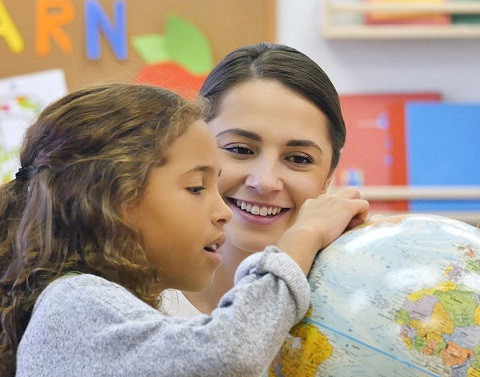 Launch of Global Education for Teachers MOOC 2020-10-27 University College London (UCL) has recently launched a new Massive Online Open course (MOOC) on global citizenship education and global education. This short online course for teachers available for free through Futurelearn is now open for enrolments to teachers from around the world. The course provides teachers with an introduction to global education and global citizenship education and practical support on how to introduce global issues into teaching. It hopes to develop teachers’ confidence, knowledge and skills to include global education in teaching practice. This course is developed in line with the UN Sustainable Development Goal 4.7, which requires countries to develop global citizenship for all learners by 2030. URL:https://www.futurelearn.com/courses/global-education-for-teachers
 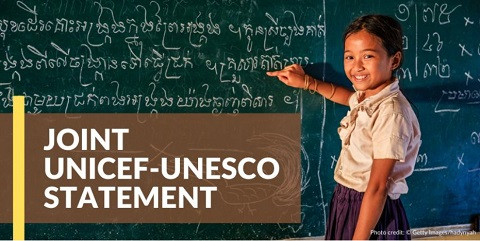 ‘Building back equal’ for girls’ education: COVID-19 threatens to reverse hard-earned gains in girls’ education in East Asia and the Pacific 2020-10-23 Crises disproportionately affect girls and young women - COVID-19 is no exception. The gains made over the past decades to ensure that all girls have access to quality education are under threat, and so are the prospects for families to lift themselves out of poverty and achieve economic security. On International Day of the Girl Child celebrated on 11 October, under the theme “My voice, our equal future”, we recall that inclusive and quality education for all girls and young women is a fundamental human right that will determine their lifelong outcomes, and justice and equity in society.The challenges are real At the height of school closures in the region, distance learning programmes were not always accessible to girls. Many countries sought to ensure that despite school closures, #LearningNeverStops, putting in place distance education through low-tech and no-tech platforms. At least every seventh girl globally – 222 million in total – has been unable to access remote learning when schools are closed.[1] One of the reasons is the existing digital divide. Many learners in East Asia and the Pacific live in areas with limited internet coverage. Other families are unable to afford internet at home, or do not have digital devices or enough devices for every child. Where there are few devices at home - parents may tend to favour boys over girls. In addition to 15 million girls already out of school in the region before the pandemic, more than 1.2 million girls (from pre-primary to upper secondary)[2] may drop out or not have access to school next year. These girls may need to support their families, have increased household and childcare responsibilities, experience early and forced marriage and/or unintended pregnancy, or fear of resurgence of the virus. Those who did not have access to distance education during confinement are particularly at risk of dropping out. COVID-19 has exacerbated the learning crisis in the region and will continue to do so. Before the pandemic, a sizeable share of girls in-school were not on course to meet minimum proficiency in basic reading and math. Every fifth girl in the region was unable to read and understand a simple text by age 10 and even more were missing out on competencies and transferable skills including digital literacy required for today’s world. [3] The pandemic also caused increases in gender-based violence, early marriage and teenage pregnancy, which negatively affects girls’ ability to access education and learn. In Viet Nam, the Peace House, a shelter for women and girl victims of domestic violence and abuse, has received double the usual number of clients since COVID-19 related measures were introduced.[4] For those girls with online access during school closures, the risk of online sexual exploitation has increased. A lack of face-to-face contact with friends and romantic partners may lead to heightened risk-taking such as sending sexualized images, while increased and unstructured time online may expose children to potentially harmful and violent content as well as greater risk of cyberbullying. Data from the Philippines Department of Justice, for example, revealed a four-fold increase in reports of online sexual exploitation and abuse during the country’s enhanced community quarantine period compared to the previous year. COVID-19 also increased psychosocial stress and mental health issues of girls, affecting their ability to learn. The prolonged lockdown, uncertainty, economic stress on families, and the loss of the school support system and routines can result in psychosocial stress and mental health issues. The longer the pandemic lasts, the more girls are at risk of never returning to school.Opportunities remain This unprecedented education crisis, however, presents the opportunity to reimagine education that drives progress towards a world where we build back equal for girls’ education. In East Asia and the Pacific, partners of the United Nations Girls’ Education Initiative are supporting governments across the region to ensure gender-equitable approaches to continuity of learning, safe school reopening and inclusion and re-enrollment of all children as learning moves back to the classroom. UNICEF and UNESCO are advising partners in education to:Keep girls at the centre: given the increased risk girls face in dropping out of school, we need to ensure that their specific needs are considered in all continuation of learning and school reopening plans. Ensure equal access to distance learning programmes: ensure that all children and especially girls have equal access to learning continuity, support government counterparts to implement different modes of distance learning, including online, television, radio and take-home learning kits. As girls with disabilities are at particular risk of being left behind, targeted action needs to be taken to ensure they can access distance learning programmes that respond to their specific learning needs and eventual return to school. Assess and address the needs of girls to return to school: girls are facing multiple barriers to returning to school upon school reopening, government partners should implement programmes to ensure that all girls are able to return to school with a particular focus on the most marginalized. Prioritize girls’ safety and protection: girls face risks especially during prolonged school closures and home confinement. There should be comprehensive programmes on school reopening integrating health, protection and mental health and psychosocial support. Keep advocating with governments, communities and families to keep girls ‘in the picture’ in education recovery and resilience: immediate priorities for continuing education and wellbeing of girls and young women also need to be complemented by longer-term policy and strategies as set forth in, “Building back equal: Girls back to school guide”. The guide - developed as part of a global campaign by the Global Education Coalition to support girls’ return to school – enables education policy makers and practitioners to accelerate gender-responsive education systems and targeted actions to ensure girls’ continuity of learning and return to school when these reopen. Strong advocacy and partnerships with governments and communities are essential, not just to overcome the COVID-19 challenge, but to make progress towards gender equality in and through education. In the current pandemic, “building back equal” requires urgent action focused on millions of girls and young women at risk of never returning to school, while keeping in sight the deep inequalities in education that existed prior to the pandemic. In the long term, there is an opportunity, if we all act together, to address structural inequalities to build stronger, more equitable and resilient societies. [1] UNICEF 2020. COVID-19: Are children able to continue learning during school closures? A global analysis of the potential reach of remote learning policies[2] (23.8 million from pre-primary to tertiary). UNESCO. 2020. UNESCO COVID-19 education response: how many students are at risk of not returning to school? Advocacy paper[3] https://www.aljazeera.com/news/2020/9/2/coronavirus-despair-forces-girls-across-asia-into-child-marriage[4] UNICEF (2020): Rapid Assessment on the social and economic impacts of COVID-19 on children and families in Viet Nam Written by Jenelle Babb, UNESCO and Maida Pasic, UNICEFThe article was first published in UNICEF East Asia & Pacific. URL:https://bangkok.unesco.org/content/building-back-equal-girls-education
  In times of crisis, positive peace must address systemic inequalities 2020-10-23 Peace is not just the absence of conflict. Positive peace is the presence of justice, equity and equality for all in our society, a lasting peace that addresses social and economic disparities and in turn the conflicts and violence associated with exploitation and inequality. The COVID-19 crisis has exacerbated the inequity and inequality that already existed before the pandemic and exposed weaknesses in societies across the Asia-Pacific. It is indisputable that the most vulnerable among us have been hardest hit, because of unequal access to health care and public health information, income-earning opportunities and learning resources, and also the fragile economic and social situations of people on the margins. This has very real impacts on our societies as a whole. Millions of learners, with an unequal impact on girls and women, have had their education disrupted because of the pandemic are at risk of never returning to school, with lifelong consequences for their own opportunities and also for their societies. Many more low-income families, including refugees and migrants, have lost their livelihoods, while at the same time facing the public crisis. We know that children who have been displaced from school face greater dangers of exploitation and domestic violence. For LGBTI people, indigenous communities, youth and many other vulnerable groups, the perils of the pandemic are compounded by pre-existing inequalities. COVID-19 has also made it starkly clear that we are all in this together. The overall resilience of countries and communities integrally and interconnectedly depends on the welfare of the most vulnerable. For all of the challenges posed by the pandemic, however, we also can see an opportunity to address and rebuild our relationship with the nature that promotes harmony between people and our planet. UN Secretary-General António Guterres has outlined the global UN response working with Member States and civil society to “build back better”, with a particular emphasis on addressing the climate crisis that is the long-term context for our present situation, and is already have visible effects from melting glaciers to rampant wildfires. The UN response involves every agency not only to combat the pandemic and lead public health efforts, but also to advise and support on economic stimulus and social protection programmes. At UNESCO Regional Bureau of Education in Asia and Pacific, we believe that quality and inclusive education is absolutely critical to move towards a peaceful and sustainable future in the region. At these times of crisis, we must have eyes on inventing mid-tem and long-term solutions for our future generations to equally enjoy living together between themselves and with nature in societies with positive peace. The Together for Peace (T4P) initiative launched virtually this week brings together Member States from across the region to work towards positive within and between countries and communities. The initiative is integral to the mandate of UNESCO, which was founded after World War II with the famous preamble of its constitution that since wars begin in the minds of men and women, it is in the minds of men and women that the defences of peace must be constructed. All of our work towards positive peace, however, depends on partnerships with government, civil society and members of the public. History has taught us that political and economic arrangements between governments are not enough to ensure sustainable and enduring peace. The support and solidarity from people coming from every segment of our societies is the only guarantee. We know we face considerable challenges in achieving that goal and building understanding and empathy between peoples. There are continuing conflicts within and between countries in the region, while narrow nationalistic narratives and disinformation continue to foster prejudice and misunderstanding. The inequalities separating people in our societies have often been widened by the pandemic. And the monumental test to mitigate the climate crisis once again will impact the most vulnerable groups first, although clearly it is a challenge that affects us all. Translating the principles of positive peace, which we can all agree on, into tangible facts on the ground requires input and partnerships between governments, but just as important we need buy in from members of the public and a commitment to better understand each other, celebrating our differences as well as our shared humanity. Education including social and emotional learning is critical – we literally learn how to care about each other. There are common themes in schools that can lay the foundations for that understanding, although each must be implemented in a culturally appropriate context. We need to teach at an early age and consistently about building just, ethical and sustainable relationships between humanity and nature. In the Asia-Pacific, this incredibly and beautifully varied region, we all need to learn to live well in the context of super diversity. As an interlinking component, we need to design education systems that inculcate a culture of peace. We are clear-eyed about the scope of the task ahead of us. Prior to the pandemic, the United Nations Economic and Social Commission for Asia and the Pacific concluded that the region was already falling behind in achieving the Sustainable Development Goals, particularly in terms of the climate crisis and environmental targets. As societies weather and recover from the pandemic, we must rebuild from more sustainable and equitable foundations that brings us all together for resilient positive peace.By Shigeru Aoyagi, the Director of UNESCO Regional Bureau for Education in Asia and the Pacific* This article was first published in The Bangkok Post URL:https://bangkok.unesco.org/content/times-crisis-positive-peace-must-address-systemic-inequalities
  At Global Education Meeting, ministers and experts highlight the work of teachers in response to the COVID-19 crisis and call on the international community to support them 2020-10-22 UNESCO, in partnership with the Governments of Ghana, Norway and the United Kingdom, has convened a virtual Global Education Meeting (GEM) on Education post-COVID-19, which is taking place on 20 and 22 October. As part of the meeting, which aims to secure commitments from leaders for the protection of education financing during the COVID-19 recovery, and produce consensus on priority actions for the next year, a special high-level segment on teachers was organized to address the future of teaching and learning. The GEM meeting took place two weeks after World Teachers’ Day (WTD), a flagship event organized annually by UNESCO and co-convening partners UNICEF, ILO and Education International to mark the adoption of the 1966 ILO/UNESCO Recommendation concerning the Status of Teachers. The high-level segment on teachers highlighted many of the points that were central in the WTD celebrations, key among them the leadership and initiative teachers have shown to ensure that learning never stopped, in all settings, as well their role in starting the complex but necessary task of remaining the future of education as the COVID-19 world becomes the new normal. “Societies should take this opportunity to recognize the social value of the teaching profession”, declared Jaime Saavedra, Global Director for Education at The World Bank. He added, “we must ensure teachers are prepared to fulfil the extremely complex task which has been entrusted to them”. As well as impacting the education of over 90% of the world’s students, 63 million primary and secondary teachers alone have been affected by the pandemic. “We need to reimagine the future, but without forgetting the past. We need to be better at tech, but not replace the human contact of teacher and student”, said Ms Haldis Holst, Deputy General Secretary of Education International. The importance of human interaction was also raised by H.E. Ms Claudette Irere, Minister of State in charge of ICT and TVET of Rwanda: “Technology can never replace a teacher… Content can’t just be placed online. Pedagogical support is needed to foster the... 21st century skills needed by teachers”. She continued, “without reimagining itself, the education sector will not be able to adapt”. The role of technology was also raised by Mr Akwasi Addai Boahene, Policy Advisor of the National Education Reform Secretariat of the Republic of Ghana: “In the past technology has dictated its use in education. Education should begin to dictate what kind of technology it needs”. However, “in many cases, in response to the crisis, teachers felt that they were left hanging in the wind”, said Ms Karen Mundy, Professor at the University of Toronto. Despite this, in all countries, there have been examples of collaborative teaching and mutual support by teachers to address capacity gaps. But there remains a lot of work to do. Ms Yara Ramadan, a youth activist from Palestine, took the opportunity to thank teachers around the world for their invaluable work and support. However, she added that “we need an updated approach to education. We don’t want to be spoon-fed… Students don’t want a boring lecture. We want collaboration, personalization and engagement… We want teachers to catch up and improve their ICT literacy!”. With the world in crisis, teachers have been at the forefront of education sector and societal responses to the COVID-19 pandemic. They deserve our support, and, indeed, have a right to it. More information on UNESCO’s work on teachers International normative instruments on the teaching profession Gender in teaching: a key dimension of inclusion (Infographic): URL:https://en.unesco.org/news/global-education-meeting-ministers-and-experts-highlight-work-teachers-response-covid-19-crisis