
News
Catch up on what’s happening in the world of global citizenship education.
1,668 results found
 COVID-19: It’s time to prioritize adult education 2020-09-25 While adult education has been pushed further to the margins during the pandemic, its potential contribution to the creation of healthier, happier and more inclusive societies has never been clearer, argues Jamila Razzaq. The long-term impact of the COVID-19 pandemic on education and learning remains to be seen. It is clear, however, that, across the world, formal systems of education have not been able to reach every learner in this crisis. Underlying structural issues in terms of priorities, roles and delivery models for education systems and services have been exposed by the crisis. Ineffectual and under-resourced mechanisms for alternative pathways to learning, inadequate connection between homes and schools, missing links between education and other social services, and under-developed practice in self-directed learning have all been highlighted in the search for viable solutions in the current situation. In some parts of the world, learning from home through online and distance learning became the new norm during lockdown, as teaching and learning activity in physical classrooms became impossible to maintain. This shift in provision has opened up the possibility of further development and investment in alternative, non-formal and family-based learning pathways. The solutions adopted during the pandemic can be integrated into education systems to ensure learners have greater opportunities to learn through multiple pathways. Throughout the crisis, policy and practice in education and learning has been focused on the disruption to the formal education of children and young people, while education and learning opportunities for adults have been pushed further to the margins. Existing adult education programmes have either been halted or obliged to operate a reduced service. This has coincided with increased demand for robust, relevant and innovative adult learning services, driven by unprecedented changes in the social environment and by the way world of work and business operates. More and more adults need to update their skills and knowledge for both their work lives and their social lives. Reimaging adult education in the framework of lifelong learning and making it responsive, relevant and valuable for individuals, businesses, organizations, communities and societies is an urgent priority. One opportunity emerging from the crisis is to focus greater attention and invest more in online and distance learning infrastructure for formal education. This infrastructure can be used as a launching pad for flexible delivery options for adult education. As well as being used as delivery mechanisms, these platforms can also facilitate wider utilization of existing resources developed in different parts of the globe and the integration of multiple stakeholder groups, from learners to local business representatives, employers, technical and vocational education providers, enterprise accelerators, higher education sector, ministries at the centre and on tangents of human resource development, and global agencies working on education, workforce development and youth engagement. These stakeholders can inform and shape adult education provision, furthering the principles of inclusion, equity and quality for all learners. These digital and distance learning platforms can help in creating different educative sites more suited to the different schedules and learning needs of participants. This effort to mainstream digital and distance learning options during the pandemic period can invigorate the landscape of adult education and learning if linked, deliberately and thoughtfully, with action, policy and lasting cultural change in this domain. COVID-19 crisis has not only exposed the pervasive issue of equity and inclusion in social systems all over the world but has also amplified inequalities and disparities, hitting hardest those who are already at the margins. Beyond the headlines concerning ill-equipped social services and staggering economic losses in the face of current pandemic, the vulnerabilities of individuals, communities and countries with no buffer zones to which to retreat, isolate and recover have been further exacerbated. The burden of this reality on collective human conscience cannot be eased without building equitable systems and services that work for all. It is critical that we emerge wiser from this crisis, as this pandemic may not be the last one we face, and all nations must realize the need to prioritize health, education and secure livelihoods for all their citizens. Adult and youth education and learning initiatives are essential if we are to re-vision, re-imagine and rebuild our societies to be healthier happier and more inclusive. Jamila Razzaq is a programme specialist at the UNESCO Institute for Lifelong Learning URL:https://thelifelonglearningblog.uil.unesco.org/2020/09/24/covid-19-its-time-to-prioritize-adult-education/
  COVID-19: A perilous time for adult education 2020-09-25 As governments implement plans for post-pandemic recovery, the emphasis on getting children back to school risks further marginalizing adult learning and education. Now, more than ever, it is critical that we preserve a comprehensive understanding of the right to education, argues Daniel Baril As we try, slowly and uncertainly, to emerge from the pandemic, governments are defining the framework for socio-economic recovery. The deconfinement of society, the reopening of businesses, jump-starting economic growth, mass-producing a vaccine and preparing for a possible second wave of infection are all priorities. Education is on the agenda too, as governments revise and resume school protocols. Restarting formal schooling for children and young people is, without any doubt, urgent. Last month, 275 former world leaders, economists and business leaders stressed the potentially catastrophic consequences of locking children and youth out of learning for any longer, particularly for the most vulnerable among them. Moreover, as economic recovery action plans are implemented, protecting and increasing funding for education will be fundamental in the months and years ahead. In this emerging post-pandemic political agenda, adult learning and education (ALE) is largely forgotten. In fact, it has been absent from policy since COVID-19 first hit our world. Yet, it is clear that adult education should be prioritized, notably because the development of adult capacities assumes major strategic importance in times of crisis. Early on in the pandemic, members of the global adult learning and education community expressed concerns over the future of ALE. The Asia South Pacific Association for Basic and Adult Education (ASPBAE) warned that adult education could bear the brunt of budget priorities favouring health financing and the cost of socio-economic recovery, while the European Association for the Education of Adults (EAEA) noted that the impact of this crisis could have dire consequences on the economic viability of several key ALE organizations. DVV International furthermore argued that ALE could face an existential crisis after the pandemic. The UNESCO Special Envoy on Literacy for Development, Princess Laurentien of the Netherlands, has also sounded the alarm about youth and adult illiteracy in the COVID-19 context. The post-pandemic ‘next normal’ could be a perilous time for ALE. As governments focus on health, economic issues and education for children and young people, adults’ learning needs could be left unanswered. Globally, the field could be weakened and further marginalized. The recent Global Report on Adult Learning and Education (GRALE 4) illustrated the vulnerabilities of ALE, as shown by insufficient progress in participation, inadequate funding, deep and persistent inequalities and the absence of policy action in the field of liberal, popular and community education, which should be so crucial in matters of health education. For decades, adult learning and education advocacy strongly supported the extension of the right to education to all adults. Every CONFINTEA’s declaration, from 1949 to 2009, as well as the Recommendation on Adult Learning and Education and Sustainable Development Goal 4, have strengthened the case for every adults’ right to education. UIL’s important contribution to UNESCO’s Futures of Education initiative, Embracing a culture of lifelong learning, published last week, has further underscored the need to recognize lifelong learning as a human right. In the post-pandemic world, commitment to the right to education for all, including adults, will be challenged. In that context, it is worth reminding ourselves that protecting, respecting and fulfilling the right to education are baseline obligations for states. Without a doubt, this transformative time of ours will have a lasting impact. The call to ‘build back better’ invites us not to miss the opportunities brought by the current crisis. A comprehensive understanding of the beneficiaries of the right to education could be at stake. Daniel Baril is Chair of the Governing Board of the UNESCO Institute for Lifelong Learning and Director General of the Canadian Institute for Cooperation in Adult Education. URL:https://thelifelonglearningblog.uil.unesco.org/2020/09/07/covid-19-a-perilous-time-for-adult-education/
  The UNESCO Global Network of Learning Cities welcomes 54 new member cities from 27 countries 2020-09-24 23 September 2020, Hamburg. Today, 54 cities* from 27 countries will join the UNESCO Global Network of Learning Cities (GNLC). These cities are outstanding examples of how lifelong learning can become a reality at local level. They have proven that effective lifelong learning policies and practices can support the development of inclusive, safe, resilient and sustainable cities and contribute to the 2030 Agenda. Today’s new members bring the total number of cities within the UNESCO GNLC to 229 in 64 countries. The UNESCO Institute for Lifelong Learning (UIL), as coordinator of the network, admitted the new members following their nomination by the National Commissions for UNESCO in the concerned countries. A strong commitment to lifelong learning by the mayor and city administration is a key prerequisite for becoming a learning city. As part of their application process, potential UNESCO GNLC members must demonstrate a clear vision for providing lifelong learning opportunities for everyone in the community. Once admitted, cities are expected to take part in the activities of the network and to produce a biennial report outlining their achievements as learning cities. The new member cities will be presented in an online event on 23 September 2020. UIL Director David Atchoarena explains: ‘With unprecedented urgency, the COVID-19 pandemic has underlined the necessity to build more resilient education systems for the future. With more than half of humanity living in urban areas, cities must be at the centre of this undertaking.’ ‘During the pandemic, UNESCO learning cities from around the world have shown that they are well placed to make lifelong learning a reality, also under harsh conditions,’ Mr Atchoarena continues. ‘I warmly welcome the new members of the UNESCO Global Network of Learning Cities and very much look forward to working with them on further advancing our goal of ensuring lifelong learning for all.’ BackgroundThe UNESCO GNLC is an international policy-oriented network geared towards knowledge production and sharing, peer learning and capacity-building. UNESCO GNLC members benefit from sharing lifelong learning policies and practices with other cities in the network, developing and exchanging knowledge on key challenges and solutions, taking part in training initiatives, and participation in regional and global events. Within the framework of the strategy for 2019–2021, the activities of the network focus on seven key priorities: education for sustainable development; equity and inclusion; educational planning, monitoring and evaluation; education for global citizenship; entrepreneurship; learning for health and well-being; and literacy. For further information, visit:Website of the UNESCO Global Network of Learning CitiesInformation about UNESCO learning cities’ responses to COVID-19 *Following a further review, one of the cities was removed from the list as it did not entirely fulfil all the required criteria. UIL apologizes for this oversight. URL:https://uil.unesco.org/lifelong-learning/learning-cities/unesco-global-network-learning-cities-welcomes-54-new-member
 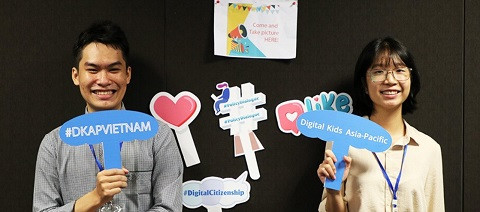 Policy dialogue on digital citizenship competencies held between Vietnamese youth and policy makers 2020-09-24 On 17 September 2020, UNESCO hosted the policy dialogue between the Youth Task Force of the Digital Kids Asia-Pacific (DKAP) Youth Engagement Project in Viet Nam and the policymakers. The first phase of DKAP Project was a research project using the DKAP Research Tools and the DKAP Regional Report was launched on 10 May 2019 in Bangkok, offering key insights into the current status of children’s perception of digital citizenship issues across four Asia-Pacific countries through a survey of 5,129 children aged 15 in Bangladesh, Fiji, Republic of Korea and Viet Nam, followed by the dissemination workshop of Viet Nam Country Report on 13 June 2019. The quantitative findings of the project that explored the digital citizenship landscape across countries revealed the need to understand the reasons for the youth’s views and responses, which also align with the report’s recommendation that more research is needed to create channels for children’s voices and needs in the development of education policy and interventions that support the development of digital citizenship. As a follow-up to the completion of the DKAP survey in Viet Nam, UNESCO in collaboration with Vietnet-ICT implemented the second phase of DKAP Project, the DKAP Youth Engagement Project in Viet Nam, to engaged youth in understanding their ICT practices, attitudes and behaviours in school contexts and at home within the DKAP Framework and connecting to the findings of the Viet Nam country report. In January 2020, the Youth Task Force (YTF) has been formed with a Core Committee consisting of five youth representatives, and the Youth Working Group consisting of a total of 33 Vietnamese youth. The YTF has a diverse composition of gender, ethnicity, and socio-economic backgrounds. They were formed into 4 groups to work on the development of multimedia products, which saw and covered the domains and competencies of the DKAP framework, from the perspectives of youth. Mr. Michael Croft, UNESCO Representative to Viet Nam opened the policy dialogue, emphasizing the importance of youth involvement in policy development and encouraging the active involvement of youth in policy formulation and review by integrating youth concerns and youth participation processes in public policies. The work of YTF was presented, followed by the feedback from policymakers, Mr. Le Anh Vinh, Vice Director General of Viet Nam National Institute of Educational Sciences, and Mr. Nguyen Hoai Nam, Vice Head of the Policy Division for ICT in Education, Ministry of Education and Training. Both congratulated YTF members on the development and presentation of their multimedia products that expressed their understanding and views about issues and concerns around the domains of the DKAP framework. At the same time, they provided YTF members with constructive comments and suggestions for improvement of the multimedia products. The hope board with the messages (recommendations and hopes) from youth on the future policy and programme development on digital skills education were presented to the policymakers for the last session, where the policymakers picked the messages and responded to them. The multimedia products developed by the DKAP YTF can be found here: (To be updated) For more information, please contact Ms. Jiheun Haylie Kim, Education Programme Officer at j.kim1@unesco.org(link sends e-mail) URL:https://en.unesco.org/news/policy-dialogue-digital-citizenship-competencies-held-between-vietnamese-youth-and-policy
  Call for Exhibitions and Edutainment Content – Global Media and Information Literacy Week 2020 2020-09-24 Acquiring media and information literacy (MIL) competencies often takes place outside the classroom, through art, storytelling and entertainment. In the framework of Global MIL Week 2020, UNESCO is calling for exhibitions and edutainment content related to MIL to be showcased throughout the Week, in an effort to enable citizens to resist disinfodemic. Call for exhibitions Stakeholders in the field of media and information literacy (MIL), including museums, libraries, archives, academia, media organizations and private sector organizations, are invited to submit proposals for MIL-related exhibitions in the framework of Global MIL Week 2020. The exhibitions will be in line with the theme “Resisting Disinfodemic: Media and Information Literacy for Everyone and by Everyone”. Proposals should present good practices, historical content, social and real-life stories, and educational resources related to the topic. They should be integrated and packaged in the format of curated audiovisual materials, giving audience a virtual exhibition experience. Selected exhibitions will be showcased virtually on the main online platform of Global MIL Week 2020. Participants can access them through the virtual exhibition booths on the platform. Submit a proposal here, by 2 October 2020. Submitters of approved proposals will be contacted for submission of full exhibition content. Call for edutainment content MIL learning can be more enjoyable when done through a combination of education and entertainment. Global MIL Week 2020 calls for such edutainment content related to MIL, as part of its response to the COVID-19 pandemic and to the increasing need to build citizens’ resilience to the disinfodemic. Think how you could teach children, youth, adults and the elderly MIL skills in an informal and entertaining manner, create content, and share it with us. The accepted formats include song, video, poetry, meme, GIF, illustration, and dance. Give free reign to your creativity! Submit your content here, by 9 October 2020. UNESCO will publish and promote selected content on its social media channels. Under the theme “Resisting Disinfodemic: Media and Information Literacy for Everyone and, by Everyone”, Global MIL Week 2020 will respond to the exponentially increasing demand for MIL worldwide. It highlights the necessity of recognizing our shared interest in improving everyone’s competencies to interact with media, technology, and information, in order that they can be engaged in societies as critical-thinking citizens. It also underlines the pivotal role of MIL in fostering quality journalism, critical access to information and freedom of expression, which all have implications on how the war against disinformation can be overcome. Contact Alton Grizzle, a.grizzle@unesco.org(link sends e-mail) Xu Jing, ji.xu@unesco.org URL:https://en.unesco.org/news/call-exhibitions-and-edutainment-content-global-media-and-information-literacy-week-2020
  UNESCO Prize for the use of ICT in Education: Call for nominations now open to projects ensuring the continuity and quality of learning 2020-09-24 The UNESCO King Hamad Bin Isa Al-Khalifa Prize for the use of ICT in education is now accepting candidatures. The theme of the 2020 edition is the use of Artificial Intelligence (AI) to enhance the continuity and quality of learning. In the context of the education crisis due to the COVID-19 pandemic, this focus is all the more important. Indeed, the way we use new technologies to respond to the crisis reveals both their potential and the need to support their development – so that they can help to improve learning and inclusivity rather than exacerbate existing inequalities. Technology innovations fueled by AI have the potential to locate and reach excluded and marginalized groups and provide quality learning programmed for learners in emergency contexts or learners with physical and cognitive disabilities. AI technologies can also help accurately analyze difficulties faced by students studying in a language other than their mother tongue. At the same time, they can support teachers with a better diagnosis of learning problems and personally adaptive feedback to improve pedagogical responses. Two winners will be selected by the Director-General of UNESCO based on the recommendations of an international Jury, and each winner will receive a reward of USD 25,000 and a diploma during a ceremony in Paris. Who can apply?Any individual, institution, or non-governmental organization (NGO) with an established ongoing project relevant to the specific theme of the year i.e. that use AI-powered solutions to enhance the continuity and quality of learning. More information on the selection criteria and eligibility. How to apply?The applicants should fist request the access to the online platform and then fill in an online form.See detailed user guide and instructions. For the application to be considered, it should be nominated by either the National Commission of the UNESCO Member State or an NGO in official partnership with UNESCO. All applicants are encouraged to get in touch with the NGO or National Commission ahead of the application process. Self-nominations will not be accepted. Governments of UNESCO Member States as well as NGOs in official partnership with UNESCO are invited to elicit and nominate up to three projects, which are in line with the 2020 theme and meet the selection criteria. The deadline for nominations is 18 December 2020 (midnight, Paris time). For more information contact: ictprize@unesco.org URL:https://en.unesco.org/news/unesco-prize-use-ict-education-call-nominations-now-open-projects-ensuring-continuity-and
 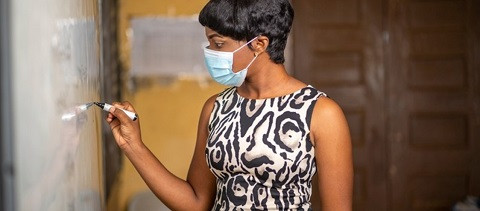 How teachers are leading efforts to ensure learning never stops during COVID-19 education disruption 2020-09-24 As schools and other educational centres were closed down around the world, the education of nearly 1.6 billion learners, representing over 90% of the world’s total enrolled student population, was, and continues to be, affected by the COVID-19 pandemic. This crisis has created an unprecedented context that has brought to the fore teacher leadership, creativity and innovation. Globally, in contexts ranging from places where teachers and learners have no computers, or internet access, to others where online learning took a great leap forward, teachers have worked individually and collectively to find solutions and create new learning environments for their students to ensure that learning never stops. Some teachers travelled for hours each day to establish small learning groups around a laptop, others walked door to door to distribute thousands of much-needed school meals during the lockdown, yet others delivered their classes from the back of a truck! In the majority of cases, teachers were forced to act without much warning and with little time to prepare. Curriculums were modified or condensed, lesson plans adapted, working methods turned on their heads. But, whether via the internet, mobile phone, television, radio broadcast or the mail, teachers continued to provide an education to their students. In many low-income countries, where there is poor or no connectivity to the internet or mobile networks (globally about 50% and 43% of households, respectively, do not have a computer or access to the Internet), teachers prepared take-home packages for their students. To support their work, teachers have also formed communities of practice and support groups through social media platforms such as Facebook and Twitter. COVID-19 has therefore significantly added to the workload of teachers who, at the best of times, face a number of challenges. In response to the crisis, the International Task Force on Teachers for Education 2030 released a “Call for Action on Teachers” which, among other things, advocates for teacher participation in short, medium-, and long-term planning and policymaking as we move forward. The leadership and ingenuity teachers have shown during the COVID-19 crisis are no surprise. They have shown these time and time again. This is why, as it has done every year since 1994, UNESCO will celebrate their work on 5 October, with World Teachers’ Day, on the anniversary of the signature of the 1966 ILO/UNESCO Recommendation concerning the Status of Teachers. The day provides the occasion to celebrate the teaching profession worldwide, to take stock of achievements, to raise awareness of the challenges facing teachers, and to highlight their role in the achievement of the global education targets. This year, it will also be an opportunity to address the role of teachers in education systems, and societies in general, as we move past the COVID-19 crisis and into what inevitably will be new and as yet largely unchartered territory. For more information on World Teachers’ Day, and how to participate, please visit the event’s webpage URL:https://en.unesco.org/news/how-teachers-are-leading-efforts-ensure-learning-never-stops-during-covid-19-education
 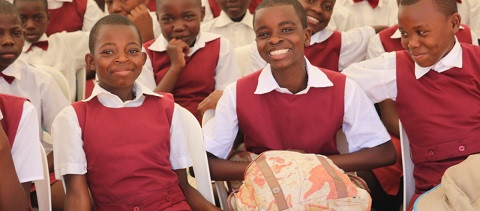 Children’s learning and welfare should be at the centre of decisions around school re-opening 2020-09-24 At the end of March, 9500 schools in Zimbabwe were closed due to the COVID-19 pandemic – affecting more than 4.6 million children in the country.-- Laylee Moshiri, Alex Gasasira and Hubert Gijzen On any normal weekday morning we would hear the familiar and comforting sounds of school children walking in small groups giggling with each other – strolling down the various roads and footpaths of Zimbabwe’s cities, towns and villages filtering towards the local school. A full day of learning ahead. Wisdom passed on from the teacher. Games or a kick of the football in the school yard. And a good meal for lunch. But this year that sound and sight has vanished. At the end of March, 9500 schools in Zimbabwe were closed due to the COVID-19 pandemic – affecting more than 4.6 million children in the country. But the Government, through the Ministry of Primary and Secondary Education (MoPSE) and partners such as UNICEF, WHO and UNESCO are working hard to prepare the country towards reopening schools and reopen in the safest way possible for children, teachers and communities. We are very happy to see that this week Cambridge Examination classes went back to the classroom and the Zimbabwe School Examination Council (ZIMSEC) exam classes: Grade 7, Form 4 and Form 6 will return later in September. We hope all grades will follow soon after that. While welcoming the steps towards reopening schools, it is worth reinforcing some of the things we know about COVID-19 and the increasing evidence pointing to the impact of school closures on learners. Scientific evidence tells us that children and adolescents are less likely to contract COVID 19 and when they do, they generally have a milder form of the virus. Documented transmission amongst children and staff within educational settings is limited because so many countries closed schools and children have largely remained at home during times of intense community transmission. Prolonged closure of schools is not an option in a developing country context given that schooling is protective, particularly for poor and vulnerable children and adolescents. Prolonged school closures negatively impact a child’s ability to learn, including those in pre-primary grades. This can also lead to permanent loss of learning and based on World Bank modelling, school closures in sub-Saharan Africa could result in lifetime earnings losses of $4,500 per child. The longer children are out of school, the higher their chance of permanently dropping out of school and their likelihood in facing dire problems including child labour. After extended breaks from school many children simply never return. In equal measure, evidence shows that the cost of a continued lockdown is very high for children. It increases the risk of teenage pregnancies, sexual exploitation, child marriages, abuse, violence, mental health issues and other threats to their well-being. A framework for reopening schools developed by UNESCO, the World bank, UNICEF and WFP reiterates that these negative impacts will be significantly higher for marginalized children, such as those living in countries affected by conflict and other protracted crises, migrants, the forcibly displaced, minorities, children with disabilities, and children in institutions. In Zimbabwe, Helpline services such as those operated by Musasa Project and Childline have reported significant increases in reports of gender-based violence and child protection concerns since the lockdown began in April this year. Of the child protection cases reported, many are directly related to violence against children and sexual and gender-based violence, with a majority of the perpetrators being people within the child’s home and close environment. Further, lengthy closures disrupt essential school-based services such as school feeding which provides the only nutritious meal for many poor children, psychosocial support, immunizations, and can lead to increased anxiety due to loss of teachers/peer interaction. Without timely action for reopening and increased investment, a learning crisis could turn into a protracted emergency for children’s education and well-being. The message is clear: As lockdown measures and restrictions ease, we need to reopen the classrooms. So, the big question is: How and when to reopen during this time? MoPSE in collaboration with other key partners in the Education Working Group has developed a strategy as part of its preparedness and response plan. The key intention is to protect children and teachers when schools re-open, while ensuring quality learning. This strategy is holistic and proposes measures that can contribute to limit exposure to COVID-19 (and many other diseases at the same time) and reduce the probability of its transmission amongst learners, teachers and school communities, while suggesting ways to build back better and safer school environments. One of the key objectives includes support to learners, teachers, and school communities to prevent the transmission and spread of COVID-19 and to facilitate safe return to school as schools start re-opening. We are seeing this through sustained planning and investment such as the development of Standard Operating Procedures and new monitoring systems with data from schools to foster quicker and more insightful decision making. Additionally, efforts are being made through rigorous planning and the roll out of personal protective equipment including hygiene kits and reusable masks for teachers, and rehabilitation of water sources in schools. The strategy also aims at ensuring continuity of quality learning and the well-being of learners, teachers, and school communities during the emergency. We are seeing this through the delivery of 180,000 early childhood development (ECD) books for home learning and development of over 500 primary level radio lessons – broadcast daily throughout the country, as well as a teacher’s resource platform and plan to provide capacity building programmes on distance learning for teachers. The justification for school re-opening is echoed in the recently issued ‘’Considerations for school-related public health measures in the context of COVID-19’’, published by WHO, UNICEF and UNESCO which is intended to help policy makers and educators with making decisions on running schools as safely as possible during the COVID-19 pandemic, guided by a risk-based approach. This guidance emphasizes that at the forefront of all considerations and decisions should be the continuity of education for children for their overall well-being, health and safety and maintains that the shutting down of educational facilities should only be considered when there are no other alternatives. This global health crisis further underscores that teachers are the backbone of every education system and are in actual fact frontline workers. Teachers and school leaders were forced to adapt quickly, and often without preparation, to remote learning modalities. Despite the challenges, the crisis allowed for creativity and innovation in teaching and learning that must be capitalized upon and sustained. As schools reopen, it will be critical to provide stronger support to teachers, including through continuing professional development, in particular in the area of information and communications technology (ICT) to place more attention on their social and emotional well-being, and ensure social dialogue to protect their rights and ensure they are actively engaged in shaping the educational recovery. As we move into this new normal of COVID-19, we urge leaders, communities, parents, and teachers to employ the same agility and urgency to safely reopen schools as has been used to open up other parts of society and the economy. Ongoing efforts to minimize the risk of COVID-19 transmission within schools, school associated settings and the wider community are commendable and should be sustained. The long-term impact of extending the school lockdown risks ever greater harm to children, their future and their communities. Let’s all reimagine learning so that every child gains the skills they need to reach their full potential. Authors: Laylee Moshiri is the Representative, UNICEF Zimbabwe Alex Gasasira is the Representative, WHO Zimbabwe Hubert Gijzen is Southern Africa Regional Director and Representative, UNESCO URL:https://en.unesco.org/news/childrens-learning-and-welfare-should-be-centre-decisions-around-school-re-opening
 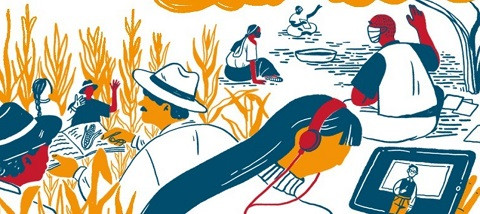 Regional Webinars on the International Literacy Day 2020 Celebration in Sub-Saharan Africa 2020-09-24 The recent COVID-19 pandemic and its disruptions to education systems globally, has demonstrated the fragility of many youth and adult literacy educators, programmes and systems as represented by abrupt suspension of numerous programmes. Policy-makers, practitioners, and development partners have learnt some important lessons, particularly in the context of both formal and non-formal education, such as the potential of distance learning offered by digital and other types of technologies, and the value of face-to-face interactions between educators and learners. In addressing some of the fallouts of the pandemic, the UNESCO Regional Offices in Abuja, Dakar, Harare, Nairobi and Yaoundé, within the framework the International Literacy Day 2020 are organizing two webinars on the theme “Literacy Teaching and Learning: The Role of Educators and Pedagogical changes.” Other partners of the event include the International Institute for Capacity Building in Africa (IICBA), the Section of Youth, Literacy and Skills Development of UNESCO Paris and the UNESCO Institute of Lifelong Learning (UIL). The first webinar is a Policy Dialogue on innovative methodologies for youth and adult literacy programmes in the midst of the COVID-19 pandemic and beyond and the role of educators. It will provide a platform for Ministers of Education, development partners, civil society organizations and the private sector to discuss effective policies, innovative approaches and the role of educators, as we rethink literacy teaching and learning of youth and adults in Africa during and after the COVID-19 era. The second webinar will provide an opportunity for UNESCO to share the UNESCO Strategy for Youth and Adult Literacy (2020-2025) with focal persons responsible for literacy in the countries of the region as well as provide a platform for countries to share experiences on the focus areas of the Strategy. Details of the two webinars are as follows:1st webinar: 23rd September, 2020Time 09:00 GMTZoom link: https://unesco-org.zoom.us/webinar/register/WN_X_oGCk2xSEmVt... 2nd webinar: 30th September, 2020Time: 09:00 GMTZoom link: https://unesco-org.zoom.us/webinar/register/WN_kvxS7XRnSde0f... URL:https://en.unesco.org/news/regional-webinars-international-literacy-day-2020-celebration-sub-saharan-africa
 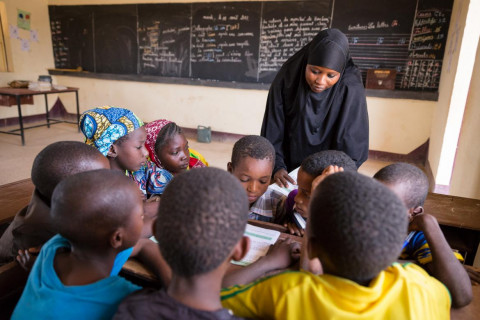 Peace education: A key driver of change in Africa 2020-09-23 This post is the 9th in a blog series published in 2020 in the context of a collaboration between the Association for the Development of Education in Africa (ADEA) and the Global Partnership for Education (GPE). September 21st marks the International Day of Peace. Established in 1981 by the United Nations, this day is devoted to strengthening the ideals of peace, both within and among all nations and peoples. It also showcases some of the initiatives that countries have put in place to end conflict (e.g. peace caravans, tree planting for peace, music concerts, sensitization on emerging forms of violence, etc.). This year’s theme is “Shaping Peace Together.” As we reflect on this theme, it is important to state from the onset that peace is a collaborative effort. No community or individual can achieve it alone. This draws attention to the importance of collaborative action in ending conflict and promoting peace throughout the world. This year is also the AU theme of ‘Silencing the Guns: Creating Conducive Conditions for Africa’s Development’. Let’s remember that silencing the guns means quality education! Impact of conflicts on education When war erupts, education is the most adversely affected sector. Violent conflict continues to pose social-economic challenges to the African continent – destroying infrastructure, impacting teachers, swelling number of students out of school and impacting the most vulnerable. As of June 2019, 9,272 schools were closed or had become non-operational and almost 2 million children had been robbed of an education due to violence and insecurity in Burkina Faso, Cameroon, the Central African Republic, Chad, the Democratic Republic of Congo, Mali, Niger and Nigeria. A report published by UNICEF in August 2019 further stated that since 2017, there had been a surge in deliberate attacks against students, teachers and schools in West and Central Africa, leading to a tripling in school closures in the last year, which pushed more than 1.9 million children out of school. And all this was before the school closures due to the COVID-19 pandemic, which is now further exacerbating an already complex emergency situation. Therefore, the capacity of the education sector to promote peace and harmonious coexistence cannot be underestimated. Indeed, one direct result of children not getting an education is that they are more vulnerable to recruitment into violent extremism, child labor and sexual exploitation, early marriages, disease, and ultimately poverty. Shaping peace in Africa through education and citizenry The African Union vision talks of “a peaceful and prosperous Africa, integrated, led by its own citizens and occupying the place it deserves in the global community and in the knowledge economy.” Quality education is crucial to achieving this vision, and entails fostering attitudes that promote mutual understanding, tolerance and respect, which in turn makes societies less susceptible to violent conflicts. Education also provides a sense of normalcy and routine for children and adults after the trauma of violent conflicts. Investing in peace through education is therefore strategic as it promotes resilience and mitigates violent conflicts as well as violent extremism – the case of Europe is a classic example. Peace and security are critical ingredients in the social and economic development of any nation. Violent conflicts hamper economic development and reinforce inequalities, grievances and desperation, trapping countries in a vicious cycle of violence. Quality education can give children and youth hope and opportunities and heal divisions and traumas of war. A school can and should be a place of peace. To this end, African countries have no alternative but to anchor peace education in their education sector policies and plans, and mainstream peace education at all levels to ensure that knowledge, skills, values and attitudes for peaceful coexistence can be learned and practiced. Ministries of education also need to adopt conflict-sensitive approaches in their policies as well as emergency preparedness and response strategies that incorporate conflict reduction and protection of education from attack. Of even greater importance is the need for ministries of education to establish and strengthen their emergency coordination structures at both national and regional level to seal any gaps that may be in existence. ADEA’s work on fostering peace education in Africa The Inter-Country Quality Node on Peace Education (ICQN-PE) is one of ADEA's mechanisms for peer learning and knowledge exchange among African countries, to promote dialogue for education and leadership. Since its establishment in Kenya in 2009, the ICQN-PE has brought together countries facing conflict-related challenges for collaborative actions and use education systems as agencies and forces for conflict prevention, peacebuilding and nation building. For example, a study on the Protection of Education against Military Attack during Armed Conflict validated in August 2019 in which the ICQN-PE took part, indicated that as a result of implementation of the Safe Schools Declaration, official armed forces, among other actors, have made great efforts towards ensuring that they do not occupy schools for their activities, and they have reduced the use of children as soldiers. The teacher attrition rate has decreased in conflict-affected areas after disaster and risk reduction training and initiatives have been put in place. Peace clubs have also helped in decreasing indiscipline in schools and most countries now have a policy on schools as zones of peace. To help strengthen regional coordination, in February 2020, the ICQN in collaboration with ADEA and Save the Children, brought together 11 countries in post-conflict, currently in conflict or hosting refugees to build the capacity of the coordinators of the African Union CESA Cluster on Peace Education. ADEA, through its ICQN-PE and strategic partners, organize policy dialogue forums and call on all key actors (governments, parties to conflict, religious leaders, etc.) to stop attacks and/or threats against schools and their personnel in Africa and invest in quality education – which will make their country socioeconomically prosperous. Lastly, what is vital today also, in light of this catastrophic COVID-19 pandemic, is to develop bold policies aligned with continental and global frameworks that can really advance African actions on education in emergencies and protracted crisis. Today more than ever before, it is key to invest in education if we want to prepare the future of tomorrow. by Dorah Kitala, ICQN-PE URL:https://www.globalpartnership.org/blog/peace-education-key-driver-change-africa