
News
Catch up on what’s happening in the world of global citizenship education.
1,668 results found
 HESI highlights the role of higher education in building a better world for current and future generations 2020-10-22 On 20 October 2020, the Higher Education Sustainability Initiative (HESI) raises the flag of higher education as a driver for sustainable development and inclusive societies on the first day of the Global Education Meeting 2020. The extraordinary session of the Global Education Meeting (2020 GEM) is convened in virtual format by UNESCO, in partnership with the Governments of Ghana, Norway and the United Kingdom. Bringing together high-level political leaders, policy-makers and key education stakeholders, the 2020 GEM provides a unique platform for discussion on protecting and reimagining education in the current world shaped by the global COVID-19 pandemic. The 2020 GEM also provides a strategic opportunity for Member States and the international community to maintain and scale up their commitment to education as the pivotal investment for recovery efforts. Addressing the global education community, HESI partners emphasized that higher education plays a vital role in educating the current and next generation of leaders, driving the research agenda for both the public and private sectors, and playing a critical role in shaping the direction of national economies. In face of the largest education disruption due to the COVID-19 pandemic, members of the initiative are ready to join forces with other stakeholders to towards addressing the most pressing modern challenges and building back better: redesigning higher education in support of sustainable development, a green recovery, and regenerative pathways for education while also ensuring the quality of education, equity, and gender equality. The high-level segment of the 2020 GEM will be held on 22 October 2020. Join the live stream of the meeting at the live event page. *** The Higher Education and Sustainability Initiative (HESI) is a partnership that convenes over thirty Higher Education Sustainability Networks and UN agency members. Created preceding the United Nations Conference on Sustainable Development (Rio+20 in 2012) HESI accounted for more than one-third of all the voluntary commitments that were launched at Rio+20 with commitments from over 300 universities from around the world. Through its strong association with the United Nations, HESI provides higher education institutions with a unique interface between higher education, science, and policymaking. Higher Education Sustainability Initiative (HESI) Statement to the Education post-COVID-19: Extraordinary session of the Global Education Meeting (2020 GEM) URL:https://en.unesco.org/news/hesi-highlights-role-higher-education-building-better-world-current-and-future-generations
 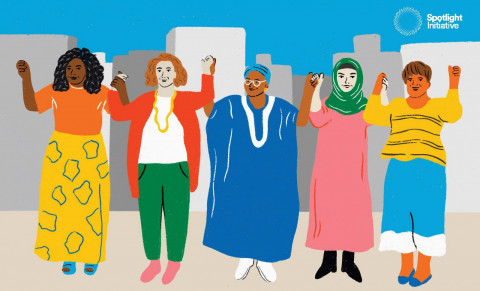 消除暴力侵害女性行为,和她站在一起 2020-10-21 Violence against women and girls is one of the most widespread, persistent and devastating human rights violations in our world today. It threatens rights to which every woman and girl is entitled: the right to education, the right to work, the right to physical and mental well-being, and the right to equality. Since its creation in 2017, the Spotlight Initiative, a global partnership between the European Union and the United Nations, has worked to eliminate all forms of violence against women and girls. The Spotlight Initiative is committed to shift people’s minds and attitudes, by drawing attention to gendered discrimination; working to change the social norms and practices; increasing public awareness; creating space for activists and survivors to share their stories; and educating communities about sexual and genderbased violence. It has a worldwide impact, covering specifically Africa, Asia, the Caribbean, Latin America and the Pacific.In 2020, UNESCO’s Director General, Audrey Azoulay, joined the Spotlight Initiatives global #WithHer campaign to raise global awareness of violence against women and girls. UNESCO field offices in Guatemala, Nigeria, Samoa, and Zimbabwe are working with civil society organisations as partners to design and implement programmes to change laws, provide essential services, and address the linkages between sexual and gender-based violence and harmful practices. The project has also highlighted the importance of preventing gender-based violence during the COVID-19 in Nigeria and in Latin America, and providing accelerated second-chance education opportunities to out-of-school girls and young children facing intersectional marginalization. To learn more about Spotlight Initiative, please check the latest report entitled Universal rights, global action which highlights the ways the Spotlight Initiative country and regional programmes have meaningfully reached women and girls, including those facing multiple and intersecting forms of discrimination. 41 laws newly signed or strengthened to support gender equality 15% increase in survivors seeking help from support services 10% increase in cases reported to the police across our country programmes Ending violence against women and girls is critical to achieving sustainable development. Decades of progress and millions of lives are at stake. Keeping gender-based violence at the top of government agendas and engaging the public is more important than ever. URL:https://en.unesco.org/news/eliminating-violence-against-women
 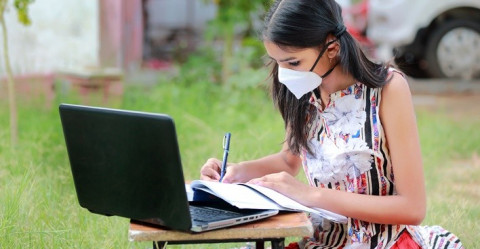 Beyond Disruption: digital learning during the COVID-19 pandemic 2020-10-21 Set against the backdrop of the COVID-19 education disruption and response, UNESCO’s flagship digital technologies in education event (formerly named Mobile Learning Week, 12-14 October 2020) highlighted innovations for technology-enabled futures of learning. Held virtually for the first time, the three-day event, under this year’s theme of ‘Beyond Disruption: Technology Enabled Learning Futures’ started the first day with sharing distance learning policies and evaluating effectiveness, followed by showcasing innovative solutions throughout the second day, and concluded on the third day with setting out policy and research agendas to build back better. Organized in partnership with the International Telecommunication Union and in collaboration with Ericsson, GIZ, Huawei, Microsoft, Norad, and ProFuturo amidst the largest education disruption in history due to the COVID-19 pandemic, this year’s conference focused on distance learning solutions to build back better. It examined the medium and long-term implications of the learning crisis that forced 1.6 billion learners worldwide out of the classroom, and the challenges that lie ahead. The event also shared best practices and explored innovative solutions to resolve this crisis. “Technology and connectivity are integral to building more resilient, flexible, and open systems,” said Stefania Giannini during the Opening Ceremony. “Let us together define how to use technology to help meet the enormous challenge before us inclusively and fairly. What we do need now is another evaluation of what didn’t work”. Effective policies – sharing policies and evaluating effectiveness After months of large-scale experimentation with distance learning, panel discussions with high-level representatives of UN agencies, ministers, and experts attempted to draw specific forward-looking policy advice. The first day featured a ministerial level panel to present various country-level responses. Ministers of Education from Côte d'Ivoire, Egypt, Ethiopia, Finland, and South Sudan recounted their national efforts to provision distance learning at unprecedented speed and scale. “Exceptional times require flexible measures and a lot of creativity by teachers,” said Li Andersson, Finland’s Minister of Education. “While the ability of teachers to transfer teaching online proved even better than had been expected, it is clear that distance learning can never fully replace the physical classrooms. Schools are much more than places for learning. They provide social networks, safety and well-being for children and youth.” Gabriel Changson Chang, South Sudanese Minister of Higher Education, Science and Technology stated, “technology-enabled learning futures can help shape the future of South Sudan’s higher education opportunities. The Republic of South Sudan hopes to draw lessons from a range of education responses during COVID-19 to inform the planning of technology-enabled inclusive and resilient learning systems for the future.” Innovative solutions – showcasing innovative distance learning solutions The second day of the conference showcased solutions from sponsors and members of the Global Education Coalition, and featured exhibitions from technology providers. One highlight was the EduTech keynote session focusing on the Khan Academy, whose Founder, Salman Khan, shared his experience during the pandemic in creating online educational tools, “the digital divide is the number one headline of COVID-19. What we are trying to do is to build for the rebuilding phase.” Barbara Holzapfel, Vice President of Microsoft Education, contributed to the day’s discussion by stating, “COVID-19 has accelerated the transformation [in education] that was well underway and we’ve seen years’ worth of change in just a matter of weeks. On the other side, the acceleration of change also brings an opportunity to reimagine the future of education and chart a path that is inclusive for all students around the world. “ The future – setting out policy and research agendas to build back better The conference concluded with the exploration of how education systems can emerge from the crisis stronger and more resilient to future disruptions. Sessions highlighted successful policy interventions in India and Finland, solutions to build back more gender-equal education systems, and innovations to digitize educational content and pedagogy. The event concluded on a positive note with a High-Level Panel outlining the way forward in the presence of the Minister of Education from Ecuador. She put forward the importance of the “flexibility of the education system” in addressing gaps and inequality in education, “in order to respond to the different situations”. She was joined by key representatives from UNESCO, Dubai Cares, ITU, the World Bank, UNICEF, ProFuturo Foundation, and the Southeast Asian Ministers of Education Organization (SEAMEO). In her closing remarks, the Assistant Director General for Education Stefania Giannini underlined: “Change is possible. Education is a promise to provide an equal chance to students for education. However, the way to address inequalities is still a challenge.” Resources Videos, presentations, agenda, speakers’ bio and more resources available at https://mlw2020.org/#/home Six months into a crisis: Reflections on international efforts to harness technology to maintain the continuity of learning URL:https://en.unesco.org/news/beyond-disruption-digital-learning-during-covid-19-pandemic
 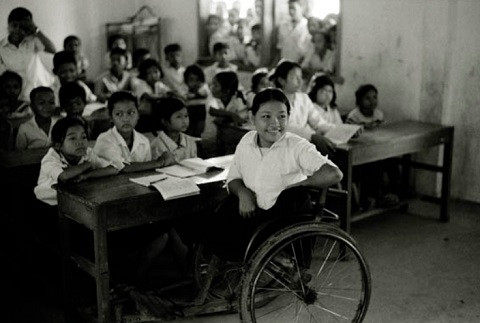 Emerging from COVID-19 pandemic: A social inclusion approach to educating learners with disabilities 2020-10-20 By Charlotte McClain-Nhlapo, Global Disability Advisor, World Bank and Anna Cristina D’Addio, Senior Policy Analyst at the GEM Report The onset of the COVID-19 pandemic forced millions of children to stay at home and physically out of school. Despite planned school re-opening in certain regions, 46% of the world’s learners remain impacted by school closures. In response to COVID-19, governments, global education stakeholders, civil society, and educators have collaborated to ensure measures to continue learning, as they simultaneously work to contain the virus and support the health and well-being of learners. From an equity perspective, there is a growing concern regarding potential exclusion of the most marginalized groups and in particular, children with disabilities. The concern is that COVID-19 disproportionately impacts people from lower socio-economic groups. Research indicates that children with disabilities and their families are particularly vulnerable as they are more likely to be poor and less likely to have access to vital information. Poverty is a critical dimension which further exacerbates exclusion from education, health, and social inclusion during the Pandemic. To capture and address these critical concerns, the Inclusive Education Initiative (IEI) managed by the World Bank released an issues paper focusing on COVID-19 and learners with disabilities. The paper titled, Pivoting to Inclusion: Leveraging Lessons from the COVID-19 Crisis for Learners with Disabilities, highlights the emerging social and educational needs, barriers, and issues experienced by children with disabilities, their families, and teachers. Reinforcing the twin-track approach to disability-inclusive development and the principles of Universal Design for Learning, the paper sets out recommended practices to meet the immediate needs of learners with disabilities, medium-term strategies for re-opening, and long term actions that should be implemented to make progress towards more equitable, inclusive learning ecosystems during and after the pandemic. Listen to the voices of parents, teachers, and persons with disabilities To better understand if learners with disabilities and their families have access to the support they need to continue learning while schools are closed due to COVID-19, the IEI carried out the IEI COVID-19 Survey on Children with Disabilities. The results highlight critical observations from parents, teachers, and persons with disabilities across seven geographic regions reflecting their lived experience, on providing care support, and ensuring quality learning during the COVID-19 pandemic. While governments and global education actors are working towards solutions to address the crisis, many concerns and observations highlighted below by stakeholders remain in need of further action. Parents are concerned about learning loss due to the school closures and reintegration once schools re-open. School re-opening plans should include catch-up programs for learners with disabilities to ensure their learning and well-being is addressed. Parents also noted difficulties in accessing affordable, low-cost internet data and equipment to support online learning. There is a need for accessible information, instruction for home learning, and community support for the care and well-being of children with disabilities. Teachers are concerned about having the appropriate support, especially in low- and lower-middle-income countries, on training and provision of resources to teach online, including access to internet, desktops, tablets, accessible learning devices and content. Another concern that emerged was actualizing guidelines, protocols, and prevention measures around promoting social distancing for learners with disabilities to ensure safety in school. Persons with disabilities are concerned about a further decrease in the rate of education and employment of persons with disabilities due to COVID-19, therefore widening the learning, wage, and poverty gaps. The lack of support for students, parents, and caregivers to prevent, protect and manage the continuing education and health crisis was also articulated as a concern along with advocacy mechanisms that can facilitate and support the involvement of persons with disabilities in COVID-19 response planning and implementation. Think inclusive, act inclusive A global seminar hosted by the IEI held in July discussed the emerging education and social needs, barriers, and issues experienced by children with disabilities in relation to COVID-19 from a global and national perspective. The seminar featured country-specific experiences from Kenya and Nepal on how they have addressed disability-inclusive education by using digital technology and social protection measures to mitigate the existing barriers in remote learning. The participant discussion pointed to the need to develop practical disability-inclusive responses at the country level, including: Facilitating mechanisms to promote accountability, including training local organizations of persons with disabilities and civil society organizations to participate in decision making and review processes of education plans in the medium- and long-term; Providing additional support to learners with disabilities with printed education packets and braille materials in countries where the medium of learning is primarily radio; Documenting practices and lessons learned from the pandemic and the risks faced by children with multiple vulnerabilities for developing strategies for ongoing teacher training to provide quality inclusive education to all children, including those with disabilities; Establishing a multi-sectorial approach for education financing to avoid the burden of the responsibility falling squarely on the education budget. Sectors, such as health, social protection, gender, and telecom must collaborate to increase affordable and sustained access to care, well-being, and education during emergencies; Ensure all data collection efforts during and post-pandemic promote the collection and use of data disaggregated by disability. The seminar also explored solutions to promoting inclusive education for children with disabilities during and post-pandemic. It concluded with a recognition that the pandemic, presents opportunities to build back more inclusive systems for all learners. The interest in issues paper and the global seminar has garnered much attention, with demand from civil society, academia, and stakeholders at the regional and country levels to host more localized seminars. In response to this demand, the IEI will continue to share the findings from the issues paper, publish the survey results, and continue dialogue on the inclusion of learners with disabilities in the responses to COVID-19 in select countries. To engage and participate in the discussion and find out where the national seminars will be held, please join the Disability Inclusive Education Community of Practice for upcoming regional events and resources on COVID-19 and learners with disabilities. URL:https://gemreportunesco.wordpress.com/2020/10/19/emerging-from-covid-19-pandemic-a-social-inclusion-approach-to-educating-learners-with-disabilities/
  UNESCO Green Citizens showcases grassroot projects at the service of biodiversity and sustainable development 2020-10-20 Today UNESCO will launch the Green Citizens initiative to amplify the voice of some 100 local citizen projects worldwide in key domains of biodiversity and sustainable development, including the Ocean, Water/Hydrology, Education for sustainable development, Indigenous and local knowledge. UNESCO has witnessed a great increase in the number and pertinence of local citizen projects over decades of scientific research in biodiversity, oceanography and hydrology, and conservation work in its protected sites around the world (Biosphere Reserves, Geoparks, natural World Heritage sites). The Organization wishes to highlight and support local, innovative, duplicable citizen projects with a verifiable impact on their community and stimulate the dissemination of new change driving ideas worldwide. The project reflects the conviction that changes in our relationship with living ecosystems will only be achieved by bringing together the complementary actions of the different actors at all levels and the reinforcement of networks of committed individuals and organizations. It is also a call on decision-makers to act quickly and a reminder that it is only together that we can make the change that is needed. UNESCO Green Citizens is a collective endeavour bringing together the Klorane Botanical Foundation as a founding partner, Adveris digital agency, Passion Pictures Paris, Twitter (for Good), artists including Juan Delcan, Roxane Campoy, Desta Hailé, students and volunteers, as well as partners, dubbed Watchers such as Solar Impulse Foundation, Sparknews or ChangeNow that are critical in identifying outstanding local projects. The Initiative enriches UNESCO’s extensive and growing range of programmes and partnerships aiming to protect biodiversity. **** More information UNESCO biodiversity URL:https://en.unesco.org/news/unesco-green-citizens-showcases-grassroot-projects-service-biodiversity-and-sustainable
 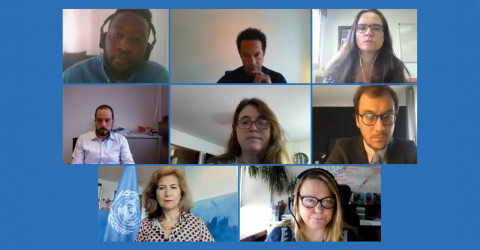 Experts consultation on racism and discriminations in Europe 2020-10-19 The third edition of the UNESCO Regional Expert Consultation Series held on 6 October 2020 gathered a distinguished panel of experts for a discussion on racism and discriminations in the European region. They exchanged valuable insights and perspectives on its roots and effects in light of the cases of discrimination and violence in the region, as well as in the context of the COVID-19 pandemic, which has exacerbated the already adverse socio-economic conditions of the most vulnerable groups in society. Aida Guillén, Director of Citizens Rights, Barcelona City Council, touched upon the socio-economic aspect of the crisis by illustrating the situation as a “competition for resources” and discussing the reality that a greater suffering exists among the most vulnerable groups in society, especially those who are discriminated against – including migrants and other minorities. The issues of job loss and social needs were also more evident within these groups with a growing rate of up to 40% of those with migrant background in social needs. Nick Glynn, Senior Program Officer, Better Policing, Open Society Initiative for Europe, discussed the dimension of power especially in line with extensive police powers and its disproportionate use on people of color a matter of great concern in moving forward. On another end, he noted how the crisis has also revealed resourcefulness in terms of crisis response with the enactment of solutions that were not seen as possible before as he shared that “we have been able to see things that initially or in the past were impossible to solve – with COVID, all of a sudden they became possible.” Prof. Evelyne Heyer, Professor of the National Museum of Natural History, pointed out the need to combat this deeply rooted prejudice by freeing ourselves from the influence of prevailing erroneous concepts surrounding racism. She illustrated how ”racism is synonymous with domination” in a competition between groups who want to serve their interest and take advantage of the other in the process. A point was also raised regarding the reinforcement of racist categorization when fighting against racism as opposed to adapting a universal approach, which works “as if races actually existed and they were not just the product of social constructs.” Mehrdad Payandeh, Member of the Committee on the Elimination of Racial Discrimination – CERD, discussed the significance of ensuring collaboration among different institutions and organizations at various levels in addressing racial discrimination. In the context of the institutional cooperation exemplified during the crisis, he noted that “this is a good example of how institutions can work together and raise the visibility [as you said] of each other.” Moha Gerehou, Journalist and 2020 European Young Leader, discussed how social media functions as both a reporting and an awareness-raising mechanism as well as a unique avenue for knowledge sharing, inclusion, and public accessibility. This is witnessed in how it acts as a platform for “voices that have been historically excluded in the global conversation on different topics” through the information that is made accessible to the public. Siegfried Nagl, Mayor of Graz, in a video message, discussed the role cities play in tackling racism, and mentioned two main strategies, namely the elimination of the structure of racism and the creation of a culture of inclusion and human rights. He also stressed the importance of facilitating the exchange of experiences and good practices among cities from all around the globe including recommendations to work on data collection and identify approaches in fighting racism and discrimination, among others. The main overarching themes of the discussion revolved around data collection, construction of knowledge and deconstruction of racism, empowerment of youth and civil society, collaboration as well as intersectionality. Recommendations were made in line with these priority areas. Organized by UNESCO, this Series aims to unpack the societal challenges of the COVID-19 pandemic related to racism and discriminations and seeks to facilitate the necessary deep reflection on what direction the international community should take amid a renewed emergence of racist agendas. This edition was moderated by Lorenzo Kihlgren Grandi, Lecturer in City Diplomacy at Sciences Po, and École Polytechnique. Since 18 September, UNESCO held three consultations focusing on the African region, North America and Europe. The last two editions of the series on the Asia-Pacific and the Arab regions are scheduled on 20 and 21 October 2020. URL:https://en.unesco.org/news/experts-consultation-racism-and-discriminations-europe
 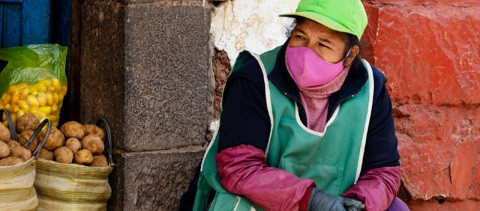 Experts from Latin America and the Caribbean take part in a dialogue on racism and discriminations in the region 2020-10-18 The fourth edition of the UNESCO Regional Expert Consultation Series held on 9 October 2020 focused on addressing the issue of racism and discriminations in the Latin America and the Caribbean region. The consultation brought together diverse speakers such as José Francisco Calí Tzay, UN Special Rapporteur on the rights of indigenous peoples (Guatemala), María Elisa Velázquez Gutiérrez, Sociologist, anthropologist, researcher on Afro-descendants and cultural diversity at the National Institute of Anthropology and History (Mexico), Myriam Elizabeth Suarez Garcia, Executive Coordinator of the Secretariat of Ethnic-Racial Equality and Migrant Populations of the City of Montevideo (Uruguay), Carla Moore, Artist, activist, and lecturer at the Institute for Gender and Development Studies (Jamaica), Sindis Meza, Program Officer, Ford Foundation (Colombia), Matheus Gato de Jesus, Professor, Department of Sociology, the University of Campinas (Brazil), Rina Cáceres, Member of the International Scientific Committee of the Slave Route Project, Professor (Costa Rica). This edition was moderated by Jembell Chifundo, poet and Afro-descendant activist from Colón, Panama. The panel’s composition allowed shedding light on different features of the problem across the continent and also developing a broader set of recommendations. A point of convergence amongst all speakers was the need to create a “new narrative” on racism and discriminations. Such efforts would require clarification of the concepts of ‘race’, ‘slavery’ and ‘slave’, which, in their current construction reverberate to a large extent racist prejudice. They should also be anchored in a holistic approach that takes into account the intersection of racism with other forms of discrimination, including those based on gender, social status, sexual identity, etc. and builds on a closer interaction between all categories of actors. The next step is rewriting “history” and elaborating a new pedagogy that will be free from persisting stereotypes (for instance moving away from the folklorization of indigenous peoples and their traditions) and will communicate the experiences and realities of people that have historically been subject to discrimination. As regards education, this new approach should explicitly tackle, from an early age, the widespread lack of self-esteem in children belonging to minorities that often face exclusion and marginalization. At the same time, education should become more culturally appropriate and the active and meaningful participation of indigenous peoples and people of African descent would play a decisive role in achieving that goal. A second broader recommendation pertained to improving the use of established frameworks, platforms, and processes. The experts coincided with the need to strengthen the follow-up to the International Decade for People of African Descent (2015-2024), inter alia by promoting greater participation of civil society actors. Several of UNESCO’s initiatives were seen as particularly relevant for upscaling the fight against racism and discriminations. One such example was the Slave Route Project. The Project could be expanded, building on its past achievements and legacy. Another example is the Latin American and the Caribbean (LAC) Coalition of Cities against Racism, Discrimination, and Xenophobia, with its important work on intersectionality.The speakers also provided valuable recommendations on the strengthening of the legal and policy frameworks and on the enhancement of their implementation. Investment in data disaggregation, improved methodologies for data collection and comparability of practices and approaches across borders were considered of capital importance for sharpened situation analysis and better-tailored action. The latter could include increased budget allocation in support of groups that have remained in the margins, notably to improve access to quality services, strengthened capacity building of city administrations and the city nomenclature, and greater use of affirmative action. Organized by the Social and Human Sciences Sector, the Series of Regional Expert Consultations on Racism and Discriminations aims to unpack the societal challenges of the COVID-19 pandemic related to racism and discriminations, and seeks to facilitate the necessary deep reflection on what direction the international community should take amid a renewed emergence of racist agendas. Since September 18, UNESCO held three consultations focusing on the African region, North America and Europe. The last two editions of the series on the Asia-Pacific and the Arab regions are scheduled for the 20th and the 21st of October, respectively. URL:https://en.unesco.org/news/experts-latin-america-and-caribbean-take-part-dialogue-racism-and-discriminations-region
  Why the world must urgently strengthen learning and protect finance for education 2020-10-16 A “generational catastrophe”. That is what UN Secretary-General António Guterres called the unprecedented education crisis looming over millions of learners across the planet, in his UNESCO-led Policy Brief launched alongside the #SaveOurFuture campaign in August. The COVID-19 pandemic has created the most severe disruption to global education systems in history, forcing more than 1.6 billion learners in more than 190 countries out of school at the peak of the crisis. It threatens the future of a generation with 24 million children and youth at risk of dropping out. This pandemic has brought to light already-existing challenges to education that have not adequately addressed for far too long. It has highlighted alarming inequalities within and across countries that must be tackled urgently in order to guarantee everyone’s fundamental right to quality education. From financing education to reopening schools safely, the world must immediately set priority actions for the recovery and strengthening of education systems around five themes considered key to the COVID-19 response. Protect domestic and international financing of education Globally, the share of education in public budgets has remained constant at about 14.5% for the past two decades. With the economic impact of COVID-19, government capacity to raise revenues will be seriously tested, while education is expected to continue to face stiff competition from other sectors. The financial downturn will put increasing pressure on national education budgets and aid to education at a time when higher funding is required for the recovery. According UNESCO’s estimates based on data from the IMF and the UNESCO Institute for Statistics (UIS), even if the budget share allocated to education remains stable, public spending could drop by 8% (US$210 billion) and aid to education could fall by 12% (US$337 billion). The 2019 Global Education Monitoring Report estimated that annual spending on education was at US$4.7 trillion worldwide: Governments account for 79.3% of total spending, households for 20.4% and donors for 0.3% globally (12% in low-income countries). Reopen schools safely Countries across the globe are gradually reopening or planning for the reopening of schools after several months of closure to curb the spread of the virus. Protecting the physical and mental health of students, teachers and school personnel and preparing for a potential viral resurgence remain the top concerns. Additional challenges to be addressed include the consequences of prolonged social isolation, both on the education system and on the school community. School closures have brought a major disruption in children’s lives, affecting their socio-emotional development and well-being, as well as their social life and relationships at school. One critical condition to reopening is to ensure a safe return to physical premises, implementing infection control measures such as physical distancing and respiratory and hand hygiene measures in school premises and transport. The immediate preoccupations to address when reopening schools include learning loss, how to assess it and offer remedial action. Everything must be done to counter the exacerbation of existing learning gaps and inequalities, the emergence of new ones, and the risk of increased dropout. Managing the back-to-school transition will require remedial action and possible adjustments, including changes to the school calendar, learning objectives, delivery modalities, assessment and certification practices. The joint Framework for reopening schools by UNESCO, UNICEF, the World Bank and World Food Programme (WFP) serves as an important reference on this topic. Focus on inclusion, equity and gender equality The COVID-19 pandemic has exposed and deepened education inequalities, marginalization and exclusion. At least 463 million or nearly one-third of students around the globe remain cut off from education, mainly due to a lack of remote learning policies or lack of equipment needed for learning at home. Social and digital divides based on gender, ability, location, language, wealth and other characteristics have put the most disadvantaged at risk of learning loss and dropout. Public health outbreaks usually have distinct gendered impacts. Evidence from past crises shows that girls can be particularly vulnerable in the face of prolonged school closures, particularly in low- and low-middle-income countries. The COVID-19 pandemic is no exception. Quarantines have placed many girls at heightened exposure to gender-based violence, including sexual exploitation and early and unintended pregnancies, while also removing access to vital services for protection, nutrition, health and well-being. UNESCO and partners recently launched a campaign to ensure that every girl is able to learn while schools are closed and return to the classroom when schools safely reopen. Ensuring continuity of learning and safe return to school for all students is needed to protect advances in education made over the last two decades, where the number of out-of-school children has decreased by nearly 125 million. This includes important gains made in girls’ education in recent decades. Reimagine teaching and learning The pandemic directly affected 63 million primary and secondary teachers. Almost overnight, schools closed and teachers were required to conduct distance teaching. With no time to prepare and often with limited guidance and resources, teachers had to modify curricula and adapt lesson plans to carry on with instruction using high, low and no-tech solutions. They lectured live, posted lessons online or interacted with students using mobile devices. In countries with poor or no connectivity, teachers used radio and TV, prepared take-home packages, while others visited homes to pick up and drop off students’ work. Teachers have been key to ensuring that learning and communication with students and their families continued while schools were closed. Their role during reopening is just as important. Teachers require training and support on adjusting curricula and assessment methods to measure and mitigate learning losses and prevent vulnerable students from dropping out. They need continued training on remote teaching, available technologies and alternative flexible pedagogies for online, blended and offline learning during future school closures. Teachers also require training on health and safety protocols to ensure a safe return to school and finally they require psycho-social support to deal with stress and to learn how to support students and other teachers in turn. Teaching quality remains a challenge globally, especially in low-income countries, yielding a workforce that lacks the skills and confidence to effectively transfer teaching online. The impact of this crisis on learning and the conditions of learning has been huge. Restrictions on movement, social isolation and the sudden change of traditional learning methods have led to increased pressure, stress and anxiety for young people, their families and communities. That is why education priorities must be reorganized so that learning systems address everyone’s needs to build a ‘new and better normal’ . UNESCO, with its Futures of Education initiative, is currently leading a global debate to reimagine how knowledge and learning can shape the future of humanity and the planet in a world of increasing uncertainty Harnessing equitable connectivity and technologies for learning The impact of COVID-19 on learning continuity has been devastating. Due to global school closures, formal learning either stopped completely or was severely disrupted for the vast majority of the world’s students. Unfortunately, learning disruptions due to the pandemic remain far from being resolved for most learners. Approximately half of the world’s population (some 3.6 billion people) still lack an internet connection. Most students do not have the appropriate hardware, software, connectivity and digital skills required to find and use educational content dependent on technology. According to UN estimates, nearly 500 million students from pre-primary to upper-secondary school did not have any access to any remote learning—three quarters of those lived in the poorest households or rural areas. Eight months into the crisis, UNESCO estimates that close to 600 million children, youth and adults) are affected by school closures in 34 countries, while in many others, they face reduced or part-time academic schedules. In March 2020, UNESCO launched the Global Education Coalition, a multi-sector partnership - centered around connectivity, gender and teachers - to meet the urgent need worldwide for continuity of learning on an unprecedented scale. UNESCO, together with the Governments of Ghana, Norway and the United Kingdom, is convening a virtual Global Education Meeting on 20 and 22 October to secure commitments from leaders for protection of education financing through the COVID-19 recovery, and agree on priority actions for the next year. URL:https://en.unesco.org/news/why-world-must-urgently-strengthen-learning-and-protect-finance-education
  Sexuality education the key to positive and healthy relationships: UNGEI@20 Forum 2020-10-16 Every young person will one day have life-changing decisions to make about their bodies, relationships, families, and life goals. Yet, many do not have the knowledge to make these decisions carefully. Comprehensive sexuality education enables young people to develop and sustain positive, healthy relationships and protect themselves from unsafe situations. The critical importance of comprehensive sexuality education to education, health and well-being was discussed at Educate for Equality: UNGEI@20 Forum, at a session on bodily autonomy and sexual and reproductive health, on 14 October. Co-hosted by UNESCO and the UN Girls’ Education Initiative (UNGEI), the event focused on why free, universal access to quality and inclusive comprehensive sexuality education needs to be a priority for education and health ministries. Team Leader at UNESCO’s Section for Health and Education, Joanna Herat, said: “If we want to see sustained gender equality, we need to ensure that both girls and boys are receiving quality and comprehensive sexuality education. Only then will they be able to take charge of their own lives, bodies and fertility, and contribute to positive, healthy, respectful and kind societies. As one of UNGEI’s partners, UNESCO has been working collaboratively towards achieving the Agenda 2030 goals on gender equality, health and education as well as the Beijing Platform for Action. Speakers at the event, civil society and youth organizations as well as UNESCO colleagues, said it was time to shift our focus from an exclusive focus on academic outcomes in education towards a more holistic approach which recognizes the role that education plays in shaping every aspect of our lives, including sexual and reproductive health and rights. Video interviews with representatives from education ministries reinforced this message. The Educate for Equality: UNGEI@20 Forum was held from 12th-16th October 2020, and organized around the six Generation Equality Action Coalitions which mark 25 years since the adoption of the Beijing Platform for Action. The forum also marked 20 years since UNGEI was launched to promote collective action for girls’ education and gender equality. The forum focused on the six Action Coalition topics: gender-based violence; economic justice and rights; bodily autonomy and SRHR; feminist action for climate justice; technology and innovation; feminist movements and leadership. Comprehensive sexuality education Education for health and well-being Educate for Equality: UNGEI@20 Forum International technical guidance on sexuality education URL:https://en.unesco.org/news/sexuality-education-key-positive-and-healthy-relationships-ungei20-forum
  Envision 4.7. Policy Papers Launched 2020-10-16 Ahead of EU Green Week, the Bridge 47 network is launching a series of policy papers that emphasize the EU’s need to prioritise Target 4.7 of the Sustainable Development Goals (SDGs) in their policy responses to the climate emergency and other global crises. The ‘Envision 4.7 Policy Papers’ outline how the Commission’s six political priorities - the Green Deal, Future of Europe, Digital Education Plan, A Strong Social Europe for Just Transition, European Education Area and New European Consensus on Development - all stand to benefit from the inclusion and implementation of SDG Target 4.7, which focuses on transformative education. This is life-long and value-based learning, designed to promote global citizenship, sustainable development, human rights and gender equality. The press release associated with the launch is featured here, on Euractiv. Rilli Lappalainen, Director of Sustainable Development for Fingo and Chair and Founder of Bridge 47: “To achieve the transformative vision of Agenda 2030, we need to change the way we think and act. This change requires the prioritisation of SDG 4.7, which outlines the need for transformative education and demonstrates how education can help us achieve all the SDGs. After the success of last year’s Envision 4.7 event, the Bridge 47 Network are delighted to release the Envision 4.7 Policy Papers, which offer guidance on the importance and necessary inclusion of SDG 4.7 in the Commission’s policy priorities” These policy papers (which you can find here) build on the momentum of Bridge 47’s Envision 4.7 event held in Helsinki in November 2019, which brought together 200 education practitioners, academics, government representatives, civil servants and civil society organisations from around the world to create the Envision 4.7 Roadmap, a collaborative policy roadmap for the implementation of SDG Target 4.7 in Europe. Brikena Xhomaqi, Director of the Lifelong Learning Platform (LLLP), co-chair of the EESC civil society liaison group and part of the Envision 4.7 Roadmap drafting committee: “The Envision 4.7 conference brought together different sectors in a European context. There were people from local, regional and national organisations, some working in education, others not. The Lifelong Learning Platform took part as we believe learning is a lifelong experience, which is meant to ensure equity, social cohesion and active citizenship. The co-creation process of writing the Envision 4.7 Roadmap demonstrated why cross-sectorial collaboration is key, bringing diverse perspectives together for a common cause.” Continuing with the same spirit of collaboration, a policy working group was established to take the work of Envision 4.7. forward, including network members such as LLLP and SOLIDAR. This resulted in the Envision 4.7 Policy Papers. Latvian MEP Dace Melbarde, an attendee at Envision 4.7 and member of the European Conservatives & Reformists Group, welcomes the launch of the policy papers at a time of great uncertainty for many but a crucial moment for the EU in terms of not losing focus or momentum on Europe’s response to the climate crisis ahead of EU Green Week 2020. Dace Melbarde, Latvian MEP and Vice Chair of the Committee on Culture and Education (CULT): “Global citizenship education is paramount to help cope when a crisis is felt. We need transformative education more than ever to help tackle the issues we face during the current Covid-19 pandemic and the existential threat posed by climate change and environmental degradation. This should be reflected in the delivery of the EU political priorities for 2019-2024.” It is likely that the difficulties and inequalities amplified by the Covid-19 pandemic are only likely to increase as the destabilising effects of climate change are felt across Europe and beyond. The Bridge 47 network believe that individuals of all ages need to be equipped with the knowledge and skills to be able to think critically about current structures, connect their actions with their impacts and engage positively with the world around them as active global citizens. Along with the policy papers, a series of animations have recently been released showcasing why SDG Target 4.7 and transformative education should be recognised by the EU as a vital mechanism for achieving positive change in response to global challenges, including the climate emergency. The EU priorities for 2019-2024 offer an opportunity for the European Union to commit to monitor the ability of education, in its various forms, to engage with global issues and challenges. URL:https://www.bridge47.org/news/10/2020/envision-47-policy-papers-launched