
News
Catch up on what’s happening in the world of global citizenship education.
1,668 results found
 جائحة كوفيد-19: حثّ البلدان على اتخاذ إجراءات أكثر قوة لوقف انتشار المعلومات الضارة 2020-10-02 The World Health Organization (WHO) together with the UN, specialised agencies and partners today called on countries to develop and implement action plans to promote the timely dissemination of science-based information and prevent the spread of false information while respecting freedom of expression. WHO, the UN, UNICEF, UNAIDS, the UN Development Programme (UNDP), UNESCO, the International Telecommunication Union (ITU), the UN Global Pulse initiative and the International Federation of the Red Cross and Red Crescent Societies (IFRC), together with the governments of Indonesia, Thailand and Uruguay held a webinar on the margins of the 75th UN General Assembly to draw attention to the harm being done by the spread of misinformation and disinformation, the latter being deliberate misinformation to advance an agenda. “As soon as the virus spread across the globe, inaccurate and even dangerous messages proliferated wildly over social media, leaving people confused, misled and ill-advised”, said UN Secretary-General António Guterres. ”Our initiative, called “Verified”, is fighting misinformation with truth. We work with media partners, individuals, influencers and social media platforms to spread content that promotes science, offers solutions and inspires solidarity. This will be especially critical as we work to build public confidence in the safety and efficacy of future COVID-19 vaccines. We need a ‘people’s vaccine’ that is affordable and available to all.” “Misinformation and disinformation put health and lives at risk, and undermine trust in science, in institutions and in health systems,” said WHO Director-General Dr Tedros Adhanom Ghebreyesus. “To fight the pandemic we need trust and solidarity and when there is mistrust, there is much less solidarity. False information is hindering the response to the pandemic so we must join forces to fight it and to promote science-based public health advice. The same principles that apply to responding to COVID-19 apply to managing the infodemic. We need to prevent, detect and respond to it, together and in solidarity.” “On top of the immediate impact on pandemic responses, disinformation is undermining public trust in democratic processes and institutions and exacerbating social divides”, said UNDP Administrator Achim Steiner. “It’s one of the most concerning governance challenges of our time. UNDP is actively collaborating with Member States, fellow UN agencies, and other partners to find holistic responses which respect human rights.” “Misinformation is one of the fastest growing challenges facing children today,” said Henrietta Fore, UNICEF Executive Director. “It takes advantage of the cracks in trust in societies and institutions and deepens them further, undermines confidence in science and medicine, and divides communities. In its most pernicious forms, such as when it convinces parents not to vaccinate their children, it can even be fatal. Because misinformation is more a symptom than a sickness, countering it requires more than just providing truth. It also requires trust between leaders, communities and individuals.” “We can beat COVID-19 only with facts, science and community solidarity,” said Executive Director, Winnie Byanyima. “Misinformation is perpetuating stigma and discrimination and must not come in the way of ensuring that human rights are protected and people at risk and those marginalized have access to health and social protection services.” “Since the start of the pandemic, UNESCO has mobilised its international networks of media partners, journalists, fact-checkers, community radio stations, and experts, to give citizens the means to fight against false information and rumours — phenomena that have been exacerbated by the pandemic,” said Audrey Azoulay, the UNESCO Director-General. ”Collective mobilisation to promote quality and reliable information, while strictly ensuring respect for freedom of expression, is essential. A free, independent and pluralistic press is more necessary than ever.” “Trust is a cornerstone of our digital world,” said Houlin Zhao, Secretary-General of the International Telecommunication Union. “Building on the long-standing WHO-ITU BeHe@lthy BeMobile initiative, ITU has been working with national ministries of telecommunications and health and mobile network operators since the beginning of this crisis to text people who may not have access to the internet, providing them with science- and evidence-based COVID-19 health advice directly on their mobile phones.” WHO and partners urged countries to engage and listen to their communities as they develop their national action plans, and to empower communities to build trust and resilience against false information. “Engaging communities on how they perceive the disease and response is critical to building trust and ending outbreaks,” said Jagan Chapagain, IFRC Secretary General. “If our response does not reflect the communities’ concerns and perceptions, we will not be seen as relevant or trusted by affected populations, and the epidemic response risks failure. More than ever, local responders are at the forefront of this crisis. We need to recognize the incredible role they play in understanding and acting on local knowledge and community feedback.” The co-hosts also called on the media, social media platforms, civil society leaders and influencers to strengthen their actions to disseminate accurate information and prevent the spread of misinformation and disinformation. Access to accurate information and the free exchange of ideas online and offline are key to enabling effective and credible public health responses. "UN Global Pulse was set up a decade ago inside the UN System to pioneer the use of real-time and predictive insights to protect vulnerable communities in times of crisis”, said Robert Kirkpatrick, Director of UN Global Pulse, the United Nations Secretary-General’s initiative on big data and artificial intelligence (AI). “During this pandemic we have seen a tremendous increase in requests for advanced analytics from across the UN System and Member States. We will continue to work with WHO and other partners to help identify and combat mis- and disinformation.” Note to Editors WHO defines an infodemic as an overabundance of information, both online and offline. It includes accurate information as well as mis- and disinformation. In May 2020, WHO Member States passed Resolution WHA73.1 on the COVID-19 response at the World Health Assembly. The Resolution recognises that managing the infodemic is a critical part of controlling the COVID-19 pandemic: it calls on Member States to provide reliable COVID-19 content, take measures to counter mis- and disinformation and leverage digital technologies across the response. The Resolution also called on international organisations to address mis- and disinformation in the digital sphere, work to prevent harmful cyber activities undermining the health response and support the provision of science-based data to the public. URL:https://www.who.int/news-room/detail/23-09-2020-covid-19-pandemic-countries-urged-to-take-stronger-action-to-stop-spread-of-harmful-information
  Media and Information Literacy against racial discrimination: Young Experts from Canada and Morocco 2020-10-01 Following UNESCO’s launch of the interview series, Media and Information Literacy (MIL) Experts Speak against racial discrimination, a Youth Advisor and a young Liaison Officer from the International Federation of Medical Students Association (IFMSA), share their personal narratives. They talk about how, by becoming media and information literate, people can resist all forms of stereotypes that lead to discrimination and hate. Global MIL Week 2020 is organized under the theme, Resisting Disinfodemic: Media and Information Literacy for Everyone and by Everyone. Several InFocus Sessions will address issues of inclusion and discrimination. This “Everyone” suggests a need to shift from the “Us” and “Them,” which often stir discrimination. When we are able to access and critically assess truthful information about other peoples and cultures, this helps us to be less prone to fall into the trap of hate and racial discrimination. Young people are a significant part of the “Everyone”. They are catalyst in promoting informed unity while tackling the uninformed racial discrimination connected to the COVID-19 pandemic, and in general. Join us for an exciting webinar on 30 September at 3 p.m. Paris time where dynamic young men and women will share their views on these issues, addressing the topic, Media and Information Literate Youth: A cornerstone to implementing Access to Information policies. Follow the links to connect and get involved in both events! Continue to read and to share in the heart wrenching experiences and the thinking of the two young interviewees below. Bushra Ebadi (Canada) Youth Advisor and Executive Committee Member at the Canadian Commission for UNESCO and a Youth Ambassador of the UNESCO MIL Alliance (GAPMIL) UNESCO: You are a MIL expert/practitioner. How do you think MIL is relevant to tackle racial discrimination? Bushra Ebadi: My name is Bushra Ebadi and I am a social innovator, researcher and global strategist with expertise and experience in youth engagement, gender equity, human rights, sustainable development, technology ethics, peacebuilding and inclusive governance. As a Youth Ambassador, North America and Europe, for the UNESCO MIL Alliance (GAPMIL) initiative and as Chair of the Canadian Commission for UNESCO’s Youth Advisory Group, I mobilize communities, knowledge and resources to advance peace, justice, sustainable development, and the agency of marginalized individuals and communities globally. Media and Information Literacy is a critical tool to tackle racial discrimination. Racism is a systemic issue; from the way institutions have been set up, to the development of laws and policies, and the language we use to communicate about world. Racism, bigotry and discrimination thrive off ignorance and rely on the spread of misinformation and disinformation in order to persist. Racist ideas, policies, and practices are not rooted in evidence. In order for us to collectively address racism, we must address the problematic narratives and inequitable power dynamics and systems that exist at the local, national, regional and global levels. Furthermore, by supporting the development of media and information literacy skills, we can equip people with the skills to effectively assess and identify credible information and distinguish it from propaganda, misinformation and disinformation that work to further entrench racism. UNESCO: Have you had a personal experience of racial discrimination? Bushra Ebadi: As a first-generation Afghan Canadian Muslim woman, I have experienced racial discrimination. My experiences of racism intersect with my experiences of misogyny, xenophobia and Islamophobia. I can recall experiences of othering from a young age; whether it was from peers who thought the food I was eating or the language I spoke were ‘weird’ or educators who exoticized and tokenized my identity. These experiences were amplified after the 9/11 terrorist attacks. UNESCO: How did you respond to the experience? Bushra Ebadi: I think many of us have been socialized to ignore experiences of racism. I don’t think that young people, even when they are experiencing racism, are well equipped to articulate these experiences and fully understand what is taking place. It is thus crucial for education on media and information literacy to tackle issues of systemic racism, including propaganda, scapegoating, cultural cleansing and genocide, freedom of expression, freedom from oppression, and accessibility. As I learned more about racism through my work with marginalized and equity-seeking communities, my education in political science, philosophy, and global affairs, as well as my own lived experiences, I committed to supporting, advancing and co-developing solutions that tackle the systemic and structural nature of racism, injustice and inequity. I often find that my experiences of racism and those of other marginalized individuals and communities are dismissed as micro-aggressions or rare occurrences. These dismissive attitudes reflect the lack of understanding many people have of the systemic nature of racism and discrimination. Furthermore, I think we need to be cognizant when we ask people to share their experiences of racism that we are not simply doing so in performative ways that contribute to the re-traumatization of individuals. No one is owed our stories and experiences as a way to ‘educate’ or spread ‘awareness’ of racism. We know racism exists; we have countless studies, stories and experiences to draw from. UNESCO: How would you characterize incidents of racial discrimination? Bushra Ebadi: Racial discrimination is a global challenge. Racism is systemic; it is supported, entrenched and centred in economic, political, legal and social systems. Despite the existence of clear evidence of systemic racism, many people are still debating whether racism is a ‘real’ challenge. Education on the historical and contemporary experiences and systems of racism is generally absent, lacking or insufficient; the enslavement of black people, genocide of indigenous peoples and xenophobia towards certain groups of immigrants are rarely acknowledged in curriculum. Systemic racism excludes marginalized individuals and communities from decision-making and governance spaces. These inequities also manifest themselves in the media industry, where black, Indigenous and other racialized journalists are under- or un-paid, excluded, marginalized or forced to leave their jobs because of systemic racism. UNESCO: Do you know about how MIL is being applied to address these challenges? Bushra Ebadi: Various civil society and community organizations and leaders are using MIL in Canada to hold governments, organizations and individuals accountable for their racist practices and policies. The Canadian Race Relations Foundation released a study on Racist Discourse in Canada’s English Print Media. Members of the Coalition of Inclusive Municipalities are working to “improve policies against racism, discrimination, exclusion and intolerance.” Canadian Journalists of Colour has released Canadian Media Diversity: Calls to Action. Future Ancestors Services is advancing “climate justice and equity, with a lens of anti-racism and ancestral accountability.” Black Lives Matter Canada, the Canadian chapter of the international #BlackLivesMatter organization, is fighting against anti-Black racism through education, community mobilization and activism. MIL plays a vital role in helping us to think critically about information and all forms of content, thus ensuring that we recognize, value and support the leadership and valuable contributions marginalized individuals and communities are making to realizing more just, equitable, peaceful and sustainable societies. Globally, we are seeing communities mobilize to tackle racism, discrimination and inequity. COVID-19 has amplified and further entrenched existing inequities and injustices. COVID-19 is disproportionately impacting systematically marginalized communities who lack access to healthcare, resources and information. Misinformation and disinformation surrounding COVID-19 have contributed to increased acts of racism and violence towards Asian people. In order to address some of these challenges, Beatrice Bonami (GAPMIL Youth Ambassador for Latin America and the Caribbean) and I co-founded the Health Information Literacy Access (HILA) Alliance with the support of our fellow Youth Ambassadors of the UNESCO MIL Alliance (GAPMIL), volunteers and partnering institutions from around the world. The HILA Alliance works to make credible information on COVID-19 information accessible to marginalized individuals and communities and address issues of discrimination, racism, disinformation and misinformation by developing media and information literacy capacities in collaboration with diverse communities. As part of our activities, we have developed information guides on COVID-19, partnered with local organizations and communities to make information accessible to Indigenous peoples, and hosted webinars on issues such as accessibility, self-care, empathy, racism and discrimination, mental health and youth engagement. Saad Uakkas (Morocco) Liaison Officer to Student Organizations working with the International Federation of Medical Students Association UNESCO: You are a MIL expert/practitioner. How do you think MIL is relevant to tackle racial discrimination? Saad Uakkas: The spreading of media content and information is a main factor that shapes the public opinion, people's attitudes and behaviours either for the good or the bad. Media itself can be a fertile ground to spread racial discrimination. Given the importance of accurate information, MIL, which includes education about information sources and providers, is necessary. Racial discrimination can originate from feelings of hate and superiority coupled with lack of knowledge or misinformation about the victims' situation. MIL is a major way to correct this misinformation, raise people's awareness about the situation of minority’s, struggles and vulnerabilities. It has the power to spread positive feelings such as empathy and solidarity. UNESCO: Have you had a personal experience of racial discrimination? Saad Uakkas: In my work in emergency rooms of hospitals in Morocco, I tend to see migrant patients from sub-Saharan Africa getting check-up for different diseases. Multiple times, I have seen lack of empathy with them by hospital personnel or other patients themselves who tend to want to go before them and demonstrate other negative behaviours. I recall one patient who was pregnant. After, her baby died in womb because of an accident. She came to the emergency room bleeding and was put in a bed for resting. Immediately after I checked her, I ordered staff to take her urgently to the Gynecology Department so they can stop the bleeding and take care of her. The thing is that this wasn't done immediately. I later learnt that she was left there for almost an hour. UNESCO: How did you respond to the experience? Saad Uakkas: Once I ordered the staff to take her, I had to keep doing my check-up work with other patients being the only doctor in the emergency room at the moment. Multiple times I kept calling the security guards and staff asking them to transport her without any concrete outcomes. Finally, I decided to stop working and stayed there sitting beside her until the patient was transported. Transport agents appeared out of nowhere and the wheelchair that was "non-existent," as they kept saying, appeared as well. The patient finally got transported. UNESCO: How would you characterize incidents of racial discrimination? Saad Uakkas: The thing about racial discrimination is that many times people don't realize they are practicing it. Simple behaviours or attitudes that people think are acceptable often tend to be discriminatory towards people. Awareness and education are needed for people to realize what is and is not discrimination and how to avoid it. Another challenge that I kept seeing is discrimination in healthcare settings by staff and healthcare professionals. The same happens in many other professional settings including administrations. Racial diversity, acceptance, and friendly behaviour and communication must be taught, and MIL has a major role in achieving that. UNESCO: Do you know about how MIL is being applied to address these challenges? Saad Uakkas: From my personal experience, in Morocco I got to see a couple of initiatives fighting racial discrimination by NGOs and institutions. This included online campaigns using testimonies, sharing emotional stories and spreading messages about humanity - support of others in need and highlighting the negative effects of discrimination. I believe more can be done by focusing on special targets and promoters, educating them and engaging them to help spread the right message. Those include decision-makers, media agents, influencers, NGOs and education system actors. DisclaimerThe ideas and opinions expressed in these interviews are those of the interviewee and do not necessarily reflect the views of UNESCO. The designations used in this publication and the presentation of the data contained therein do not imply the expression of any opinion on the part of UNESCO concerning the legal status of countries, territories, cities or areas or their authorities, or concerning the layout of their borders or boundaries.The interviews were conducted by Alton Grizzle, UNESCO Programme Specialist in Media and Information Literacy. URL:https://en.unesco.org/news/media-and-information-literacy-against-racial-discrimination-young-experts-canada-and-morocco
  Всемирный день учителя 2020 года будет отмечаться недельной серией виртуальных мероприятий 2020-09-30 The World Teachers’ Day 2020 will be celebrated with a week-long series of virtual events Every year on 5 October since 1994, UNESCO celebrates the World Teachers’ Day (WTD) to commemorate the anniversary of the signing of the 1966 ILO/UNESCO Recommendation concerning the Status of Teachers and the 1997 Recommendation concerning the Status of Higher-Education Teaching Personnel. These normative standard-setting instruments set benchmarks regarding the rights and responsibilities of teachers and standards for their initial preparation and further education, recruitment, employment, and working conditions. This year the WTD will be celebrated virtually with the theme, “Teachers: Leading in crisis, reimagining the future.” The celebration will begin on 5 October 2020 with the official Opening Ceremony followed by the Award Ceremony of the 6th Edition of the UNESCO Hamdan Prize for the Effectiveness of Teachers. Events are planned throughout the week around the world. The official closing ceremony takes place on 12 October with a joint World Teachers’ Day and Mobile Learning Week session. The event will focus on the innovative use of technology for teacher professional development and mentoring during the time of COVID-19. More information about other WTD events can be found here. The adoption of the Sustainable Development Goals (SDGs), including Goal 4 on Education, recognizes teachers (Target 4.c) as key to the achievement of the 2030 Education Agenda. The WTD provides an annual occasion to take stock of achievements and raise awareness around challenges facing teachers and the role of teachers in the achievement of the global education targets. Day of the Teachers and Mentors in Uzbekistan In Uzbekistan, the World Teachers' Day is preceded by a state holiday - the Day of the Teachers and Mentors, which has been celebrated annually since 1997 on 1 October. The country pays attention to the improvement of the education system, building and reconstruction of educational institutions and improvement of the quality of education. In September 2020, a new version of the «Law on Education» entered into force in Uzbekistan, introducing for the first time the concept of inclusive education. URL:https://en.unesco.org/news/world-teachers-day-2020-will-be-celebrated-week-long-series-virtual-events
 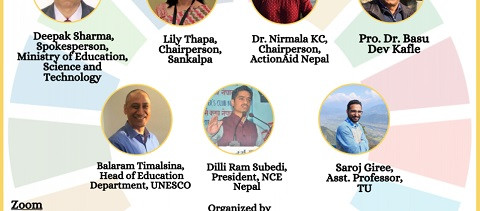 Global Goals Week Celebrated in Nepal with Youth 2020-09-30 The present COVID-19 pandemic threatens to reverse decades of progress in all sectors including education. The Global Goals Week (18-26 September) is designed to bring together people—from leaders to regular citizens—to accelerate progress towards Sustainable Development Goals (SDGs). In Nepal, Youth Advocacy Nepal, in partnership with UNESCO, UNV, ActionAid Nepal, the European Union, and Nepal Youth Council under the Ministry of Youth and Sports, organized a series of virtual events that brought together youth leaders all around the world. More than 200 youth leaders participated in the high-level dialogue "SDG4 Education 2030 Nepal National Framework: Challenges and Opportunities,” organized on 24 September. “The 17 SDGs were adopted in 2015 to ensure that all people can live in peace and prosperity, leaving no one behind. Unfortunately, the world is confronting the COVID-19 pandemic which affects all aspects of human life, putting the education sector also into jeopardy,” said Balaram Timalsina, Chief of the Education Unit in UNESCO Kathmandu Office. While appreciating the Ministry of Education, Science, and Technology’s effort to develop a framework that is aligned with the global and regional frameworks and national education policy and plans, he urged the Ministry to focus on its implementation, with an adequate budget and resources. The dialogue highlighted the need for building the capacities of teachers and educators, and the importance of their roles in order to achieve the stated goals. Prof. Dr. Basu Dev Kafle was critical that this framework has not focused much on higher education. He said, “Although this framework talks about education as a right, the annual budget has to be increased to fully implement the vision of this document.” In his remarks, Deepak Sharma, Spokesperson at the Ministry of Education, Science and Technology explained that the document is aligned with constitutional provisions, international declarations, and the government’s commitment. “With this guiding framework, local and provincial governments should develop their own action plans to achieve SDG4 targets by 2030,” he said. In another dialogue, "Localization of SDGs and Role of Young People," young leaders from Nepal shared their experiences and opinions regarding how they can help spread awareness about SDGs in their local areas. The dialogue emphasized that plans, design, programs, and projects should be supported by data and research that helps to reach needy and marginalized people. They are equally emphatic about the crucial need for advocacy and activities in order to end inequalities. Dr. Min Bahadur Shahi, chief guest of the event and member of the National Planning Commission (NPC) shared that in order to achieve SDGs, the NPC has adopted multi-stakeholders' consultations and prepared SDG progress status and road map. Emphasizing the need for the involvement of young people in every stage of the process, he said, "Youth are constructive critical builders and NPC always remains open to their opinions." More than 175 youth from different countries participated in another event, “Global Youth Meetup,” organized on 26 September in the presence of the Hon’ble Minister for Women, Children, and Senior Citizens, Parbat Gurung. Young speakers shared their experiences and the work they are doing towards achieving the 17 goals. Expressing his appreciation for the efforts made by the youth, Dr. Baburam Dhungana, Administrative Chief at the National Youth Council said, "Youth leadership must be recognized and the National Youth Council is practicing youth involvement and welcomes partnership with young people." The global meetup was an excellent platform to learn from each other's experiences. In his closing remarks, the Honorable Minister said, “The steering committee, under the leadership of the President of NPC and the thematic committee, have initiated strategies like SDG status, road map, and budget system. All have played their roles; however, COVID-19 affected much of the progress made in SDGs.” “In my view, young people are the agents of change, and if they are given a chance, we will surely achieve the SDG targets. The Government of Nepal is highly committed to achieving the SDGs,” he added. URL:https://en.unesco.org/news/global-goals-week-celebrated-nepal-youth
  [APCEIU Insights] Plague, Prejudice and Protest: Role of Education in Pandemic World 2020-09-29 Lynn Davies(Emeritus Professor of International Education, University of Birmingham, and Co-Director, ConnectFutures) Writing in September 2020, one’s gaze both backwards and forwards is unprecedented. Because of COVID-19, the past few months have seen an almost unique upheaval globally; the future is unknown but likely to be equally unmatched. Across the world, schools have been closed, people have lost jobs and livelihoods, and the harsh economic and social impact is yet to be evaluated. ”Recovery” and “normality” are only visions. So how can one even begin to make prescriptions about the role of education - nationally let alone globally? This article offers three imperatives relating to inequality, racism and social action - based mostly on not making things any worse, while possibly sharpening up educational responses to turmoil. Inequality: Poverty, Displacement, Gender The first most obvious task centres around inequality. While schools across the world have been trying to maintain some educational contact through online teaching, it is feared that children already disadvantaged will become more so. This includes those who do not have access to the internet, or where a family of eight shares access to the sole mobile phone, or, as always, where there are no books in the home. Libraries are shut. While innovative work is being done through television and radio, this requires electricity. But a UNICEF report says that poverty also seriously affects access to electricity. In seven least developed countries, less than 10 per cent of the poorest households have electricity. Nonetheless, we can draw inspiration from efforts by organisations such as Africa Educational Trust (AET), who work in the poorest regions of Africa. Where there is connectivity, they have been able to deliver training to head teachers, community education councils and project officers through Zoom, with the training that includes child-centered pedagogy, disaster planning and resilience - including safe back to school measures post-COVID-19 and the protection of vulnerable children and adults. When there is little connectivity, outreach workers and local networks come into play. In Kenya, parents of school children can visit those outreach organisations by making appointments, using social distancing and hygiene practices, to pick up home learning packs and nutritionally enhanced porridge powder to help them survive. We have to remember that COVID-19 is not the only disaster in Africa. In Kenya, they have suffered from the worst locust swarm in living memory, devouring all crops; in Somalia, floods displaced over 250,000 people in March and a rise in fighting between armed groups in South Sudan resulted in over 250 deaths in one week in early June. Whilst facing all these challenges, people that AET talk to on the ground still maintain that education is the only way that they see themselves getting out of poverty. With the economic impact of COVID-19, we will see increased migrations and refugees. Children who are displaced across or within borders already are more likely to have their education disrupted. Refugees can be stigmatised. Girls in conflict-affected settings are even more adversely affected. Organisations such as UNICEF and Mercy Corps have been ‘reimagining’ education and devising a whole array of platforms to deliver lessons and find inclusive learning apps. But disadvantaged girls are at the most risk. Without the protective school environment, COVID-19 menaces the education, health and wellbeing of girls. With increased poverty among families and limited social protection, parents are increasingly likely to marry their daughters at a younger age as a negative coping strategy. This increases the risk of female genital mutilation (FGM), child marriages and subsequent permanent dropouts from schools. Families in Somalia are taking advantage of school closures to carry out FGM so that girls have time to recover from the ritual, which can take weeks. FGM of course takes place in many other countries, including wealthy ones. The protective role of schools is at a premium. Vigilance is so much more than just stressing handwashing and social distancing. Nationalism, Racism, Extremism: Spread of Infodemic Any emergency generates fear, threat and a culture of blame. Conspiracy theories abound regarding who, what and which country is responsible. So educational efforts on media literacy and fake news have a key importance now. Habits of questioning what is read and seeking for evidence become vital. The great problem in these COVID-19 times is that the evidence seems to change, whether face coverings protect people, what exact social distance is necessary and whether a vaccine is possible. There is likely to be the growth of an anti-vaccination movement, as we saw with the measles and, in some countries, polio. Hence, the role of education is to dissuade against kneejerk reactions based on fear and to encourage the scrutiny of available science. Frighteningly, we are seeing greater explicit racism and prejudice. When the Chinese are blamed for example, there can be attacks on anyone who is or looks Chinese. In the United States, many individuals, particularly those from East Asian backgrounds, are reporting more experiences of racism and xenophobia. A Canadian survey conducted by Angus Reid in June revealed that almost one-third of Chinese Canadians reported being physically attacked due to the COVID-19 pandemic. In parts of Europe, the racism against Roma communities has increased with accusations of the community spreading disease. This is the collective danger -a license to unleash racism against stigmatized groups. What is happening is that extremist groups are using the opportunity to spread their hatred. This is part of what the World Health Organisation calls an “infodemic” - the massive spread of misinformation and cybercrime relating to COVID-19. The Commission for Counter Extremism in the United Kingdom published a report on July 9 revealing how hateful extremists of all spectrums, including neo-Nazis and the far right, have been exploiting the pandemic to launch broad misinformation campaigns that aim to sow social discord. They have promoted racist and xenophobic narratives on social media platforms that aim to incite violence against minority groups, such as urging their supporters to intentionally infect Jewish and Muslim populations with the coronavirus. Other groupings have also been fingered by neo-Nazi groups as a danger; whether refugees, LGTB individuals or elites. Fringe extremist and fringe health groups are mingling dangerously in this infodemic. Conversely, from Islamist groups, the apportioning of blame is varied. The “crusaders” in the United States are held responsible for a wave or atheism and immorality that has allegedly provoked punishment by God in the form of the pandemic. The Islamic State (ISIS) is telling terrorists to steer clear of coronavirus-stricken Europe. Those who believe they might have contracted the coronavirus are told to stay away from areas under ISIS control in order to preserve the health of others and fulfil the “holy obligation of taking up the causes of protection from illnesses and avoiding them.” Elsewhere, it was reported in The Conversation (a network of not-for-profit media outlets) that an Islamic State group online publication in India has called for its supporters to spread the coronavirus, saying “every brother and sister, even children, can contribute to Allah’s cause by becoming the carriers of this disease and striking the colonies of the disbelievers.” In Nigeria, according to the British daily newspaper The Guardian, the leader of the Boko Haram breakaway faction of extremists has released an audio clip claiming that his brutal version of Islam was an “anti-virus” while portraying the social distancing measures that have closed mosques an assault on the faith. Hence, media literacy has an intensified role of enabling young people to work their way through the large number of conflicting messages and politicised strategies on a pandemic. Teachers need support in their role of recognising hate speech and how to report it, whether online or offline. Students also need support in recognising misinformation, open or hidden xenophobia and the tactics of extremists. Social Unrest and Protest Finally, we are seeing a confluence of the impact of both COVID-19 and protest movements. The Black Lives Matter movement has swept across many countries, with different facets - from statues of slave traders being toppled, to the exposure of how BAME (black and ethnic minority) people are more likely to be affected by COVID-19 because of historic racism and deprivation, differential access to health care and differential representation as frontline workers in hospitals and care homes. Foreign Policy magazine, a U.S. news publication, reported that in parts of Latin America, COVID-19 initially dampened down protest movements - for social media cannot replace social mobilisation - but they are likely to re-emerge with increasingly vulnerable and disaffected populations. A recent analysis by Verisk Maplecroft, a global strategic consulting firm, predicts that protests are likely to surge globally. The economic shock of the pandemic coupled with existing grievances makes widespread public uprisings “inevitable.” Thirty-seven countries, mainly in Africa and Latin America, could face protests for up to three years. But the risk of unrest in other countries including India, Brazil, Russia, South Africa, Indonesia and Turkey are only slightly less acute and still constitute a threat to stability. In 2019, Verisk Maplecroft recorded 47 countries with a significant uptick in protests, including Hong Kong, Chile, Nigeria, Sudan and Haiti. As reported in The Guardian, more turmoil is predicted in 2021. When schools fully reopen (if they do), this may lead to a new world of unrest. Teachers need to be aware of how protests are triggered, and how to discuss with students both the causes and effects of these protests. Civil disobedience takes different forms and is responded to in different ways and in different countries; the responsibility of teachers is to try to keep students safe, yet at the same time, not avoid discussions that examine the root of conflicts or grievances and what protests do or do not achieve. This includes warnings about how protest movements get hijacked by extremists: for example, far-right white supremacists have seized the opportunity to mount counter protests about White Lives Matter, with inevitable outbreaks of violence across groups and with the police, according to the Southern Poverty Law Center, a nonprofit legal advocacy organization in the United States. Vigilance and Action The intersections between inequality, racism and violent protests have been amplified by COVID-19. The role of schools has become equally intensified. On the one hand, they have an opportunity and responsibility to build on any benign aspect - that many communities have actually demonstrated greater coherence, providing food and supporting each other across ethnic, social class and age lines. Schools and agencies across the globe have had to develop innovative ways of accessing the hardest to reach. Yet major challenges remain and will get worse. It is vital that schools continue to fight hate speech and propaganda, enable young people to extend skills and vigilance in what they read online, and not thinkingly or unthinkingly contribute to racism, antisemitism and Islamophobia through what they themselves post, what they share or “like.” Yet the task is more than media literacy. The slogan of the Holocaust Memorial Museum is highly relevant here: “What you do matters; what you fail to do is critical.” In times of social unrest, informed political and citizenship education becomes central: for example, how to protect the self and others, how to protest against injustice or corruption, and how to create social change without violence. URL:(No.8) Plague, Prejudice and Protest > EIU in the World - APCEIU (unescoapceiu.org)
  Q&A: African countries must build back equal for girls’ education & learn from the COVID-19 crisis 2020-09-29 Today, over 875 million of the world’s students remain affected by the COVID-19-related school closures, with the majority in Sub-Saharan Africa. Globally, UNESCO estimates that 23.8 million learners from pre-primary to tertiary education may be at risk of not returning to school, including 11.2 million girls and young women. For Aicha Bah Diallo, a former Minister for Education in Guinea and a founding member of the Forum for African Women Educationalists (FAWE), Africa is facing an unprecedented education crisis as it struggles to mitigate the impact of school closures. Also a jury member for the UNESCO Prize for Girls’ and Women’s Education, Bah Diallo took the time to talk to UNESCO about what she and her colleagues are observing across the region and the key priorities for girls’ and women’s education in Africa as we look to the future. What is the immediate impact of COVID-19-related school closures in Africa? The COVID-19 pandemic has signaled the start of a crisis impacting health, education, the economy and as well as food security in the region. All public and private schools and other learning institutions have been closed since March in most African countries and there is a realization that the region has neglected to adequately invest in both health and education. If schools continue to remain closed for a long time, children will not only miss crucial opportunities for learning but will more likely fall into forced labor or have poor nutritional outcomes as they are missing out on a daily meal usually provided at school. For girls, the consequences are more devastating, particularly for the most vulnerable and marginalized. We know that girls will face risks of early and forced marriage or early pregnancy, preventing them from continuing or returning to education. Experience shows that girls are disproportionately impacted by crisis. What learning alternatives are being implemented across the region to ensure the continuity of learning for girls and women? FAWE’s national chapters report that out of school students in the region are being encouraged to follow educational broadcasts via television, radio or online, with some schools using social media platforms like Telegraph to share materials. While these initiatives are positive, alternatives to ensure continuity of learning are not reaching most girls, women and other vulnerable and disadvantaged groups due to limited access to technology. While 80% of African households have access to radio, only 34% have access to the internet. UNESCO’s International Institute for Educational Planning reports that 89% of learners in sub-Saharan Africa do not have access to a computer at home. This gap in learning is creating high levels of anxiety among girls about their future. Adding to that, the social isolation that comes with no longer attending school is impacting girls’ socio-emotional learning and overall wellbeing. We must work closely with parents to identify those who have not been able to help their daughters keep up with their schoolwork over this time. Remedial courses need to be implemented to ensure that these students do not end up permanently dropping out of school. Looking forward, how can we ‘build back equal’ for girls’ and women’s education in Africa and more generally after this global crisis? COVID-19 has brought to light the inequalities within African education systems and societies, generally. While countries are managing the virus, they need to look ahead and develop strategies that simultaneously dismantle the structural and systemic barriers reinforcing these inequalities. For example, countries must create and support an enabling environment for the expansion of digital infrastructure so that all students, be they rural or urban, male or female, have access to online, interactive learning platforms. These platforms must also be used to provide training to teachers on virtual curricula to ensure that all students have access to quality education. Concretely, our Ministries of Education must negotiate with mobile operators and telecommunications companies to obtain fair and reasonably priced internet packages that ensure the delivery of distance education to all. It is also crucial that the lessons learned in different countries during this crisis are documented, and that the collection and disaggregation of data is prioritized. This crisis presents an opportunity to redesign African education into a vibrant, equitable and resilient system that can withstand future crises. Women and girls must be at the core of both the initial response and the long-term planning. More information UNESCO Prize for Girls’ and Women’s Education New campaign: Keeping girls in the picture UNESCO’s COVID-19 Education response Building back equal: Girls back to school guide URL:https://en.unesco.org/news/qa-african-countries-must-build-back-equal-girls-education-learn-covid-19-crisis
 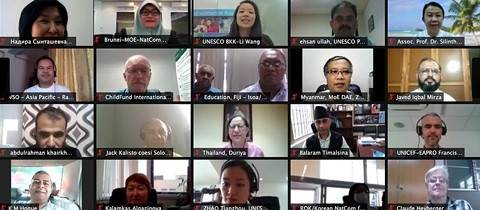 Asia-Pacific Regional Online Consultation on the 2020 Global Education Meeting (GEM) 2020-09-29 The Asia-Pacific region faces unprecedented challenges brought by the COVID-19 pandemic on governments to ensure learning continuity and on learners, parents, teachers, and caregivers. While the pandemic continues to unfold, it is increasingly evident that education itself will be defined by a new schism – the policies and practices before COVID-19, and those that will come to define the next generation of learning. On 23rd September 2020, the Asia-Pacific Regional Thematic Working Group on Education 2030+ (AP-RTWG Education 2030+) Secretariat at UNESCO Bangkok hosted a regional consultation on ‘The 2020 Global Education Meeting (2020 GEM) Declaration’ that enabled member states and civil society organizations (CSO) to discuss and collect regional inputs on the draft outcome document “2030 GEM Declaration” for the upcoming extraordinary session of the 2020 GEM scheduled on 20 and 22 October. Ms Maki Hayashikawa, the Director of the Division of Education 2030 Support and Coordination at UNESCO, said, “The extraordinary session aims to secure a commitment from political leaders by positioning Education in the center of national and international efforts to recover inclusively and sustainably from the COVID-19 pandemic.” Inputs from distinguished country representatives and CSOs included a focus and strong emphasis on the curricula, gender, and governance. Participants also highlighted a lifelong learning perspective to avoid gaps between Early Childhood Education (ECE), Technical and Vocational Education and Training (TVET) and Adult Education. A CSO representative suggested having a multi-sectoral involvement, especially from the private sector as innovative financing actors. Others stressed the need to mention disability, remote rural areas, and the most marginalized in the document. A suggestion from the body to affirm UNESCO's leadership role in coordinating the SDG4-Education 2030 Agenda and the inclusion of the Global Partnerships Education were also put forward. This multifaceted engagement and collaboration across member states and CSOs will be key for the 2020 GEM Declaration to cover the urgent educational themes in the context of COVID-19 response and recovery and as we embark on the decade of action of the 2030 Sustainable Development Agenda, our responsibility as a community is to leave absolutely no one behind. AP-RTWG Education 2030+ will continue to encourage its members to provide any further general comments or suggested inputs in the draft Declaration document. According to Ms Hayashikawa, the outcome document “2020 GEM Declaration” will be implemented by Member States in the next 12 months and its progress will be reviewed in the ordinary GEM session in November 2021. Related links and information 2020 GEM concept note and agendaMore about the 2020 GEM About AP-RTWG Education 2030+ The AP-RTWG Education 2030+, co-chaired by UNESCO Asia and Pacific Regional Bureau for Education in Bangkok, UNICEF East Asia and Pacific Regional Office and UNICEF Regional Office for South Asia, was established in March 2016 as a platform for SDG4 National Coordinators for sharing of knowledge, good practices and experience, as well as for promoting south-south-north cooperation, for the effective implementation and progress monitoring of SDG4-Education 2030. For more information, please contact AP-RTWG Education 2030+ Secretariat at ed2030.bgk@unesco.org URL:https://en.unesco.org/news/asia-pacific-regional-online-consultation-2020-global-education-meeting-gem
 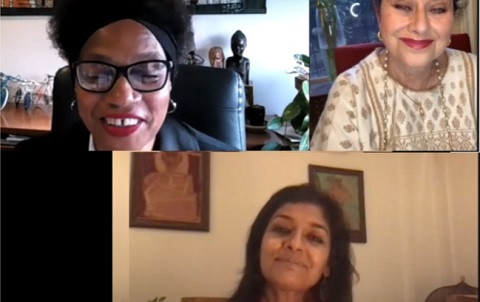 Advancing gender equality across borders: Mexico-India dialogues 2020-09-29 UNESCO New Delhi and the Embassy of Mexico in India jointly hosted the second Mexico-India Dialogue on Women’s rights on the subject of Breaking Gender Stereotypes in the Media. The dialogue shed light on gender-based discrimination in the media. The second of its kind, the dialogue is part of a series of conversations that seek to stir up discussions on women’s rights and exchange knowledge between India and Mexico, but also beyond. The dialogue revolved around the experiences of two prominent figures, namely Angélica Aragón and Nandita Das, in film and television industry, who have managed to advance an agenda of empowerment of women in environments characterized by sexist practices, abuse and perpetuation of gender stereotypes. Cinema and television have been marked by under-representation of women and misrepresentation of gender roles, sexualization, and domestication. Long silenced by the industry's unspoken norms, today more and more women are raising their voices to dispute pay gaps, the objectification of their bodies and the need to promote gender parity and portrait masculinities in different ways in the visual media. While discussing the challenges that ensued from her long-standing career in cinema, theatre and television including soap-operas (telenovelas), Angélica Aragón said, “it is imperative to target the new generation of girls, who should be empowered to rehearse the type of character they want to have in the future, for us to truly eradicate gender stereotypes and biases starting from a young age”. Bollywood actor, director, and producer Nandita Das followed by discussing her own set of experiences of working in the cut-throat world of mass media and challenging the status quo. Reflecting on the issue, she stated that “as a very powerful tool for communication, we need to infuse the media with social conscience, for new generations to question inequalities and make the world a better place”. Media has the power to inform, influence and entertain across borders. In many cases, the media acts as a social mirror and carries with it immense potential for social change. In the context of gender equality, media can be used as a powerful tool to advocate for eliminating gender-based discrimination and violence against women. However, like every other sector of the economy, the media industry is not immune to gender-based violence and gender stereotypes. Unfortunately, in many cases, the visibility given to women in the media is replete with and based on stereotypes. This in turn perpetuates the cycle of gender inequality. Despite progress achieved, the media continues to be a space that reproduces stereotypes, which makes it ever more important for more women to take up leadershup roles. In the wake of persistent gender based discrimination and gender stereotypes in the media, both Nandita Das and Angélica Aragón have taken up active roles as advocates for gender equality and continue to drive social change in their own right. The full dialogue can be accessed online using this link. URL:https://en.unesco.org/news/advancing-gender-equality-across-borders-mexico-india-dialogues
 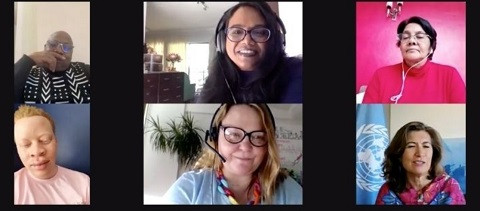 Experts engaged in a critical dialogue on racism and discriminations in the African Region 2020-09-27 UNESCO organized the first edition of the “Series of Regional Expert Consultations on Racism and Discriminations” on 18 September 2020, bringing together almost 200 participants from all around the world. In an era of globalization and multiculturalism, contextualized around the COVID-19 pandemic, the series was delivered in the form of an international webinar which was open to the public, specifically targeting national and local decision-makers, the academic and scientific communities, the NGO communities, civil society, media, and the private sector, among others. The series aims to deconstruct racism and unpack the societal challenges of the COVID-19 pandemic related to racism and discrimination. It seeks to facilitate the necessary deep reflection on what direction the international community should take amid a renewed emergence of racist agendas. Beyond providing a collective understanding and diverse perspectives on the issue, the consultation series will also guide UNESCO to develop a tool to identify the institutional structures, including legal and cultural frameworks, that contribute to the fight against racism and discriminations. This first edition focused on addressing the issue of racism and discriminations in the African region, bringing together high-level speakers such as Prof. Rose Boswell, Professor at the Nelson Mandela Metropolitan University, Prof. Vijaya Teelock, Professor at the Faculty of Social and Human Sciences and President of the Scientific Committee of the UNESCO Slave Route Project, Mr. Cheick Tidiane Seck, Member of the International Coalition of Artists for the General History of Africa and Mr. Sanele Xaba, an international model with albinism, activist and founder of the Rolled Sleeves Outreach Programme. It was moderated by Ms. Mary Papayya, Founder and Executive Director of Papayya Media. The recommendations of the speakers emphasized the need for efficient delivery, enhancement, and evaluation of both novel and existing UNESCO initiatives to combat racism and discriminations. Through an intersection between cultural collaboration and sensitivity, creative and innovative spaces, legal frameworks, project implementation, and knowledge sharing, their recommendations illustrate how UNESCO and the international community could upscale their efforts in addressing this multi-faceted issue in this day and age. The role of the youth as catalysts for change was tackled through the promotion and destigmatization of other embodied forms of knowledge and cultural expression. Individual and cross-industry participation was also cited as an important step for inclusion to move beyond organizational level discussions. Emphasis was also placed on gender equality and gender empowerment towards achieving the agenda of a just society. This involved projects to be implemented with youth and women as the focus groups on the ground. The next editions will be scheduled throughout September and October. URL:https://en.unesco.org/news/experts-engaged-critical-dialogue-racism-and-discriminations-african-region
  Call for Participation: Media and Information Literacy (MIL) Youth Survey in Asia and the Pacific 2020-09-27 There are more than 1.2 billion youth aged 15 to 24 years in the world, or 16 percent of the global population. Over 60 percent of the world’s youth lives in Asia and the Pacific region. Their voices, their challenges, and their ambitions are important not only in a distant future of the world but also right now in this moment. One area that is important to have the representation of youth is in communication and information. This would encompass matters related to freedom of expression, access to information, ICTs, artificial intelligence, and media and information literacy (MIL). In particular, MIL is seen as a possible measure in countering the spread disinformation and misinformation that has been steadily increasing in the past decade. The current COVID-19 infodemic is only the latest in the long line of situations where disinformation and misinformation have reared its ugly head that has been accelerated by ubiquitous social media. Youth that are tech-savvy and media and information literate can be a powerful force in altering the current trajectory of communication and information landscape. Critically minded youth who can access accurate quality information can be a stalwart against the scourge of disinformation and misinformation. Call for young advocates for the future of MIL in Asia and the PacificIn this context and under the theme “Resisting Disinfodemic: Media and Information Literacy for everyone and by everyone” of the 2020 MIL Week, UNESCO is conducting a regional survey to shape young generation’s views on MIL education and to start building the network of young MIL advocates in Asia and the Pacific. All the individuals between 15 and 24 years old and youth organizations in Asia and the Pacific are invited to respond to the 2-minute survey by the link https://www.surveymonkey.com/r/MILYouthSurvey or by scanning the QR code below. The survey is open until 12 October 2020. Main photo credit: ©Shutterstock/Dragon Images URL:https://bangkok.unesco.org/content/call-participation-media-and-information-literacy-mil-youth-survey-asia-and-pacific