
News
Catch up on what’s happening in the world of global citizenship education.
1,668 results found
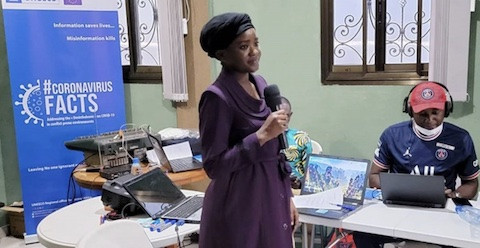 “Countering Online Disinformation and Hate Speech to Foster Peace” 2021-10-06 Community radios are receiving a training on Reporting the COVID19 in Yaounde© UNESCO / Eddy Patrick D. A year and a half of global crisis during the COVID-19 pandemic has put lives, public health, livelihoods, economies and in extension also political systems and social fabrics under unprecedented strain. The pandemic and associated movement restrictions have also accelerated the evolution of digital information sharing patterns and use of digital communication tools. In such context, and with the expertise of the sector of Communication and Information of the UNESCO, the International Pace Day will be an opportunity to discuss about the role played by social media in promoting peace and enhancing access to information; how to prevent them being used to polarize society, amplify disinformation, increase intolerance or fuel hate and conflicts and, how to ensure the respect for freedom of expression while curbing potential online harmful content? Today, innovations in technology have changed the way people seek, receive and impart information and connect with each other. With social media, in particular, people are enabled to become producers of content and information rather than just passive consumers. The role and power of social media in shaping social and political changes, violent or non-violent, have therefore come under increasing scrutiny in recent years. © UNESCO / Eddy Patrick D. To address those new challenges and curb online harmful content while protecting freedom of expression, UNESCO and the European Union have partnered on two global projects: #CoronavirusFacts and Social Media 4 Peace, both ambitioning to tackle harmful content and disinformation. The conference examined pressing global issues of social media content governance to counter online hate speech and disinformation and foster mutual respect and the need to develop common principles for a global online space. Three panels were organized with five to six panelists among high level representatives from the European Union, United Nations, UNESCO, social media platforms and governments. The Panel 2 saw the participation of Salah Khaled, Director of UNESCO, Regional Office for Central Africa. The Director Salah also recognized that if social media can be used to increase civic mobilization and access to the right information, they can also fuel hate and conflicts, contributing to new threats to peace. The project '#CoronavirusFacts: Addressing the ‘Disinfodemic’ on COVID-19 in conflict-prone environments' leverages the pivotal role of freedom of expression and access to information to address information needs in times of COVID-19 and to tackle the massive wave of disinformation which threatens to impact democracy, sustainable development and stability around the world. URL:https://en.unesco.org/news/countering-online-disinformation-and-hate-speech-foster-peace
 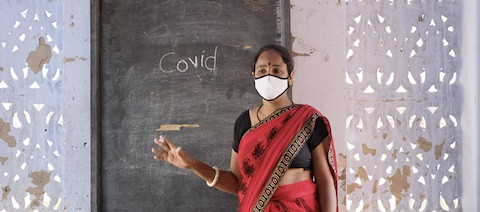 On World Teachers’ Day, UNESCO and partners urge governments to prioritise teachers in education recovery 2021-10-06 A successful education recovery hinges on increased investment in the well-being, training, professional development and working conditions of the world’s 71 million teachers to recover learning losses and manage transformations in teaching and learning imposed by the COVID-19 pandemic. This is the key message of World Teachers’ Day, celebrated on 5 October under the slogan “Teachers at the heart of education recovery.” The global advocacy day calls on governments and the international community to focus on teachers and the challenges facing their profession, and to share effective and promising policy responses. “Today we celebrate the exceptional dedication and courage of all teachers, their capacity to adapt and to innovate under very challenging and uncertain conditions. They are the principal actors of the global education recovery efforts and are key in accelerating progress towards inclusive and equitable quality education for every learner, in every circumstance,” said the conveners of World Teachers’ Day, UNESCO’s Director-General, Audrey Azoulay, UNICEF’s Executive Director, Henrietta Fore, International Labour Organization’s Director-General, Guy Ryder, and Education International’s General-Secretary, David Edwards in a joint statement. “Now is the time to recognize the exceptional role teachers play and to empower them with the training, professional development, support and working conditions they need to deploy their talent. Education recovery will be successful if it is conducted hand in hand with teachers - giving them voice and space to participate in decision-making,” argued the conveners. The educational disruptions caused by the COVID-19 crisis highlighted the crucial role of teachers in maintaining learning continuity. They have been at the heart of the educational response, from leveraging technology creatively to providing socio-emotional support to their students and reaching those most at risk of falling behind with take-home packages. But the crisis has also highlighted major challenges facing the teaching profession, including the lack of career development opportunities in online teaching and distance learning, increased workloads associated with double-shift classes and blended models and occupational safety issues. As of 27 September, schools opened fully in 124 countries. They are partially reopened in 44 countries and fully closed in 16. These figures highlight both the need for attention to teachers’ health and well-being as schools reopen, and for continued professional development to integrate and use educational technologies. According to UNESCO’s research 71% of countries have given some priority to the vaccination of teachers, but only 19 countries included them in the first round of vaccinations, while 59 countries have not prioritized them in their roll-out plans. More effort is needed to support teachers in the transition to remote and hybrid teaching. According to the 2021 global survey conducted by UNESCO/UNICEF/World Bank and OECD released in July: 40% of countries trained three quarters or more of teachers on distance learning methods and the effective use of technologies in 2020 Only six out of ten countries provided teachers with professional development on psychosocial and emotional support Just over half of all countries (58%) provided teachers with content for remote learning, while 42% provided teachers with ICT tools and internet connections Putting teachers at the heart of the education recovery will require increasing the size of the teacher workforce. According to the above survey, 31% of 103 countries recruited additional teachers for school reopening, but the global gap remains high. In total, 69 million more teachers are needed worldwide to ensure universal primary and secondary education by 2030 (SDG target 4.1) It is projected that sub-Saharan Africa will need to recruit 15 million primary and secondary teachers by 2030. To celebrate 2021 World Teachers’ Day, the conveners, together with partners, including the World Bank, the Hamdan Foundation, the International Task Force on Teachers for Education 2030 (TTF), civil society organisations and members of the Global Education Coalition, will organize global and regional events and an advocacy campaign with the participation of the UNESCO Global Network of Learning Cities. The five-day series of events will include panel discussions, webinars and online training sessions to examine effective policies, evidence and innovative practices to provide the support teachers need for successful recovery, resilience-building and reimagining education in the post-pandemic world, and to advance SDG 4. URL:https://en.unesco.org/news/world-teachers-day-unesco-and-partners-urge-governments-prioritise-teachers-education-recovery
 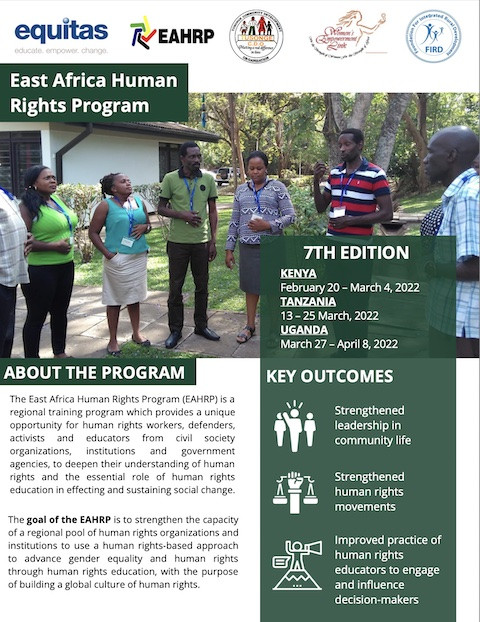 East Africa Human Rights Program 2021-10-01 The East Africa Human Rights Program (EAHRP) is a regional training program which provides a unique opportunity for human rights workers, defenders, activists and educators from civil society organizations, institutions and government agencies, to deepen their understanding of human rights and the essential role of human rights education in effecting and sustaining social change. Developed in partnership with Equitas training alumni from across East Africa, the goal of the EAHRP is to strengthen the capacity of a regional pool of human rights organizations and institutions to use a human rights-based approach (HRBA) to advance gender equality and human rights through human rights education (HRE), with the purpose of building a global culture of human rights. 2022 7th EAHRP Session – Application deadline: October 17, 2021 The EAHRP normally brings together participants from across East Africa for a two-week learning experience. However, due to the ongoing challenges around COVID-19, Equitas works with partners to implement National Training Sessions in Kenya, Tanzania and Uganda respectively for the 2022 EAHRP: Kenya: February 20 – March 4, 2022, implemented by Women’s Empowerment Link (WEL) Tanzania: 13 – 25 March, 2022, implemented by TUSONGE Uganda: March 27 – April 8, 2022, implemented by Foundation for Integrated Rural Development (FIRD) Equitas and the EAHRP team take the wellbeing and health of all participants of the 2022 EAHRP seriously and are committed to providing a safe and healthy learning environment. Be assured that as the COVID-19 situation evolves globally, so does our planning regarding the measures that are put in place to safeguard the health and wellbeing of all participants and facilitators. To learn more about the measures taken to ensure the safety of participants, visit this page. The goal of the EAHRP is to strengthen the capacity of a regional pool of human rights organizations and institutions to use a human rights-based approach (HRBA) to advance gender equality and human rights through human rights education (HRE), with the purpose of building a global culture of human rights. To this end, the program places a strong emphasis on the transfer of learning and on follow-up activities. Participants attending the program develop an Individual Plan for putting their learning into action as part of the training. Registrations for the 7th session are now open: Apply before October 17 2021! You will find all the documentation needed below : EAHRP 2022 Information Guide Application Form Memorandum of Agreement*For any questions about the EAHRP, please email eahrp2022[at]equitas.org. URL:https://equitas.org/where-we-work/east-africa/regional-program/
 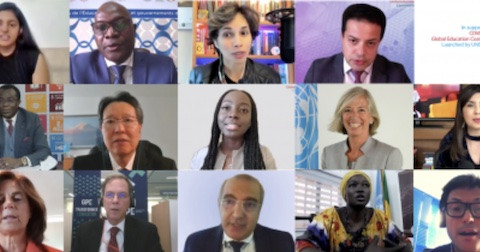 International community rallies behind technological transformations for quality, equitable and inclusive education 2021-10-01 New York, 29 September 2021: At the margins of the 76th session of the United Nations General Assembly the Permanent Mission of Japan to the United Nations and UNESCO organized a virtual event titled “Education and Technological Transformations for Human-centered Recovery”. Heeding the call of the United Nations General Assembly to leverage the potential of technological transformations for quality, equitable and inclusive education, the Permanent Mission of Japan to the United Nations teamed up with UNESCO to organize a high-level dialogue at the sidelines of 76th session of the UNGA. Bringing together key stakeholders, the event highlighted the unprecedented technological changes in education, both as means to mitigate the negative impact of COVID 19 and as a trend to be reckoned with. It also explored opportunities to unlock the potential of the Global Education Coalition to recover and further promote SDG4 through innovative technological solutions. Chairing the meeting, Ms Stefania Giannini, Assistant Director-General for Education of UNESCO, recalled the focus on reopening schools safely and brought the attention to the nearly 120 million learners who are still affected by school closures in 60 countries. In this context, she urged the international community to ensure access to distance and hybrid learning for all, including by providing devices and training teachers. She underscored the urgency to make education systems more adaptive and resilient to future shocks, with an aim to make technology work for inclusion, equity and quality in education. Recalling the ‘digital revolution happening during COVID-19 pandemic”, she informed that UNESCO and partners are working to launch a Declaration on connectivity and education. Recalling the importance of connectivity, teachers and gender equality, she emphasized the need to equip all students with digital skills as to also address exacerbated gender divides in access to technology. She further highlighted that teachers, as the most critical influence on learning, must be supported with professional development to be able to use technologies effectively. H.E. Mr Tetsuya Kimura, Ambassador, Economic, Social and United Nations Management Affairs, Permanent Mission of Japan to the United Nations reminded that the pandemic accelerated the digital transformation globally as over half of the world’s population shifted to a new way of living and learning. Yet, he warned that the post-COVID increased reliance on digital solutions may pose certain risks – such as the potential exclusion of children without internet as well as further fragmentation of education systems worldwide. H.E. Mr Kimura also called for careful assessment of the changing roles and new skills required of teachers in hybrid learning systems, ensuring that their role in fostering children’s well-being and development are well played through technology. He stressed the need to invest in digital infrastructures and human resources which “requires both a ‘whole-of-society’ and a ‘human-centered’ approach.” “I hope today that we will renew our global commitment to international cooperation and multilateralism in order to ensure the right to education, including access to the internet, information, and knowledge, which children, young people, and we ourselves all need to thrive in increasingly digitalized societies”, H.E. Mr Tetsuya Kimura said. Moderated by Ms Victoria Ibiwoye, Founder and Director of OneAfricanChild Foundation for Creative Learning, the panel also featured participation of Mr Laurent Serge Etoundi Ngoa, Minister of Basic Education of the Republic of Cameroon, Ms Maria Victoria Angulo, Minister for Education of Colombia, Mr Charles North, Deputy Chief Executive Officer, Global Partnership for Education as well as key partners of the Coalition. Ministers underscored the sense of urgency and the rapid action taken by their governments to ensure the continuity of learning. In this context, they highlighted the importance of UNESCO’s support as they grappled with the challenges to keep schools functioning. More particularly, they referred to the establishment of the ImaginEcole platform, and the Global Skills Academy, which provided free high-quality online training to equip young people with skills for employability and resilience. Stressing the importance of sustainable financing, the GPE’s representative introduced the COVID-19 global grant called “Innovation for inclusion”, funded by a $25 million GPE grant, a consortium composed of UNESCO, UNICEF and the World Bank, that develops solutions for teaching and learning continuity with the potential to be scaled up globally. Focusing on the need to produce technological change to achieve the Sustainable Development Goal 4, the second part of the event featured interventions by diverse members of the UNESCO Global Education Coalition. Panelists shared their experience in tapping on technological advances to ensure the continuity of education during the COVID-19 pandemic. They also addressed issues related to the lack of internet coverage in remote areas, the importance of training teachers on the use of technological devices, as well as the urgency of investing not only in infrastructure, but also in human and social capital, for students to acquire entrepreneurship skills that cannot be developed on self-directed learning platforms. The Global Education Coalition launched by UNESCO is a platform for collaboration and exchange to protect the right to education during this unprecedented disruption and beyond. It brings together more than 175 members from the UN family, civil society, academia and the private sector to ensure that #LearningNeverStops. Coalition members rally around three flagships, namely connectivity, teachers and gender, as well as support specific causes including the educational recovery following the deadly explosion in Beirut. All Coalition members are encouraged to pledge for the protection of learners’ personal information, privacy and security. As the UNA STRENghtens and focuses on rapid technological coalition. Click here to watch the recordings of the event. URL:https://en.unesco.org/news/international-community-rallies-behind-technological-transformations-quality-equitable-and
  Teachers need training and support to prevent and address school bullying 2021-10-01 Teachers are instrumental in promoting safe learning environments, as they are often first to prevent and address violent behavior including bullying in schools. However, a recent study shows that a significant number of teachers are not able to effectively identify, prevent and address bullying. To advance more effective responses to bullying, the 4th international thematic meeting on bullying on 7 September examined the role of teachers. Like previous meetings in the series co-organized by UNESCO and the World Anti-Bullying Forum (WABF), it contributed to the preparation of the Forum that will take place in Stockholm from 1 to 3 November 2021. “For many years, UNESCO has supported its Member States in responding to school violence and bullying, and during the last decade, we have intensified our efforts.” She explained that a solid understanding of teachers’ perceptions and practices is essential to inform these efforts,” said Vibeke Jensen, Director, Division of Education for Peace and Sustainable Development at UNESCO. Violence affects teaching practices Key findings from a recent UNESCO study based on a global survey involving 34,877 teachers (80 % of them from Central and South America) were presented for the first time at the meeting. The study highlighted what teachers think and do about bullying in schools: as many as 3 in 5 teachers surveyed expressed that violence in classrooms affected their teaching practice, but only half of the respondents felt that they were fully trained and supported by school management to address and prevent bullying. The study also revealed that some teachers were not able to identify the various forms of bullying, especially those who came from contexts where bullying is more prevalent. At the first roundtable, teachers from Africa and Europe echoed the study findings. “Here in Zambia, most teachers are aware of some kinds of bullying, but not of the more subtle types of bullying. All of the reports are about physical bullying, and incidents such as name-calling are disregarded as normal stages of growing,” said Ms Agatha Shindende, teacher at the Kabulonga Primary School in Zambia. Ms Maria Bengtsson Hurtig, Teacher and Special Educator from Nynäshamn municipality of Sweden said “in Sweden, while teachers can usually identify different types of bullying theoretically, their ability to prevent and address bullying varies, depending on the school context”. Dr Peter Macaulay, Lecturer of Psychology at the University of Derby, United Kingdom addressed the problem of cyberbullying: “Teachers are in a position where they could educate young people on how to behave online and especially help them become aware of what cyberbullying is, because sometimes young people engage in it without being aware of its impact.” Creation of a caring classroom climate The second roundtable presented different country perspectives on how to improve teacher support to prevent bullying. Ms Diana Castellanos, Undersecretary for Educational Innovation and Good Living, Ministry of Education, Ecuador, emphasized the importance of creating a harmonious school environment, and the need to take into consideration the aspect of inequality in the design of more effective responses to school violence and bullying. The experience of Thailand shared by Dr Thira Bhawangkanantha, Senior Advisor for the Ministry of Education highlighted the importance of a strong leadership, and long-term and sustainable investment in teacher training by education authorities. Dr Shoko Yoneyama, Member of the UNESCO Scientific Committee on bullying and of the WABF Scientific Committee, Japan/Australia, commented on the role of teachers based on global evidence emphasizing that teacher training should promote student-centered learning and teaching, and the creation of a caring classroom climate. “For instance, training teachers on how to create extra curriculum activities, which help students to build confidence and self-esteem.” UNESCO’s work to prevent and address school violence and bullying Behind the numbers: Ending school violence and bullying International Day against School Violence and Bullying, including Cyberbullying (on 4 November 2021) Photo: Monkey Business Images/Shutterstock.com URL:https://en.unesco.org/news/teachers-need-training-and-support-prevent-and-address-school-bullying
  Global Media and Information Literacy Youth Hackathon 2021-09-27 The UNESCO annual Global Media and Information Literacy Week is a major occasion for stakeholders to review and celebrate the progress achieved towards “Media and Information Literacy for All” and a UN international Day. Global MIL Week 2021 will be hosted by South Africa from 24 – 31 October, 2021 under the theme: Media and Information Literacy for the Public Good. You can register to participate in the online feature conference via the link: https://en.unesco.org/globalmilweek/2021/featureconference/registration Deadline for registration is 18th October, 2021 For Youth Agenda Forum, youth aged between 18 and 35 years from local schools, universities, youth centres and youth organizations, as well as youth leaders from around the globe, are invited to participate by inscribing their teams in the competition. The winning teams and the outcome of the Hackathon will be presented during the Global Media and Information Literacy Week Youth Agenda Forum on 27 October 2021. Apply via the link: https://en.unesco.org/feedback/media-and-information-literacy-hackathon-2021 Deadline for application is 3rdOctober, 2021. We look forward to your participation and please do not hesitate to contact UNESCO should you have more questions. URL:https://en.unesco.org/news/global-media-and-information-literacy-youth-hackathon
 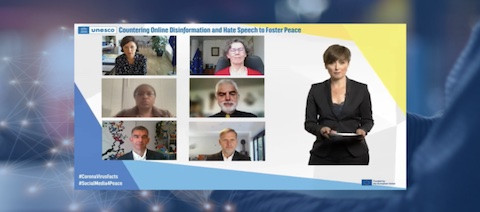 UNESCO brings together stakeholders to discuss the role of social media in promoting peace 2021-09-27 Brussels, 22 September 2021. “Unlike disinformation and hate speech, information is a key ingredient of peace, inclusion, and effective governance. I am glad that many of you have shown interest in joining today’s conversation, to reflect on how to maximize the potential of digital technologies to increase access to information and contribute to peace-building while countering hate speech and disinformation,” said Tawfik Jelassi, UNESCO Assistant Director-General for Communication and Information (CI) in his opening remarks of the virtual conference ‘Countering online disinformation and hate speech to foster peace’ organized on 21 September 2021. On the International Day of Peace, UNESCO invited high-level representatives of the United Nations (UN), the European Commission, internet platforms and experts of civil society organizations to discuss the critical role that social media play in promoting peace and enhancing access to information. Taking stock of the practices gained from the implementation of two UNESCO projects funded by the European Union (EU) Instrument Contributing to Stability and Peace, Social Media 4 Peace and #CoronavirusFacts, the event gave the opportunity to examine pressing global issues of social media content governance, in particular in conflict-prone environments, and the need to develop common principles and workable practices for an online space that can impact at local level. A high-level session aimed at discussing the role of the EU, the UN and internet companies in tackling challenges of disinformation and hate speech. Vice-President of the European Commission, Věra Jourová, affirmed the EU’s will to implement a co-regulation of online content while upholding freedom of expression. The idea is not to come up with farfetched rules that will be difficult to implement. We want to foster freedom of speech and implement a dual approach: on one side illegal and other legal but harmful.-- Věra Jourová, Vice-President of the European Commission But, co-regulating online content requires collaborating with internet platform companies, explained Alice Wairimu Nderitu, UN Special Adviser on the Prevention of Genocide: “One of the key components of the UN Strategy and Plan of Action on Hate Speech is that it acknowledges social media companies as key partners to address and counter hate speech” Ms. Nderitu said. Markus Reinisch, Vice-President Public Policy at Facebook Europe, Middle East and Africa, welcomed upscale cooperation with institutions to better tackle online hate speech, misinformation and disinformation saying that institutions’ decision on tools giving clarity and consistency to companies in dealing with hate speech, misinformation, and disinformation, “are not only desirable but necessary for social media companies.” Similarly, Matt Brittin, President of Google Europe, Middle East and Africa, explained that ‘We need to update the rules, but we also need to have ongoing regulatory dialogue because these challenges develop and evolve incredibly fast’. UNESCO’s representative, CI’s Director Guy Berger referred to UNESCO’s initiative advocating for transparency of online platforms,and on the theme recited a poem written for the occasion (download below). During a session dedicated to the new UNESCO Project ‘Social Media 4 Peace’ funded by the European Union, concrete examples from the three pilot countries of the project – Bosnia and Herzegovina, Kenya and Indonesia - of how online hate speech and disinformation have a direct impact offline on tensions and conflict dynamics were discussed. As elections are approaching in Kenya, the Director of UNESCO’s Regional Office for Eastern Africa and Representative to Kenya, Hubert Gijzen, highlighted the role social media may play in countering online disinformation and hate speech during the campaign. Maida Bahto-Kestendzic, Project Coordinator at the Bosnia and Herzegovina Press Council, explained that self-regulatory media are receiving many complaints of journalists having their news articles illegitimately removed from online platforms without a remedy and dialogue possible with the internet platforms concerned. Based on these experiences, Simon Bojsen-Møller, Deputy Head of Unit at the European Union Foreign Policy Instrument, highlighted that “through Social Media 4 Peace [project] we are piloting a combination of general rules and locally adapted approaches in dealing with social media – that can be replicated globally.” The second panel took stock of the achievements of UNESCO’s project ‘#CoronavirusFacts, addressing the ‘Disinfodemic’ on COVID-19 in conflict-prone environments, implemented since April 2020 and funded by the European Union’s Instrument contributing to Stability and Peace. With both global activities and tailored actions for nine countries and four regions/sub-regions to enhance access to information and mitigate the spread of online disinformation and hateful narratives at a critical time during the pandemic, the project has engaged over 27 000 journalists, fact-checkers and content-creators from 157 countries over the past year and a half. Project stakeholders and partners, shared practical experiences from the frontlines of tackling COVID-19 disinformation, including Cecilia Napido Gonçalves, Director of the Department of Research, Planning and Cooperation at GABINFO, Mozambique; Khaled Salah, Director of UNESCO Regional Office for Central Africa; Sana Hassan, Editor in Chief of the Iraqi Youth News Agency; Kenneth Okwaroh, Executive Director of the Africa Centre for People Institution and Society in Kenya; and Olivia Sohr, Director of Impact and New Initiatives for the fact-checking organization Chequeado in Argentina. The panel reflected on how resilience against conflict and tensions - exacerbated by the COVID-19 pandemic - has been strengthened. As a powerful common theme, their interventions emphasized the importance and impact of the new partnerships created during the pandemic and as a result of the project. Illustrating this, Janet Kincaid, Training Operations Officer & Project Manager for the Department of Communications at the World Health Organization, described the cooperation with UNESCO on the crisis response and how online interactive courses were developed for journalists around the world thanks to a global partnership between UNESCO, UNDP, WHO and the Knight Center for Journalism in the Americas at the University of Texas at Austin in the context of the #CoronavirusFacts project. She firmly underlined the added-value of this collaboration. The Massive Open Online Courses allowed WHO, with its focus on science, and UNESCO, with its focus on freedom of the press, to reach larger numbers of journalists and quickly bring them up to speed on how to write about COVID-19 credibly based on science and evidence.-- Janet Kincaid, Project Manager for the Department of Communications, WHO During the last session of the conference, panelists highlighted the need to, on the one hand, rely on international global standards to govern online content but at the same time consider social, cultural and linguistic nuances to develop and review content moderation and curation rules and tools in a localized manner. Senior Researcher at the Internet Institute of the University of Oxford and Associate Professor, Jonathan Bright, emphasized that ”There are big ethical questions behind Artificial Intelligence content moderation” and insisted on the need to make human moderators more relevant to address the complexity of online potential harmful content. Speakers Julie Owono from the Facebook’s Oversight Board and Pierre-François Docquir from Article 19 stressed the need to define efficient safeguards of freedom of expression in online content moderation. “I see a space for independent, national, multistakeholder fora bringing local aspects of societies that could be key in the implementation of new rules emerging, such as social media councils”, he said. Overall, the day enabled rich discussion and reflection. Extracting some key recommendations from the day on how to invest in and advance the right of freedom of expression and access to information as enablers of peace, the Director of the UNESCO Brussels Liaison Office to the European Union, Louise Haxthausen closed the session by underlining the needs to support journalists and enable their vital work, including by guaranteeing their safety; to strengthen fact-checkers and fact-checking; to step up transparency of internet companies, including platform moderation and curation policies and of data; to enable both monitoring and understanding of the spread and impact of hate speech; and to empower youth and other citizens to critically process what they read and hear through media and information literacy in order to build resilience to disinformation and hateful narratives. About the projectsBased on the central tenet that information is the opposite of disinformation, the UNESCO project #CoronavirusFactsleverages the pivotal role of freedom of expression and access to information to address information needs in times of COVID-19 and to tackle the massive wave of disinformation which threatens to impact democracy, sustainable development and stability around the world. Funded by the European Union, the project which has activities both at the global level, in four regions and in nine countries, supports professional, diverse and independent media’s capacity to report on the pandemic; strengthens local fact-checking organisations to debunk misinformation; and empowers youth and other citizens to critically process what they read and hear linked to COVID-19 through training in media and information literacy. Due to unprecedented challenges for the media and digital technology sectors, UNESCO has created a Resource Center of selected responses to COVID-19. To learn more, visit https://en.unesco.org/covid19/disinfodemic/coronavirusfacts The Social Media 4 Peace project funded by the European Union Instrument contributing to Peace and Stability aims at strengthening the resilience of societies to potentially harmful content spread online, in particular hate speech inciting violence, while protecting freedom of expression and enhancing the promotion of peace through digital technologies, notably social media. The project is implemented in three pilot countries: Bosnia and Herzegovina, Indonesia and Kenya. To learn more, visit https://en.unesco.org/social-media-4-peace URL:https://en.unesco.org/news/unesco-brings-together-stakeholders-discuss-role-social-media-promoting-peace
  A tipping point for education? How crisis-sensitive educational planning can secure learning for all 2021-09-26 By Karen Mundy, Director, IIEP-UNESCO On this International Day of Peace, recognizing the role of education – and planning – in contributing to peace is essential. Crises, both conflicts and disasters due to natural hazards, threaten the future of a generation of learners. Just in the past month, the instability and looming humanitarian crisis in Afghanistan, Hurricane Ida in the United States, and the earthquake in Haiti have endangered lives and upended the provision of social services, including education. Globally, COVID-19, climate change, and a refugee crisis remain significant threats to quality education for all. Will the cumulative effect of these crises lead to a tipping point for education, and what can ministries of education do to respond? Crisis-sensitive educational planning is an essential means for keeping students, teachers, and communities safe, peaceful – and learning. When done systematically and effectively, crisis-sensitive planning can help ministries institutionalize risk reduction and management and ultimately mitigate damage and impact, and in some circumstances, help prevent further crises from occurring. Simultaneous work is also needed, to redress equity and make sure that hard-won gains in education are not lost during a crisis.To support countries in mainstreaming crisis-sensitive educational planning, a revamped online resource is now available to help guide ministries of education through turbulent times. The website, Education4Resilience, relaunched with support from Education Above All Foundation, offers a wealth of resources, news, and guidance to put crisis-sensitive educational planning into motion. For ministries of education, this entails: Enhancing capacities for risk management Ministries of education need to have the capacities to analyze the risks and understand what is at stake during a humanitarian crisis – for example, how many learners or educators could be displaced, or school facilities or textbooks destroyed? In Burkina Faso, for example, the country’s conflict led to the displacement of a record one million people by the end of 2020. Through crisis-sensitive educational planning, the Ministry of Education developed their technical capacities to identify, collect, and analyze emergency related data that could both pinpoint where displaced learners were located and implement strategies to reach them. They also trained teachers to address the psycho-social needs of their students, many of whom had experienced trauma during the crisis. During COVID-19, understanding the effects of school closures on all children and youth and putting in place COVID-19 response plans to mitigate impact has been paramount for leading a coordinated response for the sector. Planning before crises strike Risk management strategies and plans for the education sector that include prevention and preparedness measures can help education authorities to anticipate crises. Authorities can then put in place measures that address vulnerabilities to potential risks so that they do not have disastrous consequences on education communities. Such strategies should also recognize that crises come in many forms and often impact the most vulnerable first. Therefore, the process of addressing multiple risks faced by a country and its education system needs to include specific measures to ensure equity and inclusiveness for girls, learners with special needs, and communities in situations of displacement. Perhaps COVID-19 was a wake-up call: authorities have now realized they must plan for the potential impact of risks long before a crisis occurs. In South America, the Ministry of Education of Guyana recognized the urgency to create a strategy to confront all the risks present in the country. The Ministry team, with technical support from IIEP, created hazard maps for all regions, outlining what was at risk and which strategies could be implemented before hazards occur, in order to ensure continuity of quality education in even the direst circumstances. With floods representing the largest risk to education, affecting some 160,000 students per year, the strategy outlines how to protect education facilities, materials, and ensure continuity of learning in such situations. Credit: Shutterstock/ivanfolio Investing in crisis-sensitive planning Investing in the protection of education not only saves lives, it can also safeguard financial resources in the long-term. Ministries of education need to work with finance ministries to determine the costs and identify the funding sources available for crisis-sensitive plans and policies prior to their implementation. Cost estimates should span activities related to preparedness (such as training for education managers and teachers or school safety programmes), prevention (such as retrofitting school buildings), and response (such as rehabilitation or reconstruction of schools that might have been destroyed). For situations that lead to displacement, ministries need to know what resources will be required to integrate refugees and internally displaced populations into host community schools. Putting strategies into action In addition to securing funding for risk management activities, implementing a plan for risk management requires buy-in at every level of the education system. Organizational capacities of the ministry such as strong communication feedback loops, and collaboration between officers and units to ensure education service delivery during crisis, are also paramount. Also important is putting in place specific organizational units mandated for risk management within a ministry of education, and fostering an organizational culture that encourages flexibility in implementation and remedial actions when challenges arise. Sufficiently trained personnel must be available to plan for and manage risks, and staff must have the necessary equipment and facilities at their disposal. Finally, a reliable and accessible education management information system (EMIS) that contains information on risks and their potential impacts is an important tool for units tasked with risk management, as their decisions should emerge from an evidence-based understanding of the realities of the education system. When these capacities exist, ministries of education will ultimately be in a better position to mitigate disastrous consequences for education communities, and to lead crisis response efforts for the sector. URL:https://gemreportunesco.wpcomstaging.com/2021/09/21/a-tipping-point-for-education-how-crisis-sensitive-educational-planning-can-secure-learning-for-all/
 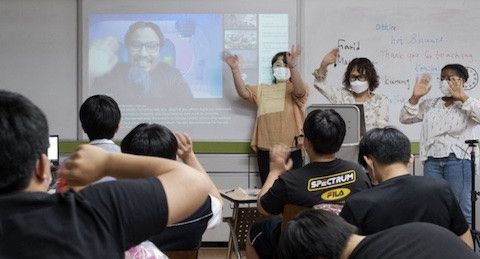 32 Multinational Teachers Develop Multilingual Online Educational Materials 2021-09-24 APCEIU is implementing a project to develop the online educational materials(hereinafter materials) with teachers in Laos, Mongolia, Indonesia, and Cambodia this September. This materials development attracts great attention as the project aims to alleviate learning loss that is worsening in the midst of the pandemic crisis. The Asia-Pacific Teacher Exchange for Global Education(APTE) Programme, hosted by the Ministry of Education of the Republic of Korea and implemented by the APCEIU is a bilateral teacher exchange programme. For the second half of this year, 32 teachers(16 from the four partner countries and 16 Korean teachers) will be participating in the project. Teachers have cooperated to develop the materials in global citizenship education and intercultural understanding combined with each countries’ school curricula. It focuses on building lesson videos by dispatched Korean teachers; thus, it is expected to establish a two-way system in company with materials developed by invited teachers last year. The materials include 32 lesson videos and 10 workbooks in five different languages. Significantly, the materials are utilizable under difficult situations, such as closed schools and remote learning. APCEIU will distribute the Lesson Kit via partner countries’ Ministry of Education with lesson videos(USB), digital documents, printed books, etc. Meanwhile, APTE for the first half of the year was held from April to August 2021. The programme included a one-to-one partnership between 10 Korean schools and 10 schools in 3 partner countries (3 in Malaysia, 4 in Thailand, and 3 in the Philippines) for a total of 60 classes. Educational activities such as real-time video classes and study group projects have elicited positive responses. URL:http://www.unescoapceiu.org/post/4252
  International Peace Day Celebrated in standing up against acts of hate online and offline 2021-09-24 UNESCO Nairobi Regional Office for Eastern Africa, through its Director, Prof. Hubert Gijzen, participated at an online conference on “Countering online disinformation and hate speech to foster peace”, held on 21 September 2021, as part of a UNESCO global event to celebrate the International Day of Peace, itself under the theme “Recovering better for an equitable and sustainable world”. This conference provided a platform to discuss the critical role that social media play in promoting peace and enhancing access to information for achievement of Sustainable Development Goals, through experience gained from the implementation of two projects funded by the European Union; #CoronavirusFacts and Social Media 4 Peace. It examined pressing global issues of social media content governance to counter online hate speech and disinformation, and to foster mutual respect as well as the need to develop common principles for a global online space. Prof. Gijzen in his intervention during this conference outlined the relevance and timeliness of the Social Media 4 Peace project piloted in Kenya, and it expected contribution to strengthen the resilience of civil society to potentially harmful content spread online such as hate speech inciting violence, while enhancing the promotion of peace through digital technologies; notably social media. Social media definitely provides an opportunity for both governments, journalists, citizens, IGOs, civil society, academics, etc., and is increasingly used to express different views. It is an essential tool for freedom of expression and for the effective exercise of democracy. It can even serve as a barometer of the social pulse, and analyzed to develop evidence-based policies for social cohesion and peace.-- Prof. Hubert Gijzen, UNESCO Regional Director for Eastern Africa In a panel session that took stock of achievements and lessons learnt from the UNESCO-EU funded #CoronavirusFacts: Addressing COVID-19 related disinformation in Kenya, Mr Kenneth Okwaroh, Executive Director at Africa Centre for People Institution and Society (ACEPIS) shared that since the onset of COVID-19 pandemic, ACEPIS worked with UNESCO, Search for Common Grounds, Code for Africa, and EU in Kenya through #CoronavirusFacts project to equip young people in Eastern Africa with Media & Information Literacy (MIL) skills and competencies to tackle disinformation and hate speech online, reaching out to over 1,000 young leaders, journalists, content creators on utilizing MIL to enhance civic engagement, reduce extremism, tackle disinformation & support information needs to fight Covid-19 in Eastern Africa. Celebrate peace by standing up against acts of hate online and offline, and by spreading compassion, kindness, and hope in the face of the pandemic, and as we recover. -- Mr. António Guterres, UN Secretary-General on the occasion of the International Day of Peace Through its global mandate and lead role in the implementation of the UN Strategy and Plan of Action on Hate Speech and in piloting in Kenya of the Social Media for Peace project, UNESCO will continue to leverage its wide expertise and networks to create a safer and peaceful space for all, ahead the 2022 general elections in Kenya. URL:https://en.unesco.org/news/international-peace-day-celebrated-standing-against-acts-hate-online-and-offline