
News
Catch up on what’s happening in the world of global citizenship education.
1,668 results found
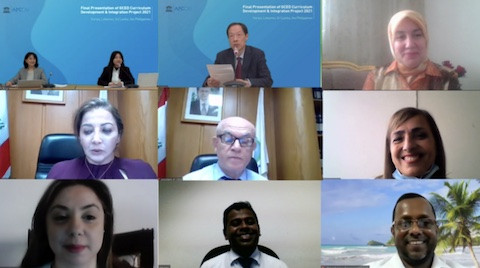 Successful Completion of the 2nd Round GCED Curriculum Development and Integration Project with Kenya, Lebanon, Sri Lanka, the Philippines 2021-11-27 The 2nd Round of Global Citizenship Education (GCED) Curriculum Development and Integration Project has been successfully completed. GCED Curriculum Development and Integration Project is a three-year project that aims to mainstream the GCED into each country’s educational system by developing GCED integrated national curriculum and/or teaching and learning materials. This year, 2nd Round countries, Sri Lanka, Lebanon, Kenya and the Philippines, finalized the expected outputs and built a concrete platform for sustainable implementation of the project. On this occasion, APCEIU held a final presentation of the GCED Curriculum Development and Integration Project from November 17 to 19 with representatives from 2nd Round countries. The participants shared their final outcomes, wrapping up the three-year project. Representatives from 3rd Round countries, including Lao PDR and Rwanda, and representatives from UNESCO member countries such as Bhutan also joined the event and enhanced their networks. This year, through pilot testing and validation, each country finalized their outputs, including GCED embedded national curriculum and teaching and learning materials (e.g., curriculum guide, manuals for teachers, GCED Lesson Exemplars). Finalized materials will be authorized by each country’s Ministry of Education and distributed nationally. Furthermore, participating countries enhanced the capacity on GCED of their key stakeholders and teachers through capacity building workshops. They are also striving to continuously promote and mainstream GCED into their education system by establishing a sustainable implementing mechanism. Furthermore, in the final presentation, representatives from GCED Curriculum Development Committees of 2nd round countries, including Center for Educational Research and Development (Lebanon), National Institute of Education (Sri Lanka), Kenya Institute of Curriculum Development (KICD), Philippine Normal University (PNU) also shared their knowledge and key materials with each other and strengthened their partnerships. Participating countries have created meaningful results even though they have faced challenges like COVID-19, and they all strongly agreed that GCED has greater meaning and importance under the pandemic. Ms Jeongmin Eom, Head of the Office of Research and Development of APCEIU, stressed the fact that all participating countries have drawn successful results and hoped to continuously communicate and share the outcomes through the GCED Curriculum Development and Integration online platform to be launched early next year. URL:http://www.unescoapceiu.org/post/4310
 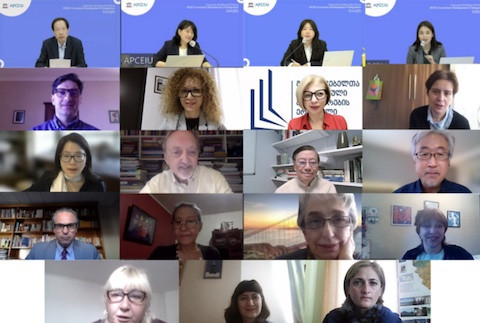 Capacity-Building Workshop for GCED Curriculum Development & Integration in Georgia 2021-11-24 From 27 to 29 October 2021, APCEIU conducted a Capacity-Building Workshop for Georgia, one of the 3rd Round countries participating in the GCED Curriculum Development & Integration Project. GCED Curriculum Development & Integration Project is a three-year programme that aims to mainstream the GCED into partner countries' national curriculum. In this regard, Georgia will be developing a GCED embedded curriculum or teaching and learning materials that reflect its national contexts and demands by 2023. Dr Hyun Mook Lim, Director of APCEIU, celebrated Georgia for embarking on the project. Also, Mr Berika Shukakidze, Director of TPDC (National Center for Teacher Professional Development), expressed his expectations and excitement for the workshop that will lay the foundation of the three-year project. GCED Curriculum Development Committee of Georgia consists of members from the Ministry of Education and Science (MoES) and TPDC. The participants gained a deeper understanding of GCED and curriculum development. They also took this opportunity to ponder how to connect the dots between GCED and specific themes such as democratic citizenship, human rights education, and climate crisis. The workshop was finalized with a discussion, sharing the future plans and innovative ideas, including developing an online platform. URL:http://www.unescoapceiu.org/post/4307
  Highlights from the International Day against violence and bullying at school including cyberbullying event with experts in Turku, Finland 2021-11-21 On 4 November 2021 UNESCO and the world celebrated International Day against violence and bullying at school including cyberbullying. A special session on cyberbullying was organized by the University of Turku in Turku, Finland, in collaboration with UNESCO , to mark the International Day against violence and bullying at school including cyberbullying which this year focused on ‘Tackling cyberbullying and other forms of online violence involving children and young people’. The special session on cyberbullying also marked the opening of the international Workshop on Aggression, which was held under the theme of ‘Prevention of aggression and violence among and against youth’ and gathered around a hundred scholars of aggression. The hybrid session was attended by around 150 people from around the world, and covered the role of the education sector in preventing and addressing cyberbullying. It included presentations by four international experts in cyberbullying prevention and a panel discussion co-facilitated by representatives from the University of Turku and UNESCO. Emphasizing a holistic approach to cyberbullying and bullying prevention Some findings presented showed that there is a relatively low prevalence of cyberbullying compared to offline bullying and victimization in Finland. ‘General’ antibullying programmes’ prevent online bullying, and being bullied online seems to be a reliable sign that the child is also bullied in other ways. It is therefore important to address bullying and cyberbullying holistically rather than try to prevent or intervene in a specific incident taking a specific form. Other conclusions at the event showed that the most prominent risk factor for online bullying is actually offline bullying. Findings from a Cambridge research showed that that the most effective interventions included components at different levels: school, classroom, peers, individual students and parents. Most interventions that included content for both online and offline bullying and victimization were effective in preventing both. The role of bystanders in cyberbullying and the importance of promoting empathy Another subject at the event addressed the role of the bystanders in cyberbullying. Besides regulation, media education and support, prevention programmes involving bystanders of cyberbullying hold great potential for tackling cyberbullying. The bystanders can be supportive to the victim, passive, or reinforce the cyberbullying. Social norms that are accepted by a group influence how bystanders behave, and bystanders who perceive their friends support the cyberbullying are likely to join in and reinforce it, while prosocial peer norms lead to less cyberbullying behaviours. This is the reason for many effective interventions that aim at strengthening empathy among children, as empathy increases support for victims and reduces acceptance of cyberbullying. Prioritizing behavioral over technological interventions During the event, children’s perceptions and experiences with cyberbullying and bullying in general from the Global South were presented. In South Africa, the prevalence of cyberbullying is high, and a study revealed that there was a 39% of co-occurrence of cyberbullying with bullying in schools, and a 13% co-occurrence with sexual abuse. Violence and abuse are normalized to a high degree. Schools there either seemed to ignore the problem or took a punitive response such as banning or confiscating phones, punishing children or banning them from schools if cyberbullying occurred. But the so-called ‘zero tolerance’ approaches offer little to no opportunity to address behaviours or drivers of bullying. Restrictive policies including restrictive parenting showed to limit risks of cyberbullying but also the development of digital and media skills and consequently digital resilience. The conclusion was that school safety approaches should include first and foremost behavioral interventions and only later technological interventions. Where can I find more information on the topic? Visit UNESCO’s web page for the International Day against violence and bullying at school including cyberbullying. Read UNESCO’s full Q&A and Factsheet for the International Day on ‘Tackling cyberbullying and other forms of online violence involving children and young people’. Learn more about UNESCO’s work to prevent and address school violence and bullying. URL:https://en.unesco.org/news/highlights-international-day-against-violence-and-bullying-school-including-cyberbullying-event
 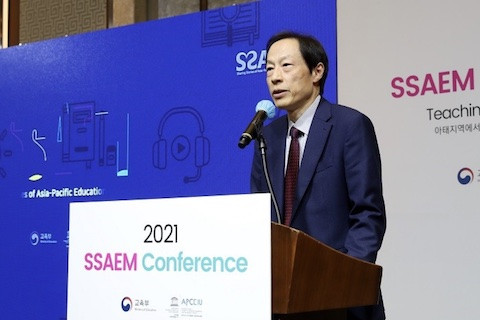 2021 SSAEM Conference, Educational Exchange demonstrates potential in the pandemic 2021-11-17 The 2021 SSAEM Conference successfully ended on the 28 as the pandemic reached its second year. With opening remarks by Yoo Eun-hae, Deputy Prime Minister and Minister of education of the Republic of Korea, this year’s conference was attended virtually and on-site by teachers and ministry officials from eight countries. “Despite schools being shut worldwide and lack of proper infrastructure for online remote classes, it was the commitment and the hard work of the participating teachers that helped successfully run the Asia-Pacific Teaching Exchange(APTE) Programme”, Lim Hyun-Mook, director of APCEIU, said in his welcoming speech. He further expressed how he looked forward to further strengthening the cooperation between the Korean teachers and teachers from partner countries. In her pre-recorded opening remarks, Minister Yoo Eun-Hae said, “The COVID-19 pandemic has led us to fully realize how closely interconnected we are,” She further added, “This exchange could serve as a chance for teachers to understand and appreciate the promising role education can play in building a world where we harmoniously live together.” She ended with a promise that the Ministry of Education, Republic of Korea would “stay committed to invariably promoting international exchange and GCED in close coordination with our partners around the world.” Hang Chuon Naron, the Minister of Education, Youth and Sport, Cambodia, said, “We have found a way to adjust to the New Normal we live in whilst continue running the exchange programme during the pandemic” and added, “The APTE Programme is a meaningful opportunity for participating countries to understand each other and to share a common vision.” The SSAEM Conference acted as a platform to share results of the APTE Programme and was significant as Korean teachers and teachers from partner countries presented their experience of the online teaching exchange in the midst of the pandemic. Furthermore, the conference played an essential role as delegates of the Ministry of Education from eight participating countries (Republic of Korea, Cambodia, Indonesia, Laos, Malaysia, Mongolia, the Philippines, and Thailand) discussed the learning losses incurred by the pandemic crisis. This year’s conference was held in a hybrid form to keep the on-site attendance to a minimum and included presentations on-site by Korean teachers and online presentations by overseas teachers from partner countries. In the first session, teachers gave a live presentation in twos on how the online exchange programme between Korea and Malaysia, Thailand, the Philippines was conducted. In the second session, teachers who helped develop online educational materials to reduce the learning loss of students amid the pandemic shared their invaluable experiences through presentations. The conference, which attracted approximately 2,000 participants on the webinar and live streaming on Youtube, is now available for viewing on Youtube or by accessing the official website (2021ssaem.unescoapceiu.com). URL:http://www.unescoapceiu.org/post/4300
 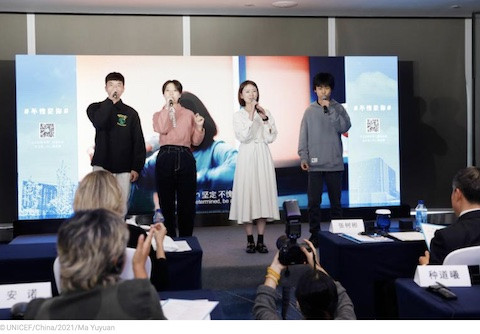 We need everyone to help break the silence around mental health – UNICEF 2021-11-14 (From left to right) Wang Zelong (20 years), Perry Kan (17 years), Yu Xinwei (18 years), and Li Simo (16 years) perform a song titled ‘A Stronger You’, which was adapted from the 1980s hit song Brother Louie by German band Modern Talking, at an event on adolescent mental health in Beijing on 12 October, 2021. The four adolescent girls and boys rewrote the lyrics and recorded a new version. UNICEF launches a campaign with young people to start conversations and end stigma around adolescent mental health BEIJING, 12 October 2021 – At an event held today, UNICEF called for societies to listen to young people, who are increasingly raising their voices for mental health, and to commit to supporting their psychological well-being. The event was co-hosted by the National Center for Mental Health and UNICEF China, with advice from the Bureau of Disease Prevention and Control of the National Health Commission (NHC). Representatives from the government, UN organizations, experts and young people attended the activities, which included the release in China of UNICEF’s flagship publication The State of the World’s Children 2021; On My Mind: promoting, protecting and caring for children’s mental health. Globally, almost 46,000 adolescents die from suicide each year, and suicide is among the top five causes of death for their age group. More than 1 in 7 adolescents aged 10–19 years old live with a diagnosed mental disorder. And, in middle- and upper-income countries, nearly 1 in 5 youth aged 15-24 years old reported often feeling depressed or having little interest in doing things. In China, a survey on mental health conducted by Chinese scholars presents similar results and challenges among adolescents. “Every child has a right to mental health. Despite growing awareness of the impact of mental health conditions, stigma is preventing children and young people from seeking treatment, limiting their opportunities to grow, learn and thrive,” said Cynthia McCaffrey, UNICEF Representative to China. “Everyone has a role to play in breaking the silence around mental health and reducing stigma. Parents, other caregivers, teachers and public figures need to create an environment where young people feel that it’s safe to talk about their mental health.” The #StrongerMindStrongerYou campaign At the event, UNICEF released a song co-created by four young people aged 16-20, as part of its #StrongerMindStrongerYou campaign. The campaign aims to start conversations among adolescents about mental health and the stigma around it. “By listening to adolescents we hear their problems and their solutions. Young people are often best placed to help other young people. That’s why UNICEF’s mental health campaign is designed not just with young people in mind, but with their help,” said McCaffrey. The song titled ‘A Stronger You’ was adapted from the 1980s hit song Brother Louie by German band Modern Talking. Facilitated by Xiaomozi, a songwriter, the four girls and boys – Perry Kan (17 years), Li Simo (16 years), Wang Zelong (20 years) and Yu Xinwei (18 years) – rewrote the lyrics and recorded a new version with singer Sienna Wu. Yu Xinwei, who is a freshman at Beijing Normal University, said: “Through this song, we want to tell our peers that if they have any kind of worries around mental health, it’s understandable, and it’s normal. We hope they can be bold and voice their problems to get the support they need.” Yu performed the song with other young lyricists at the event. The #StrongerMindStrongerYou campaign has enlisted the support of well-known figures, including UNICEF Ambassador and actor Chen Kun, Liao Zhi, who is a dancer who lost her legs in the 2008 Wenchuan earthquake, basketballer and UNICEF Ambassador Jeremy Lin, table tennis world champion Niu Jianfeng, Olympic champions Sun Yiwen (a fencer), Wang Shun (a swimmer) and Xu Xin (a table tennis player), as well as Zhu Yaming, who recorded China’s best ranking in the triple jump by winning a silver medal at the Tokyo Games. All-hands-on-deck for young people’s mental well-being Promoting mental health for young people requires commitment and investment from a diverse range of partners and stakeholders, including governments, academics, and the private sector. In China, adolescent mental health has gained increasing attention. In an opening speech at the event, Zhang Shubin, Deputy Director of the Mental Health Division of the Bureau of Disease Prevention and Control under the NHC, said, “We call on governments at all levels, relevant departments, schools, health institutions, communities, social organizations and other sectors to reinforce cooperation, and to jointly maintain and promote children and adolescents’ mental health.” “Young people’s healthy development is the country’s future and the nation’s hope. Mental health is a blessing for hundreds of millions of families, and it lays a good foundation for each young person’s healthy growth and well-being,” said Yao Hongwen, Director General of the National Center for Mental Health. “Following the country’s policy guidance, the National Center for Mental Health will keep a close watch on adolescents’ mental well-being, and promote the development of their mental health.” Prevention of mental health problems is more cost-effective and leads to better health and well-being outcomes than treatment alone. In 2016, UNICEF joined forces with the National Health Commission to launch the ‘Adolescent Health and Development Project’ in 14 districts and counties of 11 provincial level regions. The project focuses on building adolescents’ awareness, knowledge and skills for better mental health and provides information on where and when they can access services. This project has reached over half a million adolescent girls and boys from more than 430 schools with comprehensive mental health services. The #StrongerMindStrongerYou campaign is part of UNICEF’s work to empower adolescents and young people through peer support to develop skills to help each other and reject stigma. UNICEF is also working to: Support the integration of mental health services into the primary health care system. Make sure that when additional care is needed, psychological counselling services are covered by universal health insurance, so that access to care is equally affordable for families. State of the World’s Children 2021 UNICEF also released The State of the World’s Children 2021; On My Mind: promoting, protecting and caring for children’s mental health, the organisation’s most comprehensive look at the mental health of children, adolescents and caregivers in the 21st century. According to the report, even before COVID-19, children and young people carried a burden of mental health conditions, and investment to address them has been insufficient. Diagnosed mental disorders, including ADHD, anxiety, autism, bipolar disorder, conduct disorder, depression, eating disorders, intellectual disability, and schizophrenia, can significantly harm children and young people’s health, education, life outcomes, and earning capacity. While the impact on children’s lives is incalculable, a new analysis by the London School of Economics in the report indicates that globally the lost contribution to economies due to mental disorders that lead to disability or death among young people is estimated at nearly $390 billion a year. The COVID-19 pandemic continues to heavily impact children and young people’s mental health and well-being. According to the latest data from UNICEF, globally, at least 1 in 7 children have been directly affected by lockdowns, while more than 1.6 billion children have suffered some loss of education. The disruption to routines, education, recreation, as well as worries about family income and health are leaving many young people feeling afraid, angry, and concerned for their future. For example, an online survey in China in early 2020, cited in The State of the World’s Children, indicated that around a third of respondents reported feeling scared or anxious. The report notes that a mix of genetics, experience and environmental factors in the earliest days of life, including parenting, schooling, quality of relationships, exposure to violence or abuse, discrimination, poverty, humanitarian crises, and health emergencies such as COVID-19 all shape and affect children’s mental health throughout their lifetime. UNICEF is globally calling for loving caregivers, safe school environments, and positive peer relationships to help reduce the risk of mental disorders. URL:https://www.unicef.cn/en/press-releases/we-need-everyone-help-break-silence-around-mental-health-unicef
 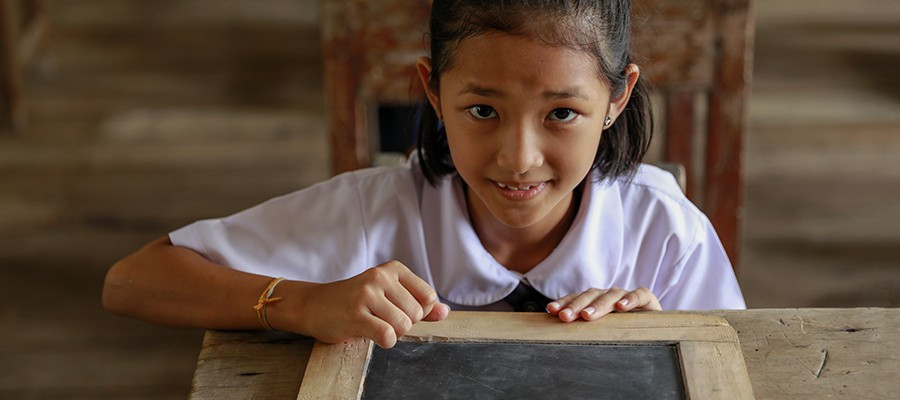 UNESCO Member States unite to increase investment in education 2021-11-12 Heads of State and Government and Ministers of Education from more than 40 countries adopted the Paris Declaration on Wednesday: a global appeal initiated by UNESCO and France to increase investment in education in the aftermath of the COVID-19 crisis. At the height of the pandemic, 1.6 billion children and adolescents were deprived of tuition in the classroom. Among them, 500 million students, mainly in the South, had no access to distance learning. UNESCO quickly rallied by bringing together States, international organizations and businesses within a Global Coalition for Education, which made it possible to ensure educational continuity in 112 countries. Despite this unprecedented mobilization, the situation remains worrying. According to UNESCO’s latest count, schools are still totally or partially closed in 65 countries, affecting 750 million students. In those countries where schools are reopening, there is concern that some children are not finding their way back to the classroom. This is particularly the case for girls, whose schooling was already precarious in a number of low-income countries. UNESCO estimates that 11 million girls worldwide are at risk of staying out of school after the pandemic. These risks are observed against a global backdrop of under-investment in education. Since 2015, UNESCO Member States agreed on a level of educational funding of 4 to 6% of GDP or 15 to 20% of public expenditure, but the majority of countries have not yet reached this threshold. Moreover, it appears that low-income countries only allocate 1% of the amount of the post COVID-19 stimulus packages to education, while the richest countries only spend 2.9% of that package on education. An agreement to boost investment On Wednesday, UNESCO Director-General Audrey Azoulay and French President Emmanuel Macron co-chaired a meeting of Heads of State and ministers of education from more than 40 countries, with the aim of strengthening global and national political commitment to education. "The COVID-19 pandemic has come to underscore for everyone around the world the critical importance of education as a global public good. In the midst of the crisis, the international coalition initiated by UNESCO helped meet the most urgent needs. We have helped more than 400 million students and 12 million teachers in 112 countries. Today, while the immediate urgency of the crisis may seem to have passed, we must maintain our mobilization. It is imperative that we prioritize education as the most powerful investment for our common future. If we do not invest in education now, the cost will be much higher for generations to come." -- Audrey Azoulay, UNESCO Director-General "With the pandemic, we have also experienced an education crisis of unprecedented magnitude, adding to the challenges of achieving universal access to quality education. At the height of the crisis, in late March 2020, 90% of the world’s schoolchildren, or more than 1.6 billion students, saw their schools close. This shock hit the most vulnerable children hard, especially girls. In France and throughout the world, we are committed to making access to education a priority. Because school is the best place to build a common project and a shared destiny for our societies. School represents the victory of the Enlightenment and science over all forms of obscurantism. It is this idea, old yet so young, that is carried by those who believe that every child is endowed with reason that must be nurtured." -- Emmanuel Macron, French President These exchanges led to the adoption of the Paris Declaration on Education. In this text, the participating States commit to improving investments by relying on public financing and public-private cooperation. They also call for increased international aid to education, making it a priority to reach the target of 0.7% of donor GNP for official development assistance. UNESCO report to rethink the Futures of Education Also on Wednesday, Ms Azoulay and Sahle-Work Zewde, President of Ethiopia, presented a new prospective report on education, fruit of two years of work by an independent international commission drawing on contributions from more than one million members of the public alongside the expertise of 400 UNESCO Associated Schools and 200 UNESCO Chairs worldwide. Entitled Reimagining our futures together: a new social contract for education, the report calls for the reform of curricula and teaching methods to take into account three major recent changes in our societies: those linked to globalization, the climate challenge and the digital revolution. It notably calls for: education to be based on human rights and respect for cultural diversity the integration of environmental education in all school programmes, teaching of digital tools to instil both the technical mastery and the critical spirit and distance that are necessary for their proper use. "The choice that awaits us is a difficult one. Either we continue on an unsustainable path, or we radically change course. I firmly believe that education is one of our most valuable tools for building a sustainable future. I welcome this UNESCO report as a vital contribution to the discussions that must take place across the UN and around the world. It is a seminal reference for the Transforming Education Summit scheduled for the second half of 2022." -- António Guterres, UN Secretary-General Media contact: Clare O’Hagan, c.o-hagan@unesco.org, +33(0)145681729 URL:https://en.unesco.org/news/unesco-member-states-unite-increase-investment-education
  International community gives a strong push to media and information literacy 2021-11-12 Global Media and Information Literacy Week 2021 was in many ways historic. The Week was commemorated from 24 to 31 October 2021 under the theme “Media and Information Literacy for the Public Good.” Global MIL Week 2021 was co-organized by South Africa and UNESCO, with the support of the European Commission. Stakeholders around the world gathered virtually on this significant occasion and organized over 600 local events to celebrate the Week. It was the first time that Global Media and Information Literacy Week was hosted by an African country and celebrated at the United Nations level, after being proclaimed by the United Nations General Assembly on 25 March this year. Over the course of the week, close to 150 speakers underlined the pivotal role of media and information literacy for the public good in 25 thematic sessions of the Feature Conference and Youth Agenda Forum. Their profiles ranged from policymakers, experts, practitioners, to representatives from international organizations, media, NGOs and the private sector. More than 600 online and offline local events and activities related to media and information literacy were organized around the globe to commemorate the Week. In this deluge of information, we need more reference points and more rational thinking. That is why media and information literacy is a such a key skill for the education of the 21st century citizens.-- Audrey Azoulay, Director-General of UNESCO This global threat of misinformation is more pronounced today as the world battles the anti-vax lobby in the face of the devastation occasioned by the COVID-19 pandemic… We must consider new media and information literacy programmes to help people understand the consequences of creating and sharing false and misleading content. To achieve and sustain the goal of media and information literacy for all, international cooperation is most urgent.-- Cyril Ramaphosa, President of South Africa Enhancing cooperation among stakeholders to sustain media and information literacy development Also, for the first time, regional intergovernmental organizations including the African Union, Arab League, Asian Cooperation Dialogue, and European Commission, expressed their commitment to fostering media and information literacy at the regional level and to enhancing global cooperation among stakeholders. State actors from France, Kenya, Morocco, the Philippines, the Russian Federation, and South Africa, presented media and information literacy policies and strategies and related good practices in their countries, setting examples for other states. Several United Nations Agencies, Funds, and Programmes discussed ways to strengthen cooperation around media and information literacy within the United Nations system during the second United Nations Roundtable on Media and Information Literacy. Positioning media and information literacy on the international development agenda in the post-pandemic world The urgent necessity to forge partnerships and mobilize adequate resources for media and information literacy was reiterated by major donors and government representatives during the Feature Conference. The Swedish International Development Cooperation Agency, Norwegian Ministry of Foreign Affairs, Ministry of Foreign Affairs of Japan, ICESCO, Arab League, and Google called on other stakeholders to join as contributors and partners so that resources are secured to support media and information literacy programmes. Lars Amréus, Chairperson of the Swedish International Development Cooperation Agency encouraged “other donors as well as partners from the private sector to recognize the importance of media and information literacy as building block in this work,” and highlighted that “the drive for democracy aims to initiate renewed and revitalized effort to support and strengthen democracy worldwide online and offline.” The need for an International Media and Information Literacy Fund was also underlined and embraced. As a pioneering move, the Feature Conference initiated a dialogue on formulating an international multi-stakeholder framework for private/digital platforms to integrate media and information literacy in their policies and operations. Organizations such as OECD, Twitter, WhatsApp, and Commonwealth of Learning embraced the idea of this multi-stakeholder framework and offered recommendations on what it should entail. Ulrik Vestergaard Knudsen, OECD Deputy Secretary-General emphasized, “the cross-boundary nature of misinformation and disinformation also means that only collective actions will deliver the change we want to see. Only a comprehensive, multi-dimensional approach will help curb this threat.” The dialogue is to be continued on 9 December 2021 with other stakeholders at the Internet Governance Forum 2021. Youth hacking media and information literacy for better futures The role of youth in promoting media and information literacy and building better future was brought to the fore during the Week. “Youth is a priority group for UNESCO, not only as beneficiaries, but more importantly as drivers for change. Throughout our action in media and information literacy, we strive to ensure inclusion of youth as co-creators, co-leaders, and experts in media and information literacy development,” stated Mr Tawfik Jelassi, UNESCO’s Assistant Director-General for Communication and Information, during the presentation of the Global Media and Information Literacy Youth Hackathon winners and outcomes. The Global Media and Information Literacy Week 2021 Youth Agenda Forum was held in the form of four dedicated sessions during the Feature Conference with an aim to mainstreaming youth. 85 teams composed of young people and youth organizations from 45 countries engaged in the creation of innovative solutions to a series of challenges using media and information literacy, in the “Hack Media and Information Literacy for Better Futures” youth hackathon. The creative ideas of the six winning teams received recognition from the 25 jury members. The baton of Global Media and Information Literacy Week was passed from South Africa to Nigeria, the host country of the 2022 edition. Preparations have commenced... Nigeria successfully hosted in 2013 the Global Forum for Partnerships on Media and Information Literacy in Abuja... We hope to make the 2022 (edition) more colourful and impactful, especially for the continent of Africa.-- Alhaji Lai Mohammed, Minister of Information and Culture of Nigeria Global Media and Information Literacy Week 2021 was celebrated from 24 to 31 October. Its Feature Conference was held between 25 and 29 October 2021, while local events took place around the world to commemorate the Week, thanks to the involvement of the Member States, members of the UNESCO Media and Information Literacy Alliance and the Media and Information Literacy and Intercultural Dialogue University Network, among other partners. The second edition of the UNESCO Model Media and Information Literacy Curriculum for Educators and Learners was published recently. In a connected initiative, UNESCO and the Republic of Serbia, in cooperation with the European Commission will jointly launch the Global Standards for Media and Information Literacy Curricula Development Guidelines, on 11 November 2021. Learn more about the launch event here. These Standards are intended to guide policymakers, media and information literacy practitioners, and other stakeholders in general about how to design, formulate, implement and monitor a media and information literacy curriculum inside and outside school settings. These and other related resources are being adapted into an online multimedia collaborative platform to be launched in early 2022. URL:https://en.unesco.org/news/international-community-gives-strong-push-media-and-information-literacy
 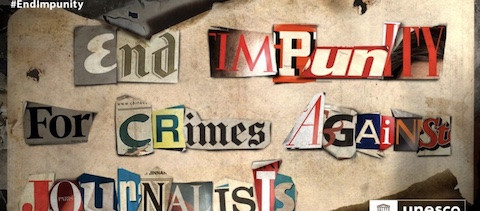 Hate speech and the Safety of women journalists 2021-11-12 World leaders, experts from technical agencies, media, civil society, and UN Member States on Tuesday discussed the impact of hate speech on the safety of journalists, especially on women, and explored ways that could be taken to tackle impunity at an event to commemorate the 2021 International Day to End Impunity for Crimes Against Journalists. “Information is a public good to which everyone is entitled. As such, information empowers citizens and enables participation and trust in democratic governance and sustainable development, leaving no one behind,” Ambassador Maria Theofili, Permanent Representative of Greece to the United Nations, said at the high-level virtual event organized by UNESCO, together with the Permanent Missions of France, Greece, and Lithuania to the United Nations, and the Group of Friends for the Protection of Journalists (co-chaired by France, Greece, and Lithuania). “This is exactly the reason more gender inclusive, gender sensitive and gender responsive approach to the protection of journalists and media workers is a necessary precondition for building democratic base and resilient societies,” she said in the opening remarks. In recent years, the number of media workers killed while investigating corruption, trafficking, and other human rights violation has risen. The Secretary-General of the United Nations, Mr. António Guterres, addressed the event in a video message. “Almost nine out of 10 of these killings go unpunished," he pointed out. Ms. Audrey Azoulay, Director-General of UNESCO, noted that in the past decade, almost 900 journalists were killed just for doing their jobs. “Journalists are not only dying in the crossfire of war. They're also being targeted for exposing wrongdoing and speaking the truth to power. Even more alarmingly, about 90 percent of the deaths remain unpunished,” she said in a video message. The global trends in violence against women journalists are even more concerning. Mr. Abdulla Shahid, President of the General Assembly, United Nations, pointed out in a video message to the event that “women journalists are disproportionately impacted targets of hate speech, threats of violence and harassment, both online and offline. Much of this is elevated by misogyny that makes journalism unsafe for women.” “Unfortunately, women journalists and media workers are no exception to violent attacks and harassment,” said Mr. Nikos Dendias, Minister for Foreign Affairs of the Hellenic Republic of Greece, urging that the right of women journalists to be safe and free from gender-based violence must be adequately protected. “Women journalists are especially vulnerable as they face a double danger: being attacked because of their work and because they are women. Acts of harassment that take place online have also often consequences for women; they experience physical danger and threats of rape and death,” Dr. Mantas Andomėnas, Vice-Minister of Foreign Affairs of the Republic of Lithuania, said in a video message. “Women journalists and media workers, in particular, are disproportionately affected by various forms of violence, abuse, and threats that in many ways exacerbate existing gender inequalities,” Ms. Delphine Borione, Ambassador for Human Rights of France, said in a video message. Ambassador Elisabeth Millard, Acting U.S. Representative to the Economic and Social Council, said in a live intervention that “Free and independent media are essential to democracy and play a crucial role in the free exchange of information and ideas, combating corruption in making government more accountable and transparent.” The key message from the international community was that “nine of the 10 murders are not punished,” said Mr. Guy Berger, UNESCO Director for Freedom of Expression and Media Development, who moderated the event. He called attention to a new UNESCO publication Threats that Silence: Trends in the Safety of Journalists, noting that “the impunity rate does not correlate with wider impunity rates in the societies concerned. In many cases, it is worse.” Evidence was also emerging that these online threats often culminated in offline harms, Mr. Berger pointed out, citing a publication called The Chilling produced by UNESCO and the International Center for Journalists, which demonstrates the connection between online violence and offline violence, including ultimately offline killings. “In this sense,” Mr. Berger said, “we have to look at impunity in a holistic sense, impunity for online violence, impunity for offline violence, and the spectrum of continuity between a lack of punishment for both fatal and non-fatal crimes against journalists, and especially women journalists.” Against impunity In the second segment of the event, Mr. Berger moderated an interactive discussion panel to look at the role of political actors, policies, and digital platforms in regard to a normative climate in which impunity online and offline can and does run relatively unimpeded. The event provided a platform for Mr. Pedro Vaca, the Organization of American States (OAS) Special Rapporteur for Freedom of Expression, to present a Joint Statement on the Political Leaders’ Narratives about the Press. “In the year 2021, the declaration notes with concern the growing tendency of political leaders to target and stigmatize vulnerable groups, individuals, also journalists, who participate in the public debate, generating an effect of self-censorship and reduction of the civic space.” Judge Ricardo Pérez Manrique, the Inter-American Court of Human Rights, told the panel that “crimes against journalists are unacceptable because their purpose is always to silent voices, to prevent debate and to generate a climate of fear that prevents democracy and the rule of law from acting effectively and in a real way.” Mr. Manrique recalled a recent judgment issued by the Court in the case of Colombian journalist Ms. Jineth Bedoya Lima, who was kidnapped, tortured, and sexually assaulted while conducting an investigation in a prison in 2000. The Inter-American Court of Human Rights ruled in October that by failing to properly investigate, Colombia had violated Bedoya's rights to justice and protection. Ms. Bedoya also attended the event and told the panel that women's voices are vital in journalism, acting as "a lifeline between marginalized communities and the world.” However, she said, online harassment is becoming one of the worst issues for female journalists. “Women not only have to face the violence they face as women, but women who communicate often have to marginalize themselves and stop their work.” The extent of the problem was revealed in the UNESCO publication The Chilling released in April this year. Based on a survey of 901 journalists identifying as female in 125 countries, the study found 73 percent of respondents had experienced some form of online harassment. Threats of physical violence, sexual violence, and violence against family members were among the most common attacks. Separately, Reporters Without Borders found an alarming rise in the number of detentions of women journalists around the world in 2020. Ms. Rebecca Vincent told the panel that “In 2020, the detentions of women Journalists increased by 35 percent. In total, women Journalists comprised 11 percent of journalists jailed globally by the end of the year, which was 42 out of 387.” “There're many different parts of the UN that have responsibility for issues related to free expression or to arbitrary killings. However, this pervasive impunity for so many attacks shows that what we have is currently not working at least in the way that it should be,” Ms. Vincent said. Thus, she added, Reporters Without Borders is advocating the establishment of a UN Special Representative on the Safety of Journalists. Ms. Khadija Patel, Head of programs for International Fund for Public Interest Media and the former editor-in-chief of the Mail & Guardian newspaper in South Africa, shared with the panel that she felt powerless dealing with hate speeches against women. “I felt especially powerless when it was the women in my newsroom who came to me carrying their cell phones showing me messages of hatred they received,” said Ms. Patel, who is also Chair of the International Press Institute (IPI). Colleagues from around the world saw little hope in addressing this issue, either through the justice system or through social media platforms, she added. But Ms. Patel believed that "online harassment directed at journalists as individuals represents an attack on the entire newsroom. [...] The acknowledgment of this is essential in building a strategy to combat online harassment,” she noted. The IPI has been researching online violence against women journalists and has recommended how newsrooms can help to counter this problem. “While existing judicial procedures dealing with online harassment are certainly not as effective as they should be, it remains important to report cases of threats, sexual harassment, and insults to the police,” Ms. Patel said. Ms. Silvia Chocarro, Head of Protection at ARTICLE 19 — an advocacy group defending the freedom of expression — told the panel that the government has a lot of room to promote measures to protect the safety of journalists. “The most simple, expansive measure that a government can take to address this is to refrain from using any of the misogynistic languages against journalists, specifically against women journalists,” she said. Tuesday’s high-level event was part of the commemorations in 2021, which will pave the way for the 10-year anniversary of the UN Plan of Action on Safety of Journalists and the Issue of Impunity, to be marked in 2022. For the United Nations Action Plan on the Safety of Journalists and the Issue of Impunity, UNESCO leads global efforts to protect journalists and ensure those that attack them are held to account. UNESCO supports national protection and prosecution mechanisms in member states and provide legal support for journalists through the Global Media Defence Fund. UNESCO has also trained nearly 23,000 judges, prosecutors, and lawyers, so they can effectively better protect journalists and prosecute crimes against them in line with international standards. “This year, we're also publishing a landmark study of online Violence Against Women Journalists, accompanied by recommendations for regulators, media, and online platforms,” Ms. Azoulay, Director-General of UNESCO, told the event earlier. “We have to do a lot more about impunity, per se,” Mr. Berger said. “We owe it to bring good news of progress to women journalists who are experiencing atrocious hate speech by perpetrators who currently enjoy a license both online and offline. We owe it to those who have been killed as journalists, killed men and women, and where justice is still lacking in the cases.” Related links: Watch the recording of the eventRead more on the International Day to End Impunity for Crimes against Journalists URL:https://en.unesco.org/news/hate-speech-and-safety-women-journalists-0
 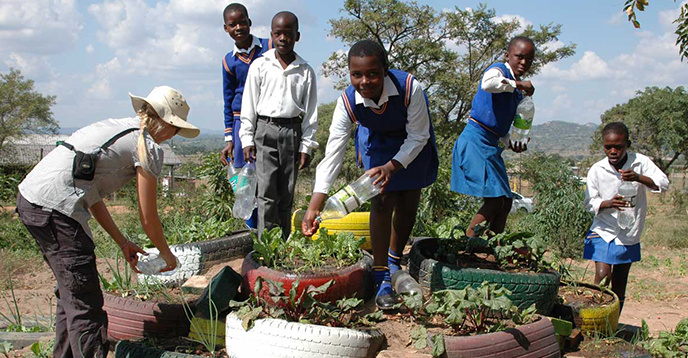 Only half of the national curricula in the world have a reference to climate change, UNESCO warns 2021-11-08 Education systems do not currently address the gravity of the climate crisis, warns the UNESCO, the UN's leading education agency, ahead of the first joint meeting of environment and education ministers at COP26 in Glasgow on 5 November. New UNESCO data from 100 countries shows that only 53% of the world’s national education curricula make any reference to climate change and when the subject is mentioned, it is almost always given very low priority. Furthermore, fewer than 40% of teachers surveyed by UNESCO and Education International were confident in teaching about the severity of climate change and only about one-third felt able to explain the effects of climate change on their region or locality. "The climate crisis is no longer the threat of a distant future, but a global reality. There is no solution without education. Every learner needs to understand climate change, and be empowered to be part of the solution, and every teacher given the knowledge to teach about it. States must mobilize for this." -- Audrey Azoulay, UNESCO Director-General When asked about the challenges of teaching climate change, 30% of the 58,000 teachers surveyed reported that they were not familiar with suitable pedagogies. Over a quarter of those surveyed felt some approaches to teaching climate education were not suited to online teaching. This is of particular concern given that 737 million students in 66 countries are still affected by full or partial school closures. In view of these findings, UNESCO decided to organize with the United Kingdom and Italy, co-Presidents of COP26, the event ‘Together for Tomorrow: Education and Climate Action’, the first joint meeting of environment and education ministers, at COP26 in Glasgow on 5 November. "Climate and sustainability education must be mainstreamed into the curriculum to go beyond the mere concept of sustainability and re-generate the school and the entire planet." -- Patrizio Bianchi, Italian Minister of Education UNESCO will underscore the need for collaboration between the education and environment sectors to successfully integrate climate change in education systems worldwide in every level of schooling. The event builds on the Youth4Climate education session jointly organized by UNESCO and the Italian Education Ministry, where young climate activists discussed their calls for quality climate education with six education ministers. ‘Together for Tomorrow” will take place on 5 November, 4 pm to 5.30 pm, in the Blue Zone, and will be open to those who have tickets to the area. Watch Together for Tomorrow on livestream: https://ukcop26.org/ Find out more about the ministers’ pledges here UNESCO’s work on education for sustainable development: https://en.unesco.org/themes/education-sustainable-development Media contact: Thomas Mallard, t.mallard@unesco.org URL:https://en.unesco.org/news/only-half-national-curricula-world-have-reference-climate-change-unesco-warns
  Paper on challenges tackling hate speech on social media released for Education Ministers Conference 2021-11-06 UNESCO released a new discussion paper entitled Addressing hate speech on social media: contemporary challenges on the occasion of the Global Education Ministers Conference on Addressing hate speech through education (26 October 2021) and of its preparatory Multistakeholder forum held on 30 September and 1 October 2021. While it is frontpage news that investigative journalists are unveiling the internal practices of one of the main social media companies, the accelerated digital evolution and online communication practices during the COVID-19 pandemic and the associated global wave of hate speech and disinformation has underscored the importance of better understanding the emergence and proliferation of online hate speech. Speaking at the opening of the Ministerial Conference, United Nations Secretary-General Antonio Guterres explained that he “called for this conference because the issue of hate speech cuts to the heart of the polarization and divisions plaguing our world.” "Too many people carry out acts of violence, terrorism and even genocide, because they’ve been convinced that it is the right thing to do… We can draw a direct line between hate speech and anti-Semitic, anti-Muslim and anti-Christian violence. And we see it mirrored in acts of misogyny against women, and violence against refugees, migrants, and minorities — including people of Asian descent who were outrageously blamed for COVID-19." -- Antonio Guterres, United Nations Secretary-General UN Secretary-General, Antonio Guterres, speaking at the Ministerial Conference on Addressing Hate Speech through Education, 26 October 2021 "This hatred is not new. But what has changed more recently is the influence and magnitude of social media platforms, which have become an echo chamber that amplifies hate speech." -- Audrey Azoulay, Director-General of UNESCO Ms Azoulay further underscored that pushing back against hate is the responsibility of all of us and that UNESCO with its interdisciplinary mandate stands ready to support Member States and is proud to contribute to the United Nations Strategy and Plan of Action on Hate speech together with other relevant United Nations entities. The United Nations Strategy and Plan of Action on Hate Speech identifies a series of priority areas for monitoring and analysing hate speech, stipulating that relevant United Nations entities should be able to “recognize, monitor, collect data [on] and analyse hate speech trends”. Inter alia, it calls for “more research on the relationship between the misuse of the Internet and social media for spreading hate speech and the factors that drive individuals towards violence” as well as to “map the emerging risks and opportunities related to the spread of hate speech posed by new technologies and digital platforms”. Identifying online hate speech for research and moderation purposes is confronted with numerous challenges and clarity on how these can be addressed is indispensable to formulate effective responses to hate speech itself. This is the rationale for developing the present discussion paper as the first in a series of papers on tackling hate speech commissioned by UNESCO and the United Nations Office of the Special Adviser on the Prevention of Genocide (OSAPG) as a direct contribution to the implementation of the Strategy and Plan of Action on Hate Speech. Authored by researchers at the Oxford Internet Institute (OII) of the University of Oxford within the framework of the project “#CoronavirusFacts: Addressing the ‘Disinfodemic’ on COVID-19 in conflict-prone environments” funded by the European Union, the paper outlines primary methods, tools and techniques used in research to monitor hate speech. It further seeks to give an overview of key considerations to address the occurrence of hate speech on social media, be it through concrete regulations by social media companies, counter efforts and legislations or preventive educational measures. Over the coming months, OII will further elaborate this research into a toolkit that maps existing tools and resources developed to monitor the existence, spread and impact of online hate speech, as well as gaps in capacities and practices to monitor and counter it. UNESCO supports the OII in piloting a new adaptable tool to monitor hate speech trends on social media platforms. By empowering local stakeholders to more rapidly detect, understand, and assess the scale of emerging hate speech trends, the aim is to enable faster counteraction better adapted to multilingual local contexts. The discussion paper is available in English, French and Spanish and will soon be translated into Arabic, Chinese and Russian. Based on the central tenet that information is the opposite of disinformation, the UNESCO project #CoronavirusFacts leverages the pivotal role of freedom of expression and access to information to address information needs in times of COVID-19 and to tackle the massive wave of disinformation which threatens to impact democracy, sustainable development and stability around the world. Funded by the European Union, the project which has activities both at the global level, in four regions and in nine countries, supports professional, diverse and independent media’s capacity to report on the pandemic; strengthens local fact-checking organizations to debunk misinformation; and empowers youth and other citizens to critically process what they read and hear linked to COVID-19 through training in media and information literacy. Due to unprecedented challenges for the media and digital technology sectors, UNESCO has created a Resource Center of selected responses to COVID-19. To learn more, visit: https://en.unesco.org/covid19/disinfodemic/coronavirusfacts URL:https://en.unesco.org/news/paper-challenges-tackling-hate-speech-social-media-released-education-ministers-conference