
News
Catch up on what’s happening in the world of global citizenship education.
1,668 results found
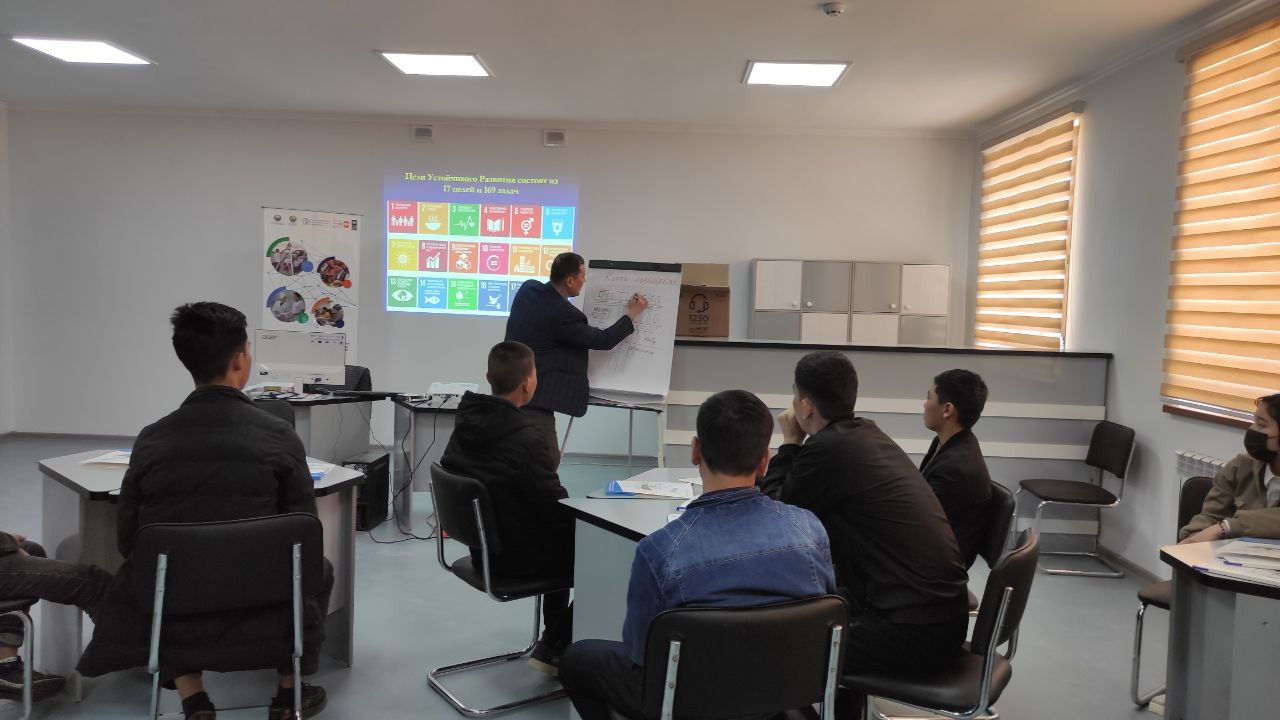 UNDP trains rural youth of Karakalpakstan in public planning 2022-06-04 April 4, 2022. Kungrad district, Karakalpakstan. On March 29, 31 and April 4, UNDP in Uzbekistan held trainings to enhance the capacities of rural youth in Bozatau, Muynak and Kungrad districts on public planning and decision-making. This initiative is also aimed at studying the needs of the rural population in pilot territories for the integration of Sustainable Development Goals on the ground. About 90 young people took part in the trainings aimed at: Raising awareness of the UN Global Sustainable Development Goals (SDGs), National SDGs and localization of SDGs in rural areas; Dissemination of knowledge and skills on the use of methods and tools for rapid assessment of the community; Assisting local youth in identifying community problems and setting the priorities; Increase the potential of rural youth in public planning and decision-making. Local authorities play a major and practical role in the implementation of the SDGs and, as noted during the meetings, they make a significant contribution to the implementation of global and national SDGs. Participants gained knowledge and skills in using methods and tools for rapid community assessment, local youth learned to conduct their own research to identify problems and determine priorities in their implementation in the field of social infrastructure and community digitalization. In the practical part of the training, which took place in the format of group work, participants were introduced a "Community Development Plan" to fill out according to a certain sample, which in the future will allow young people to participate in the processes of public planning and decision-making. The trainings are organized within the framework of the Joint Programme of UNDP, UNFPA and FAO "Unleashing young people’s and vulnerable citizens’ creativity and innovation by strengthening their adaptive capacity to address the economic and food insecurities in the exposed communities of the Aral Sea region" in partnership with local khokimiyats and district divisions of the Youth Agency of the Republic of Karakalpakstan. URL: https://www.undp.org/uzbekistan/press-releases/undp-trains-rural-youth-karakalpakstan-public-planning
 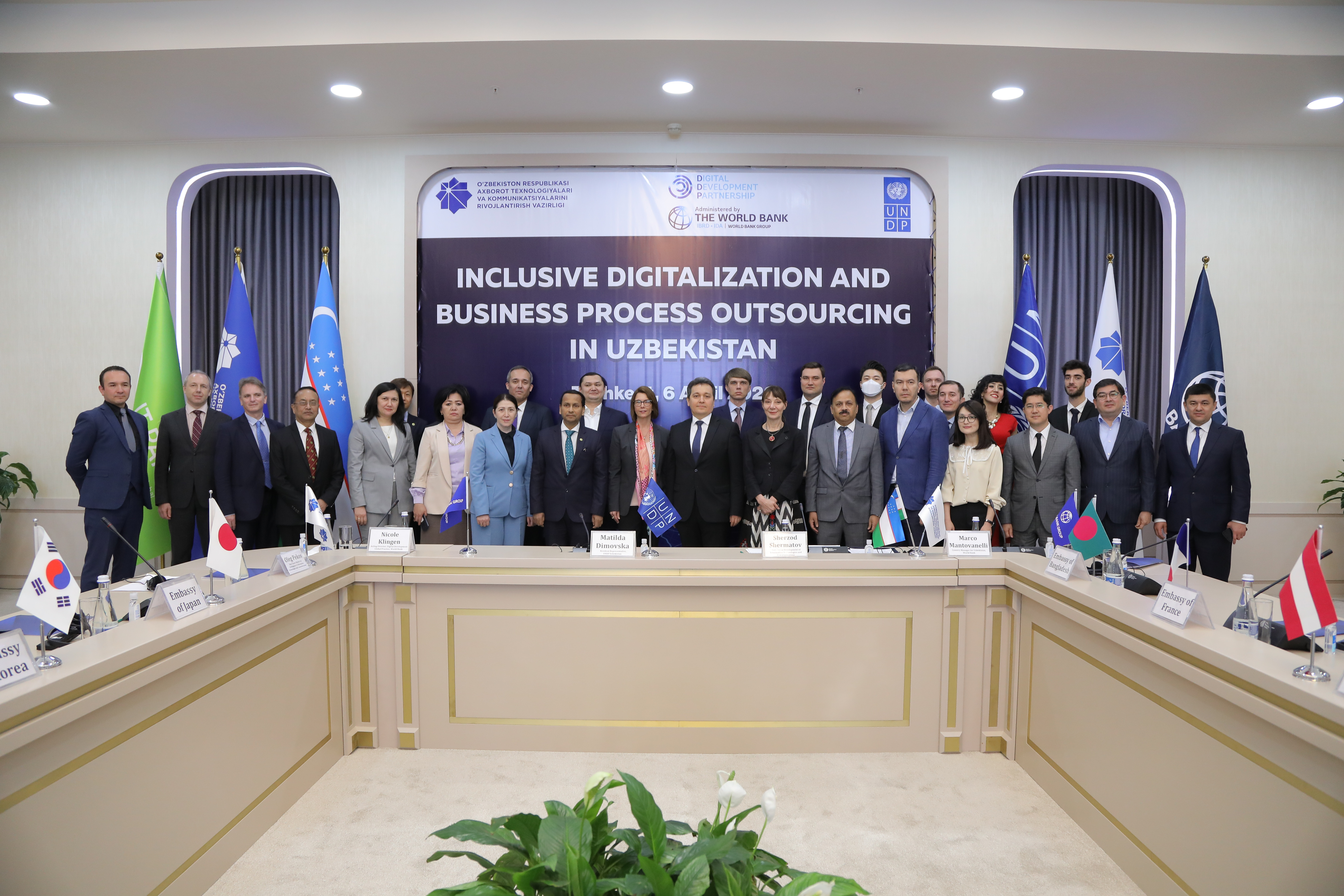 На пути к инклюзивной цифровизации и аутсорсингу бизнес-процессов в Узбекистане 2022-06-04 Together with the Ministry for the Development of Information Technologies and Communications and the World Bank we held an international roundtable on "Inclusive digitalization and business process outsourcing (BPO) in Uzbekistan". Supporting the development of digital government, ensuring public trust and transparency, and participating in the development of the digital economy play an important role in providing efficient, effective public services to all on an equitable basis. The continuous development of information and communication technologies is fundamentally transforming society, the cultural environment, and the economy. Today, in the wake of COVID-19 there is a tendency of an accelerated development of technologies in the global digital ecosystem. For instance, the business process outsourcing (BPO) and knowledge outsourcing (KPO) in the field of social networks, blockchain technologies, artificial intelligence technologies. Recognizing the important role of digital development for the economic growth of Uzbekistan, the Government has set digital transformation as a top strategic agenda. Among them is the approval of the Strategy "Digital Uzbekistan - 2030" and drawing attention to digitalization issues with human interest at heart in the framework of the Development Strategy of New Uzbekistan for 2022-2026. https://www.facebook.com/watch/?v=319799233573518 Based on this, the Government of Uzbekistan is implementing consistent measures to strengthen digital skills and create digital jobs in Uzbekistan, in particular, to increase the potential of young people - measures to expand the provision of business process outsourcing (BPO) and knowledge outsourcing (KPO) services. By demonstrating the potential of IT-outsourcing by the government of Uzbekistan, in order to improve the digital skills of the population, especially young people in all regions and districts, specialized educational BPO institutions are being organized and their capabilities are expanding. This event was attended by a wide range of local specialists, IT stakeholders, diplomatic missions and international experts who discussed the current state and prospects of digital development, assessment methods and further tasks for the inclusive digital development of Uzbekistan. Matilda Dimovska, UNDP Resident Representative in Uzbekistan highlighted that according to the Digital Readiness Assessment held jointly with the Ministry of ITC in 5 priority dimensions: infrastructure, government, regulation, business, and people Uzbekistan scored 3.57 out of 5, which means that the country is systematically advancing in key areas of digital transformation based on identified priority areas. “Now it is time to explore how to leverage digitalization to build forward better, to accelerate Uzbekistan’s growth while ensuring it is more inclusive and resilient through strengthening the national capacity to integrate into the global digital economy,” she added. During the event, participants reviewed how well the country is positioned to leverage BPO and KPO in terms of legal and institutional framework, digital infrastructure, digital education and other aspects, including the wide involvement of young women and men in these processes. URL: https://www.undp.org/uzbekistan/press-releases/towards-inclusive-digitalization-and-business-process-outsourcing-uzbekistan
  International Symposium on Global Citizenship Education: Call for papers 2022-06-02 1st International Symposium on Global Citizenship EducationRestoring Learning to Daily Living: Global Citizenship and John DeweyOctober 22, 2022 | Soka University, Tokyo, JapanThe Ikeda Research Institute for Soka Education (IRISE) at Soka University is pleased to host the 1st International Symposium on Global Citizenship Education to be held on October 22, 2022 at Soka University in Tokyo, Japan.In recent years, the idea of global citizenship has become an area of interest as the world increasingly faces daunting challenges and disparities that require collaborative efforts to resolve. The United Nations has also marked global citizenship as an essential element in achieving “Quality Education” by 2030 under the Sustainable Development Goals (SDGs), indicating the significance of promoting global citizenship within the field of education. Yet, important questions remain unanswered: What is global citizenship? How should it be promoted within educational and societal contexts? These questions have sparked ongoing discussions, highlighting the need to examine global citizenship from diverse perspectives. This International Symposium on Global Citizenship Education will be held every four years, bringing together researchers and scholars to discuss the significance, meaning, and modalities of global citizenship from a variety of angles to explore ways in which it can be effectively reflected within education and society at large.The year 2022 will mark the 15th anniversary of the opening of the Center for Dewey Studies at Soka University. Commemorating this milestone, the first symposium will focus on exploring the intersections between global citizenship and the educational philosophy of a seminal thinker in the development of modern progressive education, John Dewey, whose works have more recently been revisited within the context of global citizenship education (e.g., Crocker, 2008; Garrison et al., 2014; Hansen, 2009; Hansen et al., 2009; Hickman, 2007, Waks, 2009). Soka University Founder, Daisaku Ikeda, has expressed in a dialogue with renowned Dewey scholars, Jim Garrison and Larry Hickman, that the progenitor of value-creating (soka) pedagogy, Tsunesaburo Makiguchi, was inspired by “Dewey’s philosophy of placing living at the heart of education,” which linked learning with daily living. Global citizenship is not an abstract concept. Rather, its true value lies in how it is actualized within our daily behaviors and interactions with others as we strive to create a peaceful and sustainable world in which we can live together, all realizing our fullest potential. Within the context of global citizenship education, it therefore becomes essential to explore how learners can be best inspired to embody characteristics associated with global citizenship within daily living.This inaugural symposium will provide an opportunity for both established and emerging researchers and scholars from around the world to further explore and discuss the importance of connecting learning with daily living by drawing from the educational philosophy and practices of John Dewey as well as research and practices within the field of global citizenship education and other relevant fields. We welcome papers that address the concept of global citizenship from various perspectives including: Intersections between Deweyan philosophy and global citizenship education Global citizenship education from/viewed through educational, political, social, historical, and/or economic lenses Empirical research and practices within global citizenship education Intersections between value-creating pedagogy and global citizenshipGuidelines for Abstract Title of paper/poster Name of presenter(s) and institutional affiliation State the objective of study, theoretical framework, research design and methodology, findings and implications Should be no longer than 200 words Include three key words Include Full Reference in APA formatFor Paper PresentationsPlease submit your abstract to email address(GCE@soka.ac.jp) by June 28, 2022. Each abstract will undergo a blind peer-review process by two independent reviewers, and a notification of acceptance will be sent out within one month. If accepted, you will be asked to submit your full paper by September 21, 2022, prior to the conference. There are no word limits for the paper. Upon consent, your paper will be shared among conference participants. Each presenter will be allotted 20 minutes to present at the conference.For Poster PresentationsPlease submit your abstract to email address(GCE@soka.ac.jp) by June 28, 2022. Each abstract will undergo a blind peer-review process by two independent reviewers, and a notification of acceptance will be sent out within one month. If accepted, please print and bring your poster on the day of the conference.Important Dates: June 28, 2022 Abstract Submission Due for Both Paper and Poster Presentations July 29, 2022 Notification of Acceptance Sept 21, 2022 Full Paper Submission Due for Accepted Paper Presentations Oct 22, 2022 Symposium Student GrantsOn a competitive basis, this conference will offer a number of student travel grants up to $1,000 USD. Grant support is limited to transportation and lodging expenses.The selection process for student grants will be held at the same time as paper and poster screenings. For students who wish to apply for a student grant, please attach any document that can prove your student status when submitting your abstract.If you have any questions, please email to:GCE@soka.ac.jpReferencesCrocker, D.A. (2008). Ethics of global development: Agency, capability, and deliberative democracy. Cambridge University Press.Garrison, J., Hickman, L., & Ikeda, D. (2014). Living as learning: John Dewey in the 21st century. Dialogue Path Press.Hansen, D.T. (2009). Dewey and cosmopolitanism. Education & Culture, 25(2), 126-140.Hansen, D.T., Burdick-Shepherd, S., Cammarano, C., & Obelleiro, G. (2009). Education, values, and valuing in cosmopolitan perspective. Curriculum Inquiry, 39(5), 587-612.Hickman, L.A. (2007). Pragmatism as post-postmodernism: Lessons from John Dewey. Fordham University Press.Waks, L.J. (2009). Inquiry, agency, and art: John Dewey’s contribution to pragmatic cosmopolitanism. Education and Culture, 25(2), 115-125. Overview of Symposium URL:https://www.soka.ac.jp/en/edu/lec_sympo/gce_sympo
 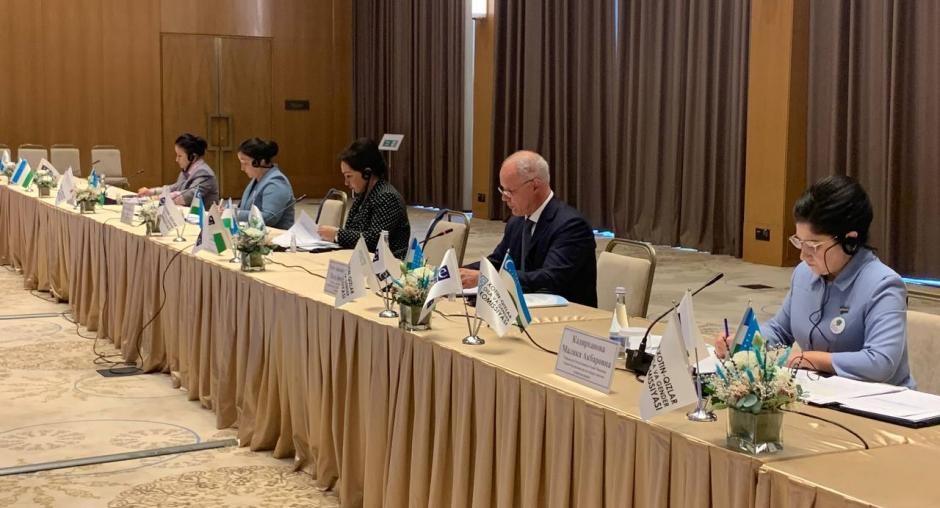 OSCE supports second forum on the role of women parliamentarians in the development of Uzbekistan 2022-06-02 The Second Forum on the Role of Women Parliamentarians in the Development of the Republic of Uzbekistan in Tashkent, 13 April 2022. On 13 April 2022, the OSCE Project Co-ordinator in Uzbekistan (PCUz), in partnership with the Republican Commission on the Advancement of the Role of Women in Society, Gender Equality and the Family, Committee on Women and Gender Equality of the Senate of the Republic of Uzbekistan organized the Second Forum on the Role of Women Parliamentarians in the Development of the Republic of Uzbekistan in Tashkent. More than 1,000 participants from the Senate and the Legislative Chamber of the Republic of Uzbekistan, deputies of local kengashes (councils) from all regions of Uzbekistan, members of the Youth Parliament of the Republic of Uzbekistan, officials of government agencies and public organizations and the media attended the forum in a blended format. Yulia Netesova, Chief of Democratic Governance and Gender Unit at the OSCE’s Office for Democratic Institutions and Human Rights (ODIHR), presented the ODIHR's work on gender equality and parliamentary representation. Aim of the forum was to create a networking platform for effective co-operation between women’s parliaments and deputy groups at the national and regional levels on issues such as: expanding women’s participation in political and social life and achieving gender equality in community interaction; the roles of female senators and deputies in coordinating joint actions to achieve sustainable development goals and overseeing the activities of regional executive bodies of local kengashes; empowering women in parliament to implement policies and programmes related to climate change, environment, and disaster risk reduction. The forum was opened by the Chairperson of the Senate of the Oliy Majlis of the Republic of Uzbekistan Tanzila Narbaeva. In her opening speech, she stressed that: “In recent years the country has been implementing large-scale reforms aimed at creating equal rights and opportunities for women and men, ensuring their full participation in managing the affairs of society and the state, their social economic and legal support”. In his opening speech, Pierre von Arx, Head of the OSCE Project Co-ordinator in Uzbekistan stressed that “Achieving gender equality requires work in three interrelated areas: correcting the unfavorable socio-economic situation of women, fight against stereotypical perceptions and violence, and increasing participation of women in political, social and economic life.” At the end of the forum, a set of follow up recommendations were provided. URL:https://www.osce.org/project-coordinator-in-uzbekistan/515946
  UNESCO invests over US$730,000 to support the diversity of cultural expressions in the Global South 2022-05-25 Against the background of the ongoing pandemic, which disproportionally impacted the livelihoods of artists and cultural professionals globally, the Fifteenth Session of the UNESCO Intergovernmental Committee for the Protection and Promotion of the Diversity of Cultural Expressions held this week approved over US$730,000 in funding for cultural projects. The funding, from the International Fund for Cultural Diversity (IFCD) will benefit 9 projects from Bolivia, Chile, Colombia, Guinea, Indonesia, Nigeria, Palestine, Seychelles and Timor-Leste, from a total of 615 project proposals submitted. This brings total support from the IFCD to more than US$ 9.4 million, resulting in funding for 129 projects in 65 Member States since 2010. The Committee’s decision is in line with UNESCO’s policy to support the creative and cultural sector, which has suffered from the pandemic, as shown in the recent report, Re|Shaping Policies for Creativity. "This period of profound upheaval is presenting all of us with a choice. Either we try to merely patch up the holes, which will undoubtedly lead us to face the same challenges in the near future, or we seize the opportunity to transform the cultural ecosystem in an integrated manner to make it more resilient, more inclusive, and more sustainable."Ernesto Ottone R.Assistant Director-General of UNESCO for Culture COVID-19 highlighted challenges faced by artists and cultural workers in accessing decent work, especially in countries with limited or no social infrastructure. UNESCO assistance targets support to reach young people, women and the most vulnerable groups in developing countries in order to provide them with a more stable work environment. The projects benefiting from the IFCD funding are: Establishing a community-driven alliance for sustainable cultural development planning in Lautem, Timor-Leste, led by the NGO Many Hands International-MHI. Fostering cultural diversity through youth empowerment in Chile, led by Arte Joven (Corporación Cultural Balmaceda Doce Quince) Reinvigorating and re-establishing culture at the heart of Seychelles’ economic and social development, led by Seychelles National Institute for Culture, Heritage and the Arts. WE ARE DIVERSE: Empowering female audiovisual professionals from vulnerable groups in seven countries of Latin America, led by Ibero-American Federation of Motion Picture, Colombia Promoting and monitoring artistic freedom in Indonesia led by the Perhimpunan Koalisi Seni Indonesia – Association of Indonesian Art Coalition, Indonesia Improving market access for artists with disabilities led by Potter’s Gallery Initiative, Nigeria Promoting cultural and creative industries in the city of La Paz, Bolivia led by the Cultural Vision Foundation, Bolivia Ramallah City of Music – a strategy for sustainable city development through music led by Ramallah Municipality, Palestine Reinforcing entrepreneurship in Guinea’s audiovisual, fashion and design sectors led by La MUSE, Guinea To learn more about the 9 IFCD beneficiary projects for 2022 please click here. The IFCD empowers the civil society actors and public sectors behind these projects to drive robust and sustainable creative economic growth. Through reinforced fundraising efforts, UNESCO expects to double contributions to the Fund over the next three years so that more eligible projects can be supported. The IFCD is part of the UNESCO Convention on the Protection and Promotion of the Diversity of Cultural Expressions (2005), which has 151 Parties. URL: https://www.unesco.org/en/articles/unesco-invests-over-us730000-support-diversity-cultural-expressions-global-south
 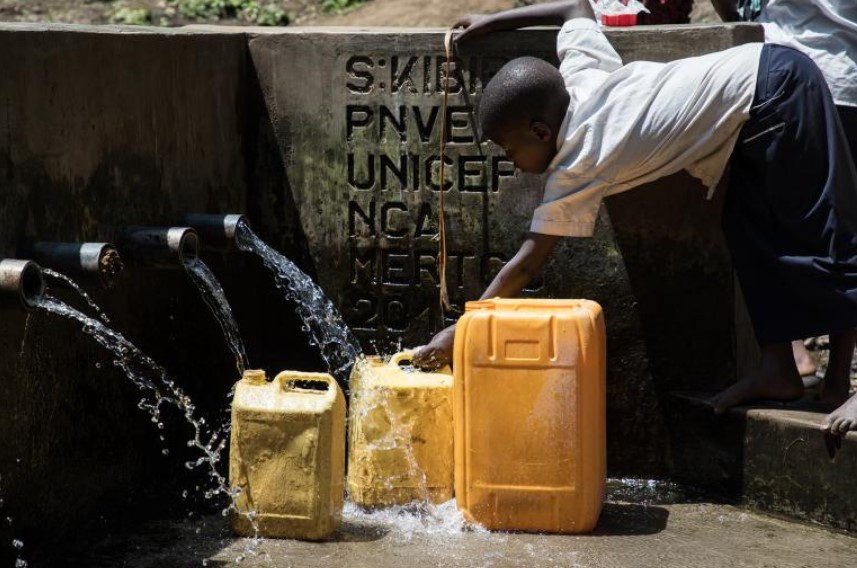 Africa to drastically accelerate progress on water, sanitation and hygiene – report 2022-05-25 DAKAR, 22 March 2022 – Achieving the Sustainable Development Goals (SDG) targets on water, sanitation and hygiene in Africa will require a dramatic acceleration in the current rates of progress, according to a UNICEF/WHO special report focused on Africa, launched today at the World Water Forum in Dakar, Senegal. This special report calls for urgent action to be taken on a continent where water scarcity and weak sanitation and hygiene services can threaten peace and development. Between 2000 and 2020, Africa’s population increased from 800 million to 1.3 billion people. About 500 million people gained access to basic drinking water and 290 million to basic sanitation services, according to a report of the WHO/UNICEF Joint Monitoring Programme for Water Supply, Sanitation and Hygiene (JMP), launched today during a session of the World Water Forum hosted by the African Ministers’ Council on Water (AMCOW) with UNICEF. On the continent, however, 418 million people still lack even a basic level of drinking water service, 779 million lack basic sanitation services (including 208 million who still practice open defecation) and 839 million still lack basic hygiene services. Achieving the SDG targets in Africa will require a 12-fold increase in current rates of progress on safely managed drinking water, a 20-fold increase for safely managed sanitation and a 42-fold increase for basic hygiene services, according to the report. “Equitable access to drinking water, sanitation and hygiene is not only the foundation of health and development for children and communities. Water is life, water is development, water is peace”, said Marie-Pierre Poirier, UNICEF Regional Director for West and Central Africa. “In a time when water scarcity fuels conflicts and water points are targeted, UNICEF calls for urgent actions. We need water, sanitation and hygiene in schools, especially for girls who may miss school because there are no toilets or because they have to fetch water. Women and children need a safe access to water. As climate change puts additional pressure on resources, we need climate risk-sensitive and resilient water, sanitation and hygiene services for children and their communities. And we need it now”. Significant inequalities persist within countries including between urban and rural, between sub-national regions and between the richest and the poorest. In urban areas, 2 out of 5 people lack safely managed drinking water, 2 out of 3 people lack safely managed sanitation, and half the population lacks basic hygiene services. In rural areas, 4 out of 5 people lack safely managed drinking water, 3 out of 4 people lack safely managed sanitation, and 7 out of 10 lack basic hygiene services. Worldwide, UNICEF works in over 100 countries to help provide access to safe water and reliable sanitation, and to promote basic hygiene practices in rural and urban areas, including in emergency situations. We achieve better water, sanitation and hygiene results for children by working directly with schools and healthcare facilities to improve access to these services, providing life-saving support in humanitarian settings. The creativity and commitment of community members supported as agents of change can inspire climate-related collective action, rallying around “nothing about us without us” where community members and government leaders identifying solutions to the challenges they face. Hosted for the first time in sub-Saharan Africa on 21-26 March 2022 by Macky Sall, the President of Senegal and Chairperson of the African Union, with the support of many partners including UNICEF, the 9th World Water Forum on “Water security for peace and development” aims to provide a unique platform for the water community and decision-makers to find solutions to increase access to water and sanitation across the African continent by 2030. URL: https://www.unicef.cn/en/press-releases/africa-drastically-accelerate-progress-water-sanitation-and-hygiene-report
 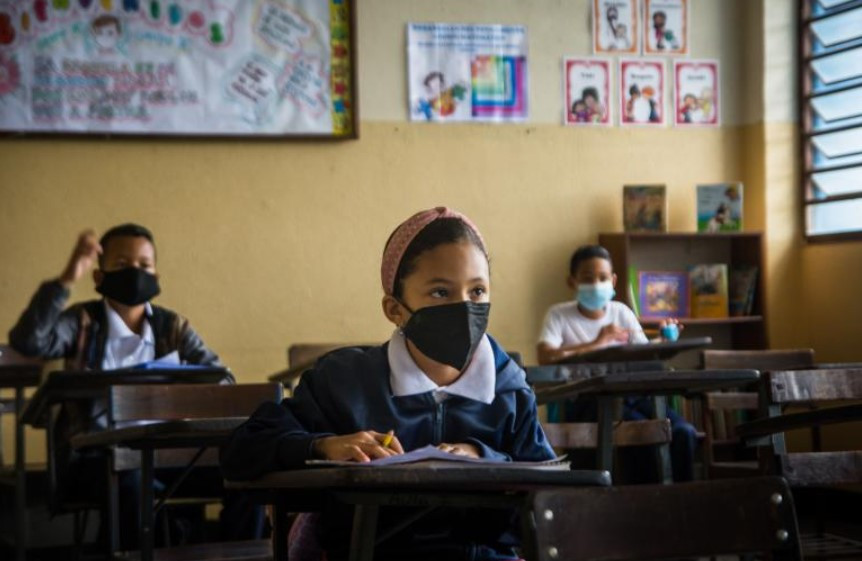 Less than half of countries are implementing learning recovery strategies at scale to help children catch up 2022-05-25 NEW YORK/PARIS/WASHINGTON D.C., 30 March 2022 – “More than two years into the COVID-19 pandemic, we are witnessing a colossal loss to children’s learning. Less than half of countries are implementing learning recovery strategies at scale to help children catch up. Unless all countries implement and expand programs in the coming months, they risk losing a generation. “With a combined 2 trillion hours of in-person school lost due to school closures since March 2020, students in more than 4 in 5 countries have fallen behind in their learning. Less well-off children have seen their learning falling back. In particular, the most marginalised – those living in poverty and rural areas, children with disabilities, and the youngest students – have fallen the furthest behind. “Basic, foundational skills upon which every aspect of education is built have been erased in many countries. Children have forgotten how to read and write; some are unable to recognise letters. Children who were poised to start school for the first time never got the chance to learn these skills in the first place, as early childhood education disappeared in most countries. Without urgent remedial action, this could carry serious lifelong consequences in terms of health and well-being, future learning and employment. “And yet, our March 2022 data show that less than half of countries featured in a new analysis published today are implementing learning recovery strategies at scale to help children catch up on what they’ve missed. Only half of low-income countries have a plan in place to assess where those who have returned are at in their learning. “While we have seen pockets of data that point to a staggering number of children not returning to school once their classrooms reopened, some countries are not collecting or not able to collect information on how many children have or have not returned to school, so we are flying blind. A quarter of low-income countries – already with high out-of-school populations – do not have the data to show how many students have returned to school. “The alarm was sounded many times. Six months into the pandemic, with a lack of access to remote learning, we already knew that at least a third of schoolchildren globally were completely cut off from their education. We knew that some 24 million children and youth were at risk of dropping out altogether. We knew child labour and child marriage would rise. And yet, not enough is being done to help children recover what they’ve lost. “At a time when it’s needed the most, education funding has and continues to fall desperately short. Countries allocated on average 3 per cent of their COVID-19 stimulus packages to education. In low- and lower-middle-income countries, the allocation was less than 1 per cent. “While countries scramble to recover, they are overlooking the single, most-effective long-term recovery and sustainability tool – education. “Governments must double down efforts get every child into school. Education is a fundamental human right. The multiple and intersecting barriers – including poverty, cultural norms, and poor quality teaching – preventing children from accessing their education must be broken down. Every child needs to be assessed on their learning and based on the results, they must have access to quality, tailored, catch-up classes to recover what they’ve lost and beyond. Teaching should be adjusted to the level they currently are at in their learning. Teachers must be given the training, support and resources they need. And finally, schools must go beyond places of learning and support children’s well-being and safety. “This is a now-or-never moment to act and transform education in order to save this generation.” ### Notes to Editors A joint report issued today by UNESCO, UNICEF and the World Bank highlights staggering levels of learning loss globally and takes stock of the measures being taken by countries to mitigate learning losses as schools reopen. The Where are we on education recovery? report is based on a survey of 122 UNICEF country and fundraising offices administered in early March 2022. The data presented in this statement is noted in the new report which presents the importance of and progress made in five key actions for education recovery: Reach every child and retain them in school; Assess learning levels; Prioritize teaching the fundamentals; Increase catch-up learning and progress beyond what was lost; and Develop psychosocial health and well-being so every child is ready to learn. URL: https://www.unicef.cn/en/press-releases/less-half-countries-are-implementing-learning-recovery-strategies-scale-help
  New Specialist Online Masters Programme in Global Learning 2022-05-09 Students interested in Global Learning, Education for Sustainable Development and Global Citizenship Education now have the option of engaging with a specialist Masters programme that covers these topics at University College London (UCL). Since 2008, the Development Education Research Centre at IOE, UCL's Faculty of Education and Society, has been running an online distance learning MA in Development Education and Global Learning, and a revised and updated programme has now been relaunched as the Global Learning MA for 2022. Global Learning is a pedagogical approach that encourages active engagement with a diverse, interdependent and fragile world. The online degree aims to equip its students with the skills needed to incorporate global learning into their educational practice, and apply it through policy or research, thereby advancing global social justice and sustainability. The Development Education Research Centre (DERC), launched in 2006 with funding from the UK Department for International Development, acts as the hub for knowledge generation, new thinking, quality output and teaching on development education, global learning, education for sustainable development and global citizenship – and the Centre has produced a substantial body of research on these subjects. The MA Global Learning is intended for anyone interested in developing, promoting and managing educational responses to global challenges, in schools, further and higher education, NGOs or youth work. It is open to early career or more established professionals internationally, who want to bring a global and social justice perspective to education. It is run fully online through asynchronous activities, specifically so that it is accessible to students based all over the world, and permitting students to continue to work while they study. The MA Global Learning will run from October 2022 and is open for applications up until 30 June 2022. Further details can be found here: https://www.ucl.ac.uk/prospective-students/graduate/taught-degrees/global-learning-ma
  Revision of the 1974 Recommendation concerning education for international understanding, co-operation and peace 2022-05-04 Adopted in 1974, the Recommendation concerning education for international understanding, co-operation and peace and education relating to human rights and fundamental freedoms is considered a landmark legal instrument that brings together for the first time peace, international understanding, human rights, fundamental freedoms and education. Long before the notion of global citizenship education (GCED) and education for sustainable development (ESD) were coined, the 1974 Recommendation called on Member States to ensure that their education policies are guided by a global perspective and a commitment to international solidarity. Today, the goals of the Recommendation align closely with Targets 4.7, 12.8, 13.3 and 16 of the 2030 Agenda for sustainable development that promote ESD and GCED. Since 1974, new threats endanger peace and human survival. These include climate change, infectious diseases, pandemics and other challenges to health, the rapid spread of hateful and violent ideologies, unsustainable consumption and production patterns, systemic racism, lingering inequalities. With the significant expansion of educational research and technological developments, the field of education has also evolved. Educational responses to societal challenges are increasingly evidenced-informed, comprehensive, digital and intersectoral, requiring cooperation across and between societies and beyond traditional borders (territorial and cultural). These developments also offer new opportunities for peace-building and fostering international solidarity. The revision of the Recommendation constitutes a unique opportunity to revive and update the global consensus around the role of education - in all its forms - to prepare learners of all ages, and future generations, to face future shocks and shape more just, sustainable, healthy and peaceful futures. About the Recommendation The 1974 UNESCO Recommendation concerning Education for International Understanding, Co-operation and Peace and Education relating to Human Rights and Fundamental Freedoms formulates principles and norms for the international regulation of education in support of the advancement of justice, freedom, human rights and peace. It promotes the role of education in eradicating conditions that threaten human survival and well-being. The 1974 Recommendation calls on national authorities and professionals in education all over the world to take action to infuse the aims and purposes of the Charter of the United Nations, (link is external) the Constitution of UNESCO and the Universal Declaration of Human Rights (link is external)(Article 26). The objective is to ensure education is directed to the ”full development of the human personality and to the strengthening of respect for human rights and fundamental freedoms” (Article 26 of the Universal Declaration of Human rights). The monitoring mechanism of the 1974 Recommendation is also used to measure progress on the achievement of Target 4.7, Target 12.8 on access to, and awareness of, information on sustainable development and 13.3. on climate change education. Why revise the 1974 Recommendation? Nearly 50 years ago, UNESCO’s Member States committed to promote peace and international understanding through education. There has been progress since, but challenges remain today. The “struggle against colonialism and neo-colonialism in all their forms and manifestations, and against all forms and varieties of racialism, fascism, and apartheid as well as other ideologies which breed national and racial hatred, and which are contrary to the purposes of this Recommendation” (Article 6) is relevant today though in different ways. Our generation is facing threats such as democratic backsliding and the spread of violent and hateful ideologies and conspiracy theories. Our life on our planet is also under threat due to pollution, climate change and the loss of biodiversity which are causing unforeseen tensions, and challenges to health and well-being. On the positive side, the international community is equipped today with a solid array of normative instruments and technological tools to foster peace and non-violence, which didn’t exist in 1974. We also have data and a rich body of research in education to develop sound policies and monitor their impact. For all these reasons, UNESCO’s Member States decided to revise the 1974 Recommendation to take into account shifts in the global and educational landscape, in particular the requirements of the 2030 Agenda and Sustainable Development Goal (SDG) 4 on Education, with a view to firmly embed the role of education in fostering global peace, international understanding and sustainable development. The revision will also take into account the recent results of the Futures of Education Report: Reimagining our futures together: a new social contract for education. Objectives The purpose of revising the 1974 Recommendation is twofold: ensure the instrument - its framing and technical guidance - is fit for purpose and able to better inspire the design of relevant policies. strengthen the resolve of Member States to implement the guiding principles contained in the 1974 Recommendation, and which are echoed in the 2030 Agenda. The process at a glance UNESCO is leading an inclusive and transparent consultative process in view of supporting the development and adoption of a Revised Recommendation. This process is composed of three main phases: Preparation: Review of relevant documents, evidence and research. [December 2021 to January 2022] Technical consultations with UN and other global, regional and multilateral partners, donors, civil society organizations, professional networks (including educators), national technical experts, as well as with youth, as appropriate. An international expert group composed of experts appointed in their personal capacity by the Director–General will be established during this phase in March 2022 to help propose initial revisions to the 1974 Recommendation. These initial consultations will contribute to the first draft of the revised Recommendation. [March – May 2022] - More information Formal consultations with Member States – as foreseen by the Rules of Procedure concerning recommendations to Member States and international conventions covered by the terms of Article IV, paragraph 4, of the Constitution. First, Member States will be invited to provide written comments on the 1st draft. UNESCO will subsequently convene a Special Committee (Category II) to review the 2nd draft. A sufficient number of intergovernmental consultations will be held in person on the text of the revised Recommendation before it is submitted to the General Conference for adoption. [September 2022 – until the foreseen adoption in 2023] Monitoring the implementation of the Recommendation As part of its standard-setting and monitoring role, UNESCO has been inviting Member States every four years to report on progress made in implementing the 1974 Recommendation. The Seventh Consultation was conducted from October 2020 to March 2021.The data was published for the first time in July 2021 in the UN’s SDG Global Indicator database(link is external). One of the key findings of the report highlights how topics related to learning to live together are more often integrated in laws and legal frameworks than topics related to learning to live sustainably. In both cases, they are slightly more likely to be included in education policies than in laws. According to the data provided by the 75 participating countries, integration of the guiding principles is especially high in curricula and in more than half of cases the mainstreaming of ESD and GCED is extensive. Although mainstreaming in teacher education is almost as high, it is more likely to be partial than extensive. Mainstreaming in laws, policies and student assessment is lower at 87-88%. Globally, 97% of countries (73 countries) reported that some or all of the guiding principles of the 1974 Recommendation are reflected in national or sub-national laws and policies. Despite these encouraging figures, the reporting does not measure the extent to which learning environments are conducive to fostering the principles of the Recommendation. These would be some of the issues to further explore in the revision process. Download the report of the 7th consultation Contact 1974recommendation@unesco.org URL:https://en.unesco.org/themes/gced/1974recommendation#:~:text=The%201974%20UNESCO%20Recommendation%20concerning,justice%2C%20freedom%2C%20human%20rights%20and
 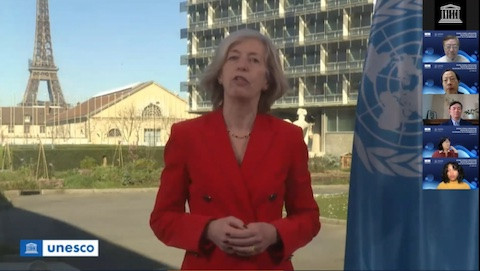 Regional Technical Consultations for the Asia and the Pacific for the Revision of the 1974 Recommendation 2022-04-22 On 6-7 April 2022, APCEIU collaborated with UNESCO Bangkok to organize the Regional Technical Consultations for the Asia and the Pacific for the Revision of the 1974 Recommendation concerning Education for International Understanding, Cooperation and Peace, and Education relating to Human Rights and Fundamental Freedoms (1974 Recommendation). The 1974 Recommendation is a legal instrument that outlines principles and norms for the international law of education in support of the development of justice, freedom, human rights and peace. In 2021, UNESCO began the preparatory process of the 1974 Recommendation almost half a century ago. The revision will take into account changes in the global and educational domains in consideration of new threats and challenges that the new generation can address through learning and education. The consultations in April aimed to capture insights and perspectives from various stakeholders based on their priority issues for the 1974 Recommendation in the context of the Asia-Pacific region. The first day of the event involved regional consultations with experts from Southeast Asia, Northeast Asia, and the Pacific, while the second day of the event involved regional consultations with experts from South and West Asia, and Central Asia. Both sessions offered Plenary Sessions and Working Group Sessions. The Plenary Sessions opened on both days with remarks from Ms Stefania Giannini (Assistant Director-General for Education, UNESCO) and Mr Shigeru Aoyagi (Director of UNESCO Asia and Pacific Regional Bureau for Education). In her opening remarks, Ms Giannini highlighted the significance of the 1974 Recommendation, sharing that “No other global legal instrument above this recommendation has been adopted to date on peace education.” She also declared, “In the face of new and very real threats, global peace and human survival, [for example] climate change, pandemics, mount inequalities, the spread of violent and hateful ideologies and disinformation, discrimination, and xenophobia – the time has come to update this instrument.” Mr Aoyagi echoed these thoughts, adding that “Modern technologies and online platforms make it easier for us to engage with experts in each region to gather input that will help revise this instrument to make it our recommendation.” The opening remarks were followed by a presentation of the historical background of the 1974 Recommendation, as well as a presentation about the revision process to provide a firm foundational understanding of the purpose of the meetings. The opening sessions were followed by visionary statements from Dr Swee-Hin Toh (Professor Emeritus in Education at the University of Alberta, Canada; and Laureate of the UNESCO Prize for Peace Education in 2000) who highlighted the integral roles of international and intercultural understanding, nonviolent conflict resolution, social justice and nondiscrimination, and environmental care in the conception of peace within the 1974 Recommendation and underscored the need to consider these themes in relation to changes in perspectives of the world that have occurred since 1974 in our revision of the document. The second visionary statement from Ms Shamah Bulangis (Co-Chair of Transform Education hosted by UNGEI), encouraged participants to consider the need for education to be both gender-inclusive and inclusive of youth and students, while also addressing the role of intersectionality and the power dynamics that have been ingrained and evolved over many generations. Dr Swee-Hin Toh also moderated the sessions on regional perspectives on the 1974 recommendation, which included a presentation of the 1974 Recommendation by Ms Faryal Khan (Programme Specialist for Education, UNESCO Asia and Pacific Regional Bureau for Education) and panel discussions about current trends and understandings of peace today and challenges to peace, as well as action areas for the way forward in the Asia-Pacific Region. Panellists included Ms Sonal Chheda (National Project Officer in Policy, Mahatma Gandhi Institute of Education for Peace & Sustainable Development), Dr Ethel Agnes P Valenzuela (Director, Southeast Asia Ministers of Education Organization Secretariat) for both Day 1 and Day 2, and Ms Lea Espallardo (Resident Artist-Teacher, the Philippine Educational Theater Association) for Day 1. In this session, participants shared their opinions on the 1974 Recommendation and aspects to be revised. The majority of participants believed that the 1974 Recommendation needs to be updated, and perceived that the aim of the Recommendation should be to ‘take informed decisions and action at the individual, community, and global levels to transform society and institutions. Similarly, participants generally believed that there should be a specific provision on sustainable development focusing on environment and climate change, and that values of accountability, transitional and restorative justice, behavioural change, equity and inclusion, action, intergenerational equity, global citizenship as our new identity, peace, resilience, SDG 2030 Goals and rethinking dominant paradigms of development and globalization needed to be included and reinforced. The Working Group Sessions were attended by select participants to examine specific sections of the recommendation and discuss what must be added or updated in the revision based on the Plenary Discussion. Director Lim Hyun-mook of APCEIU moderated the sessions on both days, in which important points were discussed. Participants deliberated the extension of our understanding of respect for diversity to include bio-cultural diversity, gender inclusivity, inter-generational learning, and an understanding of religion and spirituality as culture. In the same strain, participants suggested that it is necessary to recognize whole-community approaches and partnerships between education stakeholders in pedagogy, curriculum, and policy. Also discussed were recognition for teacher development and professional development for administrators in schools and education systems in order to facilitate their role in empowering democratic learning and teaching. Participants debated how to develop perspectives about acting for sustainable communities, such as by including principles of Global Citizenship Education (GCED) and Education for Sustainable Development (ESD). These discussions will advise proposals to be considered by the International Expert Group that will be drafting the revision of the 1974 Recommendation. URL:http://unescoapceiu.org/post/4434