
News
Catch up on what’s happening in the world of global citizenship education.
1,668 results found
 Ireland to host European Congress on Global Citizenship Education 2022-04-12 Ireland will host a European Congress on Global Citizenship Education in November 2022. The Congress will mark the culmination of an 18-month process to develop a new European Declaration on Global Citizenship Education to 2050. The Dublin Declaration will be adopted on the 20th anniversary of the Maastricht Declaration, the starting point for Europe-wide activity in this area. The Declaration will set out how education will encourage the public to act, individually and collectively, to help build a fairer, more tolerant and more sustainable world for all. It is likely to have a focus on youth, adult and community education, including reaching those who may have become marginalised from mainstream education. The process is being convened by GENE – Global Education Network Europe, the network of Ministries and Agencies with national responsibility for Global Citizenship Education in European countries. 60 Ministries and Agencies from across Europe will participate. Ireland is one of the co-founding member states of GENE and will chair the declaration process and Congress. The Declaration will be endorsed by Governments from across Europe. It will involve the European Union, the Council of Europe, the Organisation for Economic Co-operation and Development (OECD), the United Nations Educational, Scientific and Cultural Organisation (UNESCO) and the United Nations Economic Commission for Europe (UNECE). The European Commissioner for international partnerships, Ms Jutta Urpilainnen, has already strongly endorsed the process. In addition to Governments and International Organisations, the Congress and Declaration will involve civil society and youth organisations, and research and educational institutions. Local and regional authorities will also be important participants, as will voices from across the world. The Department of Foreign Affairs will co-operate closely with the Department of Education and the Department of Further and Higher Education, Research, Innovation and Science, to ensure policy alignment with the National Strategy on Education for Sustainable Development. URL:https://irishaid.ie/news-publications/press/pressreleasearchive/2022/march/ireland-to-host-european-congress-on-global-citizenship-education.html
 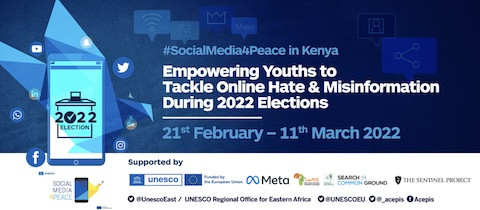 Empowering youths to tackle online hate and misinformation ahead of 2022 Kenyan elections 2022-03-17 In electoral contexts, social media have been lauded as equalizers enhancing the flow of information between candidates and voters. Yet, they have also been misused to distort citizen’s decision-making process. As Kenyans will go to the polls to elect their President, members of Parliament and county Governors in August 2022, UNESCO in partnership with the Africa Centre for People Institutions and Society (Acepis) and close collaboration with META (Facebook), Search for Common Grounds, The Sentinel Project and EU in Kenya mobilized young people across the country to participate in series of trainings on media and information literacy, and social media campaign to tackle online hate and misinformation. This intervention attracted participation of 163 young people (1st cohort), 289 youths (2nd cohort) and 795 (3rd cohort) drawn from across. While giving opening remarks at the virtual workshop, Ms. Misako Ito, Regional Advisor for Communication and Information for Africa at UNESCO Regional Office in Nairobi said:“UNESCO’s past experiences have showed that we all instinctively like or share a post without necessarily thinking whether we should first verify and check the information before. But a click can have enormous impacts on social media and in the reality of people’s life. This is why UNESCO always encourages social media users to ‘Think Critically and Click Wisely.” Kenya has experienced the consequences of disinformation, hate speech and other harmful content in times of electoral campaigns. The 2007 general elections were accompanied by violence fueled by hate speech. In recent years, addressing the spread of misinformation and other forms of harmful content has become more and more challenging with the increased use of social media and the internet in the context of the COVID-19 pandemic. In the efforts to promote peace and fight online hate speech in the wake of the upcoming 2022 general elections in Kenya, UNESCO is implementing the project Social Media 4 Peace funded by the European Union (EU). Through the project, UNESCO, the EU, and partners such as Africa Centre for People Institution and Society (ACEPIS) seek to empower youth in four countries around the world, including Kenya, to be more resilient to harmful content. Katrine Hagemann, Deputy Head of Delegation of the EU in Kenya stated that:“Online hate and disinformation are complex issues which can trigger devastating effects. Political intolerance and hate speech have proliferated on traditional media outlets and social media platforms with users unwilling or unaware of how to moderate that content. This new method of potentially harmful hate speech and misinformation can easily impact offline violence. Fact based, fair and balanced information is a key ingredient to countering news and manipulative narratives.” At the trainings, Ms. Sarah Muyonga, Public Policy Manager, Meta, East and Horn of Africa indicated that: “Social media can and must be a force for peace and human rights. Technology is providing new and creative ways for peace builders to foster alternative discourse and challenge prevailing conflict narrative. It can easily be used as a tool to divide and cause conflict. Meta will educate young people on the online tools they can use to stay safe, tools of privacy, engagement standards and how to avoid content that easily exercabate conflict.” Ms. Judy Kimamo, Director, Search For Common Ground stated:“Social media platforms are important spaces for gathering people. The Maskani research showed that young people largely use Facebook as a hangout space to interact, share and get information. As we get into the election season it is important that young people and influencers have the tools and capacity to be able to understand how misinformation and disinformation affects the delivery of elections and in wider scale contributing to peace and security in communities.” John Green Otunga. East African Programmes Manager, the Sentinel Project also stated that:“Misinformation and Disinformation is not new in our society but the exceptional and exponential proliferation of information audiences are exposed to in this day make it a challenge to filter and determine the legitimate from the manipulated and fake. A lot needs to be done to ensure vulnerable populations are protected from consuming and spreading unverified information ahead of the general elections. Let’s not wait until after the fact to react.” During the months of February and March 2022, ACEPIS has trained over 500 young people drawn from 47 counties in Kenya on Media and Information Literacy (MIL) competencies and skills to become more discerning creators and consumers of content online. As young voters are the most important consumers and producers of online content, the trainings target youth in Kenya to equip them with skills to identify, counter and report online harmful content. “The importance of social media cannot be overlooked, what happens online mimics and translates into what happens offline. Cognizant of this reality it is paramount that we ensure social media platforms are used positively for peacebuilding purposes. These trainings purpose to equip young people with skills to be responsible digital citizens especially as we get into the electioneering period.” said Rachel Olpengs, Programmes Manager of ACEPIS. The series of trainings are based on modules and toolkits developed by UNESCO and partners such as the Model Media and Information Literacy Curriculum for Educators and Learners Media and Information Literate Citizens: Think critically, Click Wisely ). The training programme is accompanied with knowledge brokering sessions where representatives of prominent social media platforms engage with youths on their community guidelines in relation to harmful content. About the Social Media 4 Peace Project The Social Media 4 Peace project is premised on the realization that while digitalization of societies presents opportunities for information flow, digital communication tools have also become instrumental platforms for spreading harmful content with a significant impact on conflict dynamics and peace. Through the project, UNESCO seeks to enhance understanding of the root causes, scale and impact of potentially harmful content and of the effectiveness of the tools to address it in the 3 pilot countries – Kenya, Bosnia & Herzegovina, and Indonesia. The project is funded by the European Union and will contribute to the achievement of SDG 16, to promote just, peaceful and inclusive societies and to the UN Plan of Action on Hate Speech launched by UN Secretary General Antonio Gutierrez to combat the online disturbing groundswell of xenophobia, racism and intolerance. URL:https://en.unesco.org/news/empowering-youths-tackle-online-hate-and-misinformation-ahead-2022-kenyan-elections
 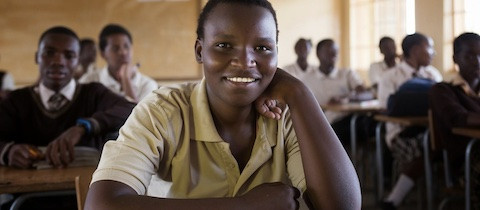 Let us make schools places of learning about respect and equality 2022-03-10 An estimated 246 million children and adolescents experience violence in and around school every year. By Lidia Arthur Brito and Hubert Gijzen It is estimated that globally 246 million children and adolescents experience some form of physical, sexual or psychological violence in and around schools each year. Violence in schools, can be detrimental to learners. Many of us have seen disturbing videos circulating on social media in the ESA region, of young people either being bullied or being part of those bullying others. These were not isolated cases. In a recent study by UNESCO, 48% of learners in sub-Saharan Africa reported that they have experienced bullying. The consequences of school violence are severe for children and young people who are finding it difficult to concentrate in class, are missing classes, avoiding school activities, playing truant or dropping out of school altogether. In turn, this adversely impacts their academic achievement and future education and employment prospects. Where there is violence, or threat of violence, effective teaching and learning cannot take place. Furthermore, being a victim of violence in childhood has lifelong impacts on education, health, and well-being. Exposure to violence can lead to educational underachievement due to cognitive, emotional, and social problems. And because children who are exposed to violence are more likely to smoke, misuse alcohol and drugs, and engage in high-risk sexual behaviour, they are also more likely to endure a range of illnesses later in life. This is why it is important to ensure that schools are not only safe, but also places where learners develop more respectful behaviours and adopt attitudes that promote peace. Schools have become crucial agents of socialisation for children and young people. Teachers play a significant role in children and young people's lives because they contribute to their attitudes and worldviews. And although the rates of school exclusion for this region are high, the high number of learners points to the huge opportunity to utilise schools as places where positive gender norms, and relations can be nurtured. This requires action from all sectors of society including religious leaders, traditional leaders, parents, and the school system. This requires action targeting both girls and boys. First, we need to support teachers to better create respectful classroom environments where every learner feels safe and empowered to learn, and to relate to the teacher and fellow learners in a respectful manner. This support should include both skills and materials, and adequate classroom space for teachers and learners to interact, and for the teacher to be able to implement positive discipline as the primary and only form of discipline. The Connect with Respect toolkit is a resource that teachers can use to address complex issue of school violence, including gender-based violence in the classroom and the broader school environment. Results from the pilot of the toolkit conducted in Eswatini, Tanzania and Zambia, showed that over three quarters of participating students (77%) said that the Connect with Respect programme improved their relationship skills. The programme also led to a reduction in the occurrence of some forms of violence and led to increased knowledge about how to seek help for those affected, as well as increased intention to seek help if affected by violence at school. Second, we need to adopt a whole-school approach to ending violence in schools. This involves addressing the needs of learners, staff and the wider community, not only within the curriculum, but across the whole-school and learning environment. It implies collective and collaborative action in and by a school community to improve student learning, behaviour and wellbeing, and the conditions that support these. Schools must be committed to becoming violence-free zones, where any occurrence of violence is met with strong action from every member of the community. And lastly, we need to transform gender norms. Harmful gender norms and stereotypes, including harmful notions of masculinity result in many types of inequalities between girls and boys, and perpetuate gender-based violence. Consequently, gender-based violence continues to disproportionately affect women and girls, too often at the hands of men and boys. The COVID-19 pandemic only emphasized this further: the lack of safety of women and girls in their home environments during lockdown was record high and had a severe impact on young people’s mental and physical health. Preventing violence in schools, and indeed in homes, starts with first transforming our gender norms, roles, and expectations. It starts with challenging negative masculinities and femininities as well as beginning to develop more respectable relationships. Schools in the 21st century need to be places where such respectful values are taught, and where healthy and gender equitable relationships and connections are reinforced. Granted, addressing power relations in the school environment is not an easy feat, as some teachers and educators all too often face their own internal conflicts about their beliefs in certain gender roles, and norms, and the expectation placed upon them by the education sector to challenge such norms among learners. This particular conflict points to the need for more resources and tools that seek to not only provide teachers with the ability to address gender and power relations, but also changes their own perceptions and attitudes. The Connect with Respect tool, and associated teacher training package, does these two things well; it helps teachers clarify, challenge and transform their own values and biases, and secondly, it gives them practical classroom activities and exercises that they can do in their classrooms to promote respectful and healthier relationships. We have already received overwhelming interest from countries in the region who wish to roll out the Connect with Respect programme in their schools. And as UNESCO and other partners, we are keen to support this work to make schools safer, healthier, and free of violence and discrimination. For more information about the webinar and media requests please contact Remmy Shawa r.shawa@unesco.org(link sends e-mail) Register for the webinar here. Download the Connect with Respect toolkit for Eastern and Southern Africa here. Download the multi-country report here. Follow #ConnectWithRespect Learn more about what UNESCO does on School violence and bullying here. *Lidia Arthur Brito is the UNESCO Regional Director for Southern Africa *Hubert Gijzen is the UNESCO Regional Director for Eastern Africa URL:https://en.unesco.org/news/let-us-make-schools-places-learning-about-respect-and-equality
 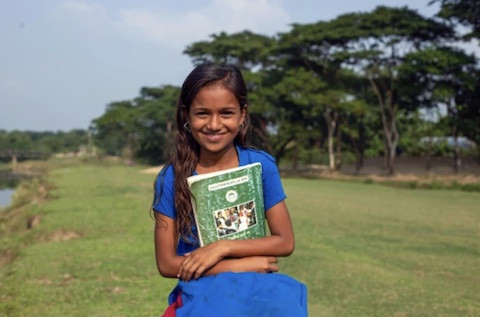 Why Mother Language-Based Education Is Essential 2022-02-27 Every year on 21 February, the world celebrates International Mother Language Day, which was established at the initiative of Bangladesh by UNESCO’s General Conference in 1999. The Day is an essential platform to promote the importance of cultural and linguistic diversity, and multilingualism for peaceful and sustainable societies. UNESCO has been leading the way and advocating for multilingual education based on the mother tongue from the earliest years of schooling. Research shows that education in the mother tongue is a key factor for inclusion and quality learning, and it also improves learning outcomes and academic performance. This is crucial, especially in primary school to avoid knowledge gaps and increase the speed of learning and comprehension. And most importantly, multilingual education based on the mother tongue empowers all learners to fully take part in society. It fosters mutual understanding and respect for one another and helps preserve the wealth of cultural and traditional heritage that is embedded in every language around the world. However, there is still a long way to go before guaranteeing all learners their right to education in their mother language. In most countries, the majority of students are taught in a language other than their mother tongue, which compromises their ability to learn effectively. It is estimated that 40 % of the world’s population does not have access to an education in a language they speak or understand. There are about 7,000 languages spoken around the world today. But linguistic diversity is increasingly threatened as more and more languages disappear at an alarming rate. And when a language disappears, it takes with it an entire cultural and intellectual heritage. Globally, progress is being made in multilingual education based on mother tongue with growing understanding of its importance, particularly in early schooling, and more commitment to its development in public life. Through its normative frameworks for language policy and education, UNESCO shares good practices in bilingual and multilingual education and mother tongue instruction. It works with Member States to integrate multilingual education into curriculums and education systems. Recent successful initiatives to promote mother language-based education have taken place in Djibouti, Gabon, Guinea, Haiti and Kenya. The findings from UNESCO’s new report From rights to country level action shows national efforts made by different countries to foster cultural and linguistic diversity. In addition, UNESCO recently unveiled the World Atlas of Languages, an unprecedented initiative to preserve, revitalize and promote global linguistic diversity and multilingualism. Impact of COVID-19 on mother language education School closures due to the COVID-19 pandemic has exposed and deepened pre-existing education inequalities around the world. The closures ranged from a global average of 20 weeks to above 70 in some cases, more than a full school year. As always, it has impacted vulnerable and marginalized learners the hardest, which includes indigenous and speakers of languages from minority groups. According to UN estimates, nearly 500 million students from pre-primary to upper-secondary school were unable to access any remote learning opportunities during the lockdowns. In many countries, distance teaching and learning tools, programmes and content were not always able to reflect linguistic diversity: They were largely provided in dominant national or international languages. When remote learning content is not available in students’ mother tongue, it increases the risk of learning loss, dropouts and exclusion. Many learners lacked the necessary equipment, internet access, accessible materials, content relevant to contexts and needs, and human support that would have allowed them to follow distance learning. Many teachers also didn’t have the skills and readiness for using distance teaching. They also struggled with digital tools in languages that they didn’t always master. The massive digital divide shows how connectivity has become a key factor to guarantee the right to education. The lack of access to digital learning content is deepening inequalities, marginalization and exclusion. Another element that exacerbates the digital divide is the fact that many languages are not present on the Internet: There is a major linguistic divide in cyberspace today. The inclusion of languages in the digital world and the creation of inclusive learning content is vital. Remote learning based on the mother tongue should be incorporated into education systems in order for all learners, especially those from linguistic minorities, to access education during school closures and beyond. This year’s International Mother Language Day theme, “Using technology for multilingual learning,” is an opportunity to take stock of the experience of the past two years, to move forward differently and better. More on International Mother Language Day More on UNESCO’s work around languages in education URL:https://www.unesco.org/en/articles/why-mother-language-based-education-essential
  [Presentation Materials] 5th UNESCO Forum on Transformative Education for Sustainable Development, Global Citizenship, Health and Well-being 2022-02-21 5th UNESCO Forum on Transformative Education for Sustainable Development, Global Citizenship, Health and Well-being: The implementation of transformative education – where do we stand? Presentation materials from the 5th UNESCO Forum on Transformative Education are now available to download at the GCED Clearinghouse. From 29 November to 1 December 2021, the 5th UNESCO Forum on Transformative Education for Sustainable Development, Global Citizenship, Health and Well-being was held virtually from Seoul, Republic of Korea. Co-organized by UNESCO and APCEIU, and hosted by the Ministries of Education and Foreign Affairs of the Republic of Korea, the forum gathered about 3,000 online participants. In view of underlining the complementarity and synergy among diverse education programmes and approaches that have been furthering increased quality and relevance of education and learning, UNESCO has been moving towards an integrated approach to SDG Target 4.7 that brings together under the term of “transformative education” to open the way for innovation in education today. In recent years, many global, regional and national efforts have been made to monitor progress towards Target 4.7, or transformative education. Against the background of these efforts, which all have their respective strengths and weaknesses, and in light of the many efforts underway to implement transformative education, Member States and other stakeholders have increasingly voiced the need to understand better what concrete progress in transformative education looks like and how it can best be captured. The 5th Forum responded to this need. More information on the Forum To download the presentation materials, please click each link (name) in the list below: Opening Opening remarks· Ms Stefania Giannini, Assistant Director-General for Education, UNESCO· Ms Eun-hae Yoo, Deputy Prime Minister and Minister of Education, Republic of Korea· Mr Jong-ho Kyun, Director-General, Public Diplomacy and Cultural Affairs Bureau, Ministry of Foreign Affairs, Republic of Korea· Mr Hyun Mook Lim, Director, APCEIUModerators:· Mr Alexander Leicht, Chief, Section of Education for Sustainable Development, UNESCO· Ms Jeongmin Eom, Head of Office of Research and Development, APCEIU A moderated conversation on transformative educationModerator: Mr Eric Falt, Director, UNESCO New Delhi OfficeSpeakers:· Mr Nepomuceno A. Malaluan, Undersecretary of Education, Department of Education, Philippines· Mr Amr Abdalla, Professor Emeritus, the University for Peace, Egypt Strand 1 – What does progress in transformative education look like – a look at practices at the country level Plenary session 1 Moderator: Ms Krista Pikkat, Director, UNESCO Almaty OfficeSpeakers:· Mr Shadreck Majwabe, Director of the Department of Curriculum Development and Evaluation, Ministry of Basic Education, Botswana· Mr Thomas Greiner, Head of Subdivision,Lifelong Learning, Federal Ministry of Education and Research, Germany· Ms Taka Horio, Assistant Secretary-General, the Japanese National Commission for UNESCO & ASP National Coordinator, Ministry of Education, Culture, Sports, Science and Technology, Japan· Ms Niveen Jouhar, Member of Directorate of Curricula, Ministry of Education, Jordan Concurrent sessions 1 Session 1.1 – PolicyModerator: Ms Akpezi Ogbuigwe, Founder, Anpez Centre for Environment and Development, NigeriaSpeakers:· Mr Arjen Wals, UNESCO Chair, Social Learning and Sustainable Development, University of Wageningen, Netherlands· Ms Anna-Karin Johansson, Swedish National Commission for UNESCO, Ministry of Education, Sweden· Mr Felipe de Souza Costa, São Paulo Municipal Secretariat of Education, Brazil· Mr El Hadji Gueye, Founder, Banlieu UP, Senegal Session 1.2 – Curricula, pedagogy and assessmentModerator: Mr Yao Ydo, Director, UNESCO International Bureau of Education (IBE)Speakers:· Dr Esther Care, Professor, University of Melbourne, Australia· Ms Lynndina Essack, Senior Education Officer, Department of Education Services, Ministry of Education, Seychelles· Mr Daehoon Jho, Professor, Sungshin Women's University, Republic of Korea· Dr Jinan Karameh Chaya, Principal, Al Manar Modern School (UNESCO Associated Schools Network member), Lebanon Session 1.3 – Learning environmentModerator: Mr Chris Castle, Chief of Section of Education for Health and Well-being, UNESCOSpeakers:· Prof. Didier Jourdan, UNESCO Chair and Head of the World Health Organization (WHO) Collaborating Center "Global Health & Education"· Prof. James O’Higgins Norman, Director of the National Anti-Bullying Centre, the Dublin City University, Ireland & UNESCO Chair on Tackling Bullying in Schools and Cyberspace· Ms Bolorchimeg Dagva, Adolescents and HIV Specialist, UNICEF, Mongolia Strand 2 – What does progress in transformative education look like – a look at recent global and regional data Plenary session 2 Moderator: Mr Sobhi Tawil, Director, Future of Learning and Innovation, UNESCOSpeakers:· Ms Miho Taguma, Senior Policy Analyst on OECD Learning Compass 2030 and SDG 4.7· Ms Leanne Riley, Unit Head, Surveillance, Monitoring and Reporting, Department of Noncommunicable Diseases (NCDs), World Health Organization· Ms Valeria Damiani, Associate Professor, La Libera Università Maria SS. Assunta (LUMSA) University, Italy· Mr Carlos Henríquez Calderon, Coordinator of the Latin American Laboratory for Assessment of the Quality Education (LLECE), Regional Bureau for Education in Latin America and the Caribbean (OREALC), UNESCO Santiago Office Concurrent sessions 2 Session 2.1 – How to address social and emotional dimensions of learning in assessment?Moderator:· Ms Cecilia Barbieri, Chief, Section of Education for Global Citizenship & Peace, UNESCOSpeakers:· Ms Nandini Chatterjee, Senior National Project Officer, UNESCO Mahatma Gandhi Institute of Education for Peace and Sustainable Development (MGIEP)· Ms Valerie Shapiro, Associate Professor, University of California Berkeley, USA· Mr Pablo Pincheira, Training Director, Forja Chile, Chile Session 2.2 – Making adult learning and education visible within lifelong learning: strengthening non-formal education for individual, social and system level transformationModerator: Mr Jose Roberto Guevara, President, International Council for Adult EducationSpeakers:· Mr Nicolas Jonas, Programme Specialist, UNESCO Institute for Lifelong Learning (UIL)· Ms Mo Winnie Wang, Programme Specialist, UNESCO Institute for Lifelong Learning (UIL)· Mr Denis Barrett, Coordinator of Cork Learning City, Ireland Session 2.3 – What do we need to monitor/measure/assess in transformative education - gaps and opportunities?Moderator: Dr Marcia McKenzie, Director, MEECE Project and SEPN, and Professor, the University of Melbourne, AustraliaSpeakers:· Mr Doug McCall, Executive Director, International School Health Network· Mr Antoine Marivin, Project Manager, UNICEF-East Asia and Pacific Regional Office (EAPRO)· Dr Julia Kim, Programme Director, the Gross National Happiness Centre, Bhutan Special Session by the Host Country (Plenary) – Experiences from the Republic of Korea and Beyond: Progress, Challenges and New Visions Moderator: Mr Soon-yong Pak, Professor, Yonsei University, Republic of KoreaSpeakers:· Mr Hwanbo Park, Professor, Chungnam University, Republic of Korea· Mr Cheol-Jin Yang, Teacher at Songwoo Middle School & Co-Founder/Director of Neuroo, Republic of KoreaDiscussants:· Ms Sun-Kyung Lee, Professor, Cheongju National University of Education, Republic of Korea· Mr Aaron Benavot, Professor, University of Albany, USA Strand 3– What does progress in transformative education look like – the crucial role of teachers Plenary session 3 Moderators:· Ms Antonia Wulff, Director of Policy, Advocacy and Research, Education International· Mr Christophe Cornu, Senior Project Officer, Section of Education for Health and Well-being, UNESCOSpeakers:· Mr William Gaudelli, Dean, College of Education & Vice Provost for innovation in education, Lehigh University, USA· Mr Carmel Cefai, Professor, Department of Psychology, University of Malta, MaltaPanelists:· Mr Anil Ramdewor, Ministry of Education, Mauritius· Mr Souphap Khounvixay, Advisor, Cabinet Office of the Minister for Education and Sports, Lao People's Democratic Republic· Ms Miri Yemini, Professor, Department of Educational Policy and Administration, the Jaime and Joan Constantiner School of Education, Tel Aviv University, Israel· Mr Bert Tuga, President, Philippines Normal University, Philippines· Ms Anh Duong Phuong, Teacher and youth activist for gender equality and girls’ rights, Viet Nam· Mr Renato Jiménez Cabrera, teacher trainer, the Benemérita Escuela Nacional de Maestros, Mexico Concurrent sessions 3 Session 3.1 – Teacher preparedness Moderator: Dr Jim Taylor, Research Associate, University of KwaZulu-Natal, South AfricaSpeakers:· Dr Dy Samsideth, Deputy Director General for Education, Ministry of Education, Youth and Sport, Cambodia· Dr Mieke van Ingelghem, Lecturer, UC Leuven Limburg Teacher Education (UNESCO Associated Schools Network member), Belgium Session 3.2 – Teaching and learning resources and materialsModerator: Ms Yumiko Yokozeki, Director, UNESCO International Institute for Capacity Building in Africa (IICBA)Speakers:· Mr Dennis Sinyolo, Director, Education International’s African Regional Office· Ms Mary Sichangi, Head of Department, Partnerships & Linkages, Centre for Mathematics, Science and Technology Education in Africa (CEMASTEA)· Mr Temechegn Engida, Program Officer, UNESCO International Institute for Capacity Building in Africa (IICBA) Session 3.3 – School and community supportModerator: Mr Carlos Vargas, Chief of Section of Teacher Development, UNESCOSpeakers:· Mr Carlos Enrique Rodoriguez Rivas, Head, National Teacher Training Institute, Ministry of Education, El Salvador· Dr James Williams, Professor, School of Education and Human Development at George Washington University, USA· Mr Kiichi Oyasu, Director, Education Cooperation Department of Asia-Pacific Cultural Centre for UNESCO (ACCU), Japan Strand 4 – What does progress in transformative education look like – conclusions and next steps Plenary session 4Moderator: Ms Vibeke Jensen, Director, Division of Peace and Sustainable Development, UNESCOPresentation of the key ideas for recommendation:· Mr Alexander Leicht, Chief of Section of Education for Sustainable Development, UNESCODiscussants:· Mr Nilantha Gunasekara, Deputy Director, School Health and Nutrition Branch, Ministry of Education, Sri Lanka· Ms Chandrika Bahadur, Director, SDG Academy· Ms Katarina Popovic, Professor, Department of Andragogy, University of Belgrade, Serbia & Secretary General, the International Council for Adult Education (ICAE)· Mr Hyun Mook Lim, Director, APCEIU, Republic of Korea· Mr Aaron Benavot, Professor, University of Albany, USA Concurrent sessions 4 Session 4.1 – Policy makersModerator: Mr Sam Loni, Programme Director, UN Sustainable Development Solutions Network, USASpeakers:· Ms Catherine Matara, Assistant Director of Education, Ministry of Education, Kenya· Ms Sandra Allison Soria Mendoza, Head of the Environmental Education Unit and Environmental Education Specialist, Ministry of Education of Peru· Ms Saher Baig, Representative, Youth4Climate Session 4.2 – PractitionersModerator: Ms Monica Froehler, CEO, Ban Ki-moon Centre for Global CitizensSpeakers:· Mr Umair Mushtaq, Project Manager, The Little Art, Pakistan· Ms Elena Diryugina, Head of methodology and evaluation department, Investment to the Future, Russian Federation· Ms Libby Giles, Head of Global Citizenship, St Cuthbert’s College, Director, New Zealand Centre for Global Studies, New Zealand Session 4.3 – Monitoring experts on measurement frameworks, M&E, and dataModerator: Mr Ralph Carstens, Senior Research Advisor, International Association for the Evaluation of Educational Achievement (IEA)Speakers:· Ms Mónika Réti, Representative of Hungary, UNECE working group on monitoring of the ESD strategy· Mr Le Anh Vinh, Deputy Director General, Viet Nam Institute of Educational Sciences (VNIES)· Mr Hilaire Hounkpodoté, Coordinator of the Programme for the Analysis of Education Systems (PASEC), CONFEMEN· Mr Guy-Roger Kaba, Coordinator of the Observatory on the Quality of Education, CONFEMEN Special concurrent sessions Special Concurrent Session 1 Sulitest – Raising & Mapping Awareness of the Global Goals· Mr Aurelien Decamps, Co-founder, SulitestThe Danish Institute for Human Rights / SDG Target 4.7· Ms Kristina Helland Strandby, Senior Advisor, The Danish Institute for Human Rights, Sweden Special Concurrent Session 2 Mapping GCED network in North America and Europe· Mr Massimiliano Tarozzi, Professor, University of Bologna, ItalyMonitoring and Evaluating Climate Communication and Education (MECCE) Project· Dr Marcia McKenzie, Director, MECCE Project and SEPN, and Professor, the University of Melbourne, Australia Special Concurrent Session 3Reorienting education and training systems to improve the lives of indigenous youth· Mr Charles Hopkins, Chairholder, UNESCO Chair in Reorientating Education towards Sustainability, York University· Ms Katrin Kohl, Executive Chair Coordinator, UNESCO Chair in Reorientating Education towards Sustainability, York University· Ms Pigga Keskitalo, University Researcher, University of Lapland, Finland· Ms Sheila Santharamohana, Designer of Curriculum and Instructional Design, LeadEd Services, MalaysiaMapping Education for Sustainability in the Nordic countries· Mr Robert J. Didham, UNESCO Chair on Education for Sustainable Lifestyles, Inland Norway University of Applied Sciences, Norway Closing Celebration (Korean cultural performance)Messages from Youth· Ms Anna Susarenco, Youth Leader, Moldova· Ms Shamah Bulangis, Co-chair, Transform Education, PhilippinesConcluding remarks· Mr Shigeru Aoyagi, Director, UNESCO Asia-Pacific Regional Bureau for Education· Mr Hyun Mook Lim, Director, APCEIUModerators:· Ms Jun Morohashi, Programme Specialist, Section of Education for Sustainable Development, UNESCO· Ms Jeehyeon Kim, Senior Programme Specialist, Office of Research and Development, APCEIU
 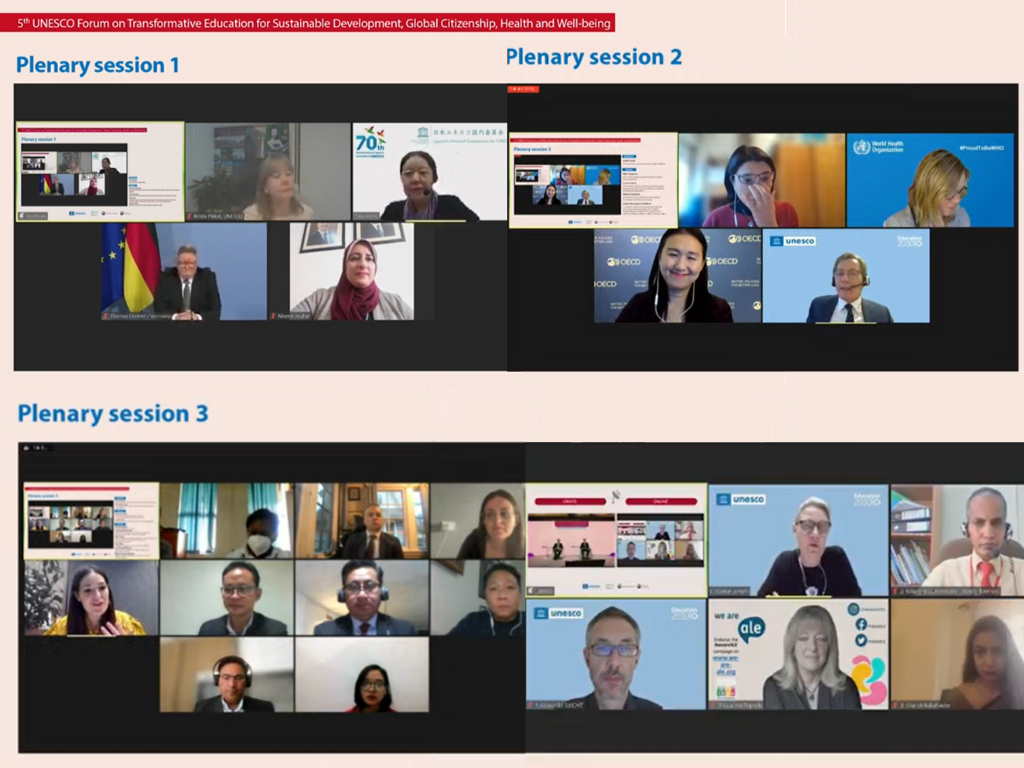 A Call for Global Action to Implement Transformative Education: 5th UNESCO Forum on Transformative Education for Sustainable Development, Global Citizenship, Health and Well-being 2021-12-08 From 29 November to 1 December 2021, the 5th UNESCO Forum on Transformative Education for Sustainable Development, Global Citizenship, Health and Well-being was held virtually from Seoul, Republic of Korea. Co-organized by UNESCO and APCEIU, and hosted by the Ministries of Education and Foreign Affairs of the Republic of Korea, the forum gathered about 2,000 online participants. With rising voices to capture concrete progress in transformative education, the 5th UNESCO forum focused on identifying “where do we stand” on the achievement of SDG Target 4.7, under the term of “transformative education.” During the forum, discussions were held under four different strands: What does progress in transformative education look like 1) a look at practices at the country level, 2) a look at recent global and regional data, 3) the crucial role of teachers, and 4) conclusions and next steps. The first day of the forum started with the opening ceremony, moderated conversation on transformative education and the first plenary and concurrent sessions. UNESCO Assistant Director-General for Education, Ms Stefania Giannini, highlighted that Transformative Education was at the heart of UNESCO’s mission, a point recalled during the Organization’s recent 75th birthday celebrations. APCEIU Director, Dr Hyun Mook Lim, emphasized transformative education both requires and promotes transformation of education for which we need collective actions. On the second day, there was a special plenary session dedicated to talk about experiences from the host country, Korea, and speakers shared good practices, emerging trends and lessons learnt on achieving SDG Target 4.7 at the domestic and international levels.Moreover, UNESCO launched the Teachers Have Their Say report by presenting the results of the global survey of 58,000 teachers carried out in cooperation with Education International on Teachers’ readiness for education for sustainable development and global citizenship across the world. The survey result showed the majority of teachers were interested in themes related to sustainable development and global citizenship, but nearly a quarter responded that they are not ready to teach them, since they are not familiar with relevant pedagogies. And it followed by a discussion on ways to address this gap. At the final plenary session, a summary of recommendations from the forum was presented as follows: Develop policies that support the integration of transformative education across the education sector Mainstream Education for Sustainable Development, Global Citizenship Education and health and well-being across the whole curriculum Enhance whole-school and widen them to whole-of-community approaches Invest in teachers at all levels Let students, teachers and other stakeholders co-create pedagogies, materials and monitoring mechanisms Develop and expand easy-to-use monitoring mechanisms that help countries to evaluate their progress, setting clear targetDr Hyun Mook Lim, Director of APCEIU, emphasized the importance of international-level consensus as a support and stimulus for multiple stakeholders at the national level to truly realize the transformative education. “I hope the momentum for transformative education generated at this forum will be kept and sustained in the coming years” said Dr Lim for his final remarks at the forum.
 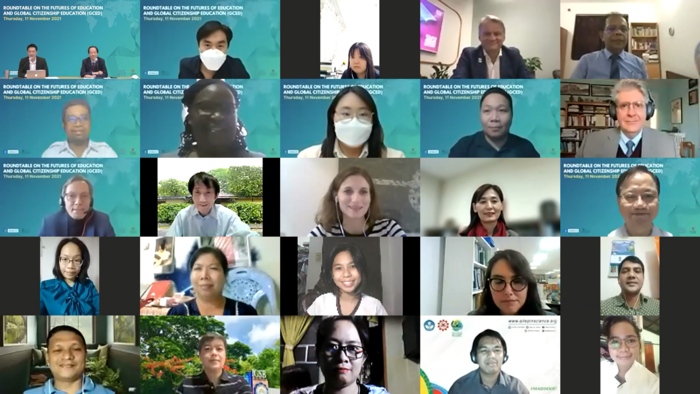 Roundtable on the Futures of Education and Global Citizenship Education (GCED) 2021-12-08 On the occasion of ‘Reimagining our futures together: a new social contract for education’ was released at the 41st session of the UNESCO General Conference in November, the Roundtable on the Futures of Education and Global Citizenship Education (GCED) was held on 11 November 2021. This event was co-organized by the Permanent Delegation of the Republic of Korea to UNESCO and the Asia-Pacific Centre of Education for International Understanding (APCEIU) in collaboration with the Group of Friends for Solidarity and Inclusion with GCED (Afghanistan, Armenia, Austria, Bangladesh, Canada, Colombia, Italy, Jordan, Kenya, Kuwait, Philippines, Republic of Korea, Saudi Arabia, Senegal, and Serbia) and the UNESCO Secretariat. Mr Kim Dong Gi, Ambassador and the Permanent Delegate of the Republic of Korea to UNESCO opened the forum with his welcome remarks and expressed his gratitude towards the delegates of the Group of Friends for Solidarity and Inclusion with GCED and speakers of the event. And he highlighted the launch of the 'Reimagining our futures together: A new social contract for education' report and its own meaning in this pandemic. And he mentioned since we are living in the interconnected world, the effective solutions for many challenges should come from our minds. During the meeting, the participants learned about the UNESCO’s perspective on futures of education a presentation given by Dr Sobhi Tawil, Director of Future of Learning and Innovation, UNESCO. He explained about the three main parts: background on UNESCO perspective, the evolution of thinking in terms of approaches to humanism and implications for global citizenship education. Following the inspirational presentation, the panel discussion was initiated by the moderator, Ms Cecilia Barbieri, Chief of the Section of Global Citizenship and Peace Education UNESCO. The list of the distinguished panelists of the discussion is as follows:- Ms Victoria Ibiwoye (Executive Director, One African Child Foundation for Creative Learning, Nigeria)- Dr Wing On Lee (Executive Director, Institute for Adult Learning Singapore, Singapore University of Social Sciences)- Prof. Fernando M. Reimers (Ford Foundation Professor of Practice in International Education and Faculty Director, International Education Policy, Harvard University, USA)International Commission Member of the 'Futures of Education'- Prof. Markku Wilenius (Professor, University of Turku, Finland. UNESCO Chair in Learning for Transformation and Planetary Futures) Moreover, three key guiding questions were presented to engage the panelists on the discussion around the idea of envisioning the future of education.Key Question 1UNESCO's new report by the International Commission on the Futures of Education underlines the importance of rethinking and reimagining the meaning and role of education for the future society. What do you think will and should be the meaning and role of education in future society?Key Question 2The global community has recently strengthened efforts to promote Global Citizenship Education (GCED) as one of the key solutions to our most pressing challenges such as hate, discrimination, widening inequalities, climate crisis, and the pandemic. Will GCED continue to be important in future society?Key Question 3In order to realize the potential of GCED, what actions will have to be taken by governments, civil society, academia, and international organizations like UNESCO? Based on these questions, panelists are shared their thoughts and experiences with the participants. Also, since the new report was released the day before the forum, panelists are noted the importance and meaning of it.In the closing remarks, Mr Lim Hyun Mook, Director of APCEIU, expressed his gratitude to Dr Tawil for his new UNESCO education report and presentation. He sincerely believes that the report challenges all readers to reimagine the vision of education in today's circumstances and shared his thought on the purpose of education. Director Lim concluded the forum to thank all panellists and Ambassador Kim Dong Gi and his team at the Permanent Delegation of the Republic of Korea to UNESCO for co-organizing the meeting. URL:http://www.unescoapceiu.org/post/4314
 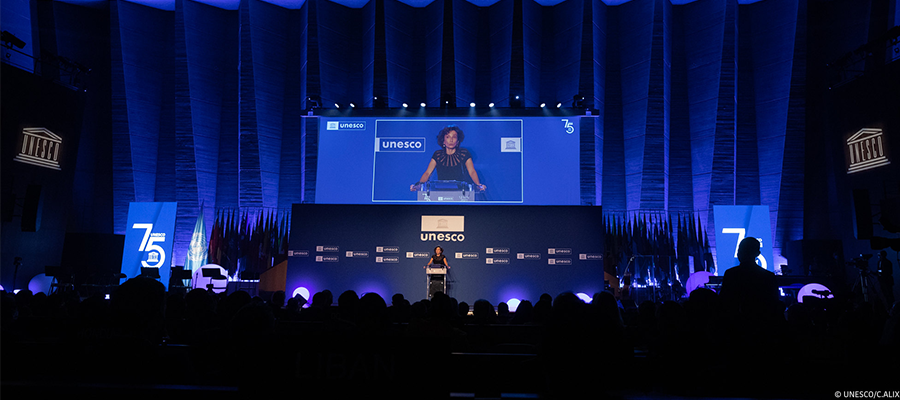 UNESCO’s General Conference reaches global agreements on artificial intelligence, open science and education 2021-11-28 The 41st session of UNESCO General Conference ended yesterday with the adoption of key agreements demonstrating renewed multilateral cooperation for educational recovery, open science and the ethics of artificial intelligence. On 9 November, the organization’s 193 Member States overwhelming voted in support of Audrey Azoulay to serve a second term of four years as Director-General of the Organization, which celebrated its 75th anniversary during this session. Member States endorsed the Paris Declaration: A Global Call for Investing in the Futures of Education at a meeting which brought together Heads of State and Government and education ministers from 40 countries on the 10 November. The purpose of the meeting was to increase support for education in the aftermath of the COVID-19 pandemic. A key part of the event was the launch of a report Reimagining our futures together: a new social contract for education by UNESCO’s Director-General and the President of Ethiopia, Sahle-Work Zewde. UNESCO’s Member States adopted the first ever global Recommendation on the Ethics of Artificial Intelligence. It will be presented by the Director-General accompanied by experts at a press conference at 15.00 CET on Thursday, the 25 November, at UNESCO Headquarters. Journalists seeking Accreditation should contact Léo Bégé-Duclaud: l.bege-duclaud@unesco.org Another landmark moment was reached with the UNESCO Recommendation on Open Science which was also adopted during the General Conference. Of particular relevance to global scientific cooperation surrounding the COVID-19 pandemic , this agrement promotes equality among scientists so that populations and policy-makers will reap the benefits of advances in science. More information is available at https://www.unesco.org/en/natural-sciences/open-science. UNESCO also passed a significant milestone by marking its 75th anniversary with a special ceremony attended by 28 Heads of State and Government. There were moving performances by an array of leading international musicians and artists. During the session, the Organization also celebrated the anniversary of its Man and the Biosphere Programme, which has been a vehicle for progress for sustainable development and the sharing of ideas and examples of best practicearound the world for the last fifty years. Finally, the Åland Islands, part of Finland with autonomous status, became UNESCO’s 12th Associate Member. More information on the General Conference at https://www.unesco.org/en/general-conference/41 Media Contact: Clare O’Hagan: c.o-hagan@unesco.org URL:https://en.unesco.org/news/unescos-general-conference-reaches-global-agreements-artificial-intelligence-open-science-and
  How citizens can engage in educational planning and policy 2021-11-27 "Education is perhaps the place where citizens and government have some of their closest interactions. This is the place where good governance comes alive and where trust is built or lost." -- Paul Maassen, Chief, Country Support, Open Government Partnership (OGP), keynote speaker for IIEP’s Policy Forum In IIEP’s recent virtual Policy Forum, Open Government in education: Learning from experience, the message was clear: there is growing momentum to both share more information and collaborate, but also to act on feedback and improve education systems. For three days (16-18 November), decision-makers and educational managers, OGP country representatives, civil society members, and researchers from 50 countries discussed how to move forward with open government as a promising model for integrity planning in education. More than 1,000 people from across the globe followed the event online. Watch the videos. The discussions focused on a range of open government initiatives from Colombia, India, Madagascar, Peru, Portugal, and Ukraine – all of which have been featured as case studies in IIEP’s four-year research project on open government. By bringing these examples to life, the participants gained new clarity on how open policy-making, open budgeting, open contracting, and social audits can pave the way to innovative forms of collaboration between citizens and government. They also highlighted the wide-ranging impact open government can have on education: from improving school feeding programmes to monitoring parental school donations. Some of the key questions included how to ensure equal access and use of open government initiatives, how to harness new technologies to facilitate citizen involvement, how to cement the link between open government and accountability, and finally how to address the limits and risks of citizen involvement in the policy cycle. Opening the Forum, IIEP’s Director Karen Mundy explained that research in the area has found that public access to information and citizen engagement are key to promoting greater transparency in education systems, but that additional efforts are required to ensure that they have a real impact on the management of the sector. "Open government in the education sector calls on renewed government-citizen interaction and relies on the principles of transparency, citizen engagement and participation, as well as government responsiveness." -- Karen Mundy, IIEP Director The value of national level support Open government initiatives typically require transparency and open education data. However, as explained by Muriel Poisson, IIEP’s expert on ethics and corruption in education and coordinator of the Institute's research on the topic, open government must go further: “Disclosing information publicly is key, but it is only a first step. Further action is required from education authorities to accompany new forms of citizen engagement and ensure that appropriate decisions are taken based on citizen’s feedback – including possible legal recourse,” she said. The temptation is often to start organizing at the most local level – where citizens and communities are. However, this can pose challenges for the education sector as decisions that impact people – and learners – are still largely taken at the central level. Therefore, national actors continue to play a large role in the successful implementation of open government. Among 38 countries that have adopted open government commitments in the education sector, 76% are operated and managed at the national level, compared to 41% at the school level. For example, national involvement made the first social audits possible in ten Indian states, and in Portugal it facilitated the annual involvement of some 200,000 students aged 12 to 18 in participatory budgeting for education. National support can come in the form of financing and expertise, but also through legitimatizing initiatives through legislation. In Portugal, 90% of Portuguese public schools have participated in a least one edition of the participatory budgeting program, which aims to strengthen the democratic management of schools by stimulating student participation. At the same time, the Forum highlighted the immense value of locally driven initiatives, such as Open School in Ukraine. Here, an open budget website was launched to bring more transparency to school budgeting. The site also monitors the type of donations received and opens new channels for dialogue on prioritizing the actual needs of schools. "This initiative has changed my attitude towards the authorities, my confidence has increased because now I see everything that is happening with money. When the principal makes a report, I see that this is indeed true." -- A teacher in Druzhkivka, Ukraine How to encourage the engagement of all citizens Open government is only worthwhile with an engaged citizenry. Yet, for the education sector it can often be challenging as the culture of participation often remains low. To be successful, initiatives must pay attention to how citizens access, understand, and use information, and a plurality of voices must be encouraged. In Madagascar, for example, local consultation structures (LCS) facilitated participatory planning and budgeting at the municipal level. Varied communication channels – from phones, radio, to posters and school meetings – have helped the public both access and use information to diagnose shortcomings. and formulate strategies to address them. Similarly, in India, street theatre and puppet shows were used to mobilize the public in the social audits, while in other initiatives efforts were made to ensure that underrepresented voices – including women and youth – were heard. Closing the accountability loop Beyond citizen engagement, a successful initiative must also foster important links with accountability. “We all agree that answerability is not an end. We have to move towards enforceability," said Poisson. This means that public authorities must not only report on their actions, but change practices, thereby closing the accountability loop. Nada Zohdy, the Director of the Open Gov Hub agreed: “If people don’t see any response because of their engagement, they will be demotivated. So, ensuring responsiveness and making sure citizens understand the decisions taken is indispensable, even if they are not 100 percent responding to what citizens proposed. The dialogue is important.” Looking forward, a lot of this dialogue will occur via digital platforms, especially in the age of COVID-19, smart environments, and among younger audiences. However, the participants of the Forum stressed that the existence of virtual platforms and other digital tools are not enough. Citizens need equal accessibility and universal know-how on how to use information towards the betterment of quality education for all. To learn more about IIEP’s work in the area, consult the ETICO resource platform dedicated to ethics and corruption in education. URL:http://www.iiep.unesco.org/en/how-citizens-can-engage-educational-planning-and-policy-14026