
News
Catch up on what’s happening in the world of global citizenship education.
229 results found
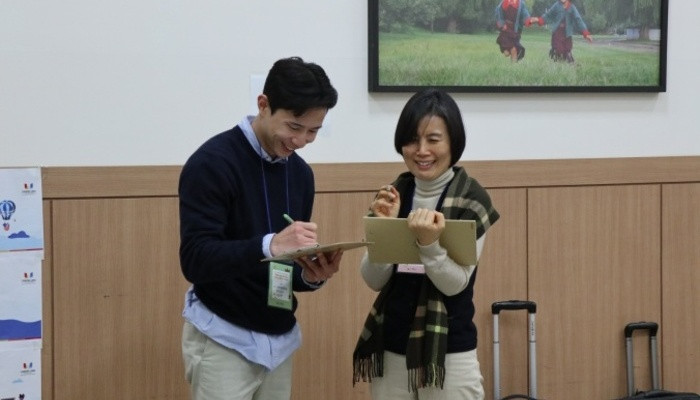 한국 교사 3월부터 6개월 파견 시작, 프로그램 개편 후 첫 시행에 큰 기대 2025-02-25 올해로 13주년을 맞는 『2025 다문화가정 대상국가와의 교육교류사업』 (이하 “교육교류사업”)이 학교 현장의 수요에 맞춰 사업 개편을 추진, 오는 3월 첫 시행을 앞두고 있다. 개편된 교육교류사업에 따라 한국 교사들의 해외 파견 기간이 3개월에서 6개월로 연장되며, 파견 기간 연장의 효과를 공고히 할 수 있도록 귀국 후 성과공유형 심화연수 과정이 새롭게 추가될 예정이다. 이번 개편을 통해 참가자들은 더욱 심도 있는 교류 활동을 진행할 것으로 예상하며, 세계시민교육가로서의 역량 또한 한층 더 강화될 것으로 기대된다.사업 개편 후 처음으로 파견에 참가하게 될 한국 교사들을 위한 사전연수가 지난 1월 22일부터 3일간 아태교육원에서 진행되었다. 오는 3월 말레이시아 및 캄보디아에 파견될 교사 7명이 참가한 가운데 열린 이번 연수는 참가자들이 파견국 현지 관련 정보를 습득하고 파견교사로서의 역할을 충실히 수행할 수 있는 기반을 다지는 기회를 제공했다. 무엇보다 세계시민교육을 현지에서 실행하기 위한 역량을 기르고. 변경된 사업의 취지에 맞게 활동의 깊이를 더할 수 있도록 마련되었다.연수 첫째 날은 세계시민교육 및 교육교류 사업, 파견교사의 역할과 과제, 국가별 준비사항 등 사업의 이해를 돕기 위한 내용으로 구성되었다. 둘째 날은 세계시민교육 실전 수업계획, 세계시민교육 우수사례, 국가별 문화 강의, 의료 안전 교육 등의 실무적인 내용을 중심으로 교사들의 현지 적응을 돕기 위한 다양한 세션이 진행되었다. 마지막 날에는 파견 서약과 발대식을 끝으로 연수가 마무리되었다. 발대식에서 교육부 교육국제화담당관실의 강효곤 사무관은 참가 교사들에게 이번 교육 교류 사업이 “서로 다른 문화적 배경을 가진 학생들을 어떻게 이해하고 존중할 수 있을지 고민하는 계기가 될 것”이라며, 이는 학생들이 “미래의 글로벌 리더로서의 역할을 잘 수행할 수 있도록 돕는 중요한 한 걸음이 될 것”이라고 강조했다올해 교육교류 사업을 통해 28명의 한국 교원이 6개의 협력국으로 파견될 예정이며, 7개국 44명의 해외 교원이 한국으로 초청될 계획이다. URL: https://www.unescoapceiu.org/post/5289
  소통과 참여로 인권친화적 학교문화 조성한다 2025-02-19 소통과 참여로 인권친화적 학교문화 조성한다 - 도교육청, 2025 학생인권 증진 기본계획 수립 제주특별자치도교육청(교육감 김광수)은 지난 5일 학생인권의 실질적인 보장과 인권친화적 학교문화 확산을 위해 2025 학생인권 증진 기본계획을 수립하여 관련 기관 및 도내 각 학교급에 보급하였다. 학교교육활동을 통한 학생인권 실현을 비전으로 ▲학생인권 보호 및 증진 ▲인권존중 교육환경 조성 ▲인권증진 협력체계 구축을 주요 과제를 세웠다. 이를 통해 교육과정과 연계한 학교 학생인권교육 운영을 지원하고 인권친화적 학교문화 확산을 위한 인권의식 제고를 지원하고자 한다. 지난해와 비교하여 인권증진 협력체계 구축과제에서 교육공동체의 인권 보장 협력체계를 확대 및 강조하여 ▲교육공동체 인권의식 제고 활동 강화 ▲교육공동체 인권 보호를 위한 지원 확대 ▲교육공동체 인권 증진 단위학교 역량 강화를 세부 과제를 마련하였다. 세부 사업으로는 학교별 여건에 맞는 학생인권교육 운영으로 학생 대상 학기당 2시간 이상(연간 총 4시간 이상) 학생인권 교육을 통해 학교구성원 상호 존중과 인권친화적 학교문화를 조성하고 인권친화적 학생생활규정 개정 컨설팅도 운영할 예정이다. 또한 학생인권교육 역량 강화와 인권감수성 함양 교육 등을 위해 관리자 및 교원 대상 역량 강화 연수를 비롯한 찾아가는 학생인권교육을 운영하게 된다. 지난해에는 유니세프 아동친화학교 운영 10개교를 지속 운영하였고 올해에는 씨앗학교(1년차)를 5개교 신규 지정 공모를 시작으로 관련 설명회는 오는 18일에 실시할 예정이다. 도교육청 관계자는“학생인권 존중 기반 정책 추진과 학생인권교육을 통한 실질적인 학생인권이 보장될 수 있기를 기대한다”라며 “ 학교구성원의 인권의식 제고 및 학생인권 증진계획의 실천으로 인권친화적 학교문화 확산에 지속적으로 노력하겠다”고 말했다. 2025 학생인권 증진 기본계획은 제주특별자치도교육청 누리집(https://buly.kr/EdsZH4o)에서 확인할 수 있다. URL: 원문 바로가기
  학교서 학생인권 존중 받고 있는 긍정적 인식 높아져 2025-02-19 제주특별자치도교육청(교육감 김광수)은 17일 지난해 9월 30일부터 10월 20일까지 실시한 ‘2024년 학생인권 실태조사’ 결과를 발표하였다.설문은 도내 초·중·고 학생, 교직원, 보호자 대상으로 진행되었으며 학생 2722명, 교직원 595명, 보호자 1009명이 응답하였다.‘학교생활에서 학생들의 인권을 존중받고 있다’는 인식은 초등학생 92.3%, 중고등학생 89.8%, 교직원 98.0%, 보호자 86.7%로 나타났으며 학생 인권교육 만족도는 초등학생 90.0%, 중학생 85.0%, 고등학생 74.7% 조사됐고 인권교육 이후 생각이나 태도의 변화에 대한 긍정적 인식은 초등학생 84.8%, 중학생은 81.1%, 고등학생은 70.9% 순으로 나타났다.인권을 존중 받고 있다는 응답은 초중학생, 교직원, 보호자가 전년도에 비해 긍정적으로 응답을 한 것으로 분석됐다.한편, 학교에서 학생이 당한(1년 이내 1회 이상) 인권침해 내용으로 초등학생은‘휴식을 취할 권리(48.1%), 의사 표현의 자유(44.7%), 쾌적한 환경과 문화생활을 누릴 권리(44.4%)’로 응답했다.중학생은‘개성을 실현할 권리(41.3%), 학습권을 보장받을 권리(39.9%), 휴식을 취할 권리(39.2%)’로 응답했고 고등학생은‘개성을 실현할 권리(28.7%), 휴식을 취할 권리(27.1%), 학생 참여권(24.0%)’ 순으로 응답했고 학생들은 인권침해를 당했을 때 주로 학교 선생님과 보호자에게 도움을 요청하는 것으로 나타났다.도교육청 관계자는“실태조사 결과를 바탕으로 2025년 학생 인권 증진 기본계획을 수립하여 각 학교에 안내하겠다”며 “2025학년도는 민주적 의사결정 및 의사 표현의 기회를 확대하여 학생 참여를 활성화하는 등 학교에서 서로의 인권을 존중하는 문화가 조성될 수 있도록 지원하겠다”고 말했다. <붙임> 제4차 학생인권 실태조사 보고서 URL: 원문 기사 바로보기
  ‘우리는 세계로 간다’…20여 개국서 글로벌 리더 양성 2025-01-30 광주시교육청(교육감 이정선)이 학생들의 국제화 역량을 강화하고 세계시민의식을 갖춘 글로벌 리더로 키우기 위해 올해도 ‘학생 글로벌 리더 세계 한 바퀴’를 운영한다. ‘학생 글로벌 리더 세계 한 바퀴’는 지난해 16개의 다양한 프로그램이 운영돼 500여 명의 학생들이 독일, 미국, 호주 등 20개국을 탐방했다. 특히 참여 학생의 99.4%가 만족할 정도로 좋은 평가를 받았다. 시교육청은 학생, 학부모의 관심이 높은 만큼 학생 국제교류 사업 추진에 앞서 업체 설명회를 개최하는 등 공정성과 투명성을 확보하고 있다. 올해는 지난해와 동일하게 16개 프로그램을 운영하되, 내실화를 기한다. 주제는 민주·인권·평화, 5·18세계화, 역사문화, 봉사, AI디지털, 문화·예술·체육, 독서, 생태 교육 등 다양하게 마련했다. 첫 탐방은 오는 3월 ‘민주·인권·평화통일’을 주제로 독일에서 진행한다. 이번 프로그램에 참여하는 학생들은 6박8일동안 프랑크푸르트 재독 5·18단체와 기념식을 진행하고 5·18민주화운동 홍보활동을 펼친다. 또 유대인박물관, 베를린 장벽, 괴테 생가 등을 방문하며 독일의 민주 시민의식을 이해하는 시간을 가질 예정이다. 글로벌 리더 양성은 단위학교에서도 활발히 이뤄지고 있다. 지난해 광주지역 13개 학교 130여 명의 학생이 해외학술탐방을 통해 영국, 싱가포르 등 11개 국가를 체험했다. 또 온라인 국제교류를 통해 32개 팀 1천522명의 학생이 수업교류를 했으며, 초·중·고 15개 학교 227명의 학생들은 대면 교류활동을 진행했다. 이 밖에 광산교육국제화특구 사업의 하나인 ‘You & I Together’ 프로그램, 한국어교육 기반 국제교류 프로그램 ‘교수·학습 국제교류 교원연구회’, 한국어 수업 공유 프로젝트 ‘세계로 내딛다’, 국제 온라인 수업교류 ‘세계와 연결하다’, 학생들이 진로·적성 탐방을 위해 진행되는 ‘찾아가는 자기주도 진로 탐색 및 독서교류 프로그램’ 등도 운영한다. 시교육청은 올해 국립국제교육원과 유네스코 등과 협력해 ‘한일중 어린이 동화교류대회’, ‘한일 고교생 교류 사업’, 유네스코 학교 지원 등의 신규 사업을 추진하며 각 학교 주도 및 타 기관과 협력을 통한 국제교류를 확대할 계획이다. 이정선 교육감은 “우리 학생들이 국제교류 프로그램을 통해 5·18 광주정신과 K-POP 등 한국문화의 우수성을 전세계에 알릴 것으로 기대한다”며 “문화 다양성, 세계민주시민의식 등의 함양으로 글로벌 리더로 거듭나길 바란다”고 말했다. URL: https://enews.gen.go.kr/v5/?sid=25&wbb=md:view;uid:48314;&page=8
 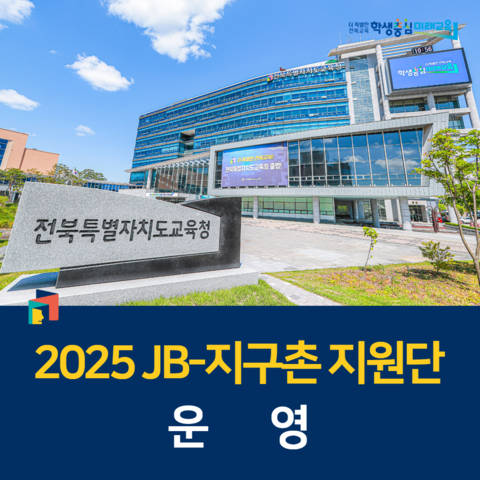 전북교육청, 2025 JB-지구촌 지원단 운영 2025-01-06 전북특별자치도교육청(교육감 서거석)은 지구촌에 대한 이해와 관심을 바탕으로 세계시민의식 함양하고자 ‘2025 JB-지구촌 지원단’을 운영한다고 6일 밝혔다. JB-지구촌 지원단은 2025 찾아가는 세계시민교육 및 문화다양성교육 선정교 145개교를 찾아가 학부모 및 교직원, 학생을 대상으로 세계시민교육 및 문화다양성 교육을 담당하게 된다. 지원단 참여를 희망하는 사람은 오는 14일 오후 2시까지 신청서, 교육활동 지도안, 수업 실연 영상 파일, 개인정보 수집이용 동의서 등의 제출서류를 작성해 교원은 민주시민교육과로 공문 제출하고, 외부 지원자는 이메일(hrlee1209@jbedu.kr) 제출하면 된다. 지원 자격은 △세계시민교육 교사연구회 및 세계시민교육 선도교사 활동 이력이 있는 자 △다문화교육 중점학교 운영 유경험자 △교육청 주관 다문화교육 관련 지원단, 파견 프로그램, 연구회, 사제동행 등에 참여한 자 △교수, 교원, 다문화교육 관련 유관기관 근무 이력 소지자 △문화다양성교육 강사로 활동한 이력이 있는 자 △해당 분야 관련 학위 소지자, 관련 분야 자격증 소지자 등이다. 전북교육청은 심사를 거쳐 오는 21일 최종 합격자를 발표하고, 2월 7일 JB-지구촌 지원단 협의회를 개최해 운영 방침 및 교육시 유의사항 등을 안내할 예정이다. 김지유 민주시민교육과장은 “지원단은 4월부터 11월까지 학교로 찾아가 세계시민교육 및 문화다양성 교육 이론, 세계시민교육 문화다양성 교육의 실제 및 사례, 학교으로서 필요한 문화감수성 함양 교육 등을 담당하게 된다”며 “관심있는 분들의 많은 참여 바란다”고 말했다. URL: https://news.jbe.go.kr/board/view.jbe?menuCd=DOM_000001201001000000&boardId=BBS_0000222&dataSid=747784
 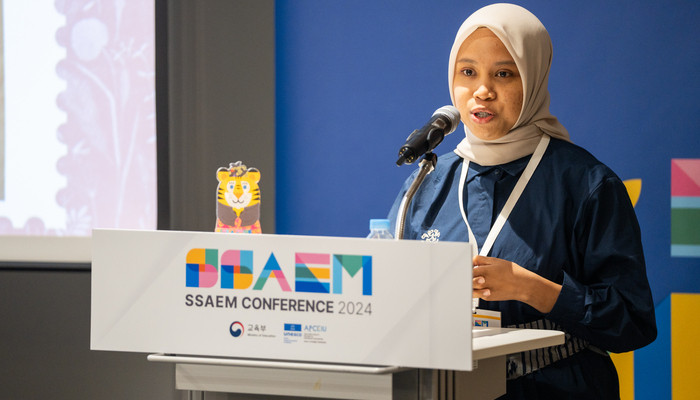 APCEIU Successfully Concludes the 2024 SSAEM Conference in Collaboration with Eight Countries 2024-12-05 The 2024 SSAEM Conference, marking the conclusion of this year’s ‘Asia-Pacific Teacher Exchange for Global Education(APTE)’, was successfully held on November 21 at Suwon Convention Center. Hosted by the Ministry of Education of Korea and organized by APCEIU, the event provided a platform to review the achievements of the APTE programme and discuss its future directions. Over 200 participants, including officials of the Ministries of Education and embassies and teachers from Korea, Cambodia, Indonesia, Lao PDR, Malaysia, Mongolia, Thailand, and the Philippines attended the conference.The opening ceremony began with opening speech from Ms. SHIN Meekyung, Director at the Korean Ministry of Education, followed by a welcoming remark by Dr. LIM Hyun-mook, Director of APCEIU. Congratulatory addresses were delivered by Ambassador Tanee Sangrat of the Royal Thai Embassy, Minister-Counsellor Alounkone Boulommavong of the Lao PDR Embassy, Second Secretary Eung Saravuth of the Cambodian Embassy, and Director Rohayati binti Abd Hamed from the Malaysian Ministry of Education. During the panel discussion, representatives from the Ministries of Education of the eight partner countries explored the significance and impact of the Programme amidst changing social dynamics. The session also highlighted the unique characteristics of each country’s implementation and outcomes, fostering a meaningful exchange of insights. Notably, students from Seoul Youngil Elementary School, one of the participating schools in the newly launched hybrid online-offline teacher exchange programme this year, took the stage as presenters. Their active participation exemplified the role of students as key stakeholders in the programme, alongside teachers. In the afternoon, parallel sessions were held, reflecting UNESCO’s Recommendation on Education for Peace, Human Rights, International Understanding, Cooperation, Freedom, Global Citizenship, and Sustainable Development, adopted at the 2023 General Conference. The sessions were divided into three themes: enhancing digital and media literacy as global citizens, understanding cultural diversity and global citizenship, and fostering solidarity for a sustainable environment. Participants shared diverse approaches and practical educational activities under these themes. A distinctive feature of the APTE is its emphasis on collaborative efforts between participants and their assigned schools to achieve shared goals. The session featuring presentations by matched schools highlighted the active cooperation and engagement between Korean schools and their counterparts in participating countries, showcasing firsthand reactions from teachers and students alike. The conference concluded with a dialogue session featuring six former participants, including teachers who joined the APTE programme as early as 2013. They shared their ongoing initiatives and follow-up activities, ensuring that the educational exchange extends beyond a one-time event. The discussion also sparked great interest as they proposed actionable ideas for follow-up activities tailored to participants, countries, and specific fields of collaboration. URL: https://www.unescoapceiu.org/post/5220
 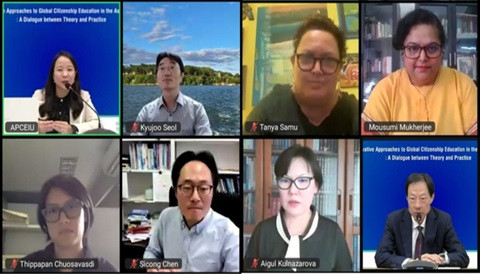 Webinar on “Innovative Approaches to Global Citizenship Education in the Asia-Pacific: A Dialogue between Theory and Practice” 2024-11-14 On November 1, 2024, the Asia-Pacific Centre of Education for International Understanding (APCEIU) held an online webinar titled “Innovative Approaches to Global Citizenship Education in the Asia-Pacific: A Dialogue between Theory and Practice”. In the webinar, experts from the Asia-Pacific region discussed how to reimagine Global Citizenship Education (GCED) through local perspectives and contexts. The webinar opened with remarks from APCEIU Director LIM Hyun Mook, followed by presentations from six researchers and subsequent Q&A sessions. The event highlighted the outcomes of the research project entitled “Rethinking Global Citizenship Education from Asia-Pacific Perspectives” and facilitated a discussion of key insights with the researchers. The presentations were organized into two discussion sessions, each focusing on the following theme: Discussion 1: “How is GCED Shaped by Local Contexts in Asia-Pacific Countries?” “Performing Global Citizenship through National Citizenship: Humanity, Politics, and Competency” – Sicong CHEN from Kyushu University, Japan, discussed the nature of citizenship education in China and Japan, exploring the concept of performative global citizenship. “Exploring Global Citizenship Education in Central Asia” – Aigul KULNAZAROVA from Tama University, Japan, examined the historical context and distinct dynamics of Central Asia, proposing stronger connections with GCED. “A Direction of Global Citizenship Education in the Asia-Pacific Region: Beginning from Locality and Expanding to Universality” – SEOL Kyujoo from Gyeongin National University of Education, Korea, presented applying GCED with locality that expands toward universality, using Korea’s ‘Statue of Peace’ as an example. Discussion 2: “How Can GCED Be Reimagined through Asia-Pacific Cultural and Philosophical Perspectives?” “Home and the World: Rethinking Global Citizenship Education from Tagore’s Perspective” –Mousumi MUKHERJEE from O.P. Jindal Global University, India, reflected on Tagore’s ideas to offer a new approach to GCED. “(Re)Imagining GCED through Pacific/Oceanic/Moana Perspectives” – Tanya SAMU from University of Auckland, New Zealand, introduced the conceptualisation of pacific-centric and oceanic-centric approach to GCED. “Tolerance, Interdependence, and Global Citizenship Education: A Buddhist Perspective” –Thippapan CHUOSAVASDI from Chulalongkorn University, Thailand, shared the Buddhist perspective of tolerance and interdependence, linking them to GCED. The webinar provided an invaluable platform for sharing diverse perspectives on global citizenship and GCED, drawing on traditions from across the Asia-Pacific region, including the Pacific, East Asia, India, and Central Asia. These perspectives were rooted in various cultural and religious traditions, such as Buddhism, Islam, and Confucianism. The results of the “Rethinking Global Citizenship Education from Asia-Pacific Perspectives” project will be published in book in November 2024. URL: https://www.unescoapceiu.org/post/5199
 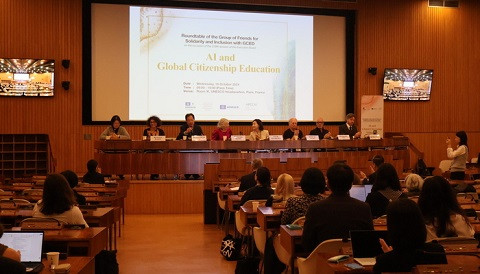 APCEIU and Permanent Delegation of ROK to UNESCO Co-organized Roundtable on 'AI and Global Citizenship Education' 2024-10-30 The Asia-Pacific Centre of Education for International Understanding (APCEIU) under the auspices of UNESCO and the Permanent Delegation of the Republic of Korea to UNESCO jointly organized a roundtable discussion on "AI and Global Citizenship Education" on 16 October 2024 at UNESCO Headquarters in Paris, France, on the occasion of the 220th Session of the UNESCO Executive Board. The event was held in partnership with the Group of Friends for Solidarity and Inclusion with GCED and UNESCO. H.E. Ms. Sang Mee Bak, Ambassador and Permanent Delegate of the Republic of Korea to UNESCO, emphasized in her opening remarks that "Education plays a crucial role in understanding how this world is closely interconnected and respecting diverse cultures and values in today's rapidly changing world". She particularly highlighted the UNESCO's '2023 Recommendation on Education for Peace, Human Rights and Sustainable Development,' stressing the need to incorporate international solidarity and global perspectives into educational policies. Ms. Stefania Giannini, Assistant Director-General for Education at UNESCO, emphasized that "While the role of technology in education systems becomes increasingly important with digitalization, maintaining a human-centered approach is essential." She announced that UNESCO would support the development of specific skills, aptitudes, and values through its 'AI Competency Framework.' She also expressed gratitude to the Korean government for supporting the GCED Prize, highlighting UNESCO's role as a platform for identifying and valorizing good practices at national and regional levels. Professor Wayne Holmes from University College London presented two dimensions of approach: 'AI in education' and 'education about AI.' He pointed out that current AI educational tools focus solely on knowledge and skills transfer, emphasizing the need to consider 'individuation' and 'socialization' aspects crucial in Global Citizenship Education. He particularly highlighted concerns about AI's environmental impact through energy and water consumption, the exploitation of 'ghost workers' in AI development, and the potential loss of democratic control due to corporate AI dominance. Professor Emmanuel Goffi from Paris Institute of Digital Technology emphasized that "responsible people" are more important than "responsible AI." He stressed the importance of critical thinking about AI and highlighted the significance of soft skills, including human interaction, effective communication, time management, and conflict management. He warned against the potential loss of these abilities through excessive AI use and called for genuine ethical considerations deeply rooted in cultural values. Mr. Mark West, UNESCO Education Specialist, analyzed the digital transformation of education post-COVID-19, noting significant changes in traditional understanding of the right to education. He particularly emphasized the need to redefine concepts of attendance and participation in digital environments, and raised questions about the 'right to disconnected education.' He shared research findings suggesting that EdTech and digital-centered education could hinder development in very young learners, advocating for age-appropriate technology use approaches. Dr. Hyun Mook Lim, Director of APCEIU emphasized in his closing remarks that "As AI technologies are raising serious concerns, global citizenship, values and principles have to be rigorously protected and promoted in all areas, especially in education." He highlighted the need to strengthen citizenship education, or Global Citizenship Education, not only for general learners but also for AI developers and users, calling for continued collaboration to find effective ways to learn and practice citizenship and global citizenship values and principles in and through education in relation to AI technologies. The roundtable attracted approximately 60 participants, including representatives from numerous UNESCO Member States such as Austria, Argentina, Lao PDR, Canada, United States, Kenya, Chile, Italy, Serbia, and Japan, as well as GCED and AI practitioners and education professionals. The active participation of numerous UNESCO Member State representatives demonstrated the international community's high interest in the intersection of AI and education, with participants engaging in in-depth discussions about the role and direction of Global Citizenship Education in the era of AI. The event served as a significant opportunity to reaffirm the importance of Global Citizenship Education in maintaining human-centered values and ethical principles in an era of accelerating technological advancement. URL: https://www.unescoapceiu.org/post/5192
 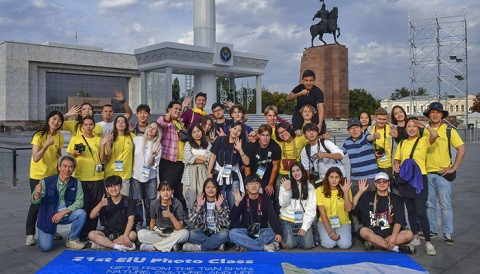 Completion of the 21st EIU Photo Class 'Gifts from the Tian Shan: Nature, Culture, and Life' 2024-10-30 The Asia-Pacific Centre of Education for International Understanding (APCEIU) under the auspices of UNESCO and the National Commission of the Kyrgyz Republic for UNESCO successfully co-organized the 21st EIU Photo Class at Ilim Educational Complex in Bishkek, Kyrgyz Republic from 22 to 29 September 2024. Under the theme "Gifts from the Tian Shan: Nature, Culture, and Life", the programme brought together 8 Korean secondary school students and 20 students from the Kyrgyz Republic to promote youth exchange and cultural understanding between the two countries. Under the guidance of professional photographers Jae Hoon KANG, Yongye YU, and Artur AKHMETCHIN, the participating students captured the diverse cultural heritage and natural landscapes of the Kyrgyz Republic through their lenses. They conducted field photography sessions at various locations, including the Burana Tower of the medieval city of Balasagun, the majestic Ala-Archa National Park in the Tian Shan mountains, and the Supara Ethno-Complex, where traditional lifestyle can be experienced. The students had the opportunity to directly experience the unique living culture of the Kyrgyz Republic through intangible cultural heritage activities, particularly traditional felt craft making. By beating and rolling wool using traditional methods to create felt, students gained firsthand insight into the wisdom and artistry of nomadic life that has existed in harmony with nature. This hands-on experience allowed students to move beyond observation to active participation, providing them with a deeper understanding of Kyrgyz traditional culture. In addition to field activities, the programme included various indoor sessions such as cultural exchange activities and workshop on Global Citizenship Education. Participants went beyond merely acquiring photography skills, fostering qualities as global citizens through communication with students from different cultural backgrounds. The week-long programme culminated in a photo exhibition at the Gapar Aitiev Kyrgyz National Museum of Fine Arts on 29 September 2024. The exhibition was attended by esteemed organizers and distinguished guests including Dr. Hyun Mook Lim, Director of APCEIU, Ms. Sabira Soltongeldieva, Secretary-General of the National Commission of the Kyrgyz Republic for UNESCO, H.E. Mr. Kwang Jae Kim, Ambassador of the Republic of Korea to the Kyrgyz Republic and Ms. Aigul Mamytkazieva, Director of the National Museum of Fine Arts. The exhibited works, capturing the Kyrgyz Republic's nature, culture, and people through the fresh perspective of young photographers, received enthusiastic responses from visitors. To further disseminate the outcomes of this Photo Class, APCEIU plans to publish a photo book featuring selected works and make them available on its online archive (photoclass.unescoapceiu.org) as educational resources.The EIU Photo Class, which has been conducted in 20 countries since its inception in the Philippines in 2006, has established itself as APCEIU's flagship youth exchange programmes. APCEIU will continue its efforts to promote understanding of cultural diversity in the Asia-Pacific region and foster global citizenship among youth through the medium of photography. URL: https://www.unescoapceiu.org/post/5188
 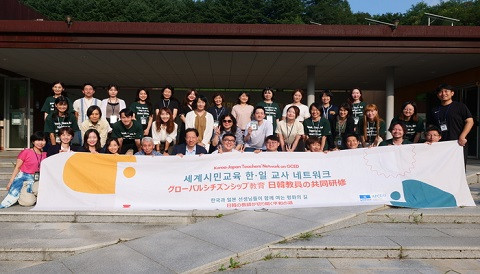 Korea-Japan Teachers’ Network Workshop on GCED 2024 Successfully Held 2024-10-09 The Asia-Pacific Centre of Education for International Understanding (APCEIU) successfully hosted the "Korea-Japan Teachers' Network Workshop on GCED 2024" from August 10 to 13, 2024. The workshop took place at APCEIU in Seoul and the DMZ Peace-Life Valley in Gangwon State. A total of 29 teachers from Korea and Japan participated, aiming to deepen their understanding of GCED, strengthen mutual exchange, and share plans for implementing GCED in their classrooms. As the fourth annual workshop, this year’s event featured enriching discussions and meaningful exchanges, further strengthening the collaborative network between the two countries. Expanding Teachers' Understanding of GCED One of the main objectives of this workshop was to broaden teachers' perspectives on GCED. Participants explored the latest global discussions on GCED, including the "Recommendation on Education for Peace and Human Rights, International Understanding, Cooperation, Fundamental Freedoms, Global Citizenship and Sustainable Development,”(2023 Recommendation) adopted at the 42nd session of the General Conference of UNESCO. This Recommendation emphasizes GCED as a transformative approach to education, prompting in-depth discussions on practical strategies for its implementation. In addition, the workshop provided opportunities for hands-on experiences related to climate change education, as highlighted in the 2023 Recommendation. Teachers engaged in activities utilizing natural energy, deepening their understanding of climate change and its educational significance. Given the Korea-Japan context, participants also explored the importance of promoting peace in Northeast Asia through the introduction of the 'Common Curriculum Guide for Peace Education in Northeast Asia’. This guide sparked lively debates among Korean and Japanese teachers on how to apply the curriculum in their respective classrooms. The teachers appreciated the opportunity to expand their knowledge of various GCED topics, particularly those relevant to the international and sub-regional contexts. Strengthening Teacher Networks through GCED Experiences Another key focus of the workshop was to strengthen the teachers' network by sharing practical experiences related to GCED. It became clear that teachers’ networks flourish most when centered on practical GCED activities shared between classrooms. The workshop began with a poster session showcasing the teachers' own GCED initiatives, followed by theme-based breakout sessions on topics such as ‘Primary Education,’ ‘Secondary Education,’ and ‘International Exchange.’ Additionally, cultural exchange sessions deepened mutual understanding between the two countries, further solidifying the network and fostering stronger connections. According to a survey conducted after the workshop, teachers found the greatest value in the opportunity to learn from each other’s practical experiences. They gained valuable insights into how GCED can be immediately applied in their own classrooms and felt motivated to take action, knowing they were supported by like-minded peers. The sense of solidarity among participants played a key role in encouraging their commitment to continue implementing GCED. Developing and Applying Practical GCED Strategies The final goal of the workshop was to develop concrete strategies for implementing GCED in classrooms and to share these plans with colleagues. While the four-day workshop has concluded, all participants agreed that it marked only the beginning of their journey toward GCED implementation. Teachers from Korea and Japan reaffirmed their commitment to ongoing collaboration through the network, actively engaging in Teachers' Club Activities aligned with their areas of interest, and planning joint lessons. Moreover, participants committed to applying what they learned during the workshop to their own teaching practices and sharing their results through an online platform later in the year. This will allow them to continue advancing GCED and exchanging successful practices. Since 2021, APCEIU has been organizing the 'Korea-Japan Teachers' Network' to foster global citizenship among educators in both countries. To date, 77 teachers have collaborated through this network, engaging in joint lesson development and actively participating in Teachers' Club activities focused on six key areas, including Media and Information Literacy (MIL), language, and books. These efforts have fostered meaningful exchanges and strengthened the integration of GCED principles in classrooms across both nations.Looking ahead, the Korea-Japan Teachers' Network is anticipated to play an increasingly important role, not only in deepening collaboration between Korea and Japan but also in contributing to the broader educational landscape of Northeast Asia. APCEIU remains committed to promoting and expanding GCED from classrooms to sub-regional, regional, and global levels, ensuring its continued impact on advancing global citizenship education. URL: https://www.unescoapceiu.org/post/5181