
News
Catch up on what’s happening in the world of global citizenship education.
1,668 results found
 2022 UNESCO International Literacy Prizes Reward 6 Initiatives Promoting Inclusion 2022-09-16 Wazzkii/Shutterstock.comAugust 31, 2022 - Last update: September 1, 2022 On the occasion of International Literacy Day (8 September), UNESCO has selected six outstanding literacy programmes from Brazil, India, Malaysia, South Africa, United Arab Emirates and United Kingdom as laureates of its International Literacy Prizes, based on the recommendations of an international jury. "Literacy is an essential human right. International Literacy Day is an opportunity to assess and accelerate progress in this field. I congratulate the six winners of our prizes: they are examples of successful actions, sources of inspiration that UNESCO will promote on a large scale."Audrey AzoulayUNESCO Director-General The awards will be presented during an international conference in Abidjan (Côte d’Ivoire), on 8 and 9 September 2022, under the theme “Transforming literacy learning spaces”. A special session focusing on efforts that transform literacy learning spaces will be held with the laureates on 9 September from 2.40pm to 3.35pm CET. UNESCO King Sejong Literacy PrizeThe UNESCO King Sejong Literacy Prize, sponsored by the Government of the Republic of Korea, recognizes contributions to mother language-based literacy development. It will be awarded to: ‘Native Scientist’ programme of Native Scientist, United Kingdom. ‘Native Scientist’ is a non-profit organisation working to foster scientific literacy and language development among marginalized children and adolescents by creating meaningful connections between students and scientists across Europe. The programme connects migrant children with international professionals experienced on Science, Technology, Engineering, Mathematics and Medicine (STEMM), who share a common cultural heritage and the same native language as the learners. ‘Mother Tongue Based Multilingual Education’ programme of Kalinga Institute of Social Sciences, India. The programme aims to tackle the challenges of poor retention of indigenous students in elementary schools due to classroom language barriers and teachers' incapacity to deal with multilingual and multicultural classrooms effectively. The programme is in a hybrid format with face-to-face and distance learning modules using low-tech solutions such as television, radio, and text messaging. ‘Madrasa Arabic lessons’ programme of Madrasa, United Arab Emirates. Madrasa is a leading e-learning platform launched in 2018 to respond to the need to develop and enrich Arabic educational content and make it accessible to students. The ‘Madrasa Arabic lessons’ programme aims to provide basic literacy skills in the Arabic language by collaborating with a committee of experts and transforming traditional learning methods into an interactive and engaging format.Each of the three UNESCO King Sejong laureates will receive a medal, a diploma and an endowment of US$ 20.000. UNESCO Confucius Prize for LiteracyThe UNESCO Confucius Prize for Literacy, sponsored by the Government of the People’s Republic of China, recognizes contributions to functional literacy leveraging technological environments in support of adults in rural areas and out-of-school youth. It will be awarded to: ‘Accessible Literature’ (Literatura Acessível) programme of Institute Include, Brazil. Institute Include aims to promote inclusion and social participation of people with disabilities through education, sport, and culture. The programme is an initiative that produces, reproduces and launches books in multiple formats, which includes simple reading in braille, Libras (Brazilian sign language), audio description, and pictograms. The programme has enrolled 2,022 learners, 55% of whom are girls and women. ‘People Accessible Network for Digital Empowerment and Inclusivity (PANDei)’ programme of Sarawak State Library, Malaysia. With local government support, the programme aims to help build a comprehensive support network, empowering local communities’ digital competencies and skills for building a digital-ready community. From 2018 to 2022, 81,057 learners benefitted from the programme, which also helped train 54 facilitators and teachers through two Train of Trainer (ToT) activities. 'School Readiness through Community Participation' programme of The Molteno Institute for Language and Literacy, South Africa. The programme aims to equip children, schools and communities to prepare Grade R (Reception Year) learners for formal schooling. Furthermore, the programme enables school readiness by involving local communities and parents through local languages in the context of underserved school communities of rural South Africa. Each of the three UNESCO Confucius laureates will receive a medal, a diploma and an endowment of US$ 30.000. More on UNESCO International Literacy Prizes URL: https://www.unesco.org/en/articles/2022-unesco-international-literacy-prizes-reward-6-initiatives-promoting-inclusion
 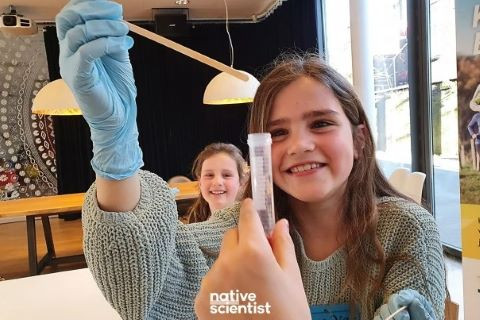 Connecting learners with science: NGO from United Kingdom is awarded 2022 UNESCO Literacy Prize 2022-09-12 Native Scientist from United Kingdom is awarded the 2022 UNESCO King Sejong Literacy Prize for its programme ‘Native Scientist’. Native Scientist is a non-profit organization, founded in 2013, with the aim of building meaningful connections between migrant children and scientists to foster language development, reduce inequalities and celebrate diversity. Since its foundation, Native Scientist has organized nearly 300 workshops in 13 different languages across 12 European countries and has built over 20 000 meaningful connections between children and scientists. The ‘Native Scientist’ programme has been developed with the aim of promoting scientific and language literacy among migrant children by connecting them with international Science, Technology, Engineering, Mathematics and Medicine (STEMM) professionals, through innovative workshops in schools. During the workshops, where a content and language integrated learning (CLIL) approach is followed, the scientists and the learners share the same common cultural heritage and speak the same native language, allowing students to learn scientific subjects, further develop and improve their native language skills, and, at the same time, be inspired by the interaction with role models. The founder, Dr Joana Moscoso, decided to start the programme inspired by her personal career experience. Indeed, as a migrant, woman and scientist in London she decided to create the programme in order to allow migrant children to familiarize themselves with science and avoid facing the same barriers she encountered in the beginning. Together, Dr Moscoso and co-founder, Dr Tatiana Correia, they started to gather Portuguese-speaking scientists with Portuguese-speaking children, in London schools. Today, the programme has reached 28 different cities in 9 European countries, targeting a wide range of migrant communities. From 2018 to 2021 around 1,800 learners successfully completed the programme, among of them 60 per cent are women. ‘’Being an organization based on a network of more than 1 000 scientists, we know first-hand that learning is a lifelong experience. In the fast-paced, fast-evolving society we live in, literacy at several levels is increasingly needed, be it language literacy, digital literacy or science literacy, among others, to better understand the world we live in and to better adjust to the challenges that are imposed on us’’, shared Dr Moscoso. Under this belief, the programme has developed and implemented a new paradigm of teaching and learning, building a unique and attractive learning space, which is strategically tailored for underserved and migrant children and based on a relationship -centric approach, where the in person direct interaction between scientists and students is at the core. This approach allows children to broaden their horizons and open up to possible future scientific career paths, looking at them as more real viable options. With the COVID-19 pandemic, ‘Native Scientist’ programme had to face important challenges to guarantee the continuity of its learning activities. While keeping the prgramme’s initial principles and objectives, they had to switch to online format, adjusting internal processes, creating new workflows and preparing new contents. Today, they offer both online and in person formats. Beyond receiving the UNESCO prize, Native Scientists hope that, “the civil society and governments join forces to effectively narrow the literacy gaps that still exist in the world today” and stresses the importance of “levelling the playing field so that everyone can reach their full potential no matter where they live or where they come from.’’ To celebrate the International Literacy Day, Native Scientist calls to action all relevant stakeholders from scientists, scientific higher education institutions, teachers, foundations, embassies, cultural institutions and government to open up and support innovative learning approaches like this one and contribute to transform education. Moreover, they shared an encouraging message to all people, young and old, “To reach out to others with genuine openness and interest, acknowledging that strength and learning arises when all voices are heard’’. URL: bit.ly/3RE8kEa
 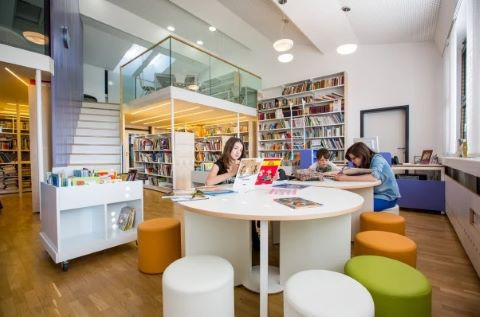 UNESCO Global Network of Learning Cities: 77 new members from 44 countries 2022-09-05 Today, 77 cities from 44 countries join the UNESCO Global Network of Learning Cities (GNLC) in recognition of their outstanding efforts to make lifelong learning a reality for all at the local level. The UNESCO Global Network of Learning Cities is an international network consisting of cities that successfully promote lifelong learning across their communities. It includes 294 cities from all around the world that share inspiration, know-how and best practice among each other. "With more than half of humanity living in urban areas, cities have the power to drive lifelong learning policies by implementing and supporting local initiatives and bring bottom-up change. The newly admitted UNESCO learning cities have a wealth of expertise and commitment to ensuring that the right to education becomes a reality for people of all ages" Audrey Azoulay UNESCO Director-General The new members are: AfricaBouaké (Côte d'Ivoire)Durban (South Africa)Gulu (Uganda)Helao Nafidi Town Council (Namibia)Hina (Cameroon)Kara - Commune de Kozah 1 (Togo)Kilifi County (Kenya)Kuno Consortium (Kenya)Kwekwe (Zimbabwe)Laikipia Consortium (Kenya)Libreville (Gabon)Lira (Uganda)Makokou (Gabon)Masaka (Uganda)Niamtougou - Commune de Doufelgou 1 (Togo)Pya - Commune de Kozah 2 (Togo) Arab StatesAl Daayen (Qatar)Al Rayyan (Qatar)Doha (Qatar)Fayoum (Egypt)Ifrane (Kingdom of Morocco)Marrakech (Kingdom of Morocco)Ras Al Khaimah (United Arab Emirates)Sharjah (United Arab Emirates)Yanbu Industrial City (Kingdom of Saudi Arabia) Asia and the PacificCanning (Australia)Cao Lãnh (Viet Nam)Guangzhou (People's Republic of China)Hamedan (Islamic Republic of Iran)Hat Yai (Thailand)Hwaseong (Republic of Korea)Nilambur (India)Nonsan (Republic of Korea)Phayao (Thailand)Sejong (Republic of Korea)Sukhothai (Thailand)Thrissur (India)Warangal (India) Europe and North AmericaBatumi (Georgia)Braga (Portugal)Brest (France)Bursa (Turkey)Derby (United Kingdom of Great Britain and Northern Ireland)Edmonton (Canada)Girona (Spain)Kirklees (United Kingdom of Great Britain and Northern Ireland)Kyiv (Ukraine)Laško (Slovenia)Lausanne (Switzerland)Ljubljana (Slovenia)Nanterre (France)Netishyn (Ukraine)Oss (The Netherlands)Pallini (Greece)Poltava (Ukraine)Ptuj (Slovenia)Reggio Calabria (Italy)Reșița (Romania)Sakarya (Turkey)Sarcelles (France)Satka (Russian Federation)Trnava (Slovakia)Ventspils (Latvia)Yozgat (Turkey) Latin America and the CaribbeanBarranco (Peru)Bluefields (Nicaragua)Concepción del Uruguay (Argentina)Envigado (Colombia)General Escobedo (Mexico)Granada (Nicaragua)Juigalpa (Nicaragua)La Estrella (Colombia)Loja (Ecuador)Pachuca de Soto (Mexico)Querétaro (Mexico)Salta (Argentina)Tafí Viejo (Argentina) The new UNESCO learning cities were added to the network following their nomination by the National Commissions for UNESCO in the concerned countries and the recommendations of a jury of experts. A strong commitment to lifelong learning by the mayor and city administration and a track record of good practices and policy initiatives are key prerequisites for becoming a learning city. The 77 new members bring the total number of cities within the UNESCO GNLC to 294 in 76 countries. About UNESCO learning citiesConnecting education, training and cultural institutions and engaging a wide range of partners such as public-sector representatives, civil society organizations and employers is a key feature of UNESCO learning cities. They effectively mobilize resources in every sector to promote inclusive and quality learning, from basic to higher education. They revitalize learning in families and communities and facilitate learning for and in the workplace while extending the use of modern learning technologies. URL: bit.ly/3BbNiam
 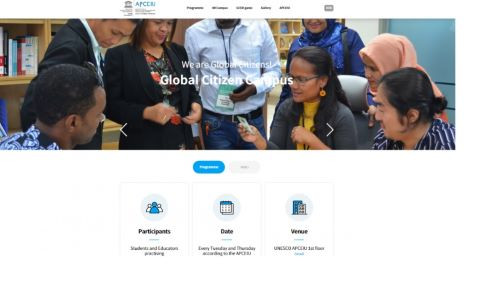 Renewal of the Global Citizenship Campus(GCC) Website 2022-09-05 The new Global Citizenship Campus (GCC) website (gcc.unescoapceiu.org) launched for usage as of 31 August 2022. APCEIU began operating the GCC programme in 2015 and introduced the GCC website in 2016. The renewal of the website includes simplification of programme registration processes, responsive web design for mobile devices, strengthened web security, and a stabilized server. The new website is expected to promote the GCC and its detailed programmes, such as the Model-UNESCO Conference, GCC board games, VR Campus (metagcc.org), etc., allowing improved accessibility for programme participants. The renewed website is now available both in English and Korean here. http://gcc.unescoapceiu.org/ URL: http://www.unescoapceiu.org/post/4557
 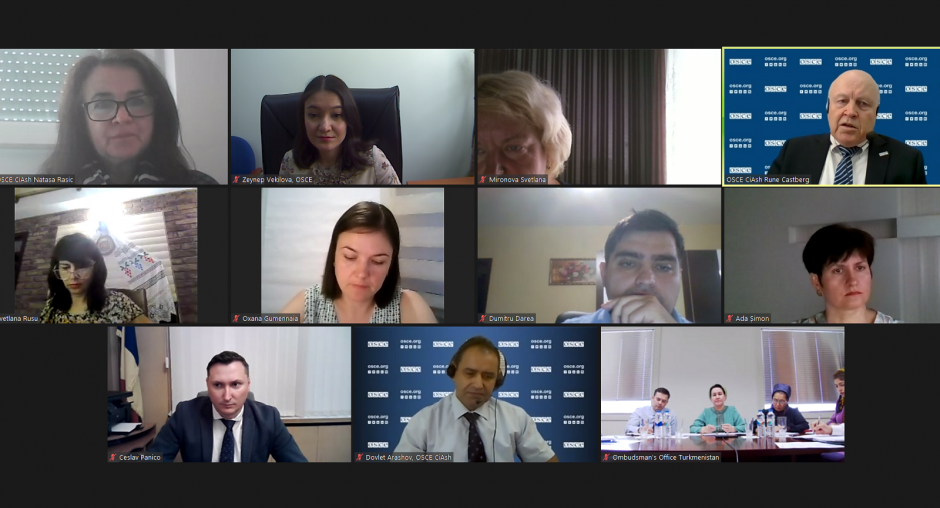 Role of the Ombudsperson’s Office in Protecting Women's Rights and Promoting Gender Equality Discussed at OSCE Seminar in Turkmenistan 2022-09-04 On 29 July 2022, the OSCE Centre in Ashgabat organized an online seminar on the role of the National Human Rights Institutions (NHRIs) in protecting women’s rights and promoting gender equality. The event brought together representatives from the Office of the Ombudsperson of Turkmenistan with the aim to explore and discuss functions of the Ombudsperson’s Offices in other OSCE participating States and exchange practical experiences. The discussions were led by speakers from the Office of the People`s Advocate of Moldova (Office of the Ombudsperson of Moldova), who presented legal instruments and mechanisms for the protection of women’s rights and promotion of gender equality. They also discussed the role of the Office of the People's Advocate in the protection and promotion of human rights in the Republic of Moldova and strengthening co-operation between NHRIs and national state bodies and civil society. “Working for peace, security and prosperity requires that all the people in a society are included and their rights protected,” said Rune Castberg, officer in charge of the OSCE Centre in Ashgabat. “OSCE participating States are therefore strongly committed to making gender equality a reality everywhere – at home and in public life, in politics and the military, in the economic and environmental spheres, in every realm of human rights and fundamental freedoms,” added Castberg. URL: https://www.osce.org/centre-in-ashgabat/523553
 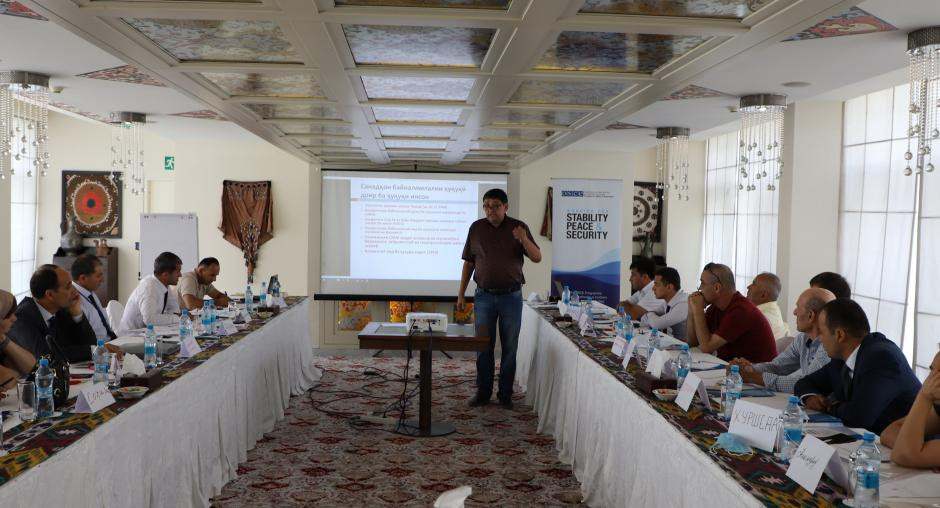 OSCE Trains Lawyers from Women Resource Centres and Local Authorities in Tajikistan on Legal Support to Survivors of Domestic Violence 2022-09-04 The OSCE Programme Office in Dushanbe organized a four-day training course for lawyers from the OSCE-supported Women’s Resource Centres (WRCs) and local authorities from 11 to 14 August in Dushanbe. The course trained participants on how to provide legal advice and legal assistance to victims of domestic violence and people at risk of experiencing domestic violence. Some 23 lawyers from the Sughd, Khatlon, Rasht Valley regions, and Gorno-Badakhshan Autonomous Region of Tajikistan participated. Specialized trainers/attorneys with many years of hands-on domestic violence law experience delivered the course. During the course participants were familiarized with the legislative framework in the field of prevention of domestic violence, international and national mechanisms, identification of domestic violence and skills of working with victims of domestic violence. Other topic covered was redirecting mechanisms and mechanisms of recovering materials and moral compensation to victims of domestic violence in criminal and administrative cases. During the event, discussions on human trafficking also took place. Participants had a hand-on exercises and group works which helped them to discuss issues and find solutions. Shamsiddin Mirzosafarzoda, a lawyer from the local government authority of the Dusti district, Khatlon region found useful that during the course he was able to enhance his knowledge of national and international laws and how they are implemented. He also mentioned he found the sessions on legislation in the field of combating domestic violence and human trafficking particularly informative. Mirzoboy Mallaev, a lawyer from WRC “Kuhsor” in the Ayni district, Sughd region said: “The involvement of lawyers from relevant state structures was very good and timely. This will expand and strengthen co-operation between local structures and will lead to the improvement of activities for the prevention of domestic violence.” He added that he will use his gained knowledge and skills in his field of activity. The OSCE Programme Office will continue to support the Government of Tajikistan in implementing the Law on Prevention of Domestic Violence. The Programme Office provides a comprehensive support to victims of domestic violence in the regions through a network of 14 OSCE-established WRCs in close partnership with local authorities. The current activity is being implemented within the WRCs project of the OSCE Programme Office funded by Norway, the United States of America, Finland, the European Union, Andorra and Germany. URL: https://www.osce.org/programme-office-in-dushanbe/524274
 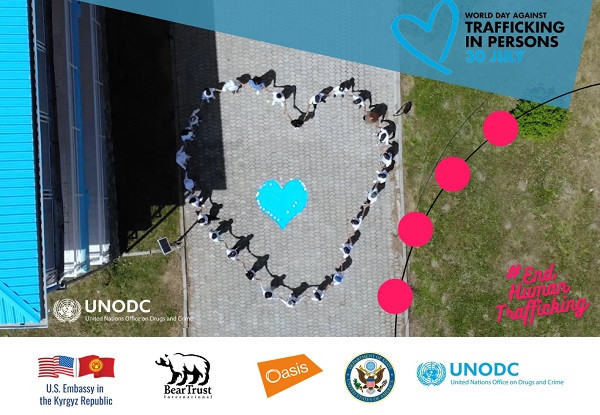 UNODC and Oasis Foundation Share Safety Tips to Protect Youth from Trafficking in Persons in Kyrgyzstan 2022-09-04 UNODC and Oasis Foundation Share Safety Tips to Protect Youth from Trafficking in Persons in Kyrgyzstan With the digital globalization - intensified by the COVID-19 pandemic and the shift of our everyday life to online platforms -- the crime of human trafficking has conquered a cyber space. The internet and digital platforms offer traffickers numerous tools to recruit, exploit, attract and control victims; organize their transport and accommodation; and reach out to potential clients; communicate among perpetrators; and hide criminal proceeds – and all that with a greater speed, cost-effectiveness, and anonymity. To support youth with life-skills and information about cybersecurity, UNODC together with the Oasis Foundation organized a two-day interactive camp for 14 children from Chui oblast orphanage and 12 children of labor migrants. According to the research conducted by UNODC and the Oasis Foundation in 2021, children of labor migrants and orphans are highly vulnerable and most at risk of becoming victims of violence and trafficking in persons. “Annually UNODC marks the World Day Against Trafficking in Persons and this year’s theme focuses on the role of technology as a tool that can both enable and impede human trafficking”, says Ms. Aida Isabekova, UNODC expert in Kyrgyzstan. “Human traffickers have become adept at using internet platforms, including social media channels, online marketplaces, and free-standing webpages to recruit victims and attract clients. We shared safety tips to protect youth from trafficking in persons”. Each year many young people migrate to big cities in search of employment and educational opportunities. According to the survey conducted by the Oasis Foundation among 480 young women and men, about 30% of them admitted that they were not paid a salary during employment, and that their passports and other documents were taken away. “This camp is a launching pad for further support of vulnerable youth. To make this process sustainable, each participant of the two-day camp will receive access to the Bilim-Belek educational program, through which they can acquire additional skills and knowledge”, informed Ms. Nadira Karatbekova, Oasis Foundation Programme Manager. Ms. Karatbekova emphasized that the children who participated at the camp are beneficiaries of the Oasis Foundation. “Children of labor migrants were suggested to us by the Ministry of Labor and Social Development of the Kyrgyz Republic”, she added. Participants gained knowledge and skills on safe and responsible migration, employment, educational opportunities, how and where to recover lost or stolen documents, access to housing and social protection, as well as on safe technology use. On the second day of the event, each child wrote his/her understanding about trafficking in persons and how to protect yourself from it. They glued their notes to a blue heart to demonstrate their solidarity with the victims of human trafficking. “A positive outcome was that the participating children emphasized the importance of reaching out to the police for help and double-checking information about tempting job offers”, concluded Ms. Aida Isabekova, UNODC expert in Kyrgyzstan. URL: https://www.unodc.org/centralasia/en/news/unodc-and-oasis-foundation-share-safety-tips-to-protect-youth-from-trafficking-in-persons-in-kyrgyzstan.html
 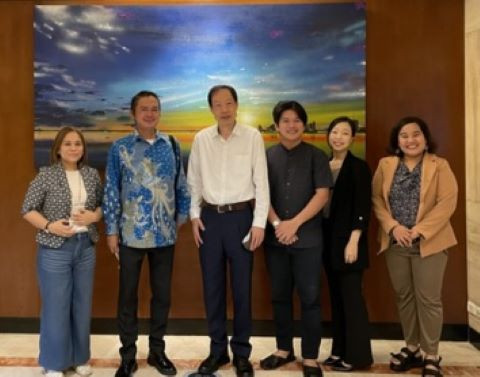 APCEIU visits GCED Cooperation Centre - Philippines 2022-09-01 On 16th August 2022, APCEIU visited Philippine Normal University to strengthen our networks with PNU and to further manifest Global Citizenship Education (GCED) in the region. Earlier this year, APCEIU established a GCED Cooperation Centre at PNU as part of its GCC initiative, launched in 2021 to enhance GCED capacities of Teacher Education Institutes (TEIs) in the ASEAN region. Director Lim Hyun Mook of APCEIU met with Dr Serafin J. Arviola, Director of GCC-Philippines, and Mr Carl Dellomos, Deputy Director of GCC-Philippines to receive updates on programme planning and progress, as well as to deliver APCEIU’s anticipations that GCC-Philippines will become an independent and dynamic GCED hub in the region. In addition, during his visit, Director Lim attended the Investiture of Dr Bert J. Tuga as the 11th President of PNU and PNU’s 114th Commencement Exercises for the Graduate Level as the Guest of Honour. In his congratulatory remarks and speech, Director Lim highlighted the role of education and educators in building a peaceful and sustainable society and emphasized the importance of GCED capacity building for educators. URL: http://www.unescoapceiu.org/post/4555
 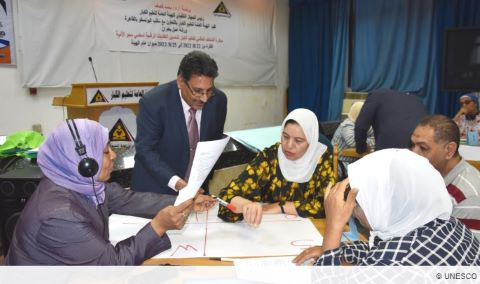 UIL Launches Technology Training for Literacy Educators in Egypt GEC GAL Workshop Egypt 2022-08-28 Digital skills are key for literacy teaching in the twenty-first century. The COVID-19 pandemic, however, demonstrated that many educators have limited capacities to use technologies for instruction and would benefit from locally relevant, structured training in this area. To promote quality literacy provision by increasing effective use of technologies in literacy instruction and learning, the UNESCO-led Global Education Coalition (GEC) and the Global Alliance for Literacy (GAL) launched the first national workshop to develop contextualized digital competencies training modules for literacy educators in Egypt from 22 to 25 August 2022. Twenty-one key literacy stakeholders contributed to the workshop, organized by the UNESCO Institute for Lifelong Learning, the UNESCO Cairo Office and the Adult Education Authority of the Arab Republic of Egypt. Participants adapted the UNESCO-developed training modules and tools to respond to Egypt’s context and the needs of its adult educators. In line with Egypt’s strategic direction under Education 2.0 and Digital Egypt 2030, this is an important milestone on the journey to enhance educators’ digital competencies for teaching, communication, collaboration and continuous professional development. With a supportive community of practice and relevant training, technology can be more effectively harnessed by educators to help their adult learners meet the diverse literacy needs of today. One participant, Gamila El Said Abdallah, adult educator with the Adult Education Authority, commented: “I benefited so much from this training so that I can now understand the significance of digital technology… I made the decision to develop myself in the field of digital technology because it is the language of the era and this training was wonderful to develop our teamwork and hear our voices.” Once the contextualization process is complete, the course will be rolled out to build the capacity of 5,500 youth and adult literacy educators across Egypt through a multi-stakeholder approach. Support from UNESCO throughout this process will enhance the capacities of important stakeholders in Egypt, such as the Adult Education Authority, universities, and non-governmental organizations that train and support youth and adult literacy educators. “This is just the beginning and not the end,” said Prof. Mohamed Yehia Nassef, President of the Adult Education Authority. “We are paving the way for more development and improvement through constructive and fruitful collaborative partnerships. We should leverage the technology in literacy and educational programmes for its efficiency in terms of time and effort.” The Arabic Republic of Egypt is the first of five pilot countries of this GEC-GAL initiative to enhance literacy educators’ effective use of technologies in literacy instruction and learning. More countries and organizations will join the initiative in 2022 and in the following years. BackgroundSince its launch in 2016, the Global Alliance for Literacy within the Framework of Lifelong Learning has driven international discourse and guided the agenda for literacy provision globally for those who need it most. The Alliance includes 29 countries committed to improving youth and adult literacy. It serves as a platform for its members to collectively discuss progress and challenges, and exchange knowledge and good practices. URL: http://bit.ly/3AsVMZ4
 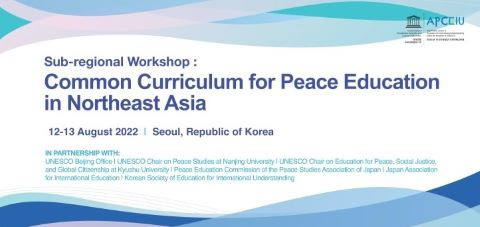 Successful Completion of the Sub-regional Workshop on a Common Curriculum for Peace Education in Northeast Asia 2022-08-26 APCEIU hosted the first Sub-regional Workshop on a Common Curriculum for Peace Education in Northeast Asia for two days on 12-13 August 2022 in Seoul, Republic of Korea. This workshop was conducted to gather ideas and insights from peace educators and to promote APCEIU’s cooperative project, “Development of a Common Curriculum for Peace Education in Northeast Asia,” to be carried out in 2022-2023 with six key partners in the region. The partners include UNESCO Beijing Office; UNESCO Chair on Peace Studies at Nanjing University in China; UNESCO Chair on Education for Peace, Social Justice, and Global Citizenship at Kyushu University in Japan; Peace Education Commission of the Peace Studies Association of Japan; Japan Association for International Education; and Korean Society of Education for International Understanding. This project aims to develop a common curricular guide for peace education pertinent and responsive to the needs and contexts of Northeast Asia while being faithful to UNESCO’s vision. On the first day, APCEIU, Drafting Team, Expert Working Group (EWG) and representatives of the project partners gathered to review the draft developed by the Drafting Team to share ideas for improvement and prepare for the workshop.On the following day, the Drafting Team presented an overview of the project and the draft of the Common Curriculum guide. Ten local peace educators, including professors and school teachers, joined the workshop to provide feedback and ideas on the Common Curriculum Guide. The workshop was primarily held offline, with partner representatives from China joining online. In the break-out sessions, stakeholders and local peace educators discussed effective strategies for establishing the Common Curriculum that reflects the context of Northeast Asia. After several intensive discussion sessions, all participants gathered to summarize the key points and final comments. Following the workshop, APCEIU and the partners will develop a common curriculum (guide) to be widely and actively used by relevant UNESCO Member States in both formal and non-formal education. In the process of curriculum development, feedback from peace educators and key stakeholders in the region will be continuously solicited through the rotating workshops in China, Japan and the Republic of Korea. Ultimately, this project aims to contribute to the strengthening and enhancement of peace education in Northeast Asia. URL: http://www.unescoapceiu.org/post/4549