
News
Catch up on what’s happening in the world of global citizenship education.
1,668 results found
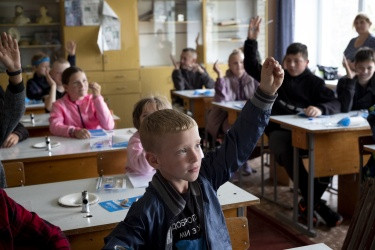 Ukraine Joins the Global Partnership for Education 2022-11-29 November 22, 2022 WASHINGTON D.C. / KIEV, November 22, 2022 – The Global Partnership for Education (GPE) welcomed Ukraine as its latest member today. Since February 2022 the war has devastated Ukraine, causing civilian casualties, mass displacement and destruction of vital infrastructure. Education has been severely disrupted by the fighting despite heroic efforts by the Government of Ukraine and partners. “By joining GPE, Ukraine is sending a strong signal that education remains a country priority despite tremendously difficult circumstances,” said said Charles North, Acting CEO of the Global Partnership for Education. “We commend the Ukrainian government and the people of Ukraine for their resilience and courage, and are committed to helping strengthen the education system to deliver quality education for millions of children.” “For nearly 20 years, the world has witnessed impressive achievements of the Global Partnership for Education in providing access to education for millions of children,” said Serhiy Shkarlet, Minister of Education and Science of Ukraine. “Almost from the beginning of the full-scale war against Ukraine, GPE offered its support, and thanks to our partners, Ukrainian children and teachers will soon be able to receive critical support. However, the partnership with GPE is also about long-term outcomes, transformative changes and building resilient education systems. We are grateful for the opportunity to be a part of this community and are ready for joint action.” By joining GPE, Ukraine can access US$43 million in grants. The partnership supports priority activities defined by the Government of Ukraine. These include teachers’ professional development, providing psychosocial support to children and educators, delivering learning materials, providing infrastructure and equipment for education facilities, and supporting comprehensive digital transformation of education. GPE is working in close coordination with humanitarian and development partners, including the private sector, to mobilize funding to support education needs in Ukraine. In March 2020, Ukraine received an emergency grant from GPE of US$70,000 to respond to the impacts of COVID-19 on its education system. The funds were used to provide education kits and learning supplies to vulnerable preschool children, including children with disabilities. ### About the Global Partnership for Education GPE is a shared commitment to ending the world’s learning crisis. We mobilize partners and funds to support more than 80 lower-income countries to transform their education systems so that every girl and boy can get the quality education they need to unlock their full potential and contribute to building a better world. URL: https://www.globalpartnership.org/news/ukraine-joins-global-partnership-education
 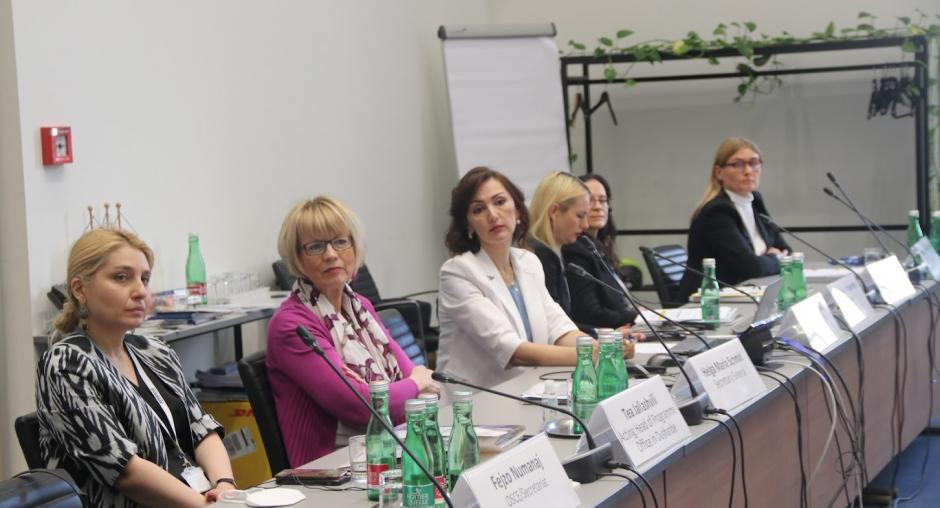 OSCE Border Management Staff College Organizes Roundtable on Incorporating Gender-Sensitive Approach in Border Security 2022-11-29 The OSCE Secretary General Helga Maria Schmid (centre) participating the OSCE BMSC-organized roundtable discussion on integrating gender sensitive and gender inclusive approach in border security, 2 September 2022, Vienna. (OSCE) 2 September 2022 Integrating a gender sensitive and gender inclusive approach in border security and management in times of crisis and conflict was the focus of a roundtable discussion organized by the OSCE Border Management Staff College on 2 September 2022 in Vienna. The participants exchanged ideas on incorporating gender sensitive approaches to improve the effectiveness of border security and management agencies in preventing and detecting a variety of cross-border crimes. The topics of discussion also included combating sexual and gender-based violence, trafficking in human beings and protecting the human rights of those fleeing across borders in times of crisis and conflict. In her opening remarks, the OSCE Secretary General Helga Maria Schmid emphasized the importance of incorporating gender sensitive approaches in times of crisis, particularly when war is being waged in the OSCE region and millions of civilians consequently fled their homes. She also noted that in times of crises, women and girls are disproportionately impacted, being at great risk of abuse, trafficking and violence. The Acting Head of the OSCE Programme Office in Dushanbe Tea Jaliashvili echoed the Secretary General’s remarks. She underlined the fact that the roundtable discussion helped to review the connections between gender-inclusive and human rights-based border security and effective border managed in line with the OSCE’s comprehensive approach. During practical exercises, the participants learned about unconscious biases, discrimination towards people in-need of protection and recognition of potential victims of human trafficking at the borders. The roundtable discussion represented the third in a series of discussions covering various aspects of international cooperation in the context of border security and management. URL: https://www.osce.org/programme-office-in-dushanbe/525288
  Укрепление сотрудничества правоохранительных органов в борьбе с торговлей людьми в центре внимания конференции ОБСЕ в Астане 2022-11-29 (left-right) Zhangali Kenbaev, Moderator; Valiant Richey, OSCE Special Representative and Co-ordinator for Combating Trafficking in Human Beings; Volker Frobarth, Head of the OSCE Programme Office in Astana and Robert Heuer, Head of the Human Dimension Department of the OSCE Programme Office in Dushanbe at OSCE Central Asian regional conference on strengthening law enforcement co-operation in combating trafficking in human beings, Astana, 4 October 2022. (OSCE) 5 October 2022 An OSCE Central Asian regional conference on strengthening law enforcement co-operation in combating trafficking in human beings, co-organized by the Programme Office in Dushanbe and the Programme Office in Astana, in co-operation with the Office of the OSCE Special Representative and Co-ordinator for Combating Trafficking in Human Beings, was held on 4 and 5 October 2022 in Astana. The objective of the conference was to improve cross-border co-ordination between the law enforcement agencies of Central Asian countries in identifying, investigating and protecting the rights of victims of human trafficking. Law enforcement officials from Kazakhstan, Kyrgyzstan, Tajikistan, Turkmenistan and Uzbekistan discussed current issues and challenges in their efforts to combat trafficking in human beings and shared the best experiences of OSCE participating States in enhancing the institutional response to cases of human trafficking In his opening remarks, Valiant Richey, OSCE Special Representative and Co-ordinator for Combating Trafficking in Human Beings said: “There is a growing disparity between a high number of estimated victims and an extremely low rate of investigations, prosecutions and convictions. To revert the tide, we need to exercise a holistic approach, addressing factors that drive supply and demand of the trafficking in human beings business model, as well as using all available means to hold perpetrators accountable: from making the best use of technology and implementing our laws, to following the money to ensure that the crime does not pay.” “Keeping in mind the increasing pressure to Central Asia as a region of destination, transit and origin, it is important more than ever to inspire concerted action when addressing human trafficking. This is a stark example of why we need effective multilateralism: large, complex and common problems are better tackled together, with common strategies and multi-faced approaches,” said Volker Frobarth, Head of the OSCE Programme Office in Astana stressed. Tea Jaliashvili, the Acting Head of the OSCE Programme Office in Dushanbe, emphasized that the event is an opportunity to “exchange experiences, discuss challenges of investigating the transnational crimes, share best practices and advance regional and international co-operation to combat human trafficking.” The participants developed recommendations for the strengthening of both regional and international co-operation and co-ordination between law enforcement agencies of the Central Asian countries towards effectively combating trafficking in human beings. URL: https://www.osce.org/programme-office-in-dushanbe/527931
 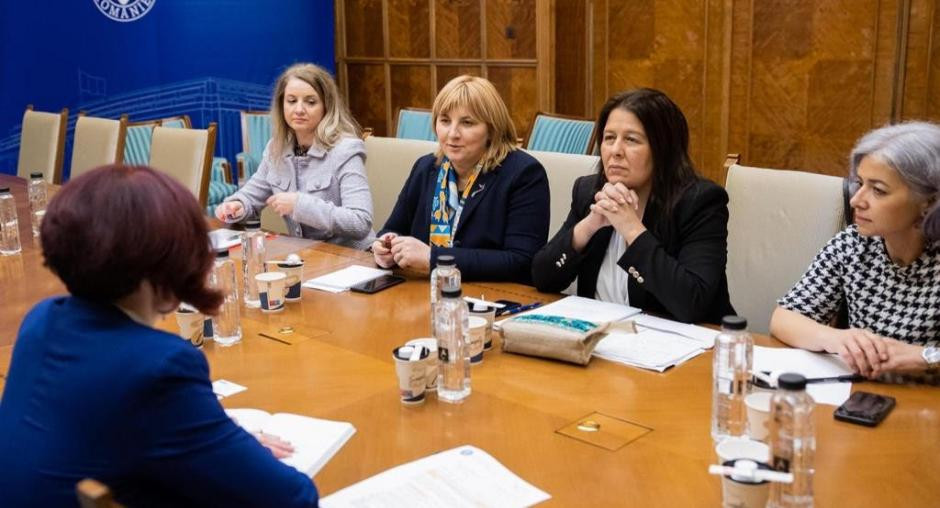 Укрепление сотрудничества правоохранительных органов в борьбе с торговлей людьми в центре внимания конференции ОБСЕ в Астане 2022-11-29 BUCHAREST, 22 November 2022 – Enhancing efforts to implement the Women, Peace and Security agenda and assessing the situation of Ukrainian women refugees was at the centre of a two-day visit to Romania by Special Representative of the OSCE Chairman-in-Office on Gender, Liliana Palihovici, and OSCE Senior Adviser on Gender Issues, Lara Scarpitta. BUCHAREST 23 November 2022 In Bucharest, they visited the Support Center, where they met Ukrainian women refuges and held discussion with Cosmina Simiean Nicolescu the General Director of the General Directorate for Social Assistance and Marian Ursan, the President of the Carousel Association that is managing the Support Center. “This Centre proves once more that through good communication we can enhance the society's receptiveness and solidarity with Ukrainians who fled the country because of the war. I appreciate the partnership of authorities of Bucharest municipality and Carousel Association in providing assistance and doing it with the full respect for human dignity of all 39 women and children that are housed in this Centre,” Special Representative Palihovici said. With the aim of sharing best practices in providing support for Ukrainian women refugees, Special Representative Palihovici and Senior Adviser Scarpitta also held meetings with the high-level officials, including the representatives of the Prime Minister Chancellery, Ministry of Internal Affairs, Ministry of Foreign Affairs, Ministry of Justice, and the Romanian Border Police. Gender-inclusive peace-making and gender equality were focus of discussion with representatives of the Commission for Equal Opportunities for Women and Men in the Chamber of Deputies. “This visit was an important opportunity to discuss the short- and long term strategies to address the needs of Ukrainian refugees, most of which are women, children and people with vulnerabilities. I commend the efforts of the national authorities in Romania to mainstream gender in border management, humanitarian responses and protect the survivors of gender-based violence and trafficking in human beings,” OSCE Senior Adviser on Gender Issues Scarpitta said. ”I was impressed by the efforts of civil society to provide safe and dignified spaces for the most vulnerable. The joint work of state institutions and civil society is critical and deserves full support,” she stressed. Special Representative Palihovici and Senior Gender Adviser Scarpitta emphasized the significance of keeping gender equality high on the political agenda of OSCE participating States, as well as enhancing capacities, sharing recommendations for further action, and collecting the best practices for increasing women’s political participation. URL: https://www.osce.org/secretariat/531926
  New Free Online Short Course on Education for Sustainable Development 2022-11-27 Educators can play an important role in ensuring the sustainable future of our planet. But there is an ongoing and critical need for educators at all levels – from primary through tertiary education – to develop their knowledge and confidence to teach education for sustainable development. This need is particularly pressing in the context of the UN Sustainable Development Goals, with their prominent focus on global citizenship and education for sustainable development. It was for this reason that the Educating for Sustainable Development in Schools and Universities course was created by Dr Nicole Blum and Dr Fran Hunt from the Development Education Research Centre at IOE, UCL's Faculty of Education and Society. The course, which is running for the first time in November 2022, is available for free and aims to provide educators across the world with an introduction to key ideas and practices related to education, learning and sustainable development, including issues such as climate change. Through online discussions and activities, participants engage with peers to explore diverse perspectives and practices from around the world and also current international policy. The course is intended for both educators in higher education as well as teachers in schools globally, so that participants can talk to one another about their practice and share ideas about how education for sustainable development might link across various levels of education. Participants also have an opportunity to reflect on how their learning from the course can be applied to their practice. The three-week course, with a time commitment of around three hours per week, is hosted by FutureLearn. Taking the course is free, but educators can also choose to pay a small fee and receive a certificate of engagement and unlimited access to the course.If you have a query about the course, you can contact the course leaders at: DERCMOOC@live.ucl.ac.uk.
 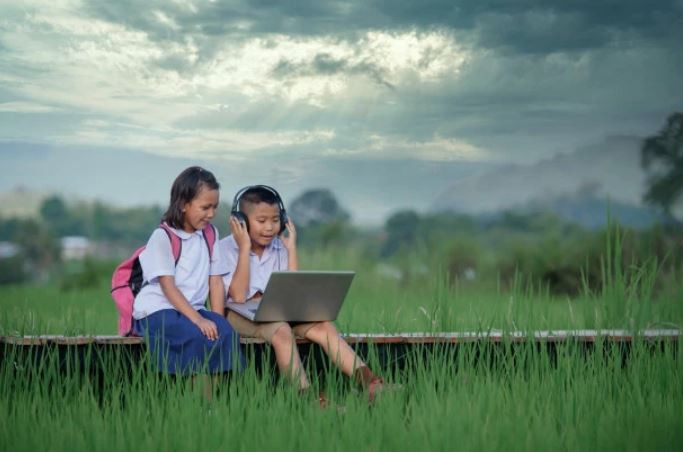 UNESCO ICT in education prize: Call for nominations open to projects ensuring inclusive access to digital education content through public platforms 2022-11-25 ⓒ Bell Ka Pang/Shutterstock.com The UNESCO King Hamad Bin Isa Al-Khalifa Prize for the use of ICT in education is now accepting candidatures. The theme of the 2022 edition is the use of public platforms to ensure inclusive access to digital education content. The 2022 edition builds on the conclusions of the Transforming Education Summit (TES), held in September 2022 during the United Nations General Assembly. At the summit, participating States reaffirmed that digital technologies should not widen but reduce learning gaps. To realize the common vision, the Call to Action: Assuring and improving quality public digital learning for all, launched during the Summit, underlines three keys, namely content, capacity, and connectivity, to unlock the power of digital teaching and learning, rendering it more universally accessible and a more reliable pillar of holistic educational experiences. Within this context, the Prize will reward projects that have made digital learning platforms and digital content more accessible, as well as those that have promoted universal connectivity in education and the development of digital competencies for all teachers and learners. Two winners will be selected by the Director-General of UNESCO based on the recommendations of an international Jury, and each winner will receive a reward of US$ 25,000, a diploma, and international recognition during an award ceremony to be held at UNESCO Headquarters. Who can apply? Any individual, institution, or non-governmental organization (NGO) with an established ongoing project (at least for 1 year) relevant to the specific theme of the year i.e. the use of public platforms to ensure inclusive access to digital education content. How to apply? For the application to be considered, it should be nominated by either the National Commission of the UNESCO Member State or an NGO in official partnership with UNESCO. All applicants are encouraged to get in touch with the NGO or National Commission ahead of the application process. Self-nominations will not be accepted. Governments of UNESCO Member States as well as NGOs in official partnership with UNESCO are invited to elicit and nominate up to three projects, which are in line with the 2022 theme and meet the selection criteria. Details of the selection process and applications can be found on the Prize webpage. The deadline for nominations is 23 January 2023 (midnight, Paris time). For more information, please contact ictprize@unesco.org URL:https://www.unesco.org/en/articles/unesco-ict-education-prize-call-nominations-open-projects-ensuring-inclusive-access-digital
 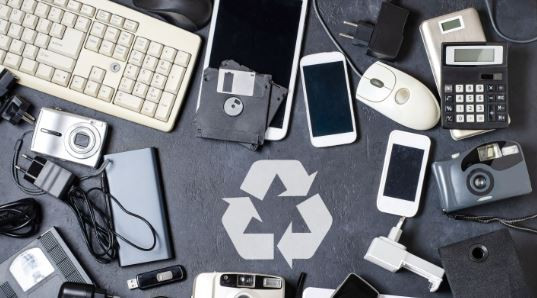 How disposable tech is feeding an e-waste crisis 2022-11-23 ⓒ Photo: Getty Images/Andrei Mitrofanov As humanity’s desire for new technology grows, so do the mountains of potentially toxic electronic waste. Some 54 million metric tonnes of phones, computers and other so-called e-waste are produced a year, according to data from the United Nations Environment Programme (UNEP) and partners. That is equivalent to 7 kilogrammes for every person on Earth; a number predicted to double by 2050 if nothing is done. Only 17 per cent of e-waste is recycled. The rest is dumped, often to be sifted through in low-income countries by informal workers, including children, seeking to extract valuable materials at grave risk to their health. To shed light on this issue, UNEP has partnered with Kenyan spoken word poet Beatrice Kariuki on a compelling new short video series, which explores the planetary risks posed by poor waste management. The first video tackles e-waste and Beatrice asks: “How much more can our planet take of machines that are made to break?” Progress is being made with UNEP leading science-based global efforts to stem pollution and waste. In its convening role, UNEP brings decision makers together under the Basel, Rotterdam and Stockholm conventions, supporting global agreements to reduce pollution and waste. The most recent meeting in June saw a strengthening of international cooperation on e-waste management to ensure countries exporting e-waste must first receive informed consent from the recipients. This builds transparency and accountability, which research shows are foundations of a sustainable circular economy in which less is wasted, and more is recycled, repaired, and reused. Pollution and waste are part of the triple planetary crisis that includes nature and biodiversity loss, and climate change, all driven by unsustainable consumption and production. To hold back the torrent of trash, experts say everyone can take action. Consumers can buy fewer things while recycling and reusing more. Governments can develop e-waste management systems to collect and recycle, extracting in a safe way some of the estimated $62.5 billion of value from discarded materials. Finally, companies can build products designed to last, not to be replaced, and to be reused. To fight the pervasive impact of pollution on society, UNEP launched #BeatPollution, a strategy for rapid, large-scale and coordinated action against air, land and water pollution. The strategy highlights the impact of pollution on climate change, nature and biodiversity loss, and human health. Through science-based messaging, the campaign showcases how transitioning to a pollution-free planet is vital for future generations. URL:https://www.unep.org/news-and-stories/story/how-disposable-tech-feeding-e-waste-crisis
  Learning behind bars: Realizing the benefits of prison education 2022-11-20 © Shutterstock / SGr Achieving lifelong learning for all means paying particular attention to vulnerable groups: while the benefits of prison education are clear, too few prisoners have access to quality education programmes, argues Marie Macauley Education is widely recognized as a human right, yet it is a right from which prisoners are routinely excluded. The benefits of education for prisoners are well established. It gives them the opportunity to broaden their knowledge and acquire new skills that will facilitate their sustainable (re)integration into the labour market and society, while, at the same time, reducing recidivism and the attendant economic and social costs. Yet prisoners’ education remains overlooked and under-valued. Within the framework of its programme on inclusion, the UNESCO Institute for Lifelong Learning (UIL) has been studying and supporting prison education policies and programmes in different parts of the world. As the person responsible for UIL’s programme in this area, I visited the Fleury-Mérogis correctional facility (France), the largest prison in Europe, with 3,300 prisoners, to document their experience, understand the challenges they face, and identify good practices and lessons for other institutions and countries. Located in Fleury-Mérogis, not far from Paris, the eponymous prison comprises a men’s prison, a facility for young men aged 18 to 21 and, in a small adjacent building, a women’s prison (MAF). Fleury-Mérogis receives convicts whose sentences do not exceed beyond two years, as well as remand prisoners (prisoners awaiting trial), who make up 26 per cent of the inmate population. Like in many carceral institutions in the world, overcapacity is an issue at Fleury-Mérogis, with the prison operating at 29.4 per cent above its maximum capacity. While every prisoner should have an opportunity to access some form of education programme (see Section 2 of the French Government’s Law No. 2009–1436 of 24 November 2009 on prisons, Articles 27–29), only 25 per cent of the prisoners benefit from such entitlement. Yet the need is huge: the majority of detainees in Fleury-Mérogis have no qualifications. The French section of the International Prison Observatory (OIP-SF) points more generally to an ‘inadequacy of resources in relation to the number of prisoners’ as well as ‘logistical and security constraints which take precedence over the need for rehabilitation’. Priority is given to minors and those who are unable to read or write, including prisoners whose first language is not French. Seven per cent of prisoners at Fleury-Mérogis are non-French speakers, while around 12 per cent are illiterate (compared to 7 per cent of the general population). Education teams, in collaboration with prison administration, are tasked with identifying and addressing the needs of these particularly vulnerable groups. Prisoners often face significant barriers in accessing available learning opportunities, as I noted during a reading workshop organized by the Lire C’est Vivre association. Among the 15 participants, two were training to become library assistants. Although the course is offered to all the roughly 800 prisoners in this division of the prison (Fleury-Mérogis has five divisions), only those few had enrolled. To be eligible for the training, prospective students must write several letters to demonstrate their commitment – an insurmountable obstacle for anyone with low-level literacy skills. This is not the only barrier to participation. A lack of information on educational provision within prisons means that many inmates are unaware of the opportunities available to them. Stéphane, a former prisoner who now works with the organization Auxilia Une Nouvelle Chance, which promotes the social and professional reintegration of vulnerable people, including prisoners, reported that programmes have long waiting lists and prisoners have to demonstrate a strong motivation to be admitted. Furthermore, the tedious application procedure is often a disincentive for those who do not have a good command of French. Poor learning conditions can also be an obstacle. Inmates must study in the cells they share with other prisoners, where television and radio are often on continuously, and noise from adjacent cells, the prison yard and loudspeakers is incessant. Inside the cells, desks must be shared and there is often a lack of equipment such as notebooks and pens. Moreover, because inmates depend on guards to leave their cells, attendance in class rests as much on the efficiency of the system as on the goodwill of prison officers. A pro-school prison guard can therefore prove to be a strong support for teachers, as OIP-SF points out. Uncertainty is also a factor, as another former detainee explained to me. Most inmates are not willing to enrol in a course before their trial has taken place. In short, lack of funding, learning spaces and teachers are the most common obstacles to large-scale quality education programmes in prisons. Civil society organizations such as Lire C’est Vivre and Auxilia Une Nouvelle Chance operate to guarantee prisoners access to knowledge and skills and technical training. The latter employs 800 volunteer trainers who have so far reached 1,600 inmates with programmes that aim to combat illiteracy or provide refresher courses, as well as offering general training up to the baccalaureate and pre-professional training levels. Auxilia Une Nouvelle Chance also offers distance education and trains its volunteers to be aware of the many challenges prisoners face. Auxilia facilitators write personal letters to inmates in addition to providing them with course content, and tailor educational offerings to inmates’ particular needs. Another objective of Auxilia Une Nouvelle Chance is to ‘bring education into the cells’ by providing learners with tablets (without internet), thus facilitating their access to the required material, and limiting the time they need to share a desk. Documenting such positive examples is key to improving and expanding education and training opportunities in prisons in France and around the world. More efforts are needed to systematically collect and analyse data on the effectiveness of prison education, including regarding specific programmes such as those aiming at preventing violent extremism. Early results of UIL’s programme on prison education points to the importance of reinforcing support systems to build awareness among prisoners and give them the information and guidance they need to engage in a learning journey. Another lesson relates to the potential of digital technologies to democratize access, enhance the learning experience and facilitate individualized support to learners throughout their incarceration. By improving the quality of prison education delivery, such initiatives contribute to fulfil our common goal to achieve lifelong learning for all. Marie Macauley is a Programme Specialist at UIL Posted on November 16, 2022 by Katja Römer URL:https://thelifelonglearningblog.uil.unesco.org/2022/11/16/learning-behind-bars-realizing-the-benefits-of-prison-education/
 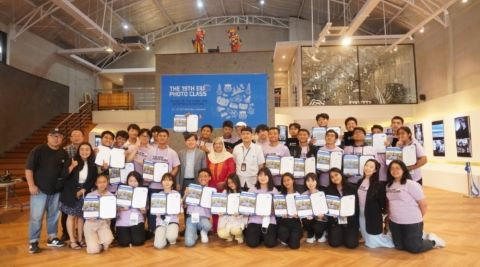 The 19th EIU Photo Class Held in Bali, Indonesia 2022-11-20 On 20 – 27 October, APCEIU implemented the 19th EIU Photo Class in Bali, Indonesia in collaboration with the Indonesian National Commission for UNESCO and the Bali Provincial Education, Youth, and Sport Office. This year, APCEIU invited 8 Korean students, 20 Indonesian students, and 3 professional photographers to participate in the programme’s first overseas implementation of the programme since 2019. The students learned about photography and engaged in cultural exchanges with each other and the local community under the theme, “Island of the Gods: the Inception of Nature”. Students received instruction from professional photographers in order to learn how to use the light around them to express their perspectives on their subjects. Students integrated EIU/GCED frameworks into their experiences by participating in an EIU/GCED workshop. As part of the programme, students captured on their cameras cultural rituals such as Saraswati, celebrating the Goddess of Knowledge and Wisdom, at local secondary school SMA N 8, and Banyu Pinaruh at Sanur Beach. They also visited the Ubud Palace, Batuan Temple, Klungkung Regency, Taman Ujung, Tenganan Pegringsingan, and Alas Harum Coffee Plantation as part of their photography trips. The photos captured during the programme were then displayed at Superlative Gallery in Kuta, Bali in a digital exhibition. Ms Itje Chodidjah (Executive Chairperson, Indonesian National Commission for UNESCO), Mr Kim Jong-Hun (Head, Office of Planning and Administration, APCEIU), and Mr Gusti Ngurah Kama Wijaya (Coordinator for the 19th EIU Photo Class, Bali Provincial Education, Youth and Sport Office), delivered opening remarks in the Opening Ceremony of the exhibition. In their speeches, they emphasized the importance of cultural exchanges and education through initiatives such as the 19th EIU Photo Class in fostering global citizenship. Since it was launched in 2006, the EIU Photo Class Programme has offered opportunities for students from around the world to learn EIU and GCED through photography. Photos from previous programmes can be found in the EIU Photo Class archive. URL:http://www.unescoapceiu.org/post/4615
  World Science Day takes us on a ‘fantastic voyage’ into the world of molecules and modelling 2022-11-17 ⓒ Alan C. (CC BY-NC-SA 2.0) / Flickr A webinar organized by UNESCO to mark World Science Day for Peace and Development on 10 November set out to demystify the basic sciences – biology, chemistry, mathematics and physics – by explaining the link between curiosity-driven science and the seemingly inexhaustible range of applications that can result, often with a lasting impact on peoples’ lives and sustainable development. In The Fantastic Voyage, a US film from the 1960s, a submarine crew is shrunk to a microscopic size and injected into the blood stream of an injured scientist to repair damage to his brain. Human travel through the body may fall within the realm of science fiction but, thanks to leaps and bounds in basic science in recent years, it is now possible to introduce tiny nanoparticles into the human body directly in order to deliver medical drugs, or via the creams found in cosmetics and sunscreens. One of the six speakers to address the webinar, Professor Sara Abdesalam described how her work was contributing to this fantastic voyage. She explained how the gold nanoparticles that she is studying can carry drugs through the human body to help combat cancerous tumours. An Associate Professor of Mathematics at the British University of Egypt, Dr Abdesalam recalled that gold had long been known for its ability to delay premature ageing by rejuvenating skin cells, boosting blood circulation and increasing skin elasticity to reduce dryness and lighten the complexion. Some 2,000 years ago in Egypt, the pharaoh Cleopatra used to apply a face mask made of gold to give herself a glowing complexion. Today, cosmetic companies use gold nanoparticles in their skincare products with the blessing of the US Food and Drug Administration. However, nanoparticles come in a range of metals. Dr Abdesalam has also been studying nanoparticles in the form of titanium, one of the strongest metals of all. She explained to viewers how titanium nanoparticles can be used to manufacture sunscreens that are partially absorbed through the skin to protect it from the sun’s ultraviolet rays. Depression now the leading disabling disease worldwide Health was also the focus of Dr Hailan Hu’s work. A neuroscientist from Zhejiang University School of Medicine in China, she was one of this year’s recipients of the L'Oréal-UNESCO For Women in Science International Award for ‘her groundbreaking work in deciphering the mechanism behind depression and informing the development of next-generation antidepressants’. In 2017, depression overtook heart disease and cancer to become the number one disabling disease in the world. Professor Hu told the fascinating story of how the drug ketamine came to be used as an anti-depressant. Currently, medical drugs combat depression by elevating chemicals in the brain such as dopamine and serotonin which are associated with reward. However, most of these drugs take 6–8 weeks to work and then only in about 30% of patients. ‘Recently’, she said, ‘the drug ketamine has brought about a revolution to the pharmaceutical world…, as ketamine can cause a very rapid antidepressant response – within one to two hours – in more than 70% of treatment-resistant patients’. She explained that, ‘a few years ago, my lab discovered that depression has a lot to do with a tiny part of the human brain called the lateral habenula, which plays a big role in mediating different emotions, such as stress, fear and disappointment. When the lateral habenula becomes overactive, it inhibits the reward centre in the brain. What ketamine does is to disinhibit the reward centre to improve the person’s mood’. Ketamine was originally used at a higher concentration as an anaesthetic, until academic researchers realized about 20 years ago that it could act as an effective anti-depressant at a lower dose. ‘The global mental health crisis has been exacerbated by the Covid-19 pandemic’ over the past three years, remarked Professor Hu, ‘as the pandemic has caused widespread anxiety both among those with long Covid and those indirectly affected by the pandemic, such as children. Unfortunately, I don’t think that we have prepared enough for this complication’, she said, adding that this made it important for policy-makers to support the ongoing scientific research in this area, in order to understand the impact on mental health of the societal trauma caused by Covid-19. "This is a time when we really need science to understand what is happening in the world." -- Professor Hailan Hu Economics, infectious diseases and climate change can all be modelled What is the link between economics, infectious diseases and climate change? That was the question asked – and and answered – by Dr Matteo Marsili from UNESCO’s Abdus Salam International Centre for Theoretical Physics in Italy. He described how modelling can help us to understand complex phenomena of relevance to sustainable development. Dr Marsili explained that economics, infectious diseases and climate change could all be modelled. Whether a scientist was looking at the microstate, such as the composition of a chemical compound, or at the macrostate, as in the case of collective behaviour, these data could be modelled, he said. For instance, ‘an economy is made up of commercial firms and consumers who interact through markets’, he remarked. ‘This collective behaviour can be modelled’. Similarly, climate change can be modelled on the basis of parameters that include the source and volume of emissions of different greenhouse gases and how different factors influence the way in which these emissions evolve over time, such as if petrol-consuming vehicles are replaced by hybrid ones on a massive scale. Mathematical models can also study what happens when a system becomes unstable, such as during a financial crisis (economic system), or in the event of a surge in greenhouse gas emissions (climate system), or when a certain type of bacteria attack the human gut (digestive system). Standing on the shoulders of giants to see further Each biologist, each chemist, each physicist, each mathematician builds on the work of their predecessors and peers. As UNESCO Assistant Director-General for Natural Sciences Shamila Nair-Bedouelle recalled in her introduction to the webinar, human progress is a story that has been written over thousands of years, as inquisitive minds have built on the discoveries of their forebears to add another stone to the edifice of knowledge. Quoting the English mathematician, Isaac Newton, who lived 300 years ago, she said ‘if I have seen further, it is by standing on the shoulders of giants’. The theme of this year’s World Science Day espoused that of the International Year of Basic Sciences for Sustainable Development. In an appeal for greater funding for basic science to tackle the multiple crises the world faces, Dr Nair-Bedouelle urged the audience to seize the opportunity offered by this International Year ‘to give our scientists everywhere the chance to stand on the shoulders of giants to see further’. More information Watch the full webinar Programme World Science Day for Peace and Development International Year of Basic Sciences for Sustainable Development URL:https://www.unesco.org/en/articles/world-science-day-takes-us-fantastic-voyage-world-molecules-and-modelling