
News
Catch up on what’s happening in the world of global citizenship education.
1,668 results found
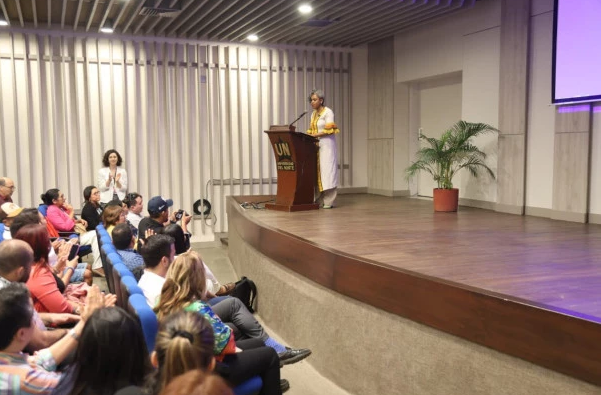 UNESCO and Colombia call on countries to continue the regional agenda to ensure the right to education for people in situations of human mobility 2023-09-06 8 June 2023 During the regional forum, Latin American and Caribbean countries presented the challenges and transformative practices to strengthen educational inclusion, eliminating all kinds of obstacles for the continuity of the educational paths of the displaced population. In the context of the regional forum "Education beyond borders" organized by the Regional Bureau for Education in Latin America and the Caribbean (OREALC/UNESCO Santiago), the Minister of Education, Aurora Vergara Figueroa, reaffirmed the commitment of the Colombian government to guarantee the right to education for people in situations of human mobility."Colombia is committed to the right to education for people in situations of human mobility, within the framework of a regional integration agenda that allows a response from an inclusion and development perspective," said Minister Aurora Vergara Figueroa.The speech was made during the closing of the regional event, organized by the Government of Colombia and UNESCO, in coordination with the Regional Education Group and with the support of Education Cannot Wait and the Government of Canada.According to UNESCO and its partners, as a result of emergencies and crises in Latin America and the Caribbean, about 3.7 million girls, boys and adolescents are in processes of migration and displacement with the hope of finding a better life opportunity and access to basic services."The guarantee of the right to education for the population in mobility situations has been a great challenge for our countries. Since the first version of the Regional Forum, progress in ensuring access for students to host education systems has been extraordinary. However, Latin America and the Caribbean must not spare efforts to ensure the elimination of all obstacles to ensure permanence and completion of studies. The message of the 16 participating countries is clear: the priority in the coming years will be the guarantee of the quality of teaching and learning, without any distinction," said Claudia Uribe, Director of the Regional Bureau for Education in Latin America and the Caribbean (OREALC/UNESCO Santiago).In this pursuit, those who migrate are forced to interrupt their studies, as well as face multiple barriers to access education, whether in transit or host countries.In that context, and after analyzing the problem with representatives of the ministries of education from Latin America and the Caribbean, international organizations and civil society, the Minister of Education of Colombia pointed out the importance of generating policies with a regional dimension to continue providing reception and integration to migrants and refugees in education systems."Our challenge now is to ensure effective responses for the provision of educational services to more than 600,000 boys and girls who have arrived in our country between 2016 and 2023. To do this, we are implementing emergency and protracted crisis education strategies," said Minister Aurora Vergara.Colombia is currently the Latin American and Caribbean country that hosts the largest number of people in mobility from Venezuela. As of December 2022, the country has recorded the entry of approximately 2.5 million citizens from that country.The response of the Colombian Government to migratory demands has been crucial to ensure the inclusion of students in mobility. National regulatory frameworks have been modified in order to eliminate access barriers to the education system and develop coordinated measures between different institutions of the Colombian State, as well as at different levels of the Government to ensure the conditions of access and permanence of this population in the education system.It is worth noting that one of the priorities in the lines of action of the National Development Plan 2022-2026 "Colombia, Power of Life" is to establish protection mechanisms for the migrant population in transit, refugees and with a desire to settle in the national territory, which will allow to continue with the protection policies for this population and contribute fundamental contributions to the integration processes of Latin America and the Caribbean.From the Ministry of National Education, different inter-institutional efforts are being coordinated, with international cooperation and civil society to strengthen the strategies of education in emergencies and protracted crises, from a territorial approach and with civic education, for reconciliation, socio-emotional, anti-racist and to face climate change."Our commitment is to ensure that education is a vehicle for inclusion, not stigmatization, empowerment and opportunities for all children, adolescents and young people living in the country, regardless of their place of origin," concluded Minister Vergara. https://www.unesco.org/en/articles/unesco-and-colombia-call-countries-continue-regional-agenda-ensure-right-education-people-situations?hub=701
 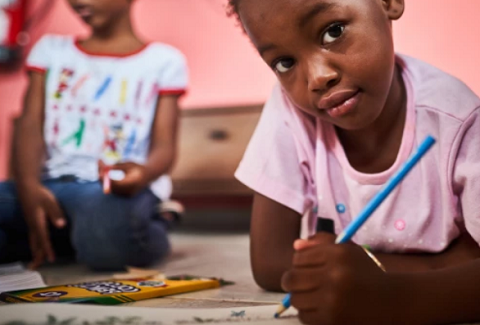 Barranquilla (Colombia) hosts UNESCO regional forum on the right to education for people in mobility situations 2023-09-06 • The meeting will analyze national and regional strategies and possibilities for cooperation to guarantee the right to education for people in these situations. Additionally, participants, representatives from Ministries of Education from 15 countries, will discuss existing evidence to support coordination among countries in Latin America and the Caribbean.• Join the plenary sessions of this forum through the YouTube channel of the Regional Bureau for Education in Latin America and the Caribbean (OREALC/UNESCO Santiago) at www.youtube.com/unescosantiago 6 June 2023 What progress and actions are countries and educational actors making to guarantee the right to education for migrants, displaced persons, and refugees? Which of these experiences can be adapted and implemented in other countries in the region? In its third edition, the regional forum "Education Beyond Borders, Regional Solidarity for the Guarantee of the Right to Education" seeks to recognize initiatives and policies undertaken to provide a coordinated educational response that benefits over 14.8 million people in mobility situations in the region. The event will take place in person from June 7 to 9, 2023, at the Universidad del Norte in Barranquilla (Colombia) with online streaming of the plenary sessions. This regional forum has been conceived as a platform for sharing experiences in solidarity, reflecting on lessons learned, and assessing their potential for adaptation and scalability in the region. During the event, participants will identify areas of cooperation regarding the educational inclusion of students in human mobility and provide significant information and evidence to strengthen coordination and cooperation mechanisms among countries in the region. Its objective is to support countries in addressing and guaranteeing the right to education for people in situations of human mobility in the region. Ministers of Education from the region, national educational authorities responsible for the educational response to the population in mobility, experts, and representatives from United Nations agencies from 15 countries will attend the event. Representatives from academia and civil society actors, particularly organizations working with refugees, migrants, youth, women, and those involved in the educational response in the region, will also be present. The host institution is Universidad del Norte, in the city of Barranquilla (Colombia). The forum is held within the framework of the Multi-Year Resilience Program (MYRP) of Education Cannot Wait and has the generous support of the Regional Education Group and the Government of Canada. The forum takes place thanks to cooperation with the Ministry of National Education of Colombia and the Education Secretariat of Barranquilla. URL:https://www.unesco.org/en/articles/barranquilla-colombia-hosts-unesco-regional-forum-right-education-people-mobility-situations?hub=701
 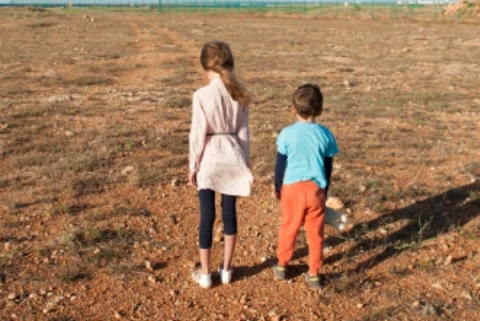 More than 3.7 million migrant children at risk of missing out on school 2023-09-06 30 March 2023 1 out of every 2 Venezuelan migrants and refugees face challenges in accessing education. Over one million of them are Venezuelan migrant and refugee children under 15 years of age.The campaign "Education without limits: I learn here or there" seeks to highlight the educational crisis experienced by children and adolescents in context of human mobility in Latin America and the Caribbean. Panama, 29 March 2023. As a result of poverty and high rates of violence in Latin America and the Caribbean, around 3.7 million children and adolescents are displaced or on the move in search of better opportunities and access to basic services. In this search, migrants are forced to interrupt their studies and face multiple barriers to continue their learning, whether in transit or host countries. In response to this problem, the Regional Education Group for Latin America and the Caribbean , made up of Save the Children UNICEF, UNESCO, Plan International and other organizations, launched the campaign "Education without limits: I learn here or there". The campaign seeks to highlight the educational crisis experienced by children and adolescents in a situation of mobility, to promote that they access and stay in school, and to show how their access to education can positively impact a host community. This campaign is part of the activities carried out under the Refugee and Migrant Response Plan (RMRP), supported by the Regional Chapter of the Multi-Year Resilience Program (MYRP) of the Education Cannot Wait (ECW) Fund and is supported by the Government of Canada.The "Education without limits: I learn here or there" campaign will have resources and tools aimed at providing children, adolescents and their families, host communities, teachers, and educational personnel with accurate information on educational pathways, resources, mechanisms, and protocols available for children and adolescents in a situation of mobility to continue learning in the region. Victoria Ward, Save the Children's Regional Director for Latin America, and the Caribbean, said: "The Education without limits campaign comes at a key moment when migratory movements in the region have increased exponentially. Every day, thousands of children and adolescents are in a mobility situation, facing multiple challenges, including access to education. With this campaign we seek topromote access to and permanence in education as a human right for children and adolescents who migrate". "In Latin America and the Caribbean, one in five refugees or migrants is a child. They had to leave their schools, but when they crossed borders, many did not have the opportunity to keep learning and found themselves trapped in exclusion, poverty, and violence. The campaign we are launching today seeks to break this vicious cycle through education. The most vulnerable children fleeing their countries can contribute to the development of transit and host communities, but only if they have access to more inclusive and quality education services," said Garry Conille, UNICEF Regional Director for Latin America, and the Caribbean. Claudia Uribe, Director of the Regional Bureau of Education for Latin America and the Caribbean (OREALC/UNESCO Santiago) stressed that "The region must spare no effort to remove any obstacle that prevents any child in a situation of mobility from fully integrating into the national education systems in their host countries". "Girls and adolescents represent about 20% of the flow of female human mobility in the region, facing additional barriers to access education due to the responsibilities and roles assigned to girls and women in households, gender-based violence, child and adolescent pregnancies, and early marriages and unions are exacerbated in crisis situations, hindering their access to education, their learning processes, quality, transition and educational completion," said Debora Cobar - Regional Director of Plan International for Latin America and the Caribbean. https://www.unesco.org/en/articles/more-37-million-migrant-children-risk-missing-out-school?hub=701
 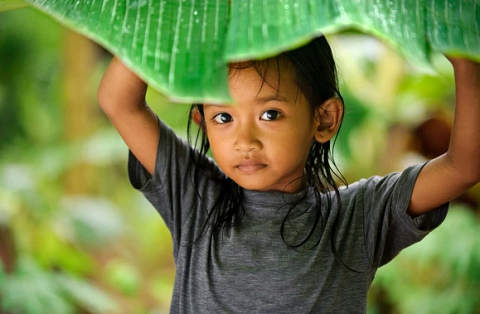 Lives displaced and disrupted: how climate change threatens the right to education 2023-09-06 By Chairat Chongvattanakij - Minsun Kim23 June 2023 Widely regarded as the single greatest challenge ever faced by humanity, climate change is reshaping migration patterns around the world, presaging far-reaching social, political, economic and cultural ramifications. According to the Internal Displacement Monitoring Centre (IDMC), the year 2022 saw 32.6 million disaster-related internal displacements globally. Yet the impact of climate displacement on the right to education remains critically underexplored. In this regard, UNESCO and the UN University-Institute for the Advanced Study of Sustainability (UNU-IAS) jointly organized the only education-focused side event at the 79th Commission Session of UN ESCAP, in Bangkok, on the topic of 'Climate Change and Right to Education', with the express aim of stimulating dialogue and fostering partnerships to address this issue. Ms Rolla Moumné, Right to Education Programme Specialist at UNESCO Headquarters, Paris, introduced the UNESCO initiative on the impact of climate change and displacement on the right to education. Under this initiative, UNESCO will release a ‘global synthesis report’ towards the end of this year which will feature global policy recommendations on how to ensure the right to education in the face of climate displacement. Citing the confluence of population density, rapid urbanization and distinct geographical characteristics, Dr Jonghwi Park, Academic Programme Officer and Head of Innovation and Education at UNU-IAS, noted that Asia and the Pacific accounted for a staggering 80 per cent of the total global climate displacement from 2008 to 2020. UNESCO’s recent study in the Asia-Pacific region reveals serious barriers to education in the context of climate disaster and displacement, including the destruction of schools, the repurposing of schools as post-disaster emergency shelters, and increasing dropout rates due to climate-induced poverty. Climate displaced persons commonly encounter further problems: in addition to being traumatized, many face language and administrative barriers – if not outright discrimination. Dr Park reminded the audience that teachers can also become victims of climate disasters. As such, they require assistance and training that would enable them to resume teaching quickly as well as provide psychological support to traumatized students. Displaced adults generally lack opportunities for reskilling, upskilling or language learning that would help them adapt and thrive in a new environment. Indeed, one of Dr Park’s core observations was the need for data-based prioritization in delivering aid or intervention to specific demographics and disaster scenarios. At the policy level, Dr Park, along with other speakers, called for greater interaction between educational policies and disaster risk reduction policies. Another crucial issue raised at the event was the current absence of any international legal framework that would afford protection to cross-border climate displaced persons and ensure their right to education. When people are displaced by climate change, ‘access to education is the first to suffer,’ said Mr Anindya Dutta, Project Officer on Migration, Environment and Climate Change at the International Organization for Migration (IOM) Thailand. Conversely, he remarked that education can make a difference to one’s climate readiness. This promising idea was further developed by Ms Rika Yorozu, Head of Executive Office and Regional Programme Coordinator at UNESCO Bangkok, in her discussion of UNESCO’s Greening Education Partnership (GEP). Ms Yorozu explained that within the framework of Education for Sustainable Development, GEP seeks to ‘empower learners to be agents of change’ in fashioning environmentally sustainable societies. GEP leverages a strong multistakeholder alliance to catalyze action around four main pillars: 1) greening schools; 2) greening curriculum; 3) greening teacher training and education systems’ capacities; and 4) greening communities. Addressing the third pillar of GEP, Ms Deepali Gupta, Advocacy and Partnership Specialist (Asia-Pacific) at Global Partnership for Education (GPE), underscored the need for ‘climate-smart education systems’. Recognizing that climate displacement further marginalizes the most vulnerable (including women and girls, ethnic minorities and people living with disabilities), Ms Gupta noted, ‘We need an education system that is able to address some of these power asymmetries and create not just a greener society but also a fairer society.’ To this aim, she introduced GPE’s 7-Dimension Framework for Action, which identifies important entry points for mainstreaming climate considerations into education systems. Addressing the Thai context specifically, Dr Chongrak Thinagul, a representative from Thailand’s Department of Environmental Quality Promotion (DEQP), alluded to the Eco-School Project, which exemplifies a whole-school approach in advancing nature-based learning and forging connections between school and local community. Perhaps the key lesson to be taken away is, in Ms Gupta’s words, ‘If we could mobilize school communities to restore ecosystems and to adopt sustainable practices, this can have an immense impact.’ Education thus holds tremendous promise as the vital driver of climate resilience, sustainable development and human flourishing. URL:https://www.unesco.org/en/articles/lives-displaced-disrupted-how-climate-change-threatens-right-education?hub=66925
 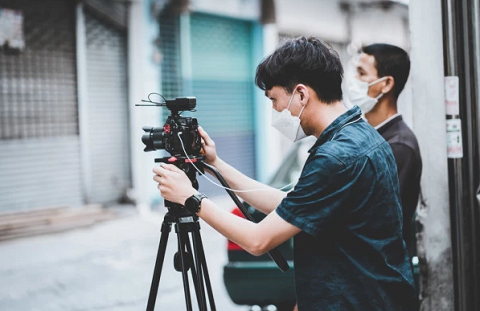 Insights from the UN Regional Workshop on Freedom of Expression, Access to Information and Safety of Journalists in South-East Asia 2023-09-06 By Chairat Chongvattanakij17 July 2023 Jointly organized by UNESCO and the United Nations System Staff College (UNSSC), the regional workshop stimulated lively discussion from diverse perspectives, fostered interagency understanding, and provided participants with actionable insights. "Freedom of information is a fundamental human right and is the touchstone of all the freedoms to which the United Nations is consecrated."- United Nations General Assembly, Inaugural Session (1946–1947), Resolution 59(I)"Everyone has the right to freedom of opinion and expression; this right includes freedom to hold opinions without interference and to seek, receive and impart information and ideas through any media and regardless of frontiers."- Article 19, The Universal Declaration of Human Rights (1948) Safeguarding information as a public good‘Freedom of expression’ is not just ‘freedom of speech’. As broadly defined in Article 19 of the United Nation’s Universal Declaration of Human Rights (UDHR), freedom of expression also implies unfettered access to information, which refers to the less often discussed but equally essential right of citizens to seek and receive reliable information without hindrance. Freedom of expression is crucial to journalism’s producing verifiable information in the public interest, as well as its potential for holding power to account and serving as a bulwark of democracy. The United Nations recognizes that, despite their potentially raising issues of political sensitivity in certain regional or national contexts, freedom of expression, access to information, and the safety of journalists are prerequisites for peace and the realization of the Sustainable Development Goals (SDGs) of the UN 2030 Agenda. Together, these collective, societal values constitute a critically important constellation that requires interagency collaboration and tactful multistakeholder engagement.In this light, and in the interest of synergizing their respective areas of expertise, UNESCO and UNSSC joined forces in December 2021 to organize regional workshops and webinars in an effort to advance UN-wide understanding of these issues. The first regional workshop for the Latin America and Caribbean region was organized on the sidelines of the Global Conference for World Press Freedom Day, in May 2022. The South-East Asia workshop, conducted at the UNESCO Bangkok Office in March 2023, was attended by senior UN staff, regional media professionals, and representatives from civil society organizations and academia.During the workshop, Mr Guilherme Canela, UNESCO’s Chief of Section for Freedom of Expression and Safety of Journalists, identified three key components of the framework of information as a public good: 1) the demand for access to reliable information; 2) the supply of such information; and 3) the transmission chain. Challenges to a healthy information ecosystem, as well as ways to effectively address them, can be broadly categorized and discussed accordingly. The demand: access to reliable informationAs Mr Canela explained, it is inherently difficult for any government to be transparent by default, owing to its concern for maintaining national security and respecting the sensitivity of diplomatic relations. For instance, in a case study pertaining to Malaysia, Ms Watshlah Naidu, Executive Director of the Centre for Independent Journalism, discussed how Malaysia’s legal framework, especially the Official Secrets Act 1972, apparently revolves around maintaining secrecy rather than transparency. This is partly owing to the fact that in the geopolitical context of South-East Asia, current laws may still reflect colonial or monarchic legacy. According to Mr Canela, even in countries where legal guarantees for access to information exist, poor records management often affects the quality of the information available and can even constitute the principal reason for the outright denial of requests for information.In Thailand, where the Official Information Act guaranteeing the public’s right to governmental information was adopted in 1997, Ms Patchar Duangklad, co-founder of the data-and-tech organizations PunchUp and WeVis explained that it remains difficult to obtain, process and verify the integrity of public data. Nevertheless, through the efforts of volunteers and the use of open-source software such as that developed by WeVis, Ms Duangklad maintained that it is possible to visualize data in an engaging and impactful way and, moreover, to equip citizens with a user-friendly tool in an attempt to ‘reclaim an active role in political life.’It should be noted, however, that access to information is not simply about holding those in power to account and exposing corruption. Mr Canela shared the story about the Brazilian Air Force transporting human organs, which illustrated that access to information in that case enabled journalists to uncover previously unnoticed inefficiencies—and ultimately save lives. The supply: safety of journalists and the legitimate limits to freedom of expressionTo ensure the supply of reliable information as a public good, journalists must be able to carry out their work in safety, which encompasses physical, mental, digital, and even legal dimensions. Despite the decline in the number of killed journalists worldwide in the past five years—see UNESCO’s own 'Observatory of Killed Journalists' for pertinent data points going back 30 years—Mr Canela pointed out that the number of imprisoned journalists has reached a record high since 2018. Among the nuances of regional regression in the public’s enjoyment of the right to freedom of expression observed in recent years, Ms Cynthia Veliko, Regional Representative of the Office of the High Commissioner for Human Rights (OHCHR) in South-East Asia, noted the increasing revocation of licenses of independent media, the routine use of strategic lawsuits against public participation (SLAPPs), and the employment by regional governments of vaguely defined laws that enable them to arbitrarily detain journalists, many of whom have received lengthy, disproportionate sentences for so-called crimes against national security.Ms Hathairat Phaholtap, Editor-in-Chief at Thailand’s Isaan Record, recounted for workshop participants her experiences as a journalist in the field, delivering a poignant first-person account of the kinds of threats and harassment that journalists—particularly women journalists— continue to face. Mr John Nery, a columnist and editorial consultant at the Filipino online news site Rappler, shared the insight that a restrictive state could prosecute media outlets as business entities, thereby disguising its real intent on undermining press freedom as a pillar of democracy. Nonetheless, Mr Yan Naung Oak, managing director of the online data and design company Thibi, believes that media organizations must find a viable business model in order to avoid being co-opted by powerful oligarchs allied to the state.Within the framework of the ‘UN Plan of Action on the Safety of Journalists and the Issue of Impunity’, UNESCO guidelines and professional toolkits have been used since 2013 to train over 25,500 judicial actors, and 11,600 law enforcement and security officials worldwide on international and regional standards for freedom of expression and the safety of journalists. In an intriguing reflection of different national contexts within the region, however, Ms Watshlah Naidu said that constitutional rights can serve as common ground in cultivating dialogue between journalists and members of the police, while Mr Akarachai Chaimaneekarakate, of Thai Lawyers for Human Rights, criticized constitutional reforms as a source of democratic erosion.Of course, freedom of expression can be abused, contaminating the supply of reliable information with disinformation and hate speech. But this problem should not be exploited as justification to completely stifle freedom of expression. Rather, Mr Canela recommended the application of the ‘three-part test’ – which draws directly on terminology from Article 19 of the International Covenant on Civil and Political Rights (ICCPR, 1966) – as a tool that can assist judicial actors worldwide in determining the validity of restrictions on freedom of expression. In alleged cases of hate speech, the three-part test can be supplemented with the six-part Rabat threshold test to assess the severity and prioritize civil sanctions whenever possible. The transmission chain: regulation of digital platformsTo be sure, misleading and harmful content has always been around. But what is new in today’s world, as noted by Mr Canela, is the ‘volume, velocity and virality’ of the proliferation of such content in the digital environment, which has led to increased polarization and self-censorship throughout global society. To achieve the delicate balance required in regulating digital platforms in such a way as to preserve their value for freedom of expression will be one of the biggest challenges of the next 20 years, Mr Canela predicted. Recognizing the significance of the issue, UNESCO hosted the 'Internet for Trust' conference in February 2023, which engaged over 4,300 participants in discussing a set of draft global guidelines for regulating digital platforms. According to Dr. Tawfik Jelassi, UNESCO Assistant Director-General for Communication and Information, ‘It’s only by taking the full measure of this technological revolution that we can ensure it does not sacrifice human rights, human dignity, freedom of expression and democracy as a whole.’Broadening the perspective, Mr Ramon Guillermo R. Tuazon, Media Development Specialist at the UNESCO Myanmar Office, advocated a ‘whole-of-society approach’ in countering the ‘disinformation industry’, one driven largely by political and economic interests. He emphasized moving away from isolated fact-checking towards the ecosystem of ‘media information literacy’ (MIL) as the first line of defence against disinformation. In particular, MIL should be an integral part of teachers’ pre-service and in-service training, and it should be delivered to preschool children to ‘inoculate’ them against biases and intolerance, which are the triggers for disinformation. Lessons learnedThis regional workshop deliberately featured diverse viewpoints (including topics like election disinformation and trauma reporting) in order to sensitize participants to wider possibilities for engagement with various stakeholders. The workshop underscored the role of UN Resident Coordinators in identifying interagency synergies and enhancing collaboration within the UN system to tackle issues related to freedom of expression, access to information and the safety of journalists with a positive agenda. As Thailand UN Resident Coordinator Gita Sabharwal observed, ‘Workshops like this provide us with an excellent opportunity to learn from each other and to see how we can create new entry points in different country contexts for taking this agenda forward.’The Universal Periodic Review (UPR) was highlighted as one of the few truly multistakeholder mechanisms available for deepening dialogues with governments in the region. Despite its advantages, Professor Emeritus Vitit Muntarbhorn, UN Special Rapporteur on the situation of human rights in Cambodia, cautioned against placing too much trust in such mechanisms, citing how careful monitoring is necessary to ensure that a government’s acceptance of a recommendation translates into implementation.In the spirit of freedom of expression, several workshop participants also raised the need for the UN to critically engage in self-scrutiny so as to realize greater transparency, integration and accessibility throughout the organization. After all, UN staff should abide by the very values they seek to promote. But above all, as Ms Marte Hellema, Media Freedom and Safety of Journalists Consultant at the OHCHR Regional Office for South-East Asia, reminded everyone present in the room, ‘Behind all the hard work and intimidating challenges that we need to face within this enormously wide topic, just remember that there are very real people that we can really help.’#Recap #FreedomOfExpression #AccessToInformation #SafetyOfJournalists https://www.unesco.org/en/articles/insights-un-regional-workshop-freedom-expression-access-information-and-safety-journalists-south?hub=66925
  Seven million displaced in Latin America and the Caribbean: UNESCO publishes tools for their educational inclusion 2023-09-06 13 April 2023 A new document from the Regional Bureau for Education in Latin America and the Caribbean (OREALC/UNESCO Santiago) was launched on April 12, 2023 in Arica, a border city of Chile. The publication provides tools for the educational inclusion of people in mobility contexts and includes information to strengthen the capacities of professionals who design and implement response actions from the education sector, whether in the face of armed conflicts, disasters caused by climate change, health crises, among other causes. The text was launched in Arica, at an event convened by UNESCO, Fundación SM, the Ministry of Education and the Chinchorro Local Public Education Service. This latter entity plays a fundamental role in fulfilling the right to education for those in mobility contexts in the north of the South American country. The Framework for action to ensure the right to education: tools for the educational inclusion of people in a mobility context is aimed at the teams of the Ministries of Education, decision-makers, policy planners, and professionals and teams of civil society organizations and the United Nations system. Its content supports the design and implementation of concrete actions towards the guarantee of the right to education for migrants, refugees, asylum seekers, and returnees and offers proposals for planning related actions. The document was born out of the scarcity of tools for preparing for emergency situations from the educational system. The book mainstreams and incorporates a rights-based approach in all components of an educational policy and response, with a view to full inclusion. The material presents activities to be implemented with work teams or the educational community and includes general steps, guiding questions and reference material, as well as resources and tools for its application. "Often times, learning opportunities do not take into account cultural and linguistic variables, and the responses do not consider the active participation of displaced and host communities. This scenario challenges us to continue strengthening the institutional capacities of national education systems. The possibility of sustainable responses over time depends on this process." - Claudia Uribe, Director of the Regional Bureau for Education in Latin America and the Caribbean (OREALC/UNESCO Santiago) The publication is part of the second installment of the initiative "Rebuilding without Bricks: support guides for the education sector in emergency contexts", a collaboration between UNESCO and the SM Foundation to promote the educational inclusion of people in vulnerable and historically marginalized situations, and that focuses on the needs and rights of those in mobility contexts."It is easy to transfer the problem to the migrant and not want to look at the background, which not only questions our sensitivity to forced displacements or even how we welcome, but it questions us in the way of how we relate to others and live together in spaces of diversity and in the construction of the common good. This publication appeals to that reconstruction of ties, care and recognition as articulating principles for the update of educational policy and the school is empowered as a space to learn to live well", indicated Rafael Gómez, director of the SM Foundation. ***** In Chile, the country where this publication was launched, UNESCO supports the Chilean Ministry of Education in the process of updating the national policy for foreign students, with the aim of generating new institutional commitments to advance in the full guarantee of the right to education for students in mobility. The Action Framework is one of the main tools for technical assistance. In a broader sense, this document is part of UNESCO's new Regional Strategy on Human Mobility for Latin America and the Caribbean 2022-2025, a project that seeks to support countries in ensuring the right to education for people in mobility situations, and addresses the main challenges to move towards inclusive and equitable quality education with lifelong learning opportunities. https://www.unesco.org/en/articles/seven-million-displaced-latin-america-and-caribbean-unesco-publishes-tools-their-educational?hub=701
  Internet For Trust: UNESCO global conference to tackle online disinformation and hate Speech 2023-09-06 15 February 2023 Over 3000 representatives of governments, regulatory bodies, digital companies, academia and civil society will gather at UNESCO on 22-23 February for the first global conference to address the threats to information integrity and freedom of expression posed by social media platforms. "We face one of the most complex and decisive challenges of our time. We will meet it together, by establishing common principles based on human rights, in particular freedom of expression".- Audrey AzoulayUNESCO's Director-General The Internet for Trust Global Conference will take place from 22-23 February 2023 at UNESCO Headquarters in Paris, along with a day of side events organized by UNESCO partners on 21 February.Although they have revolutionized communications and the dissemination of knowledge, today, social media platforms are also sometimes responsible for the dissemination of disinformation, hate speech, and conspiracy theories. The algorithms integral to most social media platforms’ business models often prioritize engagement over safety and human rights.Many countries around the world have issued or are currently considering national legislation to address the spread of harmful content. Some of this legislation risks infringing the human rights of their populations, particularly the right to freedom of expression and opinion. There are also wide disparities in the distribution of moderation resources between regions and languages. A consistent approach worldwide is urgently needed, founded upon international human rights standards.UNESCO’s Conference responds to a global call for action from the United Nations Secretary-General, Antonio Gutérres, to address the spread of disinformation and the denial of scientifically-established facts, which pose “an existential risk to humanity.”As the UN agency for communication and information, UNESCO has been leading a series of global consultations to define common guidelines to address this issue since September. The conference will be a key opportunity for exchange between the different actors during the consultative process. UNESCO will finalize and publish the guidelines in mid-2023. They will then be used by governments, regulatory and judicial bodies, civil society, the media and the digital companies themselves to help improve the reliability of information online while promoting freedom of expression and human rights.Participants in the conference will travel from all regions of the world to participate in this important dialogue. Among the notable contributors will be the Nobel Peace Prize-winning journalist Maria Ressa, the Pulitzer prize-winning investigative journalist Julia Angwin, Irene Khan the UN Special Rapporteur on the Right to Freedom of Expression, Daniel Motaung and Christopher Wylie, both Facebook Whistleblowers, and Roberto Barroso, the Brazilian Supreme Court Justice. https://www.unesco.org/en/articles/internet-trust-unesco-global-conference-tackle-online-disinformation-and-hate-speech?hub=701
 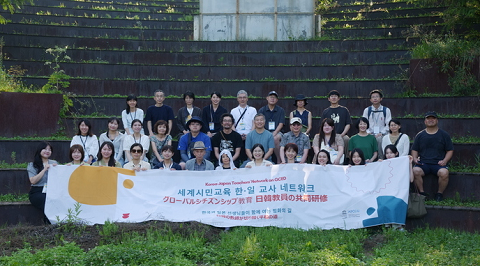 Korean and Japanese Teachers: Open the Path to Peace Together 2023-08-31 17 to 21 August 2023 APCEIU held a “Korea-Japan Teacher’s Network on GCED 2023” workshop with 33 Korean and Japanese teachers from 17 to 21 August 2023. Launched in 2021, the Network activities have been conducted online for the past two years and it was the first workshop held in the form of a ‘face-to-face workshop’. During the 5-day workshop, participating teachers shared their activities on student/teacher exchange and joint classes, learned from one another through good case sharing, and planned for future actions together. The workshop started with the sessions at APCEIU in Seoul, followed by four days of field training at the DMZ Peace-Life Valley in Inje, Gangwon Province.The first day of the workshop included poster presentation sessions to understand the participants’ practices and educational activities. The sessions provided an opportunity to exchange information about various activities done in schools and communities in Japan and Korea, fostering future student/teacher interaction and collaborative activities.On the second day, the participants moved to Inje, Gangwon, and visited a Korean school (Inje High School) to have a better understanding of the educational environment and system of Korea and interact with the Korean students.Subsequently, various sessions with the theme of peace and life were provided at the DMZ Peace-Life Valley. Starting with the opening lecture by Mr. JUNG Sung-Heon, director of the DMZ Peace Life Valley, workshops and activities such as sharing of GCED practices, educational activities of Korea and Japan by grade level·subject·theme, Education of Sustainable Development (ESD), Peace/GCED, watching documentary film and discussing with the film director, and interacting with the village residents and educators, were followed. During the educational seminars, Korean and Japanese teachers participated as speakers and facilitators to present GCED practices in both countries. Not only they compare the educational approaches by grade levels (elementary and secondary) and subject (English, social studies, etc.), but also discussed practices and cases on the topics of ESD, critical media literacy, international exchange practices, and peace-oriented classrooms.Additionally, the participants engaged in activities on the themes of sustainable energy and climate crisis, field studies and organic farming, focusing on learning about the values of peace and life through the place of DMZ (demilitarized zone). The participants also visited Netgang Village in Inje to interact with community educators from the local area, learning about the implementation of GCED and ESD within the region. Moreover, the teachers had a chance to share and learn about each other's culture through Japanese and Korean cuisine preparation, rice cake pounding, and cultural performances.The last day of the workshop consisted of the session sharing ideas for future activities including student/teacher interaction, collaborative research, and lesson planning. In the post-workshop survey questionnaire, participants reflected that this workshop allowed them to deeply understand and share educational activities from teachers’ perspectives of both countries. Also, they have realized that GCED should be extended beyond theory into practical application. Furthermore, they highlighted the meaningful experience of becoming friends with teachers from the two countries, through which they could learn about their roles as global citizens from various viewpoints. The teachers expressed their commitment to continue fostering deeper and more intimate interaction with teachers from both countries, with the hope of contributing to the establishment of peaceful relationships among students, schools, and local communities.APCEIU will continue to provide diverse follow-up activities for the teachers to further expand meaningful cooperation through the Korean-Japanese Teacher’s Network on GCED. https://www.unescoapceiu.org/post/4881
 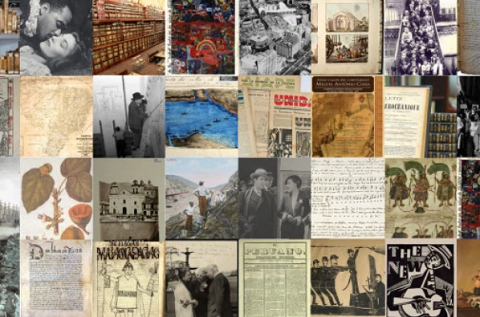 Capacity Building Workshop on preparing effective nominations for UNESCO's Memory of the World (MoW) International and/or Regional Registers 2023-08-31 28 August 2023A capacity building workshop to prepare effective nominations for UNESCO's Memory of the World (MoW) International and/or Regional Registers will be held in Rio de Janeiro, Brazil, From 4 to 6 September 2023 for Portuguese-Speaking African Countries (PALOP) and the Latin America and Caribbean (LAC) region. The activity is organized by UNESCO in collaboration with the MOWLAC Committee and with the support of the Government of Brazil through the National Library of Brazil and Instituto Guimarães Rosa.The workshop aims at sensitizing PALOP and LAC countries on the importance of the MoW International Register, as well as the MoWLAC Regional Register, for a better appropriation of the process. As a result of this process, it is sought to assist these countries in preparing effective nomination dossiers for these international and regional registers. The event will be opened by Peter Scholing, President of the MoWLAC Regional Committee for Latin America and the Caribbean, Marlova Jovchelovitch, Director of the UNESCO Office in Brasilia and Marco Lucchesi, President of the National Library. The workshop also seeks to provide a platform for the exchange of knowledge and the creation of networks between actors of documentary heritage. The event will also include a handover ceremony of certificates of the 2022 Regional Register to Brazilian Institutions that are part the MOWLAC. URL:https://www.unesco.org/en/articles/capacity-building-workshop-preparing-effective-nominations-unescos-memory-world-mow-international?hub=745
  UNESCO hosts Special Committee Meeting on the revision of the 1974 Recommendation 2023-08-29 11 August 2023 Delegates from over 40 countries are meeting at UNESCO Headquarters to continue discussing the second draft of the 1974 Recommendation concerning education for International understanding, co-operation and peace and education relating to human rights and fundamental freedoms. This signature normative instrument provides a clear roadmap on how education should evolve in the 21st century to drive peace, reaffirm human rights and promote global citizenship and sustainable development in the face of contemporary threats and challenges.The second session of the Intergovernmental Special Committee meeting is taking place in Paris, from 10 to 12 July 2023. During the three days, delegates – technical and legal experts from Member States and Associate Members of UNESCO – will review and analyze the remaining text of the second draft.After the full text is agreed upon at the second session of the Special Committee meeting, the updated revised text of the Recommendation will then be submitted to the General Conference in view of its possible adoption at its 42nd session in November 2023. The first session of the Intergovernmental Special Committee meeting took place in person at UNESCO Headquarters in Paris from 30 May until 2 June 2023. It was attended by over 200 delegates from more than 90 countries. The outcome of the first session was the adoption of the Title, Definitions, Aims, Scope, Guiding Principles, and part of the Action Areas.What is the 1974 Recommendation?Adopted almost 50 years ago, the 1974 Recommendation is the first international non-binding legal instrument that brings together and articulates education's role in building peace, international understanding and cooperation, human rights, and fundamental freedoms. It establishes international principles and standards for governing education in this field. To make sure this normative instrument remains relevant for the decades to come and fully addresses contemporary challenges and threats, UNESCO Member States decided to review the Recommendation at the 41st session of the General Conference in 2021. UNESCO is leading a transparent and participatory three-phase revision process, guided by the Organization’s Rules of procedure. The revision was also inspired by the results of the Transforming Education Summit and the Futures of Education report. The new solid and evidence-informed text of the Recommendation should help Member States transform and shape their education policies and systems in the next 30-50 years.Throughout the year and a half of the revision, around 3000 experts from more than 130 countries have participated in the process. To prepare a first draft of the revised text, UNESCO conducted six regional and four thematic consultations with representatives from ministries, UN agencies, UNESCO chairs, academia, youth, education professionals, NGOs, and other stakeholders. Numerous thematic papers and technical notes were also developed to expand on the topics and issues previously not addressed in the Recommendation. https://www.unesco.org/en/articles/unesco-hosts-special-committee-meeting-revision-1974-recommendation?hub=701