
News
Catch up on what’s happening in the world of global citizenship education.
1,657 results found
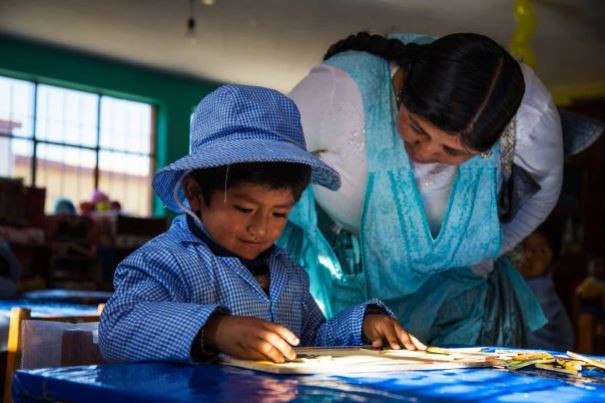 World Teachers’ Day: UNESCO sounds the alarm on the global teacher shortage crisis 2022-10-13 © StanislavBeloglazov/Shutterstock.com On World Teachers’ Day, Audrey Azoulay, Director-general of UNESCO, called on governments around the world to step up their support for teachers, warning that the profession is struggling to retain its workforce and attract new talent. Worldwide, 69 million teachers are needed to reach universal basic education by 2030. The largest deficit is in sub-Saharan Africa. "Lack of training, unattractive working conditions and inadequate funding all undermine the teaching profession and aggravate the global learning crisis. UNESCO has always placed teachers at the heart of the fight for the right to inclusive and quality education. There is an urgent need to better recognise this profession on which the future of our children depends." -- Audrey Azoulay UNESCO’s Director-General UNESCO’s estimates indicate the need for an additional 24.4 million teachers in primary education and some 44.4 million teachers for secondary education in order to achieve universal basic education by 2030. With some of the most overcrowded classrooms in the world, sub-Saharan Africa is also home to the most overburdened teachers and understaffed systems, with 90% of secondary schools facing serious teaching shortages. New UNESCO figures unveiled for 2022 World Teachers' Day show that 5.4 million teachers are needed at primary level in sub-Saharan Africa, and 11.1 million teachers at secondary level, if we are to achieve the targets set by the 2030 Agenda. The region with the second largest deficit is Southern Asia: UNESCO projects 1.7 million additional teachers will be needed at primary-level, and 5.3 million at secondary-level. Working conditions must be improved In low-income countries, the first obstacle is the heavy workload. According to a new UNESCO data, each primary teacher in these countries has an average of 52 pupils per class at primary level, while the global average is 26. The ratio is particularly high in sub-Saharan Africa – 56 pupils per teacher – and Southern Asia – 38. In Europe and North America there are only 15 pupils per teacher on average. Supervision difficulties are amplified by a lack of training, which means that teachers do not always have all the tools at hand to succeed in the classroom. UNESCO data shows that about 26% of primary and 39% of secondary school teachers do not have the minimum qualification requirements in low-income countries, compared to respectively 14% and 16% globally. In remote, underprivileged, and rural areas, conditions worsen and are exacerbated by multi-grade, multi-lingual and acute learning needs in the classroom. Female teachers are affected disproportionately due to lack of adequate housing, long and unsafe routes to school and a lack of childcare services making it difficult to keep women in remote teaching posts. The underrepresentation of female teachers in certain knowledge areas, and in leadership positions is another ongoing challenge. Better salaries must be offered The vocational crisis is also accentuated by non-competitive salaries. UNESCO data shows that 6 out of 10 countries pay primary school teachers less than other professionals with similar qualifications. This criterion is particularly evident in high-income countries. In 5 out of 6 countries in this group, primary school teachers earn less than other comparable professionals. Three high-income countries have a commendable teacher salary policy: Singapore, with an average salary equal to 139% of comparable professions, Spain (125%), and the Republic of Korea (124%). More information on World Teachers’ Day Transforming education from within: current trends in the status and developmen… Press contact:Clare O'Hagan (Head of Press office, ai)Phone: +33145681729 URL:https://www.unesco.org/en/articles/world-teachers-day-unesco-sounds-alarm-global-teacher-shortage-crisis
  Climate crisis is intensifying heatwaves UN-backed report warns, ahead of COP27 2022-10-11 Climate and EnvironmentGreater action is needed now to avert the recurrence of disastrous heatwaves, which are being intensified by the climate crisis, the UN humanitarian affairs agency, OCHA, and the International Federation of the Red Cross (IFRC), said in a report issued on Monday. Record high temperatures this year – which are fueling catastrophes in countries such as Pakistan and Somalia – foreshadow a future with deadlier, more frequent, and more intense heat-related humanitarian emergencies, they warned. Vulnerable hardest hitThe world’s lowest-income countries are already experiencing disproportionate increases in extreme heat. Although they are the least to blame for climate change, these nations will see a significant increase in the number of at-risk people in the coming decades. “As the climate crisis goes unchecked, extreme weather events, such as heatwaves and floods, are hitting the most vulnerable people the hardest,” said Martin Griffiths, UN Humanitarian Affairs and Emergency Relief Coordinator. “Nowhere is the impact more brutally felt than in countries already reeling from hunger, conflict and poverty,” he added. Mitigate worst effects The report, titled Extreme Heat: Preparing for the heatwaves of the future, has been released ahead of the COP27 UN climate change conference in Egypt next month. It is the first report published jointly by the partners and offers concrete steps to mitigate the worst effects of extreme heat. This year, communities across various parts of the world – in North Africa, Australia, Europe, South Asia, the Middle East, the western United States and China – have experienced record-high temperatures. Intensifying humanitarian needs In the coming decades, heatwaves are predicted to meet and exceed human physiological and social limits in regions such as the Sahel, the Horn of Africa, and south-west Asia, the report said. Humanitarian needs are already high in these regions, which could lead to large-scale suffering and death, population movements and further entrenched inequality. Noting that the climate crisis is intensifying humanitarian emergencies worldwide, IFRC Secretary General Jagan Chapagain called for investment in both adaptation and mitigation, particularly in countries most at risk. “At COP27, we will urge world leaders to ensure that this investment reaches local communities that are on the frontline of the climate crisis. If communities are prepared to anticipate climate risks and equipped to take action, we will prevent extreme weather events from becoming humanitarian disasters,” he said. Prioritize marginalized communities The report also reveals how heatwaves contribute to inequality, as isolated and marginalized people suffer the greatest impacts. Therefore, investments that mitigate climate change and support long-term adaption for these populations must be a priority. Furthermore, although the impacts of extreme heat are global, vulnerable communities – agricultural workers, for example – are being pushed to the frontlines of the crisis. Meanwhile, elderly people, children, and pregnant and breastfeeding women, face higher risk of illness and death. Early action and preparedness The report outlines five key steps so that humanitarians can support the most vulnerable people. It calls for providing early information on heatwaves to help people and authorities take timely action, for example by making forecasts available to all. Supporting preparedness and expanding anticipatory action, especially by local actors, is also needed as they are often the first responders in emergencies. At the same time, authorities should find new and more sustainable ways of financing local action. Humanitarian response will also have to adapt to the “new normal”. Some organizations are already testing out measures such as “green roofs”, cooling centres and more thermally appropriate emergency housing. Finally, the report stressed that addressing the impact of extreme heat also requires strengthening engagement across the humanitarian, development, and climate spheres. URL:https://news.un.org/en/story/2022/10/1129362
 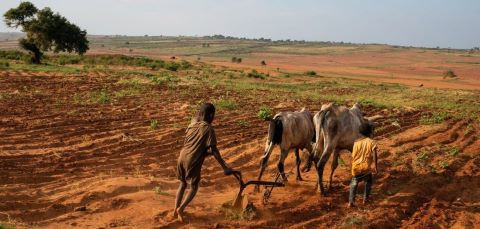 UN Chief: Countries bound for COP27 must make climate action ‘the top global priority’ 2022-10-11 Climate and EnvironmentAs government representatives begin to finalize the agenda for the COP27 climate change conference in Egypt next month, the UN chief told journalists in New York that the work ahead is “as immense as the climate impacts we are seeing around the world”. Speaking to reporters in New York, as the pre-COP meeting got underway in Kinshasa, Secretary-General António Guterres laid out the worsening impacts worldwide. “A third of Pakistan flooded. Europe’s hottest summer in 500 years. The Philippines hammered. The whole of Cuba in black-out. And here, in the United States, Hurricane Ian has delivered a brutal reminder that no country and no economy is immune from the climate crisis,” he highlighted. And while “climate chaos gallops ahead, climate action has stalled,” he added. Faulty mathsThe top UN Official underscored the importance of COP27 while warning that the collective commitments of G20 leading industrialized nations governments are coming “far too little, and far too late”. “The actions of the wealthiest developed and emerging economies simply don’t add up.,” he said, pointing out that current pledges and policies are “shutting the door” on limiting global temperature to 2°C, let alone meet the 1.5°C goal. Mr. Guterres warned, “we are in a life-or-death struggle for our own safety today and our survival tomorrow,” saying there is no time for pointing fingers or “twiddling thumbs” but instead requires “a quantum level compromise between developed and emerging economies”. “The world can’t wait,” he spelled out. “Emissions are at an all-time high and rising”. And he said that while pursuing their own “drop-in-the-bucket initiatives” international financial institutions must overhaul their business approaches to combat climate change. BackslidingMeanwhile, as the planet burns, the Ukraine war is putting climate action on the back burner and the dynamic climate actors in the business world continue to be hampered by “obsolete regulatory frameworks, red tape and harmful subsidies that send the wrong signals”. Meaningful progress must be made to address loss and damage beyond countries’ abilities to adapt as well as financial support for climate action, upheld the UN chief Decisions must be made now on the question of loss and damage as “failure to act” will lead to “more loss of trust and more climate damage,” he said, describing it as “a moral imperative that cannot be ignored”. Action ‘litmus test’COP27 is “the number one litmus test” of how seriously governments take the growing climate toll on the most vulnerable countries. “This week’s pre-COP can determine how this crucial issue will be handled in Sharm el-Shaikh,” he informed the media, noting that the world needs clarity from developed countries on the delivery of their $100 billion pledge to support climate action in developing countries. Moreover, adaptation and resilience funding must represent half of all climate finance; multilateral development banks “must raise their game”; and emerging economies need support to back renewable energy and build resilience. While the Resilience and Sustainability Trust led by the International Monetary Fund (IMF) is a good start, major multilateral development bank shareholders must be the driving force for transformative change, he continued. “On every climate front, the only solution is solidarity and decisive action”. The Secretary-General chief upheld that by showing up at COP27 in Sharm el-Shaikh, all countries – led by the G-20 – can demonstrate that “climate action truly is the top global priority that it must be”. Step up climate adaptation supportMeanwhile in Kinshasa, UN Deputy Secretary-General Amina Mohammed warned environment ministers and others that the window of opportunity to avert the worst impacts of the climate crisis is closing. She stressed that greater support for climate adaptation in developing countries “must be a global priority”, particularly progress on adaptation finance. Ms. Mohammed recalled that at last year’s COP26 conference in Glasgow, developed nations had promised to double adaptation support to $40 billion dollars a year by 2025. The UN deputy chief called for a clear roadmap on how the funding will be delivered, starting this year. She added that $40 billion is “only a fraction of the $300 billion that will be needed annually by developing countries for adaptation by 2030”. 'Every moment counts'Ms. Mohammed underscored that the world “desperately needs hope”. “We need progress…that shows that leaders fully comprehend the scale of the emergency we face and the value of COP, as a space where world leaders come together to solve problems and take responsibility,” she said. “Every moment counts”. The deputy chief said that it is time to prove that we are moving in the right direction “with an outcome that shows our collective commitment to addressing the climate crisis because people, and the children here today, and the planet matter”.The road to SharmSimon Stiell, Executive Secretary of UN Climate Change (UNFCCC) said that COP27 was a "gear-shifting point as we pivot from negotiations to implementation and demonstrate progress on the Glasgow outcomes (at COP26)". "To make this happen we need to make progress here in Kinshasa, finding areas of convergence on the key issues. Those critical areas of convergence identified will be carried forward to Sharm el-Sheikh, where we will further work to reach a consensus between all Parties on concrete outcomes that are sufficiently ambitious to respond to the crisis we are in. The world is watching our work, desperately needing proof that commitments are real and being met.” URL: https://news.un.org/en/story/2022/10/1129127
 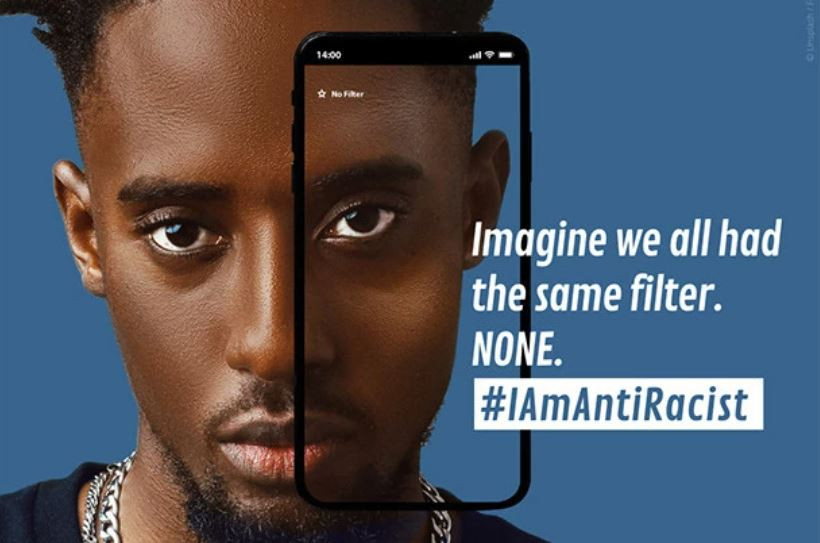 #IAmAntiRacist – Are you? Join our social media campaign! 2022-10-11 © Unsplash / Favour Otunji (original visual) As you can imagine, racism occurs all the time and everywhere.Have you been a bystander or a victim yourself? We invite you to share your experience. You can reduce racism through your own actions. We need to STOP racism together! From 6 October to 28 November 2022, join our #IAmAntiRacist social media campaign. Tell us your story on Twitter, Facebook, Instagram and TikTok! How to participate? Post a short video clip of 20 seconds up to one minute on your account. Show us how you deal with racism in everyday situations. Share your tips & inspire other people! How to make your video stand out: Record a video on your smartphone Use the hashtag #IAmAntiRacist Tag @UNESCO … And post it on your feed! Make it global: invite your friends, classmates, relatives or neighbors to participate! Anyone can become an antiracism champion! Need help? Use the tips at the bottom of this article. Bonus The 10 best videos will be promoted via UNESCO social media platforms, and screened during UNESCO’s 2nd Global Forum against Racism and Discrimination from 28-29 November 2022 in Mexico City, Mexico. This campaign is the initiative of UNESCO. It follows the success behind Finland’s Olen Antiracist campaign. Why through social media? As the most used media of expression for young people, social networks provide valuable opportunities to share strong messages and call for action. Through these platforms, young people can learn and appreciate different perspectives and worldviews to better understand the world around them and contribute to changing mindsets. It can also help them to raise awareness among their peers and have a real impact. The campaign is aligned with the efforts of the Social and Human Sciences Sector of UNESCO to address the ‘Global Call against Racism’. It is also organized in the context of UNESCO’s overall work to fight racism and discrimination since 70 years along with the annual Global Forum against Racism and Discrimination, the Master Class Series against Racism and Discriminations and the Routes of Enslaved Peoples project. ________________ Need help? Here are some tips(from Finland’s campaign How to tackle racism) 1. Identify the racist situation A racist situation can arise without targeting any particular individual. You may hear a racist joke or remark at a family celebration or among friends with no minority member attending. Racism may emerge anywhere, including at workplaces, on social media, while engaged in hobbies, on public transport, or at school. Racist situations can also involve physical violence, so consider your own safety when tackling racism. Remember that racism is also structural. 2. Support the person who is being targeted Show the person that they are not alone. Talk to the person who was the target of racist harassment. Ask how you can help. You can show support by approaching the individual and stand by them. Help them by escorting the person away from the situation. In social media, you can send a message to the person who is experiencing racist harassment and show support by responding to their content. 3. Tackling a racist situation Addressing a racist situation is not easy. Do not be afraid to fail. The main point is that you make an effort. Calmly tell the perpetrators that their behaviour is not acceptable. Ask them to stop. Do not provoke them. Try to remain calm. Ask other bystanders for help or support if you cannot tackle the situation yourself. Call emergency services if the situation is threatening. If a police presence is not required, then you may also notify some other party responsible for public safety, such as a security guard or doorkeeper. Act even if a racist joke or comment is not targeted at a particular person. Try to intervene at the moment. If you cannot because you are in a large crowd or feel uncomfortable, talk to the person in private. 4. Report racism Racist behaviours should be reported further. This should begin by asking victims whether they would like to report the incident. You may offer support in the reporting process. Reports may be sent to such parties as an event organiser, training provider, service provider, the Non-Discrimination Ombudsman or the police. Racism on social media may be reported to the platform administrators. 5. Work against racism every day You can act against racism even if you do not experience or face a racist incident. You can help to build a society free of racism through your own actions every day. Inform yourself about racism and antiracism. Develop yourself as an antiracist actor. Don’t be discouraged when you make mistakes, but learn from them. See also Learn more about UNESCO’s work on inclusion and non-discrimination UNESCO Master Class Series against Racism and Discriminations Further details of everyday anti-racist action (Finland’s campaign) URL:https://www.unesco.org/en/articles/iamantiracist-are-you-join-our-social-media-campaign
  Seize the moment: Financing adult learning and education 2022-10-10 -- © UNESCO/Iason Athanasiadis With the UN’s Transforming Education Summit just days away, Daniel Baril, chair of the committee responsible for the final declaration of CONFINTEA VII, reflects on its important commitment to better financing of adult education and why Member States need to start delivering on it At the closing session of the seventh UNESCO International Conference on Adult Education (CONFINTEA VII) in June, representatives of UNESCO Member States adopted by acclamation the Marrakech Framework for Action (MFA). Commitments expressed through the MFA will guide the international debate on adult education for the next 12 years and will be among the measures by which national policies will be evaluated. Implementing the MFA is now the task awaiting national governments. Before its final adoption, the MFA had been submitted to an extensive consultative process. First, the CONFINTEA VII consultative committee made recommendations on a preliminary draft. Second, an online public consultation gave all stakeholders the opportunity to comment on a modified draft. Finally, before being tabled at the conference, Member States had the chance to comment on a final draft. This consultative process validates the MFA as the legitimate expression of an international consensus on priorities in adult learning and education (ALE). I had the responsibility of chairing the drafting committee for the final declaration of CONFINTEA VII. We had, at the outset of the conference, a proposed draft that already manifested a strong consensus, having been twice validated by Member States. On that basis, it appeared to me that the principal task of our committee was to seize the will of the conference itself to give a political signature to a final action plan. Amendments made by Member States to the proposed MFA gave us the key to this moment to be seized. In the proposed draft, submitted to national delegations at CONFINTEA VII, references to the financing of adult education were mainly limited to statements of the need for more funding. The conference strengthened this recognition by expressing a political commitment ‘to increasing public funding and resource mobilization for ALE and to preventing regression in existing budget allocations’. Agreeing that ALE should be funded ‘through the contribution of a wide diversity of stakeholders, various ministries, employers and other private actors, local governments and learners’, Member States underscored their determination ‘to increase public spending on adult education in accordance with country contexts’. This was a core contribution made by the conference itself to the proposed MFA, which already commanded wide consensus. CONFINTEA VII should, therefore, be viewed as a key strategic moment in the international debate on financing adult education. From now on, in all UNESCO Member States, implementing the MFA should translate into increased overall national budget of ALE. Consequently, monitoring the financing of ALE becomes a priority, particularly since, in years to come, governments will face a constraining fiscal situation and inflationary pressure. Keeping ALE and the MFA’s commitment on financing at the forefront of the political debate will be both an urgent and a daunting task. In that regard, the proposal from the Kingdom of Morocco to create a post-CONFINTEA ministerial committee will be fundamental in keeping ALE high on the agenda. Recognizing the transformative power of ALE is the overarching message of the MFA. Creating the conditions to make that power an effective strength for all is its programmatic message. In that spirit, it is significant that financing ALE has now become a keystone of international commitment to ALE. In a few days, the United Nation will convene a summit on the transformation of education. Financing of education is one of the five thematic action tracks for the summit. This major event is a historic opportunity to build on the momentum created by CONFINTEA VII’s call to recognize the transformative power of ALE and to commit the necessary funding to fully concretize it. Let us hope it is taken. Daniel Baril is Chair of the Governing Board of the UNESCO Institute for Lifelong Learning and Director General of the Canadian Institute for Cooperation in Adult Education. He chaired the drafting committee of the Marrakech Framework for Action, the outcome document of CONFINTEA VII. Posted on September 14, 2022 by Paul Stanistreet URL:https://thelifelonglearningblog.uil.unesco.org/2022/09/14/seize-the-moment-financing-adult-learning-and-education/
 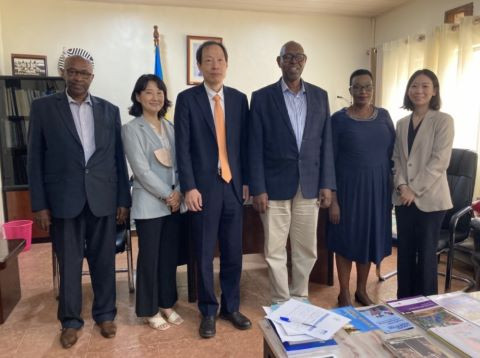 Strengthening partnership for GCED in Rwanda - APCEIU meetings with GCED stakeholders in Kigali, Rwanda 2022-10-10 Rwanda has been one of the partner countries for the GCED Curriculum Development and Integration (GCED CDI) Project. To meet and encourage GCED stakeholders in Rwanda and discuss the implementation of the GCED CDI Project, APCEIU visited Kigali, Rwanda on 28 August - 1 September 2022. APCEIU paid a courtesy visit to the Ministry of Education. Mr Charles Karakye, the Permanent Secretary of the Ministry welcomed APCEIU and acknowledged Rwanda’s importance of global citizenship education in the Rwandan national curriculum and expressed expectations in the GCED CDI Project and APCEIU’s other GCED projects and initiatives. APCEIU visited the Rwanda Education Board, which is in charge of promoting quality education in Rwanda basic, specialized, and adult education. Dr. Nelson Mbarushimana, director general of the Rwanda Education Board, shared how Rwanda is pursuing digitalization in Education and showed interest in developing digitalized teaching and learning materials for GCED in the Rwandan national curriculum through the GCED CDI Project.APCEIU visited the Rwanda National Commission for UNESCO and shared current projects including GCED CDI Project in Rwanda. Mr. Albert Mutesa, Secretary-General of the Rwanda National Commission for UNESCO, shared Rwanda’s effort in promoting citizenship education and was convinced that the GCED CDI Project would greatly contribute to promoting SDG4.7 in Rwanda. APCEIU paid a visit to the KOICA Office in Rwanda and Mr CHON Gyong Shik, country director of the KOICA Office in Rwanda, welcomed APCEIU and shared current education projects in Rwanda. Mr Chon expressed expectations for the GCED CDI Project for Rwanda and future collaborations with APCEIU to promote GCED in Rwanda. Meetings with the GCED stakeholders in Rwanda during the visit convinced us that the GCED CDI Project would be implemented successfully through cooperation and Rwanda would play a critical role in promoting GCED nationally and in the African region. URL: http://www.unescoapceiu.org/post/4579
 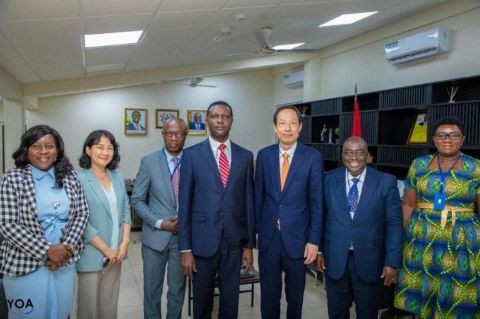 Fostering GCED in Ghana - APCEIU meetings with GCED stakeholders in Accra, Ghana 2022-10-10 Along with the APCEIU-IEPA Joint Capacity-Building Workshop on Empowering Educational Leaders through GCED held on 23 - 25 August 2022 in Accra, Ghana, APCEIU visited educational stakeholders and partners in Ghana: Ministry of Education of the Republic of Ghana, Ghana National Commission for UNESCO, Labone Senior High School, Korea International Cooperation Agency(KOICA) Ghana Office, Embassy of the Republic of Korea in the Republic of Ghana. On 23 August, APCEIU paid a courtesy visit to Hon. Dr. Yaw Osei Adutwum, Minister of Education of Ghana. The Minister welcomed the APCEIU and expressed his support and expectations for implementing the GCED Curriculum Development and Integration(GCED CDI) Project in Ghana. For effective implementation of the Project, the Minister designated the Institute of Educational Planning and Administration (IEPA) and the National Council for Curriculum and Assessment (NaCCA) as the implementing agencies for this Project. On 25 -26 August, APCEIU paid a courtesy visit to Ghana National Commission for UNESCO. Mrs Ama Serwah Nerquaye-Tetteh, the Secretary-General of the Ghana National Commission for UNESCO, expressed the unwavering support of the Ghana National Commission for UNESCO to APCEIU and the GCED CDI Project. She also acknowledged the importance of institutions such as Category II Centres to move forward the UNESCO agendas. APCEIU had an opportunity to visit Labone senior high school located in Accra. APCEIU witnessed how GCED is taught in Ghanaian schools and GCED activities done by students. To share the information about the cooperation between APCEIU and Ghana, APCEIU paid a visit to the Embassy of the Republic of Korea in Ghana and the Korea International Cooperation Agency (KOICA) Ghana Office. APCEIU shared the outcomes of the APCEIU-IEPA Joint Capacity-Building Workshop and discussed how GCED could be strengthened through International cooperation such as the GCED CDI Project. URL: http://www.unescoapceiu.org/post/4578
 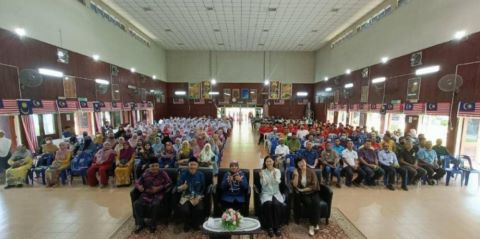 APCEIU visits GCED Cooperation Centre – Malaysia (USM) 2022-10-03 On 14-15 September 2022, APCEIU visited the Global Citizenship Education (GCED) Cooperation Centre (GCC) at Universiti Sains Malaysia in Penang, Malaysia and related stakeholders, including the Ministry of Education and Institute of Teacher Education Malaysia. The GCC-USM (Director: Prof. Rohizani Yaakub) at the School of Educational Studies of USM was established in 2021 as part of APCEIU’s GCED Institutional Capacity-Building for Teacher Education Institutions (TEIs) project. During the meeting with Prof. Rahimi Che Aman, Dean of School of Educational Studies, USM, APCEIU appreciated the university’s strong support for the GCC-USM, which has served its role as a hub for teaching and learning GCED in Malaysia since its establishment. On 14 September, sharing the achievements of GCC at USM, APCEIU and USM consulted on the ways of enhancing collaboration for promotion of GCED with the Ministry of Education and Institute of Teacher Education Malaysia. On 15 September, APCEIU attended the GCED Parent-Teacher Association (PTA) Conference held at SMK AGAMA Baling secondary school in Baling, Kedah. Ms. Yangsook Lee, Deputy Head of the Institute of GCED, APCEIU, delivered her congratulatory message and celebrated for the launch of the school-community collaboration project to integrate GCED as well as the launch of the GCED Corner at SMK AGAMA Baling. APCEIU also visited SK Covent Bukit Mertajam Primary school in Penang, which has participated in the pilot test of new GCED material focusing on Media-Information Literacy (MIL) to be released by the end of this year. APCEIU will continue its partnership with USM to further promote GCED in the region. URL: http://www.unescoapceiu.org/post/4565
  Lo que necesita saber sobre el acceso a la información 2022-10-01 Trayko Popov Recognizing the significance of access to information, the 74th UN General Assembly proclaimed 28 September as the International Day for Universal Access to Information (IDUAI) at the UN level in October 2019. 1. Why is freedom of information an important human right? International human rights law specifically recognizes the right to access to information. Article 19 of the International Covenant on Civil and Political Rights, echoing article 19 of the Universal Declaration of Human Rights, protects everyone's right to seek, receive and impart information of all kinds. States have an obligation to respect and ensure everyone enjoys this right without distinction. 2. Why is it essential to the flourishing of democracy? Access to Information Laws enable: Public authorities be accountable and transparent. For example, proper implementation of Access to Information law means action can be taken against public authorities with consistently poor performance in the field of access to information. Citizens to participate more fully in public life. For example, when a government plans to build a road, everyone nearby is given a chance to participate in discussions about it; citizens are invited to participate in town hall meetings, and government-held information about the development of the road, such as the way it will affect traffic and any environmental reports, is made available online. Governments to build trust in public institutions. During the COVID-19 pandemic, governments published their responses to the pandemic saving lives. Human rights bodies to be part of the decision-making process which ensures that algorithms do not discriminate against marginalized groups. 3. What kind of information has been made public in countries implementing Access to Information laws? Marthaline Nuah, lives in a village in northeastern Liberia and is eager to pursue her education. By listening to the radio, she learnt about her right to request public information and formulated an information request with the Ministry of Education to learn about available scholarships to assist with school fees. The information provided helped her apply for a scholarship. In Brazil, the government proactively published its budgetary information online in compliance with the law. Media outlets have used this information to enhance supervision of governmental programmes, spot inconsistencies and expose corruption and wrongdoings. 4. How, practically, does a citizen exercise his/her right to information? A citizen first needs to send a written request to the relevant public body. It is important to be as specific as possible with regard to the information that you seek, such as the authority that holds the information or the date when the record was created. Some Access to Information Laws specify how long public institutions have to process the requests of citizens. If a citizen does not receive the information requested, citizens can normally complain to the information commissioner. Access to Information laws also requires authorities to be proactive in putting information of public interest into the public domain, without the need for requests. 5. Can too many exemptions from Access to Information Laws, or provisions for Ministerial vetos render such laws meaningless? Limited exemptions must be based on narrow, proportionate, necessary and clearly defined limitations. Exceptions should apply only where there is a risk of substantial harm to the protected interest and where the harm is greater the overall public interest in having access to the information. Bodies should provide reasons for any refusal to provide access to information. The 2022 UNESCO survey on Access to Information, found that most countries evoke national security, privacy and legitimate commercial and other economic interests as permissible exceptions. 6. Does ‘implementation’ of Access to Information Laws include the obligation to inform the public of their rights as well as explaining how to exercise them ? In response to the annual UNESCO survey on access to information, information commissioners reported that their activities include the provision of implementation guidance and/or offered training to officials from public bodies. The majority of them also engage in activities to raise public awareness. The right to access to information forms part of media and information literacy skills so that young people can know the law, how to formulate an information request and how to appeal if their right is not respected. On 28 September 2022, International Day for Universal Access to Information, UNESCO publishes its annual Report, on Public Access to Information based on a survey of 123 countries and territories. URL:https://www.unesco.org/en/articles/what-you-need-know-about-access-information
  Join our MOOC on “What does it mean to link science with human rights?” 2022-10-01 Gorodenkoff / Shutterstock.com We live in a period of unprecedented scientific advancement. And yet, despite the extraordinary progress made in all fields, human rights and ethical principles are not where they should be in the scientific process. Indeed, many of the new and persisting challenges facing science and scientific researchers are human rights issues: growing attacks on scientists and interference in their work, unequal access to scientific benefits, unequal access to vital information and persistence of the Internet divide, gender inequalities… to name but a few. Fortunately, there is new momentum toward placing people at the centre of the science process. UNESCO’s expanding normative work has contributed significantly to strengthening the link between science and universal values. Highlights include the 2017 UNESCO Recommendation on Science and Scientific Researchers, which emphasizes the protection of scientific freedom and the working conditions of scientists; the 2021 Recommendation on the Ethics of AI, which aims to “crack the algorithm” for greater equality and social justice in AI technology; and the 2021 Recommendation on Open Science. To bring about change on the ground, we need to fill the knowledge gap and put existing standards and principles into practice. This is the purpose of the Massive Online Open Course (MOOC) on Science and Human Rights, developed by UNESCO’s Social and Human Sciences Sector and the Global Campus of Human Rights. Available from 10 October to 13 November 2022, it is the first-ever educational project on this topic. "Our joint MOOC shows why science driven by human rights is a must, spelling out the benefits in a broad range of fields." -- Gabriela Ramos (Assistant Director-General for Social and Human Sciences) Is there a human right to science? What claims and obligations does it create, and for whom? What are the links with the right to health, particularly in a pandemic context, or with the handling of toxics? How is scientific freedom defined? How are open science and the promotion of diverse knowledge systems relevant to scientific freedom? How can these concepts strengthen the implementation of the SDGs and the governance of science, technology, and innovation systems? These are some of the questions that will be addressed. The MOOC offers 30 hours of active learning through readings, videos by leading experts — including Gabriela Ramos, UNESCO Assistant Director-General for Social and Human Sciences, UN special rapporteurs and members of UN Committees — discussions and quizzes. It provides examples from across the world and features prominent UNESCO projects such as the Sida-sponsored Strengthening STI systems for sustainable development in Africa. A cross-disciplinary approach will allow participants to gain a global and multidimensional understanding of the topic. The course is freely accessible. It targets scientists and university-level science students who want to understand and practice scientific freedom and scientific responsibility. Building on a long-standing partnership between UNESCO and the Global Campus of Human Rights, the MOOC is the second joint project on this topic after the 2009 Venice statement on the right to enjoy the benefits of scientific progress and its applications. Register here – deadline: 23 October Watch the teaser: "MOOC Science and Human Rights" More information URL:https://www.unesco.org/en/articles/join-our-mooc-what-does-it-mean-link-science-human-rights