
News
Catch up on what’s happening in the world of global citizenship education.
245 results found
 La Agenda de AFS: Educación para la Ciudadanía Global 2019-10-10 ¿Qué es Educación para la Ciudadanía Global? La educación para la ciudadanía global es una educación que se caracteriza por ser transformadora, duradera y que involucra tanto elementos de la educación formal, como elementos vivenciales de aprendizaje experiencial. La educación para la ciudadanía global ayuda alas personas de todas las edades a: Respetar diferencias culturales, de género, religiosas entre otras. Volverse más consciente del mundo más allá de su entorno inmediato Comprender nuestras responsabilidades como miembros de una comunidad global. Abrazar nuestro papel en la protección de nuestro planeta para un futuro más sostenible. Estar consciente de como nuestras acciones a nivel local impactan al mundo. El Efecto AFS para Ciudadanos Globales AFS prepara ciudadanos globales de todas las edades y procedencias- estudiantes, jóvenes, adultos, voluntarios, familias, colegios entre otros. Hacemos esto a través de nuestros programas internacionales, nuestro voluntariado local e internacional y nuestras oportunidades de hospedaje. Todas éstas apoyadas por nuestros currículos educativos. AFS apoya a las personas a pensar de una forma crítica, a tener una mente abierta y a ser flexible. Nuestras experiencias ayudan a construir autoconfianza, ampliar perspectivas y a desarrollar las habilidades y destrezas necesarias para comunicarse con personas de diferentes contextos- en comunidades locales y alrededor del mundo. Participar en un programa en el extranjero con AFS o hacer voluntariado local con AFS ayuda a las personas a poder resolver problemas, tomar decisiones y a trabajr efectivamente en equipos diversos. Como resultado de nuestras experiencias de aprendizaje, AFSers aprecian, valoran y respetan la diversidad cultural, y creen que el mundo es un mejor lugar por esta razón. No se debe ir muy lejos para encontrar un AFSer generando cambio social en una comunidad o a nivel global. Los AFSers son líderes, están en todas partes y son ciudadanos globales. Estas habilidades son altamente valoradas por educadores, gerentes, activistas humanitarios y comunidades en general. Tener una postura de apertura y respeto hacia las personas de diferentes culturas nos abre las puestas a muchas oportunidades. La Agenda de AFS en Educación para la Ciudadanía Global: AFS se enfoca en seis áreas para apoyar el movimiento de educación para la ciudadanía global: AFS ayuda a las personas a convivir. Estamos comprometidos con la promoción de los intercambios culturales y el entendimiento cultural como una herramienta para la promoción de un mundo mas justo y más pacífico. AFSers abrazan la diversidad cultural y creen que el mundo es un mejor lugar por esa razón. AFS enfatiza la importancia de la inclusión de la diversidad en políticas publicas, programas, organizaciones y otros esfuerzos públicos. AFS está comprometida con impulsar el papel de la juventud en los procesos de liderazgo y toma de decisión, en AFS, y en la sociedad. Nuestras recomendaciones ayudan a las organizaciones y a las comunidades a potenciar a sus voluntarios y jóvenes líderes. Defensores de AFS – junto con educadores, creadores de políticas y otros- apoyan la integración del aprendizaje intercultural y la educación para la ciudadanía global en las agendas nacionales y los currículos educativos. AFS trabaja de cerca con colegios, universidades, organizaciones no gubernamentales y otros sobre temas relacionados con nuestra misión y que apoyan la educación para la ciudadanía global. AFS apoya los Objetivos de Desarrollo Sostenible de Naciones Unidas y cree que éstos objetivos proveen una ruta para ayudar a que el mundo sea un mejor lugar para todos. AFS pone especial atención al Objetivo 4: Resultado 4.7 Para el 2030, asegurar que todos los estudiandos desarrollen el conocimiento y las habilidades para promover el desarrollo sostenible, incluyendo entre otras cosas, educación para el desarrollo sostenible y los estilos de vida sostenibles, los derechos humanos, la equidad de genero, la promoción de una cultura de paz y la no violencia, la ciudadanía global y la apreciación de la diversidad cultural y los aportes de la cultura al desarrollo sostenible. Aprenda más sobre los 17 Objetivos de Desarrollo Sostenible URL:https://www.afs.org.co/educacion/agenda-educacion-global/
 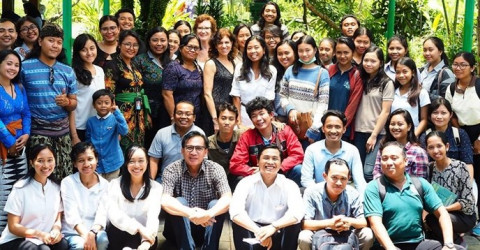 Un programa indonesio en favor de la diversidad lingüística gana un premio de alfabetización de la UNESCO 2019-09-06 BASAbali from Indonesia is awarded the 2019 UNESCO Confucius Prize for Literacy for its programme ‘BASAbali Wiki’. Based on a collaboration of scholars, governments, artists, and community members from within and outside of Bali, BASAbali was created as a digital tool to both preserve local languages and strengthen them by transforming people’s attitudes towards promoting and valuing linguistic diversity. The tool, BASAbali Wiki, is a multimedia, multilingual (Balinese-Indonesian-English) wiki dictionary, encyclopedia and virtual library which intends to revitalize endangered local languages by creating the sense of ownership. Both local Balinese and international communities are invited to contribute to creating the content in whatever way they can in local, national, and international languages. A team of experts contributes to monitoring the relevance and quality of the content. “We realized that to foster literacy, particularly with local languages, we need to do more than just create a body of resources: we needed to engage civil society in developing a norm of literacy and multilingualism”, says Gde Nala Antara, the Chair of the BASAbali Wiki Board. Read to a child in a local language Since the launch in 2011 with interfaces in Balinese, Indonesian and English, BASAbali Wiki has been used by over half a million people. The main target group of the programme is younger generations, especially young women and girls. “Outreach teams particularly target out-of-school youth, women and girls, and those who may be outside the grid but can nonetheless add and use content through an offline function”, says Gde Nala Antara. “Our goal is to have the grandchildren of this generation’s children value literacy and multilingualism. We target children directly, teens and young adults as role models for their younger peers, and young parents who can create an environment of reading, writing , and using local, national and international languages”, says the director of BASAbili Wiki. When material is submitted in one language, users are encouraged to offer translated text in the other two languages. In this way, BASAbali Wiki serves as both a Balinese reference and a translation tool for Indonesian and English languages. The team of experts also provides translation and editing assistance when needed. Over the last five years, BASAbali has succeeded in getting a significant number of young parents, millennials and children involved in the initiative. BASAbali now wants to share the initiative with other language communities, while expanding their dictionary and virtual library, with special focus on youth, girls and underserved communities. Other project plans include creating multilingual books featuring a teen environmental superhero imagined by the children of Bali. To celebrate International Literacy Day, Gde Nala Antara wants to share a simple message: “Give a lasting gift: read to a child in a local language.” This year’s UNESCO International Literacy Prizes will be awarded to laureates from Algeria, Colombia, Indonesia, Italy and Senegal on the occasion of International Literacy Day. The Prize Award Ceremony will take place during the global event for International Literacy Day on 9 September at UNESCO Headquarters. This year’s International Literacy Prizes and global event are organized around the theme of ‘literacy and multilingualism’. Read more: UNESCO International Literacy Prizes International Literacy Day 2019 What UNESCO does for literacy URL:https://en.unesco.org/news/programme-indonesia-promoting-linguistic-diversity-wins-unesco-literacy-prize
 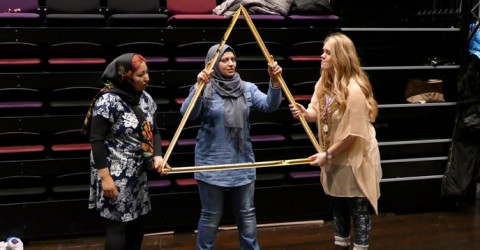 Italian programme wins UNESCO Prize for teaching literacy to migrants through theatre 2019-09-06 Nuovo Comitato il Nobel per i Disabili in Italy has won the 2019 UNESCO Confucius Prize for Literacy for its programme ‘Tell Me’. Nuovo Comitato il Nobel per i Disabili (New Nobel Committee for People with Disabilities) is an italian non-profit organization created by Nobel laureate, Mr Dario Fo, in 1997 to support disadvantaged groups through education, with particular regard to disabled people. In 2016, the committee decided to focus its efforts on the migrant population and launched the programme ‘Tell Me’, an acronym for ‘Theatre for Education and Literacy Learning of Migrants in Europe’. Italy is one of the first countries impacted by migration. The programme aims to contribute to social inclusion of youth and adult migrants, with the priority to learn the language of the host country. “In the wake of a period of raised awareness about the issue of migration, but not solely for that reason, the potential that theatre has to contribute to social inclusion of those whom we like to refer to as new European citizens, seemed evident and indisputable on many levels”, says Nazzareno Vasapollo, the project manager of the Tell Me project. “The difficulty of mastering a language is among the most important causes of material, social and psychological insecurities that a “foreigner” experiences in the integration process in any country”, says Nazzareno Vasapollo. Today the programme is operating in Italy, Portugal, Spain, and Turkey, where it has benefited over a hundred migrants since 2018, many of whom are out-of-school youth. A message about solidarity and a mutual encounter The project moves in three stages, between art, language learning and social inclusion. The theatre is a tool to exchange knowledge and bridge the gap between cultures to facilitate the integration of migrants. The methodology, aligned with the national and European educational frameworks and developed with partners across the field of education and theatre, revolves around storytelling, as a way to gradually transition from the learner’s mother language to the host country’s language. 72 teachers have been trained through workshops so far. Teachers also benefit from an e-learning platform and an online material repository where curriculum documents, methodological guidelines and other materials are available in English, Italian, Portuguese, Swedish and Turkish. For International Literacy Day, Nazzareno Vasapollo wants to address a message to migrants who were forced to go outside of their countries. “The founding fathers thought of a Europe based on the values of solidarity and that no one would be able to defeat them if they are carried out by its citizens, its organizations and its institutions of good will.” The organization intends to carry out the project across Europe, which the recognition of the prize will help with. This year’s UNESCO International Literacy Prizes will be awarded to laureates from Algeria, Colombia, Indonesia, Italy and Senegal on the occasion of International Literacy Day. The Prize Award Ceremony will take place during the global event for International Literacy Day on 9 September at UNESCO Headquarters. This year’s International Literacy Prizes and global event are organized around the theme of ‘literacy and multilingualism’. Read more: UNESCO International Literacy Prizes International Literacy Day 2019 What UNESCO does for literacy URL:https://en.unesco.org/news/italian-programme-wins-unesco-prize-teaching-literacy-migrants-through-theatre
 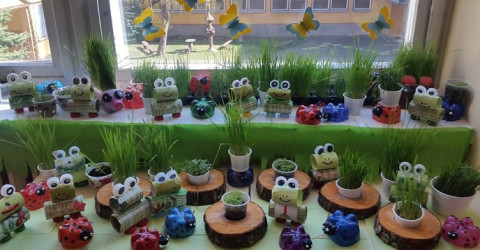 Imagination and energy help schools in Lithuania turn sustainability ideas into action 2019-09-02 A simple but powerful kindergarten experiment in biodegradability is just one of the innovative ways schools in Lithuania are embracing sustainability. The Lithuanian Children and Youth Centre's Sustainable Schools' programme began in 2013 to promote and create awareness about sustainable development through developing school communities that are better able to manage and develop their own resources. The programme was among nominees for the 2018 UNESCO-Japan Prize on Education for Sustainable Development (ESD), part of UNESCO's wider work on ESD. The Lithuanian programme, based in Vilnius, works through the formation of Green Teams of ten people in educational establishments which can include everyone from teachers, students and parents to administrative staff. So far, 139 educational institutions ranging from kindergarten to non-formal settings have signed up to the programme to learn how to improve the quality of life for future generations. Project Manager Lina Blazeviciute said: 'Five years ago the programme started at a very simple level with a website where schools could sign on to evaluate their eco footprint’. 'The first schools started with sustainability ideas like stickers reminding everyone to switch off lights and turn off taps. Now those same schools have moved on to more complex projects such as food gardens and sustainable mobility. For example, last year a school wanted to encourage children to cycle to school. Instead of holding a one-off event they took the children and conducted a careful study of the areas surrounding the school identifying traffic hazards and where bike lanes were needed. They submitted the results to the municipality who made improvements leading to more bike use.' Each school starts the programme with a themed conference with sustainability experts invited and in addition there are two or three training sessions a year for teachers and liaison with universities to keep abreast of research. Participating schools draw up a plan at the start of the academic year, which is submitted, to the programme, which advises, on its content and structure. At the end of the year a report is written showing what has been achieved and the number of participants engaged. Schools are awarded points culminating in an award ceremony where Green, Silver and Gold medals are handed out for achievement. Innovation fills the funding gap 'There are many really innovative ideas,' said Lina. In one experiment with very young children at a kindergarten, they buried an apple core and a sweet wrapper and left them for several weeks returning to find the core had completely disappeared, but the sweet wrapper was still intact giving a simple but valuable lesson in biodegradability. Other schools have started their own food and herb gardens after workshops on building greenhouses and growing vegetables and produce their own juices and healthy breakfasts. 'We are always looking for ways to engage children and make the topics fun and interesting. and here is where we really rely on teachers to do a great job,' said Lina. 'For that reason, we are very interested in new methodologies on to talk about sustainability to children’. Making sustainability the norm Introducing children to the biodiversity, which exists outside their classrooms or houses, is also part of the programme. 'We urge teachers even in urban schools to take children out and get them to discover the richness of their own environment, how many different trees, or insects or animals there might be,' said Lina. The programme also organizes structured biodiversity hikes in natural parts which can attract several thousand participants. The ultimate aim of the programme is simple. 'The next step for us is to ensure that sustainable schools receive proper political attention. We would like that sustainability became the norm rather than the exception. Our government already uses the concept of a 'good school'. Now we want one of the criteria for becoming a good school to be sustainability. We also want to strengthen our international partnerships so that we can share our experiences,' said Lina. URL:https://en.unesco.org/news/imagination-and-energy-help-schools-lithuania-turn-sustainability-ideas-action
 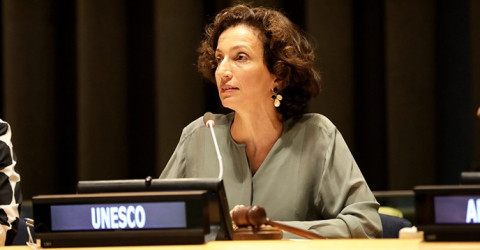 High Level Political Forum: Education is everyone’s responsibility 2019-09-02 The voices of governments, donors, international organizations, youth and teachers struck a common chord in calling for stepped up action to achieve relevant, equitable and inclusive quality education, at an event organized by UNESCO, the Group of Friends for Education and Lifelong Learning and the SDG-Education 2030 Steering Committee on 15 July 2019 during the High Level Political Forum at UN Headquarters in New York. “Education is a fundamental right and the supporting structure for the entire 2030 Agenda,” said UNESCO Director-General Audrey Azoulay, opening the event. “It is urgent that we act together and step up efforts to invest more in education. Governments hold the primary responsibility but civil society, multilateral and international actors must join their efforts to achieve this common goal,” she said, asserting that UNESCO will continue to make education a top priority and to fulfill its global coordination and monitoring role. Government representatives gave examples of how Sustainable Development Goal 4 on education is influencing national policy, demonstrating its relevance to all contexts. The Minister of Research and Higher Education of Norway, Ms Iselin Nybo, highlighted measures to reduce drop out in upper secondary, make lifelong learning more accessible, and integrate sustainable development across all school subjects and in university programmes. To achieve the SDGs and build better societies, she called for the “democratization of knowledge” to ensure that the fruits of research are widely shared. Likewise, Argentina has placed priority on ‘leaving no one behind” through affirmative actions at all levels, from investment in early childhood education and schools with lower results to innovations in teaching and more flexible pathways to the world of work, explained Oscar Ghillione, the country’s deputy Minister of Education. Having hosted the first G20 conference of education ministers in 2018, Argentina is also striving to “place education at the heart of the global debate,” he said. This holds urgency in light of the “simmering education crisis.” To address it, Jaime Saavedra, head of Education Global Practice at the World Bank, called for a “completely different level of political commitment,” warning that “many kids are in learning poverty” as proven by assessments showing that over half cannot understand a simple story. “This is morally unacceptable,” he said. To accelerate progress, Stefano Manservisi, the European Commission’s Director-General for International Cooperation and Development stressed the need to “articulate the global and local level in more effective ways and to avoid harmful competition.” Global action can help to mobilize and sustain national commitment, while impact has to be measured at local level, making support to public policy and plans a starting point for progress. Professor Kaz Yoshida, co-chair of the SDG-Education 2030 Steering Committee, urged countries to pay more attention to the nature of interlinkages with other goals in order to accelerate progress. “We need to go beyond the education sector to reinforce dialogue with other sectors and stakeholders,” he said. This is all the more true in highly disadvantaged contexts. Maggie MacDonnell, laureate of the Varkey Foundation’s Global Teacher Prize for her work in indigenous villages of the Canadian Arctic, gave a sense of what it means to teach in communities that have been structurally oppressed for generations, struggling with poverty, insecurity and high levels of suicide. “How do you build self confidence? You have to teach to their heads, to their bodies and to their hands to pass on skills, but most importantly to teach to their hearts, to inspire hope, to help them to dream again and become a generation of change makers.” Training teachers is a top priority to achieve SDG4, stated Robert Napier, President of the European Students’ Union. If leaving no one behind requires inclusive policies, he warned that “the biggest threat to education is privatization and commercialization. Market needs are driving education rather than education being based on the skills needed to promote sustainable development.” He stressed the social dimension of higher education, urging for more political focus on equity, inclusion and lifelong learning. Moderating the event, UNESCO Assistant Director-General for Education Stefania Giannini wrapped up the event by stressing urgency, accountability, solidarity and political engagement to accelerate global action for education. URL: https://en.unesco.org/news/high-level-political-forum-education-everyones-responsibility
 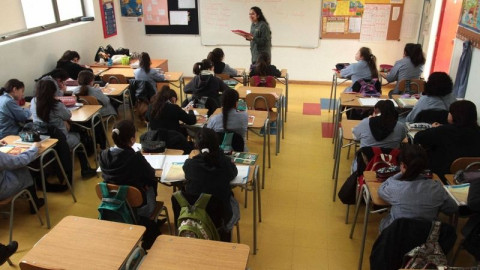 Estudiantes chilenos tienen bajo conocimiento de ciudadanía y democracia 2019-08-10 Los nacionales comparten estos malos resultados con los jóvenes de Colombia, México, Perú y República Dominicana En la presentación del I Congreso Iberoamericano de Educación, Ciudadanía y Democracia, el pasado 1° de agosto en Baranquilla (Colombia), especialistas revelaron que el 50% de los estudiantes de Chile, Colombia, México, Perú y República Dominicana no tienen conocimientos básicos sobre democracia y ciudadanía. El evento, gestionado por la Organización de Estados Iberoamericanos (OEI), la Universidad Simón Bolívar de Barranquilla y la Fundación por una Educación de Calidad y que se realizará el 29 y el 30 de agosto en esta ciudad del Caribe colombiano, contará con la participación de especialistas de Argentina, Uruguay, México y Colombia. Durante la rueda de prensa, el presidente del congreso, Ubaldo Meza Ricardo, se refirió al estudio internacional sobre educación cívica y ciudadana, que reveló que “la mitad de los estudiantes de Chile, Colombia, México, Perú y República Dominicana no logra demostrar algún conocimiento específico o comprensión sobre las instituciones, sistemas y conceptos cívicos y de ciudadanía”. “Estos cinco países son los de menor desempeño entre 24 sistemas analizados en Iberoamérica”, explicó Meza. “Uno de los temas que abordaremos en el congreso es la necesidad de garantizar una educación inclusiva, equitativa y de calidad y promover oportunidades de aprendizaje durante toda la vida para todos”, agregó Meza, indicando que este concepto está alineado con los objetivos de desarrollo sostenible de las Naciones Unidas. Por su parte, el director adjunto de la OEI para Colombia, Carlos Zuluaga, explicó que “el tema central será la educación para la ciudadanía global, la ética y la democracia para el desarrollo sostenible, en el marco de la agenda de educativa 2030 y de las metas educativas del 2021”. Zuluaga precisó que el congreso es una de las actividades programadas dentro de las celebraciones de los 70 años de la fundación de la OEI y en cumplimiento de las conclusiones del V Congreso Iberoamericano y VII Nacional, por una educación de calidad, que se realizó en Santa Marta (norte). “La importancia y la pertinencia de abordar esta temática es que los sistemas educativos enfrentan el reto de formar a los niños y jóvenes como ciudadanos que reconozcan y valoren la importancia de la democracia, la solidaridad, el respeto mutuo, la convivencia y la resolución pacífica de conflictos”, indicó el director de la OEI en Colombia. Agregó que también hace parte de esos retos “la formación en el respeto a las diferencias, especialmente a los más vulnerables, el aprendizaje social, la cooperación y el rechazo a toda forma de exclusión de segregación y de violencia”. Sobre el Congreso Este encuentro (29 y 30 de agosto) será clave teniendo en cuenta que los sistemas educativos del mundo, especialmente de Iberoamérica, se enfrentan al reto de formar a los niños y jóvenes como ciudadanos que reconozcan y valoren la importancia de la democracia, la solidaridad, el respeto mutuo, la convivencia, la resolución pacífica de los conflictos, el respeto a las diferencias, especialmente a sus compañeros más vulnerables, el aprendizaje social, la cooperación y el rechazo a toda forma de exclusión, de segregación y de violencia. Para este congreso, es primordial contextualizarse con el marco de acción del Objetivo de Desarrollo Sostenible N°4, que especifica la necesidad de garantizar una educación inclusiva, equitativa y de calidad y promover oportunidades de aprendizaje durante toda la vida para todos. Así mismo, con la Agenda Educativa 2030, en la que se incorpora un importante componente relacionado con la educación para la ciudadanía democrática, especialmente en la meta 4.7 (Conocimientos y habilidades para el desarrollo sostenible). El propósito principal es que en 2030 todos los alumnos adquieran conocimientos teóricos y prácticos necesarios para promover el desarrollo sostenible, mediante la educación y los estilos de vida llevaderos; los derechos humanos; la igualdad de género; la promoción de una cultura de paz y no violencia; la ciudadanía mundial y la valoración de la diversidad cultural, y la contribución de la cultura a esta promoción. El congreso contará con la participación de reconocidos conferencistas internacionales y expertos en la materia como: Alicia Cabezudo (Argentina), Marita Copes (Uruguay), Enrique Rentería (México), Julián De Zubiria (Colombia), Francisco Cajiao (Colombia), Alejo Vargas (Colombia), y Abel Rodríguez (Colombia), entre otros. Será dirigido a educadores, directivos docentes y administrativos de todos los niveles, desde el preescolar, hasta el posgrado; así como a investigadores, académicos, organizaciones de la sociedad civil, gobiernos, empresarios y estudiantes. URL:https://www.bcn.cl/delibera/pagina?tipo=1&id=estudiantes-chilenos-tienen-bajo-conocimiento-de-ciudadania-y-democracia.html
  Una Nueva Propuesta para Introducir Educación en CIudadanía Global en tu Escuela y en tu Aula 2019-05-31 ¡Nos llena de emoción anunciar el lanzamiento de un nueva propuesta para introducir Ciudadanía Global en tu escuela y el tus aulas! Como muchos de ustedes saben, desde algunos años la Educación en Ciudadanía Global se ha convertido en prioridad para el Secretariado de Educación Jesuita y por lo tanto para nuestra Comunidad Global de escuelas Jesuitas e Ignacianas. Nosotros, desde Educate Magis, hemos venido trabajando en la recolección de recursos, materiales didácticos y experiencias, así como también, creando herramientas que han sido usadas de diferentes maneras para acompañar el proceso de introducción de Ciudadanía Global en el aula. Por ejemplo: para aprender conceptos básicos sobre Ciudadanía Global, para conectar estudiantes de diferentes partes del mundo, para sensibilizar sobre realidades globales y muchas más. ..todos los seres humanos, y sus pueblos, son poseedores de una “ciudadanía global”, en la que se enlazan derechos y deberes. P. Sosa, JESEDU-Rio2017 Hoy proponemos ir más allá, para nos solamente educar y empoderar a nuestros estudiantes para ayudarles en el proceso de convertirse en ciudadanos globales sino también para integrar Ciudadanía Global como parte de un proceso/plan Estratégico a largo plazo para tu escuela. Para esto hemos actualizado la página de Ciudadanía Global en Educate Magis donde encontrarás dos secciones, una para los Líderes de las Escuelas, que ofrece una Plantilla para acompañar el desarrollo de un Plan Estratégico para introducir Educación en Ciudadanía Global en la escuela. Esta sección te brinda una guía con pasos para desarrollar el ciclo de este proceso. La otra sección está dirigida para Profesores y Profesoras de las escuelas, aquí puedes encontrar materiales didácticos y herramientas para usar en el aula. Así como también, sugerencias para adoptar el Paradigma Pedagógico Ignaciano (PPI) para la enseñanza de Educación en Ciudadanía global en el aula. Como el P. General Arturo Sosa SJ mencionó en su discurso durante el Congreso de JESEDU-Rio2017, como Comunidad Global de escuelas Jesuitas e Ignacianas “Tenemos enormes posibilidades de alentar la esperanza en nuestro mundo, contribuyendo a la formación de hombres y mujeres, justos, verdaderos ciudadanos del mundo.” Te invitamos a explorar y usar la nueva página de Ciudadanía Global para Escuelas Jesuitas y a compartir tus experiencias usando los recursos y herramientas ofrecidas. Es nuestra intención y objetivo ayudarte a ti y a todos los miembros de tu comunidad escolar a desarrollar este emocionante e importante aspecto de nuestra educación Jesuita. Esperamos que la plantilla, los materiales didácticos y las ideas compartidas a través de esta página complementen y brinden apoyo al maravilloso trabajo que ya se está realizando en sus escuelas y aulas, para animar la dimensión global de nuestras escuelas Jesuitas. URL:https://www.educatemagis.org/es/blogs/una-nueva-propuesta-para-introducir-educacion-en-ciudadania-global-en-tu-escuela-y-en-tu-aula/