
News
Catch up on what’s happening in the world of global citizenship education.
245 results found
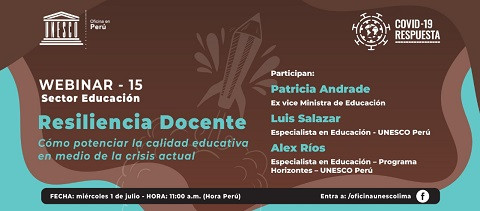 Resiliencia docente ¿Cómo potenciar la calidad educativa en medio de la crisis actual? (Webinar) 2020-07-07 Con el objetivo de reflexionar acerca de la resiliencia docente como factor que potencia la calidad educativa en el contexto de crisis actual, UNESCO Perú realizó su décimo quinto seminario web denominado: "Resiliencia docente: ¿Cómo potenciar la calidad educativa en medio de la crisis actual?". Participaron: Patricia Andrade: Ex vice Ministra de Educación Luis Salazar: Especialista en Educación - UNESCO Perú Alex Ríos: Especialista en Educación – Programa Horizontes – UNESCO Perú Para ver el video desde el Facebook de Unesco Perú, haga click aquí.También, puede descargar el audio del webinar en MP3 aquí. URL:https://en.unesco.org/news/resiliencia-docente-como-potenciar-calidad-educativa-medio-crisis-actual-webinar
 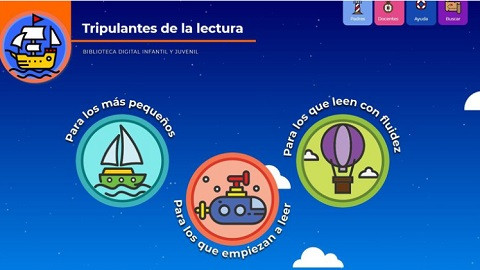 Mexican Ministry of Education: How to get the most out of "Summer Fun" and "Reading Crews" for primary and secondary students 2020-07-04 The Ministry of Public Education (SEP) has created a range of activities following the coronavirus health contingency in Mexico, with special programs such as "fun summer" or "reading crew", they seek to entertain and educate. During this stage of confinement, children and relatives in general should be kept at home to avoid the spread of COVID-19, therefore, the portal invites the little ones of the home to feed their imagination through reading.As a first point, the student or parent must enter the website: http://www.tripulantes.sep.gob.mx/.Once there, you can select the button for the little ones, between three and six years old, which will display illustrated books for better entertainment. URL:https://www.infobae.com/america/mexico/2020/06/30/sep-como-aprovechar-al-maximo-verano-divertido-y-tripulantes-de-la-lectura-para-estudiantes-de-primaria-y-secundaria/
 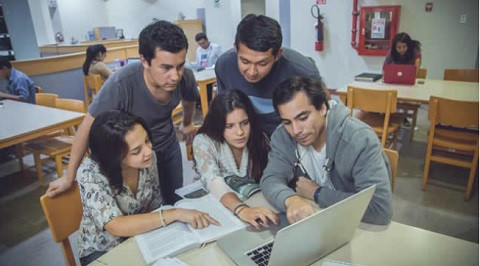 Todas las universidades públicas migrarán este año al sistema de educación virtual 2020-07-04 El Minedu e instituciones internacionales brindarán asistencia técnica para fortalecer el proceso de virtualización Fotos: Oficina de Prensa - MineduOficina de Prensa30 de junio de 2020 - 3:34 p. m. Hasta el momento, 32 universidades nacionales ofrecen el servicio educativo de forma no presencial El 100% de las universidades públicas del país migrarán este año al sistema de educación virtual para evitar que sus estudiantes se perjudiquen por la emergencia sanitaria causada por el coronavirus. En ese proceso, contarán con la asistencia técnica de organizaciones internacionales. El director general de Educación Superior Universitaria del Ministerio de Educación (Minedu), Jorge Mori, afirmó que el objetivo es que las 52 universidades públicas ofrezcan clases virtuales por intermedio de instrumentos tecnológicos. Hasta el momento, 32 universidades han logrado implementar acciones para ofrecer el servicio educativo a distancia, anotó. “Nuestras universidades nacionales recibirán asistencia técnica de organizaciones académicas con gran experiencia en el tema tecnológico, como Laspau-Harvard en alianza con el instituto Tecnológico de Monterrey y la UPLANNER, el British Council, la Universidad de Liverpool, IESALC-UNESCO, la UNED de España con la UTEC y Tecsup, y la Pontificia Universidad Católica del Perú”, precisó. Esta iniciativa tiene como objetivo realizar el diagnóstico de la capacidad institucional de las universidades para desarrollar procesos de educación no presencial, la implementación de planes de estudios y sílabos adecuados, así como la adaptación no presencial de los cursos 2020-I en adelante. También busca fortalecer las competencias digitales de los docentes, estudiantes y personal técnico de apoyo, la generación de cursos virtuales y la implementación del sistema de monitoreo como instrumento de evaluación para la educación no presencial durante la época de emergencia. En esa misma línea, Mori, indicó que mediante el decreto legislativo N° 1465 se destinó un presupuesto de hasta 31 millones de soles para que las universidades puedan contratar y comprar servicios de internet para sus estudiantes de escasos recursos, como medida extraordinaria para superar los problemas generados por el Covid-19 y evitar la deserción. Finalmente, informó que el Minedu, a través del Programa Nacional de Becas y Crédito Educativo (Pronabec), está ofreciendo la “Beca Continuidad” para alumnos con alto rendimiento y el “Crédito Continuidad” con la finalidad de que más jóvenes puedan continuar y culminar sus estudios universitarios. Los interesados en postular al crédito pueden hacerlo hasta el 27 de julio a través del link https://www.pronabec.gob.pe/credito-continuidad/. URL:https://www.gob.pe/institucion/minedu/noticias/189379-todas-las-universidades-publicas-migraran-este-ano-al-sistema-de-educacion-virtual
 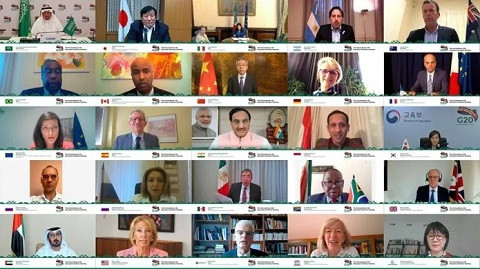 An extraordinary virtual meeting of G20 Education Ministers was held 2020-07-04 By Sobre Tiza The first extraordinary virtual meeting of G20 Education Ministers was held on June 27. Temporary presidency is held this year by Saudi Arabia. This extraordinary meeting was promoted to address the impacts on educational systems around the world caused by the COVID-19 pandemic. URL:https://www.sobretiza.com.ar/2020/06/30/se-llevo-a-cabo-una-reunion-virtual-extraordinaria-de-ministros-de-educacion-del-g20/
 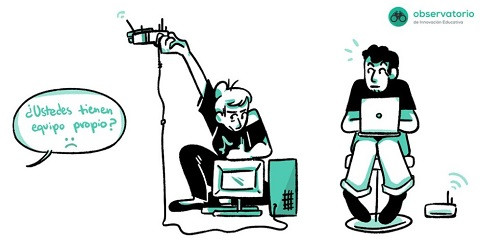 How do teachers perceive the digital preparation of Higher Education in Latin America? 2020-07-04 The COVID-19 pandemic has accelerated technological integration in university education. However, three out of four teachers in the region do not feel prepared to incorporate new digital technologies in the classroom. This according to a regional study carried out by the Inter-American Development Bank (IDB) and the Tecnológico de Monterrey between February and March 2020, in which more than 800 university professors were consulted on the penetration of digital technologies in universities. URL:https://observatorio.tec.mx/edu-news/encuesta-preparacion-digital-docentes-universitarios-america-latina
 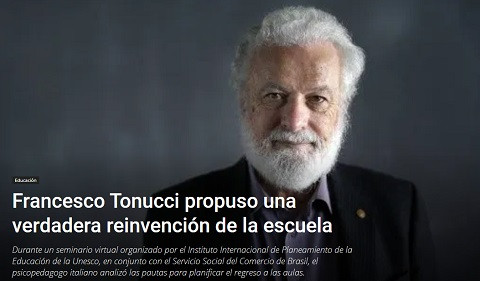 Francesco Tonucci propuso una verdadera reinvención de la escuela 2020-07-04 By Sobre Tiza The Italian psycho-pedagogue Francesco Tonucci proposed a real reinvention of schools for the post-pandemic period and analyzed the guidelines for planning the return to classrooms, during a virtual seminar organized by the Unesco International Institute for Educational Planning (IIPE) in together with the Social Service of Commerce (Sesc) of Brazil. URL:https://www.sobretiza.com.ar/2020/06/29/francesco-tonucci-propuso-una-verdadera-reinvencion-de-la-escuela/
 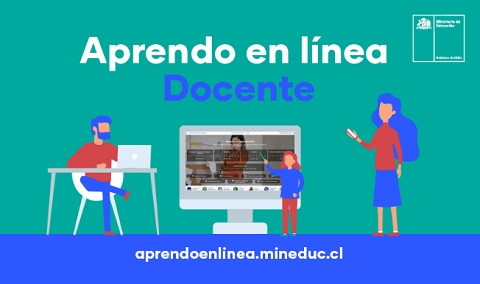 Mineduc lanza portal Aprendo En Línea Docente con más de 20 mil recursos disponibles para facilitar a profesores la aplicación del Currículum Escolar Priorizado 2020-07-03 The Chilean Ministry of Education incorporated a new web resource on the "Aprendo en Línea" platform to reinforce remote learning. Its objective is to support teachers in the application of the Prioritized School Curriculum, which was prepared by the Ministry after the suspension of face-to-face classes as a result of the health emergency. The website will have a total of approximately 20,000 pedagogical resources: 5,500 guides, 3,000 formative evaluation activities, 300 pedagogical files, 300 videos, 30 conference videos and 200 orientation documents, among other digital tools. To access this portal, teachers and managers must go to aprendoenlinea.mineduc.cl and select the “teaching” button, where they will find the subjects and levels that they need to develop. URL:https://www.mineduc.cl/aprendo-en-linea-docente/
  Towards resilient education systems for the future – A new joint study launched by UNESCO and IEA 2020-07-03 The International Association for the Evaluation of Educational Achievement (IEA) and UNESCO are launching a study, in partnership with the European Commission, to draw a more comprehensive picture of COVID-19’s impact on global education, entitled “Responses to Educational Disruption Survey (REDS)”. REDS is part of the collective effort under the Global Education Coalition launched by UNESCO that seeks to facilitate inclusive learning opportunities for children and youth in the context of educational disruption and to establish approaches to develop more open and resilient education systems for the future. The pandemic has affected students’ learning efficacy on a global scale never encountered before. Education systems have varied in their responses in this context. Some have introduced home schooling programs and remote learning, offering free online resources, while others are delivering paper-based assignments to students’ homes or using public TV and radio broadcasting channels. What is missing is the first-hand information from schools, collected in a systematic, efficient and scientific manner, that is needed for evaluating the extent to which teaching and learning have been challenged, continued, and adjusted as a result of the current crisis. REDS intends to bridge this information gap by collecting internationally comparable data from governments, school principals, teachers and students, on how they are prepared for distance learning in times of school closures, as well as during a subsequent re-opening phase, and what measures were implemented to provide all students with the opportunity to continue learning. The study seeks to answer the following overarching question: How were teaching and learning affected by the disruptions and how was this mitigated by the implemented measures, across and within countries? Aside from providing insights on the impact of the teaching and learning disruption, the study aims to investigate the contextual factors, issues and implemented measures that may influence the success of distance learning for students across countries. The study will target all different educational levels and will focus on topics around the preparedness for distance learning, available IT and educational resources, perceptions on the success of strategies, student engagement, as well as around inequalities in educational learning opportunities during the disruptions. Additionally, issues concerned with students’ and teachers’ wellbeing will be explored. REDS is designed to serve as a valuable source of information that will inform the policy and practice for more resilient education systems for the future, also in their pursuit of the Sustainable Development Goal 4 on ensuring inclusive and equitable quality education for all, in particular targets 4.1 and 4.4. The insights may also offer an opportunity to rethink the overall purpose, role, content and delivery of education in the future. For this reason, the study also aims to identify sustainable, transformational concepts that emerged from the crisis and may serve as good practice when schools re-open. How to get involved? All interested countries are invited to participate in REDS. We understand the immense pressure currently facing countries, and to encourage wider country participation, we are seeking funds from donor organizations to support countries with participation costs associated to REDS, especially for low-income countries. For the full study proposal or further information please reach out to Huong Le Thu(link sends e-mail) or Dr Andrea Netten(link sends e-mail). Download leaflet and brochure URL:https://en.unesco.org/news/towards-resilient-education-systems-future-new-joint-study-launched-unesco-and-iea
 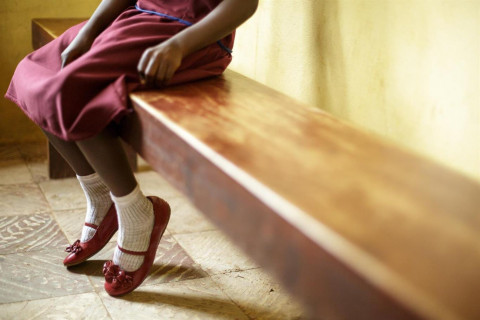 Countries failing to prevent violence against children, agencies warn 2020-06-30 Global status report on preventing violence against children calls for more government action and warns of ‘dramatic impact’ of COVID-19 Half of the world’s children, or approximately 1 billion children each year are affected by physical, sexual or psychological violence, suffering injuries, disabilities and death, because countries have failed to follow established strategies to protect them. This is according to a new report published today by the World Health Organization (WHO), UNICEF, UNESCO, the Special Representative of the United Nations Secretary-General on Violence against Children and the End Violence Partnership. “There is never any excuse for violence against children," said Dr Tedros Adhanom Ghebreyesus, WHO Director-General. “We have evidence-based tools to prevent it, which we urge all countries to implement. Protecting the health and well-being of children is central to protecting our collective health and well-being, now and for the future.” The report – Global Status Report on Preventing Violence Against Children 2020 – is the first of its kind, charting progress in 155 countries against the “INSPIRE” framework, a set of seven strategies for preventing and responding to violence against children. The report signals a clear need in all countries to scale up efforts to implement them. While nearly all countries (88%) have key laws in place to protect children against violence, less than half of countries (47%) said these were being strongly enforced. The report includes the first ever global homicide estimates specifically for children under 18 years of age – previous estimates were based on data that included 18 to 19-year olds. It finds that, in 2017, around 40,000 children were victims of homicide. “Violence against children has always been pervasive, and now things could be getting much worse,” said UNICEF Executive Director Henrietta Fore. “Lockdowns, school closures and movement restrictions have left far too many children stuck with their abusers, without the safe space that school would normally offer. It is urgent to scale up efforts to protect children during these times and beyond, including by designating social service workers as essential and strengthening child helplines.” Progress is generally uneven Of the INSPIRE strategies, only access to schools through enrollment showed the most progress with 54% of countries reporting that a sufficient number of children in need were being reached in this way. Between 32% to 37% of countries considered that victims of violence could access support services, while 26% of countries provided programmes on parent and caregiver support; 21% of countries had programmes to change harmful norms; and 15% of countries had modifications to provide safe physical environments for children. Although a majority of countries (83%) have national data on violence against children, only 21% used these to set baselines and national targets to prevent and respond to violence against children. About 80% of countries have national plans of action and policies but only one-fifth have plans that are fully funded or have measurable targets. A lack of funding combined with inadequate professional capacity are likely contributing factors and a reason why implementation has been slow. The COVID-19 response and its impact on children “During the COVID-19 pandemic, and the related school closures, we have seen a rise in violence and hate online – and this includes bullying. Now, as schools begin to re-open, children are expressing their fears about going back to school,” said Audrey Azoulay, UNESCO Director-General. “It is our collective responsibility to ensure that schools are safe environments for all children. We need to think and act collectively to stop violence at school and in our societies at large.” Stay-at-home measures including school closures have limited the usual sources of support for families and individuals such as friends, extended family or professionals. This further erodes victims’ ability to successfully cope with crises and the new routines of daily life. Spikes in calls to helplines for child abuse and intimate partner violence have been observed. And while online communities have become central to maintain many children’s learning, support and play, an increase in harmful online behaviours including cyberbullying, risky online behavior and sexual exploitation have been identified. “Whilst this report was being finalized, confinement measures and the disrupted provision of already limited child protection services exacerbated the vulnerability of children to various forms of violence,” said Najat Maalla M’jid, Special Representative of the United Nations Secretary-General on Violence against Children. “To respond to this crisis a unified, child rights and multisectoral framework for action for children is critical requiring a strong mobilization of governments, bilateral/multilateral donors, civil society, private sector and children, whose views must be heard and truly taken into account to ensure duly protection and the possibility for all to thrive and reach their full potential.” Accelerating action to protect children WHO and its partners will continue to work with countries to fully implement the INSPIRE strategies by enhancing coordination, developing and implementing national action plans, prioritizing data collection, and strengthening legislative frameworks. Global action is needed to ensure that the necessary financial and technical support is available to all countries. Monitoring and evaluation are crucial to determine the extent to which these prevention efforts are effectively delivered to all who need them. “Ending violence against children is the right thing to do, a smart investment to make, and it’s possible. It is time to fully fund comprehensive national action plans that will keep children safe at home, at school, online and in their communities,” said Dr Howard Taylor, End Violence Partnership. “We can and must create a world where every child can thrive free from violence and become a new generation of adults to experience healthy and prosperous lives.” Editor’s note: The data for the report was compiled through a survey administered between 2018 and 2019 with responses from over 1000 decision-makers from 155 countries. The INSPIRE strategies launched in 2016 call for the implementation and enforcement of laws; changing norms and values to make violence unacceptable; creating safe physical environments for children; providing support to parent and caregivers; strengthening income and economic security and stability; improving response and support services for victims; and providing children with education and life skills. Related links: To download the report (in English only) and executive summary (in English, French, Russian and Spanish), go to: https://who.canto.global/b/SSHOR and use password: 490759. To watch the launch event taking place on Thursday, 18 June from 15:00 to 16:30 CEST, please register at https://bit.ly/2ApZXKa. After registering, you will receive a confirmation email with details on how to access the event. Interpretation will be provided in the 6 UN languages. URL:https://www.who.int/news-room/detail/18-06-2020-countries-failing-to-prevent-violence-against-children-agencies-warn
  #TheWorldin2030: Help UNESCO set the global agenda on the issues you care about! 2020-06-02 Help UNESCO set the global agenda on the issues you care about! UNESCO is launching an unprecedented public survey to gain insights into global sentiment on the major challenges that threaten peace around the world today and the solutions needed to address them. The results will assist UNESCO in setting the global agenda on these issues over the next decade to ensure #TheWorldin2030 is one we want to live in. Take the survey: Click here The survey is being launched at a time of profound societal upheaval linked to the COVID-19 pandemic. There are urgent calls for reflection on the world that will emerge from the crisis and how we will address major ongoing challenges such as climate change, violence, widespread inequalities and massive technological disruption. “The next ten years are critical for putting the pieces into place for the world to come after the COVID-19 crisis, and addressing the already-severe challenges from before it began,” said UNESCO Director-General Audrey Azoulay. “This new survey is part of UNESCO’s commitment to leading a global reflection on these issues. Understanding the obstacles people are facing and their hopes for overcoming them is crucial, and I call on everyone from all regions to take part and tell us what they think.” Amid questions from some on the effectiveness and relevance of multilateralism in today’s world, the survey will also gain insights into how the international community, including UNESCO through its mandate to build peace in the minds of men and women, can better address the concerns of all populations. The survey is open to all around the world and it will soon be available in at least 20 languages. It will be open for the next three months, with the results to be released in September 2020 as part of a special “World in 2030” report analysing global and regional views on the challenges of today. A special focus has also been placed on ensuring a large number responses from young people. Through the survey, UNESCO aims to give them an opportunity to express their points of view and ideas and contribute to discussions on what the future should look like. The survey is being held as part of UNESCO’s ongoing Strategic Transformation. It also fits into wider efforts by the Organization to reflect upon the world to come, including the recent launch of the UNESCO Forum series. This series kicked off this week with video interviews featuring leading women thinkers, artists and activists, in which they aired their views on the challenges and opportunities the world will face in the wake of the COVID-19 crisis. URL:https://en.unesco.org/news/theworldin2030-help-unesco-set-global-agenda-issues-you-care-about