
News
Catch up on what’s happening in the world of global citizenship education.
245 results found
 Resources for Ministries of Education: COVID-19 crisis 2020-05-27 The Inter-American Committee on Education (CIE) is a permanent ministerial dialogue mechanism responsible for the development and follow-up on the lines of action established by the Ministers of Education to respond to the mandates emanating from the Inter-American Meetings of Ministers of Education, the General Assembly and the Summits of the Americas. They have put together some resources to make them available for Ministries of Education of the region in order to support their work during the COVID-19 crisis. URL:https://portal.portaleducoas.org/es/redes/educaci-n/inicio-home
  Innovación y solidaridad: la comunidad IFRS promueve acciones para enfrentar al COVID-19 2020-05-26 Instituto Federal de Educação, Ciência e Tecnologia do Rio Grande do Sul toma parte en la realización de respuestas innovadoras y de ayuda en la comunidad de Brasil. Comprometidos en la búsqueda de soluciones innovadoras para combatir al COVID-19, los empleados y estudiantes del Instituto Federal de Rio Grande do Sul (IFRS) están fabricando equipos de protección para profesionales de la salud, llevando a cabo acciones de solidaridad, de investigación y extensión centradas en el tema. Las acciones tienen lugar por iniciativa de los 17 campus y el Rectorado y están en constante crecimiento. La comunidad académica trabaja hacia el mismo objetivo, pero de forma remota o en rotación, para evitar los riesgos de contaminación. Y cuenta con la colaboración de voluntarios, muchos de ellos ex alumnos, empresas, instituciones y organismos públicos. Los materiales se donan a agencias de salud en municipios de las regiones cubiertas por el IFRS. Para tener una idea del alcance de esta participación, las acciones se organizaron en un mapa (verifique la imagen), que se actualiza constantemente. Conozca algunas iniciativas:El vino se convierte en 70% de alcohol: para ayudar a detener la propagación del nuevo coronavirus, el vino se convierte en 70% de alcohol en la capital brasileña de la viticultura. Aproximadamente 47,000 litros de vino fueron destilados de la Vinícola-Escola en el Campus Bento Gonçalves, los cuales fueron considerados no aptos para el consumo y la comercialización. La institución donó el material que, en una acción conjunta con empresas de diferentes segmentos, llegó al Departamento de Salud Municipal de Bento Gonçalves y la región, como alcohol líquido para ser utilizado en la desinfección de superficies. Fue posible producir alrededor de 7 mil litros de alcohol.Leer más Moda solidaria: ¿Cómo puede contribuir el área de moda y vestimenta a la sociedad en tiempos de emergencia en salud? Buscando una respuesta, los profesores y técnicos del IFRS vinculados a los cursos de Tecnología Superior en Diseño de Moda, Técnico de Modelado de Ropa y Técnico en Producción de Moda buscaron estándares y proveedores para tratar de contribuir a la demanda de equipos de protección persona (PPE) textiles. Solo en el municipio de Erechim, la Fundação Hospitalar Santa Terezinha necesita 2.000 batas de hospital utilizadas por profesionales de la salud cada mes. Luego, se creó la acción "Costure em Casa", llevada a cabo por el Campus Erechim del IFRS con el apoyo del Centro Tecnológico APL Polovest, del Sindicato de Industrias del Vestido del Alto Uruguai y de voluntarios. Las batas de hospital se hacen de forma gratuita para la Fundación Hospitalar.Leer más Innovación para proteger a los profesionales de la salud: El equipo para ampliar la protección de los profesionales de la salud que atienden a pacientes con COVID -19 se fabrica en los laboratorios del Centro de Accesibilidad Tecnológica (CTA) IFRS, en Bento Gonçalves. Es una caja de acrílico transparente que se coloca sobre la cabeza del paciente en la cama del hospital, llamada "caja de aerosol", y actúa como una barrera mecánica entre el médico o la enfermera y el paciente, reduciendo el riesgo de contaminación con el nuevo coronavirus. Las dos primeras unidades elaboradas fueron donadas al Hospital Tacchini de Bento Gonçalves. El doctor de IFRS, Andrew Chaves Feitosa da Silva, dice que la barrera mecánica hecha por la caja es mayor tanto para el médico como para el equipo de salud en relación con los protectores faciales del tipo escudo, y sirve como un complemento para la protección. La caja se usa durante la intubación de pacientes que progresan al Síndrome de dificultad respiratoria aguda (SDRA) y requieren ventilación mecánica. Para que las manos del médico alcancen la cara del paciente, hay dos entradas. (Leer más ) Contenido publicado originalmente en IFRS bajo la licencia Creative Commons. Traducido por Daniela Saavedra Rodriguez. URL:https://compartirpalabramaestra.org/actualidad/articulos-informativos/innovacion-y-solidaridad-la-comunidad-ifrs-promueve-acciones-para-enfrentar-al-covid-19
 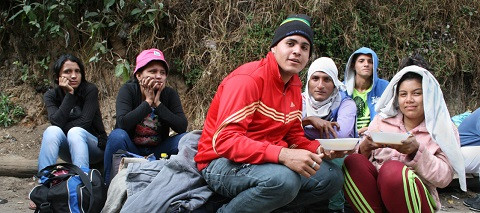 The right to education of Venezuelan migrant and refugee children and adolescents: multidimensional risks and exacerbation of vulnerabilities during the pandemic 2020-05-26 The situation of Venezuelan refugee and migrant families that were in a fragile situation before the pandemic is now aggravated by their loss of employment, difficulties in accessing emergency services and benefits, and lack a of access to healthcare systems. As they do not longer have the livelihoods to stay in their host countries or have been unable to access emergency responses due to the States' pressure and redefinition of priorities, many Venezuelans have decided to return to Venezuela. Throughout different cities in the region, many Venezuelan families are awaiting humanitarian assistance that will provide them with options to return, exposing themselves to risks of infection due to irregular movements between countries and across borders. In educational matters, 100% of the Venezuelan children and adolescents who were enrolled in their host countries are currently out of school and without a certain return. The interruption of learning has also spread among children and adolescents who had already had their studies interrupted when they started their displacement. There are also those who, despite being enrolled in educational centers in their host countries, due to confinement have not been able to begin their school year, losing contact with their educational communities. Despite the efforts of the Ministries of Education to diversify remote education mechanisms towards the inclusion of television channels and radio programs (and beyond the existing web platform,) their current habitability conditions, lack of access to technologies, internet and educational material are barriers that displaced children and adolescents have been experiencing in their attempts to access the educational responses implemented in the host communities. All these factors can put at risk the return of Venezuelan children and adolescents to school. The experience of other crises shows us that the longer learning is interrupted and schools remain closed, the more likely it is that children and adolescents on the move will not return to school. This situation presents unprecedented challenges for the educational systems of our region. In this context, UNESCO proposes five key messages to focus the efforts of the education sector on the objective of guaranteeing the right to education and providing migrant and refugee children and youth with the knowledge and skills necessary to save and sustain their lives through education. Advocacy: Prioritize vulnerable and marginalized groups, especially refugee and migrant children and adolescents, to guarantee the right to quality public education amid reduced funding and fiscal spaces. Policy change: Diversify learning pathways and programs that respond to the needs of students and their contexts. Dialogue and exchange of knowledge and resources: Participate in spaces for political and technical dialogue and share knowledge and resources. Multisectoral response: Reach beyond the thoughts and actions of the education sector, linking it to health, nutrition, social protection and livelihoods. Capacity development: Ensure adequate national competencies to respond now and build resilient educational systems. URL:https://en.unesco.org/news/right-education-venezuelan-migrant-and-refugee-children-and-adolescents-multidimensional-risks
  Call for applications and nominations for the 2020 UNESCO International Literacy Prizes 2020-05-20 UNESCO has now opened its call for applications and nominations for the 2020 UNESCO International Literacy Prizes. This year UNESCO will reward five individuals or organizations around the world for their outstanding projects that promote literacy within the theme ‘Teaching and learning literacy: the role of educators and changing pedagogies’. This year’s thematic focus is highlighting teachers who are at the frontline of delivering literacy learning, and their contribution to promoting youth and adult literacy, linked to target 4.6 of the Sustainable Development Goal on Education (SDG4), where literacy is perceived as a continuum developed throughout life. Since 1967, the UNESCO International Literacy Prizes have rewarded excellence and innovation in the field of literacy. Over 495 projects and programmes around the world have already received recognition and support for their excellent work. Who can apply and who can nominate? Governments, non-governmental organizations and individuals who promote literacy through projects and programmes are welcome to apply. All applications should be submitted to nominating entities, such as the National Commission for UNESCO in the country of the programme, or an NGO that is in an official partnership with UNESCO. Candidates can submit their applications through the online platform. Details about the application and nomination process are on the UNESCO International Literacy Prizes’ website. National Commissions and non-governmental organizations (NGOs) in official partnership with UNESCO are encouraged to nominate individuals, institutions and organizations who are making outstanding contributions to promoting literacy and who request a nomination. Deadline for candidates to submit applications to nominating entities: 28 June 2020 (midnight, Paris time). Deadline for nominating entities to submit their nominations to UNESCO: 12 July 2020 (midnight, Paris time). The nominations will be assessed by an independent International Jury, composed of five experts on the basis of the selection criteria. Based on the recommendations of the International Jury, the Director-General of UNESCO will select the finalists to be awarded at the occasion of International Literacy Day (8 September). About the Prizes Through two prestigious literacy Prizes, UNESCO supports effective literacy practices and encourages the promotion of dynamic literate societies to close the literacy gap of approximately 750 million of people. UNESCO distinguishes between two Literacy Prizes which are given to five laureates in total: The UNESCO King Sejong Literacy Prize (2 awards), was established in 1989 and is supported by the Government of the Republic of Korea. It gives special consideration to programmes that focus on the development and use of mother-tongue literacy education and training. The UNESCO Confucius Prize for Literacy (3 awards), was established in 2005, and is supported by the Government of the People’s Republic of China. This Prize recognizes programmes that promote literacy amongst adults in rural areas and out-of-school youth, particularly girls and women. Each prizewinner receives a medal, a diploma and US$20,000. Contact: literacyprizes@unesco.org(link sends e-mail) UNESCO International Literacy Prizes URL:https://en.unesco.org/news/call-applications-and-nominations-2020-unesco-international-literacy-prizes
  See again the seminar #2 for Latin America: Consequences for girls due to the Covid-19 pandemic 2020-05-14 << Seminar's websiteOn April 29 of 2020, UNESCO, together with the Regional Cluster of Education for Latin America and the Caribbean, held the second session of the series of COVID-19 webinars on education in Latin America and the Caribbean “Leave no one behind in times of the pandemic". On this occasion, the conversation addressed the topics of gender, education and COVID-19, focusing specifically on the consequences of the current educational situation on girls. This session featured presentations by representatives of the Ministry of Education of Argentina, the World Association for Sexual Health, Plan International and UN Women. The event, which brought together over 700 participants from 31 countries, was facilitated by UN Women and Plan International. Janaina Hirata, Regional Specialist in Education in Emergencies of Plan International, highlighted the relevance of incorporating the gender perspective in emergency policies and responses, as well as in the reopening of schools. Andrea Conde, Director of Human Rights, Gender and Comprehensive Sexuality Education of the Ministry of Education of Argentina, explained how the current context can be an opportunity to address historical issues of gender inequalities, such as the burden of care assumed by women within families. In this sense, it is key to consider the importance of solidarity, of redistributing this burden and, through education, of deconstructing the prevailing gender stereotypes in our societies.Esther Corona, vice president of the World Association for Sexual Health, introduced some of the institutional response strategies that have been developed in Mexico and identified short and medium-term challenges. Among them is the need to strengthen multisectoral responses to gender issues in education and the provision of comprehensive sexuality education as part of the alternative education modalities that have been implemented. Finally, from the Regional Education Cluster, Amalia Alarcón, Regional Manager of Transforming Gender and Influence Programs of Plan International, reviewed the regional situation, highlighting the difficulties, barriers and human right violations that girls in the region have experience before, during and after the health crisis, focusing on the main challenges of each stage of the response to guarantee their well-being and right to education. Within this framework, Dana Barón, Migration Advisor at UN Women, highlighted some key messages to strengthen the educational response, addressing its gender dimension. These messages included the need to raise awareness among teachers on the increased risk of gender-based violence and sexual abuse, to advocate for an equitable distribution of household chores, and to involve and discuss with communities the importance of education for girls as part of alternative education programs. At the end of the session, Paula Klenner, Associate Program Coordinator at the UNESCO Regional Office for Education, reviewed the main issues discussed in the event, stating that while many girls will continue their education once schools reopen, some of them may never return to them. This is why educational responses must prioritize the needs of girls, adolescents, and young people, at the risk of reversing 20 years of educational achievement in the region. See the topics of the next seminars URL:https://en.unesco.org/news/see-again-seminar-2-latin-america-consequences-girls-due-covid-19-pandemic
  Call for cases: Innovative literacy learning and education for refugees, migrants and internally displaced persons 2020-05-13 UNESCO, with the support of the Swedish International Development Cooperation Agency (SIDA), is conducting a global landscape study entitled ‘From Radio to Artificial Intelligence: Innovative Literacy Learning and Education for Refugees, Migrants and Internally Displaced Persons’. In preparation for the study, UNESCO invites stakeholders to submit promising case studies from around the world in which technology, ranging from low-tech to cutting-edge solutions, is effectively used to support these groups’ literacy learning and education and contributes to their well-being and social integration. The call is addressed to: individuals or organizations involved in the planning, delivery or evaluation of literacy learning and educational opportunities for refugees, migrants and internally displaced persons (IDPs); individuals or organizations using innovative tech solutions to address the unique learning challenges that refugees, migrants and IDPs are facing; individuals or organizations conducting academic research on the innovative use of technologies for literacy and language learning of these specific populations. Download the entire call with links to the online submission form in English, French and Arabic Deadline: 29 May 2020, 12midnight (CEST) Project website Contact:Should you have questions regarding the project, please contact the UNESCO project team: uil-lbs@unesco.org URL:https://uil.unesco.org/literacy/call-cases-innovative-literacy-learning-and-education-refugees-migrants-and-internally
  Universities tackle the impact of COVID-19 on disadvantaged students 2020-05-13 Cooperation between UNESCO and its UNESCO Chairs dealing with human rights and social inclusion issues stems from the need to better understand the social impact of COVID-19 on the most vulnerable segments of the population and the mitigating measures adopted so far. With educational institutions at all levels closing in 191 countries, learning continues through distance and notably digital solutions. Yet, for many students in tertiary education online teaching is not an option. Overcoming digital and economic divides The first obstacle is the digital divide. According to the UN’s International Telecommunications Union, before the COVID-19 outbreak only 47% of the population of developing countries used the Internet - compared to 86% of the population of developed countries. As pointed out by the Chair in Culture of Peace and Education at the Universidad Técnica Particular de Loja (Ecuador) “at least 60% of the student population has been affected by the pandemic, as many do not have the means or the instruments to access online teaching. Given that COVID-19 is having a vast impact on students, timely responses are needed.” Although primary and secondary students seem to be the most affected, the digital divide can also be observed at the university level, even in developed countries. In the words of the Chair in Philosophy for Peace in the University Jaume I (Spain) “as far as education is concerned, COVID-19 is highlighting the great digital divide that still exists today, in the 21st century. At the Universitat Jaume I, according to the students, there are people who are suffering from this situation”. When it comes to the digital divide, “the socio-economic situation of the students and their families is an aggravating factor”, observes the Chair in Democratic Citizenship and Cultural Freedom in the University La Rioja (Spain). Indeed, students in economic distress are more likely to have poor or no internet access - because they cannot afford the cost of a laptop/computer or the internet connection or because they live in regions or neighbourhoods with low connectivity. For instance, according to the UNESCO Chair in Population, Migrations and Development at the Sapienza University of Rome, in Italy about 25% of families do not have a broadband connection and among them 20.6% are in Trentino – in the north - and 35.7% in Calabria – in the south of Italy. These digital and economic divides, combined with a protracted lockdown, will result in affected students lagging further behind. Aware of the existing digital divide, the University La Rioja has taken it into account in the instructions for adapting teaching activities to the non-attendance mode in the 2019/2020 academic year. According to the UNESCO Chair “on one hand, it was made clear that the modifications introduced should take into consideration the technological capacity available in the homes of the students […] On the other hand, if students encounter problems of a technological nature, it is recommended that they inform the teaching staff or the directorate of studies of their degree.” The UNESCO Chairs in the University of Cordoba (Spain) and the University Jaume I (Spain) report that their host universities, in a bid to allow students in economic distress to access online teaching, offered these students the possibility to borrow laptops and 4G USB drives. © Shutterstock.com/Rawpixel.com Including students with disabilities Students with disabilities are amongst the most affected as they require specific support and teaching tools that are not always available in distance learning. The UNESCO Chairs at the University of Zagreb (Croatia) and the University of Padua (Italy) report the specific actions taken by their host institutions. Since the Rector's announcement on distance learning, the Center for e-learning at the computing centre of the University of Zagreb has been monitoring and supporting lecturers in the implementation of online teaching. In order to ensure inclusive distance learning, lecturers are called upon to apply specific instructions and recommendations, such as the Guidelines developed by the Office for Students with Disabilities. The Office was established in 2007 with the aim of giving equal opportunities to students who, due to illness, impairment or disability, had difficulty in fulfilling their daily academic obligations. The Inclusion Office of the University of Padua sensitized all lecturers offering online classes to the needs of students with hearing disabilities, who normally benefit from stenotype services. Furthermore, it published on its website specific guidelines on how to make teaching tools, such as videos and PowerPoint presentations, accessible to students with hearing and visual disabilities. Mitigating loss of livelihood Another vulnerability caused by the crisis with potential indirect impact on learning is the increased economic distress of students due to income loss. For instance, the Chair at the University of Maastricht (the Netherlands) reports that “many of the off-campus and foreign students who usually rely on part-time jobs to cover university tuition, lost their income due to the closure of non-essential economic activities.” In response, the University launched a crowdfunding campaign and offers students the opportunity to get an interest-free loan for a couple of months. The Chair at the University Jaume I reports the latter’s decision to postpone the payment of April tuition fees to more than 5,200 Bachelor and Master students to mitigate the economic impact of COVID-19. UNESCO’s responses Since the very beginning of the pandemic UNESCO has been at the forefront in addressing the challenges related to the adoption of online teaching. In addition to monitoring school closures and their impact on learners around the world, the Organization is focusing on strengthening capacities of distance learning systems to overcome the digital divide through resources providing support to teachers, parents and caregivers, a curated list of distance learning management solutions and an evolving repository of national responses collected from countries. In parallel, the Organization is strengthening its cooperation with the OER (open educational resource) Community to: support openly licensed teaching and learning materials in the framework of the 2019 UNESCO OER Recommendation; identify MOOCs and OERs which can provide online courses and self-directed learning content through both mobile and desktop platforms; support, through the OER4Covid initiative, transition to online learning using OER during the COVID-19 pandemic. This article was prepared with inputs by: the UNESCO Chair on conflict resolution in the University of Cordoba (Spain); the UNESCO Chair on Philosophy for peace in the University Jaume I (Spain); the UNESCO Chair in Democratic Citizenship and Cultural Freedom in the University La Rioja (Spain); the UNESCO Chair in Human Rights and Peace in the University of Maastricht (the Netherlands); the UNESCO Chair in Human Rights, Democracy and Peace in the University of Padua (Italy); the UNESCO Chair on the Free Movement of People, Migration and Inter-Cultural Dialogue in the University of Zagreb (Croatia). Given the scarcity of reliable data, UNESCO sent the Chairs a brief questionnaire to gather information and strengthen the evidence base. Based on their responses, articles will be published online. Information and experience sharing will be pursued, and this dialogue will potentially lead to coordinated initiatives in the post-pandemic phase in order to enhance solidarity and reduce vulnerability in the face of future unexpected and protracted emergencies. URL:https://en.unesco.org/news/universities-tackle-impact-covid-19-disadvantaged-students
 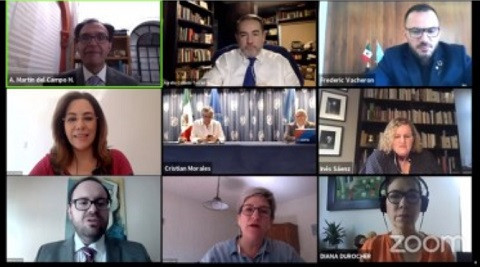 Pandemic, democracy and human rights: new challenges in journalism 2020-05-13 UNESCO, Tec de Monterrey and INAI celebrated the digital seminar "Pandemic, democracy and human rights: new challenges in journalism", in the frame of World Press Freedom Day. To understand how to turn relevant in people's lives, the media must rethink how they are designing their agendas because, although the problems they face have been exacerbated by the COVID-19 pandemic, this is also a great opportunity to show that journalism is public service good, said Alejandra Xanic, General Editor of the Fifth Element Lab, at the Seminar about press freedom organized by the United Nations Educational, Scientific and Cultural Organization (UNESCO) in Mexico, the National Institute of Transparency, Access to Information and Protection of Personal Data (INAI) and the Technological Institute of Superior Studies of Monterrey (ITESM).During the virtual dialogue table held this Wednesday, the Pulitzer Prize winner emphasized that, in this context of health crisis, local or regional journalism is crucial to offer people information about what is happening in their communities that allows them to know how to act, how to protect themselves and how to make decisions. This is an important 'shake to how the issues of society have to be at the center of the media agendas and that the best position in a newspaper should not be the journalist of politics, but the journalist of health and education-- Alejandra Xanic The seminar on disinformation, safety of journalists and other challenges that the health emergency imposes on press freedom was chaired by the Resident Coordinator of the United Nations System in Mexico, Antonio Molpeceres; the WHO / PAHO Representative in Mexico, Cristian Morales; the Dean of the School of Humanities and Education at the Tec de Monterrey, Inés Sáenz; and the UNESCO Representative in Mexico, Frédéric Vacheron.Along with Xanic, Guilherme Canela, Head of the Section of Freedom of Expression and Security of Journalists of UNESCO, the INAI Commissioner, Blanca Lilia Ibarra, and Aurelio Collado, professor at the School of Humanities and Education at ITESM, participated in the discussion panel of the digital seminar "Pandemic, democracy and human rights: new challenges in journalism". Alejandro Martín del Campo, also from ITESM, served as moderator in a session in which journalists, academics and students participated.Guilherme Canela agreed that the media, especially local and community, are also at risk of closing or being captured by private interests due to the lack of resources for their subsistence, thus affecting a free and plural media environment, reason why he made a call to recognize the role of journalism in societies and support it.Canela explained that, although UNESCO has detected attempts to control information or to suppress access to information through various mechanisms, he stressed that the responsibility for tackling mass disinformation also rests with journalists, verifying facts, documenting cases and contrasting information.For Aurelio Collado, professor at the School of Humanities and Education of the ITESM, the challenge of the media is not only found in the battle for credibility, but also in the formation of more critical audiences so that people can have the tools to select the pertinent information among all that is produced and shared in the so-called “infosphere”. Having clear, timely, truthful information and from reliable sources is vital so that people [...] can know what to do, can know how to behave, can know how to protect themselves [...]. The media can, then, contribute to a change in behaviors that help reduce the spread of the disease and not overburden health services-- Cristian Morales Meanwhile, INAI Commissioner Blanca Lilia Ibarra pointed out that it is essential that governments guarantee adequate channels, so that the media can carry out their work without facing grievances, with professional ethics, in an inclusive and responsible manner, since “the journalistic exercise allows to save lives. "This was the first of a series of open and free seminars that UNESCO, Tec de Monterrey and INAI, will organize in May in order to underpin brave and favoritism-free journalism, as well as the safety of journalists and the sustainability of the media. In the coming months we will face unsuspected challenges of health, education, employment, inclusion, social cohesion and preservation of natural resources. It is vital, above all, to protect the most vulnerable groups such as women, the elderly, indigenous communities […] Without ethical and courageous journalism, this protection work will be harder, slower, and more costly for society-- Frédéric Vacheron Links of interest: High-level online dialogue: Press freedom and the fight against disinformation in the context of COVID-19 Journalism, press freedom and COVID-19 URL:https://en.unesco.org/news/pandemic-democracy-and-human-rights-new-challenges-journalism
  El reto de inclusión frente a la emergencia del COVID-19 en México 2020-05-13 Por: Paola Garcia Chiñas, Directora de Evaluación para la Mejora de Políticas y Programas Educativos, Comisión Nacional para la Mejora Continua de la Educación México no es la excepción. Su sistema educativo nacional ha tenido que adaptarse frente a los retos causados por la pandemia del COVID-19. Las medidas tomadas han puesto en la agenda pública algunos de los desafíos que el sistema educativo ya enfrentaba, y que ahora se vuelven más evidentes. El gobierno tiene el reto de implementar estrategias de educación a distancia que respondan a la emergencia de manera oportuna, sin dejar de responder a las prioridades de inclusión establecidas en las estrategias nacionales de política. Frente a las brechas existentes, la pandemia enfrenta al gobierno a la encrucijada entre dos objetivos: el de reforzar los aprendizajes y/o construir nuevos aprendizajes, priorizando al mismo tiempo la permanencia de los alumnos. Resulta indispensable profundizar en el análisis de las implicaciones en cuanto a equidad de las estrategias educativas implementadas frente a COVID-19 en nuestro país. El sistema educativo mexicano se caracteriza por desigualdades, con alrededor de 25.4 millones de alumnos y 1.2 millones de maestros en más de 226 mil escuelas públicas y privadas de educación básica (inicial, preescolar, primaria y secundaria), que están oficialmente en casa desde el 20 de marzo. Las estrategias de educación a distancia no serán fácilmente accesibles para todos. Por ejemplo, 90% de la población perteneciente al estrato socioeconómico alto cuenta con acceso a internet comparado con solo el 19% en el estrato bajo. La emergencia, no puede obviar la discusión sobre la interseccionalidad y la necesidad de proveer una educación inclusiva y de calidad, en momentos en los que se corre el riesgo de ampliar aún más las brechas educativas. Para responder a la necesidad de que las estrategias de educación a distancia no amplíen las brechas de desigualdad, es clave recordar lo establecido en los instrumentos nacionales de política. En el caso de México, la Estrategia Nacional de Educación Inclusiva (ENEI) hace un llamado a la relevancia de que las escuelas puedan dar cabida a cualquier persona, independientemente de sus características o condiciones, para avanzar en la consecución de un sistema educativo inclusivo, flexible y que favorezca la permanencia e inclusión. Asimismo, se reconoce la necesidad de eliminar las barreras para el aprendizaje y la participación que afectan a grupos en condiciones de vulnerabilidad, asegurando que nadie quede excluido. En esta crisis, estas prioridades de política no deben perderse. De hecho, debido al riesgo de las condiciones de marginación se agraven durante esta pandemia, estos principios y derechos son aún más importante de resaltar. ¿Cuáles han sido las acciones del gobierno mexicano desde que se cerraron las escuelas? Frente al cierre de las escuelas, la Secretaría de Educación Pública (SEP) lanzó dos iniciativas claves: 1) Aprende en casa y la 2) Estrategia de Educación a Distancia: transformación e innovación para México. Aprende en casa se desarrolla a través de programas de televisión durante los cuales se explican diversos temas relacionados con el grado escolar, y al finalizar se sugiere realizar ciertas actividades. Si por alguna razón el estudiante no logra ver la clase que le corresponde, puede acceder al portal de Aprende en casa en línea, en el que encontrará los enlaces a todos los programas que puede ver desde YouTube. Se trata de una plataforma con actividades y contenidos con los que se busca incrementar el aprendizaje o reforzar los conocimientos que ya se revisaron en clase, y se presentan materiales organizados por semana. Asimismo, se sugiere que las y los estudiantes, vayan armando una carpeta de experiencias en la que guarden trabajos y tareas. El portal presenta para algunas sesiones o temas, un catálogo de actividades educativas, por ejemplo: 1) fichas de repaso, 2) lecturas, 3) actividades lúdicas, 3) retos, 4) pausas activas, 5) reforzamiento del conocimiento. Al mismo tiempo, la Secretaría impulsa la Estrategia de educación a distancia: transformación e innovación para México, una propuesta de Google for Education, cuyo objetivo es: “Implementar una estrategia integral que permita a la Secretaría de Educación brindar a los estudiantes una educación de calidad y de excelencia a distancia, a través de las herramientas que ofrece Google para Educación y YouTube, contribuyendo a la continuidad de las actividades educativas durante el período de contingencia nacional”. Dicha estrategia opera a partir de 4 ejes: 1) establecimiento de la plataforma a distancia para la SEP; 2) contenidos (de muchos tipos y materias, con métodos, lúdicos unos, visuales otros); 3) capacitación y acompañamiento a docentes, padres de familia, estudiantes y funcionarios; y, 4) métricas de uso, como insumo para su posible monitoreo y evaluación. En el caso de la educación media superior, a la que asisten 5.2 millones de estudiantes, se lanzó la estrategia Jóvenes en Casa, una plataforma dirigida fundamentalmente a estudiantes, con cinco componentes: lectura, retos formativos, concursos nacionales, webinars sobre regulación emocional y plataforma de contenidos. El objetivo es ofrecer actividades lúdicas, artísticas, deportivas y de responsabilidad social durante la pandemia. En días recientes la Secretaría, lanzó una plataforma con contenidos orientados a fortalecer la dimensión académica de la educación media superior, “Maestras y maestros en casa”, en la que se ofrecen recomendaciones y recursos didácticos y pedagógicos para poder continuar con los aprendizajes en casa. Tal como se dice en la plataforma, los recursos están en línea con los aprendizajes esperados y contenidos específicos de los programas de estudios del segundo, cuarto y sexto semestre. Las maestras y maestros pueden consultar y utilizar esos recursos para planear y diseñar estrategias de enseñanza y aprendizaje acordes a sus estudiantes, al contexto y circunstancias de este momento. ¿Cuáles son los principales desafíos a la inclusión que plantean estas estrategias? La educación, como bien público, busca cerrar las brechas de desigualdades educativas existentes. Así, es crucial analizar los retos que enfrentan las estrategias de educación a distancia, entre los que destacan: 1) ir más allá del currículo formal, para reconocer la importancia de contenidos que fortalezcan las habilidades emocionales; 2) analizar las implicaciones de la participación de actores no estatales en la provisión de servicios educativos, como el caso de Google for Education; 3) pensar en estrategias específicas que consideren el acceso desigual a recursos, con énfasis en las poblaciones que enfrentan mayores condiciones de vulnerabilidad; 4) tener en cuenta el contexto diferenciado en las familias; 5) reconocer la creatividad de las maestras y los maestros y convocarlos como protagonistas de las estrategias educativas durante la emergencia. Sobre este último punto, tal como lo señala la Comisión Nacional para la Mejora Continua de la Educación, frente a la diversidad de contextos las maestras y los maestros han tenido que adaptar sus estrategias de enseñanza a las nuevas condiciones, lo que puede representar una oportunidad para potenciar su creatividad pedagógica, recuperando y reconociendo sus iniciativas y liderazgo educativo y social frente a la pandemia. Es difícil prever hacia dónde se reorientarán las prioridades educativas después de la pandemia. Lo que hoy queda de manifiesto es la importancia de contar con currículos flexibles, con esquemas que permitan impulsar la creatividad pedagógica del docente, permitir que las y los estudiantes construyan aprendizajes significativos a partir de experiencias como la que estamos todos viviendo y reconocer el papel de la educación como dimensión central del desarrollo humano para ampliación de oportunidades y libertades. URL:https://educacionmundialblog.wordpress.com/2020/05/07/el-reto-de-inclusion-frente-a-la-emergencia-del-covid-19-en-mexico/
  Unas nuevas directrices ofrecen una hoja de ruta para reabrir las escuelas en condiciones de seguridad 2020-05-08 UNESCO, UNICEF, el PMA y el Banco Mundial publicaron nuevas directrices para reabrir las escuelas NUEVA YORK/PARÍS/ROMA, 30 de abril de 2020 – La UNESCO, UNICEF, el PMA y el Banco Mundial han publicado hoy unas nuevas directrices para reabrir las escuelas en condiciones de seguridad tras los cierres que afectan a cerca de 1.300 millones de estudiantes de todo el mundo. Los organismos han advertido de que el cierre generalizado de los centros educativos como respuesta a la pandemia de la COVID-19 plantea un riesgo sin precedentes para la educación y el bienestar de los niños, especialmente de los niños más marginados que dependen de la escuela para su educación, su salud, su seguridad y su nutrición. Las directrices ofrecen a las autoridades nacionales y locales una serie de consejos prácticos para que los niños regresen a la escuela en condiciones de seguridad. “La desigualdad creciente, los problemas de salud, la violencia, el trabajo infantil y el matrimonio precoz son solo algunas de las amenazas a largo plazo para los niños que no van a la escuela”, afirmó Henrietta Fore, Directora Ejecutiva de UNICEF. “Sabemos que cuanto más tiempo pasan los niños sin ir a la escuela, menos probabilidades hay de que regresen. Si no priorizamos la reapertura de las escuelas (cuando sea seguro hacerlo), es probable que seamos testigos de un catastrófico retroceso de los avances en materia de educación”. Las nuevas directrices ponen de manifiesto que, si bien todavía no hay pruebas suficientes para medir el impacto del cierre de las escuelas sobre las tasas de transmisión de la enfermedad, los efectos adversos sobre la seguridad y la educación de los niños están bien documentados. Los avances logrados en la ampliación del acceso a la educación por parte de los niños en las últimas décadas no solo podrían perderse, sino que, en los peores casos, podrían revertirse por completo. “En los países más pobres, la comida que reciben los niños en la escuela suele ser la única comida que reciben al día. Sin embargo, muchas escuelas permanecen cerradas a causa de la COVID-19 y, como resultado, 370 millones de niños no están recibiendo esas comidas nutritivas que son un sustento para las familias pobres. Además, tampoco tienen acceso a la atención de la salud que normalmente pueden obtener a través de la escuela. Esto podría provocar daños duraderos; por eso, cuando las escuelas reabran, será fundamental restablecer los programas de comidas y los servicios de salud, que también pueden alentar a los niños más vulnerables a regresar a la escuela”, afirmó David Beasley, Director Ejecutivo del PMA. Según las directrices, el interés superior de los niños y las consideraciones generales en materia de salud pública –sobre la base de una evaluación de los beneficios y los riesgos para la educación, la salud pública y los factores socioeconómicos–han de ser la prioridad para las autoridades nacionales y locales a la hora de tomar la decisión de reabrir las escuelas. Las escuelas deben estudiar la mejor forma de volver a abrir sus puertas, mejorando el aprendizaje y ofreciendo una asistencia más completa para los niños, por ejemplo, en todo lo relacionado con la salud, la nutrición, el apoyo psicosocial y las instalaciones de agua, saneamiento e higiene. Mientras los países tratan de determinar cuándo volverán a abrir las escuelas, la UNESCO, UNICEF, el PMA y el Banco Mundial –como parte de la Coalición Mundial para la Educación– instan a los gobiernos a evaluar los beneficios de la enseñanza en las aulas frente al aprendizaje remoto, así como los factores de riesgo relacionados con la reapertura de las escuelas, teniendo en cuenta que las pruebas sobre los riesgos de infección relacionados con la asistencia a la escuela son aún inconcluyentes. “Ante la gran cantidad de estudiantes que se están quedando rezagados en su educación debido al cierre prolongado de las escuelas, la decisión de cuándo y cómo volver a abrirlas, si bien no es nada sencilla, debería ser prioritaria. Cuando el sector de la salud dé luz verde, será necesario poner en marcha todo un conjunto de medidas para garantizar que ningún niño quede atrás. Estas directrices proporcionan una guía completa para que los gobiernos y los aliados faciliten la reapertura de las escuelas a los estudiantes, los maestros y las familias. Compartimos un objetivo: proteger y promover el derecho a la educación para cada estudiante”, dijo la Directora General de la UNESCO, Audrey Azoulay. Las directrices incluyen: Una reforma de las políticas: las implicaciones en materia de políticas abordan todas las dimensiones de las directrices, entre las que cabe destacar la elaboración de políticas claras para la apertura y el cierre de las escuelas durante emergencias de la salud pública y el fomento de reformas necesarias para ampliar el acceso equitativo de los niños marginados y los que no van a la escuela, así como el fortalecimiento y la normalización de las prácticas de aprendizaje remoto. Requisitos de financiación: abordar los efectos de la COVID-19 sobre la educación e invertir en fortalecer los sistemas educativos para la recuperación y la resiliencia. Funcionamiento seguro: garantizar condiciones que reduzcan la transmisión de la enfermedad, salvaguardar servicios y suministros esenciales y promover un comportamiento saludable. Esto incluye el acceso a jabón y agua limpia para lavarse las manos en condiciones de seguridad, procedimientos de actuación en caso de que algún miembro del personal o algún estudiante se encuentre indispuesto, protocolos de distanciamiento social y prácticas adecuadas de higiene. Compensar el aprendizaje: centrarse en prácticas que compensen el tiempo de instrucción perdido, fortalecer la pedagogía y utilizar modelos híbridos de aprendizaje tales como integrar los enfoques basados en la educación remota y a distancia. Esto debe incluir conocimientos sobre la transmisión y la prevención de enfermedades. Bienestar y protección: hacer hincapié en el bienestar de los estudiantes y reforzar la protección de los niños a través de mecanismos mejorados de remisión y la prestación de servicios esenciales en la escuela, como la atención de la salud y la alimentación escolar. Llegar a los más marginados: adaptar las políticas y las prácticas de apertura de las escuelas para ampliar el acceso a los grupos marginados, como los niños que ya habían abandonado la escuela, los niños desplazados y migrantes y las minorías. Diversificar las comunicaciones y las actividades de divulgación más importantes poniéndolas a su disposición en los idiomas pertinentes y en formatos accesibles. “Cuando las escuelas comiencen a abrir de nuevo sus puertas, la prioridad será reintegrar a los estudiantes en los entornos escolares en condiciones de seguridad y de una forma que permita reanudar el aprendizaje, especialmente para quienes hayan quedado más rezagados en su educación. Nos encontramos en un momento decisivo, ya que estamos ante una plataforma de lanzamiento hacia una nueva normalidad que debería ser más efectiva y equitativa. Con el fin de gestionar la reapertura, las escuelas tendrán que estar preparadas logísticamente y su profesorado deberá estar listo. Además, deberán contar con planes específicos para facilitar que los estudiantes más desfavorecidos se pongan al día de su aprendizaje. Las directrices ofrecen un marco para seguir avanzando en torno al cual se coordinan los principales organismos de las Naciones Unidas”, afirmó Jaime Saavedra, el Director Mundial de Educación del Banco Mundial. URL:https://www.unicef.org/colombia/comunicados-prensa/nuevas-directrices-para-reabrir-las-escuelas