
News
Catch up on what’s happening in the world of global citizenship education.
162 results found
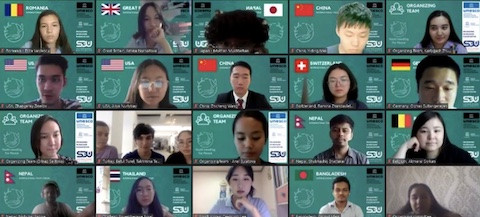 International Youth Forum "Youth Leading for Peace” 2021-08-08 On 30-31 July, 2021 the Kazakhstan National Federation of Сlubs for UNESCO with the support of the UNESCO Cluster Office in Almaty organized an International Youth Forum “Youth Leading for Peace”, dedicated to the International Year of Peace and Trust, the International Day of Action against Nuclear Tests, as well as to the 30th Anniversary of Kazakhstan's independence and the 30th Anniversary of the closure of the Semipalatinsk nuclear Test site. The forum covered 140 delegates represented by schoolchildren and students from Russia, China, Pakistan, Uzbekistan, Nepal, the Philippines, Bangladesh, Mongolia, South Korea, Romania, Tajikistan, Kyrgyzstan, Turkey, Ukraine, Belarus and Kazakhstan. Each team had the opportunity to present the strategy in the nuclear industry of their countries and took part in the practical stage of the forum to solve a hypothetical case. Participants developed solutions for the case based on international law and international documents in the field of conflict management and made their proposals from the positions of the economic, social, environmental and military committees.The forum was given a high level by experts-speakers of the theoretical part from Vienna, the Czech Republic, Russia and Kazakhstan, who shared their knowledge about the nuclear policy of different countries and international organizations in this area. The final stage of the event was the adoption of the resolution by all the delegates of the International Youth Forum “Youth Leading for Peace”, which included strategies for solving the problems of a hypothetical case.At the end, a competent jury selected 16 winning countries in such categories as “The Best video report” and “The most active delegation”.The Forum participants noted the high level of organization of the Forum and the importance of creating such platforms where young people can express their opinions on important topics, exchange knowledge and create a community of a new generation committed to the ideas of peace and tolerance. “First of all, thank you very much for organizing this event. The forum really helped to improve my analytical and communication skills. I learned a lot of interesting and useful things about nuclear weapons and energy from experts and delegates from other countries. Thank you!" - Nischal Bania, Nepal. “It was a really interesting experience that I will remember for a long time. Since it was an international conference, I met delegations from different countries. So many different people – so many different opinions. I had some expectations from this conference, and I can say with confidence that they were fulfilled. Thank you very much for creating such a wonderful opportunity for international youth”- Lee Taekyong, South Korea. You can watch the full video recordings of the forum via this link. URL:http://en.unesco.kz/international-youth-forum-youth-leading-for-peace
  UNESCO makes commitments to key-drivers to gender equality: education, science and culture 2021-07-02 As the world meets at the Generation Equality Forum, UNESCO is launching a set of concrete commitments to achieve tangible progress towards gender equality in key areas over the next five years while COVID-19 has magnified deeply rooted structural gender inequalities: On Girls’ Education, UNESCO will continue to lead a multi-stakeholder global coalition to support girls’ education in the wake of COVID-19, reaching 28 million learners in more than 80 countries with quality gender-transformative teaching and learning that promotes gender equality; On Technology and Innovation, UNESCO will work to close the digital gender divide, empower women scientists, and promote the ethical use of Artificial Intelligence which is free of gender bias and sexism. UNESCO will, for example, enable 10,000 women physicists to take leadership roles and provide access to at least 10,000 girls in Africa to studies on microscience; On Creativity, UNESCO will work to economically empower women artists and those working in the creative industries in Africa, by improving their access to audiences, funds, social protection schemes and increasing the number of creative industries enterprises owned and led by women, while promoting women’s rights to create, free of violence, sexism, and sexual harassment. Gender Equality is a global priority for UNESCO that cuts across its fields of competence: education, science, culture and communication. Gender equality cannot be achieved without concrete measures. Access to education for women and girls is a priority for UNESCO. Among other efforts, we are strengthening their access to scientific training where they are still under-represented. Our work also focuses on culture, where women’s representations are essential and where they are the most affected by the pandemic.-- Audrey Azoulay, Director-General of UNESCO Although women have been on the front lines of the crisis, they are suffering sever backlashes. In education, 767 million young women and girls were impacted by school closures and 11 million may never return to class, joining the 132 million who were already out of school before the crisis struck. From the economic perspective, the recession is pushing 47 million more women and girls into poverty, destroying their economic independence and making them more vulnerable to gender-based discrimination and violence. We must ensure that progress achieved by countries around the world is sustained notably in education, where, according to a new UNESCO report, girls’ primary school completion rates have reached 87%, almost 20 percentage points more than 25 years ago. Women still face all too many obstacles in science, despite the brilliant success of researchers like Kati Kariko, from Hungary, who contributed significantly to the creation of the Pfizer-BioNTech mRNA vaccine against coronavirus. UNESCO’s data shows that women make up only one out of three scientific researchers although they constitute 45 to 55% of all university students and 44% of PhD students. Only 3% of female higher education students, however, choose to study information and communication technologies. This is why UNESCO funds young women PhD researchers through its Organization for Women in Science for the Developing World. It also provides STEM mentorship programmes for high school girls to nurture their interest in the sciences through role models and provides courses in coding, robotics and Artificial Intelligence. UNESCO further promotes the careers of young women scientists and gives visibility to their achievements through the annual UNESCO/L'Oréal For Women in Science Award. Since 1998, more than 3,600 women scientists have been recognized, 3,500 Young Rising Talents, PhD candidates and post-doctorates, were supported through financial support and leadership training. In addition, 117 Laureates have been honored for their excellence in science, including five who have gone on to win a scientific Nobel Prize. In the field of culture, UNESCO’s recent publication Gender & Creativity: Progress on the Precipice, analyses the gender gaps in the cultural and creative industries where women artists and creators continue to face unequal access to decent work, unfair remuneration, marginalization, as well as limited access to information and communication technologies. Related links: UNESCO Priority Gender Equality UNESCO Report: “I’d blush if I could” URL:https://en.unesco.org/news/unesco-makes-commitments-key-drivers-gender-equality-education-science-and-culture
  Modern technologies in inclusive education during the COVID-19 pandemic 2021-06-22 The COVID-19 pandemic has exacerbated inequities in access to educational opportunities of marginalized populations, especially people with disabilities. While many countries in the world have taken a number of measures to address these inequities through a range of open and distance learning (ODL) solutions, emerging evidence indicates that these solutions have rarely been inclusive of students with disabilities. To support countries and other global initiatives to incorporate a strong disability inclusive perspective to COVID-19 response and recovery, the United Nations Partnership on the Rights of Persons with Disabilities (UNPRPD) launched the Global Programme Supporting Disability Inclusive COVID-19 Response and Recovery at National Level. This global programme, entitled ‘Building Back Better for All’, has enabled research investigations that leverage the experience of UN agencies, organizations of persons with disabilities and broader civil society. In 2021, IITE, the UNESCO International Institute for Educational Planning (IIEP) and UNESCO Headquarters (HQs) joined forces to contribute to the successful implementation of this programme. In January-June 2021, IITE and IIEP jointly undertook a research project aimed to increase national understanding of the range and reach of inclusive open and distance learning (ODL) solutions applied for students with disabilities in Rwanda and Mauritius and the barriers to their implementation during the COVID-19 pandemic, and inform upcoming national education COVID -19 recovery initiatives. To achieve the project’s tasks, IITE and IIEP conducted rapid assessments of the implementation of inclusive ODL solutions by inclusive, special schools, and resource centers in Rwanda and Mauritius to address the negative effects of the COVID-19 pandemic on learning for students with disabilities, as well carried out a case study in Mauritius to collect and analyze best practices in this field. Based on the findings of the conducted analysis, IITE and IIEP developed a Case Study ‘COVID 19, technology-based education and disability: The case of Mauritius. Emerging practices in inclusive digital learning for students with disabilities’ and the Analytical Report on ‘A rapid assessment of the development and implementation of inclusive open and distance learning solutions for students with disabilities served by inclusive, special schools and resource centres in Rwanda and Mauritius’. On June 15 2021, IITE and IIEP organized an international webinar on ‘Technology-enabled inclusive education: Emerging practices from COVID-19 for learners with disabilities’ with the participation of 230 experts from different countries. The webinar allowed to present key research results and recommendations related to the implementation of technology-enabled ODL initiatives and to have an open discussion about lessons learned in order to explore ways to enhance future initiatives. In June 2021, based on the gathered data from the rapid assessment and case study reports, IITE and the Division for Education 2030 Support and Coordination at UNESCO HQs prepared a Policy Brief on ‘Understanding the impact of COVID-19 on education of persons with disabilities: Challenges and opportunities of the distance education’. The Policy Brief included conclusions and recommendations developed based on the findings of recent studies undertaken in the COVID-19 context in Africa (specifically, in Rwanda and Mauritius), Asia (Bangladesh) and South America (Colombia) regarding inclusive education for learners with disabilities. The activities performed by IITE, IIEP and UNESCO Headquarters within the UNPRPD programme contribute to strengthening global collaboration and creating an encouraging ecosystem for ongoing ODL and help promoting the idea of the development of a system–wide educational reform where multiple channels to diverse learning opportunities are recognized and learning beyond formal education is encouraged. Webinar Information Note URL:https://iite.unesco.org/news/modern-technologies-in-inclusive-education-during-the-covid-19-pandemic/
 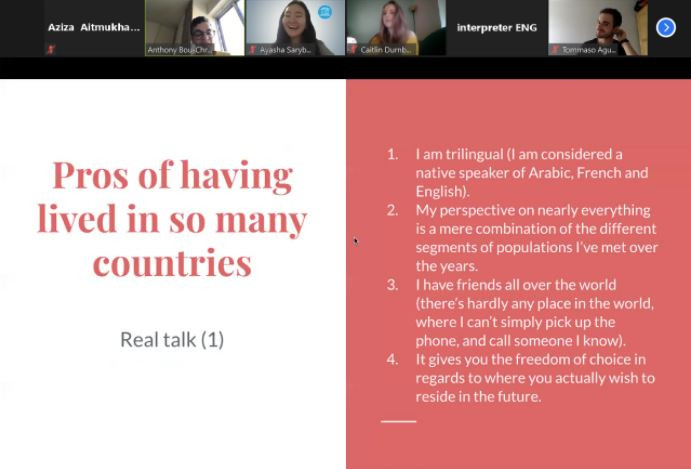 Молодые люди с 4 континентов встретились вместе для дискуссии как жить и учиться вместе 2021-05-31 The UNESCO and LingoBridge's team celebrated World Day for Cultural Diversity for Dialogue and Development by organizing an event that brought together young people worldwide including, Kazakhstan, Kyrgyzstan, Turkmenistan, the USA, and Italy, Bulgaria to promote cross-cultural understanding and international dialogue. Three speakers with broad experience of living and studying in international and multicultural environments were invited to share their stories and ideas about exploring the world. The speakers highlighted the significance of developing cultural awareness and the benefits of interacting with people across cultures. They also touched upon matters of the comfort zone and shared their thoughts on why it is essential to get comfortable being uncomfortable.Caitlin Durnbaugh from the United States has recently graduated with a Bachelors of Science in Human Development & Family Studies as well as a Bachelor of Arts in Spanish. She traveled more than 6000 km to Spain to witness different cultures and a pace of life. She says, “This exposed me to a blend of cultures ranging from Islamic and Arab influences of the South, to Spanish and European influences of the North. It is this trip in particular that changed the direction of my career to return to Europe and serve for NGOs in refugee relief.”Anthony Bou-Chrouche represented North America and the Middle East. He is a native speaker of English, French, and Arabic. He was born in Lebanon and lived there until his family immigrated to Canada because of the war. By the time Anthony turned 16, his family had to move to Dubai due to personal circumstances. Now he is enrolled in the Joint Honours program in Political Science and Economics at the University of Ottawa. Having extensive experience of living in three countries, he made some recommendations on how to adjust to an unaccustomed environment. Anthony also explained the adaptation graph he drew based on his observations.Tomasso Aguzzi is a Ph.D. candidate within the Innovative Training Network MARKETS program (EU-MSCA Fellowship) at Tallinn University of Technology (TalTech), Estonia. He holds a double MSc degree in Global Studies from the University of Vienna, Austria, and Roskilde University (RUC), Denmark, as well as a bachelor’s degree in International Development and Cooperation from the University of Bologna, Italy. He lectured at Ablai Khan University of International Relations and World Languages and worked at the Eurasia Foundation of Central Asia in Almaty, Kazakhstan. During the meeting, everyone was impressed by his wide traveling experience.The speakers and participants also played Kahoot, prepared by Anthony Bou-Chrouche, and tested their geography, general-knowledge skills, and how well they listened to the speakers. We also looked at where the meeting attendees would like to study; the destinations included the USA, some European countries such as Italy, France, Germany, Asian countries (Japan, China), but the most creative and unexpected place to study appeared to be the moon. Lessons learned from the meeting: The pros of living and studying in a different country outweigh the cons. Therefore, step out of your comfort zone, explore the world and meet new faces. Studying abroad broadens your international connections, which in turn helps you build up a sense of empathy. The cultures can be very different, but it is noteworthy to realize that we all share the same values and goals; we all want to love and be loved, be safe and happy. Befriend locals, allow yourself to adapt to a new environment, and get the most out of every single experience. Living in a country where you do not speak the language can be challenging. The advice is to find friends who can speak both the language you know and the local language so that you can get insights into the mother tongue of the locals step by step.Going abroad to study is life-enriching and can inevitably broaden the horizons and open up one’s eyes! The best part of exposing yourself to an entirely different culture is being able to gain new perspectives and sharing your background and culture to promote understanding and peace.Happy World Day for Cultural Diversity for Dialogue and Development! URL:http://en.unesco.kz/youth-from-4-continents-met-together-to-celebrate-world-day-for-cultural-diversity
 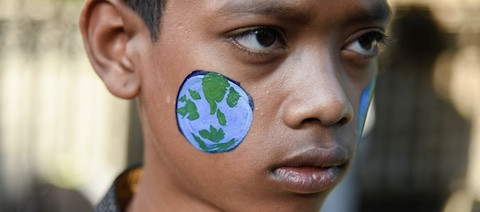 UNESCO declares environmental education must be a core curriculum component by 2025 2021-05-21 Over 80 ministers and vice ministers and 2,800 education and environment stakeholders committed to taking concrete steps to transform learning for the survival of our planet by adopting the Berlin Declaration on Education for Sustainable Development (ESD) at the end of a three-day virtual World Conference held from 17 to 19 May. The Conference, followed online by over 10,000 viewers, was organized by UNESCO in cooperation with the Federal Ministry of Education and Research of Germany and the German Commission for UNESCO as advisory partner. UNESCO has called for Education for Sustainable Development to be a core component of all education systems at all levels by 2025. Education can be a powerful tool for transforming our relationship with nature. We must invest in this field in order to preserve the planet.-- Audrey Azoulay, UNESCO Director-General UNESCO’s launch of a new publication, which analyzed educational plans and curricula frameworks in close to 50 countries informed the discussions. UNESCO found that more than half make no reference to climate change, while only 19% speak about biodiversity. The Berlin Declaration on Education for Sustainable Development outlines a range of policies to transform learning encompassing teaching, learning, professional training and civic engagement. It also highlights the need to implement Education for Sustainable Development with focus on cognitive skills, social and emotional learning, collaboration skills, problem solving, resilience-building. We need training for sustainable development not to be a privilege but accessible to all people. The success of the Education for Sustainable Development programme for 2030 will bring us closer to all the SDGs.-- Angela Merkel, German Chancellor “We need training for sustainable development not to be a privilege but accessible to all people. The success of the Education for Sustainable Development programme for 2030 will bring us closer to all the SDGs,” said German Chancellor Angela Merkel in her welcoming address, describing Germany’s broad network of partners working on sustainability at all levels of education and training. Throughout the Conference, countries shared plans to integrate Education for Sustainable Development. Ms Anja Karliczek, Germany’s federal minister of education and research, shared the commitments of 18 countries of the European Union to implement the Education for Sustainable Development for 2030 framework, underscoring it as a driver for the achievement of all the SDGs. We must focus not only expanding access and improving learning outcomes, but also on the kind of education needed in our world. Education for Sustainable Development will be at the core of reimagining education.-- Amina Mohammed, UN’s Deputy Secretary-General Laurent Fabius, who presided COP21 where the Paris Agreement was sealed, stated the “fight against climate change begins at school.” He recalled commitments in the Paris Agreement to education, and called for increased efforts to improve teacher training on ESD and increase financing. “2021 is the year in which we will overcome the pandemic and embark on a sustainable development model for the future that must include ESD. If we miss this occasion, we will lose decades. This is a race against the clock.” The voices of young people were given a platform throughout the Conference, as those leading the call for change so that they can #LearnForOurPlanet. Building a whole new lifestyle is not an easy, but slowly and together I’m sure we can do it. But education needs to give us the tools to do this. Learning not just about our planet but for our planet needs to be part of every young person’s education, everywhere in the world.-- Rajwa Pandhita, a student from Indonesia The adoption of the Berlin Declaration will create momentum for the implementation of ESD for 2030 Roadmap – the framework for this decade of Education for Sustainable Development. Every UNESCO Member State will be asked to create a network of actors who together can implement the ambitious vision for education. From Berlin, 2021 will provide key opportunities for governments to apply this commitment, including the United Nations Biodiversity Conference (COP 15) and the United Nations Climate Change Conference (COP26) in Glasgow. URL:https://en.unesco.org/news/unesco-declares-environmental-education-must-be-core-curriculum-component-2025
 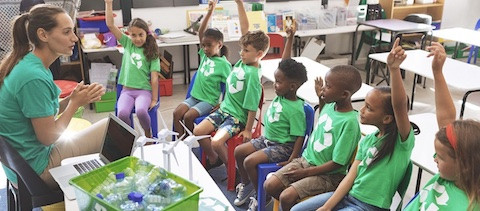 UNESCO urges making environmental education a core curriculum component in all countries by 2025 2021-05-14 Education is not giving students sufficient knowledge to adapt, act and respond to climate change and environmental crises, according to a new report published by UNESCO on the eve of the World Conference on Education for Sustainable Development, which will take place on line from Berlin (Germany), from 17 to 19 May. The study, Learn for Our Planet, analyzed educational plans and curricula frameworks in close to 50 countries across all regions. More than half make no reference to climate change while only 19% speak about biodiversity. The study notes a lack of attention to socio-emotional skills and action-oriented competences that are central to environmental and climate action. In an on-line survey of some 1,600 teachers and education leaders conducted for the study, one third of respondents indicated that environment-related issues were not part of teacher training. Education must prepare learners to understand the current crisis and shape the future. To save our planet, we must transform the way we live, produce, consume and interact with nature. Integrating education for sustainable development into all learning programmes must become fundamental, everywhere.-- Audrey Azoulay, UNESCO Director-General UNESCO has therefore set a new target: to make environmental education a core curriculum component in all countries by 2025. The Organization is working with its 193 Member States to support curriculum reform and track progress to ensure everyone acquires the knowledge, skills, values and attitudes to introduce positive change and protect our planet’s future. The World Conference will bring together some 2,500 participants, including 81 education ministers and leading players committed to the transformation of education so that all learners can address the climate crisis, biodiversity loss and all other sustainable development challenges. It will aim to create strategies for the integration of education for sustainable development into every level of education and training, in line with a new framework. Over three days, sessions will focus on optimal ways to harness education to address interconnected global challenges such as climate change, biodiversity loss, green and circular economies, technological advancement and building resilient relationships with the planet through education. It will look at ways to reinforce the capacity of educators, empower youth and take local actions through education for sustainable development. All participants will be called upon to commit to the Berlin Declaration on Education for Sustainable Development that will outline a range of policies encompassing teaching, learning, professional training and civic engagement. High-level participants scheduled to attend the conference: Audrey Azoulay, Director-General, UNESCO Angela Merkel, Chancellor, Germany Amina Mohamed, Deputy Secretary-General of the UN Patricia Espinosa, Executive Secretary, UNFCCC Princess Lalla Hasnaa, President, Mohammed VI Foundation for Environmental Protection, Morocco Laurent Fabius, President of COP21 (France) Alexander Gerst, European Space Agency Astronaut and advocate for sustainability (Germany) Jeffrey Sachs, Director, the Center for Sustainable Development, Columbia University and President, the UN Sustainable Development Solutions Network Andreas Schleicher, Director of Education and Skills and Special Advisor on Education Policy to the Secretary-General, Organization for Economic Cooperation and Development (OECD). In the lead-up to the Conference, people have been adding their voices to a global campaign launched by UNESCO to call for changes in education so we can all #LearnForOurPlanet, for our own survival and for the future of life on earth. UNESCO is the leading United Nations organization on Education for Sustainable Development, which aims to ensure that all learners acquire the knowledge, skills, values and initiative to act for the planet and live sustainably. In 2019, the UN General Assembly adopted a resolution calling on the international community to scale up education for sustainable development in order to achieve the 2030 Agenda. The resolution recognized UNESCO’s leadership in this field. The conference is organized in cooperation with Germany’s Federal Ministry of Education and Research and with its generous support. URL:https://en.unesco.org/news/unesco-urges-making-environmental-education-core-curriculum-component-all-countries-2025
  Call for nominations for the 2021-2022 UNESCO-Hamdan Prize for Teacher Development 2021-05-09 The three winning projects will receive US $100,000 to support their further development. UNESCO is pleased to invite Governments of Member States and NGOs in official partnership with UNESCO to nominate outstanding projects or programmes for the 2021-2022 UNESCO-Hamdan Prize for Teacher Development.The UNESCO-Hamdan Prize honours institutions, organisations or educational institutes for exemplary projects or programmes in the field of enhancing teaching and learning in line with UNESCO’s principles and objectives. The Prize also recognises the role of teacher development as an integral element of Sustainable Development Goal 4 on Education. The winner will be selected by the Director-General of UNESCO, from a shortlist of outstanding candidates prepared by an independent international jury. To be considered eligible for nomination, projects must meet the following criteria:• the program/project must be ongoing for at least three years• it must represent an outstanding contribution to the fundamental objectives of UNESCO and the United Nations in the fields of quality education for sustainable development• the work accomplished must be exemplary and likely to stimulate similar initiative• it must have shown itself to be effective in mobilizing new intellectual and material resourcesEntrants must be nominated by a Permanent Delegation to UNESCO from a member state, or by an NGO in official partnership with UNESCO. Self-nominations will not be accepted. Each member state or NGO can make up to five nominations.Nominations must be submitted in English or French by midnight (Paris time) on 31 October 2021.Further information on the Prize is available on the Prize website, and the nomination process is explained in the application guide.The Prize is funded by the Hamdan Bin Rashid Al Maktoum Foundation for Distinguished Academic Performance of the United Arab Emirates. The Prize was established in 2008 and will be awarded for the seventh time next year. The 2021-22 Prize will be the first since the sad passing of the Prize’s donor, His Highness Sheikh Hamdan bin Rashid Al-Maktoum. The Sheikh will be remembered for his unwavering support for quality education, and for the teaching profession in particular. It is hoped that the UNESCO-Hamdan Prize for Teacher Development will pay tribute to this legacy for many years to come. URL:http://en.unesco.kz/call-for-nominations-for-the-2021-2022-unesco-hamdan-prize-for-teacher-development
 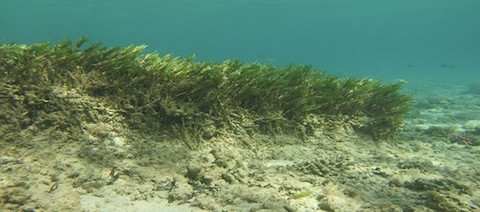 UNESCO cautions ocean risks losing its ability to absorb carbon, exacerbating global warming 2021-05-05 In absorbing carbon dioxide (CO2), the oceans play a crucial role in regulating the climate, a role yet to be fully understood. However, the oceans’ ability to contribute to climate regulation may decline and even be reversed in the future. The oceans that are now the blue lungs of our planet, could end up contributing to global warming. Integrated Ocean Carbon Research: A Summary of Ocean Carbon Knowledge and a Vision for Coordinated Ocean Carbon Research and Observations for the Next Decade, a report newly published by UNESCO’s Intergovernmental Oceanographic Commission (IOC) sets out to accomplish the vital task of studying the evolution of CO2 uptake. It presents a synthesis of the state of knowledge about the oceans’ role in the carbon cycle and points to the way ahead. Its objective is to provide decision-makers with the knowledge needed to develop climate change mitigation and adaptation policies for the coming decade. The report also emphasizes the importance of scientific knowledge to the taking of informed decisions within the United Nations Framework Convention on Climate Change in order to achieve the goals of the Paris Agreement and build more resilient societies. The report highlights the role of the ocean since the industrial revolution as a sink for carbon generated by human activity. Indeed, without ocean and land sinks, atmospheric CO2 levels would be close to 600 ppm (parts per million), 50% higher than the 410 ppm recorded in 2019, which is already well above the agreed target of limiting global warming to two degrees Celsius. But there is a danger that this process will be reversed. Instead of absorbing carbon, the oceans could contribute to the warming greenhouse effect of CO2 emissions. The IOC report thus examines available observations and research to determine whether the oceans will continue to “help” humanity or whether they will turn against it, making mitigation and adaptation to warming more difficult. The broader question is how humanity is altering the ocean carbon cycle, including through carbon dioxide removal schemes, and how this impacts marine ecosystems. In developing the report, the IOC brought together experts from the five [1] international research and coordination programmes on ocean-climate interaction, which have been working together since 2018 in the IOC Working Group on Integrated Ocean Carbon Research (IOC-R). Together they propose an innovative joint programme of medium- and long-term integrated ocean carbon research to fill the gaps in this field. The report was developed as part of the ongoing UN Decade of Ocean Sciences for Sustainable Development (2021-2030). This is a unique opportunity to bring together all stakeholders around common scientific priorities to strengthen action on the changing ocean carbon cycle.-- Audrey Azoulay, UNESCO Director-General Report: Integrated ocean carbon research: a summary of ocean carbon research, and vision of coordinated ocean carbon research and observations for the next decade Study on the role of 'blue carbon' in World Heritage sites United Nations Decade of Ocean Science for Sustainable Development (2021-2030) Media contact: Clare O'Hagan(link sends e-mail), +33(0)145681729 [1] The International Ocean Carbon Coordination Project (IOCCP), the Integrated Marine Biosphere Research Project (IMBeR), the Surface Ocean – Lower Atmosphere Study (SOLAS), the Climate and Ocean Variability, Predictability and Change (CLIVAR) project and the Global Carbon Project. URL:https://en.unesco.org/news/unesco-cautions-ocean-risks-losing-its-ability-absorb-carbon-exacerbating-global-warming
 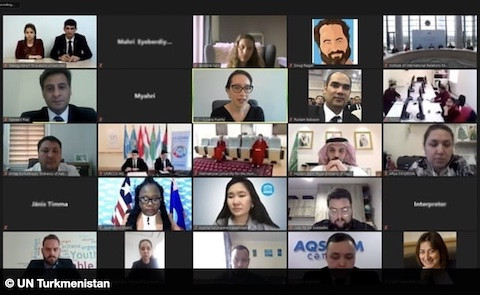 Engaging youth in peace and trust global discussion 2021-05-05 On 29 March 2021, the United Nations and the Government of Turkmenistan have convened the International Youth Forum for Peace and Trust which was organized as a follow up to the Resolution adopted by the UN General Assembly on 12 September 2019 proclaiming the year 2021 as the International Year of Peace and Trust. The high-level forum organized in a video-conference format brought together the representatives of the UN System, in particular the Office of the UN Secretary General's Special Envoy for Youth, UNFPA, UNICEF, UNESCO, UNDP, UN-Habitat, UNODC, OHCHR, UNRCCA, as well as the National Youth Councils, regional youth organizations and the civil society to facilitate a global dialogue to promote youth participation in formal peace dialogues and amplifying the importance of creating a climate of trust between the nations.The Forum aimed at encouraging the UN Member States, UN entities, regional and sub-regional organizations and other relevant actors to consider instituting mechanisms to engage youth in the promotion of a culture of peace, tolerance and intercultural and interreligious dialogue and develop, as appropriate, an understanding of respect for human dignity, pluralism and diversity. During the first segment of the Forum young leaders representing youth organizations and networks from the region and beyond exchanged their views on importance of youth participation for regional peace and creating a culture of trust at all levels. They also contributed to the Joint Appeal of the participants of the Forum that was later adopted.The results of the Ashgabat Youth Forum will contribute to the Economic and Social Council (ECOSOC) Youth Forum to be held on 7 and 8 April 2021. URL:http://en.unesco.kz/engaging-youth-in-peace-and-trust-global-discussion
  The Fight for Equal Rights for Women Is Growing in Central Asia 2021-05-05 Savia Khasanova. Photo: CABAR.asia On March 30, IWPR Central Asia held an online discussion on the topic “Women’s Activism in Central Asian Countries: the Fight for Women’s Rights Is Relevant Again”. The activists of the women’s movement for equal rights from four Central Asian countries participated in the online discussion. They discussed issues of gender equality and violation of women’s rights in Kazakhstan, Kyrgyzstan, Tajikistan and Uzbekistan. The moderator of the discussion was Lola Olimova, IWPR Program Coordinator. She noted that regrettably, the situation with the violation of women’s rights is worsening in Central Asian countries. After 30 years of independence of the countries in the region, the women have to defend their rights again. Gender inequality is revealed in many areas, in particular, women, despite state programs, laws and populist statements by the authorities, find it difficult to overcome the barriers to advance the careers in politics, governance, distribution of economic benefits, etc. Women in Central Asia have to fight for their social and political rights, while facing strong opposition from men insisting that women should follow the conservative traditions of their ancestors. A Kyrgyz performer, known for her songs in defense of women’s rights and against violence, Zere Asylbek, set the tone for the conversation. She spoke standing in front of a court building in Bishkek, where there was a hearing of the case of a woman raped by bailiffs. Zere said that she came there to support the victim of violence, who seeks justice for 8 years already. The activist spoke about the aggravating situation of women in her country. “The cases of bride kidnapping still exist. In addition, during the pandemic, the number of complaints from women about domestic violence increased by 40%. It is scary to think about where it all is going, because the unstable political situation is most disadvantageous for women. This makes me think about what will happen next,” Zere Asylbek said. She recalled the protest on March 8, 2019, when women in Bishkek went out to state their position against the violence. The government did not protect the women’s march then. According to Zere, the authorities pretended that they had nothing to do with it, hired some people who attacked the women, while the police detained not the attackers, but the women participating in the peaceful demonstration. “The state not only knows about the problems women encounter, but it also ignores these problems. It seems that the state does not want to solve these problems, and suppresses the activists who are struggling with it. The situation of women in corrupt countries is aggravating,” Zere said. Nevertheless, young girls and women in Kyrgyzstan do not give up and continue to fight for equal rights. The march on March 8 this year became symbolic and showed that the feminist movement in the country became stronger. In conclusion, Zere introduced the participants of the online discussion to young girls who came to one of the district courts in Bishkek with posters to support a woman fighting for her rights. We should add that a DoS attack was launched against the online discussion. At the beginning, during the speeches of activists from Kyrgyzstan, the opponents of women’s equality were able to interfere with the speeches for a short time, posting obscene comments and pictures, thereby discrediting the event. The organisers quickly regained control by blocking some of the participants with unidentified nicknames. The discussion went on without interruptions. The next speaker was Savia Khasanova, a researcher and data journalist from Kyrgyzstan. Savia manages several analytical platforms: Central Asian Analytical Network, UZAnalytics, and regularly publishes her materials on the online media Kloop.kg. She actively works on research on femicide, gender-based violence and women’s economic empowerment. Her presentation was titled “Fight for Women’s Rights in Kyrgyzstan: an Agenda Against Stereotypes, Discrimination and Violence”. She said the topic was inspired by the protest marches that took place in 2019 and 2021. According to Savia Khasanova, largely, the discrimination and violence against women arise from the stereotypes existing in society. “Most of the comments about women’s activism in the Kyrgyz segment of social media say, “What are you thinking of? Who is stopping you?” On paper, everything is fine in the Kyrgyz Republic. Women’s rights are enshrined in various laws, the National plan for achieving gender equality, etc. However, when it comes to opportunities, in fact, everything is not so perfect,” she said. In her presentation, the researcher showed the deterioration in the situation of women in Kyrgyzstan over the past twenty years. One of the most important indicators is the participation of women in economic life of the country. The comparative analysis conducted by her shows that the employment gap between men and women over 15 years old is growing. In 2002, every second woman between 20 and 29 years old worked, but by 2019, this figure dropped to 37%. In political representation, 30% gender quotas for women adopted in 2011 have never been implemented. The representation of women in Parliament has not exceeded 17% over the past five years. The number of officially registered cases of domestic violence in Kyrgyzstan is growing. In 2019, 8,159 cases of domestic violence were registered, 95% of the victims were women. At the same time, the numbers do not reflect the real picture, according to Khasanova. She presented data on the Gender Inequality Index, annually provided by UNDP. It shows that among the CIS countries, Kyrgyzstan has made the least progress. This indicator reflects the complex situation in the country with the women’s status. Both activists of the gender equality movement from Kyrgyzstan noted that the change of power in their country does not encourage optimism and, possibly, it will add new challenges to their struggle. “Just yesterday, President Japarov signed a decree on the creation of a group for preparation of a concept of spiritual and moral development. We do not understand what criteria will be included in this spiritual and moral development. What will be promoted under this concept? In general, how will this affect the women’s role in our country? I urge everyone to follow this situation. In case of something inappropriate, we should ring the alarm,” Savia Khasanova said in conclusion. Zulaykho Usmonova, PhD, leading researcher at the Institute of Philosophy, Political Science and Law of the National Academy of Sciences of the Republic of Tajikistan, women’s rights activist and researcher, spoke about the situation with the women’s status in Tajikistan. Women’s rights movement in Tajikistan is not as developed as in Kazakhstan and Kyrgyzstan. Zulaykho Usmonova told the discussion participants about the first attempt to get together and celebrate International Women’s Day on March 8 last year. Then, a small group of women, about 50 people, decided to gather in one of the cafes in Dushanbe, and faced incredible opposition from the state security officers. According to Usmonova, this meeting was decided to be held in another cafe, but it never took place, because its organiser Nisso Rasulova was asked to immediately stop the meeting due to the danger of coronavirus spread, although at that time, the authorities officially denied the presence of this virus in Tajikistan. Later, many women reported that they were summoned for questioning by the State Committee for National Security. This was the only attempt to control the feminist movement in Tajikistan. After that, women in Tajikistan no longer gathered. Meanwhile, the situation of women in this country is also rapidly aggravating. “The main obstacles to gender equality in Tajikistan and in other countries, in my opinion, are phenomena that can be called superstructural, considering the Marxist theory of base and superstructure – the phenomena that are related to spiritual, not material life. The prevalence and persistence of stereotypes, which, unfortunately, rapidly appeared in our countries after the Soviet Union collapse. First, they relate to the role and position of women. These stereotypes in Tajikistan acquire new contexts and become a real disaster and threat to the development of gender equality,” Usmonova said. Unfortunately, despite the fact that the state adopts fair laws, strategies and programs, despite the commitment of the country’s government to international norms and documents on gender equality, the women in the country are not allowed access to the power. This happens for various reasons, but, first, because there are quite few educated women who can professionally engage in politics, economics, and banking. This results from the fact that girls are forbidden to continue their education after the marriage. This negatively affects the role of women, therefore, there are several times fewer candidates and doctors of science among women than among men, as Zulaykho Usmonova emphasized. The feminists from Kazakhstan, human rights activists and co-founders of the Feminist Initiative “Feminita” Zhanar Sekerbaeva and Gulzada Serzhan spoke about their fight for equal rights. Their presentation was titled “Why Is Feminism Equal to LGBT in Kazakhstan?” Zhanar Sekerbaeva said that their initiative is unregistered, since “the patriarchy resists them with all its power”. She said that together with Gulzada, she has been monitoring, researching and advocating for vulnerable women since 2014. “Our mission clearly defines the groups of women whose advocacy and monitoring we conduct. These are lesbian, bisexual, queer and trans women. The sex workers are also registered there, and this definition very often embarrasses officials. They are constantly trying in to say that this group of people is very terrible,” said Zhanar Sekerbaeva. She noted that, despite the repeated criticism of identity politics, they equate feminism and LGBT, which is often used against them. Zhanar spoke about the preparation and realisation of the feminist march in 2021 initiated by their group, and about the excitement in society about it. “It becomes unclear to everyone how feminism and the women’s movement are suddenly connected with LGBT people? No one thinks that these are, mostly, the women. Even when we try to explain that they are women too and they have the same problems, just their sexual identity is a little different, very few people understand us,” she said. “The protest on March 8 in Kazakhstan has become historic. For the first time, about 1000 people came to such a march. Even the opposition and those who oppose the transfer of land to China were unable to gather so many people. However, the lesbians, female sex workers, women living with HIV organised such a peaceful march with so many people. It was the safest and largest feminist march,” Zhanar Sekerbaeva highlighted. She urged women to stand up for their rights and not be afraid of stereotypes. Gulzada Serzhan spoke about her feelings about this march and an invitation to a TV talk show after it. The devaluation of their activities and accusations of ties with the authorities [the Almaty Akimat issued permission to hold this march, and “Feminita” initiative is accused of using the pro-government connections] could not destroy their positive attitude in the fight for their rights. On the contrary, all these accusations and the quoting out of context led to an increase in the number of views of their websites and social media pages. “According to our laws, it is prohibited to gather more than a thousand people for the peaceful protests. However, those who are afraid of us claimed there were three thousand people. We wonder what would happen if next year, every woman brings two friends with her? What should we do then?” said Gulzada Serzhan. Irina Matvienko, journalist and women’s rights activist, founder of the “Ne Molchi” [“Do not be silent” – Tr.] Movement in Uzbekistan, informed the discussion participants about the situation in her country. Her presentation was titled “Uzbekistan: The Illusion of Equality”. The Article 18 of the Constitution of the Republic of Uzbekistan guarantees equal rights and freedoms, regardless of gender, race, nationality, language, religion, and so on, but in fact, all this is an illusion, Matvienko said and presented statistics. The women make up only 2.9% of the government of the Republic of Uzbekistan, and 12.8% – of the judicial system. In 2019, the women made up 26.6% among the managers at the level of heads of departments in ministries, 11.1% – among the heads of enterprises, and only one fifth – among the heads of households. The women make up less than a quarter of the adult population who own land. The wage gap between men and women is 36.2%, but if we consider the unpaid domestic work, then women are occupied with such work much more. Higher education enrolment is also much lower among women. The Uzbek expert cited the scary headlines from the Uzbek media, which indicate a growth of femicide in the country. “The women are beaten, are killed. The women throw themselves under the train with their children, because her husband blames her for not giving birth to a boy. They are beaten because they were late at work and did not have time to cook dinner. The women are raped. This is scary,” said Irina. The activists in Uzbekistan are fighting for their rights, she said. Last year, a flash mob “Fight against stereotypes” was launched in Tashkent, where the girls participated with posters and slogans “Kelinka [daughter-in-law – Tr.] is not a servant”, “My body, my choice”, “A woman is not an incubator”, etc. The activists of the “Ne Molchi” movement prepared a petition for women’s rights protection, but the commission under the Oliy Majlis, consisting of eight men, rejected this petition, stating that the rights of women in Uzbekistan are already protected. In the conclusion, Irina Matvienko showed a movie “Hear Me Out, Too” by Mukhlisa Azizova, an Uzbek director. The movie demonstrates the vulnerable position of girls and women from the countries of the region. URL:https://cabar.asia/en/the-fight-for-equal-rights-for-women-is-growing-in-central-asia