
News
Catch up on what’s happening in the world of global citizenship education.
162 results found
 Launch of the "Youth as Researchers" Project in Central Asia 2025-02-12 The UNESCO Almaty Regional Office, in close collaboration with the UNESCO Office in Tashkent, the International Centre for the Rapprochement of Cultures under the auspices of UNESCO, and the Kazakhstan National Federation of Clubs for UNESCO, is proud to announce the launch of the Youth as Researchers initiative in Central Asia. 30 January 2025The UNESCO Almaty Regional Office, in close collaboration with the UNESCO Office in Tashkent, the International Centre for the Rapprochement of Cultures under the auspices of UNESCO, and the Kazakhstan National Federation of Clubs for UNESCO, is proud to announce the launch of the Youth as Researchers initiative in Central Asia. This exciting project empowers young people across Kazakhstan, Kyrgyzstan, Tajikistan, Turkmenistan, and Uzbekistan to engage in research on critical themes that impact their communities. Through this initiative, nine youth research groups have been selected to focus on five key topics: Promotion of Science Peace and Intercultural Dialogue Gender Equality Youth Mental Health Ethics of Artificial Intelligence Over the next two months, these youth groups will undergo comprehensive training in research methodologies, particularly in the social and human sciences. This training will equip them with the necessary tools to develop impactful knowledge products, which will contain recommendations on the selected topics. The findings will be shared with the National Commissions and Permanent Delegations to UNESCO of the participating countries.The Youth as Researchers (YAR) programme, which is part of a global UNESCO initiative, is designed to empower young people to conduct research that addresses the issues they face. By equipping youth with research skills, YAR fosters evidence-based advocacy, encourages active participation in policy discussions, and strengthens their roles as agents of change in society.Stay tuned for updates on the progress of the YAR project and the invaluable contributions of young people across Central Asia to shaping their communities’ future. URL: https://www.unesco.org/en/articles/launch-youth-researchers-project-central-asia?hub=701
 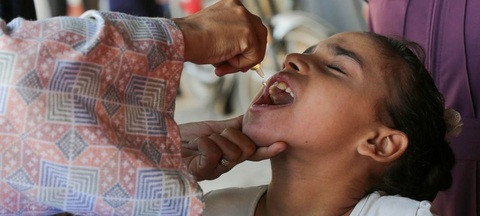 UN Regrets US Exit from Global Cooperation on Health, Climate Change Agreement 2025-02-10 21 January 2025 - Humanitarian Aid UN agencies responded on Tuesday to President Trump’s executive orders ending US membership of the World Health Organization (WHO) and its adherence to the Paris Climate Agreement, highlighting the massive potential negative impact on public health and efforts to curb global warming.“The WHO regrets the announcement that the United States of America intends to withdraw from the Organization…We hope the United States will reconsider,” said WHO spokesperson Tarik Jasarevic, hours after the new President signed an executive order at the White House, bringing US involvement in the UN agency to an end in 12 months. The US joined WHO in 1948 after a joint resolution was passed by both chambers of Congress. The resolution requires the country to provide one year’s notice to leave the organization. President Trump took steps to withdraw from the WHO in 2020 during his first term – but the move was reversed by the Biden administration. Responding to journalists’ questions in Geneva, Mr. Jasarevic insisted that WHO “plays a crucial role in protecting the health and security of the world’s people, including Americans, by addressing the root causes of disease, building stronger health systems, and detecting, preventing and responding to health emergencies, including disease outbreaks, often in dangerous places where others cannot go.” Asked about the impact of the US withdrawal, Mr. Jasarevic pointed out that he saw the executive order “this morning like everyone else” and that further analysis will be needed. He confirmed that the US was WHO’s largest single donor, accounting for 18 per cent of the agency’s budget in 2023. Also in Geneva, UN humanitarian affairs office (OCHA) spokesperson Jens Laerke highlighted the UN health agency’s importance, saying that “the world lives longer, healthier, perhaps a little bit happier because of WHO”. “WHO is in places where others cannot go,” Mr. Laerke said, including Gaza, Yemen, Afghanistan and Sudan. “It is an indispensable part of the international humanitarian system,” he insisted. Climate shock From the UN World Meteorological Organization (WMO), spokesperson Clare Nullis reacted to President Trump’s vow to quit the universally adopted 2015 Paris Agreement - marking an immediate return to the policies of his first presidential term, which ended in January 2021. The need for all countries to respect the accord was “pretty obvious”, she said, given that 2024 “was the hottest year on record”, at about 1.55°C above the pre-industrial era. “It is the defining challenge of our time,” she insisted. In the wake of the recent devastating and deadly massive wildfires that ripped through Los Angeles, the WMO spokesperson also noted that the US had suffered the bulk of global economic losses from weather, climate and water-related hazards. “It has sustained 403 weather and climate disasters since 1980 where overall damages/costs reached or exceeded $1 billion. The total cost of these 403 events exceeds $2.915 trillion, according to US figures,” Ms. Nullis said. Her comments echoed those of the UN Spokesperson’s Office late on Monday which responded to journalists’ questions insisting that “the transformation envisaged in the Paris Agreement is already underway”, with a renewable “energy revolution” offering opportunities for jobs and prosperity. “The Secretary-General remains confident that cities, states and businesses within the United States - along with other countries - will continue to demonstrate vision and leadership by working for the low-carbon, resilient economic growth that will create quality jobs and markets for 21st century prosperity," the statement continued. “It is crucial that the United States remains a leader on environmental issues,” it concluded. URL: https://news.un.org/en/story/2025/01/1159211
 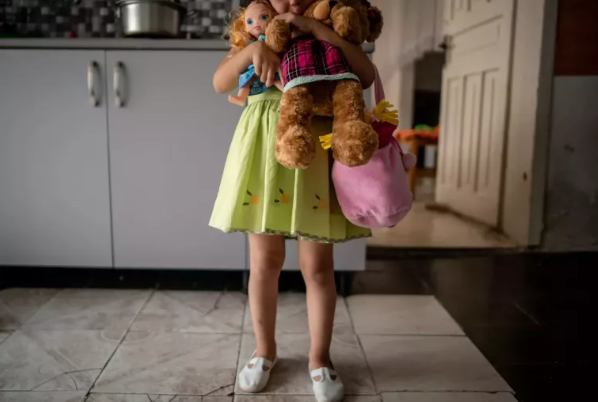 ЮНИСЕФ приветствует принятие Сенатом Олий Мажлиса Республики Узбекистан Закона «О прекращении всех форм насилия в отношении детей» 2024-09-05 TASHKENT, 15 August 2024 – The United Nations Children’s Fund (UNICEF), welcomes the approval of the Law for the Protection of Children from All Forms of Violence today by the Senate of the Olij Majlis of the Republic of Uzbekistan. The law, which now awaits the president’s signature, outlines prevention and response measures to protect children from violence, abuse, neglect, and exploitation in all settings. The statutory instrument provides for multi-sectoral services designed to prevent and address violence against children. Globally, data reveals that more than 1 billion children experience physical, emotional, or sexual violence each year. In Uzbekistan, the recent MICS study found that 2 in 3 children aged 1-14 (62%) have experienced violent disciplining methods, and 33% of girls aged 15-19 believe that a husband is justified in beating his wife. These statistics underscore the urgent need for comprehensive legal protections for children. “We are excited about the passing of the law by the Senate. This is a landmark legislation for the children of Uzbekistan and represents a significant step forward in safeguarding the well-being and protecting them from all forms of violence.” said UNICEF Representative Ms Regina Castillo. “As UNICEF we are keen to start supporting the Government and the people of Uzbekistan, with its implementation.” The Law on Ending all Forms of Violence Against Children provides a clear definition of violence against children and includes protections against various forms of violence, such as physical, psychological, and sexual violence, child neglect, exploitation, and bullying (including cyberbullying). Further, it promotes the non-use of violent disciplining methods in family and school settings. Additionally, the law allows for the issuance of protection orders for boys and girls subjected to violence and includes legal safeguards to protect child victims from secondary victimization in criminal justice proceedings. The law also provides for wide dissemination of information about violence against children and how to seek support if a child is at risk or has become a victim of violence. The law passed by senate today is the culmination of extensive working group meetings with line ministries under the leadership of the Ministry of Justice and the National Agency for Social Protection under the President. It is aligned with international standards and incorporates best practices from other countries in the field of ending violence against children. “The law, when implemented can potentially leapfrog Uzbekistan’s attainment of numerous Sustainable Development targets related to ending violence against children, specifically SDG target 16.2 that aims to end violence against children and SDG target 5.2.1 that aims to eliminate violence against women and girls,” said Ms Castillo. UNICEF stands ready to continue supporting the Government of Uzbekistan in the implementation of the law once it is signed by the President and comes into force. URL: https://www.unicef.org/uzbekistan/en/press-releases/unicef-welcomes-adoption-law-ending-all-forms-violence-against-children-uzbekistan
 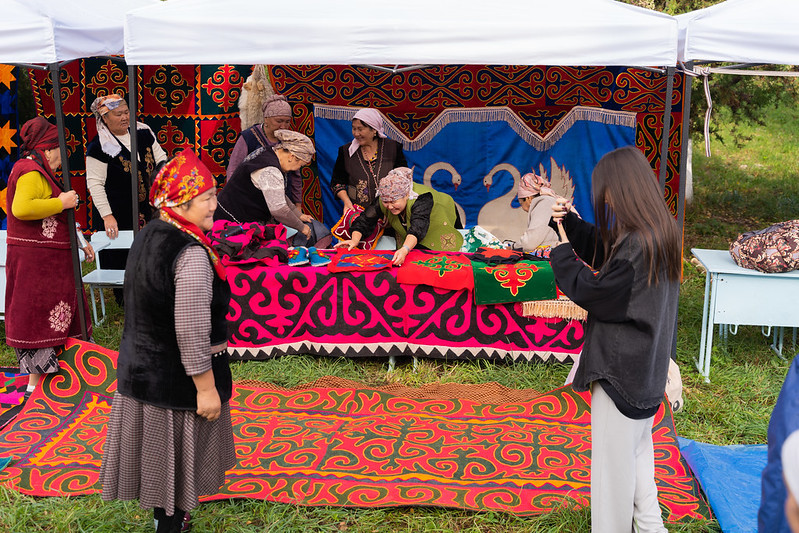 Women's Creative Labs: UNDP Promotes Women Empowerment Through Creative Spaces 2024-09-05 Women empowerment is a cornerstone of sustainable development. When women are empowered, they contribute significantly to economic growth, social stability, and overall community well-being. However, in developing countries in general and areas beyond capital cities in particular, women often face unique challenges that hinder their potential. These regions, characterized by limited production opportunities, significant labor outmigration, and persistent stereotypes about women’s role in the society, require innovative solutions to harness women's capabilities. Despite existing development constraints and limited budgetary support from local governments, communities can create value-added products that drive development by leveraging local resources (including intangible assets like social capital, cultural norms, and branding) that could be monetized through creative expression; and women can make a major contribution towards that process. The creative economy has significant potential to boost GDP and employment by enabling individuals to innovate and produce valuable products and services. These industries create jobs, improve quality of life, and foster inclusive societies, benefiting from greater involvement of women. According to the Ministry of Economy and Commerce, 40% of those employed in creative industries are women, most of whom work informally. However, the UNDP’s research on creative skills conducted in 2023 shows that despite strong interest among respondents in creative employment, half of the women cited "lack of financial support" as a key barrier to developing their skills.Additionally, 59% of women highlighted the need for safe creative spaces to meet, share ideas, support each other, and exchange experiences as a crucial institutional measure to enhance their engagement. To address these challenges, UNDP launched Women Creative Labs (WCL), representing first in Kyrgyzstan women-oriented coworking space with an extremely enabling and nurturing peer environment. Operating on the basis of cooperation with local NGOs and municipal governments, the Lab serves multiple functions, including giving access to seed financing sources to test or speed up women’s business ideas in creative enterprises, running special training and tutoring support programs, as well as providing conducive environment for exchanging information and knowledge on the topic of interest, such as financial literacy, gender equality, legal rights, and even sexual and reproductive health.The successful experience of the laboratory in Osh in 2022 made it possible to launch laboratories in Jalal-Abad and Batken in 2023. By applying human-centered design approach and principles of inclusivity, the Laboratories aim to affect changes on multiple levels, going bottom up from beneficiaries to partners to communities. Participating women are the primary beneficiaries, gaining essential resources and skills to empower themselves financially, emotionally, and psychologically. According to Gulsana Abytova, Head of the Laboratory in Jalal-Abad and Batken:“We were very eager to address the issues of women's unemployment, lack of job opportunities, and income through the strengths of women—practical skills in making kurak, shyrdak, souvenirs, providing tourist services, and more. Women need to meet like-minded individuals, share their ideas and experiences, learn new things from others, and receive support and a positive attitude. It is important for women to have their work, skills, and abilities recognized, which is not easy in rural areas. They can find all this at the Laboratory.”The words of Aidarbek Alisherov, Head of Ketmen-Döbö village in the Toktogul district, further attest to the recognition of the Laboratory’s contribution to community development:“In 2023, women from the village of Ketmen-Döbö joined the Women's Creative Laboratory, which is already operating in other regions of the republic, focusing on guesthouses in tourism and tourist services. As a result, four guesthouses were opened in the rural district, with one operating seasonally. Women are engaged not only in tourism but also in creating traditional carpets, patchwork items, and much more, which are long-standing parts of Kyrgyz culture. The Women's Creative Laboratory has assisted participants with training, workshops, and creating conditions for women in rural areas to work in various fields such as tourism, craftsmanship, and other areas. This has enabled women to develop the potential of their region, draw attention to its tourism potential, and create conditions for prosperity.” The Laboratory also enables grassroots NGOs to drive development agenda on the ground. Through disbursement of grants, the initiative provides opportunities to local partners in combining and testing contextualized conventional and innovative methodologies and approaches to inclusive economic development. Empowered grassroots organizations, mainly represented by women themselves, gain credibility and a strong voice to engage with local authorities and advocate for change as a united force. According to Nurlanbek Junusov, Head of the Unemployment Assistance Department in the city of Nookat:“This year, we held a series of events dedicated to women's employment. Among our most active participants were the coordinators of the Women's Creative Laboratory. They made a significant contribution to our events, actively participated, shared their ideas, and helped us achieve good results. Wherever we went, many women listened to the advice of our leaders, took their contact information, showed interest in their activities, and approached us with a strong desire to work. Therefore, we highly value their contribution to our efforts.” This journey continues with the hope of creating a broader impact through the development of a network of Women Creative Labs across the country. Already, more than 300 women have become Lab residents, and over 1,000 women have joined the network in various locations. WCL has proven to be a unique and scalable model that can be adopted by grassroots organizations and customized to fit local contexts. Thanks to the monetization of residents' creative skills and support from local governments, WCL can maintain operations and achieve both financial and content sustainability. A compelling example of this sustainability is the establishment of a women's cooperative in Kyzyl-Kiya, inspired by the laboratory model, which brings together women engaged in sewing production. Another lab initiative aims to develop Toktogul into a tourist destination, boosting the local economy and community. Inspired by the model’s success, three new laboratories are to be open in Naryn region this year. This not only validates the model but also creates opportunities for future synergy and sustainability beyond UNDP's contribution. The creation of a network of laboratories will not only foster a community of practice with opportunities for information exchange, deeper expertise, and efficient use of resources, but also transform perspectives on the role of women in rural communities. This network envisions women as empowered, proactive community actors and equal decision-makers. In the next blog, we will explore how the Women Creative Lab contributes to normative and behavioral change in rural communities by challenging gender-based stereotypes.The blog was co-authored with Aikerim Motukeeva, UNDP consultant for the development of knowledge products. URL: https://www.undp.org/kyrgyzstan/blog/women-creative-labs-undp-promotes-women-empowerment-through-creative-spaces
 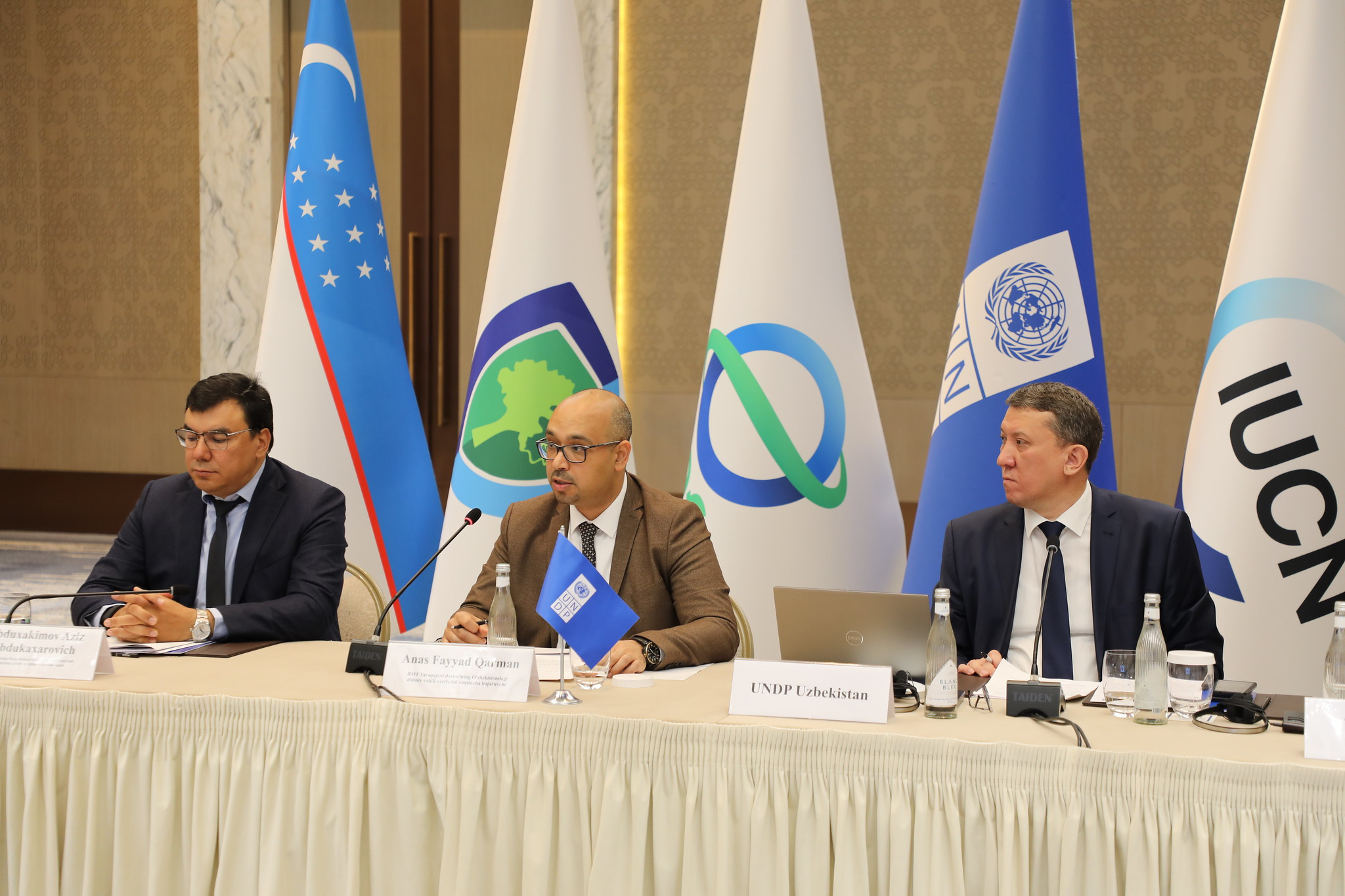 ПРООН и Министерство экологии представили новый проект по восстановлению и сохранению экосистем для устойчивого развития Узбекистана на публичное обсуждение 2024-07-05 Tashkent, Uzbekistan, 6 June 2024 - The Ministry of Ecology, Environmental Protection and Climate Change of the Republic of Uzbekistan and the United Nations Development Programme (UNDP) in partnership with the International Union for Conservation of Nature (IUCN), are conducting a validation workshop as part of a new joint project being developed, to be supported by the Global Environment Facility (GEF), aimed at the restoration and sustainable management of natural ecosystems in Uzbekistan. The project, named “Integrated Management of Landscape Protection and Restoration,” is designed to respond to the growing challenges associated with ecosystem degradation, interdepartmental coordination, and financing activities for the restoration and conservation of biodiversity and ecosystems. The project strategy is built on ensuring coherence of action, cross-sector collaboration and innovative approaches to financing and technology aimed at restoration and sustainable management of ecosystems at the landscape level. As part of the project development process, on 6 June 2024, a workshop is being held in Tashkent to validate the project strategy and its key elements, timed to coincide with World Environment Day, celebrated annually on 5 June. The main purpose of the event was to discuss the main components of the project with key partners and other stakeholders. The workshop was attended by both national and international stakeholders, which made it possible to summarize the results of the consultations and discuss the opportunities this project opens for the development of the environmental sector in Uzbekistan. The project is expected to be approved by the GEF at the end of this year. By promoting unified efforts to preserve Uzbekistan's ecosystems, the project integrates a gender-sensitive approach to natural resource management and ensuring sustainable development for future generations. URL:https://www.undp.org/uzbekistan/press-releases/undp-and-ministry-ecology-present-new-project-restoration-and-conservation-ecosystems-sustainable-development-uzbekistan
  Improving the Digital Skills of Young People and Women Entrepreneurs in the Kyzylorda Region 2024-07-05 The United Nations Development Programme (UNDP) in Kazakhstan today launched a new initiative to ensure equitable access to digital solutions and equip micro, small and medium enterprises (MSMEs) with the skills they need to adapt to new technologies. The project is part of the UNDP Seoul Policy Centre's (USPC) flagship initiative - the SDG Partnership Programme - which aims to share innovative and best practises and policy tools from the Republic of Korea with other countries, including Kazakhstan. Launched in 2023, the USPC’s SDG Partnership on "Supporting Micro, Small and Medium Enterprises through Inclusive Digital Transformation" supports partner countries in achieving inclusive digital transformation of MSMEs by sharing relevant Korean experiences and tools that support the digitalization of vulnerable economic actors such as MSMEs and youth- and women-led enterprises, and by facilitating their local adaptation in a way that complements existing initiatives and contributes to the achievement of relevant development objectives of the partner country. The initiative draws on the experience and practices of the Small Enterprise and Market Services (SEMAS) in the Republic of Korea as a reference. In Kazakhstan, the SDG Partnership programme aims to i) develop curricula for online courses on digital skills, ii) implement a programme to train trainers for vulnerable groups and iii) organise a "Future Forward Forum" to support MSMEs in the Kyzylorda region by improving their digital skills and solutions, especially in the areas of data analysis and decision-making. MSMEs make up a large part of the entire private sector in both industrialised and developing countries. In Kazakhstan, 2,026,527 MSMEs were registered in January 2023, providing employment to more than 4.1 million people or 20 percent of the population. However, it is evident that MSMEs are lagging in adopting digital technologies that can improve their participation in e-commerce and their access to digital finance. Inclusive digital transformation requires ensuring equal access to digital solutions and equipping MSMEs with the appropriate skills to adapt to new technologies. Kazakhstan was selected as a partner country for this year to jointly promote the digital skills of women and youth-led businesses. A kick-off meeting was organised to introduce key partners and stakeholders from the Republic of Korea and Kazakhstan to discuss the objectives and implementation plans of the SDG Partnership Programme and to identify the appropriate Korean expertise, solutions and tools that can be best used to adapt to the Kazakh context. URL: https://www.undp.org/kazakhstan/press-releases/improving-digital-skills-young-people-and-women-entrepreneurs-kyzylorda-region
 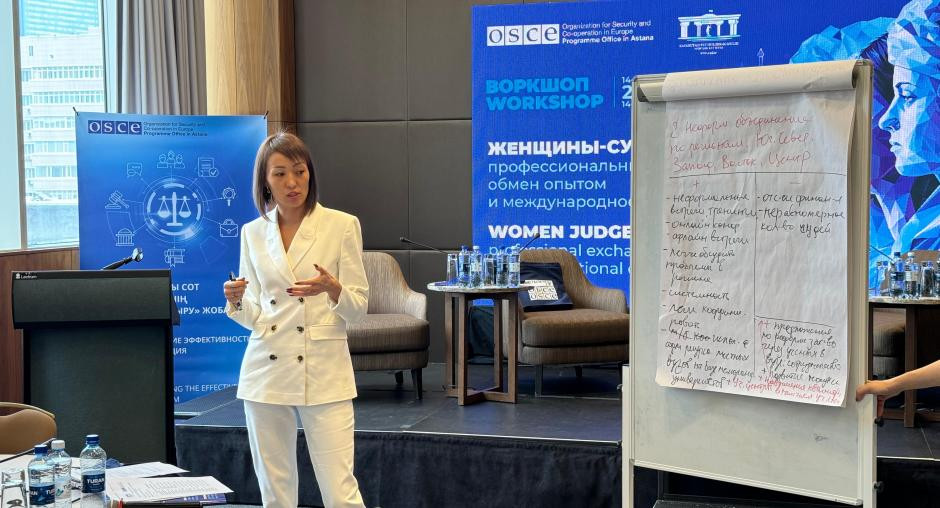 Empowering Women Judges in Kazakhstan through International Exchange 2024-05-08 Judge Rsaldy Kakisheva presenting on advantages of creating a women judges association during the interactive session of the workshop for women judges, Astana, 14-15 March 2024 (OSCE) Photo details On 14-15 March 2024, women judges from Kazakhstan and around the world convened for a two-day hybrid workshop in Astana entitled “Women judges: professional exchange of experience and international co-operation” in Astana. Aligned with the International Day of Women Judges on 10 March, the event was dedicated to fostering collaboration and sharing expertise to promote gender equality within the judicial system and enhance the rule of law. The workshop, organized in co-operation with the Supreme Court, commenced with an official opening by Aslambek Mergaliyev, Chairperson of the Supreme Court of the Republic of Kazakhstan. Welcoming speeches were delivered by Dr. Volker Frobarth, Head of the OSCE Programme Office in Astana; Elvira Azimova, Chairperson of the Constitutional Court of Kazakhstan; and Yelena Maksyuta, judge of the Supreme Court of Kazakhstan. The first day of the workshop featured two engaging sessions, providing an opportunity for insightful discussions among esteemed women judges and legal experts. The first session centered on the importance of international collaboration among women judges and the establishment of their national associations. Robyn Tupman, Secretary/Treasury of the Australian Association of Women Judges, shared methods of international support for national associations, while Jacob Bonnevie, OSCE/ODIHR Rule of Law Adviser, offered insights on gender dynamics within the judiciary. Dr. Sabina Garahan, lecturer at Essex School of Law (UK), presented recommendations from a comparative study of women judges’ associations across the OSCE region, while Dr. Khalida Azhigulova, human rights defender and gender expert in the justice sector (Kazakhstan), emphasized the role of women's associations in the justice system. The subsequent session explored experiences in establishing and managing national associations of women judges. Chinara Aidarbekova, judge of the Constitutional Court of the Kyrgyz Republic, shared insights from the Kyrgyz Association of Women Judges, focusing on strategies for improving access to justice for vulnerable groups. Margaret Glentworth, a retired District Judge and Nominated Judge of the Court of Protection (UK), discussed effective organizational practices of the Association of Women Judges in the United Kingdom. Adisa Zahiragic, judge of the Cantonal Court in Sarajevo (Bosnia and Herzegovina), highlighted the influence of the Association of Women Judges on judicial proceedings in Bosnia and Herzegovina. Finally, Nazgul Rakhmetullina, judge of the Supreme Court of Kazakhstan, led a discussion on media engagement strategies among judges in Kazakhstan. The second day featured interactive discussions facilitated by experienced judges and legal experts. Discussions explored the advantages and challenges faced by women judges’ associations and delved into the contribution of these associations to equal access to justice for vulnerable groups. Amongst discussions, participants showcased presentations of statutes of national associations of women judges, outlining their missions and objectives. The workshop was organized under the extrabudgetary project of the OSCE Programme Office in Astana “Improving the effectiveness of the justice system in Kazakhstan” and aimed to promote gender equality, empower women in the judicial system, and enhance the effectiveness of the judicial system through the exchange of knowledge and best practices between associations of women judges. ContactsOSCE Programme Office in Astana10 Beibitshilik StreetZ10K8H4 AstanaKazakhstanOffice: +7 7172 580070Fax: +7 7172 328304media.kz@osce.org URL: https://www.osce.org/programme-office-in-astana/564830
 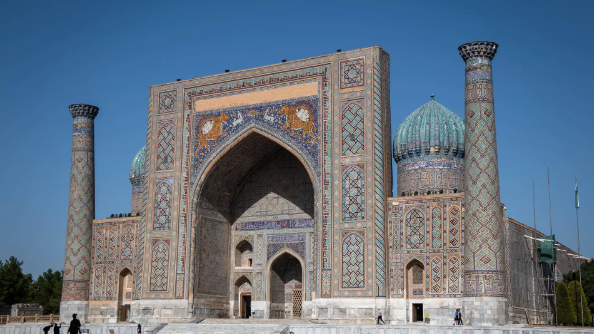 В Самарканде в мае пройдет Азиатский форум женщин – что обсудят участницы 2024-05-08 Планируют рассмотреть передовой опыт и инновационные подходы ННО к продвижению "зеленой" экономики, решению вопросов влияния изменения климата на гендерные проблемы в регионе, защите прав и интересов женщин. ТАШКЕНТ, 20 апр — Sputnik. В городе Самарканде 13-14 мая 2024 года пройдет Азиатский форум женщин на тему "Региональный подход к вопросам экономических, социальных и политических прав женщин и расширение возможностей", сообщает ИА "Дунё".Ожидается, что в его работе примут участие женщины–парламентарии стран Восточной Азии, Юго-Восточной Азии, Южной Азии и Центральной Азии, главы правительств, представители государственных органов и институтов гражданского общества, деловые женщины, политологи, общественные активисты, ученые, представители отраслей экономики и других сфер.В программе форума – 10 параллельных сессий. "Участники обсудят вопросы участия женщин в научной деятельности, в сфере образования и инновационной деятельности, а также использования цифровых технологий, сокращения бедности посредством расширения экономических прав и возможностей женщин, привлечения их к предпринимательству и инновациям, обеспечения их лидерства в современной глобальной экономике", – говорится в сообщении. Кроме того, они рассмотрят вопрос участия женщин в достижении Целей устойчивого развития. Особое внимание уделят вопросам расширения экономических возможностей женщин, роли парламентов в стимулировании их участия в бизнесе, гендерно-ориентированного бюджетирования, устранения гендерного различия в использовании финансовых возможностей, искоренения всех форм насилия в отношении женщин и детей. По итогам форума планируется принять Самаркандскую декларацию. URL :https://uz.sputniknews.ru/20240420/samarkand-may-aziya-jenskiy-forum-43524322.html
 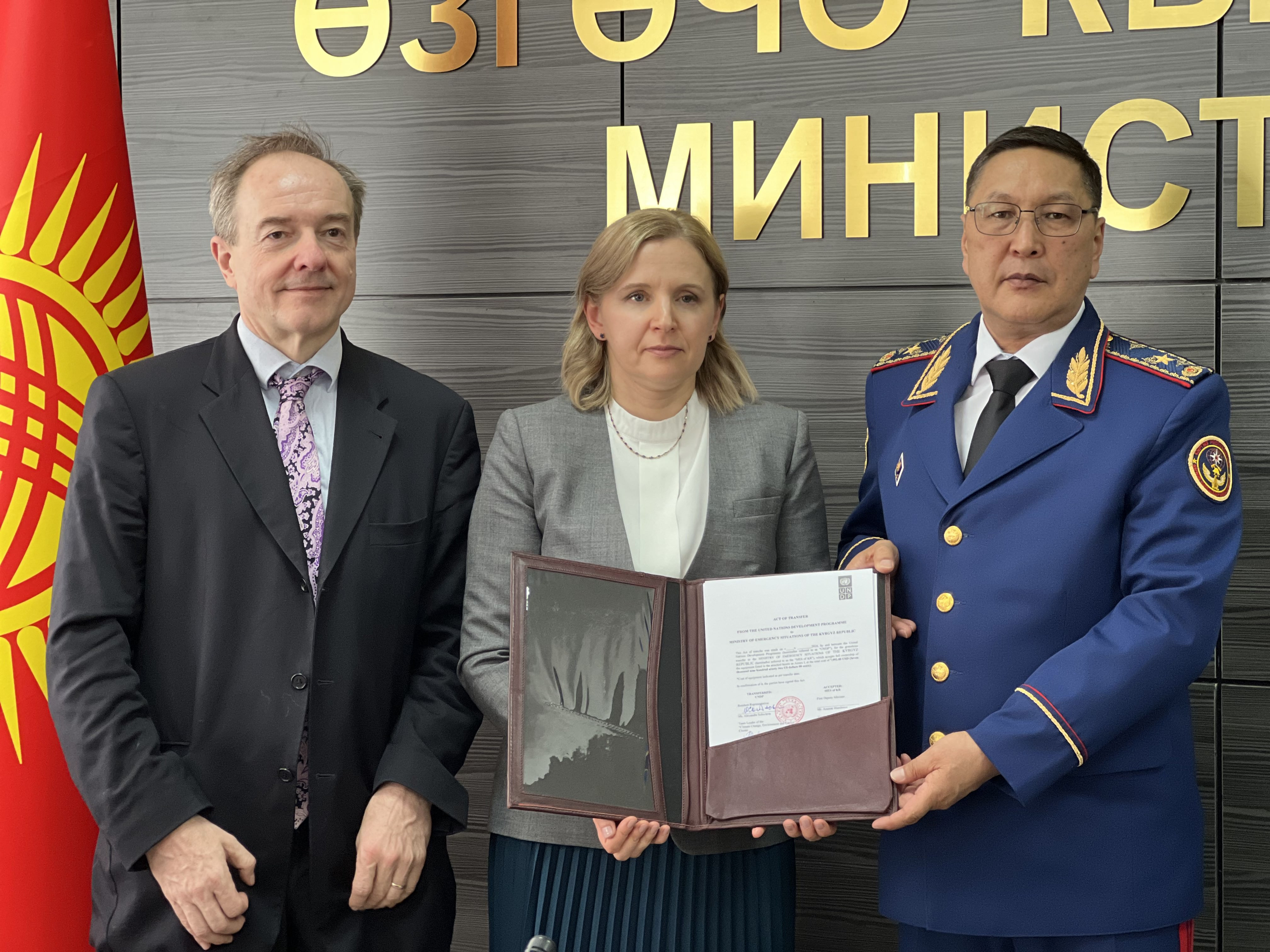 The Ministry of Emergency Situations of the Kyrgyz Republic and United Nations Development Programme Strengthen Partnership to Combat Climate Change 2024-05-08 Bishkek, 11 April 2024 – In a significant step towards bolstering disaster management and resilience capabilities in Central Asia, the United Nations Development Programme (UNDP) handed over IT equipment to the Ministry of Emergency Situations of the Kyrgyz Republic. This ceremony, held under the Climate Change and Resilience in Central Asia project funded by the European Union (EU), symbolizes a strengthened collaboration between the two entities in the shared pursuit of enhancing climate resilience and disaster preparedness in the region. Mr. Boobek Azhikeev, Minister of Emergency Situations, expressed his gratitude for the equipment provided and comprehensive support in increasing the capacity of the Ministry of Emergency Situations and expressed hope for further cooperation. Ms. Alexandra Solovieva, UNDP Resident Representative in Kyrgyzstan, emphasized the important nature of this collaboration in her opening remarks: “Climate change presents the Central Asian region with significant challenges, and it is critical that the bodies responsible for forecasting, monitoring and response are equipped with the necessary tools to successfully overcome these challenges. Today we are handing over IT equipment as an integral part of the overall system for monitoring natural processes related to climate change to ensure sustainability. These tools will make a huge difference in all aspects of emergency response, enabling informed decisions to be made at critical moments." Hans Farnhammer, Head of Cooperation at the EU Delegation in Kyrgyzstan said: “European Union and Kyrgyzstan partner up for climate resilience in Fergana valley. This aligns with the European Union’s commitment to improve disaster management and enhance climate resilience in Central Asia”. The Climate Change and Resilience in Central Asia project, funded by the European Union, is an initiative that underscores the joint commitment of UNDP and regional stakeholders to enhance cooperation and resilience in the face of climate challenges. The project concentrates on improving knowledge, integrating climate considerations into policy-making, fostering regional cooperation, and demonstrating effective early warning and prevention strategies. Its efforts are particularly crucial in the Ferghana Valley, aiming to build a more secure and climate-resilient future for the communities there. Building on these efforts, the UNDP has outlined plans to provide additional support to MES KR. This includes transferring early warning system equipment and crisis management tools to the Ministry's Crisis Management Centre. By focusing on enhancing early warning and prevention measures at specific pilot sites, this initiative demonstrates a commitment to fortify regional preparedness and response capacities against climate-related risks. The handover ceremony served as a platform for UNDP and the Ministry of Emergency Situations KR to express their united stance on continuing their collaborative efforts toward a more secure and resilient future. This event highlighted the essential role of collaborative action and a unified vision in effectively tackling the complex challenges posed by climate change. The Climate Change and Resilience in Central Asia project aims to strengthen cooperation and resilience among local and regional stakeholders. With a focus on advancing knowledge, facilitating policy integration, promoting regional cooperation, and demonstrating early warning and prevention measures, the project is pivotal for building a more secure and climate-resilient future, especially in the Ferghana Valley. More information about the project: https://www.undp.org/eurasia/projects/climate-change-and-resilience-central-asia URL:https://www.undp.org/kyrgyzstan/press-releases/ministry-emergency-situations-kyrgyz-republic-and-united-nations-development-programme-strengthen-partnership-combat
 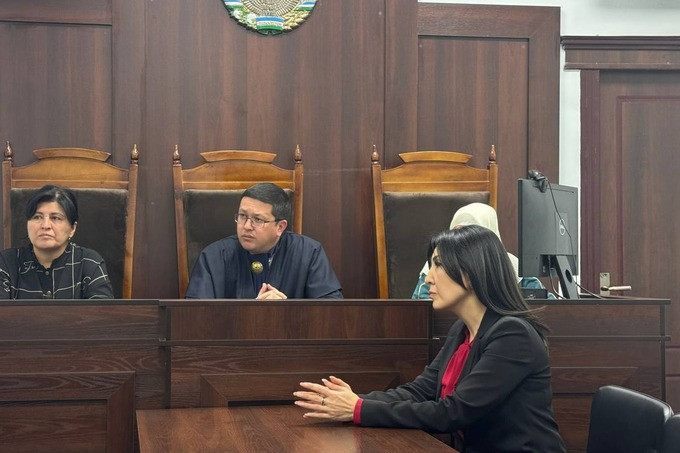 Закон о детском омбудсмане вступил в силу в Узбекистане 2024-05-08 Детский омбудсман Сурайё Рахмонова на судебном слушании о преступлении против ребенка.Фото: Пресс-служба детского омбудсманаЗакон о детском омбудсмане вступил в силу в УзбекистанеПрезидент Узбекистана подписал закон о детском омбудсмане. Он наделяет уполномоченного по правам ребёнка защищать детей в суде, посещать любые организации, связанные с детьми, включая воспитательные колонии, направлять запросы о защите прав детей из Узбекистана за рубежом и другими правами.4 марта 2024, 12:42 Политика Президент Узбекистана 29 февраля подписал закон «Об Уполномоченном Олий Мажлиса Республики Узбекистан по правам ребёнка (детском омбудсмане)». Документ опубликован в газете «Народное слово» и уже вступил в силу.О планах принять закон о детском омбудсмане сообщалось ещё в 2018 году. В апреле 2019 года президент Шавкат Мирзиёев подписал постановление, которым в стране был внедрён институт уполномоченного по правам ребенка.Новым законом определяются основные принципы деятельности детского омбудсмана, такие как законность, независимость, справедливость, гуманность, недопустимость дискриминации, объективность, открытость, приоритет прав ребёнка. Описываются задачи, права и обязанности детского омбудсмана. На должность уполномоченного, согласно документу, может быть избран гражданин Узбекистана, достигший ко дню своего избрания 25 лет и постоянно проживающий на территории Узбекистана не менее 5 лет. В законе говорится, что все проекты актов законодательства по вопросам, касающимся прав, свобод и интересов ребёнка, должны обязательно согласовываться с детским омбудсманом.Уполномоченному по правам ребёнка предоставляется полномочие по использованию права быть немедленно принятым руководителями организаций и другими должностными лицами по вопросам, связанным с его деятельностью. При установлении нарушения законодательства о правах ребёнка детский омбудсман может вносить представления руководителям государственных органов и других организаций об устранении выявленных нарушений законодательства, причин этих нарушений и условий, им способствующих. Законом установлено, что детский омбудсман ежегодно выступает с докладом на заседаниях палат Олий Мажлиса.Предусматривается назначение региональных представителей уполномоченного Каракалпакстане, областях и Ташкенте.Законом также предусматривается, что детский омбудсман оказывает содействие в совершенствовании законодательства о правах ребёнка, принятии норм, направленных на обеспечение интересов ребенка. Установлено, что дети, находящиеся в центрах социально-правовой помощи несовершеннолетним и специализированных учебно-воспитательных учреждениях, следственных изоляторах и воспитательных колониях, могут направлять в адрес уполномоченного по правам ребёнка обращения в письменной форме. URL: https://www.gazeta.uz/ru/2024/03/04/childrens-ombudsman/