
News
Catch up on what’s happening in the world of global citizenship education.
162 results found
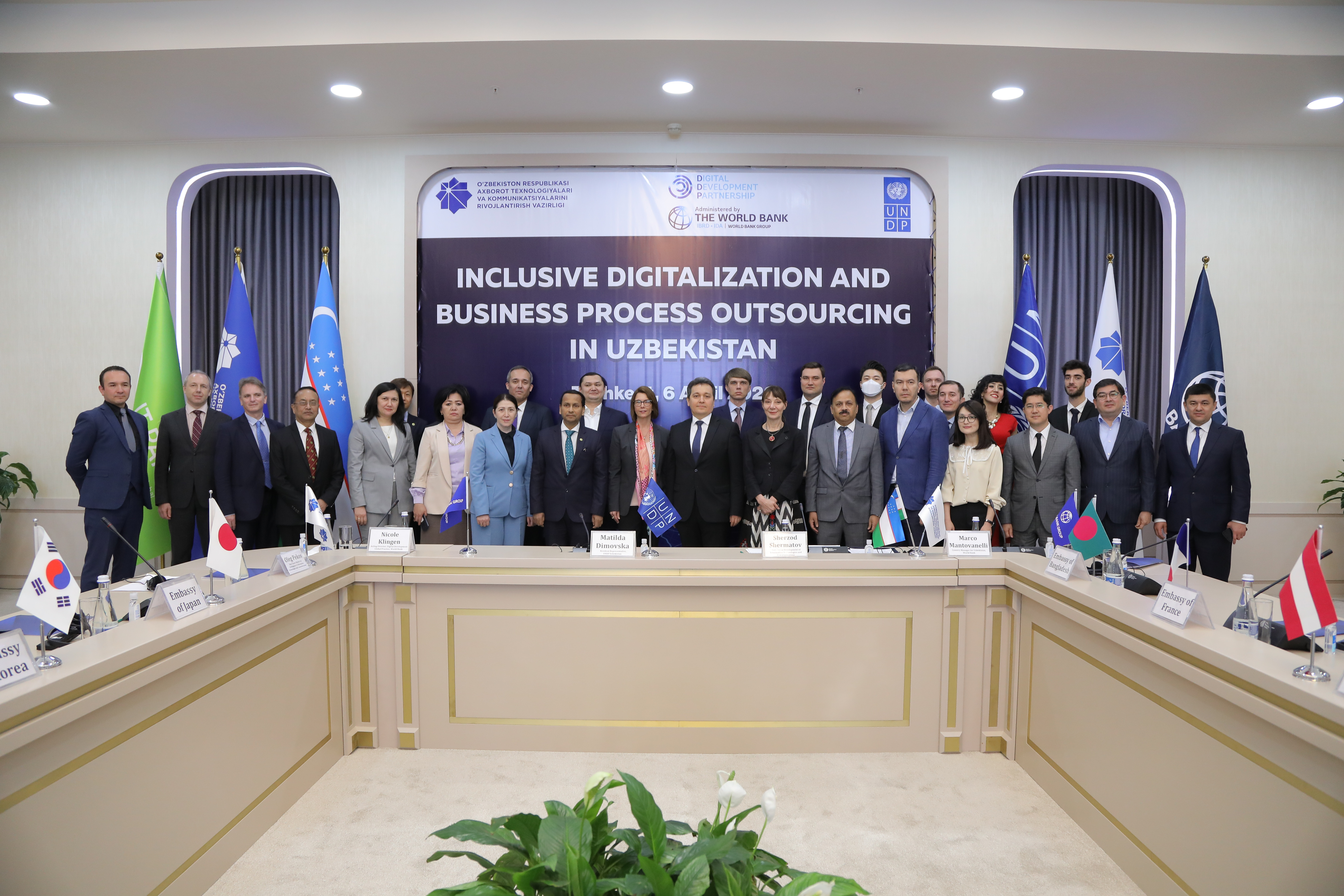 На пути к инклюзивной цифровизации и аутсорсингу бизнес-процессов в Узбекистане 2022-06-04 Together with the Ministry for the Development of Information Technologies and Communications and the World Bank we held an international roundtable on "Inclusive digitalization and business process outsourcing (BPO) in Uzbekistan". Supporting the development of digital government, ensuring public trust and transparency, and participating in the development of the digital economy play an important role in providing efficient, effective public services to all on an equitable basis. The continuous development of information and communication technologies is fundamentally transforming society, the cultural environment, and the economy. Today, in the wake of COVID-19 there is a tendency of an accelerated development of technologies in the global digital ecosystem. For instance, the business process outsourcing (BPO) and knowledge outsourcing (KPO) in the field of social networks, blockchain technologies, artificial intelligence technologies. Recognizing the important role of digital development for the economic growth of Uzbekistan, the Government has set digital transformation as a top strategic agenda. Among them is the approval of the Strategy "Digital Uzbekistan - 2030" and drawing attention to digitalization issues with human interest at heart in the framework of the Development Strategy of New Uzbekistan for 2022-2026. https://www.facebook.com/watch/?v=319799233573518 Based on this, the Government of Uzbekistan is implementing consistent measures to strengthen digital skills and create digital jobs in Uzbekistan, in particular, to increase the potential of young people - measures to expand the provision of business process outsourcing (BPO) and knowledge outsourcing (KPO) services. By demonstrating the potential of IT-outsourcing by the government of Uzbekistan, in order to improve the digital skills of the population, especially young people in all regions and districts, specialized educational BPO institutions are being organized and their capabilities are expanding. This event was attended by a wide range of local specialists, IT stakeholders, diplomatic missions and international experts who discussed the current state and prospects of digital development, assessment methods and further tasks for the inclusive digital development of Uzbekistan. Matilda Dimovska, UNDP Resident Representative in Uzbekistan highlighted that according to the Digital Readiness Assessment held jointly with the Ministry of ITC in 5 priority dimensions: infrastructure, government, regulation, business, and people Uzbekistan scored 3.57 out of 5, which means that the country is systematically advancing in key areas of digital transformation based on identified priority areas. “Now it is time to explore how to leverage digitalization to build forward better, to accelerate Uzbekistan’s growth while ensuring it is more inclusive and resilient through strengthening the national capacity to integrate into the global digital economy,” she added. During the event, participants reviewed how well the country is positioned to leverage BPO and KPO in terms of legal and institutional framework, digital infrastructure, digital education and other aspects, including the wide involvement of young women and men in these processes. URL: https://www.undp.org/uzbekistan/press-releases/towards-inclusive-digitalization-and-business-process-outsourcing-uzbekistan
 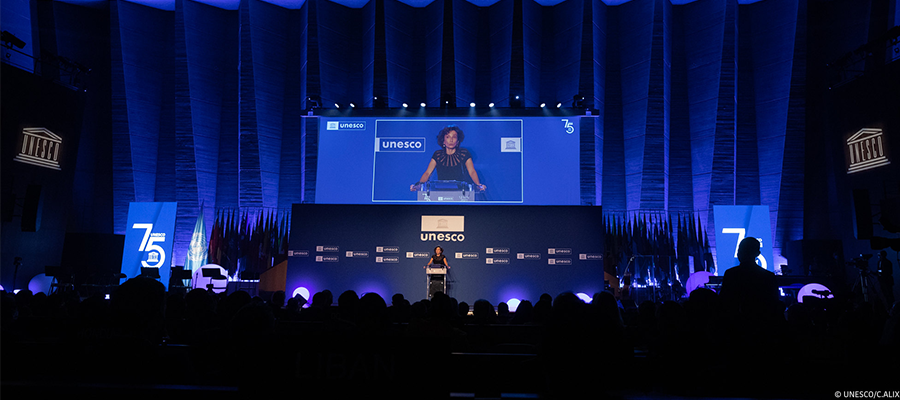 UNESCO’s General Conference reaches global agreements on artificial intelligence, open science and education 2021-11-28 The 41st session of UNESCO General Conference ended yesterday with the adoption of key agreements demonstrating renewed multilateral cooperation for educational recovery, open science and the ethics of artificial intelligence. On 9 November, the organization’s 193 Member States overwhelming voted in support of Audrey Azoulay to serve a second term of four years as Director-General of the Organization, which celebrated its 75th anniversary during this session. Member States endorsed the Paris Declaration: A Global Call for Investing in the Futures of Education at a meeting which brought together Heads of State and Government and education ministers from 40 countries on the 10 November. The purpose of the meeting was to increase support for education in the aftermath of the COVID-19 pandemic. A key part of the event was the launch of a report Reimagining our futures together: a new social contract for education by UNESCO’s Director-General and the President of Ethiopia, Sahle-Work Zewde. UNESCO’s Member States adopted the first ever global Recommendation on the Ethics of Artificial Intelligence. It will be presented by the Director-General accompanied by experts at a press conference at 15.00 CET on Thursday, the 25 November, at UNESCO Headquarters. Journalists seeking Accreditation should contact Léo Bégé-Duclaud: l.bege-duclaud@unesco.org Another landmark moment was reached with the UNESCO Recommendation on Open Science which was also adopted during the General Conference. Of particular relevance to global scientific cooperation surrounding the COVID-19 pandemic , this agrement promotes equality among scientists so that populations and policy-makers will reap the benefits of advances in science. More information is available at https://www.unesco.org/en/natural-sciences/open-science. UNESCO also passed a significant milestone by marking its 75th anniversary with a special ceremony attended by 28 Heads of State and Government. There were moving performances by an array of leading international musicians and artists. During the session, the Organization also celebrated the anniversary of its Man and the Biosphere Programme, which has been a vehicle for progress for sustainable development and the sharing of ideas and examples of best practicearound the world for the last fifty years. Finally, the Åland Islands, part of Finland with autonomous status, became UNESCO’s 12th Associate Member. More information on the General Conference at https://www.unesco.org/en/general-conference/41 Media Contact: Clare O’Hagan: c.o-hagan@unesco.org URL:https://en.unesco.org/news/unescos-general-conference-reaches-global-agreements-artificial-intelligence-open-science-and
 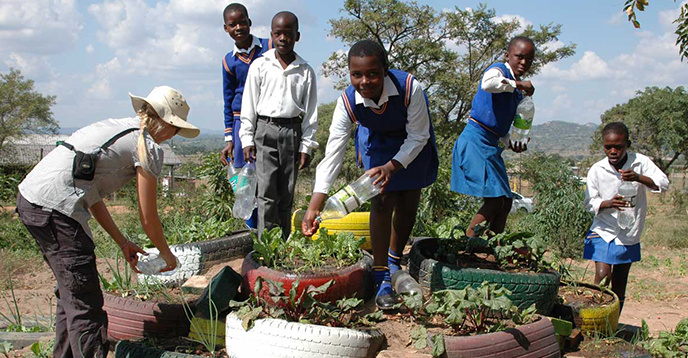 Only half of the national curricula in the world have a reference to climate change, UNESCO warns 2021-11-08 Education systems do not currently address the gravity of the climate crisis, warns the UNESCO, the UN's leading education agency, ahead of the first joint meeting of environment and education ministers at COP26 in Glasgow on 5 November. New UNESCO data from 100 countries shows that only 53% of the world’s national education curricula make any reference to climate change and when the subject is mentioned, it is almost always given very low priority. Furthermore, fewer than 40% of teachers surveyed by UNESCO and Education International were confident in teaching about the severity of climate change and only about one-third felt able to explain the effects of climate change on their region or locality. "The climate crisis is no longer the threat of a distant future, but a global reality. There is no solution without education. Every learner needs to understand climate change, and be empowered to be part of the solution, and every teacher given the knowledge to teach about it. States must mobilize for this." -- Audrey Azoulay, UNESCO Director-General When asked about the challenges of teaching climate change, 30% of the 58,000 teachers surveyed reported that they were not familiar with suitable pedagogies. Over a quarter of those surveyed felt some approaches to teaching climate education were not suited to online teaching. This is of particular concern given that 737 million students in 66 countries are still affected by full or partial school closures. In view of these findings, UNESCO decided to organize with the United Kingdom and Italy, co-Presidents of COP26, the event ‘Together for Tomorrow: Education and Climate Action’, the first joint meeting of environment and education ministers, at COP26 in Glasgow on 5 November. "Climate and sustainability education must be mainstreamed into the curriculum to go beyond the mere concept of sustainability and re-generate the school and the entire planet." -- Patrizio Bianchi, Italian Minister of Education UNESCO will underscore the need for collaboration between the education and environment sectors to successfully integrate climate change in education systems worldwide in every level of schooling. The event builds on the Youth4Climate education session jointly organized by UNESCO and the Italian Education Ministry, where young climate activists discussed their calls for quality climate education with six education ministers. ‘Together for Tomorrow” will take place on 5 November, 4 pm to 5.30 pm, in the Blue Zone, and will be open to those who have tickets to the area. Watch Together for Tomorrow on livestream: https://ukcop26.org/ Find out more about the ministers’ pledges here UNESCO’s work on education for sustainable development: https://en.unesco.org/themes/education-sustainable-development Media contact: Thomas Mallard, t.mallard@unesco.org URL:https://en.unesco.org/news/only-half-national-curricula-world-have-reference-climate-change-unesco-warns
  Global Education Ministers Conference, towards a shared action plan to counter hate speech 2021-10-31 Education Ministers from all over the world on Tuesday attended a Global Minister’s Conference held at the initiative of UN Secretary-General António Guterres and UNESCO Director-General Audrey Azoulay to reinforce the struggle against online and offline hate speech. Against a background of high anxiety caused by the COVID-19 pandemic, there has been an increase in hate speech and people’s instinctive quest for scapegoats has resulted in a sharpr rise in prejudice, stereotypes and discrimination. The UN and UNESCO have called on States to take action to curb this harmful phenomenon. The Global Ministers Conference, the first of its kind, organized by UNESCO and co-chaired by President Hage Geingob of Namibia has given rise to decisions on common actions at all levels of education, prioritizing media and information literacy, teacher training and public awareness raising about digital citizenship. "This hatred is not new. But what has changed more recently is the influence and magnitude of social media platforms, which have become an echo chamber that amplifies. The legal response is essential, but it is not enough. We must also mobilize education, because it is through education that we develop critical thinking and deconstruct prejudices." -- Audrey Azoulay, UNESCO Director-General UNESCO and partners’ work to address hate speech spans multiple areas, notably: Addressing hate speech on social media developed to monitor the existence, spread and impact of online hate speech, as well as assess capacities to counter it. Media information and literacy curriculum for teachers to help young people assess the relevance and reliability of information. Prevention of antisemitism through education, as well as teaching about the Holocaust and genocides, including training for policy-makers and teacher trainers around the world. Preventing violent extremism by providing support to youth so they can engage against hateful and dangerous ideologies, and by training and guiding educators. Organized in partnership with the United Nations Office on Genocide Prevention and the Responsibility to Protect, the Ministers Conference follows on the work of the multi-stakeholder forum organized by UNESCO early this month with the participation of governments, civil society organizations, human rights experts, as well as tech and social media companies including Facebook, YouTube and TikTok. Underpinned by the United Nations’ human rights and free speech-based Strategy and Plan of Action on Hate Speech, the Ministers Conference specifically focused on education in the struggle against hate speech, its deeply rooted causes and driving forces. Strengthening educational responses to build the resilience of learners to the rhetoric of exclusion and hate also lies at the core of the Education 2030 Agenda, and more specifically Target 4.7 of Sustainable Development Goal 4 (SDG 4) on the social, moral and humanistic aims of education. For more information and resources: https://en.unesco.org/news/addressing-hate-speech-through-education-global-education-ministers-conferencePress contact: Clare O’Hagan: c.o-hagan@unesco.org +33 145681729 URL:https://en.unesco.org/news/global-education-ministers-conference-towards-shared-action-plan-counter-hate-speech
 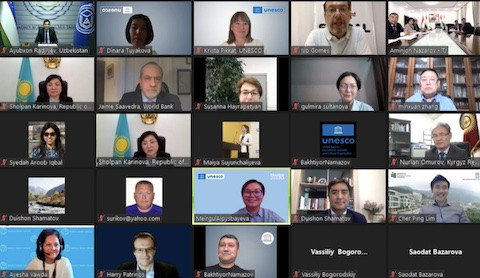 Central Asian Symposium on Education Highlights the Crucial Role of Teachers 2021-10-21 ALMATY, October 13, 2021 – Government officials, education professionals, representatives of academia from Central Asian states, as well as international experts on teacher policy, discussed approaches to developing, attracting, and retaining the best talent in teaching at the online Central Asian “Skilled Teachers – Skilled Nation” Symposium on Education. The event was co-organized by UNESCO Cluster Office in Almaty and the World Bank’s Education Global Practice. The goal of the event was to launch a regional knowledge exchange program and policy dialogue on improving learning outcomes of Central Asian students through a more effective and empowered teacher force. The timing of the event was not coincidental: theCOVID-19 pandemic has undermined human capital development gains across the region, exacerbating learning poverty, and widening the gap between students of different backgrounds.“A successful education recovery hinges on increased investment in teachers to recover learning losses and manage transformations in teaching and learning imposed by the COVID-19 pandemic,” said Krista Pikkat, Director of UNESCO Almaty Cluster Office for Kazakhstan, Kyrgyzstan, Tajikistan and Uzbekistan. “We hope today’s discussions can help enhance the country policies on teacher development, so we can improve the quality of learning.”Teachers are the critical factors behind education quality. For instance, the difference between a weak teacher and a great teacher has been measured at 0.36 and 0.54 standard deviations (SDs) in student test scores in Uganda and Pakistan which is equivalent to more than one additional year of schooling. Studies also find that several consecutive years of effective teaching can offset the learning shortfalls of marginalized students.“The role of teachers in improving education quality cannot be overemphasized. Teachers hold the keys to inspiring and unlocking every child’s potential. Their responsibility is immense,” said Jaime Saavedra, World Bank Global Director for Education. “But teachers need opportunities, motivation, and resources to succeed in leading generations of leaders, thinkers, and innovators.”Recognizing the importance of teachers in improving learning outcomes, Central Asian countries are in the early stages of reforms, as they introduce more incentives to attract, develop, and retain good quality professionals into the teaching profession. In Kazakhstan, the authorities are raising requirements to enter teacher education colleges, offering more financial support to students in education, increasing salaries and the number of hours of practical training. Teacher salaries have also increased thrice over the last decade in the Kyrgyz Republic. Meanwhile, Uzbekistan passed a law in 2021 to ensure that trainings are targeted to teachers’ needs. Such developments will empower teachers to lead improvements in education quality in their classes, schools, communities, and countries.The online symposium consisted of two main discussions focusing on national perspectives and global best practices. Representatives of education ministries of Kazakhstan, Kyrgyz Republic, Tajikistan, and Uzbekistan discussed policies and programs that can transform teaching into an attractive and progressive career.Symposium participants agreed that effective systems need to incorporate competitive recruitment, focused in-service training, school-based teacher research groups, teacher performance evaluation, and a structured career ladder that provides both motivation and a mechanism for teachers to progress in their careers.The symposium featured presentations by experts and researchers from the Education University of Hong Kong, Nazarbayev University, and Shanghai Normal University.***UNESCO has made the supply of well-trained, supported and qualified teachers one of its top priorities. UNESCO hosts the International Task Force on Teachers for Education 2030 to address the “teacher gap” as well as tackle the issues raised in SDG target 4.c – to supply qualified teachers and ensure working conditions. In Central Asia, UNESCO is supporting teachers by equipping them with relevant skills and competencies, as well as providing them with teaching resources in the area of competency-based education and distance learning. Through its Global ICT Competency Framework for Teachers tool, UNESCO is supporting Central Asian countries in assessing teachers’ ICT competencies and strengthening ICT competency standards for teachers.The World Bank’s education portfolio is $23.4 billion, benefiting approximately 18 million teachers worldwide. The World Bank’s “Learning for the Future Project” in the Kyrgyz Republic is developing digital educational resources for teachers and training 30,000 teachers in digital literacy, 6, 000 teachers in remedial reading training and 14, 000 teachers in pedagogy. The “Education Modernization Project” in Kazakhstan is supporting reforms in pre-service and in-service teacher training. The “Early Childhood Development to Build Tajikistan’s Human Capital Project” is supporting teacher training and development. In Uzbekistan, the “Promoting Early Childhood Development Project” is also helping improve professional skills of 14,000 preschool teachers across the country. URL:http://en.unesco.kz/central-asian-symposium-on-education-highlights-the-crucial-role-of-teachers
 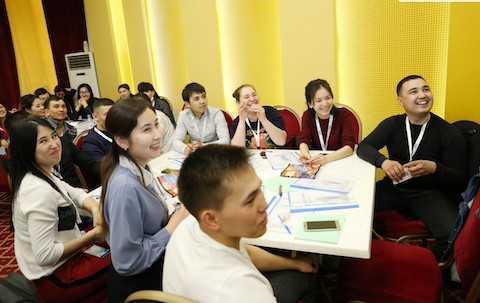 Kazakhstan experience on prevention of violent extremism was presented at the Global PVE Conference in Oslo 2021-10-07 UNDP Kazakhstan presented its unique experience on preventing violence extremism (PVE) in Central Asia during the third Global PVE Conference in Oslo. The best practices on the ways how mental health and psychological support have been integrated in PVE initiatives in Kazakhstan were discussed at the session on June 15, which highlighted examples from Central Asia. Mental health and psychosocial support (MHPSS) play a crucial role in building resilience of youth at risk of radicalisation. It is also an important part of PVE programming that allows to explore the possible links between mental health and radicalization, as well as how psychosocial support – together with other activities such as livelihoods and capacity building – can help strengthen the impact of peacebuilding interventions . However, despite an increasing interest to MHPPS application to PVE programming, there are still many factors, challenges, and risks associated with it. The rise of violent extremism and its spread across national borders has become a pressing issue for all Central Asian countries. Lack of employment opportunities, unrewarding employment, limited or constrained access to quality public services and justice, coupled with inability to participate in social and civic life lead to the overall sense of discrimination, alienation, and exclusion among youth in the region. To eradicate isolation and expand economic opportunities of at-risk youth UNDP Kazakhstan launched an apprenticeship scheme in September 2019, providing job training and employment opportunities. The scheme falls within the regional project “Strengthening Community Resilience and Regional Cooperation for Prevention of Violent Extremism in Central Asia”, funded by the Government of Japan. Within the 3-year UNDP regional initiative almost 600 vulnerable young people from remote localities of Kazakhstan took part in the subsidized 3-month apprenticeship programme. “Overall, around 600 local young people were matched to local companies and mentors. Vulnerable youth worked in enterprises, local government bodies, private businesses and civil society organisations. 331 employers from project areas participated in the Programme. Around 43,5 percent of young people have been employed on full-time basis after completion of the apprenticeship programme”, said Makhabbat Yespenova, Executive Director of KAMEDA Public Foundation, a responsible partner of UNDP within the apprenticeships scheme component in Kazakhstan. In addition to professional skills, young people were equipped with leadership and emotional intelligence skills, in-demand professional and soft skills, and received counselling and mentorship support, which could help them to withstand extremism, develop and spread ‘positive’ narratives and overcome the isolation. “Youth noted the positive changes not only as obtaining professional skills, but also as the improvement of social interaction, finding new friends, joining interest groups, gaining confidence in their capabilities and improvement of the quality of life in general,” noted Ms. Yespenova. ‘Important work is being done within the European Union funded Project on Strengthening Resilience to Violent Extremism project (STRIVE Asia). We already provided mental health and psychological support to more than 160 young people, majority of them being young women, through a series of group sessions and individual consultations with qualified psychologists’, mentioned Konstantin Sokulskiy, Head of Governance Unit at UNDP Kazakhstan during the session on June 15. Last autumn, during five-day group trainings and individual consultations vulnerable youth from Aktobe and Karaganda regions got informed about the risks of violent extremism, stress and work-life balance issues and effective communication with others. The most common issues voiced by the youth during the workshops included family related conflicts, negative emotions, persistent worry and fear about the future, search for self-identity, apathy, and depression. “As a next step, we need to take our preventive work to a next level. For example, we are still to find a way to measure impacts of our development interventions more accurately. Another challenge is achieving transformative and lasting impacts in extended geographical areas across the country’’, concluded Mr. Sokulskiy. The third Global Conference on Preventing Violent Extremism (PVE) in Oslo served a good platform to discuss the pressing issues of violent extremism, especially in the context of the COVID-19 pandemic, which brought changes to many aspects. The conference participants heard the voices from the ground on how to promote positive alternatives to radicalization; discussed issues on risks and radicalisation defined in an era of digital revolution, developed insights on how inclusive dialogue and multi - stakeholder interaction could build trust for preventing violent extremism in the society. URL:https://www.kz.undp.org/content/kazakhstan/en/home/presscenter/news/2021/june/undp-kazakhstan-to-contribute-to-the-prevention-of-violent-extre.html
 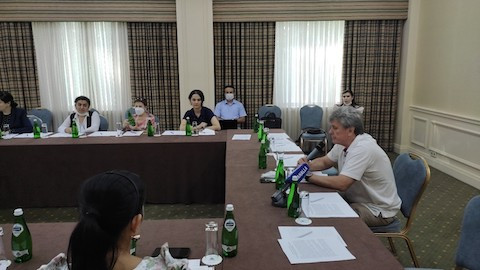 Гражданское общество Узбекистана вносит вклад в процесс реализации климатической политики страны 2021-10-07 25 июня, Ташкент. Состоялось рабочее совещание по утверждению позиционного документа в отношении климатических действий со стороны представителей гражданского общества. Мероприятие проходит в рамках регионального проекта «Политические меры по климатической безопасности в Центральной Азии», реализуемого совместно ПРООН и Министерством иностранных дел по делам Содружества и развития (FCDO) Соединенного Королевства. В ходе совещания специалист ПРООН по изменению климата Рано Байханова ознакомила участников о ходе подготовки позиционного документа по использованию возобновляемых источников энергии в Узбекистане, его целях и задачах. Документ содержит видение и миссию гражданского общества в сохранении климата. В частности необходимость перехода на возобновляемые источники энергии. По оценкам экспертов Ассоциации «Предприятия альтернативных видов топлива и энергии» к 2030 году дефицит энергоресурсов в Узбекистане может составить 65,4 процента от общей потребности. Технический потенциал возобновляемых источников энергии республики составляет 182,5 млн.т.н.э., что более чем в три раза превышает ежегодную потребность в энергоресурсах. В соответствии с прогнозом Министерства энергетики Узбекистана в период до 2030 года прирост производства электроэнергии будет увеличен с 69 млрд квт*час до 121 млрд квт*час, в том числе за счет расширения использования возобновляемых источников энергии. Обсуждаемый на совещании документ станет частью определяемых на национальном уровне вкладов (ОНУВ), которые являются ключевым элементом Парижского соглашения и способствуют достижению его долгосрочных целей. ОНУВ отражают усилия конкретных стран по снижению выбросов на национальном уровне и по адаптации к последствиям изменения климата. Каждая страна подготавливает и направляет в Секретариат ООН по климату свои ОНУВ, которые она намеревается достичь, а также придерживается их. Чтобы достичь целей таких вкладов, стороны принимают национальные меры по смягчению изменения климата. Национально определяемые вклады по смягчению воздействия и снижению уровня выбросов парниковых газов обновляются каждые пять лет. Обновленные национальные меры, способствующие достижению цели Парижского соглашения, Узбекистан планирует подготовить в ближайшее время. Они будут представлены на 26-й Конференции сторон РКИК ООН, которая будет проходить в ноябре 2021 года в Глазго, Великобритания. URL:https://www.uz.undp.org/content/uzbekistan/ru/home/presscenter/pressreleases/2021/06/the-civil-society-of-uzbekistan-contributes-to-the-development-a.html
 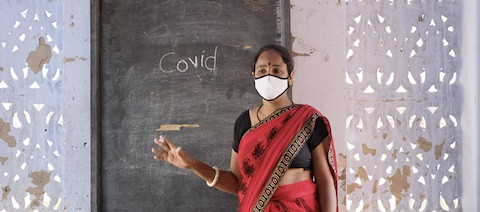 On World Teachers’ Day, UNESCO and partners urge governments to prioritise teachers in education recovery 2021-10-06 A successful education recovery hinges on increased investment in the well-being, training, professional development and working conditions of the world’s 71 million teachers to recover learning losses and manage transformations in teaching and learning imposed by the COVID-19 pandemic. This is the key message of World Teachers’ Day, celebrated on 5 October under the slogan “Teachers at the heart of education recovery.” The global advocacy day calls on governments and the international community to focus on teachers and the challenges facing their profession, and to share effective and promising policy responses. “Today we celebrate the exceptional dedication and courage of all teachers, their capacity to adapt and to innovate under very challenging and uncertain conditions. They are the principal actors of the global education recovery efforts and are key in accelerating progress towards inclusive and equitable quality education for every learner, in every circumstance,” said the conveners of World Teachers’ Day, UNESCO’s Director-General, Audrey Azoulay, UNICEF’s Executive Director, Henrietta Fore, International Labour Organization’s Director-General, Guy Ryder, and Education International’s General-Secretary, David Edwards in a joint statement. “Now is the time to recognize the exceptional role teachers play and to empower them with the training, professional development, support and working conditions they need to deploy their talent. Education recovery will be successful if it is conducted hand in hand with teachers - giving them voice and space to participate in decision-making,” argued the conveners. The educational disruptions caused by the COVID-19 crisis highlighted the crucial role of teachers in maintaining learning continuity. They have been at the heart of the educational response, from leveraging technology creatively to providing socio-emotional support to their students and reaching those most at risk of falling behind with take-home packages. But the crisis has also highlighted major challenges facing the teaching profession, including the lack of career development opportunities in online teaching and distance learning, increased workloads associated with double-shift classes and blended models and occupational safety issues. As of 27 September, schools opened fully in 124 countries. They are partially reopened in 44 countries and fully closed in 16. These figures highlight both the need for attention to teachers’ health and well-being as schools reopen, and for continued professional development to integrate and use educational technologies. According to UNESCO’s research 71% of countries have given some priority to the vaccination of teachers, but only 19 countries included them in the first round of vaccinations, while 59 countries have not prioritized them in their roll-out plans. More effort is needed to support teachers in the transition to remote and hybrid teaching. According to the 2021 global survey conducted by UNESCO/UNICEF/World Bank and OECD released in July: 40% of countries trained three quarters or more of teachers on distance learning methods and the effective use of technologies in 2020 Only six out of ten countries provided teachers with professional development on psychosocial and emotional support Just over half of all countries (58%) provided teachers with content for remote learning, while 42% provided teachers with ICT tools and internet connections Putting teachers at the heart of the education recovery will require increasing the size of the teacher workforce. According to the above survey, 31% of 103 countries recruited additional teachers for school reopening, but the global gap remains high. In total, 69 million more teachers are needed worldwide to ensure universal primary and secondary education by 2030 (SDG target 4.1) It is projected that sub-Saharan Africa will need to recruit 15 million primary and secondary teachers by 2030. To celebrate 2021 World Teachers’ Day, the conveners, together with partners, including the World Bank, the Hamdan Foundation, the International Task Force on Teachers for Education 2030 (TTF), civil society organisations and members of the Global Education Coalition, will organize global and regional events and an advocacy campaign with the participation of the UNESCO Global Network of Learning Cities. The five-day series of events will include panel discussions, webinars and online training sessions to examine effective policies, evidence and innovative practices to provide the support teachers need for successful recovery, resilience-building and reimagining education in the post-pandemic world, and to advance SDG 4. URL:https://en.unesco.org/news/world-teachers-day-unesco-and-partners-urge-governments-prioritise-teachers-education-recovery
 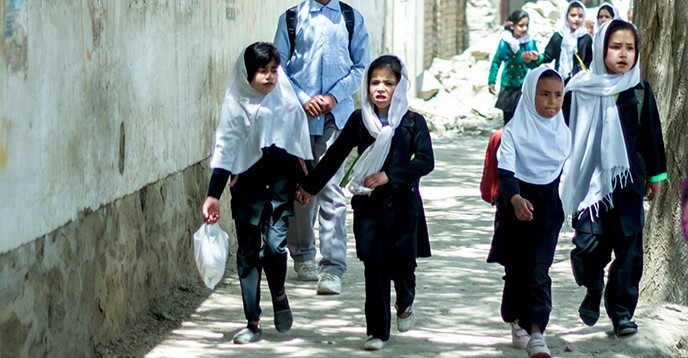 Afghanistan – UNESCO highlights key challenges for Education, Science and Culture in the country 2021-09-13 Afghanistan stands at a turning point in history. It is critical for the country, and for the entire region, that progress made over the last two decades, in terms of human rights, education and international standards remains in place. Since 2002, UNESCO and its Afghan and international partners have carried out several nation-wide programs to reform the education system, to protect cultural heritage, to increase scientific capacity, and to ensure the safety of journalists. These initiatives helped advance Afghanistan’s progress towards meaningful development. Afghanistan has made the following gains: A major increase in literacy rate, from 34% (2002) to 43% (2020) Beginning in 2006 with the support of partners including Sweden, Japan, Norway, Denmark, UN agencies and civil society organizations throughout the country, UNESCO led the largest literacy program in Afghan history, reaching 1.242.000 learners, including 800.000 women and girls. 45.000 police officers have also been reached and trained through literacy programs. From 2002 onwards UNESCO supported the government in the development of a nation-wide education revamp, encompassing all National Strategies for Education, the first-ever National Institute for Educational Planning, a global Education sector analysis, a General Education Curriculum reform (reaching over 1 million learners), and a strategic plan for higher education. UNESCO built capacity in Afghanistan: thousands of Afghan officials were trained: In the Education sector: we trained 741 planning officers from all 34 provinces. And in the Culture sector we trained several museum curators and professionals, as well as culture specialists capable of conducting inventories and monitoring heritage sites. Large-scale safeguarding operations were conducted for the preservation of the remains of the Bamiyan Valley, the Minaret of Jam and other iconic monuments that must be preserved as symbols of Afghan identity and national cohesion. Several cultural initiatives have been taken to revitalize Afghanistan’s cultural fabric and creativity, notably through the launch of the Bamiyan Cultural Center, an exhibition and training space, and through the photographic competitions which have helped give birth to the Kabul Photographic Biennale in 2017. Since 2018, the Physics Without Frontiers (PWF) programme run by UNESCO’s Abdus Salam International Centre for Theoretical Physics ICTP has been working with Kabul University to help faculty develop curricula in physics, including at undergraduate level. Some 400 Afghan students travelled to Kabul University from across the country to attend intensive Physics courses at Kabul University. Afghanistan is now home to one of the most dynamic media landscapes in the region, with 1,879 active media outlets, 203 TV channels, 349 radio stations, and 1,327 print outlets. In 2020, there were 1,741 women media workers in Afghanistan, including 1,139 women journalists These achievements all show that today Afghan society is very different from 20 years ago. The country has made huge strides, but they must be preserved or the country’s development will unravel. Many challenges lie ahead for Afghanistan: 12 million Youth and adults (15+) in Afghanistan still lack basic literacy skills 81 journalists were killed between 2006 and 2021, including 7 as of August 2021 From September 2020 - February 2021, almost one in five women journalists left the profession, due to ongoing violence and threats. UNESCO is committed to step up its support to the Afghan people. Recalling what has been achieved over the past two decades, UNESCO wishes to remind the international community what is at stake in its fields of competence, to serve as a benchmark for the future. More about: UNESCO is monitoring the evolving situation in Afghanistan with particular attention to issues concerning the universal right to education, freedom of expression and heritage. For further details, please read our statements here: UNESCO calls for respect of freedom of expression and safety of journalists in Afghanistan Afghanistan - UNESCO calls for the protection of cultural heritage in its diversity UNESCO Director General calls for unhindered right to education in Afghanistan For more information, please contact UNESCO Press Service: Clare O’Hagan URL:https://en.unesco.org/news/afghanistan-unesco-highlights-key-challenges-education-science-and-culture-country
 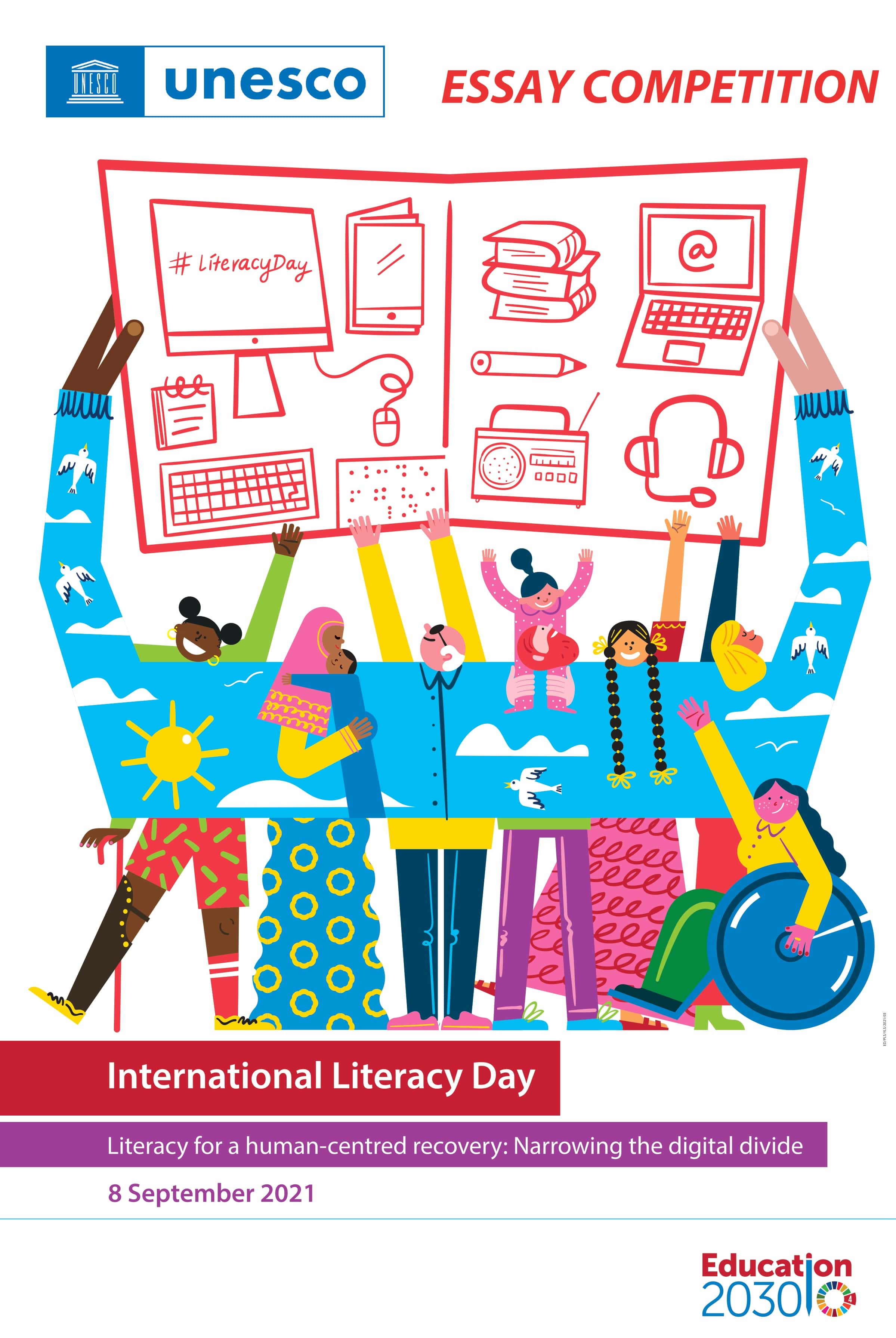 Essay competition dedicated to International Literacy Day 2021 2021-09-12 Participate in an essay competition by UNESCO Almaty dedicated to International Literacy Day 2021 and win a prize!ESSAYS SHALL BE SUBMITTED UNTIL 22 SEPTEMBER 2021 Background informationInternational Literacy Day (ILD) 2021 will be celebrated under the theme “Literacy and digital skills during COVID-19 pandemic”.The COVID-19 crisis has disrupted the learning of children, young people and adults at an unprecedented scale. It has also magnified the pre-existing inequalities in access to meaningful literacy learning opportunities, numerous literacy programmes have been forced to halt their usual modes of operation.Even in the times of global crisis, efforts have been made to find alternative ways to ensure the continuity of learning, including distance learning, often in combination with in-person learning. Access to literacy learning opportunities, however, has not been evenly distributed. The rapid shift to distance learning also highlighted the persistent digital divide, thus many students have problems the Internet connection, do not have the necessary equipment (computer, laptop, tablet) and not proficient in using technology. In addition, access to electricity is limited in some regions, which also hinders distance learning.The pandemic, however, was a reminder of the critical importance of literacy. Beyond its importance as part of the right to education, literacy empowers individuals and improves their lives by expanding their capabilities to choose a kind of life they can value. It is also a driver for sustainable development. Literacy is an integral part of education and lifelong learning premised on humanism as defined by the Sustainable Development Goal 4. Literacy, therefore, is central to a human-centred recovery from the COVID-19 crisis.ILD 2021 will explore how literacy can contribute to building a solid foundation for a human-centred recovery, with a special focus on the interplay of literacy and digital skills required by non-literate youth and adults. It will also explore what makes technology-enabled literacy learning inclusive and meaningful to leave no one behind. By doing so, ILD2021 will be an opportunity to reimagine future literacy teaching and learning, within and beyond the context of the pandemic.Essay themesWithin the competition, participants are invited to write an essay expressing their reasoning and thoughts on one of the proposed questions:1. What is the digital divide and how can it be prevented?2. How would you address the digital gap that exists in remote/rural areas?Evaluation criteria for competition entries1. Relevant to the proposed themes and questions;2. Follow the grammar and stylistics of English or Russian language;3. Essays must be original and unpublished. Plagiarized entries will be rejected;4. Ability to express own thoughts;5. Argumentation and critical thinking skills6. Essay must be up to 1-1.5 pages of typewritten text in English or Russian in Microsoft Word. Font: Times New Roman, size - 14, spacing - 1.5. All margins are 20 mm. At the top left is the surname, name of the author of the essay.DeadlineEntries must be received by September 22, 6 p.m. Almaty timeGuidelines1. Essays may be submitted by citizens of Armenia, Azerbaijan, Georgia, Kazakhstan, Kyrgyzstan, Tajikistan, and Uzbekistan, who are from 13 to 22 years old2. Essays may be submitted in English or Russian languages3. Only one entry per person is accepted4. Participation in the competition is free of charge, participants incur their own costs5. UNESCO Almaty reserves the right to exclude participants from the contest, who haven’t met the participation requirements.6. Essays must be sent to unescoata@gmail.com no later than September 22, 2021, 6 p.m. Almaty time7. Seven winners of the competition will be selected by the jury and will receive prizesPrizesA pack of branded UNESCO merchandises for 7 winning essaysHow to Enter1. Write an essay expressing your opinion on one of the proposed themes/questions2. Accept the Competition Rules by filling out all the required fields of the Registration Form3. Send the essay along with the registration form no later than September 22, 2021, 6 p.m. Almaty time to unesata@gmail.com with the subject line of "International Literacy Day essay competition" by saving and sending your work in the following format: ILD_Essay Contest_Your Surname.For more information, please contact us by email: d.tuyakova@unesco.org URL:http://en.unesco.kz/essay-competition-dedicated-to-international-literacy-day-2021