
News
Catch up on what’s happening in the world of global citizenship education.
248 results found
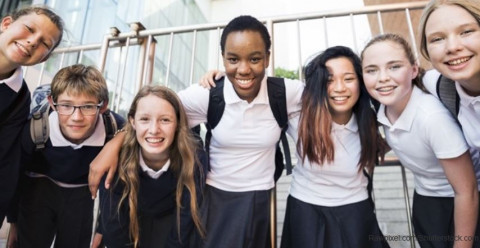 UNODC and UNESCO join up to promote the rule of law through education 2018-04-18 UNESCO and UNODC have announced the launch of a new partnership to provide Global Citizenship Education in response to some of the world’s most pressing challenges to peace, justice and the rule of law. The ‘Initiative on Global Citizenship Education: Educating for a Culture of Lawfulness’ is developed jointly by UNESCO and UNODC to equip education policy-makers, primary and secondary level teachers and educators with tools to empower learners to engage in society as constructive and ethically responsible agents of change, supporting justice and strong institutions. Welcoming the initiative, Qian Tang, Assistant Director General for Education, said: “Global Citizenship Education offers a powerful approach to address contemporary challenges to the rule of law. By strengthening learners’ ability to think, act responsibly and share, we can build the defences of peace in the minds of men and women… Through this new partnership with UNODC we look forward to developing the tools that teachers and educators need to help learners act and engage in society as constructive and ethically responsible agents of change, supporting peace, justice and strong institutions.” The initiative will be rolled out over the next two years and pools existing expertise from the two organizations. It is being implemented in the framework of UNESCO’s activities relating to Global Citizenship Education and is designed to support UNODC’s Education for Justice (E4J) initiative. The Education for Justice initiative is part of the Global Programme for the Implementation of the Doha Declaration, adopted following the 13th United Nations Congress on Crime Prevention and Criminal Justice in 2015. Funded by the State of Qatar, the initiative seeks to prevent crime, corruption and promote a culture of lawfulness through education activities designed for primary, secondary and tertiary levels. UNESCO’s work in support of Global Citizenship Education and the prevention of violent extremism through education seeks to strengthen the capacities of national education systems to appropriately and effectively contribute to national prevention efforts. This work supports the implementation of UNESCO Executive Board Decision 197 EX/Decision 46: “UNESCO’s role in promoting education as a tool to prevent violent extremism” and the UN Secretary-General’s Plan of Action to Prevent Violent Extremism. The work is set in the broader context of the two agencies’ contribution towards achieving the 2030 Agenda for Sustainable Development, in particular, Sustainable Development Goals 4 and 16, which call for quality education and the building of peace, justice and strong institutions. These efforts are also expected to build young people’s resilience to violent extremist messaging and foster a positive sense of identity and belonging. URL:https://en.unesco.org/news/unodc-and-unesco-join-promote-rule-law-through-education
 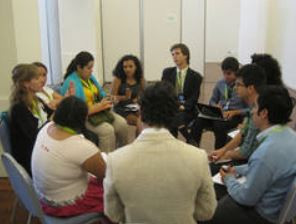 Application Open for the 4th Youth Leadership Workshop on GCED 2018-04-12 The Asia-Pacific Centre of Education for International Understanding (APCEIU) will organize the 4th Youth Leadership Workshop on GCED (Global Citizenship Education) from 20 to 26 May 2018 in Seoul, Republic of Korea. The one-week Workshop aims to build capacity of dynamic youth leaders around the world to identify strategies to achieve Sustainable Development Goals (SDGs), specifically Target 4.7, and to carry out innovative initiatives on fostering global citizenship through advocacy. While enabling participants to deepen their understanding of GCED, the Workshop allows the young leaders to play a major role and become part of a wider network of youth leaders for GCED. During the Workshop, participants will identify specific priority issues around global citizenship and establish plans for the future direction of GCED. Working both individually and in groups, the young leaders will devise the goals and strategies for use at local and national levels. Participants will learn about specific areas such as GCED and youth advocacy through information sessions and engage in dialogue and debates on the evolving issues. As part of the Workshop, participants will make a field visit to DMZ (Demilitarized Zone) area to discuss the role of youth for a more peaceful and sustainable future. Application for the 4th Youth Leadership Workshop on GCED must be submitted before 25 March 2018 (KST 23:59). Successful applicants will be notified by 6 April 2018. Travel expenses and Workshop fees will be covered by APCEIU for the selected participants (participants will be responsible for the domestic travel expenses and visa fees in their own countries). Contact information: Office of Education and Training Email: Training@unescoapceiu.org Telephone: +82-2-774-3956 (ext. 802) Online application URL:http://www.unesco.org/new/en/santiago/press-room/single-new/news/postula_al_taller_de_liderazgo_juvenil_sobre_educacion_para/
 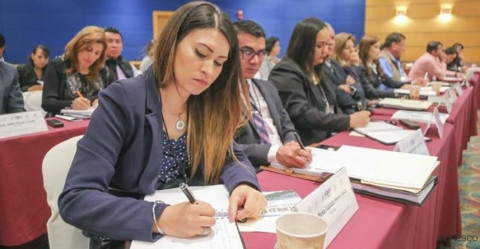 UNESCO Mexico & UNESCO Associated Schools focus on Education about the Holocaust and Genocide 2018-04-04 The UNESCO Mexico Office participated in a meeting of UNESCO Associated Schools Network (ASPnet) State coordinators in Mexico that took place from 15 to 16 March 2018 in Monterrey, Mexico. Organized by the Mexican Commission for Cooperation with UNESCO (CONALMEX) and the Secretary for Public Education, the reunion set a focus on education about the Holocaust and genocide. The theme is in line with the values and principles promoted by ASPnet, including fundamental rights and human dignity, respect for diversity and international solidarity. During the meeting, UNESCO’s Policy Guide on Education about the Holocaust and preventing genocide was presented to the participating coordinators of the 310 UNESCO ASPnet member- and 395 “ASPnet collaborating” schools in Mexico. Further topical input was provided by the exhibition “State of Deception: The Power of Nazi Propaganda”, on display on the conference premises. The exhibition was originally created by the United States Holocaust Memorial Museum (USHMM) in cooperation with The Holocaust and the United Nations Outreach Programme, to explain how the Nazi party used innovative propaganda techniques to come to power through elections and then drive the country to war and the systematic murder of 6 million Jews in Europe. The exhibit is a tool to help young people better evaluate the messaging they receive, in particular online and through social media. In this context, Adolfo Rodríguez, education specialist from the UNESCO Mexico Office presented UNESCO’s publication Rethinking Education: Towards a global common good?, and highlighted how dealing with such cases of violent pasts relates to the broader role of education in promoting peace, tolerance and contributing to the prevention of violent extremism. In a dedicated session on the second day of the meeting, Yael Siman Druker, from the Ibero-American University in Mexico City, presented on “Holocaust, Genocide and Global Citizenship”. Yael Siman Druker has been part of the two Mexican national teams that participated in the 2015 and 2017 International Conference on Education and the Holocaust (ICEH), jointly organized by UNESCO and the USHMM. The conference trains and supports education stakeholders in their efforts to advance education about the Holocaust through the development of initiatives tailored to their respective national contexts. As outcome of the 2015 ICEH, the Mexican national team has implemented a two-day academic conference at the Ibero-American University in cooperation with the Museum of Memory and Tolerance in Mexico City in fall 2016, published an educational handbook for teachers and piloted a bi-national teacher training program with Chile. The 2017 team builds on the success of this first series of projects. Over the course of 2018, the team plans to cooperate with the Mexican Ministry of Education and experts from selected Mexican universities and institutes to continue to advance education about the Holocaust and genocide in Mexico. Mexico has been increasingly advancing its efforts towards strengthening Education about the Holocaust and genocide in Mexican schools and higher education institutions. Since 2014, Mexico is a member of the UNESCO Latin American Network on Education about the Holocaust. UNESCO Education about the Holocaust and genocide United States Holocaust Memorial Museum UNESCO Associated Schools Network (ASPnet) UNESCO Associated Schools Network in Mexico URL:https://en.unesco.org/news/unesco-mexico-unesco-associated-schools-focus-education-about-holocaust-and-genocide
 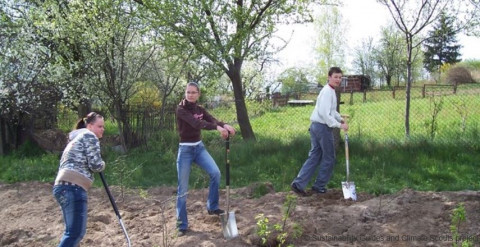 Teaching youth to plant for the planet and change the world from the heart of Europe 2018-03-29 A project run from a remote and beautiful part of the German countryside is transforming young people into climate scouts with a powerful message to share. The Sustainability Guides and Climate Scouts project is run from the International Meeting Centre, St. Marienthal in Ostritz in the Free State of Saxony near the border with Poland. Established in 1992, the centre conducts around 60 Education for Sustainable Development (ESD) events for more than 2,500 families, youths, adults and experts each year. The guides and scouts project started in 1998 and welcomes groups of students for intensive courses that combine study with practical outdoor activities, and make good use of its forest experience trail and nature protection station. Over 1,100 youth have taken part so far including 680 learning-disabled and socially disadvantaged young people who traditionally have very little access to ESD. Its geographical location means it is perfectly placed to bring together students from Germany, Poland and Czech Republic. And a new model project is currently underway which opens the door to ESD for refugees as well. One of the most exciting aspects of the project is the Plant for the Planet scheme where children have planted around 34 hectares of forest and undertaken more than 30 small-scale energy and water conservation initiatives. Project Manager Georg Salditt said: “Our message is really twofold: we are teaching peace and the environment. We are well placed at the very heart of Europe to bring young people together who may not normally have met and to demonstrate to them that we are all human beings and we must respect each other and the planet.” The work with refugees who come from Syria, Afghanistan and African countries and elsewhere also has a double aim. “We want to make sure that if they make their lives here they know how important it is to protect the environment, but also if they are able to return home or to another country that they carry those messages back with them,” said Georg. Not only is the centre itself a model of sustainability with its own environment management system: when children leave the course they take back with them ideas on how to transform their own schools. The centre ties all theory very tightly to practice. In some schools, environmental representatives have been appointed and students introduced permanent energy saving routines for heating and ventilation and for the reduction of paper use and waste. As part of the project young people also learn about the effects of climate change on societies in the form of soil erosion, extreme weather phenomena , rural depopulation, economies and the environment especially with regard to forest damage. They are motivated by quick feedback on successes in energy and water conservation and updates on the amount of forest planted. Crucially children also take part in communication workshops to learn how best to share and pass on what they have learned at open school days or town halls. For Georg one of the most satisfying aspects of his work is watching the transformation take place before his eyes. “It might sound silly but students do actually write to me one or two years after the course and say that these five days changed their lives not only as far as the environment is concerned but as a human experience. Some had never met anyone from another country at all. And they got to plant a tree!” And there is a new project already underway. “We are now working to introduce a project to protect bees and insects. Everyone loves honey and honeybees so we think it will be a success,” he said. More on Education for sustainable development. URL:https://en.unesco.org/news/teaching-youth-plant-planet-and-change-world-heart-europe
  Comprehensive sexuality education to prevent gender-based violence 2018-03-16 UNESCO, UNFPA, and UN Women presented the revised UN Technical Guidance on Sexuality Education at ‘Education for a Healthy Future’ – at an event on 13 March on the sidelines of the 62nd session of the Commission on the Status of Women (CSW) at UN Headquarters. The event follows International Women’s Day on 8 March, and the strengthened call for all people to think, act and be gender inclusive. The prevalence of gender-based violence Every year, an estimated 246 million children are subject to some form of gender-based violence, including mistreatment, bullying, psychological abuse and sexual harassment in or on the way to school. 25% of children experience physical violence and 36 % experience emotional violence. Educating young people is the only true, long-term solution to gender-based violence. However, it must be high-quality, age-appropriate, and evidence-based comprehensive sexuality education. Contrary to what opponents of sexuality education often claim, CSE is not just about sex. When delivered well, it promotes health and well-being, respect for human rights and gender equality, and empowers children and young people to lead safe and productive lives. Notably, it teaches that all forms of gender-based violence are wrong, and a violation of human rights. Young people not only learn how to recognise and stay away from all forms of gender-based violence, but they also learn how to prevent it, to not perpetrate it, and know where to get help. They also learn essential life skills such as empathy, negotiation, decision-making and critical thinking, encouraging them to question social and cultural norms that support unequal gender and power structures, and which often lead to violence. The importance of comprehensive sexuality education Despite clear and compelling evidence for the benefits of curriculum-based CSE, too few children and young people receive it. To help change this, UNESCO has published a fully updated International Technical Guidance on Sexuality Education. Produced in collaboration with UNAIDS, United Nations Population Fund (UNFPA), United Nations Children’s Fund (UNICEF), UN Women, and the World Health Organization (WHO), the Technical Guidance helps education, health and other relevant authorities develop and implement sexuality education programmes and materials. It advocates CSE to help young people overcome the challenges posed by sexuality and reproductive health issues, which are particularly difficult during puberty. These challenges include access to contraception, early pregnancy, sexually transmitted infections (STIs), HIV, and AIDS. What are children learning? The Technical Guidance goes beyond that. It outlines the key concepts, topics and learning objectives which should guide the development of locally-adapted curricula for learners aged 5 – 18+. It includes concepts like violence and staying safe, breaking them down into lessons around consent, privacy and bodily integrity. For learners aged 5 – 8 years, this helps them to describe how they would talk to a parent, guardian or trusted adult if they were experiencing violence. For learners over the age of 15, it teaches more complex notions of consent. The Technical Guidance advises teaching about tolerance, inclusion and respect. It guides young learners to treat all people with dignity, and older learners to understand broader concepts of harassment and bullying, acknowledging that everyone has a right to speak out about it and demonstrating ways to counter it. A young learner begins to understand that our ideas about gender and gender stereotypes can affect how we treat other people, and will learn how to define gender-based violence. As this child becomes an adolescent, they learn to identify all forms of gender-based violence, such as sexual harassment, domestic violence, homophobic violence and rape. As that child becomes an early adult, they are able to recognise intimate partner violence and know how to leave an abusive relationship. Where to now? Schools can play a pivotal role in stamping out gender-based violence. As the Technical Guidance outlines, they must implement zero tolerance policies for sexual harassment and bullying, including stigma and discrimination on the grounds of sexual orientation and gender identity. It is also up to governments. The Technical Guidance supports governments to ensure all children and young people have access to evidence-based, curriculum-based CSE, knowing that it is critical to broader efforts to end sexual harassment and assault. Cultures take time to change. Thankfully, speaking out against incidences of gender-based violence such as sexual harassment and abuse is becoming, not only acceptable, but also commonplace. Through CSE, the next generation of children and young people stand in the best position to help create an inclusive and gender equal society. Download the International Technical Guidance on Sexuality Education. Learn more about UNESCO’s work in education for health and well-being. URL:https://en.unesco.org/news/comprehensive-sexuality-education-prevent-gender-based-violence
 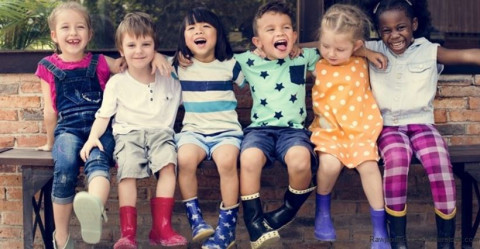 Early childhood care and education as a cradle for social cohesion 2018-03-09 Quality early childhood care and education (ECCE) has the power to transform children’s lives. It can contribute to greater efficiency in education and health systems and a better skilled workforce. Attention to early childhood can also help build more equal and inclusive societies by providing excluded and disadvantaged children with a strong foundation in lifelong learning, and throughout their lives. The right time is now Early childhood is the time when promoting gender equality and a culture of peace makes a true difference, as the pace of brain development is at its peak. When children are exposed to values and attitudes that support gender equality and peace at an early age, they are likely to hold them in later stages in life. “Many things we need can wait. The child cannot. Now is the time his bones are formed, his mind developed. To him we cannot say tomorrow, his name is today.” (Gabriela Mistral) Investing in ECCE is fundamental to the attainment of the Education 2030 Agenda, and the greater United Nations Sustainable Development Agenda. Slow progress The inclusion of ECCE in Sustainable Development Goal 4 (SDG 4) as Target 4.2 recognizes the untapped potential of quality ECCE for individuals and societies and urges countries to “ensure that all girls and boys have access to quality early childhood development, care and pre-primary education so that children are ready for primary education" by 2030. In 2007, UNESCO reminded the international community that half of the countries in the world did not have ECCE policies for children under three years old. Progress has been made on pre-school enrolment in many countries but more work is needed to make ECCE central to education systems and realize its tremendous societal benefits. Social cohesion UNESCO has partnered with the French National Commission for UNESCO to organise the International Symposium “Early Childhood Care and Education: Cradle for Social Cohesion” being held on 5 to 6 March 2018 at UNESCO Headquarters in Paris. The Symposium reflects UNESCO’s commitment to expand and improve ECCE globally. It builds on the momentum set by the international community for ECCE and increases countries’ awareness about the role of quality ECCE in fostering social cohesion. The Symposium strengthens the international knowledge and evidence base on good ECCE policies and practices. It also aims to stimulate countries in integrating ECCE, in particular in their implementation of SDG target 4.5 (Inequalities in education), SDG target 4.7 (education for sustainable development, peace and human rights education), and the 2017 UN Resolution on the Declaration and Programme for a Culture of Peace, which sets ECCE as an essential strategy for peace building. As the lead agency for the coordination of the Education 2030 Agenda, UNESCO promotes inclusion in education through holistic and quality ECCE for all children over the age of 3. UNESCO works on policy and the development of good practice, including in the area of teacher development with the Survey of Teachers in Pre-primary Education (STEPP) project. -- More information International Symposium on ECCE: UNESCO event page or webpage on French National Commission for UNESCO UNESCO’s work on ECCEURL:https://en.unesco.org/news/early-childhood-care-and-education-cradle-social-cohesion
 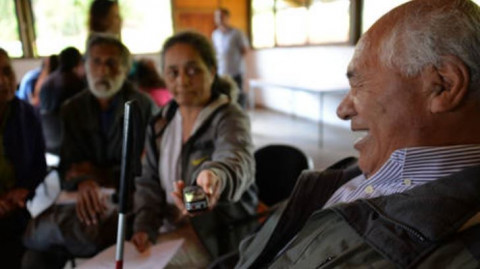 The Rapa Nui language is alive but endangered: new “Linguistic and Cultural Revitalization Plan” addresses the challenge of strengthening it 2018-03-01 Vicky Haoa has dedicated years to the strengthening of the Rapa Nui language: "Language is part of our way of being, our thoughts, our feelings, our joys and much more," he says. (Santiago, 21 February 2018.) This plan emerged in the context of Chile’s education reform after the first citizen dialogue was held in Rapa Nui (Easter Island, Chile) in October 2014. The focus was “What education do we dream of?” The design of this project included the application of a socio-linguistic survey that was completed by 542 people. The results suggest that the Rapa Nui language enjoys a high level of respect and prestige in the community, even among those who do not speak it. They also indicate that it is a defining element of speakers’ identity and that there are limited opportunities to learn it outside of the family milieu. This participatory process began in 2014 when Chile’s Ministry of Education (Mineduc) visited every province in the country to gather information from members of the public on what a dream education reform would look like. “The Rapa Nui community stated that they agree with structural changes to the education system as long as they consider and respect intercultural education, the indigenous world view and the history of the communities, as well as other elements that protect education that is relevant to the territories”, explained Andrés Soffia, the Coordinator of the Citizen Participation and Inclusion Unit (Mineduc). During subsequent encounters with the Rapa Nui people, particularly between members of educational communities, Mineduc and UNESCO, it became clear that there was a need to analyze the current situation of the Rapa Nui language and culture, and this became one of the project objectives. The cultural and linguistic revitalization project began with an assessment of the state of linguistic competency of the Rapa Nui language among the island’s population. Efforts also were made to ascertain the community’s perceptions of education and the place that Rapa Nui language and cultural heritage hold in it. Experts worked with the community to gather data on the measures that the Rapa Nui people believe are necessary in order to achieve linguistic and cultural strengthening. The work conducted during the first phase (2015) concluded with the development of a linguistic and cultural situation report on the Rapa Nui people. The document was completed with community participation and included the design and pilot application of a socio-linguistic survey in order to determine the state of vitality of the Rapa Nui language. The second phase of the process (2016) consisted of analyzing the results of the pilot application and construction of the final instrument, which was applied between October and November 2016. During 2017, progress was made on the analysis of the survey results and design of the plan of action based on the assessment conducted in collaboration with the Mineduc teams involved in the process. The proposal has three axes: 1) epistemic and intercultural participation and dialogue; 2) intercultural institutional policy design and practices; and 3) adjustment of internal and external regulations. A plan of action has been designed for 2018-2021 that covers various measures in the following lines of action: Ongoing communications efforts to raise awareness of and publicize actions and results; Participation in and strengthening of the use of the language from and in communities and families; Intercultural institutional management; Formal and informal curriculum development; Ongoing training of teachers, traditional educators, and Rapa Nui experts; Development of teaching materials in immersion, bilingualism and the Indigenous Language Learning Sector; Systematization, monitoring, support and advising on the process. During 2018, work will be conducted to include traditional educators in the education system; gather information on learning spaces; provide opportunities for reflection with the educational community; design evaluation instruments for linguistic and cultural competencies; design a training policy for teachers, traditional educators and experts; foster participatory design of teaching materials for linguistic immersion; and create local and institutional panels for the management and monitoring of the plan, among other actions. “It was necessary for this linguistic and cultural strengthening to go beyond the contents or topics included in national education programs and for it to address the entire experience of the Rapa Nui people. We believe that we are experiencing a hopeful event for efforts to increase recognition of the richness of cultural diversity in Rapa Nui and its unique contribution to a better society for all,” stated Atilio Pizarro, the Section Chief for Planning, Management, Monitoring and Evaluation at the Regional Bureau for Education in Latin America and the Caribbean (OREALC/UNESCO Santiago). The survey and its results “If there are no children who speak our language, and we as adults die, when these children are adults and become parents, they won’t speak the language and will not be able to teach it to their children,” laments Vicky Haoa, member of the Rapa Nui Language Academy. The socio-linguistic survey is meant to determine the level of vitality of the Rapa Nui language based on the guidelines set by UNESCO (UNESCO, 2003). The survey was built in Spanish and Rapa Nui, and the target population was composed of school-aged children, youth and adults from Rapa Nui families (Rapa nui or mixed families) who live on Easter Island. The survey was conducted by 28 individuals of Rapa Nui origin between October 26 and November 18, 2016. The total estimated population based on the sample was 3,000 people, 542 of whom participated in the survey. The survey results show that over 70% of members of the Rapa Nui ethnic group who are aged 65 or older have a high level of linguistic competency. As the age level decreases, the percentage of respondents who have a high level of competency also gradually decreases, reaching a low of just 16.7% in the youngest group (8-12 years). The data also indicate that the Rapa Nui language is dominant in private environments and in social, family and traditional activities, while Spanish is the dominant language in areas of new and public use. In addition, the Rapa Nui language enjoys respect and prestige in the community, even among those who do not speak it. Also, it is a defining element of speakers’ identities. However, there are limited opportunities to learn it outside of the family milieu, and more decisive action by the State and public institutions is required to protect and strengthen it. Assuming that speakers of the language are those who demonstrate a high level of competency, representing between 59% and 63% of the population with 95% confidence (in terms of the scale established by UNESCO, 2003), this proportion places Rapa Nui on the third level (“clearly in danger or threatened”), indicating that the majority of the community speaks the language. The scale ranges from 0 (no one speaks the language) to 5 (everyone speaks the language). Despite these hopeful statistics, the qualitative evaluation indicates that the language is endangered. As such, for Vicky Haoa, member of the Rapa Nui Language Academy, strengthening the Rapa Nui language also has to do with pursuing the dream “that my language will not disappear, because language is part of our way of being, of our thoughts, our feelings, our joys and much more. If our language disappears, one cannot speak of the existence of a culture called Rapa Nui. We show who we are through our language.” Paula Pilquinao, who represents the Indigenous Intercultural Education Office of the Undersecretary of Education of Chile, agrees with Vicky Haoa: “All knowledge is implicit in the language; the entire culture is implicit in the language. If the language is lost, the entire culture is lost, all of the knowledge that that language carries. That is where its importance lies. If the children no longer know the language, they won’t know their culture, and so they lose their identity,” she explained. **** According to UNESCO, a language is considered endangered when it ceases to be used, is used in a limited number of spaces, stops being taught to new generations or when there are few opportunities and resources available for teaching and learning it. UNESCO recognizes the importance of supporting the efforts of indigenous communities to strengthen their language and culture and provide the conditions necessary to allow them to transmit their knowledge, values and unique ways of life to future generations. International experiences and studies show that bilingual (or multilingual) education systems based on the mother tongue in which the mother tongue is taught to the child along with the introduction of a second language can improve performance in the second language and other topics. URL:http://www.unesco.org/new/en/santiago/press-room/our-stories/the-rapa-nui-language-is-alive-but-endangered/
 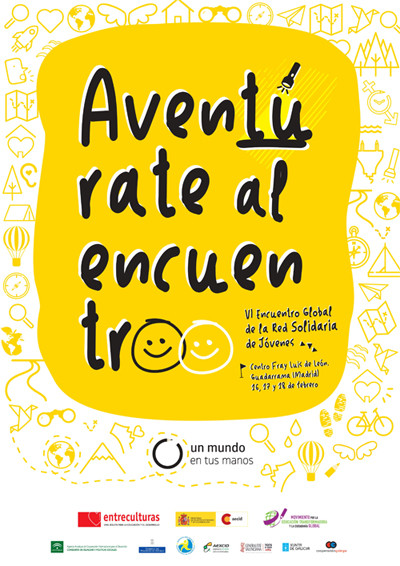 Educación para la ciudadanía global: con nuestra red solidaria de jóvenes reescribimos el futuro 2018-02-25 A mediados de febrero tuvo lugar en Madrid el VI Encuentro Global de la Red Solidaria de Jóvenes de Entreculturas. Con 280 participantes de 11 países diferentes (Argentina, Brasil, Kenia, Venezuela, Uruguay, Perú, Italia, España, Nicaragua, República Dominicana y Colombia), la cita fue todo un éxito de participación, contenidos y construcción colectiva. Bajo el lema “Aventúrate al encuentro”, la dinámica de los talleres giró en torno a los Objetivos de Desarrollo Sostenible y la búsqueda de claves y herramientas con las que afrontar los actuales desafíos globales relacionados con la igualdad de género, el medioambiente y la construcción de cultura de paz y acogida. Esta convocatoria sirvió también para auspiciar el Encuentro Internacional de jóvenes de la Red Generación 21+, para el que se contó con casi 80 jóvenes y acompañantes, la mayoría pertenecientes a Fe y Alegría pero, también, a otras organizaciones hermanas como el Servicio Jesuita a Refugiados. URL:https://memoria.entreculturas.org/educacion-para-la-ciudadania-global/
 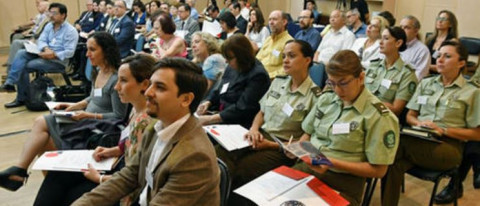 Seminar in Chile seeks to strengthen Holocaust education and the formation of a robust citizenship 2018-02-18 This is the second part of an event that began in Mexico and is one of the actions that was committed to at the Conference for International Holocaust Education. The event is part of a project financed by the International Holocaust Remembrance Alliance (IHRA) and is sponsored by UNESCO.The Jewish Interactive Museum of Chile organized the international seminar “Holocaust and Citizenship,” which took place on 22 January in Santiago, Chile. The purpose of the event was to raise awareness among opinion leaders of the importance of implementing education programs to prevent genocide, particularly programs on the Holocaust and citizenship development. At the event, the issue of the Holocaust was presented as a point of reference for examining the connections between violence, the weakening of democracy, justice, and human rights. The seminar featured important representatives of academia, the field of education, civil society, and the Chilean government. This is the second part of an event which was held in Mexico with the support of that country’s Memory and Tolerance Museum and Universidad Nacional Autónoma de México. Both seminars are part of the monitoring actions of the Conference for International Holocaust Education organized by UNESCO and the United States Holocaust Memorial Museum. The project is financed by the International Holocaust Remembrance Alliance (IHRA) and is sponsored by UNESCO. The seminar featured Nicolás del Valle, Assistant Program Specialist with the Regional Bureau for Education in Latin America and the Caribbean (OREALC/UNESCO Santiago). Del Valle highlighted the importance of this binational activity: “Like Mexico, Chile is part of the UNESCO Latin American Network for Education on the Holocaust and Other Genocides and is developing national initiatives regarding these matters. Teaching on these topics is essential for promoting reflection on the past that allows for a culture of peace and human rights to be valued as the basis for democracy and sustainable development,” he said. The organizers of this initiative will draft a publication during 2018 with contributions from both meetings to expand their scope. Education about the Holocaust and genocide UNESCO recognizes that teaching Holocaust history is essential to promoting respect for human rights, fundamental freedoms and the values of tolerance and mutual respect. UNESCO encourages UN member states to create educational programs that transmit Holocaust memory to future generations to prevent future atrocities. To that end, it provides pedagogical materials and a platform so that institutions, teachers, students and other interested parties can access teaching resources related to the topic. UNESCO also participates in national activities on these topics. On 1 February 2018, Cecilia Barbieri, the lead official and interim representative of the Regional Bureau for Education in Latin America and the Caribbean (OREALC/UNESCO Santiago), attended the commemoration of International Holocaust Remembrance Day at Chile’s former Congress building. The ceremony, which was organized under the slogan “The World Calls for Inclusion, Tolerance, and Brotherhood,” was organized by the Ministry of Foreign Affairs, the Jewish Community in Chile, and B’Nai B’rith. During the event, Chilean diplomat Samuel Del Campo, who served as consul in Romania, was honored. Between 1941 and 1943, Del Campo saved approximately 1,400 Jews by offering them Chilean documentation with special seals that offered them protection. Further information 09.06.2017 - UNESCO supports association between Chilean and Mexican organizations to strengthen Holocaust education Education about the Holocaust and genocide (UNESCO) URL:http://www.unesco.org/new/en/santiago/press-room/single-new/news/seminario_en_chile_busca_fortalecer_la_educacion_acerca_del/
 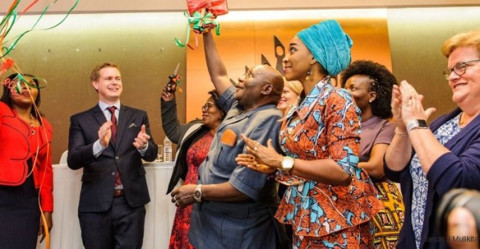 UNESCO and Sweden highlight sexuality education as a catalyst for development 2018-02-18 UNESCO and Sweden came together in sub-Saharan Africa in January, to pledge their commitment to comprehensive sexuality education (CSE) and galvanize regional action to ensure all children and young people have access to good quality, curriculum-based CSE. UNESCO representatives were joined by the Minister for Education of Sweden, Gustav Fridolin, who visited Zambia and South Africa to take part in high-level dialogues with Ministers and policy-makers from the Governments of Zambia, Zimbabwe, Ghana, South Africa, Ghana, Swaziland and Cote d'Ivoire. The Minister also took part in the regional launch of the revised UN International technical guidance on sexuality education, which aims to assists education, health and other relevant authorities in the development and implementation of CSE programmes and materials. Published by UNESCO in collaboration with UNAIDS, United Nations Population Fund (UNFPA), United Nations Children’s Fund (UNICEF), UN Women, and the World Health Organization (WHO), the Guidance facilitates development of accurate and age-appropriate knowledge, attitudes and skills that contribute to positive relationships, health and well-being, and respect for human rights and gender equality. Minister Fridolin said every young person has the right to CSE. “This makes for important steps towards gender equality, and is therefore an investment in development, economy and society as a whole. Comprehensive Sexuality Education of good quality is never an issue that concerns only girls. To reach shared and equal responsibility and healthy attitudes, sexual and reproductive health and rights and Comprehensive Sexuality Education are as important for boys and men, as they are for girls and women.” The Minister also led the launch of UNESCO’s Our Rights, Our Lives, Our Future (O3) programme, alongside the Ministers for primary and further education of Zambia. The O3 programme will strengthen CSE delivery for young people in 30 countries in sub-Saharan Africa. Patricia Machawira, Regional Health and Education Advisor at UNESCO, said that through the O3 programme, “we envision a sub-Saharan Africa where positive health, education and gender equality outcomes are a reality for children and young people,” before adding, “Young people are receiving confusing and conflicting messages about relationships, about sex and about gender. It’s critical that schools deliver scientifically accurate education that develops the skills, knowledge, attitudes, and competencies needed to navigate a healthy transition to adulthood. Government and the education sector in sub-Saharan Africa have both an opportunity and an urgent responsibility to scale up sexuality education programs.” The visit to sub-Saharan Africa highlighted comprehensive sexuality education as a catalyst for the achievement of Sustainable Development Goals (SDGs) 3, 4 and 5, around good health and well –being, quality education and gender equality. URL:https://en.unesco.org/news/unesco-and-sweden-highlight-sexuality-education-catalyst-development