
News
Catch up on what’s happening in the world of global citizenship education.
248 results found
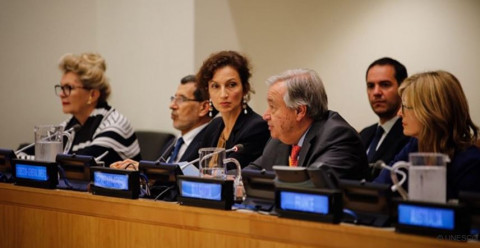 Education to prevent racism and discrimination: the case of anti-Semitism 2018-10-08 Education as the primary factor in preventing all forms of racism and discrimination was the main focus of a high-level event organized by UNESCO at the 73rd United Nations General Assembly today. Through the lens of its program to prevent anti-Semitism, UNESCO sought to mobilize Member States’ commitment in the fight against all forms of intolerance and to strengthen the organization’s overall efforts to prevent racism and discrimination. In her remarks opening the session on The power of education to prevent racism and discrimination: the case of anti-Semitism, Director-General Audrey Azoulay highlighted the importance of working as one: “this requires the mobilization of all member states”, she said, “and education is the best tool at our disposal to prevent all forms of intolerance and discrimination and to ensure equal respect for every woman and man,” adding “antisemitism undermines fundamental rights in general. To address it is to defend fundamental freedoms. It is to defend the equal dignity of all human beings.” In the presence of Antonio Guterres, Secretary General of the United Nations, the event included the participation of the Prime Minister of Morocco, Saadeddine Othmani, and Ministers representing Argentina, Australia, Bulgaria, France, Hungary, Mexico, the Netherlands, Norway, Spain, and the United Kingdom. Several hundred government officials and senior representatives of civil society organizations were also in attendance. Ronald S. Lauder, President of the World Jewish Congress, also delivered a speech. Professor Deborah Lipstadt, of the Modern Jewish History and Holocaust Studies program at Emory University and Mina Abdelmalak, Arab Outreach Specialist at the Initiative on Holocaust Denial and Antisemitism of the United States Holocaust Memorial Museum were also among the speakers. UNESCO’s extensive work in the field of preventing violent extremism through education has included publications such as Guidelines for Educators on Countering Intolerance and Discrimination against Muslims and co-publishing earlier this year with the Organization for Security and Cooperation in Europe (OSCE), the first-ever policy guidelines on Addressing anti-Semitism through education. *** Media contact: Aurélie Motta-Rivey, +33 7 72 44 89 91, a.motta-rivey@unesco.org URL:https://en.unesco.org/news/education-prevent-racism-and-discrimination-case-anti-semitism
  New data reveal that one out of three teens is bullied worldwide 2018-10-03 Almost one-third of young teens worldwide have recently experienced bullying, according to data released for the first time by the UNESCO Institute for Statistics (UIS), which is the official data source for the Sustainable Development Goal on education. The new data show that bullying affects children everywhere, across all regions and countries of different income levels. They were collected from in-school surveys that track the physical and emotional health of youth. The Global School Health Survey (GSHS) focuses on children aged 13 to 17 years in low-income regions. Similarly, the Health Behavior in School-Age Children (HBSC) targets young people aged 11 to 15 years in 42 countries, primarily in Europe and North America. Bullying refers to violence between peers/students which is characterised as “intentional and aggressive behavior occurring repeatedly where there is a real or perceived power imbalance.” “Data are the key to change,” said Silvia Montoya, UIS Director. “They can reveal who is affected by bullying and point the way to better programming by both national governments and international and non-government organizations. Over time, trends can point out whether interventions are working. Ultimately, the more knowledge we have, the more we are able to channel resources to children who need help the most.” Globally boys are slightly more at risk of bullying in schools than girls. The data – which do not include sexual or other forms of gender-based violence – show that more than 32% of boys experience bullying in school, compared to 28% of girls. Yet when looking at the 10 countries where children report the highest incidences of bullying, the median rates tell a slightly different story. In these 10 countries, a staggering 65% of girls and 62% of boys report bullying, revealing that where bullying is most pervasive, girls are more widely impacted. External factors also have a role in bullying Socioeconomic and immigrant status also play a part in bullying, according to the HBSC data on children from Europe and North America. In these regions, socioeconomic status – based on parents’ wealth, occupation and education level – is the most likely predictor of bullying: two out of five poor youth are negatively impacted. This compares to one-quarter of teens from wealthier families. Finally, also based on the HBSC data, immigrant children tend to be more vulnerable to bullying than their locally-born counterparts. As migration around the world reaches new peaks, it is worth asking whether bullying will further complicate the ability of this vulnerable group to learn. UNESCO will release a short report on 8 October 2018, looking deeper at a large number of international data sources on bullying and other forms of school violence, and revealing trends in prevalence over time. A full version of the report, available in January 2019, will present an analysis of effective national responses to school violence and bullying through country case studies. Together with the annual compilation and analysis of global data on bullying by UIS, these reports will help countries understand the scale of school violence and bullying, and put in place the policies and actions needed to ensure that all children learn in safe, supportive and inclusive school environments, as agreed in the SDG4 framework. What are the main takeaways of the data? One-third of youth globally experience bullying in school. Boys experience slightly higher rates of bullying than girls overall, but in countries where bullying is most pervasive, girls are more vulnerable. Low socioeconomic status is the main predictor of whether young teens in wealthy countries will experience bullying in schools. Immigrant youth in wealthy countries are more likely to experience bullying in schools than locally-born youth. *** For more information, contact: Amy Otchet, UNESCO Institute for Statistics, Montreal (Canada), a.otchet@unesco.org, tel: +1 514 343 7933 URL:https://en.unesco.org/news/new-data-reveal-one-out-three-teens-bullied-worldwide
 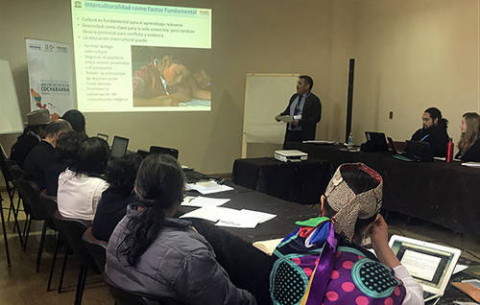 Specialists on indigenous knowledge provide recommendations on intercultural education to Latin American and Caribbean ministers 2018-10-01 The proposals on education, which were the result of discussions held at the II International Workshop on Indigenous Knowledge in Latin America, are part of UNESCO's work on intercultural issues. The points raised adopt a comprehensive and human rights approach and are linked to the global aims of the 2030 Agenda. These recommendations are intended to guide actions in education and intercultural issues through to 2030. A proposal prepared by experts in indigenous themes in education, with contributions from leaders and ministerial representatives from Mexico, Guatemala, Ecuador, Peru, Bolivia, Chile, Paraguay, Panama and Argentina, was presented to the Education Ministers of Latin America and the Caribbean on July 26 during the II Regional Ministerial Meeting in Cochabamba, Bolivia. The recommendations focus on respect for and appreciation of indigenous knowledge in education; the incorporation of indigenous knowledge as a prerequisite of interculturality in state policies at all levels of education; the progress made in terms of gender equity and inclusion of indigenous knowledge; and strengthening the commitment of states to foster policies that revitalize and promote indigenous languages. Points of the proposals The recommendations are the result of discussions held at the II International Workshop on Indigenous Knowledge in Latin America, held on July 24, 2018 in Cochabamba. In his inauguration speech, Roberto Aguilar, Minister of Education of the Plurinational State of Bolivia and host of the meeting, stressed the importance of these issues in the region: "As countries of Latin America and the Caribbean, one of our fundamental objectives is to bring renewed value to, recover, strengthen and project in time all that is represented by native peoples within the framework of our existence as peoples and states, and which are projected as part of the rights of indigenous peoples and nations." The presentation of the workshop’s conclusions to the ministers detailed the following points: Respecting and recognizing the value of indigenous knowledge in education: Recover and recognize the value of indigenous knowledge from a complementary perspective in terms of multicultural and intercultural societies; incorporate and expand indigenous knowledge in various areas; promote research policies, documentation and the deepening of indigenous knowledge through community methodologies and practices specific to peoples and on the basis of their languages. Incorporating indigenous knowledge as a prerequisite of intercultural issues and state policy at all levels of education: Ensure the binding and protagonistic participation of indigenous peoples in the definition of policies and implementation of inter-, intra- and multilingual education; make progress in the area of teacher training, recognizing teachers as central subjects, and with the participation of parents in intercultural, bilingual, intracultural and multilingual education, ensure pertinent and relevant training processes, certifying their work and paying decent wages; and promote the development of autonomous regional curricula in accordance with the socio-cultural characteristics of the indigenous peoples. Making progress in gender equity and the inclusion of indigenous knowledge: Promote debate and research, from the worldview of indigenous peoples and women, the issues of gender inequality, sexuality and sexual diversity; guarantee institutional mechanisms for recognizing and certifying authorship and intellectual property rights with respect to the wisdom and knowledge acquired and researched by indigenous women; ensure access to quality education at all levels and promote the participation of indigenous women in positions of leadership and political decision making; and promote procedures for presentations against any type of discrimination and violence against indigenous girls and women. Strengthening the commitment of states with respect to the promotion of policies for the revitalization and promotion of indigenous languages: Create and strengthen institutions dedicated to the research and promotion of indigenous languages; implement linguistic policies from within the communities that allow progress to be monitored in the teaching and training processes of teachers of indigenous languages; promote the use of indigenous languages as a right in all public and private institutions and services; make legal progress with policies for the dissemination and assessment of indigenous languages and multilingualism in the media and social networks (ICTs); promote the generation and financing of materials and books in indigenous languages; develop, together with indigenous organizations in Latin America, a common reference framework for teaching indigenous languages, taking into account local realities; and promote a regional indigenous knowledge network that will be at the forefront of actions carried out within the framework of the International Year of Indigenous Languages in 2019. The document emphasizes that the Education 2030 Agenda is also a call to value the diversity and multilingualism that characterizes the peoples and territories of the region. Its implementation requires a special political will on the part of states to ensure the full development of indigenous knowledge and languages in educational processes, thus ensuring quality lifelong education for all. In this regard, Atilio Pizarro, Chief of the Planning, Management, Monitoring and Evaluation Section of the Regional Bureau for Education in Latin America and the Caribbean (OREALC/UNESCO Santiago) indicated that these recommendations will imply "the coordination of actions that are already being developed. What UNESCO offers is to help coordinate these proposals, contribute towards efforts and resources, and provide assistance so that this issue is recognized and incorporated into the educational policies of the region, in accordance with the challenges presented by the E2030 Agenda." Más información: Download the recommendations presented to the ministers (pdf) II International Workshop on Indigenous Knowledge in Latin America II Regional Meeting of Ministers of Education of Latin America and the Caribbean https://connect.unesco.org/new/es/santiago/education-2030/cochabamba-meeting-2018/side-events/ii-international-workshop-on-indigenous-knowledge/,DanaInfo=www.unesco.org+ ***** In its 2018-2019 Action Plan, the Indigenous Knowledge Network, coordinated by the Regional Bureau for Education in Latin America and the Caribbean (OREALC/UNESCO Santiago), will continue to coordinate meetings on intercultural issues, as well as to provide advice on the development of national and subregional reports, among other interventions. Similarly, it was announced in Cochabamba that the III International Workshop on Indigenous Knowledge in Latin America will be held in Santiago, Chile in January 2019. URL:http://www.unesco.org/new/en/media-services/single-view/news/especialistas_sobre_saberes_indigenas_entregaron_recomendac/
 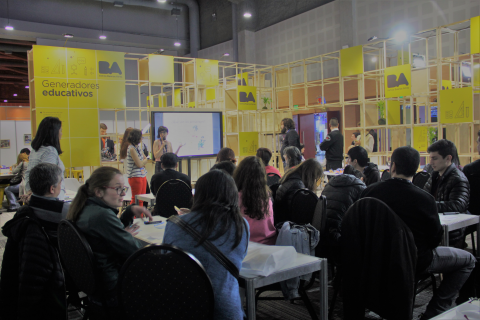 Una Ciudadanía Global en Virtual Educa 2018-09-18 El Ministerio de Educación e Innovación, a través del Programa Ciudadanía Global, participó del XX Encuentro Internacional Virtual Educa, donde también compartió un espacio de debate con Naciones Unidas. En el marco del XX Encuentro Internacional Virtual Educa, que tuvo lugar en la Ciudad de Buenos Aires los días 10-14 de septiembre en el Centro de Exposiciones y Convenciones de la Ciudad, se promovieron distintas instancias de formación. Con más de 12 mil asistentes, 243 ponencias, 12 plenarias, 268 talleres, 105 expertos de 15 países, el evento demostró ser un entorno de aprendizaje y espacio estratégico para pensar, compartir y construir una educación digital de calidad ética, inclusiva y participativa en la región. ¿En qué consiste Ciudadanía Global? El Ministerio de Educación e Innovación de la Ciudad, en asociación con Fundación Werthein y con el apoyo de Naciones Unidas Argentina, promueve una educación de calidad que contribuya a la formación de una ciudadanía global, mediada por tecnologías digitales, para la construcción de un futuro más justo, equitativo y sustentable. Con este fin se encuentra desarrollando Ciudadanía Global, un programa educativo que busca integrar la currícula en procesos de enseñanza y aprendizajes creativos y significativos para las niñas y niños del Siglo XXI. ¿Cómo accedo? Hoy la plataforma educativa se encuentra en construcción, pero pueden dejar sus datos en el siguiente formulario y les enviaremos información cuando esté online.El Programa participó de diversas instancias, entre los talleres y los paneles de debate. Taller “Diseño de personajes: Un proceso creativo para el desarrollo de habilidades globales” Espacio destinado a integrar el diseño de personajes en la práctica educativa como herramienta pedagógica potente para acercar contenidos curriculares desde lenguajes significativos para los niños. Con un público activo se promovieron experiencias creativas para un abordaje integral de lo contenidos que habilitan la producción y construcción de mensajes originales. “Educar para una ciudadanía global” Con el objetivo de compartir el enfoque de Ciudadanía Global y el trabajo a partir de proyectos transversales que incluyen una mirada digital dentro de cada propuesta, un panel de referentes compartió sus saberes y experiencias. En un primer momento Tamar Hahn, Directora del Centro de Información de Naciones Unidas resumió la importancia de trabajar en una Agenda 2030 y el cumplimiento de las metas de los 17 Objetivos de Desarrollo Sostenible (ODS) y la profunda responsabilidad de trabajar desde la escuela mejorando la calidad educativa para futuros ciudadanos globales. Desde el Ministerio de Educación e Innovación de la Ciudad, Angie Gómez Pizarro, titular de la Unidad de Proyectos Especiales - Educación para la Sustentabilidad, introdujo la apuesta del Programa Educativo Ciudadanía Global en promover una educación de calidad desde propuestas transversales que contribuyan a la formación de una ciudadanía mediada por tecnologías digitales, para la construcción de un futuro más justo, equitativo y sustentable. Por último, Diego Portillo, Asesor pedagógico Digital de INTEC, Miriam Alves, docente de la escuela Escuela Nº 21 DE 04, y seis alumnos de la Escuela Nº 27 de 04, compartieron sus experiencias y aprendizajes de esta primera instancia como “Escuelas precursoras de Ciudadanía Global”. Niñas y niños fueron los verdaderos protagonistas de este encuentro. "Ideatón” Diseñamos videojuegos de forma colaborativa. Más de 40 participantes del Ideatón crearon juegos educativos que permitieron trabajar con problemáticas reales de forma colaborativa. Cada equipo diseñó su propio juego transitando por las distintas etapas de producción de juegos: definición del objetivo del juego, historia, personajes, mecánicas y dinámicas. Finalmente cada equipo desarrolló una maqueta del juego y presentó su prototipo al resto del grupo. Diseño de personajes: un proceso creativo para el desarrollo de habilidades globales Taller destinado a integrar el diseño de personajes en la práctica educativa como herramienta pedagógica potente para acercar contenidos curriculares desde lenguajes significativos para los niños. Con un público activo se promovieron experiencias creativas para un abordaje integral de lo contenidos que habilitan la producción y construcción de mensajes originales. Ciudadanía Global: Una experiencia educativa digital y sustentable. A partir de una experiencia práctica, cada grupo de asistentes diseñó una actividad intercurricular teniendo como desafío integrar principios éticos, habilidades del siglo XXI y Objetivos de Desarrollo Sostenible (ODS). Con ello se buscó ampliar las fronteras curriculares desde la integración de los enfoques de educación digital y para la sustentabilidad en propuestas educativas significativas. URL:https://www.buenosaires.gob.ar/escuelasverdes/noticias/una-ciudadania-global-en-virtual-educa
 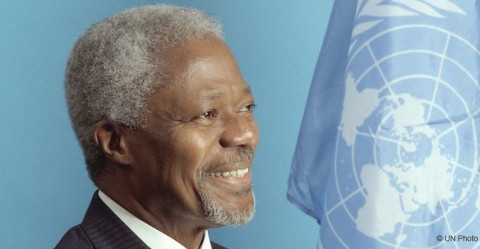 On the passing of Kofi Annan: the world loses a great defender of peace and modern multilateralism 2018-08-20 "I am deeply saddened to learn of the sudden death of former United Nations Secretary-General and Nobel Peace Prize laureate Kofi Annan," said Audrey Azoulay, Director-General of UNESCO. "A great defender of peace, he was the very embodiment of peace and of a resolutely modern vision of the United Nations. His conviction that a culture of peace should be developed was fully in line with the mandate and daily commitment of UNESCO. I remember his kindness, his determination and his absolute elegance. I would like to extend my sincere condolences to his family and friends, to his fellow Ghanaians and join the international community in saluting his tireless efforts for a better world and lasting peace through international cooperation.” In 2011, writing for a UNESCO publication, he said : “We need to act at a deeper level for the prevention of violent conflicts before they arise. We need a culture of peace. The first and fundamental principle of such a culture must be tolerance. This means welcoming and celebrating the differences that make our planet such a varied and richly textured place.” On 8 December 1998, he took part in UNESCO's celebration of the fiftieth anniversary of the Universal Declaration of Human Rights. He recalled that "United Nations action on human rights is one and indivisible. ‘All human rights for all’ is our common goal.” It is in this spirit that he has embarked on a vast reform of the United Nations. As we prepare to celebrate the 70th anniversary of the Universal Declaration of Human Rights, its committed vision of multilateralism and the central role of the United Nations remains as relevant as ever. URL:https://en.unesco.org/news/deces-kofi-annan-monde-perd-grand-defenseur-pon-passing-kofi-annan-world-loses-great-defender
 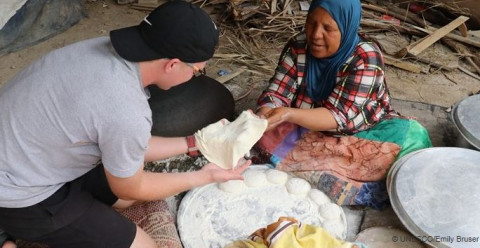 Town and country exchange on traditional sustainable development in Jordan 2018-08-12 An idea to transform people's views on rural people and traditional charity methods has grown into a ground-breaking initiative in Jordan. Zikra for Popular Learning, one of three winners of the UNESCO Japan Prize on Education for Sustainable Development (ESD) in 2017, is now looking at ways to expand its highly popular programme which brings people from urban settings to rural villages to learn first-hand about sustainable development. Co-founded by social entrepreneurs Rabee Zureika and fellow Jordanian Lama Khatieb, Zikra promotes 'exchange tourism' offering alternative learning to reconnect people with local knowledge. "I began to think about giving back using a model that did not impose the 'hero-victim' relationship on the recipient. Instead we work to get people inspired – both Jordanians and visitors from other countries – by encouraging them to stop considering rural people as simply ‘poor’ and to motivate positive behaviour changes in participants,” says Rabee. Zikra began in Ghor Al-Mazara'a, a village 100km south-bet of Jordan's capital Amman and in one of the country's poorest regions where the inhabitants are discriminated against because of their dark skin colour. To enhance the livelihoods of the villagers Zikra has supported them to welcome visitors who come to learn and engage with the local community. They pay a small amount to spend time in the village learning about food production, culture, and how best to use natural resources. "One of Zikra's most successful outcomes are the relationships and networks constructed between rural and urban community members," said Lama. The visitors do more than observe craftsmen like Khaled Nawasrah who builds artistic and intricate models of cars using wire, they get to try their hand at the skills too. The project has also established the School of Jameed drawing on local women's expertise in making a range of dairy products including the yoghurt traditionally produced in the area called Jameed. The women demonstrate the production of the yoghurt to visitors while teaching them about the wild plants and herbs special to the area that are used in its making. Despite challenges including accessing the very rural settings for the scheme and often fighting against slow bureaucracy Rabee and Lama are full of enthusiasm and ideas for the future. Since winning the Prize, Zikra has further developed an embroidery project working with female Syrian refugees who stitch storyboards based on local knowledge and stories from their hometown onto products such as bags which they then sell. They also plan a programme for architecture students to learn techniques used in the villages to build houses, roofing and ventilation systems using mud bricks. "We have found here that everyone has something to offer," says Rabee. The winners of this year's award, the 2018 UNESCO-Japan Prize on ESD, will be announced in September with an award ceremony to be held in Paris in October. The Prize, funded by the Government of Japan, consists of three annual awards of USD 50,000 for each recipient. It was awarded for the first time by the Director-General of UNESCO in 2015. The Prize and award winners recognize the role of education in connecting the social, economic, cultural and environmental dimensions of sustainable development. Read the full story about Zikra for Popular learning. URL:https://en.unesco.org/news/town-and-country-exchange-traditional-sustainable-development-jordan
 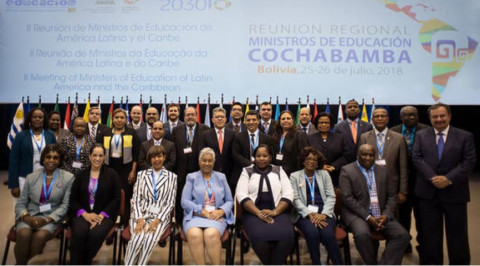 Ministers of Latin America and the Caribbean adopt Roadmap for moving towards quality, inclusive, equitable education 2018-08-01 -The Cochabamba Agreements: Regional Solidarity for Achieving SDG4-E2030 in Latin America and the Caribbean was approved at the II Regional Meeting of Ministers of Education of Latin America and the Caribbean, “Transforming Education: A Joint Response from Latin America and the Caribbean for Achieving SDG4-E2030.” -Among other things, the document establishes the adoption of the Regional Roadmap for the Implementation of SDG4-E2030 in Latin America and the Caribbean, an instrument that will support the countries’ efforts to achieve the targets of Sustainable Development Goal 4, which refers to lifelong quality, inclusive, equitable education. Education ministers and high-ranking officials from Latin America and the Caribbean approved the Cochabamba Agreements and the Regional Roadmap for the Implementation of SDG4-E2030 in Latin America and the Caribbean on 26 July 2018. The latter establishes a regional mechanism for moving towards Sustainable Development Goal 4 –Education 2030 together. The Roadmap is a frame of reference for the design and execution of regional actions in education and contains recommendations for the national implementation of public policy on this issue. It also supports coordinated and coherent progress on priority issues for the countries of the region such as the quality of education, equity and inclusion, teachers and education personnel and lifelong learning. The document was prepared collectively during two technical meetings following the I Regional Meeting of Ministers of Education of Latin America and the Caribbean (Buenos Aires, January 2017). Representatives of the countries of Latin America and the Caribbean on the SDG-E2030 Global Steering Committee (Argentina, Brazil and Bolivia), one Caribbean nation selected by GRULAC, the Group of Latin American and Caribbean Countries in the United Nations (Granada), UNESCO and UNICEF, sub-regional and regional organizations (CARICOM, CECC-SICA, the OAS and OEI) and representatives of civil society (CLADE and Education International) also participated in these meetings. A Commitment to Educational Integration The Cochabamba Agreements were endorsed by the representatives of the countries that attended the regional meeting in Bolivia. They are based on the Buenos Aires Declaration (2017), the first milestone in the regionalization of SDG4-E2030 that allowed the countries to contextualize the global decisions adopted in the Incheon Declaration emanating from the World Education Forum in May 2015 from this continent. The Buenos Aires Declaration provided a shared vision of the 2030 Education Agenda from Latin America and the Caribbean and was aimed at generating strategies and programs that seek to achieve these targets at the national and regional levels for 2017-2030. The countries agreed in Bolivia to create a mechanism for implementing the Roadmap. The executive secretariat will be the Regional Bureau for Education in Latin America and the Caribbean (OREALC/UNESCO Santiago). This mechanism consists of a Regional Steering Committee with two representatives from South America, two from Central America and Mexico, and three from the Caribbean, all of whom will be elected by the member states. UNESCO and UNICEF will serve as the permanent coordinating agencies of the committee and will receive support from regional inter-governmental organizations and two civil society organizations. The Regional Steering Committee shall establish four working groups that will drive specific actions in review, monitoring and reporting; policy and strategies; advocacy and communication; and finance and governance. The groups may seek the support of technical experts whenever necessary. In the agreements, the authorities committed to strengthen intersectoral collaboration and to explore opportunities for the participation of young people and adults in regional coordination mechanisms. They also agreed to meet every two or three years and to entrust OREALC/UNESCO Santiago with organizing regional meetings in coordination with the Regional Steering Committee and the hosting country. Roberto Aguilar, Minister of Education of the Plurinational State of Bolivia, thanked the people who made the event possible for their efforts. “It has been very important for us to give continuity to this shared effort, which has also allowed an historic participation of the Caribbean, resulting in complete integration of our region. I would like to thank you for your participation on behalf of the Bolivian people and our President, Evo Morales.” Claudia Uribe, Director of the Regional Bureau for Education in Latin America and the Caribbean (OREALC/UNESCO Santiago), highlighted the efforts made by regional authorities to build these collaborative mechanisms and said that, “As the executive secretariat, we are highly committed to further strengthening collaboration among countries so that the Roadmap effectively supports the achievement of the Sustainable Development Goal 4 - E2030 targets in our region.” ************ The Regional Meeting of Ministers of Education of Latin America and the Caribbean is the second such event held following the approval of the 2030 Sustainable Development Agenda, which was agreed to in September 2015. The Roadmap responds to the mandate of the Buenos Aires Declaration (2017), which, among other things, states that education should contribute to the elimination of poverty, reduction of inequities and protection of the environment through inclusive quality education and lifelong learning. In Buenos Aires, the regional authorities also agreed to create regional coordination mechanisms to achieve the education goals. They recognized the urgent need to increase the breadth of the changes, which means reexamining education, learning, teaching, policies and actions in Latin America and the Caribbean. The II Regional Meeting of Ministers of Education of Latin America and the Caribbean follows up on these mandates, which were established in 2017. Official website of the Cochabamba meeting Cochabamba Agreements Press Contact:Carolina Jerez Henríquez (OREALC/UNESCO Santiago)c.jerez@uesco.org, WhatsApp (+569) 92890175 URL:http://www.unesco.org/new/en/santiago/education-2030/cochabamba-meeting-2018/press/press-release-4/
 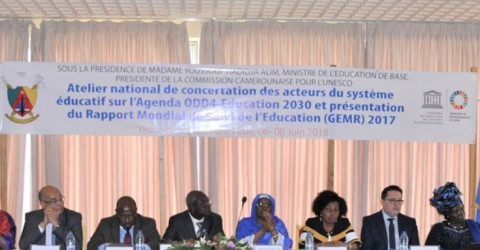 Advancing the right to education in Cameroon 2018-07-26 In order to align the new Sector Strategy for Education and Training (SSET) of Cameroon with the SDG 4- Education 2030 Agenda, the UNESCO Office in Yaoundé, in cooperation with the National Commission of Cameroon for UNESCO, organized from 6-8 June 2018 in Yaoundé, a National Consultation Workshop of stakeholders in education. The 3-day National Consultation Workshop brought together approximately 200 participants and commenced with an opening ceremony in the presence of Minister of Basic Education, Mrs. Youssouf Hadidja Alim. Participants included representatives of the various technical ministries involved, the parliament, technical and financial partners, representatives of civil society, NGOs, opinion leaders and teachers. A thematic Working Group was specifically devoted to the right to education, to discuss the legal gaps of the current national legislations and regulations inhibiting the full realization of the right to education and the achievement of SDG 4. The Working Group, chaired by Hon. Marlyse Douala Bell, member of the National Assembly and the Education and Youth Commission, provided the unique opportunity for participants to raise key issues that Cameroon faces with regard to achieving an inclusive, equitable and quality education for all. Recommendations were formulated in order to reinforce the institutional and legal framework by identifying the most urgent legal reforms that need to be undertaken. The Working Group agreed upon key steps of a Roadmap in order to follow-up on the discussions and recommendations made, with the aim to produce a country Report on the right to education to serve as a basis for future legislative reforms. This initiative in Cameroon falls within a larger scope of reviewing the legal frameworks of the countries of the Central African Region. The Nairobi Declaration and Call for Action on Education created a new momentum within Africa, with countries seeking to align their legal framework with SDG 4 Education 2030 commitments. UNESCO stands ready to provide technical assistance and strengthening of national capacities. Right to education URL:https://en.unesco.org/news/advancing-right-education-cameroon
  Transforming education in Latin America and the Caribbean: countries in the region will review their policies and cooperation mechanisms at a ministerial meeting in Cochabamba 2018-07-19 -The II Regional Meeting of Ministers of Education of Latin America and the Caribbean “Transforming education: a joint response from Latin America and the Caribbean to achieve SDG4-E2030” — organized by the Regional Bureau for Education in Latin America and the Caribbean (OREALC/UNESCO Santiago) and the Ministry of Education of the Plurinational State of Bolivia — will follow up on the commitments made in the Buenos Aires Declaration (2017), in the framework of Sustainable Development Goal 4 (quality education) and the Education 2030 Agenda. -The city of Cochabamba will receive expert and official delegations from the ministries of education who will also participate in other regional meetings taking place from July 23 to 26, 2018. Ministers of education, senior officials and experts from Latin America and the Caribbean will meet in Bolivia to discuss and validate a regional Roadmap for implementing Sustainable Development Goal 4 (quality education, SDG4-E2030*). The objective of this meeting, organized by UNESCO and the Ministry of Education of the Plurinational State of Bolivia, is to follow-up on the commitments made in the Buenos Aires Declaration, which came out of the I Regional Meeting of Ministers of Education of Latin America and the Caribbean (Argentina, 2017). The declaration confirms that the priority topics for the region are lifelong learning, quality education, equity and inclusion, and teachers. In Cochabamba, the region’s ministers will formulate recommendations for educational policies and actions with an innovative and cross-sector perspective for each of the priority topics. They will also build consensus regarding the regional cooperation mechanisms needed to finance and monitor educational programs that meet the SDG4 goals. The meeting will be an opportunity to exchange ideas, review experiences, challenges and lessons learned in order to rethink education and define innovative approaches. The results of the discussions will be compiled into the Latin America and Caribbean Roadmap for the Implementation of SDG4-E2030, the proposal for which was prepared in 2017 and 2018 by the region’s Ministries of Education representatives, United Nations agencies, regional and international multilateral institutions and civil society organizations. The Roadmap will provide a shared strategic vision for advancing the Education 2030 Agenda across the region through the formulation of policy recommendations that can be implemented at national and regional levels. Background to the II Regional Meeting of Ministers In January 2017, the Ministers of Education of Latin America and the Caribbean, the region’s education community and other allies met in Buenos Aires to establish a shared vision on education priorities. “The authorities who were present agreed on the strategic guidelines and made decisions regarding the regional cooperation mechanisms that would be needed to achieve the education 2030 goals. The commitments made by the Member States are expressed in the Buenos Aires Declaration”, explains Claudia Uribe, director of the Regional Bureau for Education in Latin America and the Caribbean (OREALC/UNESCO Santiago). Uribe adds that in the ministerial meeting it was also acknowledged that in order to implement the SDG4‐ Education 2030 in the region “concerted efforts by all countries is needed. With this mandate, the UNESCO Regional Bureau for Education in Latin America and the Caribbean has organized regional meetings and forums prior to the II Regional Meeting of Ministers to combine these perspectives and generate concerted actions.” The II Regional Meeting of Ministers of Education of Latin America and the Caribbean will be hosted by the Government of the Plurinational State of Bolivia. Bolivia’s Education Minister, Roberto Aguilar, said that the institutions and citizens of Bolivia, and in particular of Cochabamba, are delighted to be receiving the participating delegations, especially the ministers of Education of Latin America and the Caribbean, at the regional meetings that will take place in his country at the end of July. More information: II Regional Meeting of Ministers of Education of Latin America and the Caribbean July 25 and 26, 2018, Cochabamba, Bolivia. UNESCO, Ministry of Education of the Plurinational State of Bolivia Annotated agenda Regional Meetings of Education of Latin America and the Caribbean July 23 to 26, 2018, Cochabamba, Bolivia. In 2015 the UN adopted the 2030 Agenda for Sustainable Development, an opportunity for countries and their societies to embark on a new path to improve the lives for all and not leave anyone behind. When the new agenda was approved in September 2015, the international community recognized that education was essential for the success of the 17 goals. The ambitions for the field of education are reflected in an essential way in the Sustainable Development Goal 4, which aims to “ensure inclusive and equitable quality education and promote lifelong learning opportunities for all.” Through the Incheon Declaration adopted at the World Education Forum in May 2015, UNESCO, as the United Nations’ specialized agency for education, was entrusted to lead and coordinate the Education 2030 agenda with its partners. The roadmap to achieve the ten targets of the education goal is the Education 2030 Framework for Action, adopted in November 2015, which provides guidance to governments and partners on how to turn commitments into action. ***** Media contact: Carolina Jerez HenríquezRegional Bureau for Education in Latin America and the Caribbean (OREALC/UNESCO Santiago)c.jerez@unesco.orgwww.unesco.org/santiago During the meeting in Cochabamba (July 25-26, 2018)WhatsApp (+569) 92890175 Website of the II Regional Meeting of Ministers of Education of Latin America and the Caribbean URL:http://www.unesco.org/new/en/santiago/education-2030/cochabamba-meeting-2018/press/press-release-1/