
News
Catch up on what’s happening in the world of global citizenship education.
248 results found
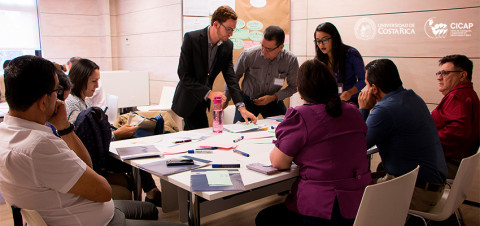 Nueva política pública en educación formará ciudadanos con conciencia en desarrollo sostenible 2018-06-27 El Ministerio de Educación Pública (MEP), la Organización de las Naciones Unidas para la Educación la Ciencia y la Cultura (UNESCO) y Centro de Investigación y Capacitación en Administración Pública de la UCR se encuentran trabajando de forma conjunta en el desarrollo de una Política de Educación para el Desarrollo Sostenible en Costa Rica. La política tiene como objetivo formar ciudadanos que aboguen por un desarrollo que conjugue los ámbitos social, económico y ambiental, para la conservación de ecosistemas y la consolidación de estilos de vida con un equilibrio entre estos tres ámbitos. Según la viceministra de educación, Alicia Vargas, desde hace 30 años se trabaja en la temática del desarrollo sostenible, pero es hasta el año pasado, con la aprobación de una nueva malla curricular, que se decidió darle un mayor impulso y construir una política pública que guíe y unifique todos los esfuerzos en esta materia. Primer paso: un trabajo colaborativo Actualmente la iniciativa se encuentra en la fase de recolección de insumos, tarea encomendada al CICAP, por medio de la elaboración e implementación de una metodología participativa de consulta con los públicos de interés internos y externos del MEP, para la posterior elaboración la política pública. “Lo que se busca es incluir el tema del desarrollo sostenible de manera transversal en la formación que se brinda en las escuelas y colegios, para educar a los estudiantes sobre el uso de los recursos disponibles en el presente, sin comprometer su existencia en el futuro. Para Costa Rica, formar a las nuevas generaciones en este nuevo concepto, va a permitir generar un bienestar para toda la población y tener un país con recursos para todos”, explicó Mayela Cubillo, directora del CICAP. En el proceso han participado expertos en materia de educación, más de 100 organizaciones públicas, privadas, del tercer sector y organismos internacionales, alrededor de 8400 funcionarios y autoridades del Ministerio de Educación de todo el país. Asimismo, como parte de la consulta se han aplicado cuestionarios en línea y organizado talleres en diversas Direcciones Regionales del MEP. Dos de las instituciones que han tenido un protagonismo importante en esta fase son el Instituto de Desarrollo Rural (INDER) y el Instituto de Acueductos y Alcantarillados (AyA), debido a que su quehacer está directamente relacionado con el manejo de los recursos naturales y los entornos sociales que dependen de ellos. Para Ricardo Rodríguez, Presidente Ejecutivo del INDER, educar a la población sobre desarrollo sostenible es fundamental, pues “territorio y desarrollo sostenible van de la mano, es como si nos faltara el agua”. Nuevos ciudadanos, nuevos contenidos La política surge en el marco de una nueva malla curricular aprobada en el 2016 por el Consejo Superior de Educación del MEP, la cual se sustenta en la visión de educar para una nueva ciudadanía que se adapte a los cambios del entorno y a la realidad histórica del siglo XXI. Por lo anterior, para la construcción de la malla se definieron 3 ejes transversales que deben incluirse en todos los niveles educativos, sin importar el contenido particular de los cursos. Estos son: ciudadanía planetaria con identidad nacional; lo que implica promover un pensamiento global desde el entorno local y concientizar sobre la incidencia de las acciones individuales en la colectividad; ciudadanía virtual con equidad social y ciudadanía para el desarrollo sostenible. Para el MEP, estos ejes trascienden lo curricular, pues se realizó el cambio de una malla de contenidos a una por habilidades o competencias. En el caso del eje de desarrollo sostenible apuntan a trabajar aspectos relacionados con vida estudiantil, la integración de los estudiantes y la gestión de los centro educativos, entre otros factores. URL:http://cicap.ucr.ac.cr/web/nueva-politica-publica-educacion-formara-ciudadanos-conciencia-desarrollo-sostenible/
 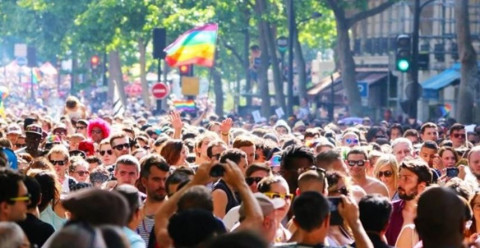 ¿Los sistemas educativos son inclusivos con respecto a las personas LGBTI? La UNESCO se asocia a una organización de jóvenes LGTB para responder a esta pregunta 2018-06-27 A global consultation on the LGBTI vision for how to make the 2030 Sustainable Development Agenda for education and health more inclusive, is being jointly launched by UNESCO and youth organization MAG Jeunes LGBT. The inputs of lesbian, gay, bisexual, transgender, intersex (LGBTI) youth will be collected through a web-based consultation conducted by MAG Jeanes LGBT and supported by a UNESCO-led social media campaign. The results of the consultation will be presented at the 2nd biannual Equal Rights Coalition (ERC) conference in August 2018 in Vancouver, Canada. The ERC is an intergovernmental coalition of 39 countries that advances the human rights of LGBTI people and promotes inclusive development in both member and non-member countries. In advance of the social media campaign, UNESCO Permanent Delegations of Canada and Chile, also co-chairs of ERC, are hosting a briefing meeting on 22 June 2018 at UNESCO Headquarters in Paris, sharing information about the ERC conference and UNESCO’s contribution to it, as well as the associated international consultation. “We know that a significant proportion of LGBT students experience homophobic and transphobic violence in school, a far higher prevalence than their non-LGBT peers. They are more likely to feel unsafe in school, miss classes, or even drop out; which negatively impacts their education, employment prospects and well-being,” said Christophe Cornu, Senior Programme Specialist and Team Leader in the Section of Health and Education at UNESCO. “Through this global consultation, we hope to learn more about these experiences, and in turn support Member States to provide safe and inclusive learning environments for all students. This is critical to effective learning, to meet human rights commitments, including the right to education and the other rights of the child, and to achieve the Sustainable Development Goals (SDGs), in particular SDG4.” The web-based consultation hosted by MAG Jeanes LGBT will run until 11 July 2018, and the associated social media campaign from 25 to 29 June 2018. Resources Out in the Open Report Web-based consultation: Arabic - Chinese- English - French - Russian - Spanish UNESCO social media: @UNESCO MAG Jeanes social media: Facebook @MAG.LGBT, Twitter @mag_jeunes_lgbt School violence and bullying Homophobic and transphobic violence in education URL:https://en.unesco.org/news/are-education-systems-lgbti-inclusive-unesco-teams-lgbt-youth-organization-find-out
 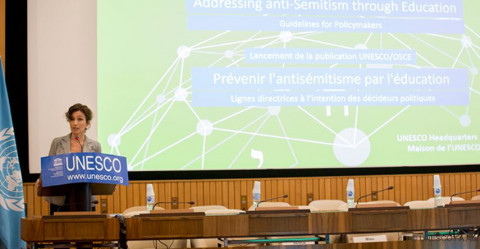 Preventing anti-semitism through education: UNESCO and OSCE launch first guide for education community 2018-06-06 UNESCO and the OSCE Office for Democratic Institutions and Human Rights (ODIHR) today released a joint publication, Addressing Anti-Semitism through Education – Guidelines for Policymakers, at a launch event at UNESCO Headquarters in Paris. The publication, Addressing Anti-Semitism Through Education – Guidelines for Policymakers, is the first on the subject by a United Nations agency. Produced with experts from the countries of Europe, Central Asia and North America, it examines the many and complex manifestations of anti-Semitic prejudice and discrimination and offers best practice recommendations to fight them through education. UNESCO is strongly committed to work on the prevention of violent extremism as part of its core mandate to promote global citizenship, a priority for the 2030 Sustainable Development Agenda. In this context, UNESCO promotes education systems that are able to equip learners with skills, attitudes and behaviours that allow them to assume active roles in facing and resolving global challenges, and to become proactive contributors to a more peaceful, tolerant and secure world. The publication is a new example of UNESCO’s contribution to the fight against anti-Semitism. UNESCO will organize a high-level debate on the subject within the framework of the General Assembly of the United Nations next September to mobilize the international community. “The struggle against anti-Semitism cannot be undertaken by Jewish communities alone. Fighting it means defending human rights and liberties, because racism and anti-Semitism are one and the same in that they share hate of otherness,” declared UNESCO Director-General Audrey Azoulay, at the launch ceremony. “In this fight, education is a major factor. It must be harnessed to prevent the rise in extremism and violence. It is our responsibility to support teachers and educators in their mission, those who sometimes feel helpless in facing the scope of unbridled prejudice.” ODIHR Director Ingibjörg Sólrún Gísladóttir, stressed the vital role of education in countering anti-Semitism, and all forms of intolerance: “Educators have access to a uniquely large audience of young people and have the opportunity to help them foster mutual respect and understanding, and thereby become responsible citizens. Resilience to language and ideas that incite discrimination can only be ensured by educating young people so that they are mindful of their own and others’ prejudices and capable of critical thinking, and that they feel responsible for making the societies in which they live cohesive ones.” On 22 May, UNESCO and ODIHR presented an outline of the publications to ministers responsible for education, culture, youth, media, communication and sport of the European Union’s 28 Member States, at a meeting chaired by Bulgaria. UNESCO and the Office for Democratic Institutions and Human Rights had earlier worked together on the publication of Guidelines for Educators on Countering Intolerance and Discrimination against Muslims (2011). **** More information Download the publication Media contact: Agnès Bardon, UNESCO Media Section: 33(0)145681764 a.bardon@unesco.org Thomas Rymer, ODIHR Spokesperson: +48 609 522 266, thomas.rymer@odihr.pl URL:https://en.unesco.org/news/preventing-anti-semitism-through-education-unesco-and-osce-launch-first-guide-education
  Towards Access to Culture for All: Advancing Universal Access to Culture in its Diversity 2018-05-18 UNESCO will celebrate World Day for Cultural Diversity for Dialogue and Development, 21 May, and this year’s 70th anniversary of the Declaration of Human Rights, with a panel debate on ways to ensure everyone’s right to access culture. Taking place at UNESCO Headquarters on the afternoon of 22 May (Room IV, 3pm to 5.30 pm,), the event will bring together UN representatives, museum directors, artists, tech leaders, and experts including the Director-General of UNESCO, Audrey Azoulay, who will open the debate and the Organization’s newly appointed Assistant Director-General for Culture, Ernesto Ottone, who will moderate the panel discussions. Considering the potential of culture and intercultural dialogue as means of achieving peace and sustainable development, participants will seek ways to reconcile the paradox inherent to cultural globalization, which has led to tremendous growth in access while contributing to growing cultural uniformity, posing a threat to the diversity and wealth of the world’s cultural landscape. The debate will focus on the enforcement of Article 27 of the Universal Declaration of Human Rights, which states that, “everyone has the right freely to participate in the cultural life of the community, to enjoy the arts and to share in scientific advancement and its benefits.” Key participants will include: Karima Bennoune, Special Rapporteur in the Field of Cultural Rights (Office of the UN High Commissioner for Human Rights), Youma Fall, Director of French Language, Culture and Diversity (Organisation internationale de la Francophonie), Ghita Khaldi, Vice-President of Arterial Network (the Pan-African, network of artists, cultural activists, entrepreneurs, enterprises, NGOs, institutions, and donors), Amit Sood, Director of Google Arts and Culture, Vincenza Lomonaco, Ambassador and Permanent Delegate of Italy to UNESCO, Léontine Meijer van Mensch, Member of the Executive Board of the International Council of Museums (ICOM), Octavio Kulesz, UNESCO expert in digital publishing and media. **** Media Contact: Roni Amelan, UNESCO Media Section, r.amelan@unesco.org, +33(0)145681650For journalist’s accreditation please contact :Djibril Kébé, UNESCO Media relations, Tel : +33 (0) 1 45 68 17 47, d.kebe@unesco.org URL:https://en.unesco.org/news/towards-access-culture-all-advancing-universal-access-culture-its-diversity
  Educate Magis: Curso de Ciudadanía Global 2018-05-14 ¿Ha habido alguna vez un mejor momento en la historia de la Compañía de Jesús para considerar lo mucho que podemos animar las dimensiones globales de nuestros colegios? La Congregación General 35 nos recordó que ´servir a la misión de Cristo hoy implica prestar especial atención a su contexto global. "FLACSI colabora, junto con otros miembros de la comunidad de Educate Magis, en el desarrollo de un curso en línea gratuito sobre Ciudadanía Global, diseñado para entregar a educadores y líderes de los colegios jesuitas en el mundo, una introducción al tema de la Educación para la Ciudadanía Global. " "Este curso representa una herramienta para apoyar a los educadores como acompañantes de los estudiantes en el continente y el mundo, desde una perspectiva de corresponsabilidad hacia un mundo más humano. El programa proporciona actividades y materiales para enseñar y acompañar a los estudiantes, de los colegios jesuitas, en su transformación como Ciudadanos Globales a través de 5 módulos por medio de una serie de textos, videos, casos de estudio y reflexiones. El Curso de Ciudadanía Global: Un Compromiso con la Justicia Social“Más que antes, somos conscientes de ser una sola comunidad humana, de compartir un mismo planeta y de tener un destino común“, P. General Arturo Sosa, S.J. San Ignacio de Loyola creía firmemente que nuestra fe debía traducirse en trabajar por la justicia. Él creía que no podía haber una verdadera expresión de fe en la que no hubiera preocupación por la justicia y la dignidad humana. La justicia social está en el corazón de la Espiritualidad Ignaciana, y nos dice que, cuando las personas sufren adversidades y opresión, ese también es asunto nuestro. La justicia social también nos invita a abrir los ojos ante las necesidades que otros pueden estar sufriendo a causa de la forma en que estamos viviendo nuestras vidas, y a responder en consecuencia. Nos invita a ser fieles, confiables, compasivos y hacerle frente a las injusticias que vemos en el mundo que nos rodea. En el mundo de hoy, donde las dinámicas de globalización permiten el flujo y la apertura de las economías, la información, de comunidades y otros elementos culturales, la naturaleza de las causas de las injusticias sociales toman un aire de transversalidad, que, por lo tanto, nos conduce a tener una mirada global para enfrentarlas. La Migración Forzada, como una de las principales expresiones de injusticia social en el mundo, es una de las temáticas del módulo de Justicia Social, en el que no sólo se expone un contexto general de la migración forzada, proporcionando historias y testimonios de personas que viven esta situación invitando a la reflexión, sino que también se presenta “Jóvenes por la Hospitalidad” como una propuesta concreta de sensibilización, formación y movilización de estudiantes, para transformar los nuevos caminos de quienes migran en unos más acogedores y con esperanza. Para conocer más sobre el Curso de Ciudadanía Global en línea, haga clic " URL:https://jesuitas.co/educate-magis-curso-de-ciudadania-global-22440
 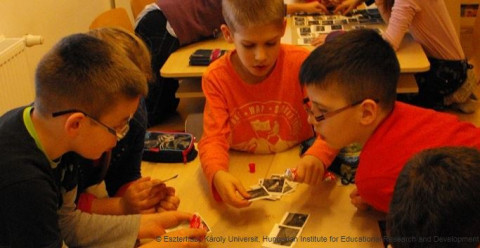 Students take the lead to spread an eco-schools initiative in Hungary 2018-05-11 An eco-schools programme in Hungary is so successful it has taken on its own momentum with students leading its growth. The flexible programme, developed by the Hungarian Institute for Educational Research and Development (HIERD), was established in 2000 with 40 pilot schools. It uses a whole-school approach to introduce the principles of sustainability in a practical way as well as through study subject matter. Team Leader and Senior Researcher of the Eco-Schools Programme, Attila Varga said: “The best surprise is to find that what we thought of as a top down initiative is more often than not led by children actively wanting to join. Since the adoption of the Sustainable Development Goals, society in Hungary is getting greener which helps enormously as more and more schools want to feel active in this field. We even have an environmental sustainability directorate in the President’s office!” Hungary has particular environmental challenges. Currently poor air quality is the focus, with the problem often worse in villages than in the cities because people burn wood and rubbish for heating. The Eco-Schools programme makes educational establishments more sustainable and embeds environmental issues in the school work plan. It is already installed in a quarter of Hungary’s school, or more precisely, by the end of 2017, 1134 Hungarian schools held an Eco-School title with 350,012 pupils and 34,890 teachers reached. Schools volunteer to join the network and work towards the Eco-School title beginning with a complete and detailed assessment of the school environment and pedagogy. “We provide a flexible framework and points system for schools which differ obviously depending on context. A village school may get points for creating a school garden while an urban school may get its points for water-saving techniques,” said Mr Varga. What they all have to provide is an annual action plan and then continuous evaluation of the success of their schemes. Children are involved from the beginning through deciding where their studies will focus up to the development of a student council to undertake parts of the self-evaluation and assessment. At the staff level each employee of the school is involved in the development of the vision of the school. In teacher education, the teaching aids and in-service trainings of the programme support student engagement in creating experience-based learning environments. Activities range from excursions to environmental projects and exhibitions made for the local community to school patrols where students check and collect data on energy consumption and local Green Parliaments where students are involved in real decision-making with local town halls. The programme also extends beyond the school gates. Since 2015 criteria for the title includes community service which empowers teenagers to transform themselves and the community they live in. “Above all, schools have to continue developing. We say that no school is ever ‘finished’ in its sustainable development work,” Mr Varga said. So successful has the programme been that it has been extended to the Green Kindergarten Programme and also reaches up to higher education and teacher training. “Yes, we have a little brother or sister of the Eco-school network which involves 1,000 kindergartens,” said Mr Varga. “It helps that kindergarten is compulsory for 3 to 6-year olds in Hungary and already has an emphasis on outdoor activities. In a sense it is even easier to include ESD in working with younger children as study is more flexible and freeform.” Activities for younger children include forest kindergartens where children spend several days outdoors learning about plants and animals. Approaching local traditions at festivals like Christmas in an environmentally-friendly way through making presents is also an important way to introduce sustainability related issues for children. “The programme is successful but there is still a lot of work to be done. The long-term goal is to reach all Hungarian schools. Most importantly, we are working to change young people’s mindsets from pessimistic to optimistic. We tell them the future is not decided, it is up to you,” said Mr Varga. Learn more on Education for sustainable development. URL:https://en.unesco.org/news/students-take-lead-spread-eco-schools-initiative-hungary
  New project to tackle youth unemployment in the south Mediterranean region 2018-05-11 Countries in the south Mediterranean region have been subject to political and socio-economic challenges and instability, which has resulted in high unemployment, especially among youth, and in economies that are not creating a sufficient number of skilled job opportunities for those who need and want them. UNESCO will be launching a new regional project, Youth Employment in the Mediterranean (YEM) in collaboration with nine countries (Algeria, Egypt, Israel, Jordan, Lebanon, Libya, Morocco, Palestine and Tunisia) to respond to these challenges. The project will support national and regional efforts over a three-year period (2018-2020), towards job creation and youth employment through the improvement of skills anticipation systems and the promotion of technical and vocational education and training (TVET) including digital skills, especially among women. Skills forecasting and quality TVET can support youth employment and professional aspirations The YEM project will include national authorities, the private sector, TVET providers and youth organisations in the process. Borhene Chakroun, Chief of Section of Youth, Literacy and Skills Development at UNESCO’s Education Sector, explains how collaboration, skills forecasting and quality TVET will contribute to youth employment in the South Mediterranean region: “The issue of youth unemployment is major policy concern in each of the beneficiary countries. By supporting the nine Member States in assessing and strengthening their national skills anticipation systems, their TVET policies, curricula and programmes will become better informed and able to promote quality TVET, as well as closing the gap between education and the world of work for young people.” The YEM project recently had a national consultation workshop in Tunisia where Hajer Ben Abid Slim, Senior Adviser in curricula development at the National Institute for Curricula Development (CENAFFIF) participated. Reflecting on the potential of improved skills forecasting she says: “The YEM project will give young jobseekers better information and orientation for their career decision. Within this framework and through regional cooperation, this will incite vocations and help young people to acquire the vocational skills necessary for their career development.” “Young people will be involved through the organizations that are assisting them in their career projects and start-ups,” she says. Other participants at the national consultation workshop in Tunisia, Mohamed Yahyaoui, Director, and Rym Ben Slimene, Assistant Director at the National Observatory of Employment and Qualifications (ONEQ) say: “Given that Tunisia is characterized by a young population and the unemployment rate in this category exceeds 30%, it will be useful to establish a system for evaluating TVET policies, programmes and strategies and adopt adequate tools for the forecasting of skills. To succeed, it will be important to rely on a national body such as the ONEQ, which will be responsible for coordinating these activities with various national partners.” The project is funded by the European Union and part of their Neighbourhood Policy, and is building on the achievements of the Employment Component of the Networks of the Mediterranean Youth Project (NET-MED Youth, 2014-2018). Visit the YEM project website. Find out more about UNESCO’s work on skills for work and life. URL:https://en.unesco.org/news/new-project-tackle-youth-unemployment-south-mediterranean-region
 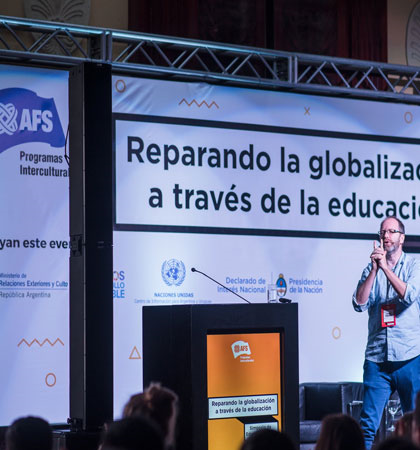 AFS llevó adelante su primer Simposio de Educación Global 2018-04-25 El evento, declarado de Interés por la Presidencia de la Nación, reunió a expertos internaciones y autoridades educativas bajo el lema “Reparando la globalización a través de la educación”. Programas interculturales, ONG que desde hace más de 60 años promueve oportunidades de aprendizaje intercultural alrededor del mundo, concretó el jueves 5 de abril la realización de su primer Simposio de Educación Global “Reparando la globalización a través de la educación”. El evento, que se desarrolló en el Hotel Panamericano (Buenos Aires) contó con la presencia de expertos de las Universidades de Harvard y California en Los Ángeles y autoridades educativas, que junto a organizaciones civiles analizaron, discutieron y promovieron la Educación para la Ciudadanía Global como eje fundamental para el desarrollo de competencias esenciales para un mundo más conectado, sustentable y respetuoso de las diferencias interculturales. El Simposio, declarado “de Interés Nacional” por la Presidencia de la Nación, comenzó con las palabras de Francisco Miguens Campos, Director Nacional de Cooperación Internacional, quien, en representación del Ministerio de Educación, destacó el rol central de la educación en el abordaje de las grandes problemáticas globales. Luego de las palabras del funcionario fue el turno de Daniel Obst, Presidente & CEO de AFS Worldwide. La máxima autoridad de la organización a nivel global marcó un contrapunto entre lo que se esperaba de la Globalización y lo que finalmente ocurrió y remarcó la importancia de que Gobiernos, ONGs, empresas y comunidades escuchen a los jóvenes y los formen para que puedan actuar frente a los grandes desafíos globales del mundo actual y futuro. A continuación, se desarrolló la Conferencia Inaugural a cargo del Dr. Carlos Torres, Presidente de la catedra de UNESCO en Aprendizaje Global y Educación para la Ciudadanía Global. En su ponencia, Torres desarrolló los que considera los principios básicos de la “Ciudadanía Global Multicultural”: reconocimiento de la diversidad, valorización del concepto de ciudadanía y respeto por los mínimos y virtudes cívicos. Luego fue el turno del Panel de Expertos, que debatió sobre la importancia de la Educación Global en todos los niveles educativos. Los panelistas fueron Verónica Boix Mansilla (Universidad de Harvard), Michael Vande Berg (MVB Associates LLC) y el Padre Adolfo Granillo Ocampo (Rector del Colegio Las Nieves). Los miembros del panel coincidieron en la importancia de desarrollar no solo las capacidades interculturales de los estudiantes, sino también de los docentes que los forman. A renglón seguido, la investigadora Cecilia Mosto de la consultora CIO, realizó una ponencia titulada “El estado de la Interculturalidad en Argentina”, en la que presentó el Índice de Interculturalidad que desarrolló junto a AFS, su metodología y primeros resultados. “El trabajo en el Índice ha permitido dar cuenta de un déficit en la conciencia de la diversidad como una problemática a ser abordada”, indicó Mosto. “En general se cree que la Argentina es homogénea, o se entiende la diversidad sólo desde el punto de vista socioeconómico”, destacó. La tarde comenzó con un segundo panel. En él confluyeron tres “Jóvenes Globales” que, desde diversos ámbitos trabajan en proyectos de impacto comunitario. Los participantes del panel fueron Victoria Gardella (creadora de la aplicación móvil Sustentate), Jonathan Modernel (del Ministerio de Cultura de la Ciudad de Buenos Aires) y Mariana Aguilar (de la ONG Global Shapers). Los jóvenes coincidieron en que, para ser un “Ciudadano Global” no es necesario viajar por el mundo, sino que lo importante es la forma de relacionarnos con otros, reconociendo y abrazando la diversidad, y siendo conscientes de que todos somos protagonistas de la transformación que viven el mundo y la sociedad. La Conferencia de Cierre estuvo a cargo del Dr. Diego Golombek (Universidad de Quilmes, CONICET), quien analizó las cualidades necesarias para el diálogo intercultural desde la óptica de las neurociencias. El encargado de dar cierre al evento fue Juan Médici, Director Ejecutivo de AFS Argentina & Uruguay. Médici repasó las principales cuestiones que fueron planteados en los diversos momentos de la jornada, y destacó la importancia del trabajo colaborativo entre los diversos actores de la sociedad para brindar mayores oportunidades para los jóvenes. “La clave para trabajar con las futuras generaciones es educarlos en que lo que hagan tiene que tener un propósito personal y comunitario, que sepan que tienen el rol indispensable de generar impacto en una sociedad en la que aprendamos a vivir en armonía”, concluyó Médici. Del evento participaron en total más de 800 personas representantes de organismos de gobierno, autoridades y docentes de colegios públicos y privados, voluntarios de AFS y otras organizaciones y público en general interesado en la interculturalidad y su importancia en la educación. URL:https://presenterse.com/afs-llevo-adelante-su-primer-simposio-de-educacion-global/
 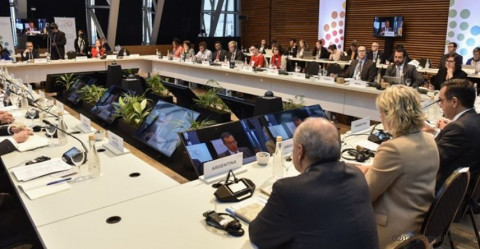 UNESCO at G20: promoting policies to shape the future of education, life and work 2018-04-24 As major transformations arise from globalization, digitalization and more complex and diverse societies, there is a growing need to develop education policies that equip children, young people and adults for an uncertain and changing future. The introduction comes from the agenda of the G20 meeting in Buenos Aires, Argentina, where UNESCO, as well as representatives from the world’s 19 major economies, met on the 12-13 April to discuss how to promote public policies that can unleash people’s potential and address the future of work. The Education Working Group was coordinated by the Argentine Ministry of Education and addressed two main issues: Skills for life and work and the Financing of education in their discussion about public policies. The questions raised were such as: how can we achieve a future where all citizens are fully involved and integrated; how can we ensure high-quality and inclusive education systems in a rapidly changing society; and what skills and education policies are needed to foster an active citizenship that is committed to sustainable development. Financing education and identifying skills for the future The Education Working Group agreed that there is a pressing need to identify the skills that will be required to achieve full integration of citizens in the labour market and society, and guarantee their full human development in a lifelong learning perspective. The Group addressed the need in promoting cognitive, non-cognitive and digital skills through inclusive education policies, with a special focus on the most vulnerable groups. Participating at the event’s opening were Marcos Peña, Chief of the Cabinet of Ministers of Argentina; Alejandro Finocchiaro, Minister of Education; Pedro Villagra Delgado, Argentine G20 sherpa; and Shiro Terashima, Director at the Japanese Ministry of Education, Culture, Sports, Science and Technology. “We are living in exciting times of technological transformation, with new challenges facing governments, civil societies, and the academic sector on how we educate our children,” said Marcos Peña. “This group can help our leaders, giving them ideas on how to advance and work together to adapt our education and training systems to this new reality,” he added. UNESCO was represented by Borhene Chakroun, Section Chief of Youth, Literacy and Skills Development, Manos Antoninis, Director of the Global Education Monitoring Report (the GEM Report) and Jordan Naidoo, Director of the Division for Education 2030 Support and Coordination at UNESCO. Borhene Chakroun emphasised that only a lifelong learning approach with a focus on learning pathways can support the workforce transitions and simultaneously equip the current and next generation of the workforce with the skills they will need for a not-yet-imagined future. The Group of Twenty (G20) is a leading forum made up of 19 countries and the world's major economies, that seeks to develop global policies to address today’s most pressing challenges. It started out in 1999 and is today a major forum for dialogue and decision-making attended by world leaders from vital economies. The new Education Working Group will hold meetings on 12-13 April, 11-12 June, and 3-4 September, and a joint session with the Employment Working Group on 4 September. More information about the Education Working Group on the G20 website. UNESCOs work in the field of skills for work and life Original press release from the G20 meeting. URL:https://en.unesco.org/news/unesco-g20-promoting-policies-shape-future-education-life-and-work
  Paving the way for women's education in indigenous communities of Guatemala 2018-04-19 Magdalena Cox Xum is a modern day hero and role model. She is the first educational coordinator for the UNESCO-Malala Center in Guatemala’s San Andres Xecul, Totonicapán, created as part of the new project supported by the UNESCO Malala Fund for Girls’ Right to Education. Her work for the Center began in March 2018, but her contribution to women´s education started many years ago in her village, Nimasac. Role models Magdalena is the youngest woman in her family of four sisters and five brothers. She is also the only one, along with her youngest brother, to have graduated school and chosen to teach. But as a young girl, Magdalena feared she would not be able to follow her dream of becoming a teacher. She thought she would only complete 6th grade like her eight siblings and like many young girls in her municipality. In San Andres Xecul, Totonicapán, according to the 2016 Ministry of Education Statistical Yearbook, the enrolment rate of school-age girls in primary school was 35%, with only 10% of women aged 12 to 21 enrolled in middle school and a mere 1% in high school. Despite her father´s initial resistance, Magdalena’s mother recognized her drive to study and supported her until graduation as a teacher of bilingual intercultural primary education. Her mother became the first example of what she wanted to be for her community, a woman who recognized in other women their potential and desire to excel and who helped them achieve it. Education is a priority Since she became a teacher, Magdalena has been committed to help women in her community even though education is not always seen as a priority there. Why should we let them study? This is one of the most common questions she receives. Magdalena has told her own story to inspire parents and community members about the importance of education and the advantages of non-formal education programs. Her work went beyond that of a teacher. She knocked on doors and met women who wished to study but did not have the possibility, due to the lack of flexibility of formal education programs or their cultural or economic context. She opened the doors of her own house to give lessons to her students, putting in her own resources to buy a whiteboard and benches. To a woman, Magdalena said:“in the morning you can shepherd the animals and in the afternoon you come with me to study.” This woman completed 6th grade. The UNESCO-Malala Centers, supported by the the UNESCO Malala Fund for Girls’ Right to Education, enable education to take its righteous place in communities. With the help of committed coordinators like Magdalena, young girls and women will select the appropriate non-formal education program, hand in the required educational materials, and establish the location and schedule for the study groups. Center coordinators, native to the region, who communicate in the relevant indigenous language and understand the cultural context, will also support communities to take ownership of the project, which is key to its sustainability. Through the Center and her work as a UNESCO-Malala Center educational coordinator, Magdalena will have the space and the opportunity to amplify her heroic efforts to provide education to the indigenous girls and young women of San Andres Xecul, Totonicapán, and hopefully of Guatemala more broadly. New project to improve the education of indigenous girls and women in Guatemala UNESCO Malala Fund for Girls’ Right to Education Saqilaj B’e (in Spanish) Indigenous girls on a clear path to become leaders in Guatemala URL:https://en.unesco.org/news/paving-way-women-s-education-indigenous-communities-guatemala