
News
Catch up on what’s happening in the world of global citizenship education.
248 results found
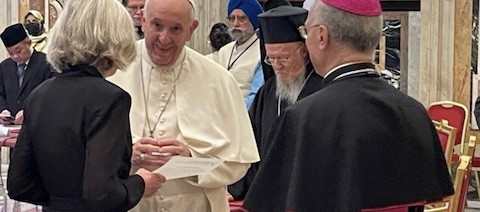 Pope Francis presents UNESCO with religious leaders’ message to the world’s teachers 2021-10-09 His Holiness Pope Francis called for educational renewal to advance universal fraternity and expressed gratitude to the world’s teachers for their dedication, during an inter-religious dialogue at the Vatican on 5 October marking World Teachers’ Day. During the event, Pope Francis handed over to UNESCO Assistant Director-General for Education Stefania Giannini a statement of greetings to teachers and educators from representatives of religions in which they express “hope that each nation will give due value and recognition to your service, in the knowledge that the future of humanity depends on the quality of teachers and education.” To achieve “open and inclusive education,” the representatives share their commitment to “putting the human person at the center of every educational process, listening to and respecting students and teaching lifestyles that are more respectful of the environment.” The message reflected the tone of the meeting, during which representatives from various religions described education’s seminal role in fostering universal values of care, tolerance, respect and solidarity. Across traditions, they advocated for a humanistic and holistic approach to education. The meeting, the first of its kind, was organized to take forward a global compact on education launched by the Pope in 2019 as a broad alliance of all those engaged in education to shape the future of our planet. “All change requires an educational process aimed at developing new solidarity and a more welcoming society,” said Pope Francis. “We want to be a stimulus for renewed education activity that can advance universal fraternity. Today we want to state that our religious traditions reaffirm the mission of integrally educating each individual - head, heart, hands and soul.” Pope Francis emphasized the responsibility of religions in promoting peaceful coexistence, dialogue and mutual respect. “If in the past, in the name of religion, discrimination was practiced against minorities, today we want to be defenders of the identity and dignity of every individual and teach young people to accept everyone without discrimination. If in the past, the rights of women, children and the most vulnerable were not always respected, today we are committed to defend those rights and teach young people to be a voice for the voiceless. Education impels us to reject and denounce he violation of the moral and physical integrity of every individual,” he continued. Affirming that “nature never forgives,” the Holy Father insisted on ecological responsibility. “If in the past we accepted the plundering of our common home, today we must train ourselves and future generations in more ecologically sustainable lifestyle.” Ms Giannini recalled that young people made a strong call for common responsibility at the Pre-COP Youth4Climate summit on 29 September in Milan. Concluding he event, she said that the statements by religious leaders resonated with UNESCO’s humanistic vision of education, stressing that teachers are at the heart of change. “Without empowered and well-prepared teachers we cannot do anything. As the COVID-19 pandemic has proven, no screen and no device can ever replace a teacher. The human factor is at the heart of learning and its success.” The meeting gathered representatives from Islam, Judaism, Sikhism, Jainism, as well as the Patriarchate of Constantinople, the Russian Orthodox Church, the Quakers, the World Council of Churches, the World Evangelical Alliance. URL:https://en.unesco.org/news/pope-francis-presents-unesco-religious-leaders-message-worlds-teachers
 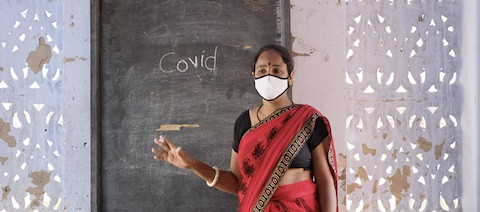 On World Teachers’ Day, UNESCO and partners urge governments to prioritise teachers in education recovery 2021-10-06 A successful education recovery hinges on increased investment in the well-being, training, professional development and working conditions of the world’s 71 million teachers to recover learning losses and manage transformations in teaching and learning imposed by the COVID-19 pandemic. This is the key message of World Teachers’ Day, celebrated on 5 October under the slogan “Teachers at the heart of education recovery.” The global advocacy day calls on governments and the international community to focus on teachers and the challenges facing their profession, and to share effective and promising policy responses. “Today we celebrate the exceptional dedication and courage of all teachers, their capacity to adapt and to innovate under very challenging and uncertain conditions. They are the principal actors of the global education recovery efforts and are key in accelerating progress towards inclusive and equitable quality education for every learner, in every circumstance,” said the conveners of World Teachers’ Day, UNESCO’s Director-General, Audrey Azoulay, UNICEF’s Executive Director, Henrietta Fore, International Labour Organization’s Director-General, Guy Ryder, and Education International’s General-Secretary, David Edwards in a joint statement. “Now is the time to recognize the exceptional role teachers play and to empower them with the training, professional development, support and working conditions they need to deploy their talent. Education recovery will be successful if it is conducted hand in hand with teachers - giving them voice and space to participate in decision-making,” argued the conveners. The educational disruptions caused by the COVID-19 crisis highlighted the crucial role of teachers in maintaining learning continuity. They have been at the heart of the educational response, from leveraging technology creatively to providing socio-emotional support to their students and reaching those most at risk of falling behind with take-home packages. But the crisis has also highlighted major challenges facing the teaching profession, including the lack of career development opportunities in online teaching and distance learning, increased workloads associated with double-shift classes and blended models and occupational safety issues. As of 27 September, schools opened fully in 124 countries. They are partially reopened in 44 countries and fully closed in 16. These figures highlight both the need for attention to teachers’ health and well-being as schools reopen, and for continued professional development to integrate and use educational technologies. According to UNESCO’s research 71% of countries have given some priority to the vaccination of teachers, but only 19 countries included them in the first round of vaccinations, while 59 countries have not prioritized them in their roll-out plans. More effort is needed to support teachers in the transition to remote and hybrid teaching. According to the 2021 global survey conducted by UNESCO/UNICEF/World Bank and OECD released in July: 40% of countries trained three quarters or more of teachers on distance learning methods and the effective use of technologies in 2020 Only six out of ten countries provided teachers with professional development on psychosocial and emotional support Just over half of all countries (58%) provided teachers with content for remote learning, while 42% provided teachers with ICT tools and internet connections Putting teachers at the heart of the education recovery will require increasing the size of the teacher workforce. According to the above survey, 31% of 103 countries recruited additional teachers for school reopening, but the global gap remains high. In total, 69 million more teachers are needed worldwide to ensure universal primary and secondary education by 2030 (SDG target 4.1) It is projected that sub-Saharan Africa will need to recruit 15 million primary and secondary teachers by 2030. To celebrate 2021 World Teachers’ Day, the conveners, together with partners, including the World Bank, the Hamdan Foundation, the International Task Force on Teachers for Education 2030 (TTF), civil society organisations and members of the Global Education Coalition, will organize global and regional events and an advocacy campaign with the participation of the UNESCO Global Network of Learning Cities. The five-day series of events will include panel discussions, webinars and online training sessions to examine effective policies, evidence and innovative practices to provide the support teachers need for successful recovery, resilience-building and reimagining education in the post-pandemic world, and to advance SDG 4. URL:https://en.unesco.org/news/world-teachers-day-unesco-and-partners-urge-governments-prioritise-teachers-education-recovery
 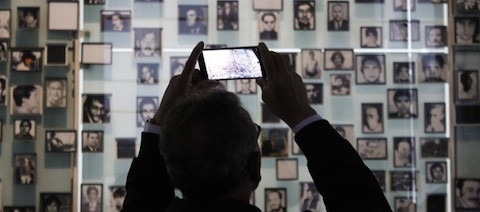 Holocaust and genocide education in Latin America and the Caribbean: Webinar series 2021-09-21 How can education address violent and conflict pasts in a democratic society? How can we promote a culture of peace and human rights that avoids mass atrocities like those that have occurred in the world and on our continent and ensure that they never happen again? These are some of the questions that will be addressed during the international seminar “Teaching about the Holocaust and Genocides in Latin America and the Caribbean” organized by the Regional Bureau for Education in Latin America and the Caribbean (OREALC/UNESCO Santiago), which is taking place over the course of five sessions between August and November this year (see schedule). “Teaching about the Holocaust and genocide is part of UNESCO’s efforts to promote Global Citizenship Education (GCED), a priority of the 2030 Education Agenda. This allows us to support the efforts of people involved in education to help students to become critical thinkers, active global citizens and responsible individuals who value human dignity and respect for everyone,” said Mary Guinn Delaney, Head of the Transformative Education Section at OREALC/UNESCO Santiago. The seminar offers an overview of opportunities that can emerge from teaching in diverse cultural contexts in which education can prevent this type of situation from the past and promote knowledge, capacities, values and attitudes that foster prevention of violence with regard to certain groups of people in today’s societies. The Holocaust is one of the most well-documented historical events in the world, and exploring this history through education can make people aware of the situations that can lead to a risk of genocide in the world today. It can also highlight the importance of human rights and universal values in the context of diversity of cultural expressions as the basis for peaceful coexistence and mutual understanding. The seminar programme features renowned specialists from museums and memory sites, policymakers and teacher trainers. Its target audience is teachers, education professionals and members of the general public. Participants who attend the entire seminar will receive a certificate and the content will be broadcast on the Zoom platform and the OREALC/UNESCO Santiago YouTube channel. This is a five-session event that is designed to contribute to the development of a conscious, respectful global citizenship that promotes human rights and cultural diversity as the basis for peaceful coexistence and mutual understanding. UNESCO’s work on education about the Holocaust and genocide URL:https://en.unesco.org/news/holocaust-and-genocide-education-latin-america-and-caribbean-webinar-series
 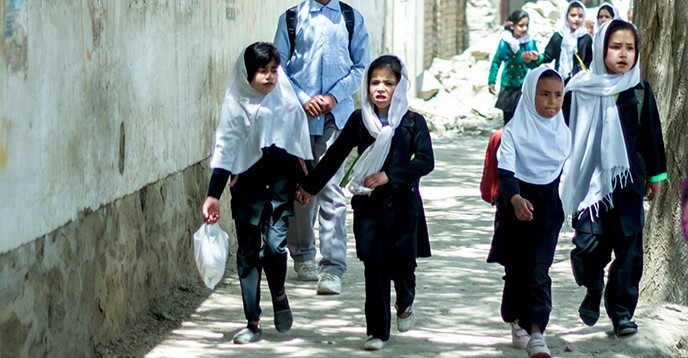 Afghanistan – UNESCO highlights key challenges for Education, Science and Culture in the country 2021-09-13 Afghanistan stands at a turning point in history. It is critical for the country, and for the entire region, that progress made over the last two decades, in terms of human rights, education and international standards remains in place. Since 2002, UNESCO and its Afghan and international partners have carried out several nation-wide programs to reform the education system, to protect cultural heritage, to increase scientific capacity, and to ensure the safety of journalists. These initiatives helped advance Afghanistan’s progress towards meaningful development. Afghanistan has made the following gains: A major increase in literacy rate, from 34% (2002) to 43% (2020) Beginning in 2006 with the support of partners including Sweden, Japan, Norway, Denmark, UN agencies and civil society organizations throughout the country, UNESCO led the largest literacy program in Afghan history, reaching 1.242.000 learners, including 800.000 women and girls. 45.000 police officers have also been reached and trained through literacy programs. From 2002 onwards UNESCO supported the government in the development of a nation-wide education revamp, encompassing all National Strategies for Education, the first-ever National Institute for Educational Planning, a global Education sector analysis, a General Education Curriculum reform (reaching over 1 million learners), and a strategic plan for higher education. UNESCO built capacity in Afghanistan: thousands of Afghan officials were trained: In the Education sector: we trained 741 planning officers from all 34 provinces. And in the Culture sector we trained several museum curators and professionals, as well as culture specialists capable of conducting inventories and monitoring heritage sites. Large-scale safeguarding operations were conducted for the preservation of the remains of the Bamiyan Valley, the Minaret of Jam and other iconic monuments that must be preserved as symbols of Afghan identity and national cohesion. Several cultural initiatives have been taken to revitalize Afghanistan’s cultural fabric and creativity, notably through the launch of the Bamiyan Cultural Center, an exhibition and training space, and through the photographic competitions which have helped give birth to the Kabul Photographic Biennale in 2017. Since 2018, the Physics Without Frontiers (PWF) programme run by UNESCO’s Abdus Salam International Centre for Theoretical Physics ICTP has been working with Kabul University to help faculty develop curricula in physics, including at undergraduate level. Some 400 Afghan students travelled to Kabul University from across the country to attend intensive Physics courses at Kabul University. Afghanistan is now home to one of the most dynamic media landscapes in the region, with 1,879 active media outlets, 203 TV channels, 349 radio stations, and 1,327 print outlets. In 2020, there were 1,741 women media workers in Afghanistan, including 1,139 women journalists These achievements all show that today Afghan society is very different from 20 years ago. The country has made huge strides, but they must be preserved or the country’s development will unravel. Many challenges lie ahead for Afghanistan: 12 million Youth and adults (15+) in Afghanistan still lack basic literacy skills 81 journalists were killed between 2006 and 2021, including 7 as of August 2021 From September 2020 - February 2021, almost one in five women journalists left the profession, due to ongoing violence and threats. UNESCO is committed to step up its support to the Afghan people. Recalling what has been achieved over the past two decades, UNESCO wishes to remind the international community what is at stake in its fields of competence, to serve as a benchmark for the future. More about: UNESCO is monitoring the evolving situation in Afghanistan with particular attention to issues concerning the universal right to education, freedom of expression and heritage. For further details, please read our statements here: UNESCO calls for respect of freedom of expression and safety of journalists in Afghanistan Afghanistan - UNESCO calls for the protection of cultural heritage in its diversity UNESCO Director General calls for unhindered right to education in Afghanistan For more information, please contact UNESCO Press Service: Clare O’Hagan URL:https://en.unesco.org/news/afghanistan-unesco-highlights-key-challenges-education-science-and-culture-country
 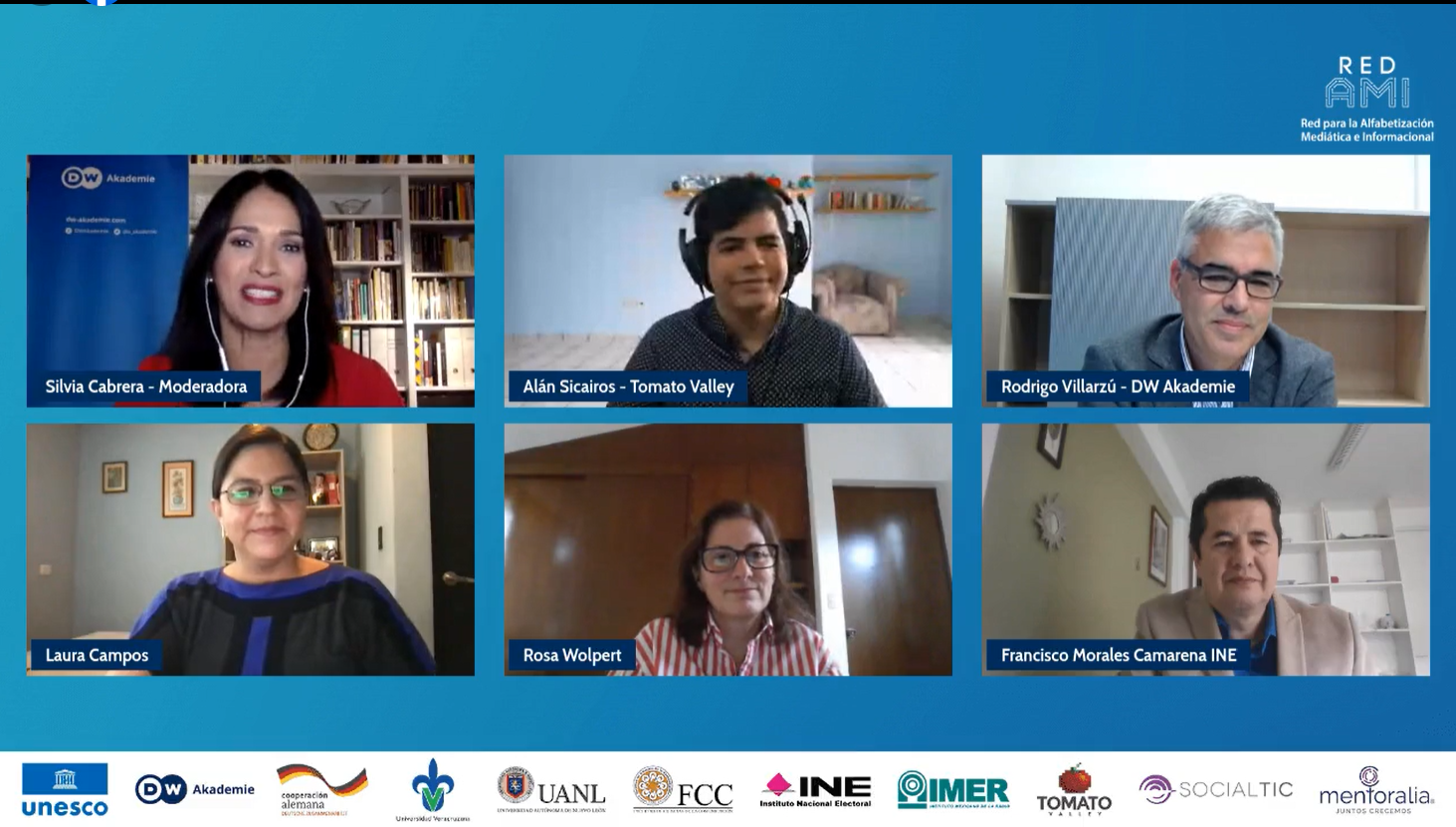 Launch of the MIL Mexico Network, an effort to promote Media and Information Literacy in the country 2021-09-08 Eight Mexican organizations and institutions are cooperating to multiply the actions on Media and Information Literacy (MIL). The Network will propose Mexico to be the host the UNESCO’s 2022 MIL Week celebration. Mexico City, August 30, 2021., - In order to combat disinformation, fake news, hate speech and discrimination, through the development of critical thinking among citizens, responsible consumption and production of information and understanding of media, information and communication technologies, the launch of the MIL Mexico Network, which will promote knowledge and skills in the country through Media and Information Literacy (MIL) was formalized on August 30. The network is integrated by eight founding members: UNESCO, DW Akademie, the National Electoral Institute (INE), the Mexican Institute of Radio (IMER), the Autonomous University of Nuevo León (UANL), the Veracruzana University (UV). Organizations such as SocialTIC and Tomato Valley. Mentoralia and Technovation Girls, also support this effort. During the presentation event (held in a virtual session) the organizations explained the importance and the need of a network that amplifies the efforts on Media and Information Literacy, mainly among multipliers relevant to the creation and dissemination of information (journalists, teachers and parents), young people aged 14 to 24, and vulnerable groups, such as indigenous communities. The MIL Mexico Network will promote, among other activities: Media and Information Literacy campaigns at national and local level. The creation of an MIL “ecosystem”. Participate in working groups, meetings and conferences. Dissemination of good practices in the teaching of Media and Information Literacy. Promote studies and research, as well as its dissemination on Media and Information Literacy in Mexico. “The quality of the information which we consume largely determines our perceptions, beliefs and attitudes, and although efforts have been made to implement a Media and Information Literacy curriculum in education systems, we are increasingly exposed to more information in multiple channels, so the efforts to promote MIL competences need to be amplified and extended beyond formal learning environments. Tools like the Media and Information Literacy help to build inclusive environments for coexistence, communication and information” said Rosa Wolpert, UNESCO México’s Education Officer. The MIL Mexico Network offers to its members: Exchange of knowledge, ideas, study and work programs. Media and Information Literacy competence training, through courses, seminars and other capacity building activities. Access to forums and materials of leading international organizations in the Media and Information Literacy (such as UNESCO and DW Akademie). Be part of a pioneering working group on a topic of high global importance. In the context of International Literacy Day and World Media and Information Literacy Week, the MIL Mexico Network will hold a series of activities such as workshops on safe and anonymous navigation and use of data for human rights defenders and journalists, a child and youth consultation on the Internet, among other activities, shared Alan Sicairos from Tomato Valley. The National Electoral Institute announced that, from the MIL Mexico Network, it will lead the proposal that Mexico hosts UNESCO’s MIL Week next year. “For the National Electoral Institute, it is very important to head the MIL Week in 2022, these activities will provide the general public with tools in the field of Media and Information Literacy. It is important to mention that, in Mexico, there are more than 126 million people, more than 92 million of them have acquired citizenship and are consumers and transmitters of information. The MIL México Network will promote the access to truthful, objective and accurate information for the Mexican population, as well as a greater participation in the public space,” said the Lorenzo Córdova, President of INE, during his participation. MIL Handbook for Journalists As a part of the launch event, the Spanish translation of the UNESCO publication Media and Information Literacy in Journalism. Handbook for journalists and journalism teachers was presented (which will be ready for consultation and free download in the coming days). This document provides tools to promote a perspective on information as a common good and a human rights approach from the journalistic environment, from training to professional practice. Go to the Microsite: Red AMI México If you are interested in joining the work of the AMI Network, you can send an email to: mexico@unesco.org, specifying in the subject: "AMI Network Mexico". Or you can contact any of the institutions through the emails of the focal points listed on the site. URL:https://en.unesco.org/news/launch-mil-mexico-network-effort-promote-media-and-information-literacy-country
  Join the UNESCO Global Network of Learning Cities! 2021-09-06 Applications open between 1 September and 1 November 2021 From 1 September to 1 November 2021, cities from UNESCO Member States are invited to apply for membership in the UNESCO Global Network of Learning Cities (GNLC). The UNESCO GNLC is an international policy-oriented network providing inspiration, know-how and best practice. Members benefit from the sharing of lifelong learning policies and practices, the production and exchange of knowledge on key challenges and solutions, capacity-building and training initiatives, and participation in global events such as the International Conference on Learning Cities. The 229 members of the network work in clusters on key issues such as education for sustainable development, equity and inclusion, and health and well-being. During the COVID-19 pandemic, UNESCO learning cities have closely worked together to share good practice, strategies and activities to minimise the disruption to learning caused by the pandemic and the resulting lockdown’. Becoming a learning city A learning city: effectively mobilizes resources in every sector to promote inclusive learning, from basic to higher education; revitalizes learning in families and communities; facilitates learning for and in the workplace; extends the use of modern learning technologies; enhances quality and excellence in learning; fosters a culture of learning throughout life. UNESCO learning cities enhance individual empowerment and social inclusion, economic development and cultural prosperity as well as sustainable development. They promote literacy and education for global citizenship, entrepreneurship, health and well-being. Submit your application by 1 November 2021! Applications must be submitted to the UNESCO National Commission in your country for endorsement and submission to the UNESCO Institute for Lifelong Learning. National Commissions for UNESCO are invited to submit up to three city membership applications no later than 30 November 2021. We will announce the new GNLC members in February 2022. More information Flyer "Join the UNESCO Global Network of Learning Cities!" (English, French, Spanish) Application form and procedureAbout the UNESCO Global Network of Learning citiesCurrent members of the UNESCO Global Network of Learning cities ContactUNESCO Institute for Lifelong LearningFeldbrunnenstr. 5820148 HamburgGermany Email learningcities@unesco.org Tel: +49 40 44 80 4144Fax: +49 40 41 077 23 URL:https://uil.unesco.org/lifelong-learning/learning-cities/join-unesco-global-network-learning-cities-0
 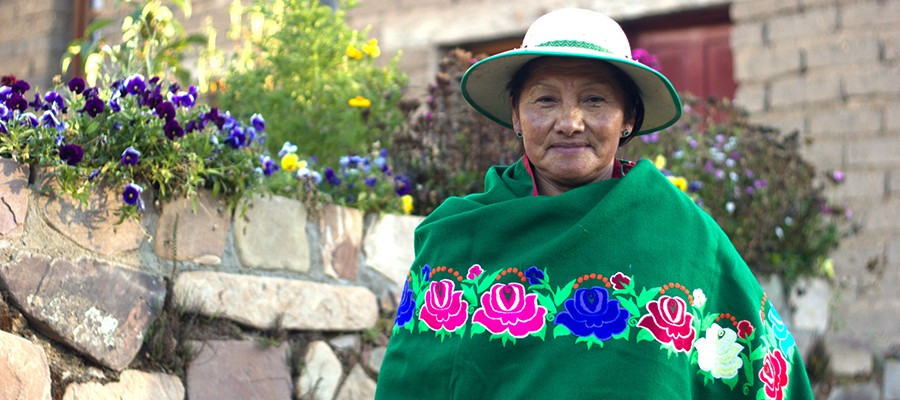 Día Internacional de los Pueblos Indígenas: una celebración inclusiva 2021-08-14 Approximately 45 million indigenous people live in Latin America and the Caribbean, accounting for 8 per cent of the population, but they speak over 500 indigenous languages and are stewards of some of the most biodiverse territories of the planet. For many indigenous peoples, cultural heritage, language, indigenous knowledge of the environment and knowing how to live well are all connected. “The Kolla people are an example of this. “For them, the hummingbird has a profound spiritual meaning that connects the people with well-being and decision-making for the future. The hummingbird must be protected and cared for. In other words, the hummingbird represents the link between the importance of knowing, respecting and caring for the environment and community-based development and being connected to Pachamama (mother earth)” asserted Serena Heckler, UNESCO’s regional programme specialist for Ecological and Earth Sciences for Latin America and the Caribbean. Marked every year on 9 August, the International Day of the World’s Indigenous Peoples is an opportunity to celebrate these communities and their knowledge. This year’s theme focuses on building a new social contract with indigenous peoples – one that is anchored in human rights and respect for their worldviews, indigenous concepts of development and good governance. UNESCO Montevideo works with indigenous peoples of Latin America and the Caribbean to amplify their voices and to increase indigenous peoples’ inclusion and participation in decision-making. In the context of the COVID-19, UNESCO worked with the Fund for the Development of the Indigenous Peoples of Latin America and the Caribbean (FILAC) to publish a policy brief on indigenous community protocols as tools for self-governance and community health during the pandemic. To amplify indigenous peoples’ voices in governance and decision-making in issues related to the environment and climate change, UNESCO is supporting working groups for social inclusion and participation in UNESCO sites. Through its Local and Indigenous Knowledge Systems (LINKS) Programme, it is supporting a series of workshops with indigenous peoples in Argentina to increase involvement of indigenous knowledge holders with international environmental assessments and processes, including the Convention on Biodiversity. It will also host a capacity-building webinar on indigenous knowledge-based fire management in the face of climate change. As vehicles for indigenous knowledge about sustainable development and living well, indigenous languages are vital elements of indigenous identity. UNESCO is proud to serve as Secretariat of the International Year of Indigenous Languages 2019 and the upcoming International Decade of Indigenous Languages. More information: Director General’s Statement United Nations International Day of the World’s Indigenous Peoples URL:https://en.unesco.org/news/international-day-worlds-indigenous-peoples-inclusive-celebration
  Insecurity in northern Mozambique continues to forcibly displace thousands 2021-07-11 This is a summary of what was said by UNHCR spokesperson Babar Baloch – to whom quoted text may be attributed – at today's press briefing at the Palais des Nations in Geneva. UNHCR, the UN Refugee Agency, remains gravely concerned for the safety of civilians in northern Mozambique as armed conflict and insecurity in the coastal city of Palma continues to displace thousands of people, two and a half months after a brutal attack by non-state armed groups. People are fleeing daily in a desperate search for safety both in Mozambique and across the border in Tanzania. Those fleeing have told UNHCR staff that the situation in Palma remains very unstable, with regular gunfire at night and torching of houses. Some 70,000 people have fled Palma since 24 March, bringing the total number of displaced in Cabo Delgado province to nearly 800,000 according to humanitarian estimates. UNHCR continues to advocate for the internally displaced to receive protection and assistance in Mozambique and for vulnerable people seeking safety in neighbouring Tanzania to access asylum. The ongoing insecurity has forced thousands of families to seek refuge in the south of Cabo Delgado and Nampula provinces. The districts of Nangade, Mueda, Montepuez, Ancuabe, Metuge, Balama, Namuno, Chiure, Mecufi, Ibo and Pemba continue to register new arrivals every day. Thousands of others are reported to be stranded in very insecure areas around Palma with restricted humanitarian access. However, UNHCR and partner agencies were recently allowed access to some remote areas to help displaced people living in dire conditions. UNHCR continues to work with partners to assess their needs and provide life-saving assistance. We have distributed relief items to some 10,000 displaced people. Many others have attempted to cross the river that marks the border with Tanzania to seek international protection. According to Mozambican border authorities, more than 9,600 of them have been forcibly returned through the Negomano border point since January this year. Some 900 were pushed back into Mozambique in just a few days from 7 to 9 June. UNHCR teams have been supporting people arriving in a desperate condition, many separated from their family members. Those pushed back from Tanzania end up in a dire situation at the border and are exposed to gender-based violence and health risks as many are sleeping in the open at night in extreme cold without blankets or a roof over their heads. There is an urgent need for emergency relief items including food. UNHCR reiterates its call for those fleeing the conflict to have access to territory and asylum, and, in particular, for the principle of non-refoulement (no forced return) to be respected. Refugees must not be forced back into danger. URL:https://www.unhcr.org/news/briefing/2021/6/60c312e94/insecurity-northern-mozambique-continues-forcibly-displace-thousands.html#_ga=2.75711645.982380942.1625975801-329418574.1625975801
 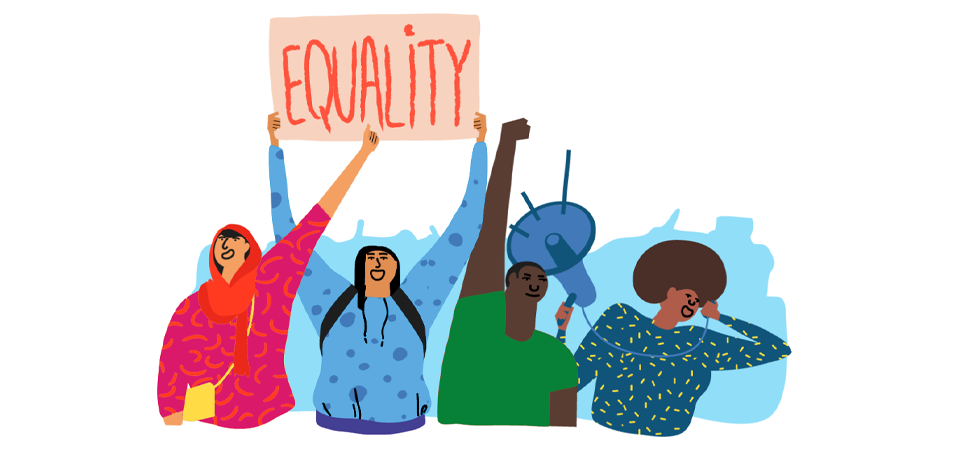 Seven ways to change the world 2021-07-04 Convened by UN Women, co-hosted by the governments of Mexico and France, together with civil society and youth, the Generation Equality Forum is taking place in Paris, from 30 June to 2 July. Here’s how it’s set to be catalytic and action-oriented, unveiling major investments, programmes, and policies that accelerate progress on women’s rights. Equal rights and opportunities for all people, of all genders, everywhere. It’s not a new vision, but still a bold one, as no country in the world has achieved gender equality in all aspects of life. Since 2020, the COVID-19 pandemic has claimed more than 3.7 million lives globally and created and exacerbated a gender equality crisis. Even before COVID-19, almost one in three women worldwide experienced abuse; during the pandemic, calls to helplines increased five-fold in some countries. The World Economic Forum estimates that at the current rate of progress, women will not achieve pay or leadership equity with men for at least another 135.6 years. The upcoming Generation Equality Forum in Paris, from 30 June – 2 July, is an inflection point to confront the gender equality crisis and spur major investments, policy, and programmes to advance gender equality and women’s rights. Convened by UN Women and co-hosted by the governments of Mexico and France, in partnership with youth and civil society, the Forum will bring together governments, feminist leaders, youth, and change makers from every sector, to announce trailblazing gender equality investments, programmes, and policies. It will mark the beginning of a five-year action journey led by six Action Coalitions and a Compact on Women, Peace and Security, and Humanitarian Action. Together, the Action Coalitions and the Compact have identified the most catalytic actions and targets needed to make irreversible progress by 2026. For instance, policies that recognize, reduce, and redistribute care work and create an additional 80 million decent care jobs; laws that protect 550 million more women and girls from gender-based violence; and doubling the proportion of women working in technology and innovation, while increasing investment in gender-responsive climate solutions.As we head towards the Paris Forum, here are seven ways to change the world, and find out how you can #ActForEqual. 1. End gender-based violence Putting an end to gender-based violence is essential for fulfilling the vision of a gender-equal world. An estimated 736 million women—almost one in three—have been subjected to intimate partner violence, non-partner sexual violence, or both at least once in their life. What needs to change? More governments must ratify international and regional conventions that prohibit all forms of gender-based violence, and strengthen, implement, and finance evidence-driven laws, policies, and action plans. “Everyone agrees that women’s rights organizations need to receive better funding,” says Céline Bonnaire, Executive Director of the Kering Foundation and a member of the Action Coalition on Gender-Based Violence. “But when you have a look at where the money goes, women and girl-lead organizations are receiving just seven per cent of the global philanthropic funding.” That’s why the Action Coalition on ending gender-based violence is focused on increasing the amount of quality, flexible funding from governments, private sector, and other donors to girl-led and women’s organizations, as well as the broader need to scale-up and improve survivor-centred services. “Everyone has a role to play in putting an end to violence against women,” says Bonnaire. “I want a future where there are no more women that have to be survivors of violence.” 2. Guarantee economic justice and rights Women and girls are particularly disadvantaged in social protection systems. The gender gap in labour force participation has not shifted in 30 years, stagnating at 31 per cent. Young women, aged 15-29, are three times more likely to be outside the labour force and schools than young men. Transforming the care economy is one key component of guaranteeing economic justice and rights for women and girls everywhere. Women spend, on average, triple the amount of time performing unpaid care and domestic work that men do, so it is essential that labour rights reward and represent care workers. Pay equity and decent work must become the norm. Diane Ndarbawa, President of Manki Maroua, an association of girl-child mothers in Cameroon, and a member of the Action Coalition on Economic Justice and Rights, says, “Legal change is needed urgently because it will significantly speed up progress on gender equality and contribute to economic justice, as well as safeguard this progress in the long term.” Supporting organizations that work with local communities, such as those offering expertise and financial backing to girls and women entrepreneurs, is another key action to drive progress, says Ndarbawa. “We want to make our voices heard… so that [women] have access to decent work, a professional career, a business—and so they are not left behind,” she stresses. 3. Ensure bodily autonomy and sexual and reproductive health and rights Empowering women and girls to exercise their sexual and reproductive health and rights and make autonomous decisions about their own bodies free from coercion, violence, and discrimination is an urgent need and critical to achieving a gender-equal world. Worldwide, 45 per cent of girls and women, aged 15-49, who are married or in unions cannot make decisions about their own bodies, such as deciding about contraception or saying no to sex. Further, women and girls in humanitarian emergencies face specific and exacerbated challenges—60 per cent of maternal deaths happen in countries affected by humanitarian crisis or fragile conditions. The upcoming Generation Equality Forum in Paris is discussing key solutions, such as expanding comprehensive sexuality education and increasing the quality of and access to contraceptive services for millions more adolescent girls and women by 2026. The Action Coalition on Bodily Autonomy and Sexual and Reproductive Health and Rights is also focused on ensuring that, in five years’ time, 50 million more adolescent girls and women live in jurisdictions where they can access safe and legal abortion. “For us, bodily autonomy is not just about removing individual friction in securing services, but also about shifting the broader market systems within which decisions are taken about what services to provide for whom and where,” says Kate Hampton, CEO of the Children’s Investment Fund Foundation and Action Coalition member. Central to this effort is placing the perspectives and needs of women and girls at the centre of decision-making, rather than treating them as an afterthought, says Hampton. 4. Feminist action for climate justiceA changing climate affects everyone, but it’s the world’s poorest and those in vulnerable situations, especially women and girls, who bear the brunt of environmental, economic, and social shocks and face greater health and safety risks. Yet, women and girls are underrepresented in advancing climate justice across all levels and sectors, and climate interventions fail to adequately account for women’s and girls’ realities in climate crises, such as violence, healthcare needs, fraught economic resilience, and unpaid care and domestic work. Joanita Babirye, from Uganda, is the Co-founder of Girls for Climate Action and member of the Action Coalition on Feminist Action for Climate Justice, and she knows this reality firsthand. “I grew up in a community where women and girls interact with the environment every day for food, income, and to take care of their households,” she shares. “We started having to travel longer distances to look for water. We noticed that changes to the seasons were having a negative impact on agriculture, which made us increasingly concerned.” Babirye felt that something had to be done to further feminist action for climate justice, so she joined forces with other Action Coalition members from around the world to increase direct access to financing for gender-just climate solutions, enable women and girls to lead a just transition to a green economy, and increase the collection and use of data on gender and the environment. “Women and girls should be able to demand climate justice, but this is only possible when they are equipped with the tools and knowledge to hold everyone accountable,” says Babirye. “The transformation needed is to make women and girls fully aware of the issues and leaders of the solutions.” 5. Foster technology and innovation for gender equalityWhat would the world look like if women and girls had equal opportunities to access, use, lead, and design technology and innovation? This question is central to the Generation Equality Action Coalition on Technology and Innovation for Gender Equality, which is set to bridge the gender digital divide across generations, double the proportion of women working in technology and innovation, and eliminate online gender-based violence. Kyzzhibek Batyrkanova, a champion for women and girls in STEM and leader of Kyrgyzstan’s first Space Programme, believes that investing in feminist technology and innovation is a key part of building an inclusive and accountable future. “We encounter many negative comments that this programme will fail because girls and women are engaged in it. People do not even consider any other factors such as lack of funding and infrastructure,” she says. To level the playing field for women and girls, the diverse partners that make up the Action Coalition on Technology and Innovation are proposing concrete steps to widen innovation ecosystems, embed transparency and accountability in digital technology, and expand inclusive digital economies. “We need…to break the glass ceiling and expand opportunities for women and girls in science,” says Batyrkanova, who works to promote STEM education for young women and girls, including courses on soldering, 3D-modeling, and 3D-printing. “We want to show by our own example that girls are capable of anything, even reaching for the stars,” she shares. 6. Invest in feminist movements and leadershipWithout increased action to advance feminist movements and leadership, we are far from achieving gender parity in political life. At the current rate of progress, equal gender representation will not be achieved in national legislative bodies until 2063. Feminist leaders, including trans, intersex and nonbinary people, indigenous women, young feminists, and other historically excluded people, have vital contributions to make today. “I find it problematic that, even in 2021, we still need to justify why women can and should be leaders,” says Bogolo Joy Kenewendo, an economist from Botswana, leader, and member of the G7 Gender Equality Advisory Council, as well as the United Nations Secretary-General’s High-Level Panel on Digital Cooperation. “A lot of work has been done since the 1995 Beijing Declaration and Platform for Action. Why should I now, 26 years later, still have to justify my position in leadership?” she asks. “Feminist organizations are on the front lines in their communities as we have seen throughout the COVID-19 pandemic. They have been supporting the poorest and most vulnerable, fighting and advocating to ensure that those dependent upon on services, such as women’s shelters, can continue to have access. These are the people on the ground who are making change happen on a day-to-day basis, and we must support them,” says Karina Gould, Minister of International Development at the Government of Canada, and member of the Generation Equality Forum Action Coalition on Feminist Movements and Leadership. “Canada signed up to co-lead the Action Coalition because it recognizes that investing in feminist movements and feminist leaders is critical for advancing gender equality”, says Minister Gould. “We see challenges and barriers to feminist movements and leadership that we want to help mitigate,” she adds. “A big challenge is funding. Less than one per cent of development assistance goes towards feminist organizations. We simply need more.” Motivated by the same sentiments as Minister Gould, the Action Coalition on Advancing Feminist Movements and Leadership are putting forth actions to fund and support diverse feminist activists, organizations, and civic space for feminist action. By 2026, the Coalition aims to advance the leadership and decision-making power of women, girls, and nonbinary people around the world. 7. Put women in the heart and at the helm of peace, security, and humanitarian actionTwo decades have passed since the landmark UN Security Council resolution 1325 was adopted, enshrining the role of women in securing and maintaining peace. Peace and equitable crisis response and disaster prevention are prerequisites for health, human security, and sustainable development. As we convene for the Paris Forum, some two billion people are living in countries affected by conflict, another billion are caught up in protracted crises, and millions more face the ever growing threat of climate change. Even in the midst of COVID-19, guns were not silenced, and women continued their efforts to keep peace or act as first responders, often without much recognition or resources. In conflict-affected countries, women’s representation in COVID-19 taskforces stands at a low 18 per cent. Although evidence shows that when women are at the negotiating table, peace agreements are more likely to last 15 years or longer, on average, women made up only 13 per cent of negotiators, six per cent of mediators, and six per cent of signatories in major peace processes between 1992 and 2019. The policies and measures to change this are already in place, but implementation and investment is lacking, in women as peacebuilders, front-line humanitarian workers, and human rights defenders. At the Generation Equality Forum in Paris, a diverse coalition will announce how they plan to accelerate implementation of the agenda. “Women and young people have a profound understanding of their countries’ peace and security situation, gender and power relations, and humanitarian needs, because they live this reality every single day,” says Mavic Cabrera Balleza, Founder and CEO of the Global Network of Women Peacebuilders, which is part of the Compact on Women, Peace and Security and Humanitarian Action. Balleza and the many diverse partners engaged in developing the Compact will leverage existing peace and security and humanitarian frameworks to dismantle discriminatory barriers and promote the protection of women's rights and the work of women peacebuilders, front-line responders, and women human rights defenders. After more than 30 governments, United Nations entities, and global civil society organizations sign the Compat at the Forum, signatories are expected to implement these actions and report on progress over the next five years. “When local populations are able to shape the implementation of the Women, Peace and Security and humanitarian agendas, it becomes inclusive, participatory, intersectional, and it fosters strong ownership,” says Balleza. “This is what we need to prioritize to effectively respond to the violent conflicts, the pandemic, and other humanitarian crises.” You can #ActforEqual 2021 can be a landmark year for gender equality if we #ActForEqual and step up for gender equality. Register for the Generation Equality Forum by 27 June 2021 to join the multi-actor and inter-generational gathering and follow UN Women on social media to stay up to date with Forum news. To learn more about each Action Coalition’s commitments, see the Forum’s microsite for commitment making. URL:https://www.unwomen.org/en/news/stories/2021/6/feature-seven-ways-to-change-the-world
  Students take on global challenges during virtual AI hackathon 2021-07-03 UNESCO YouthMobile and Microsoft have partnered to host the Imagine Cup Junior Virtual AI Hackathon, a practical journey into digital literacy on the theme “AI for Earth”. From 18 to 20 June 2021, high-school students from Europe, the Middle East and Africa engaged in an intensive online experience to understand what AI is, learn how to adapt to a constantly changing intelligence landscape, and build the skills they need to take ethical control of the development and use of AI. Following the highly successful All-Girls hackathon earlier this year, the event aimed at emphasizing the impact that AI can have on the future of our planet: the practical exercises and real-life examples used during the event all focused on the use of AI to better understand and address sustainability, particularly climate change and the loss of biodiversity. These issues are all relevant to the United Nations’ Sustainable Development Goals (SDGs), which recognize the importance of tackling climate change and working to preserve our oceans and forests. The hackathon culminated in a design challenge, where participants from Egypt, Russian Federation, Spain, Romania, Ireland, Nigeria, Morocco and Oman worked in teams to envision an AI solution to a real-world problem that would benefit the Earth. A panel of judges ultimately awarded 4 ideas: Team Autonomus from Egypt proposed a project that would enable governments and wildlife organizations to track elephant populations using a combination of acoustic sensors, bioacoustics recorders, camera traps and aerial imagery. Team Regression from Egypt exposed a solution to protect elders who live alone during emergency situations, in which they are unable to call for help, through an AI supervised learning and classification to correctly identify an emergency. Team Gauss from Romania worked on preservation of tiger subspecies by tracking tigers through social media and using classification for discerning pictures. Team Binary from Russian Federation proposed to mitigate the effects of the ongoing pandemic by developing an AI that can predict the degree of congestion in various areas, letting users know which high-risk places they need to avoid. I really enjoyed this Hackathon, I expected it to be harder than what we actually do but I learned things that I can’t learn at school in a “magic, interesting and unseen” way. This Hackathon showed me what I really want to do with my life and that I can actually do a lot of things that I like. It was a pleasant experience and I can’t wait to learn new things and participate to the next Hackathon.-- One of the participating students Supported by their teachers and by mentors volunteers, students started their journey by learning how to think like a programmer, break down a problem into a precise sequence of instructions, and create coding solutions that include sequences, events, loops and conditionals. On the second day, students were driven through the history of AI – from the first conceptualization of an automaton in the Greek myth of Talos to the super AIs of today. They learned about the pioneers who first defined what constitutes an AI and were shown the difference between narrow, general and super AIs. There were discussions on ethics and the responsible use of AI before moving on to more technical insights and machine learning techniques. Finally, to prepare for the design challenge, they underwent a series of exercises exploring various applications of AI in the context of sustainability. Using their knowledge of regression, classification and clustering, students were able to work in various tools and languages to solve a series of challenges, including predicting water consumption, deciding which is the best place to plant trees, and saving endangered species like penguins or the elusive snow leopard. UNESCO leverages young people’s digital creativity to shape solutions for the world. In today’s world, becoming digitally literate requires to further explore, understand, push limits and learn complex skills, such as the basics of AI. Equipped with digital skills, young people could develop digital solutions to address local challenges, supporting themselves and their communities. In consideration of recent developments in the social and digital domains, including artificial intelligence, privacy issues, the increasing importance of social competencies such as digital citizenship and education for sustainable development, UNESCO recently launched its updated curriculum on media and information literacy: “Think critically, Click Wisely: Media and Information Literate Citizens”. The event was a contribution to the Global Education Coalition, launched by UNESCO in 2020, which brings together more than 175 members from the UN family, civil society, academia and the private sector to ensure that #LearningNeverStops. Related links UNESCO YouthMobile UNESCO's programme on Media and Information Literacy Girls design artificial intelligence solutions during virtual hackathon held by Microsoft and UNESCO UNESCO’s Global Education Coalition Keeping girls in the picture campaign #LearningNeverStops UNESCO’s work on education and gender equality Artificial intelligence in education Girls’ and women’s education in science, technology, engineering and mathematics (STEM) ICT in Education URL:https://en.unesco.org/news/students-take-global-challenges-during-virtual-ai-hackathon