
News
Catch up on what’s happening in the world of global citizenship education.
172 results found
 UNESCO publishes new guidance tool for policy-makers on the prevention of violent extremism through education 2018-12-28 UNESCO just released its new guidance tool Preventing violent extremism through education: A guide for policy-makers. The new publication will help policy-makers within ministries of education prioritize, plan and implement effective actions for the prevention of violent extremism through education, and contribute to national prevention efforts. Member States acknowledged the importance of preventing violent extremism through education and requested UNESCO’s assistance in this endeavour. It also marks UNESCO’s effort to contribute to the implementation of the UN Secretary-General’s Plan of Action to Prevent Violent Extremism. ‘’Inclusive, equitable and quality education is one of the most powerful tools against the spread of violent extremist ideologies,” said Irina Bokova, UNESCO Director-General. “We need a specific type of education to create the conditions that can build learners resilience to hateful narratives and strengthen their commitment to non-violence and peace. This new UNESCO document offers guidance to help Member States deliver education programmes that build young people’s resilience to violent extremist messaging and foster a positive sense of identity and belonging.” Together with the Teacher’s Guide on the Prevention of Violent Extremism, this Guide for policy-makers outlines measures that can be taken within education systems to address challenges posed by violent extremism. For example, the development of inclusive education policies and non-discriminatory educational contents; the promotion of safe learning environments; the development of confident and well-trained teachers and, finally, the establishment of empowering partnerships. The document also presents modalities of implementation and includes frequently asked questions. The Guide will be shortly issued in French and then in other UN languages. Both guidance tools, A Teachers Guide on the Prevention of Violent Extremism and Preventing violent extremism through education: A guide for policy –makers, serve as a basis for UNESCO capacity building workshops on the prevention of violent extremism through education. URL:http://www.unesco.org/new/en/media-services/single-view/news/unesco_publishes_new_guidance_tool_for_policy_makers_on_the
 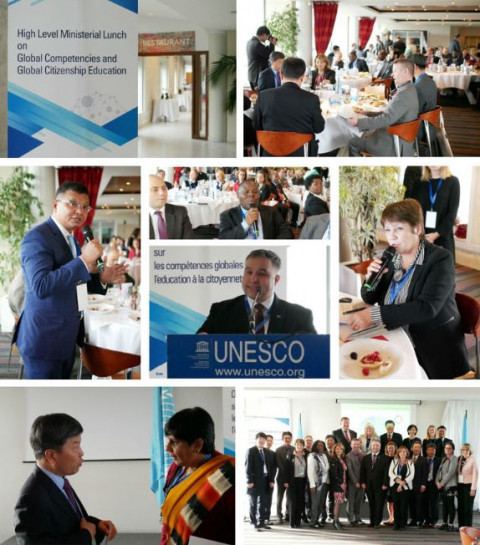 Leadership on GCED shown at High-Level Side Event during the 39th Session of the UNESCO General Conference 2018-12-28 On the occasion of the 39th Session of the UNESCO General Conference, a High-Level Ministerial Side Event took place with the title of ‘Dialogue on Global Competencies and Global Citizenship Education’ on 2 November at the UNESCO Headquarters. This side event was hosted by the Ministry of Education of the Republic of Korea and the Council of Ministers of Education of Canada, with the partenership of APCEIU and Global Affairs Canada. The dialogue attracted about 110 high-level participants, including 36 education ministers of Member States, as well as ambassadors from permanent delegations and senior officials from around the world. They gathered to discuss transformative and innovative education strategies to promote global competencies and global citizenship education. Ambassador Elaine Ayotte, Permanent Delegate of Canada to UNESCO welcomed the ministers and high-level officials to the dialogue by emphasizing the commitment of Canada and Korea to education and the realization of Education 2030 by saying “Canada and Korea, although different, have many common positions in the field of education. I believe that the reason why our two countries are here today is because Education 2030 agenda is a cornerstone for both our countries, which reaffirms the importance of providing opportunities to achieve education for the better.” Also, Ambassador Lee Byeong Hyun, Permanent Delegate of the Republic of Korea to UNESCO highlighted the role and need of GCED in a rapidly changing world and urged the efforts of stakeholders by saying “We need to mobilize resources and make the best use of those resources to transform learning environments. This requires collective endeavors of all stakeholders involved in the process, including teachers, communities and policy makers to promote global citizenship education beyond classrooms.” Followed by opening remarks, Mr Qian Tang, Assistant Director-General for Education of UNESCO highlighted the important role of the Republic of Korea and Canada in promoting GCED and contributing to the realization of SDG 4.7. As well, he thanked APCEIU for its invaluable contribution to GCED. Showcasing the two countries’ work on global competencies and global citizenship education, education ministers from Canada opened the floor to share best practices. Honorable Dale Kirby, Minister of Education and Early Childhood Development of Newfoundland and Labrador, and the Honorable Sebastien Proulx, Minister of Education, Recreation, and Sports of Quebec introduced 6 components of Canada’s Global Competencies (►Critical thinking and problem solving, ►Innovation, creativity and entrepreneurship ►Learning to learn/self-awareness and self-direction ►Collaboration ►Communication ►Global citizenship and sustainability) and shared education reforms in Canada that aim to put global competencies and foster global citizenship at the forefront of education. On behalf of the Honorable Deputy Prime Minister and Minister of Education of the Republic of Korea, Kim Sang-Kon, Mr Yeonghan Choi, Director General of International Cooperation Bureau of the Ministry of Education of the Republic of Korea, talked about lessons learned and challenges in implementing Sustainable Development Goal 4 and Global Citizenship Education. He shared that despite rapid economic development of the country, there are still limitations in the implementation of GCED in the Republic of Korea, but strongly pointed out that this is the future of education for the country. “At this point where the country has flourished, the only way towards further development is to enhance the capacities of the future generations to be sensitive with global challenges and to creatively find solutions.”, mentioned Mr Choi. He also shared the partnership effort with APCEIU in promoting GCED in transforming education in the Republic of Korea towards fostering global citizenship. He introduced initiatives such as the GCED Lead Teachers and International Teacher Exchange Programme, and other programmes that promote international cooperation for education in the Asia-Pacific and beyond. After the presentations from Canada and Korea, the participants were invited to a dialogue moderated by John McLaughlin, Deputy Minister, Department of Education and Early Childhood Development of New Brunswick. The discussion questions focused on challenges and successful initiatives or strategies in developing GCED in schools. Honorable Joof Batlara, Minister of Higher Education of Gambia asserted the political and religious challenges Gambia faces should be tackled with education, especially through GCED to sustain peace. Honorable Benghabrit Remaoun Nouria, Minister of National Education of Algeria shared the serious social issues in Algeria such as social and political turmoil and extreme violence, and highlighted that GCED represents the need to transform education in Algeria. Also, she applauded the work of UNESCO to provide tools and materials on GCED, such as the 『GCED Topics and Learning Objectives』, supported by APCEIU in 2014. The high-level participants had an opportunity to share their experiences and expertise on policy frameworks and implementation of GCED through this dialogue. Honorable Mr Hang Chuon Naron, Minister of Education, Youth and Sport of Cambodia shared a current initiative in Cambodia, called “New Generation Schools” which provided resources, equipped teachers and updated methodology that allow students to work in a team and promote collaborative learning. He further mentioned that Cambodia is cooperating with APCEIU to integrate GCED in their national curriculum, which will help students to face and tackle global challenges. Also, Honorable Mr John Chrysestom Muyingo, Minister of State for Higher Education of Uganda mentioned Uganda took the initiative of integrating GCED in the national curriculum in Uganda, a collaborative initiative with APCEIU. Even though the curriculum was not yet wholly changed, it gave an opportunity for schools to complement with new materials for learners and teachers, and to educate trainers. The High-Level Ministerial Side Event contributed to the continued discussion on global competencies and global citizenship education, an integral part of the discussions and debate during the 39th Session of the UNESCO General Conference. Being part of the strategic objectives of UNESCO in the next biennium (2018-2019), the high-level side event was an important opportunity to enhance partnership amongst different stakeholders, particularly with ministries of education, towards realizing SDG 4.7. URL:Leadership on GCED shown at High-Level Side Event during the 39th Session of the UNESCO General Conference > APCEIU News - APCEIU (unescoapceiu.org)
 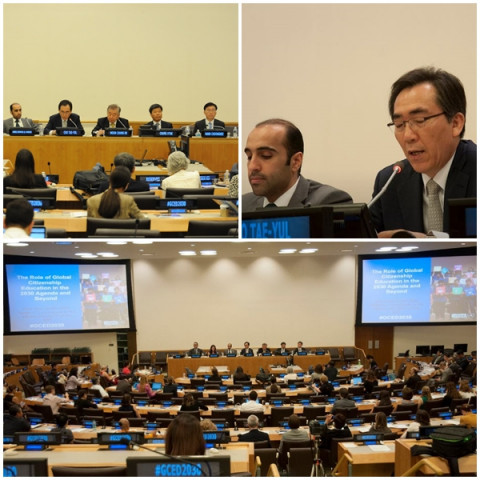 Value of GCED for the United Nations highlighted in 2017 UN GCED Seminar 2018-12-26 On 19 June 2017, APCEIU, together with the Permanent Missions to the United Nations of the Republic of Korea and Qatar, as well as the World Federation of United Nations Association (WFUNA) co-organized the 2017 UN Global Citizenship Education (GCED) Seminar at the United Nations (UN) Headquarters in New York. With the title “The Role of Global Citizenship Education in the 2030 Agenda and Beyond” the seminar focused on answering the question of how does Global Citizenship Education (SDG Target 4.7) contribute to the values and visions of the United Nations. An annual event since 2015, the discussions in the 2017 also touched on best practices that contribute to the realization of SDG Target 4.7, the Sustainable Development Goal for GCED. Ambassador Cho Tae-yul, Permanent Representative of the Republic of Korea to the United Nations, emphasized on the significance of GCED with the current global challenges faced mutually by humanity, and its role in realizing the mission of the United Nations. “GCED educates people to become active and responsible global citizens…towards sharing and realizing the universal values and visions which the United Nations upholds.” Ambassador Cho further mentioned that GCED contributes to the UN beyond its inclusion in the SDGs as it serves as, “…an important element of the UN’s holistic approach, strengthening the nexus among peace and security, development and human rights.” He further addressed that in line with the mainstreaming action needed at the United Nations, the “Group of Friends on Global Citizenship Education” was established, co-chaired by the Republic of Korea and the State of Qatar. The inaugural meeting of the group was held last 1 June where 60 representatives from 35 UN Member States as well as UN Department of Public Information, UNESCO and UN Alliance of Civilizations participated. As a reply, Ambassador Abdulrahman Yaaqob Y. A. Al-Hamadi, Deputy Permanent Representative of the State of Qatar to the United Nations, expressed their pride in co-chairing the group, a common platform for member states and key stakeholders to discuss challenges and opportunities to promote GCED. Ambassador Al-Hamadi also stressed the various efforts of Qatar to promote GCED, including through its support of intercultural dialogue, and the organization of the 2017 World Education Summit for Education (WISE) with the theme “Co-exist, Co-create, Learning to Live and Work Together”. The WISE will be held in Doha from 14 to 16 November 2017. In the opening remarks, Utak Chung, Director of APCEIU, explained that in light of the effort to prevent violent extremism, the implementation of GCED is crucial. He mentioned the full commitment of APCEIU in implementing GCED, shown in its various efforts such as the annual UN GCED Seminar, building capacities of teachers, development of curricula and policy guidance on GCED, and opening of platforms such as the International Conference on GCED and the GCED Global Network to exchange ideas and develop strategies for GCED. On a similar note, Bonian Golmohammadi, Secretary-General of WFUNA, highlighted their work on GCED, towards the goal of empowering young people to become global citizens that contribute and engage with the work of the UN and the realization of the SDGs. On a special video message, Madame Irina Bokova, Director-General of UNESCO, expounded that the inclusion of GCED in the SDGs is recognition of its role to support an education that meets the needs and challenges of the 21st century, “…convinced that (GCED) is essential to empower learners with skills and values they need to be positive change actors.” Furthermore, she recognized the leadership role of APCEIU in the promotion of GCED, working closely together within UNESCO towards stronger and more efficient programming. For the keynote speech, Moon Chung-In, Special Advisor to the President of the Republic of Korea for Unification and National Security Affairs and Distinguished Professor of Yonsei, drew the backdrop of the Korean case of GCED, a retrospection of how GCED came into being in the Korean context despite many challenges. Historical memory of poverty and rapid development has caused the Korean society to develop a certain culture that includes attitudes such as low empathy and high nationalism, a major barrier to GCED. As such, he put emphasis on the importance of taking history and culture into account, as is underlined in the GCED textbook developed through a consortium between various provincial offices of education in the Republic of Korea. The panel discussion included presentations from practitioners of GCED including Karen Bryner, Director of Educate-A-Child Technical Department, Education Above All; Lily Gray, Liaison Officer, UNESCO Office in New York; Han Kyung-Koo, Professor, Seoul National University; Mareike Hachemer, Teacher and Member of the Global Goals Educator Task Force; and Theresa Ridings, Student Cohort, Lehigh University’s Global Citizenship Programme. Panelists discussed about their activities on GCED, and perspectives that they apply in doing so. The role of teachers has been stressed, in that they need to become global citizens first and to be provided with resources and capacities developed. Students beyond the formal education sector needs to be offered with opportunities on GCED, lest the cycle of marginalization will continue. As well, the message of the complementarity between national citizenship and global citizenship was an important topic in the discussion. In the words of Han Kyung-Koo, “I believe that a good patriot can be, and should be, a really good global citizen. National citizenship is not an event, it is a process, and so is global citizenship.” At his closing remarks, Ambassador Hahn Choonghee, Deputy Permanent Representative of the Republic of Korea to the United Nations, put stress on the value of GCED beyond Target 4.7, as it achieves the ultimate goal of building peace through the United Nations. “I do not think that GCED is just a sub-target…rather it is our over-arching and ultimate goal for all SDGs, even the whole process of the United Nations. This is a common undertaking and it will be this solemn responsibility of our generation for our next generation’s children.” Related Link:http://webtv.un.org/search/the-role-of-global-citizenship-education-in-the-2030-agenda-and-beyond/5477618357001?term=Global%20Citizenship URL:Value of GCED for the United Nations highlighted in 2017 UN GCED Seminar > APCEIU News - APCEIU (unescoapceiu.org)
 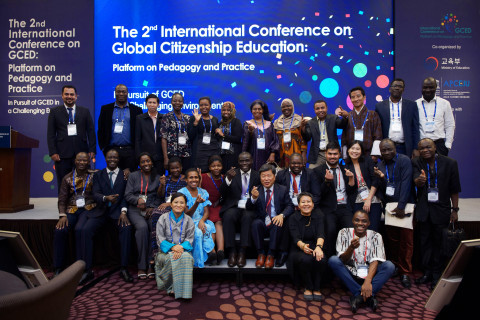 The 2nd International Conference on GCED: In Search of Solutions to Tackle Global Challenges 2018-12-26 With the rise of radicalism and nationalism, we have faced the increasing number of hate crimes against specific race, ethnicity, gender or cultural group and, consequently, an antagonistic atmosphere has been prevalent across the globe. Under these circumstances, there has been an ongoing demand for rethinking the role of Global Citizenship Education(GCED). In response, APCEIU held the 2nd International Conference on GCED from 13 to 14 September 2017 in Seoul to gather GCED practitioners and experts all over the world. Under the overarching theme of ‘in pursuit of GCED in a challenging environment’, this Conference was co-organized by the Ministry of Education of the Republic of Korea in partnership with UNESCO HQ. This Conference successfully provided a platform where participants discussed the challenges we have face globally, nationally and locally when it comes to implementing GCED and reflected upon the direction of GCED. During the two-day conference, more than 400 educators, policy makers, scholars and youth representatives from 60 different countries had attended. Kim Sang-kon (Deputy Prime Minister and Minister of Education of the Republic of Korea), Norbu Wangchuk (Minister of Education of the Kingdom of Bhutan) took part in the Conference. This Conference attempted to provide interactive sessions which encourage participants to actively participate in, consisting of various plenary sessions and concurrent sessions. The plenary sessions intended to give an integrated overview on the theme of the Conference, while the concurrent sessions consisted of diverse programmes as panel discussions, case presentations, participatory workshops, theater and debate chamber. Beyond its emphasis on the importance of global citizenship, this Conference enabled discussions on how to make the world more peaceful, inclusive and sustainable and how GCED can address current imperatives. The first day of the Conference was initiated by a panel discussion which brought together a panel of experts and practitioners from respective fields of GCED. Entitled ‘how can we pursue GCED in a challenging environment’, the panel discussion touched upon the challenges that they have faced and the achievements made by tackling these challenges in each field, region and practice. The plenary session 2 took the format of a town hall meeting in which every participant exchanged their perspectives and actively debated with each other. More than 400 participants shared their views and ideas through Mentimeter, the real-time online voting tool. In the concurrent session 1 titled ‘exploring practices of GCED and their impact,’ participants discovered how GCED has been practiced and what kind of difficulties it has been facing specifically throughout primary and secondary education, higher education and civil society organizations. This session encompassed practices on GCED in all types of education-formal, informal and non-formal.The second day kicked off with the plenary session 3, which was led by a brief performance that embodied an ethos of global citizenship. The topic was ‘GCED in Action’ and the performance was given by the Philippine Educational Theater Association (PETA). The session was designed to provide hands-on experience wherein the audience can feel the importance and message of GCED through the medium of theater. Furthermore, as GCED is considered to be delivered through diverse mediums such as participatory activities, the concurrent session 2 attempted to focus on democratic dialogism, transformative pedagogy and how to teach controversial issues. In addition, comprised of distinctive three sessions, each session in the concurrent session 3 addressed supportive conditions to scale up GCED. Each session covered education policies, curricula and teacher education respectively, shedding light on the challenges that we have faced in implementing GCED and sharing the recommendations suggested by experts in their fields. The youth debate chamber, a special session, was organized during the concurrent session 3. Under the motion of ‘Can global identity and national identity coexist? ,’ the four debaters were divided into two groups which held different views-pros and cons. The audiences were required to cast their votes in favor of the side they support two times-in advance of the debate as well as after the debate, and the side that obtained the biggest number of votes in the end won the debate. Interestingly, the result of the initial vote was reversed at the moment of the final vote. Subsequently, Cho Heeyeon, the Superintendent of Seoul Metropolitan Office of Education gave a special lecture on ‘Global Citizenship Education for Empathy & Coexistence’, which introduced the process and accomplishments of GCED in the context of education in Seoul. The 2nd International Conference on GCED provided opportunities to exchange and deduce various ideas to effectively resolve issues by which GCED is currently confronted. The Conference (except concurrent sessions) was live-streamed online for those who were interested in GCED. URL:The 2nd International Conference on GCED: In Search of Solutions to Tackle Global Challenges > APCEIU News - APCEIU (unescoapceiu.org)
 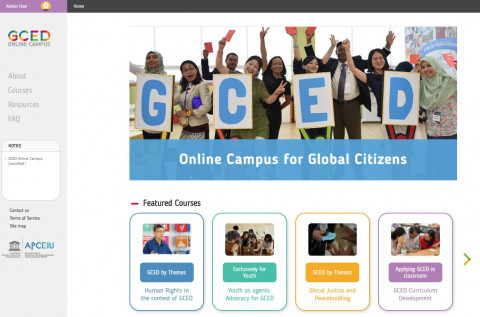 GCED Online Campus: Online Courses for Global Citizens has Launched! 2018-12-26 APCEIU has launched its e-learning platform on Global Citizenship Education ‘GCED Online Campus’ which offers various online courses on GCED to educators worldwide. (http://www.gcedonlinecampus.org/) As an e-learning platform on GCED, the online courses are expected to serve as a channel to introduce GCED to educators with its transformative approaches, as well as to deepen their understanding on thematic issues and practical knowledge. Two online courses titled ‘Glocal Justice and Peacebuilding’ and ‘Cultural Diversity and Intercultural Understanding’ are offered from 12 November 2017 till 10 December 2017, targeting educators who are interested in GCED and wish to deepen their understanding on the thematic issues of GCED, justice & peacebuilding and intercultural understanding. ‘Glocal Justice and Peacebuilding’Led by Dr. Toh Swee-Hin, the course invites educators, professionals and peacebuilders working in formal as well as non-formal educational contexts to learn about the relationship between conflicts and social justice at local and global levels. The course introduces peacebuilding initiatives to transform conflicts in both South and North contexts, identifies the root causes of conflicts and finally explores strategies that will allow nations and citizens to breed a Culture of Peace.(For more information, click here) ‘Cultural Diversity and Intercultural Understanding’The course ‘Cultural Diversity and Intercultural Understanding’ is offered by APCEIU’s partner institution, The Network University (TNU). The course is led by a team of three instructors, Ditta Dolejsiova Trindade, Gerd Junne, and Vic Klabbers. Targeting education and development practitioners, social and youth workers as well as policy-makers and civil servants, the course will enrich the participants with critical understanding on the importance of cultural diversity and intercultural understanding in a globalized world. In addition to getting acquainted to various theories, the participants will also work on their development strategy which can be utilized in their own context even after the course. Starting with the opening of the two courses, more courses will be launched soon after. Courses from GCED 101, an introductory course to GCED, to advanced courses on thematic issues and pedagogical approaches will continue to interest potential participants. Moreover, various types of resources on GCED are also available on the website, including lesson plans, and teaching materials on GCED to be used by teachers around the world. GCED Online Campus is open to all educators who are interested in and ready to learn about GCED. Please visit the website for more information on GCED Online Campus and the courses currently being offered (http://www.gcedonlinecampus.org/). URL:GCED Online Campus: Online Courses for Global Citizens has Launched! > APCEIU News - APCEIU (unescoapceiu.org)
 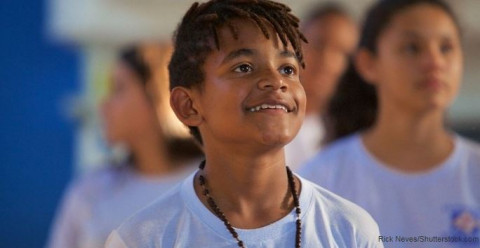 Social justice and equity: key principles for guiding action on the right to education 2018-10-25 “There is a widespread concern today over the growing inequalities around the world, not only among nations but also within countries,” says Mr Kishore Singh, former UN Special Rapporteur on the Right to Education. He spoke to UNESCO about the state of the right to education to mark the 70th anniversary of the Universal Declaration of Human Rights. “The gap between rich and poor all over the world caused by unbridled neo-liberal economy has become dramatic and its impact on education systems and the right to education is quite serious, resulting in increasing disparities and inequities in education,” he says. According to the former UN Special Rapporteur, “the empowering role that education can play in reversing this growing inequality is of paramount importance, but the first step would be to expand opportunities for good quality public education so that all children have access to education as a right.” International legal framework of the right to education Mr Singh emphasizes that the right to education without discrimination or exclusion is an internationally recognized universal right. In 1945, before the Universal Declaration of Human Rights was proclaimed, UNESCO’s Constitution clearly formulated the mission of the Organization and the responsibility of Member States for ensuring “full and equal opportunities for education for all”. The UNESCO Convention against Discrimination in Education, adopted in 1960, laid down two fundamental principles of the right to education: equality of opportunity in education and non-discrimination. This Convention influenced other UN human rights conventions adopted subsequently as regards the provisions on the right to education, Mr Singh observed. Education as a public good The former Special Rapporteur says that States have an obligation and responsibility to comply with international norms and principles, and to take normative actions to ensure that the right to education is fully realized and to preserve education as a public good. “The right to education is an overarching right, essential for the exercise of all other human rights,” he says. “Its ‘empowering role’ can lift people out of poverty and equip them with skills, competencies and values that are beneficial not only to themselves, but to society as a whole.” Safeguarding education from forces of privatization Mr. Singh stated that the mushrooming of privatization of education over the past few decades is a matter of deep concern, threatening the concept of education as a public good. “Education is being commercialized, leading to greater inequities in society and gross violation of the principles and norms of the right to education. Because of this phenomenon and false propaganda in favour of privatization, the public education system is shrinking while privatization creates a social segregation and inequities.” “The privatization in education is a big threat to the Education 2030 Agenda and runs counter to the commitments by governments from all over the world to ensure good quality education free of costs, at least till secondary stage,” states Mr Singh. “In private educational institutions run by individual proprietors and enterprises, peoples’ economic status determines access to education, based often on exorbitant and unregulated fee.” He emphasizes that any discrimination based on economic status or social situation is outlawed by UNESCO’s Convention against Discrimination in Education and other international human rights conventions. And the Convention on the Rights of the Child adds “property” among the prohibited ground of discrimination in access to education. The former Special Rapporteur stresses the urgent need of stringent regulatory measures, with sanctions for fraudulent practices. Concern about use of digital devices in education On the use of ICTs in education and digital devices, Mr Singh recognizes the benefits these entail for providing access to information but he is also concerned about the ‘digital divide’ and inequality that these create. Pointing out that these are mere tools and should not be allowed to substitute face-to-face learning pedagogies and human contact in imparting education, Mr Singh warns against multiple risks that use of ICTs and digital devices carry, especially as regards human faculty for concentration and reflections. “Digital devices in education are yet another commercial entry points, and unfortunately, they can also be used in a negative way by fostering access to pornographic sites with risk of sexual abuse or exploitation, cyberbullying , as well as to content that is aggressive and violent etc. while undermining the quality of learning. ” For Mr Singh, social justice and equity are two core principles of the United Nations system for peace and development. “Social justice and equity should remain at the forefront of measures taken by States in order for the right to education to be protected, promoted and fully and equally enjoyed by all citizens.“ Join UNESCO’s #RightToEducation campaign and help spread the word about this key human right that has the power and potential to transform lives around the world. URL:https://en.unesco.org/news/social-justice-and-equity-key-principles-guiding-action-right-education
 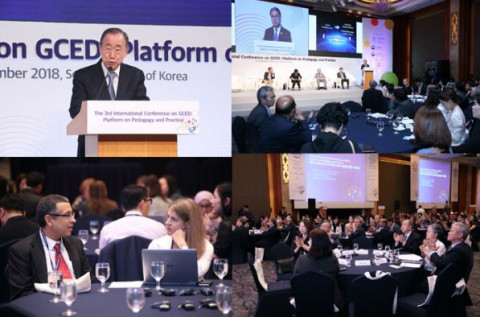 The 3rd International Conference on GCED: Sustainable and robust platform for GCED 2018-10-11 Since Global Citizenship Education (GCED) has been inscribed in Target 4.7 of the Sustainable Development Goals, it gained international attention as an imperative education agenda. In response to the ongoing demand for exchanging international, intensive, professional and practical information regarding GCED, APCEIU has been organizing the International Conference on GCED annually since 2016, in order to gather a wide variety of stakeholders of GCED from all over the world. Co-organized by APCEIU, the Ministry of Education and the Ministry of Foreign Affairs of the Republic of Korea, in partnership with UNESCO, the 3rd International Conference on GCED: Platform on Pedagogy and Practice was held on 5-6 September 2018 in Seoul, Republic of Korea. Under the overarching theme of ‘GCED in Every Corner of the World: Local-Contextualization of GCED’, the Conference intends to touch upon how GCED has been and or can be perceived differently based on the local, national and regional contexts. The Conference explored and shared regional, national and traditional concepts which address same or similar values to those that are at the core of GCED. During the two-day Conference, more than 600 educators, policy makers, scholars and youth representatives from 63 different countries had attended. Park Chun-ran (Vice Minister of Education of the Republic of Korea), Cho Hyun (2nd Vice Minister of Foreign Affairs of the Republic of Korea), Ban Ki-moon (the 8th Secretary-General of the United Nations), Leonor Briones (Secretary of Department of Education of the Philippines) took part in the Conference. This Conference attempted to provide interactive sessions which encourage participants to actively participate in, consisting of various plenary sessions and concurrent sessions. The plenary sessions intended to give an integrated overview on the theme of the Conference, while the concurrent sessions were comprised of diverse programmes such as panel discussions, case presentations, participatory workshops, theatre and TEDtalk-style speeches. The first day of the Conference was initiated by a keynote speech by Moon Chung-in, Special Advisor to the President for National Security and Foreign Affairs, under the theme ‘Localizing Global Citizenship Education: Challenges and Tasks’. The importance of GCED and its localization through networking and solidarity were discussed through the example of GCED textbooks developed by Gyeonggido Office of Education. The plenary session 1 was a panel discussion which brought together a panel of experts and from respective fields. Entitled ‘GCED in the context of the Korean peninsulaㅡits contribution to peacebuilding and reconciliation efforts’, the panel discussion explored the relevance of the notion of GCED in advancing the principle of “learning-to-leave-together” in the Korean context. The panellists discussed the importance of unification education, the understanding of clear division of the two Koreas in the way of perceiving the concept of peace, and the successful example of German-French, German-Polish joint compilation of history textbook. The plenary session 2 took the format of a town hall meeting in which all the participants exchanged their perspectives with the GCED experts from Senegal, Colombia and Philippines. The participants shared their views and ideas through question-and-answer session which aimed to raise awareness among participants about the diverse forms and expressions of GCED that exist around the world and how its core values are reflected in education systems. In the concurrent session 1 titled ‘Do classrooms respond to the local realities?’, the participants discovered how GCED has been practiced in teacher-training programmes. Also, this session touched upon the comparative studies on GCED in the system of formal education in Korea, Japan and China and GCED integrated curricula responding to local contexts based on the cases from Cambodia, Mongolia, Uganda and Colombia. The plenary 3 was led by a brief performance that embodied an ethos of global citizenship. The performance entitled ‘GCED Play ㅡ Here, hear’ was given by the Philippine Educational Theater Association (PETA). The session was designed to provide hands-on experience wherein the audience can feel the importance and message of GCED through the medium of theatre by creating different sounds. The second day kicked off with the plenary session 4 called ‘GCED Talks’. The speakers shared their genuine stories about the power of GCED transforming lives by introducing the cases of ‘Chocotogo’ cooperative promoting community-centric efforts, and advocacy activities of ‘Global Citizen’ using online platform and social media to mobilize the youth around the world. The concurrent session 2 was composed of three sessions under the theme of ‘It takes a village to raise a child as a global citizen’. One of the sessions took the format of policy talk based on the APCEIU’s publication, 『GCED: A Guide for Policymakers』. Also, in a different room, the participants were able to learn about the transformative power of GCED by introducing women/youth-led and community-based practices in India, Philippines and Costa Rica. In another session, a participatory workshop facilitated by the Suseong-gu Office invited participants to engage in an exercise based on a scenario of a polar bear cub and his attempt to find his lost mother using different props, followed by a video of destruction of the earth by humans. The key message of these activities was that even small things can have an impact to change the world. Lastly, comprised of distinctive three sessions, each session in the concurrent session 3 addressed ‘today and tomorrow of GCED’. One of the sessions delivered the added-values of ICT in GCED as ICT can facilitate the GCED pillars of cognition, socio-emotional connection and behaviour. Participatory workshops of drawing comics and playing theatre for transformative pedagogy were conducted in parallel. The 3rd International Conference on GCED provided a global platform for exchange, interaction and dialogue on GCED, acting as a bridge between the countries across the globe in implementing GCED. You can find more detailed information on the Conference at:http://gced.unescoapceiu.org/conference URL:The 3rd International Conference on GCED: Sustainable and robust platform for GCED > APCEIU News - APCEIU (unescoapceiu.org)
 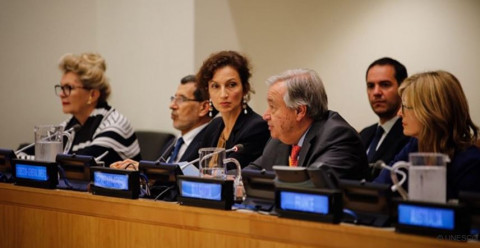 Education to prevent racism and discrimination: the case of anti-Semitism 2018-10-08 Education as the primary factor in preventing all forms of racism and discrimination was the main focus of a high-level event organized by UNESCO at the 73rd United Nations General Assembly today. Through the lens of its program to prevent anti-Semitism, UNESCO sought to mobilize Member States’ commitment in the fight against all forms of intolerance and to strengthen the organization’s overall efforts to prevent racism and discrimination. In her remarks opening the session on The power of education to prevent racism and discrimination: the case of anti-Semitism, Director-General Audrey Azoulay highlighted the importance of working as one: “this requires the mobilization of all member states”, she said, “and education is the best tool at our disposal to prevent all forms of intolerance and discrimination and to ensure equal respect for every woman and man,” adding “antisemitism undermines fundamental rights in general. To address it is to defend fundamental freedoms. It is to defend the equal dignity of all human beings.” In the presence of Antonio Guterres, Secretary General of the United Nations, the event included the participation of the Prime Minister of Morocco, Saadeddine Othmani, and Ministers representing Argentina, Australia, Bulgaria, France, Hungary, Mexico, the Netherlands, Norway, Spain, and the United Kingdom. Several hundred government officials and senior representatives of civil society organizations were also in attendance. Ronald S. Lauder, President of the World Jewish Congress, also delivered a speech. Professor Deborah Lipstadt, of the Modern Jewish History and Holocaust Studies program at Emory University and Mina Abdelmalak, Arab Outreach Specialist at the Initiative on Holocaust Denial and Antisemitism of the United States Holocaust Memorial Museum were also among the speakers. UNESCO’s extensive work in the field of preventing violent extremism through education has included publications such as Guidelines for Educators on Countering Intolerance and Discrimination against Muslims and co-publishing earlier this year with the Organization for Security and Cooperation in Europe (OSCE), the first-ever policy guidelines on Addressing anti-Semitism through education. *** Media contact: Aurélie Motta-Rivey, +33 7 72 44 89 91, a.motta-rivey@unesco.org URL:https://en.unesco.org/news/education-prevent-racism-and-discrimination-case-anti-semitism
  New data reveal that one out of three teens is bullied worldwide 2018-10-03 Almost one-third of young teens worldwide have recently experienced bullying, according to data released for the first time by the UNESCO Institute for Statistics (UIS), which is the official data source for the Sustainable Development Goal on education. The new data show that bullying affects children everywhere, across all regions and countries of different income levels. They were collected from in-school surveys that track the physical and emotional health of youth. The Global School Health Survey (GSHS) focuses on children aged 13 to 17 years in low-income regions. Similarly, the Health Behavior in School-Age Children (HBSC) targets young people aged 11 to 15 years in 42 countries, primarily in Europe and North America. Bullying refers to violence between peers/students which is characterised as “intentional and aggressive behavior occurring repeatedly where there is a real or perceived power imbalance.” “Data are the key to change,” said Silvia Montoya, UIS Director. “They can reveal who is affected by bullying and point the way to better programming by both national governments and international and non-government organizations. Over time, trends can point out whether interventions are working. Ultimately, the more knowledge we have, the more we are able to channel resources to children who need help the most.” Globally boys are slightly more at risk of bullying in schools than girls. The data – which do not include sexual or other forms of gender-based violence – show that more than 32% of boys experience bullying in school, compared to 28% of girls. Yet when looking at the 10 countries where children report the highest incidences of bullying, the median rates tell a slightly different story. In these 10 countries, a staggering 65% of girls and 62% of boys report bullying, revealing that where bullying is most pervasive, girls are more widely impacted. External factors also have a role in bullying Socioeconomic and immigrant status also play a part in bullying, according to the HBSC data on children from Europe and North America. In these regions, socioeconomic status – based on parents’ wealth, occupation and education level – is the most likely predictor of bullying: two out of five poor youth are negatively impacted. This compares to one-quarter of teens from wealthier families. Finally, also based on the HBSC data, immigrant children tend to be more vulnerable to bullying than their locally-born counterparts. As migration around the world reaches new peaks, it is worth asking whether bullying will further complicate the ability of this vulnerable group to learn. UNESCO will release a short report on 8 October 2018, looking deeper at a large number of international data sources on bullying and other forms of school violence, and revealing trends in prevalence over time. A full version of the report, available in January 2019, will present an analysis of effective national responses to school violence and bullying through country case studies. Together with the annual compilation and analysis of global data on bullying by UIS, these reports will help countries understand the scale of school violence and bullying, and put in place the policies and actions needed to ensure that all children learn in safe, supportive and inclusive school environments, as agreed in the SDG4 framework. What are the main takeaways of the data? One-third of youth globally experience bullying in school. Boys experience slightly higher rates of bullying than girls overall, but in countries where bullying is most pervasive, girls are more vulnerable. Low socioeconomic status is the main predictor of whether young teens in wealthy countries will experience bullying in schools. Immigrant youth in wealthy countries are more likely to experience bullying in schools than locally-born youth. *** For more information, contact: Amy Otchet, UNESCO Institute for Statistics, Montreal (Canada), a.otchet@unesco.org, tel: +1 514 343 7933 URL:https://en.unesco.org/news/new-data-reveal-one-out-three-teens-bullied-worldwide
 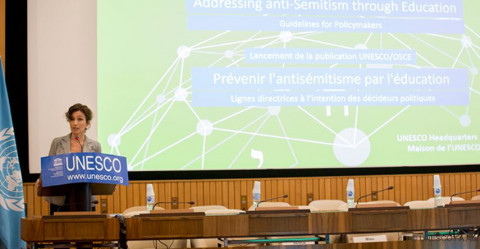 Preventing anti-semitism through education: UNESCO and OSCE launch first guide for education community 2018-06-06 UNESCO and the OSCE Office for Democratic Institutions and Human Rights (ODIHR) today released a joint publication, Addressing Anti-Semitism through Education – Guidelines for Policymakers, at a launch event at UNESCO Headquarters in Paris. The publication, Addressing Anti-Semitism Through Education – Guidelines for Policymakers, is the first on the subject by a United Nations agency. Produced with experts from the countries of Europe, Central Asia and North America, it examines the many and complex manifestations of anti-Semitic prejudice and discrimination and offers best practice recommendations to fight them through education. UNESCO is strongly committed to work on the prevention of violent extremism as part of its core mandate to promote global citizenship, a priority for the 2030 Sustainable Development Agenda. In this context, UNESCO promotes education systems that are able to equip learners with skills, attitudes and behaviours that allow them to assume active roles in facing and resolving global challenges, and to become proactive contributors to a more peaceful, tolerant and secure world. The publication is a new example of UNESCO’s contribution to the fight against anti-Semitism. UNESCO will organize a high-level debate on the subject within the framework of the General Assembly of the United Nations next September to mobilize the international community. “The struggle against anti-Semitism cannot be undertaken by Jewish communities alone. Fighting it means defending human rights and liberties, because racism and anti-Semitism are one and the same in that they share hate of otherness,” declared UNESCO Director-General Audrey Azoulay, at the launch ceremony. “In this fight, education is a major factor. It must be harnessed to prevent the rise in extremism and violence. It is our responsibility to support teachers and educators in their mission, those who sometimes feel helpless in facing the scope of unbridled prejudice.” ODIHR Director Ingibjörg Sólrún Gísladóttir, stressed the vital role of education in countering anti-Semitism, and all forms of intolerance: “Educators have access to a uniquely large audience of young people and have the opportunity to help them foster mutual respect and understanding, and thereby become responsible citizens. Resilience to language and ideas that incite discrimination can only be ensured by educating young people so that they are mindful of their own and others’ prejudices and capable of critical thinking, and that they feel responsible for making the societies in which they live cohesive ones.” On 22 May, UNESCO and ODIHR presented an outline of the publications to ministers responsible for education, culture, youth, media, communication and sport of the European Union’s 28 Member States, at a meeting chaired by Bulgaria. UNESCO and the Office for Democratic Institutions and Human Rights had earlier worked together on the publication of Guidelines for Educators on Countering Intolerance and Discrimination against Muslims (2011). **** More information Download the publication Media contact: Agnès Bardon, UNESCO Media Section: 33(0)145681764 a.bardon@unesco.org Thomas Rymer, ODIHR Spokesperson: +48 609 522 266, thomas.rymer@odihr.pl URL:https://en.unesco.org/news/preventing-anti-semitism-through-education-unesco-and-osce-launch-first-guide-education