
News
Catch up on what’s happening in the world of global citizenship education.
172 results found
 Distance learning solutions 2020-03-27 The list of educational applications, platforms and resources below aim to help parents, teachers, schools and school administrators facilitate student learning and provide social care and interaction during periods of school closure. Most of the solutions curated are free and many cater to multiple languages. While these solutions do not carry UNESCO’s explicit endorsement, they tend to have a wide reach, a strong user-base and evidence of impact. They are categorized based on distance learning needs, but most of them offer functionalities across multiple categories. Digital learning management systems Blackboard – Resources and tools to transition and deliver quality teaching and learning online. CenturyTech – Personal learning pathways with micro-lessons to address gaps in knowledge, challenge students and promote long-term memory retention. ClassDojo – Connects teachers with students and parents to build classroom communities. Edmodo – Tools and resources to manage classrooms and engage students remotely. Edraak (link is external) – Arabic language online education with resources for school learners and teachers. EkStep (link is external) – Open learning platform with a collection of learning resources to support literacy and numeracy. Google Classroom (link is external) – Helps classes connect remotely, communicate and stay-organized. Moodle (link is external) – Community-driven and globally-supported open learning platform. Nafham (link is external) – Arabic language online learning platform hosting educational video lessons that correspond with Egyptian and Syrian curricula. Schoology (link is external) – Tools to support instruction, learning, grading, collaboration and assessment. Seesaw (link is external) – Enables the creation of collaborative and sharable digital learning portfolios and learning resources. Skooler (link is external) – Tools to turn Microsoft Office software into an education platform. Study Sapuri (link is external) – Japanese language online learning platform for middle school students. Systems purpose-built for mobile phones Cell-Ed (link is external) – Learner-centered, skills-based learning platform with offline options. Eneza Education (link is external) - Revision and learning materials for basic feature phones. Funzi (link is external) – Mobile learning service that supports teaching and training for large groups. KaiOS (link is external) – Software that gives smartphone capabilities to inexpensive mobile phones and helps open portals to learning opportunities. Ubongo (link is external) – Uses entertainment, mass media, and the connectivity of mobile devices to deliver localized learning to African families at low cost and scale. Ustad Mobile (link is external) – Access and share educational content offline. Systems with strong offline functionality Can’t wait to Learn (link is external) – Gaming technology to deliver quality education to children, including those in conflict contexts. Kolibri (link is external) – Learning application to support universal education. Rumie (link is external) – Education tools and content to enable lifelong learning for underserved communities. Ustad Mobile (link is external) – Access and share educational content offline. Massive Open Online Course (MOOC) Platforms Alison (link is external) – Online courses from experts. Canvas (link is external)– Lifelong learning and professional development for educators. Coursera (link is external) – Online courses taught by instructors from well-recognized universities and companies. EdX (link is external) – Online courses from leading educational institutions. University of the People (link is external) - Online university with open access to higher education. Icourses (link is external) – Chinese language courses for university students. Future Learn (link is external) – Online courses to help learners study, build professional skills and connect with experts. Self-directed learning content Byju’s (link is external) – Learning application with large repositories of educational content tailored for different grades and learning levels. Discovery Education (link is external) – Free educational resources and lessons about viruses and outbreaks for different grade levels. Geekie (link is external) – Portuguese language web-based platform that provides personalized educational content using adaptive learning technology. Khan Academy (link is external) – Free online lessons and practice in math, sciences and humanities, as well as free tools for parents and teachers to track student progress. Available in 40+ languages, and aligned to national curriculum for over 10 countries. KitKit School (link is external) - Tablet-based learning suite with a comprehensive curriculum spanning early childhood through early primary levels. LabXchange (link is external) – Curated and user-created digital learning content delivered on an online platform that enables educational and research experiences. Mindspark (link is external) – Adaptive online tutoring system that helps students practice and learn mathematics. Mosoteach (link is external) – Chinese language application hosting cloud classes. OneCourse (link is external) – Child-focused application to deliver reading, writing and numeracy education. Quizlet (link is external) – Learning flashcards and games to support learning in multiple subjects. Siyavula (link is external) – Mathematics and physical sciences education aligned with South African curriculum. YouTube (link is external) – Huge repository of educational videos and learning channels. Mobile reading applications African Storybook (link is external) - Open access to picture storybooks in African languages. Global Digital Library (link is external) – Digital storybooks and other reading materials easily accessible from mobile phones or computers. Lezioni sul sofà – A collection of Italian language books for children, complemented with read-aloud features as well as videos discussing books and art. StoryWeaver (link is external) – Digital repository of multilingual stories for children. Worldreader (link is external) – Digital books and stories accessible from mobile devices and functionality to support reading instruction. Collaboration platforms that support live-video communication Dingtalk (link is external) – Communication platform that supports video conferencing, task and calendar management, attendance tracking and instant messaging. Lark (link is external) – Collaboration suite of interconnected tools, including chat, calendar, creation and cloud storage. Hangouts Meet (link is external) – Video calls integrated with other Google’s G-Suite tools. Teams (link is external) – Chat, meet, call and collaboration features integrated with Microsoft Office software. Skype (link is external) – Video and audio calls with talk, chat and collaboration features. Zoom (link is external) – Cloud platform for video and audio conferencing, collaboration, chat and webinars. Tools to create of digital learning content Thinglink (link is external) – Tools to create interactive images, videos and other multimedia resources. Buncee (link is external) – Supports the creation and sharing visual representations of learning content, including media-rich lessons, reports, newsletters and presentations. EdPuzzle (link is external) – Video lesson creation software. Kaltura (link is external) – Video management and creation tools with integration options for various learning management systems. Nearpod (link is external) – Software to create lessons with informative and interactive assessment activities. Pear Deck (link is external) – Facilitates the design of engaging instructional content with various integration features. Squigl (link is external) – Content creation platform that transforms speech or text into animated videos. URL:https://en.unesco.org/themes/education-emergencies/coronavirus-school-closures/solutions
  COVID-19 : UNESCO convenes Education Webinar on equity in schooling 2020-03-27 It takes a village to educate a child, and even more so in times of distance learning, when schooling goes virtual. A whole community approach and stronger partnerships are needed to make distance learning inclusive: this was one of the key takeaways from UNESCO’s first webinar on the educational response to Covid-19, which drew government officials, practitioners and experts from over 50 countries on 20 March 2020. “Scientific knowledge and global collaboration are evolving more rapidly than we have ever seen,” said Ms Catherine Kane from the World Health Organization (WHO) who set the stage for the webinar. “We cannot emphasize enough the importance of partnerships, especially between education, labour and health to keep our population healthy, educated and active.” To address equity challenges, she recommended learning from approaches used in emergency situations, including measures to ensure that students who rely on school meals do not go hungry when schools close. Restore a sense of communityIn light of the gravity of the situation, Italy’s advisor to the Minister of Education, Professor Alberto Melloni, highlighted the importance of a whole community approach. “We are working with a real tragedy. Teachers are the ones who can connect online and offline to restore a sense of community”. With over 8 million students out of school, the country is using a mix of approaches to leave no one behind and support families. To ensure that learning continues for all, the Ministry of Education announced an 85 million euro investment to deliver e-learning devices to the most disadvantaged students. In Rwanda, where schools have been closed for a week, the Government is grappling with the surge in demand for e-learning platforms and connectivity problems. “We are dealing with issues of equity and have introduced zero-rate bandwidth fees so parents don’t have to pay,” said Ms. Christine Niyizamwiyitira, Head of Department of ICT in Education at the Rwanda Education Board. “We are also using different tools, from on-line platforms to radio and television broadcasting, including on STEM subjects.” The Board is developing learning guides to support students, parents, and teachers. No substitute for a good teacherThe teacher’s central role in guaranteeing education continuity was stressed by the Director-General of France’s National Center for Distance Education (CNED), Mr Michel Reverchon-Billot. CNED’s national digital learning platform, My Class at Home is being used across the country, while the government is also providing devices and support to the 5% of students without internet access. The role of the Ministry of Education in promoting collaboration between government, enterprises, universities, and schools was highlighted also by China’s Director-General of Department of Science and Technology, Ministry of Education, Mr Chaozi Lei, and Co-Dean of the Smart Learning Institute of Beijing Normal University, Mr Ronghuai Huang. In this regard, the Ministry of Education has worked with education companies to provide free services and online curriculum resources for K12 students, universities, and the public. Training is also provided to help teachers adapt to the new learning environment and to master online teaching skills. Through a recent study, the Ministry of Education found that 80% of teachers are ready to use more ICT s in their work going forward. Integrating different digital solutions to ensure a seamless learning experience was emphasized by Mr Hwansun Yoon from the Republic of Korea’s Education & Research Information Service (KERIS). KERIS runs a thematic e-portal that provides open educational content, an e-classroom space (E-Hakseupteo) where students receive personalized assistance, a platform for teachers to exchange on lesson plans and activities (School-On), as well as a Digital Textbook platform. Content is aligned with the national curriculum across all platforms from on-line to TV and radio. Furthermore, students are learning how to recognize fake news on the pandemic as part of their school activities via both digital and radio platforms. The role of multilateralismThe webinar series is part of UNESCO’s COVID-19 Education Response to enable peer learning and sharing of experiences among all countries. “Against a global pandemic, we all realize the value of international cooperation, and the need to come together to share best practices and lessons learnt – across the globe, in Belgium, in Finland, in the Seychelles, countries are putting in place solutions to ensure learning continuity for all. Ministers have to address very specific situation and there is no “one size fits all” approach. We all need to learn from each other, and we can build a stronger education system out of this crisis” said Ms Stefania Giannini, UNESCO Assistant Director General for Education. URL:https://en.unesco.org/news/covid-19-unesco-convenes-education-webinar-equity-schooling
 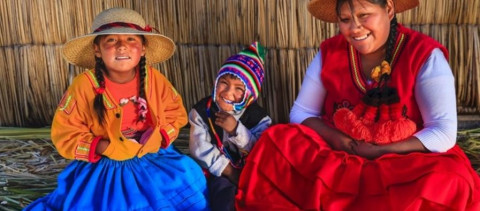 Mother language day 2020: Celebrating cross-border languages for peaceful dialogue 2020-03-25 UNESCO is celebrating ‘Languages without borders’ for International Mother Language Day 2020 on 21 February. Local, cross-border languages can promote peaceful dialogue and help to preserve indigenous heritage. Cultural and linguistic diversity are key for sustainable societies and help preserve the differences in cultures and languages that foster tolerance and respect for others. Around the world, some local languages, rather than vanishing, are in fact flourishing. Many of these fast-evolving languages are cross-border languages. For example, both regional variants of Maori – spoken in New Zealand, in the Cook Islands, and Sami, spoken across Northern Europe, have benefitted from efforts on the part of governments to revitalize these languages, which started in the 1980s. Borders in many parts of the world have been artificially imposed. From sub-Saharan Africa, to the Middle East to Latin America, many borders were negotiated and drawn arbitrarily splitting communities, which had existed for centuries. This process has contributed to conflict all over the world. Linguists specializing in cross border languages have pointed out that for such communities very often official borders do not ‘exist’. They continue to trade, share cultural practices and communicate in a common local language. Cross-border languages are naturally dynamic because they are cross-fertilized by people from two or more countries. Among many other cross-border languages, Kiswahili is one such example. This sub-Saharan African language is spoken by 120 to 150 million people. It is a hybrid tongue composed of linguistic elements from Southern Africa, Arabia, Europe and India. Its evolution tells a rich story of migration, trade, slavery, colonialism. Today, it is both sub-Saharan Africa’s most important lingua franca, and an enabling force promoting African unity and diplomacy. It is a national and official language in the United Republic of Tanzania, a national language in Kenya and in the Democratic Republic of Congo. It is a cross-border lingua franca in Uganda, Rwanda, Burundi, northern Mozambique and southern Somalia, and to a lesser extent, Malawi, Zambia and southern Sudan. Quechua is another example. The language of the ancient Incan Empire has now evolved to become a family of related indigenous languages, spoken by some 8 to 10 million people in Peru, Bolivia, Ecuador, Chile, Colombia and Argentina. The dynamism of cross-border languages means that they can provide space for indigenous culture and traditions to thrive. In the right circumstances, they can also be powerful tools for the promotion of peace between neighbouring countries. Bonds of empathy and shared heritage on either side of a border and among several countries in a region increase solidarity among neighbouring peoples and allow people to celebrate the complexity of their multi-layered identities. The development of Multilingual Education based on Mother Tongue Instruction, not only improves learning outcomes, but also helps to maintain linguistic diversity and multilingualism, a key element of inclusion. Cross-border languages have the potential to foster powerful emotional and cultural ties between neighbouring communities often living on either side of international borders. International Mother Language Day Learn more about UNESCO’s work in languages URL:https://en.unesco.org/news/mother-language-day-2020-celebrating-cross-border-languages-peaceful-dialogue
 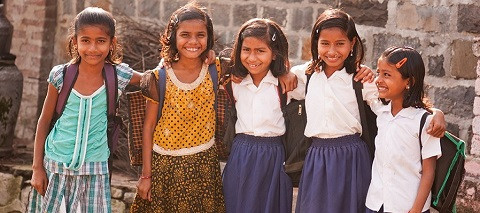 过去25年间小学入学性别差距减半 2020-03-20 UNESCO unveils a new fact sheet on girls’ education today ahead of International Women’s Day. The data is published as part of the #HerEducationOurFuture initiative which focuses on the progress achieved over the past 25 years. It shows that girls’ enrolment rates in primary and secondary education have almost doubled in low-income countries, and that the gender gap in primary enrolment has been halved. But it also shows that the pace of change is not fast enough. At the present rate, getting every girl into primary school will only happen in 2050. The fact sheet is published on the occasion of the 25th anniversary of the Fourth World Conference on Women (Beijing in 1995), which culminated with the Beijing Declaration and Platform for Action, a key global policy document on gender equality and the most ambitious roadmap for the empowerment of girls and women. “Ignoring girls’ education is akin to ignoring one of the most effective solutions for development,” said the Director-General for UNESCO, Audrey Azoulay. “When girls access quality education, it emboldens them to break the social stereotypes that hold back gender equality. It also gives them the tools to better navigate future life-altering choices on pregnancy, childbirth, and health challenges claiming millions of children’s lives around the world. We cannot achieve the world we want without the education and empowerment of all girls and women.” The Global Education Monitoring (GEM) Report at UNESCO shows that if all women completed primary education, maternal deaths would be reduced by two-thirds. If they had a secondary education, child deaths would be cut by half, saving 3 million lives, and there would be two-thirds fewer child marriages. If all girls in sub-Saharan Africa, and in South and West Asia had a secondary education, the number of pregnancies among girls younger than 17 would fall by close to 60%. But slow progress is preventing girls from reaping these benefits. As the new interactive website, https://www.education-progress.org/en/ illustrates, the primary enrolment rate of girls over the past 25 years has only increased by ten percentage points from 78% to 88%, less than half a point per year. The new fact sheet shows progress since 1995 in global commitment to girls’ right to an education through international Conventions as drawn from UNESCO’s HerAtlas, and areas where improvements are still needed. In 1995, the Beijing Platform for Action urged countries to eliminate gender discrimination in education, which is now prohibited by the constitutions of 90 countries. Since the Beijing Platform for Action, the number of States that have ratified the UNESCO Convention against Discrimination in Education (CADE) has increased from 82 to 105. However, this still means almost half have not signed it. By 1995, 150 States had ratified the UN Convention on the Elimination of All Forms of Discrimination against Women, which provides for equal rights for men and women. It has now been ratified by 189 States Parties, but 27 countries signed it with objections to particular articles on child marriage and discrimination policy. A new social media campaign, under #HerEducationOurFuture, is being launched in partnership with multiple education organizations to help advance the commitments made on education in the Beijing Declaration. The campaign calls on girls and teachers to add their voices to call for change by saying what they would want to improve for the next generation. It is launched on International Women’s Day and the Commission for the Status of Women, which will feed inputs into The Generation Equality Forum. This is a global gathering for gender equality, convened by UN Women and co-chaired by France and Mexico, with civil society as a leader and partner. The Forum will kick-off in Mexico City, Mexico, (7-8 May 2020) and be concluded over three days in Paris, France (from 7 to 10 July 2020). ****For more information and interviews, contact Kate Redman k.redman@unesco.org +33(0)671786234 URL: https://en.unesco.org/news/gender-gap-primary-school-enrolment-halved-over-past-25-years
 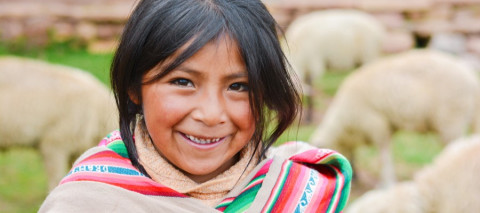 Предстоящее Десятилетие языков коренных народов (2022–2032 гг.) будет сосредоточено на правах носителей языков коренных народов 2020-03-09 Participants at the High-level event, “Making a decade of action for indigenous languages,” on 28 February issued a strategic roadmap for the Decade of Indigenous Languages (2022-2032) prioritizing the empowerment indigenous language users. More than 500 participants from 50 countries, including government ministers, indigenous leaders, researchers, public and private partners, and other stakeholders and experts, adopted the Los Pinos Declaration, at the end of the two-day event in Mexico City, which was organized by UNESCO and Mexico. The Declaration places indigenous peoples at the centre of its recommendations under the slogan “Nothing for us without us.” The Declaration, designed to inspire a global plan of action for the Decade, calls for the implementation of the internationally recognized rights of indigenous peoples, expressed notably in the UN Declaration on the Rights of Indigenous Peoples of 2007, the UN System-wide Action Plan (SWAP) on the Rights of Indigenous Peoples of 2017, and other standard-setting instruments such as UNESCO’s Convention against Discrimination in Education (1960),the UN’s International Convention on the Elimination of All Forms of Racial Discrimination (1965), International Covenant on Civil and Political Rights, and International Covenant on Economic, Social and Cultural Rights (1966). In its strategic recommendations for the Decade, the Los Pinos Declaration emphasizes indigenous peoples’ rights to freedom of expression, to an education in their mother tongue and to participation in public life using their languages, as prerequisites for the survival of indigenous languages many of which are currently on the verge of extinction. With regard to participation in public life, the Declaration highlights the importance of enabling the use of indigenous languages in justice systems, the media, labour and health programmes. It also points to the potential of digital technologies in supporting the use and preservation of those languages. Building on the lessons learnt during the International Year of Indigenous Languages (2019), the Declaration recognizes the importance of indigenous languages to social cohesion and inclusion, cultural rights, health and justice and highlights their relevance to sustainable development and the preservation of biodiversity as they maintain ancient and traditional knowledge that binds humanity with nature. Current data indicates that at least 40% of the 7,000 languages used worldwide are at some level of endangerment. While reliable figures are hard to come by, experts agree that indigenous languages are particularly vulnerable because many of them are not taught at school or used in the public sphere. More statistical data will become available once UNESCO’s Atlas of Languages, a database about practically all human languages, becomes available later this year. **** More about the International Year of Indigenous Languages and its outcomes URL:https://en.unesco.org/news/upcoming-decade-indigenous-languages-2022-2032-focus-indigenous-language-users-human-rights
 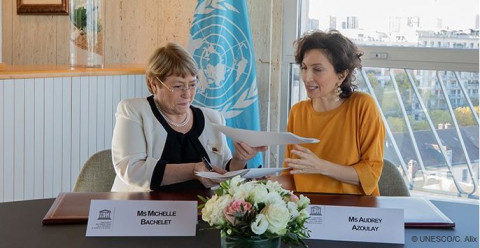 UNESCO and OHCHR strengthen cooperation to advance human rights 2019-12-04 A fast changing world requires quick, but meaningful responses to challenges that can tear at the fabric of our communities. In order to ensure that human rights are respected and protected, UNESCO Director General Audrey Azoulay and Michelle Bachelet, UN High Commissioner for Human Rights, today signed a new memorandum of understanding to promote joint action for advancing human rights. “At a time when human dignity, equality and justice are under attack, UNESCO and OHCHR reaffirm their resolve to work closer together towards a stronger implementation of human rights in response to new challenges worldwide,” said Ms. Azoulay following the signing. The agreement focuses on emerging trends and new fields of human rights today, especially human rights-based responses to new scientific and technological developments, notably on artificial intelligence. This comes at a time when UNESCO Member states are expected to launch the elaboration of a normative instrument on the ethics of artificial intelligence upon its conclusion of its General Conference on 27 November. UNESCO and OHCHR will also strengthen their work tackling racist propaganda and hate speech online and offline, linked to the UN Strategy and Plan of Action on Hate Speech (2019). Looking ahead to the anticipated development of new standard setting frameworks for AI at UNESCO, Ms. Bachelet sees opportunities emerging from this new agreement. “Taking these steps will guide technology for all the good it can produce,” she says, “but we can avoid the misuse in terms of hate speech, and also in terms of harassing journalists, human rights defenders or critics.” This new cooperation also identifies areas of convergence across the mandate of UNESCO. These include the advancement of the right to education, the right to take part in cultural life; the right to enjoy the benefits of scientific progress and its applications and the right to water and sanitation. It also includes the right to freedom of expression and access to information, in line with the UN Plan of Action on the Safety of Journalists and the Issue of Impunity spearheaded by UNESCO. URL:https://en.unesco.org/news/unesco-and-ohchr-strengthen-cooperation-advance-human-rights
 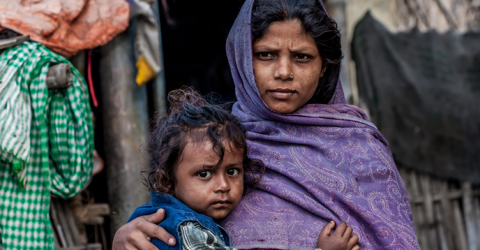 What you need to know about the Convention against Discrimination in Education 2019-11-02 Since its adoption by UNESCO’s General Conference in 1960, the Convention against Discrimination in Education has been at the forefront of the Organization’s standard-setting instruments in the field of education. It has so far been ratified by 104 Member States and UNESCO is now urging the remaining countries to do so with its #RightToEducation campaign. What is the Convention against Discrimination in Education? The Convention reaffirms that education is not a luxury, but a fundamental human right. It highlights States' obligations to ensure free and compulsory education, bans any form of discrimination and promotes equality of educational opportunity. The treaty comprehensively covers the right to education and is the only one entirely dedicated to it. The Convention is recognized as a cornerstone of the Education 2030 Agenda and a powerful tool to advance inclusive and equitable quality education for all. What does the Convention guarantee? States that have ratified the Convention are under the obligation to implement the right to education as it is elaborated in the text including, among other provisions, the obligation of the state to provide free and compulsory education.The main provisions of the treaty include: Primary education free and compulsory Secondary education in its different forms, generally available and accessible to all Higher education equally accessible to all on the basis of individual capacity Equivalent standards of education in all public educational institutions of the same level and conditions relation to quality Opportunities for continuing education Training opportunities for the teaching profession without discrimination. The Convention also ensures: Education shall be directed to the full development of the human personality and to the strengthening of respect for human rights and fundamental freedoms The liberty of parents to choose for their children’s education in conformity with their moral and religious beliefs The right of members of national minorities to carry on their own educational activities. Why ratify the Convention now?As a standard-setting Organization, UNESCO encourages Members States to ratify normative instruments in order to achieve universal adherence to its norms and standards. This Convention is the first and only legally binding international treaty exclusively dedicated to the right to education and is considered to be a foundation of the Education 2030 Agenda. Ratifying the Convention: Shows the adherence of the country to rights set forth by the Convention, including the fundamental principles of non-discrimination, equality of treatment and of educational opportunities Ensures the respect of all rights laid down in the Convention Joins the community of States that are already party to the Convention and adopt the same normative framework Participates in the strengthening of international norms and standards in education Gives higher visibility to the Convention, and raises awareness The Convention does not admit any reservation, meaning that ratifying States cannot decide to exclude certain aspects or provisions from the legal effect of the Convention; therefore, the Convention is fully applicable to all its State Parties. Read the full text of the Convention. Join UNESCO’s #RightToEducation campaign. URL:https://en.unesco.org/news/what-you-need-know-about-convention-against-discrimination-education
 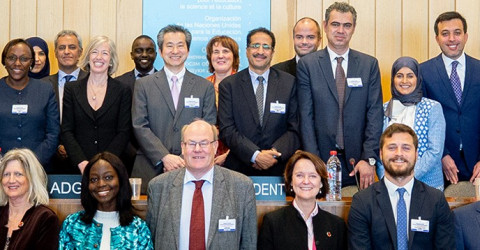 A call for action and passion to raise political support for Education 2030 2019-11-01 Keep hammering the evidence that education equals progress across the Sustainable Development Goals, urged UNESCO’s Assistant Director-General for Education Stefania Giannini, an appeal echoed by top UN officials at the opening of the sixth meeting of the SDG-Education 2030 Steering Committee on 11 March 2019 at UNESCO Headquarters. “The Steering Committee is a global think tank for education. It has a political, technical and advocacy responsibility to raise up education as a basic human right and key driver for sustainable development,” she said. “It is only through determination, cooperation and engagement that we will succeed in moving forwards, leveraging the knowledge, capacities, and networks that each of you represents.“ Counting 32 Members, the Committee, co-presided by UNESCO, is a unique consultation and coordination mechanism for education in the 2030 Sustainable Development Agenda. It brings together representatives from Member States, multilateral institutions, regional organizations, civil society networks, teacher organizations, foundations, private sector and youth. This sixth Committee meeting, organized by UNESCO and co-chaired by Japan, takes place at a crucial crossroads, ahead of the UN High-Level Political Forum in July, which will review SDG4, and the SDG Summit in September. Keep the pressure United Nations Deputy Secretary-General Amina Mohamed stressed in a video message “the importance of the Committee for guiding the implementation of SDG4 and all its connections to the other 16 goals. This involves prioritizing, collaborating and advocating around a shared vision.” “Our imperative is clear: to mobilize the political will, policies, capacity and financing that will make progress possible,” she said. “Each member of this Committee has a voice and a role. I urge you to keep the pressure on political leaders to show, in all the upcoming forums, that they are serious about meeting this challenge.” United Nations Under-Secretary General for Economic and Social Affairs, Mr Liu Zhenmin, also underscored the crucial role of the Steering Committee in the follow-up and review of SDG4 and the 2030 agenda. “Success in delivering on SDG4 would contribute considerably towards achieving other goals – reducing inequalities, building knowledge to increase ambition of climate action, and empowering people toward the jobs of the future,” he said. Speaking with one voice Ms Giannini stressed that the Brussels Declaration, adopted at the Global Education Meeting in Brussels in December 2018, provides the shared vision and direction to speak with one voice in this decisive year for education. She urged the education community to act in coordinated and concerted ways, warning that “fragmentation can and never will be the solution.” The Brussels Declaration sets inclusion as the driving principle of all policies, and spells out 8 priority areas to unlock progress in the next four years. A panel on follow-up to the Brussels meeting noted the positive ways in which the Brussels Declaration is informing policy, including at EU level. Speakers referred to it as a “practical tool and reference,” a means to rally and strengthen the education movement, and commended its emphasis on teachers, as well as on the inclusion of refugees in education systems. Aligning policies and priorities In a series of presentations, regional organizations and Member States explained how they are aligning policies and priorities with the SDG4 agenda. Colombia’s Minister of National Education of Colombia, Maria Victoria Angulo Gonzalez, stated that the SDG agenda is pivotal for planning the education sector. She described her Government’s comprehensive approach to equity and inclusion, encompassing legal reforms, intersectoral strategies and programmes at all levels. These include the promotion of early childhood care and education, rural education, school nutrition and attention to global citizenship in curricula. Many national presentations highlighted the challenges of literacy, teacher training, curriculum innovation, skills training, migration and financing. They noted the complexity of translating the broad scope of SDG4 into policy and difficulties in meeting the demand for more and better data to monitor SDG4 targets. Running for 2 days, the committee is discussing its joint submission to the High Level Political Forum, and key areas for engagement, joint work and advocacy, with a view to reinforcing coordination around SDG4 at national, regional and global level. URL: https://en.unesco.org/news/call-action-and-passion-raise-political-support-education-2030
 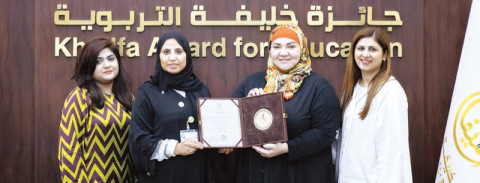 «خليفة التربوية»: توظيف الذكاء الاصطناعي في التدريس ضرورة عصرية 2019-10-31 أكدت الأمانة العامة لجائزة خليفة التربوية أهمية التنمية المهنية للمعلمين والإداريين والقيادات المدرسية والأكاديمية في الميدان التعليمي داخل الدولة وخارجها من خلال تطبيق أفضل الممارسات العلمية والتعليمية في التدريس وتوظيف تقنيات الثورة الصناعية الرابعة والذكاء الاصطناعي وتطبيقاته المختلفة في التدريس عبر طرق إبداعية جذابة تعزز من استيعاب الطالب للمادة العلمية والمحتوى المعرفي. جاء ذلك خلال ورشة العمل التطبيقية التي نظمتها الأمانة العامة للجائزة بحضور أمل العفيفي الأمين العام للجائزة، وتحدثت فيها الخبير التربوي وفاء عبدالغفار مديرة مدرسة أكاديمية الشيخ زايد بإسلام أباد والمستشار الأكاديمي الدولي حول «أفكار مبتكرة لطرق تدريس إبداعية» بحضور عدد من المعلمين من مختلف التخصصات الدراسية. وأكدت الخبير التربوي وفاء عبدالغفار أهمية أن يواكب المعلم المستجدات التقنية التي يشهدها العالم اليوم، وأن يعي دورها في العملية التعليمية وفي أدائه لرسالته داخل الصف الدراسي والمدرسة بصورة عامة، مشيرة إلى أن طرق التدريس التقليدية لم يعد لها مكان في القرن الحادي والعشرين خصوصاً مع التطور التقني الذي يشهده العالم، والذي تنعكس آثاره الإيجابية على بيئة التعلم، وتفرض تحديات كثيرة على مختلف عناصر العملية التعليمية من معلمين وطلاب. ولفتت إلى أن اتباع طرق تدريس مبتكرة ومبدعة ليس بالأمر الصعب بالنسبة للمعلم، خصوصاً للخريجين الجدد الذين ركزت دراستهم في المرحلة الجامعية على توظيف التقنيات المتطورة في العملية التعليمية وخصوصاً في طرق التدريس التي تعزز التفاعل بين الطالب والمعلم، وتحول دور المعلم من ملقن وناقل للمادة التعليمية إلى موجه ومرشد ومشارك ومتفاعل مع الطالب بشأن هذه المادة والمحتوى المعرفي المرتبط بها. وقدمت وفاء عبدالغفار خلال الورشة عرضاً علمياً لتطبيقات مبتكرة وطرق تدريس ترتكز على الإبداع والابتكار داخل الفصل الدراسي. مواد ذات علاقة مناقشة تطوير مبادرات لتقدير وتحفيز وتمكين المعلم الأرشيف الوطني يستقبل وفداً يمنياً برنامج فعاليات فنية وثقافية حافل في «نيويورك أبوظبي» خلال نوفمبر %79 إنجازات حكومة الإمارات بمؤشرات الأجندة الوطنية نورة الكعبي: قيادتنا الرشيدة تقدم نموذجاً أصيلاً لبناء الوطن والمواطن وزارة شؤون «الوطني» تزور قصر الوطن URL:https://www.albayan.ae/across-the-uae/news-and-reports/2019-10-29-1.3686546