
AI and the Future of Education: Disruptions, Dilemmas and Directions
- Author
- Corporate Author
- UNESCO
- Topic
- Human rightsGlobalisation and social justice / International understandingMedia and information literacy / Digital citizenshipTransformative initiatives / Transformative pedagogies
- Region
- Global
- Level of education
- Early childhood care and education (ECCE)Primary educationSecondary educationHigher educationLifelong learningTechnical and Vocational education and trainingNon-formal educationOther
- Keyword
- Artificial intelligenceEducation forecastingEducational objectivesTechnological changeEthics of technology
- Resource Language
- English
- Place of publication
- Paris
- Year of publication
- 2025
- Resource Type
- International normative instruments / policy and advocacy documentsResearch papers / journal articles
- ISBN
- 978-92-3-100784-2
- Collation
- 165 p.
- Format
- Type of file
Artificial intelligence (AI) is reshaping the way we learn, teach and make sense of the world around us, but it is doing so unequally. While one-third of humanity remains offline, access to the most cutting-edge AI models is reserved for those with subscriptions, infrastructure and linguistic advantage.
These disparities not only restrict who can use AI, but also determine whose knowledge, values and languages dominate the systems that increasingly influence education.
This anthology explores the philosophical, ethical and pedagogical dilemmas posed by disruptive influence of AI in education. Bringing together insights from global thinkers, leaders and changemakers, the collection challenges assumptions, surfaces frictions, provokes contestation, and sparks audacious new visions for equitable human-machine co-creation.
Covering themes from dismantling outdated assessment systems to cultivating an ethics of care, the 21 think pieces in this volume take a step towards building a global commons for dialogue and action, a shared space to think together, debate across differences, and reimagine inclusive education in the age of AI.
Building on UNESCO’s Recommendation on the Ethics of AI, its Guidance on Generative AI in Education and Research and its twin AI competency frameworks for teachers and students, such a global commons can direct collective sense-making and bold reimagination around curricula, pedagogy, governance and policy with human rights, justice and inclusion at its core.
Related Resources
-
 Envisioning the Future of Assessment in Transformative Education: A Synthesis Report of the Expert Meeting on Evaluation and Assessment for Transformative Education: Towards and Beyond 2030
 -
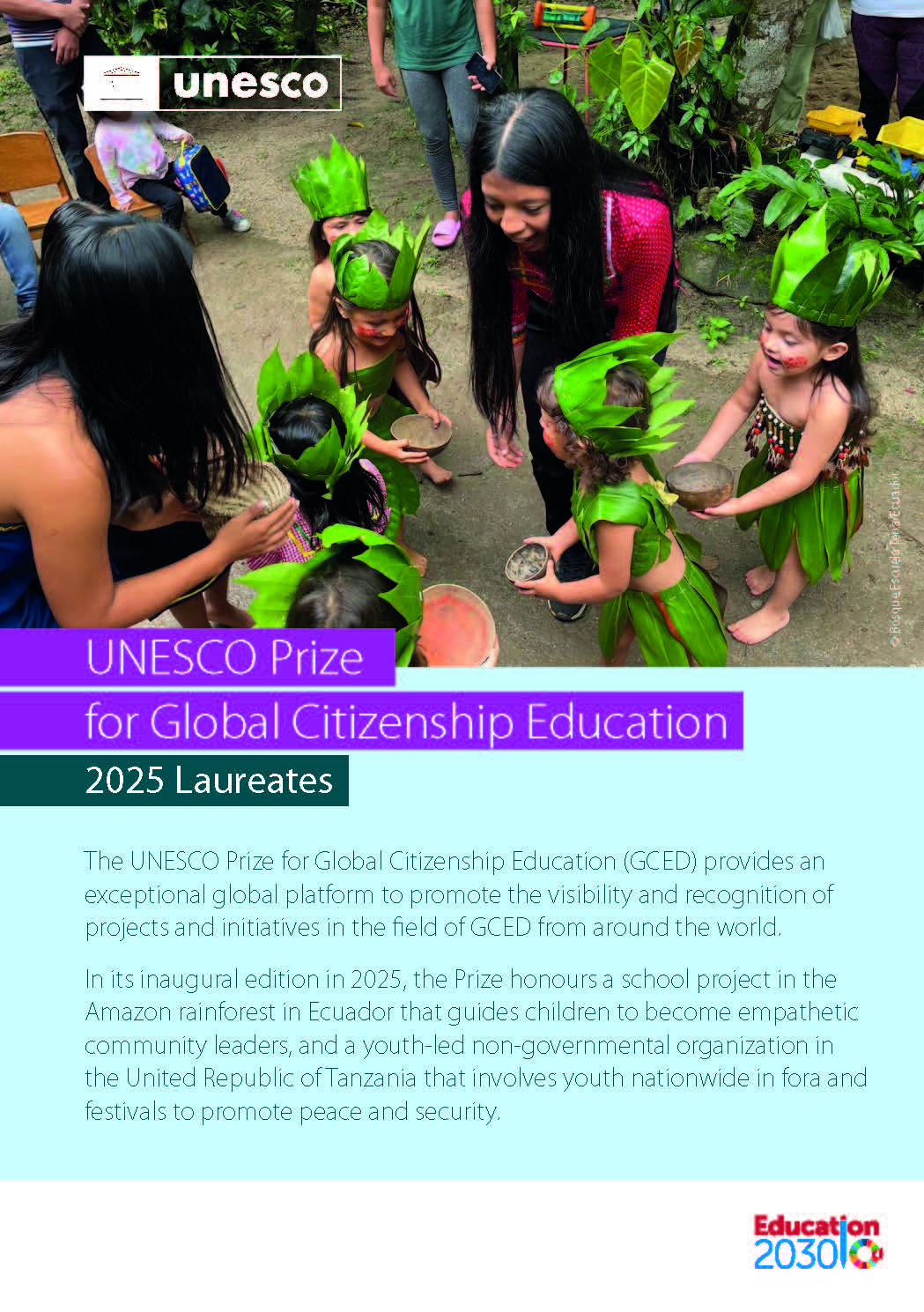 UNESCO Prize for Global Citizenship Education 2025 Laureates
 -
 Confronting Inequality through GCED: Toward Justice, Inclusion, and Transformation (SangSaeng; No.65, 2025)
 -
 ACER-APCEIU Global Citizenship Education Monitoring Toolkit: For Teachers, Schools and System Leaders