
Dialogue for Social Cohesion
- Corporate Author
- UNESCO
- Topic
- Diversity / Cultural literacy / InclusivenessHuman rightsGlobalisation and social justice / International understandingPeace / Culture of peace
- Level of education
- Early childhood care and education (ECCE)Primary educationSecondary educationHigher educationLifelong learningTechnical and Vocational education and trainingNon-formal education
- Resource Language
- English
- Place of publication
- Paris
- Year of publication
- 2025
- Resource Type
- International normative instruments / policy and advocacy documentsResearch papers / journal articles
- ISBN
- ISBN 978-92-3-100754-5
- Collation
- 41 p.
- Format
- Type of file
In an era where geopolitical power struggles disrupt traditional peacebuilding, where identity and misinformation fuel divisions, and where trust in institutions is eroding, UNESCO’s Intercultural Dialogue for Conflict Transformation briefs series presents an adaptable, culturally grounded, and people-centred approach to peacebuilding.
With 89% of conflicts worldwide occurring in countries with limited capacity for intercultural dialogue, this four-part series draws on firsthand experience, country case studies, and expert analysis to demonstrate the transformative potential of dialogue in fragile and conflict-sensitive settings.
The Dialogue for Social Cohesion brief—developed in collaboration with the Berghof Foundation and Search for Common Ground—bridges theory and practice to explore the horizontal (community-to-community) and vertical (citizen-to-state) dimensions of social cohesion and highlights how inclusive dialogue can support both.
Case studies from Afghanistan, Germany, Somalia, and South Sudan illustrate how dialogue—whether through theatre, education, local governance, or environmental peacebuilding—can cultivate mutual understanding and trust, bridge identity-based divides, and restore, step by step, the social fabric in fractured societies.
Through actionable recommendations, this brief equips practitioners, policymakers, and civil society with the essential guidance needed to tailor and embed dialogue in their respective contexts, helping to ensure that peace processes are inclusive, locally driven, and enduring.
Related Resources
-
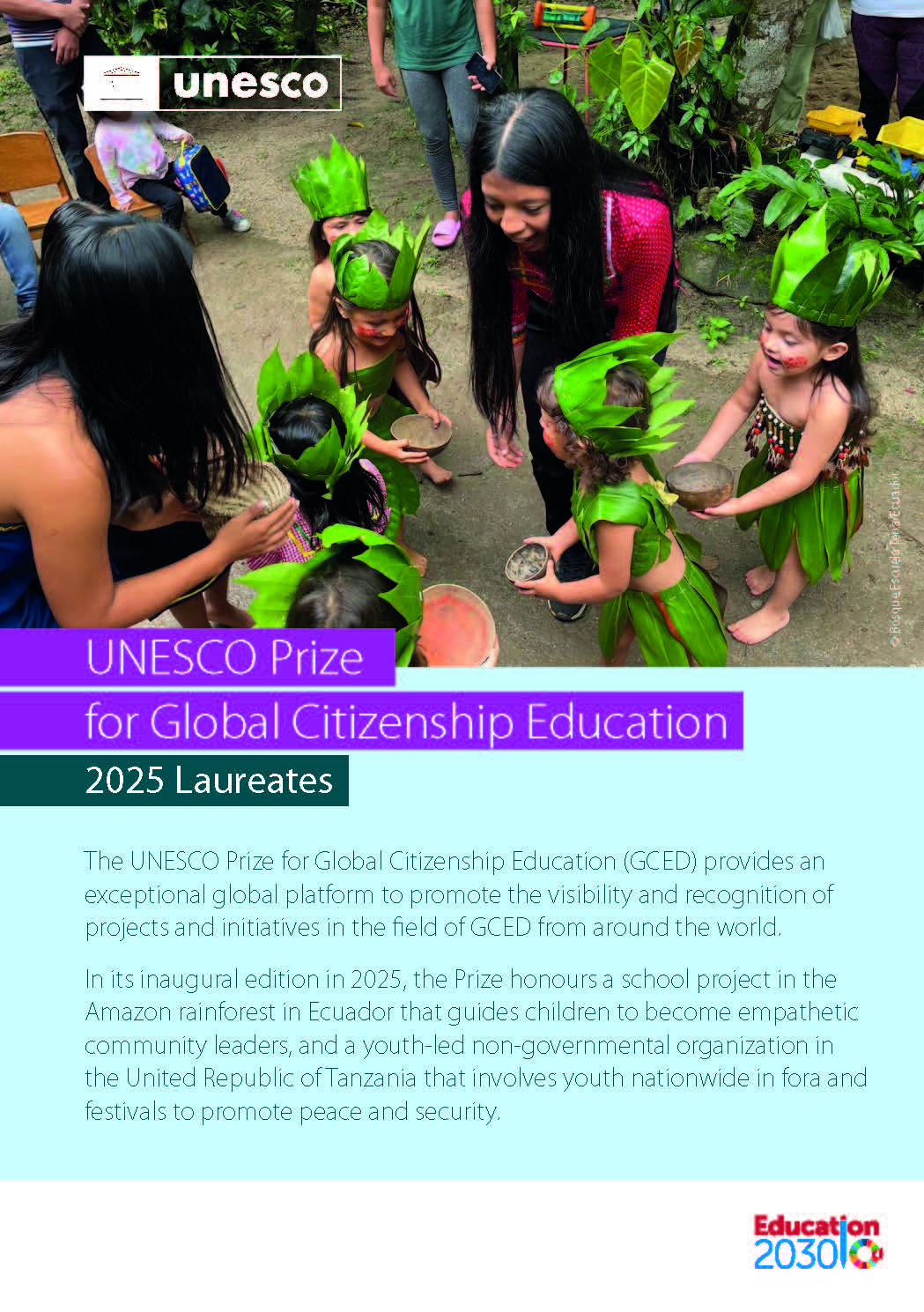 UNESCO Prize for Global Citizenship Education 2025 Laureates
 -
 Confronting Inequality through GCED: Toward Justice, Inclusion, and Transformation (SangSaeng; No.65, 2025)
 -
 ACER-APCEIU Global Citizenship Education Monitoring Toolkit: For Teachers, Schools and System Leaders
 -
 Recommendation on Education for Peace, Human Rights and Sustainable Development: An Implementation Guide