
Ensuring inclusive teaching and learning for educational recovery: Practical ways forward
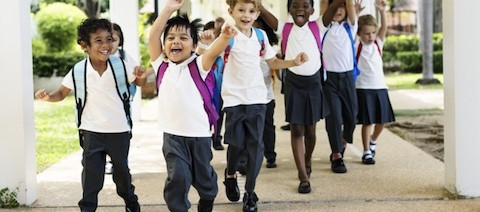
Around the world, in the face of the COVID-19 pandemic, teachers are confronted by unprecedented challenges as they seek to ensure quality education for all learners. Whilst the nature of these challenges varies depending on country or location, a shared concern is for learners who are vulnerable to marginalization or exclusion; such as those from low-income households, refugees, living in conflict situations, as well as those of ethnic and linguistic minorities and indigenous backgrounds, and children with disabilities.
Also, UNESCO estimates that girls aged 12-17 are at particular risk of dropping out of school in low- and lower-middle income countries, whereas boys are more at risk in upper-middle and high-income countries.
Efforts to ensure educational transformation in light of the pandemic must be based upon the principles of inclusion and equity. These principles are summed up in UNESCO’s Guide for Ensuring Inclusion and Equity in Education, as follows: ‘every learner matters and matters equally’. This webinar will encourage an exchange and open dialogue on how these principles should specifically be integrated into teaching and learning practices.
The webinar will focus on the practice of teachers and how they can be supported to find ways of ensuring that marginalized and vulnerable learners are included in schools; and on how to adapt content, pedagogies and assessments to be truly inclusive. It will showcase and analyze examples of innovative solutions from different parts of the world.
Discussions will revolve around key topics such as:
- What teaching practices can ensure that all children and young people are included in schools as they reopen?
- How can teachers be supported and empowered to develop these practices?
- What are the challenges faced by teachers and school leaders, and how can they be overcome?
Discussions will relate to and build on the Framework for reopening schools, developed by several agencies, including UNESCO, in April 2020, and other guidance materials on school reopenings.
The webinar is co-organized by UNESCO, UNESCO’s International Bureau of Education (IBE) and the University of Manchester. The webinar will provide a platform for the sharing of experiences amongst teachers and other stakeholders. It aims to reach out to teachers, teacher educators, policy-makers, curriculum developers and pedagogical advisers, as well as other key stakeholders.
Interpretation will be available in English, French, Spanish and international sign language.
Programme at a glance
14:00 - 14.30
- Introductory panel: Setting the stage for inclusive teaching and learning
14:30 - 15:50
- Moderated discussion with teachers and practitioners on their practices towards fostering an inclusive teaching and learning environment. The panel will explore challenges and promising practices to ensure that every learner matters and matters equally as schools reopen.
- Q&A session with the panel and the participants
15:50 - 16:00
- Wrap up and close
Symposium documents
Background documents and resources
- Cali commitment to equity and inclusion in education, 2019
- International forum on inclusion and equity in education, Cali, Colombia, 11-13 September 2019
- Inclusion and education: All means all, Global Education Monitoring Report, 2020
- 2020 Global Education Monitoring Report - Infographics
- Education post-COVID-19: 2020 Global Education Meeting Declaration (Extraordinary Session)
- Inclusive teaching: preparing all teachers to teach all students, Global Education Monitoring Report, International Task Force on Teachers for Education 2030
- A Guide for ensuring inclusion and equity in education, UNESCO 2017
- Framework for the reopening of schools, UNESCO, UNICEF, World Food Programme and World Bank, 2020
- Reaching Out to All Learners: a Resource Pack for Supporting Inclusive Education, IBE-UNESCO blog
- Education in a post-COVID world: nine ideas for public action, UNESCO 2020
Useful links
URL: